
BuddhistCatholicContemplativeEvangelicalGeneral ChristianHinduJewishLatter-day SaintMuslimNew VisionsProgressive Christian
Beliefs
- Buddhist
- Catholic
- Contemplative
- Evangelical
- General Christian
- Hindu
- Jewish
- Latter-day Saint
- More Voices
- Muslim
- New Visions
- Pagan
- Progressive Christian
Topics
- Religion News
- Food and Religion
- Sports and Religion
- Religious Art
- Religious Music and Entertainment
- Religious Events
- History and Religion
- Style and Religion
- Politics and Religion
- Women in Religion
- Recreation Outdoors and Religion
- Business Finance and Religion
- Careers Workplace and Religion
- Education and Religion
- Family Parenting and Religion
- Health Fitness and Religion
- Home and Religion
- Relationships and Religion
- Technology and Religion
- Travel and Religion
Columnists
- Buddhist Columnists
- Business Finance and Religion Columnists
- Careers Workplace and Religion Columnists
- Catholic Columnists
- Contemplative Columnists
- Education and Religion Columnists
- Evangelists Columnists
- Family Parenting and Religion Columnists
- General Christian Columnists
- Health Fitness and Religion Columnists
- Hindu Columnists
- History and Religion Columnists
- Home and Religion Columnists
- Jewish Columnists
- More Voices Columnists
- Latter Day Columnists
- Muslim Columnists
- New Visions Columnists
- Nonreligious Columnists
- Pagan Columnists
- Politics and Religion Columnists
- Progressive Columnists
- Recreation Outdoors and Religion Columnists
- Relationships and Religion Columnists
- Religion News Columnists
- Religious Art Columnists
- Religious Events Columnists
- Religious Music and Entertainment Columnists
- Sports and Religion Columnists
- Style and Religion Columnists
- Technology and Religion Columnists
- Travel and Religion Columnists
- Women in Religion Columnists
Resource Library
- 2026 Calendar
- Library of World Religions
- The 100 Most Holy Places on Earth
- Patheos Answers
- Podcasts
- Videos
- Faith Leaders Database
- Anglican Episcopalian
- Bahai
- Baptist
- Buddhism
- Christianity
- Confucianism
- Eastern Orthodoxy
- Hinduism
- Holiness and Pentecostal
- ISKCON
- Islam
- Judaism
- Lutheran
- Methodist
- The Church of Jesus Christ of Latter-day Saints
- New Age
- Paganism
- Presbytarian and Reformed
- Protestantism
- Religion Behind the Scenes
- Roman Catholic
- Scientology
- Shia Islam
- Sikhism
- Sufism
- Sunni Islam
- Taoism
- Zen
- See all religions
Research Tools
 Ad-Free & Subscriber Log-In Subscription Support
Ad-Free & Subscriber Log-In Subscription Support
Follow Patheos 

- Trending:
- Forgiveness
- |
- Marriage
- |
- Consciousness
- |
- Death Penalty
- |
- Election
- |
- Halloween

- Home
- Catholic
- Thoughts on National Repentance, Part II: Unoriginal Sin
Thoughts on National Repentance, Part II: Unoriginal Sin
Last updated on: June 29, 2021 at 6:55 pm by Gabriel Blanchard
Thoughts on National Repentance, Part II: Unoriginal Sin 2021-06-29T18:55:48-04:00 Gabriel Blanchard
Patheos Explore the world's faith through different perspectives on religion and spirituality! Patheos has the views of the prevalent religions and spiritualities of the world.
What Do a National Repentance?
I’ve been giving more thought to this post. If we want to practice national repentance, then as Catholics, our model is the sacrament of penance. Seems straightforward enough, right?
However, in order to actually put that into practice, we’re going to need to muscle our way through some pretty uncomfortable stuff. That’s kind of how this works—repentance means (among other things) accepting responsibility, and that’s an uncomfortable thing to do. It’s a blow to our ego. But it also is, or ought to be, part of every Christian’s continual modus operandi. Christ did not come saying, “Relax, for the kingdom of God is at hand.”
The Theology of Repentance
The best description of penance that I’ve yet come across actually comes from a Protestant source, namely Dorothy Sayers’ introduction to the Purgatorio. Here’s a chunk of it.
Suppose that, in a fit of rage, or through carelessness, you have destroyed a valuable vase belonging to a friend. The effect of this act is to disturb the friendly relations between you, and to bring matters back to normal it is necessary that you should be (a) sorry, and (b) forgiven.
The first necessity is that you should “accept judgment”—i.e., admit that you are in the wrong. The vase did not “come to pieces in your hands,” and nobody else knocked it out of them: your own ill-temper or your own negligence are to blame. When you have frankly admitted this, first to yourself and then to your friend, you have have performed the first of the three parts of Penance, viz. Confession.
The next necessity is that you should both be sorry, and say that you are sorry, for what you did, and for the fault that caused you to do it; and that you should ask to be forgiven. This is the second part of Penance, viz. Contrition.
When this is done, your friend forgives you, and good relations are restored. You are now, without any further act, free of the guilt of your evil act: in technical language you have “purged the culpa.” [This is effected sacramentally in absolution.]
Two things, however, remain: the vase is still broken, and you yourself are still liable to attack by the rage or negligence which caused the trouble in the first place. Technically, you have still to “purge the reatus.”1 This leads you to the third part of Penance, viz. Satisfaction, and calls for two further actions: reparation to your friend and amendment in yourself.
Note that if you are really sorry, these are acts which you will wish to perform. … Even though you have been forgiven, you will want to “make it up to” your friend as best you can; and you will also be particularly anxious to rid yourself of any tendency to fall into the same fault again.

Hauntings
That first step, confession, is where we have to start. There can be no repentance if we won’t admit responsibility for a wrong. And this is where we, as in we white people, tend to start running into problems.

It is obviously true that white Americans today are not personally responsible for the trans-Atlantic slave trade; no living person is. It is also obviously true that most white Americans today have not personally uprooted First Nations from their homes in order to take away their land.2 As far as I know, nobody is disputing that. The problem is, a lot of white Americans jump from that to “It isn’t my fault, so I shouldn’t have to do anything about it.” That really isn’t how responsibility works, especially not on a national scale.
Imagine a man called A steals B’s land. A is a smart crook, and makes a huge profit off the resources from it, which he then passes on to his heirs; B’s heirs get nothing, and the struggle just to stay alive keeps them from building up any wealth. Three generations later the situation is much the same: G, A’s great-grandson, is not personally guilt of stealing from B’s great-grandson H, nor indeed of stealing from B—but he’s still profiting from a situation that was originally established by an injustice. He may not be guilty, but he is responsible, in that he is the one with the power to set things right now. Which means that, at least once he’s fully aware of the facts, G has a decision to make.
Time does not heal. Correcting injustice heals; nothing else does. The spirits in ghost stories don’t stop haunting houses just because the previous occupants moved out, still less because they’ve been haunting it for a long time.

“Our Forefathers Brought Forth on This Continent …”
Of course, some people take this further. Sometimes G tries to pretend that what A did was justified: “B wasn’t exploiting the land to its full potential”—as though that were anyone’s business but B’s, even if it were true. The ideas of “manifest destiny” or “American exceptionalism” were favorites once upon a time, and some versions of nationalism (notably Trump’s educational priorities) have tried to revive them. I have always despised this kind of thinking. It’s blatantly unbiblical to pretend that the US has some sort of hallowed status; perhaps a Mormon could argue for it, but no Catholic could. The only country the Bible concerns itself with is Israel, and that concern clearly doesn’t take the form of viewing Israel in a universally favorable light.
Or G will insist, angrily or tearfully, “My ancestors weren’t monsters!” Which really isn’t relevant. Because the question is not whether A was a monster; it’s whether A did something that was wrong. You don’t need to be a monster to be a sinner. And if the kind of wrong thing his ancestor did is the kind of thing G considers monstrous, then either G has to accept that A did something monstrous, or G has to lie—there is no third option, and the second is certainly neither right nor Christian. What’s needed here is not loyalty but honesty; a loyalty that can’t survive honesty does not deserve to survive.
The Mirror of America
So what is it we have to face? What is the “confession” part of national repentance? Two main things present themselves:
- The violent conquest of about 40% of North America, killing or displacing the original inhabitants and taking away their land.
- The kidnapping and enslavement of many millions of Africans and their descendants.
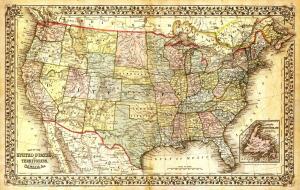
These things are how the United States as we know it came into existence. There is no getting around them. We need to be able to say, in plain English, that these things were evil and that we are still living with their consequences, because that’s the truth. Until we can do that we will not be able to move on to the next stage of national repentance.
1Culpa and reatus are Latin words which translate, more or less, as “blame, fault” and “accusation, charge.”
2I specify “most” here because, while the slave trade has been legally extinct for a century and a half, US encroachment on First Nations land is an ongoing problem. There are living people guilty of it.
Previous Post

June 19, 2021
Thoughts on National Repentance
Next Post
July 5, 2021 A Fisking of John Thiel's "The New Donatism"
Browse Our Archives
Select a Category abuse antifascism art bad Catholic celibacy chastity Church crucifixion culture war eros forgiveness gay gender homophobia ikons language liturgy peace poems politics Pope Francis prayer pro-life race recommendations reform repentance review sacraments saints satire scandal schism scripture sex suffering theology Uncategorized violence
Select a Month October 2026 September 2026 August 2026 July 2026 June 2026 May 2026 April 2026 March 2026 February 2026 January 2026 December 2025 November 2025 October 2025 September 2025 August 2025 July 2025 June 2025 May 2025 April 2025 March 2025 February 2025 January 2025 December 2024 November 2024 October 2024 September 2024 August 2024 July 2024 June 2024 May 2024 April 2024 March 2024 February 2024 January 2024 December 2023 November 2023 October 2023 September 2023 August 2023 July 2023 June 2023 May 2023 April 2023 March 2023 February 2023 January 2023 December 2022 November 2022 October 2022 September 2022 August 2022 July 2022 June 2022 May 2022 April 2022 March 2022 February 2022 January 2022 December 2021 November 2021 October 2021 September 2021 August 2021 July 2021 June 2021 May 2021 April 2021 March 2021 February 2021 January 2021 December 2020 November 2020 October 2020 September 2020 August 2020 July 2020 June 2020 May 2020 April 2020 March 2020 February 2020 January 2020 December 2019 November 2019 October 2019 September 2019 August 2019 July 2019
Follow Us!
TAKE THE
Religious Wisdom Quiz
Who saw a vision of a pot boiling toward the north?
Select your answer to see how you score.
Jeremiah Habakkuk Isaiah Zechariah
Related posts from Mudblood Catholic

With My Body, I Thee Worship: Part One


TRENDING AT PATHEOS Catholic

The Iron Gates and the Lion of the...
Yesterday, I didn't finish my report about, well, yesterday. So I'll...

Dolly Parton’s Last Song Wins Dove Award with...
Bluegrass band The Grascals, speaking on the red carpet at the 57th...

The Image: On the Horror of Capitalism and...
The Image Then went the Pharisees, and took counsel how they might...

We are approaching the date of our new American national holiday: October...

Letters on Living the Faith by C.S. Lewis
Most of us met C.S. Lewis as a public intellectual. Mere Christianity....

When Halloween Unmasks Married Hearts
Written by Dr. David K. Ewen from Eternal Truth Bible College Behind...
view all Catholic blogs
Ad-Free & Subscriber Log-In Subscription Support
- About Us
- 2026 Calendar
- Videos
- Podcasts
- Library of World Religions
- Faith In Media Tracker
- Advertise With Us
- Write for Us
- Privacy Policy
- Terms of Service
- Do Not Sell My Data
- Contact Us
- Radiant Digital
- Manage Newsletter Subscriptions
- Unsubscribe From Notifications
- Sitemap
Copyright 2008-2026, Patheos. All rights reserved.
Subscription Support Ad-Free & Subscriber Log-In
Follow Patheos