
BuddhistCatholicContemplativeEvangelicalGeneral ChristianHinduJewishLatter-day SaintMuslimNew VisionsProgressive Christian
Beliefs
- Buddhist
- Catholic
- Contemplative
- Evangelical
- General Christian
- Hindu
- Jewish
- Latter-day Saint
- More Voices
- Muslim
- New Visions
- Pagan
- Progressive Christian
Topics
- Religion News
- Food and Religion
- Sports and Religion
- Religious Art
- Religious Music and Entertainment
- Religious Events
- History and Religion
- Style and Religion
- Politics and Religion
- Women in Religion
- Recreation Outdoors and Religion
- Business Finance and Religion
- Careers Workplace and Religion
- Education and Religion
- Family Parenting and Religion
- Health Fitness and Religion
- Home and Religion
- Relationships and Religion
- Technology and Religion
- Travel and Religion
Columnists
- Buddhist Columnists
- Business Finance and Religion Columnists
- Careers Workplace and Religion Columnists
- Catholic Columnists
- Contemplative Columnists
- Education and Religion Columnists
- Evangelists Columnists
- Family Parenting and Religion Columnists
- General Christian Columnists
- Health Fitness and Religion Columnists
- Hindu Columnists
- History and Religion Columnists
- Home and Religion Columnists
- Jewish Columnists
- More Voices Columnists
- Latter Day Columnists
- Muslim Columnists
- New Visions Columnists
- Nonreligious Columnists
- Pagan Columnists
- Politics and Religion Columnists
- Progressive Columnists
- Recreation Outdoors and Religion Columnists
- Relationships and Religion Columnists
- Religion News Columnists
- Religious Art Columnists
- Religious Events Columnists
- Religious Music and Entertainment Columnists
- Sports and Religion Columnists
- Style and Religion Columnists
- Technology and Religion Columnists
- Travel and Religion Columnists
- Women in Religion Columnists
Resource Library
- 2026 Calendar
- Library of World Religions
- The 100 Most Holy Places on Earth
- Patheos Answers
- Podcasts
- Videos
- Faith Leaders Database
- Anglican Episcopalian
- Bahai
- Baptist
- Buddhism
- Christianity
- Confucianism
- Eastern Orthodoxy
- Hinduism
- Holiness and Pentecostal
- ISKCON
- Islam
- Judaism
- Lutheran
- Methodist
- The Church of Jesus Christ of Latter-day Saints
- New Age
- Paganism
- Presbytarian and Reformed
- Protestantism
- Religion Behind the Scenes
- Roman Catholic
- Scientology
- Shia Islam
- Sikhism
- Sufism
- Sunni Islam
- Taoism
- Zen
- See all religions
Research Tools
 Ad-Free & Subscriber Log-In Subscription Support
Follow Patheos 

- Trending:
- Advent
- |
- Forgiveness
- |
- Thanksgiving
- |
- Election
- |
- Seasonal Holidays
- |
- Marriage

- Home
- Catholic
- The Revolt of Fr. Altman
The Revolt of Fr. Altman
Last updated on: May 26, 2021 at 9:09 am by Gabriel Blanchard
The Revolt of Fr. Altman 2021-05-26T09:09:50-04:00 Gabriel Blanchard
Patheos Explore the world's faith through different perspectives on religion and spirituality! Patheos has the views of the prevalent religions and spiritualities of the world.
Who Is Fr. Altman?
Fr. James Altman of Wisconsin has achieved notoriety over the past year and some, for a number of reasons. He has asserted that it is impossible to be a Catholic and a Democrat, citing abortion as the reason, while ignoring all criticism of the GOP. He has called the coronavirus pandemic a hoax, accused bishops of deserting their flocks by closing churches to prevent its spread, and stated that they will “burn in hell” for following these safety guidelines. He claimed in a homily that his “research” on lynchings showed they were caused by “homicides and rapes” and referred to them as “capital punishment carried out by a mob”. And this is just a small selection of his rhetoric.
He is apparently unable to see why his bishop considers him divisive. Bishop Callahan of La Crosse has asked him to step down from leading the parish of St. James the Less. Bishop Strickland of Tyler, flouting the usual norms among bishops, has said that Fr. Altman is “in trouble for speaking the truth.” Fr. Altman himself, in his homily yesterday, compared this request for his resignation to martyrdom, and has begun fundraising to appeal his bishop’s decision.
The Snake’s Fang
I’m not going to go through all of this priest’s outrageous and vile errors. I don’t have the time or the stomach for that. Nor do I have a great deal of hope of convincing the sort of person who would listen to him for an instant once they’d heard this stuff. I would, however, like to focus on one very serious error he made in his Pentecost homily—one that I believe lies at the root of traditionalist rebellion against the Church just as much as modernist rebellion against the Church.
Many have jumped on the injection bandwagon, daring to call it our moral duty to take the experimental injection. Dear family, their statement, from the Bishop of Rome on down, is not infallible. No, as we learned in seminary, in the last two thousand years, depending on who’s doing the counting, infallible statements have been made maybe four to seven times—that’s it. Anything else? An opinion.
I can’t say for certain what they’re teaching in La Crosse’s seminary, of course; but either they are grossly mis-educating their priests, or Fr. Altman is a fool or a liar.
Liar is the single worst insult in my vocabulary. I would prefer to believe that he was either grossly mis-taught or is just badly confused. Thankfully, I don’t need to judge his soul. But intentionally or not, he is in fact deceiving tens of thousands of Catholics across the country on this point. So I’d like to speak to that.
The Syllabus of Errors
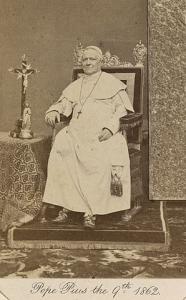
The Syllabus of Errors was a document written under the ægis of Pope Pius IX. He composed it as an antidote to modernism, a family of heresies that came to prominence in the nineteenth century. It condemned several propositions relating to pantheism, indifferentism, communism, liberalism, and other currents of thought. The Syllabus tends to be a favorite document with traditionalists, not least because of its opposition to socialism and religious liberty. One of the statements it condemns is the following:
The obligation by which Catholic teachers and authors are strictly bound is confined to those things only which are proposed to universal belief as dogmas of faith by the infallible judgment of the Church.
Pope Pius IX declared this an error. In other words, Catholic teachers and authors—such as priests—are not free to dismiss the Church’s judgment as “an opinion” merely because that judgment doesn’t rise to the level of dogma.
So Wait, What’s Infallibility?
This is a tricky question, or at least, I find it difficult. I accordingly invite correction from people who know what they’re talking about better than I do.
The Church is the mother and teacher of the faithful. Her teaching is divine revelation, which the Holy Ghost safeguards in her. The bishops, and assistants they appoint (like priests and catechism teachers), are the Church’s normal voice for this teaching; the name for this is the ordinary Magisterium. As you might expect, most Christian instruction takes place through this ordinary Magisterium.
However, in exceptional circumstances (like if a dispute arises), the Church may exercise her extraordinary Magisterium. This refers to the Catholic Church as a whole, speaking as one. That usually means an ecumenical council, but can also refer to the Pope making a solemn definition without convoking a council.
Here’s the thing, though: both the extraordinary and the ordinary Magisterium are infallible. What differs is the means they use, not how authoritative they are. And priests are specially bound to accept the Church’s teaching, whether extraordinarily or ordinarily promulgated.1
Wait—It’s All Infallible? That Doesn’t Sound Right.
No, not everything every clergyman says in infallible. Your CCD teacher, or whoever, did (I hope) correctly tell you that the Pope can’t infallibly declare sunshine to be rain or anything like that; her authority extends to faith and morals, not “all true things.”
Moreover, the Church sets forth ideas with varying degrees of gravity, and with different purposes in mind. An exhortation is not primarily meant to teach, but to urge action upon the faithful, even though that urging may naturally discuss certain truths. At the other extreme, a definition, like Ineffabilis Deus, explicitly and solely aims to define something as a divinely revealed truth that Catholics must, as a moral duty, believe. A definition might imply or justify certain actions—celebrating the Immaculate Conception in the liturgy, for instance—but only as a corollary.
The context this stuff normally comes in, whether the ordinary or extraordinary Magisterium is involved, are formal Church documents: encyclicals, pastoral letters, that kind of thing. The point of the doctrine of infallibility is, roughly, that “When the Church tries to teach, she succeeds,” and then to outline in more detail what “the Church trying to teach” looks like. There’s a difference between the Pope’s personal opinions (even on theological subjects) and formal dogmatic pronouncements, yes; if the Pope isn’t trying to teach, he isn’t teaching. But this difference is very much not “If it’s not a formal dogma, it’s just a human opinion.” It is a radical, disastrous distortion of Catholic belief to think or say that.
Degrees of Clarity
Ineffabilis Deus gives us a good example of something else, too: the distinction between dogma and truth. To take an example, the Blessed Virgin Mary went into heaven bodily. That was true for about nineteen centuries before the Pope defined it; it was part of the deposit of faith before the Pope defined it.
However, before the definition, it may not have been equally clear to everybody that it was part of the deposit of faith, as distinct from being a reasonable and pious but non-binding opinion. By contrast, the idea that unbaptized babies who died went to Limbo was only ever a reasonable opinion, never a dogma, though some under-informed people thought it was a dogma (and some under-informed people today think it used to be a dogma). The reason definitions are useful, even though they aren’t changing the deposit of faith, is that they help us recognize the deposit of faith. The sun shines just as brightly at dawn, or at midnight, as it does at noon; what’s different is our ability to see it. Likewise, what’s at stake here is our power to recognize the truth, not whether it’s true.
Explanation—Implication—Deduction
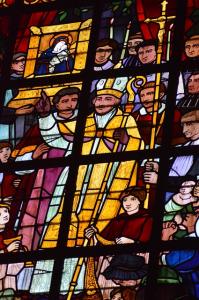
There are also different degrees of explicitness in revelation. Theologians identify three: formal and explicit revelation, formal but implicit revelation, and virtual2 revelation. The deity of the Father and of Jesus Christ is a formal and explicit revelation—both are referred to in Scripture as God without qualification. The deity of the Holy Ghost is a formal but implicit revelation: equally true, equally divinely revealed, but more obscure; context-sensitive interpretation brings this out. The full doctrine of the Trinity, which harmonizes these truths with the formal and explicit revelation that “the Lord is one,” is thus a virtual revelation, something we deduce as necessarily true from other known truths.
These three degrees of explicitness, again, imply different levels of responsibility. If a doctrine is implicit or virtual, it takes a level of time and attentive intelligence to grasp, and not every person has those things, or has had a chance to apply them. A person might be quite innocently ignorant of a virtual revelation, even though they fully assent to formal revelation.
So?
So here’s the skinny. Different aspects of the truth have different levels of importance and clarity. This, in turn, means that we have varying levels of responsibility for them. A truth that’s simple and obvious should be easy to assent to, while one that’s complex and mysterious may pose us genuine, non-blameworthy problems. Our responsibility to grasp and believe the truth also varies according to our own capacities and station in life. Theology teachers have a more serious obligation than line cooks or dog breeders to know, accept, and be able to explain Catholic dogma. It’s their job.
And it is very much a priest’s job too. By his ordination, Fr. Altman accepted the duty to understand, embrace, and pass on the Church’s teaching. Whatever the reason, he’s failing to do that on this point.
I want to stress one more time that I cannot and have no right to pass spiritual judgment on Fr. Altman. (This reminder is much more for me than my readers.) The point I’m making here is that he’s distorting the Church’s teaching about Church teaching. That is a terrible error for any priest to make, both for him and because it warps the faithful in his wake.
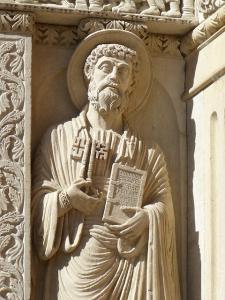
Don’t stick to your favorite priest, no matter who he is. Ubi Petrus, ibi Christus. Stick to Peter. Peter is the rock. It’s what he’s there for.
Footnotes
1Not in the sense that it is “more true” for them or anything like that. Rather, since they’re responsible to serve the faithful, they have a special duty to their neighbor as well as to God when it comes to the Magisterium.
2This word is a little unfortunate in modern English. We usually contrast “virtual” with “actual,” as in the phrase “virtual reality.” In its Latin origin, however, it means something more like “effective” or “in substance.” So, e.g., keeping someone locked in a room and refusing them water for a week is “virtually” killing them in the relevant sense, not because it makes them feel terrible, but because it in fact is killing them even though you haven’t shot them or something.
Previous Post

May 15, 2021
Five Quick Takes
Next Post
June 2, 2021 A Sneak Preview
Browse Our Archives
Select a Category abuse antifascism art bad Catholic celibacy chastity Church crucifixion culture war eros forgiveness gay gender homophobia ikons language liturgy peace poems politics Pope Francis prayer pro-life race recommendations reform repentance review sacraments saints satire scandal schism scripture sex suffering theology Uncategorized violence
Select a Month November 2026 October 2026 September 2026 August 2026 July 2026 June 2026 May 2026 April 2026 March 2026 February 2026 January 2026 December 2025 November 2025 October 2025 September 2025 August 2025 July 2025 June 2025 May 2025 April 2025 March 2025 February 2025 January 2025 December 2024 November 2024 October 2024 September 2024 August 2024 July 2024 June 2024 May 2024 April 2024 March 2024 February 2024 January 2024 December 2023 November 2023 October 2023 September 2023 August 2023 July 2023 June 2023 May 2023 April 2023 March 2023 February 2023 January 2023 December 2022 November 2022 October 2022 September 2022 August 2022 July 2022 June 2022 May 2022 April 2022 March 2022 February 2022 January 2022 December 2021 November 2021 October 2021 September 2021 August 2021 July 2021 June 2021 May 2021 April 2021 March 2021 February 2021 January 2021 December 2020 November 2020 October 2020 September 2020 August 2020 July 2020 June 2020 May 2020 April 2020 March 2020 February 2020 January 2020 December 2019 November 2019 October 2019 September 2019 August 2019 July 2019
Follow Us!
TAKE THE
Religious Wisdom Quiz
What did God create on the first day according to Genesis?
Select your answer to see how you score.
Light Animals Man Plants
Related posts from Mudblood Catholic
With My Body, I Thee Worship: Part One


TRENDING AT PATHEOS Catholic

Jesus explicitly mentions the book of Jonah twice, but he retells the...

Peggy Sue Got Married: Coppola’s Always Been Like...
I enjoyed Megalopolis (2024). It’s a mess, but I enjoyed it. The...

My dissertation The Place of Mysticism in the Late Middle Ages concerns...

God and the Contingency of This World
The great Catholic philosopher Aquinas and the great Lutheran philosopher Leibniz developed...

Pope Francis and The Devil – A Pagan...
According to his private diaries, Pope Francis saw visions of the devil...

Rock N' Roll-- Morphing into/for a New Generation...
Well, should we be grateful, or is rock n' roll just dead? ...
view all Catholic blogs
Ad-Free & Subscriber Log-In Subscription Support
- About Us
- 2026 Calendar
- Videos
- Podcasts
- Library of World Religions
- Faith In Media Tracker
- Advertise With Us
- Write for Us
- Privacy Policy
- Terms of Service
- Do Not Sell My Data
- Contact Us
- Radiant Digital
- Manage Newsletter Subscriptions
- Unsubscribe From Notifications
- Sitemap
Copyright 2008-2026, Patheos, part of the Radiant Digital network of media brands. All rights reserved.
Subscription Support Ad-Free & Subscriber Log-In
Follow Patheos