
BuddhistCatholicContemplativeEvangelicalGeneral ChristianHinduJewishLatter-day SaintMuslimNew VisionsProgressive Christian
Beliefs
- Buddhist
- Catholic
- Contemplative
- Evangelical
- General Christian
- Hindu
- Jewish
- Latter-day Saint
- More Voices
- Muslim
- New Visions
- Pagan
- Progressive Christian
Topics
- Religion News
- Food and Religion
- Sports and Religion
- Religious Art
- Religious Music and Entertainment
- Religious Events
- History and Religion
- Style and Religion
- Politics and Religion
- Women in Religion
- Recreation Outdoors and Religion
- Business Finance and Religion
- Careers Workplace and Religion
- Education and Religion
- Family Parenting and Religion
- Health Fitness and Religion
- Home and Religion
- Relationships and Religion
- Technology and Religion
- Travel and Religion
Columnists
- Buddhist Columnists
- Business Finance and Religion Columnists
- Careers Workplace and Religion Columnists
- Catholic Columnists
- Contemplative Columnists
- Education and Religion Columnists
- Evangelists Columnists
- Family Parenting and Religion Columnists
- General Christian Columnists
- Health Fitness and Religion Columnists
- Hindu Columnists
- History and Religion Columnists
- Home and Religion Columnists
- Jewish Columnists
- More Voices Columnists
- Latter Day Columnists
- Muslim Columnists
- New Visions Columnists
- Nonreligious Columnists
- Pagan Columnists
- Politics and Religion Columnists
- Progressive Columnists
- Recreation Outdoors and Religion Columnists
- Relationships and Religion Columnists
- Religion News Columnists
- Religious Art Columnists
- Religious Events Columnists
- Religious Music and Entertainment Columnists
- Sports and Religion Columnists
- Style and Religion Columnists
- Technology and Religion Columnists
- Travel and Religion Columnists
- Women in Religion Columnists
Resource Library
- 2026 Calendar
- Library of World Religions
- The 100 Most Holy Places on Earth
- Patheos Answers
- Podcasts
- Videos
- Faith Leaders Database
- Anglican Episcopalian
- Bahai
- Baptist
- Buddhism
- Christianity
- Confucianism
- Eastern Orthodoxy
- Hinduism
- Holiness and Pentecostal
- ISKCON
- Islam
- Judaism
- Lutheran
- Methodist
- The Church of Jesus Christ of Latter-day Saints
- New Age
- Paganism
- Presbytarian and Reformed
- Protestantism
- Religion Behind the Scenes
- Roman Catholic
- Scientology
- Shia Islam
- Sikhism
- Sufism
- Sunni Islam
- Taoism
- Zen
- See all religions
Research Tools
 Ad-Free & Subscriber Log-In Subscription Support
Ad-Free & Subscriber Log-In Subscription Support
Follow Patheos 

- Trending:
- Forgiveness
- |
- Marriage
- |
- Consciousness
- |
- Death Penalty
- |
- Election
- |
- Halloween

- Home
- Catholic
- Wolves In the Fold, Pt. 3: Howls and Hirelings
Wolves In the Fold, Pt. 3: Howls and Hirelings
Last updated on: April 29, 2021 at 10:49 pm by Gabriel Blanchard
Wolves In the Fold, Pt. 3: Howls and Hirelings 2021-04-29T22:49:04-04:00 Gabriel Blanchard
Patheos Explore the world's faith through different perspectives on religion and spirituality! Patheos has the views of the prevalent religions and spiritualities of the world.
Content Warning
This post and series deal with various types of abuse, including sexual abuse and abuse perpetrated by clergy. Please read with caution.
Go here for Part 1: What Is Spiritual Abuse? and Part 2: Some Things Abuse Is Not.
The Roots of Abuse

Who can be an abuser? We touched briefly last time on the stereotype of the predator—an obviously skeezy stranger trying to lure children with candy. Thanks to Hannibal Lecter, we’ve also developed a second stereotype: that of the intelligent, often cultured, and even charismatic sociopath who uses his immense charm to conceal his utter lack of conscience and sadistic intent.
Both of these figures have some basis in reality, but they’re both cartoons. Most abusers, spiritual or otherwise, are not Stranger Danger or Suave But Psycho. Usually, abusers seem normal, for the same reasons most of us usually seem normal: it’s the way to navigate most of life with a minimum of inconvenience.
People learn to abuse in different ways and at different stages in life, and they resort to abuse in different contexts. The unifying theme is the desire to exert control over the target of abuse. This control can be expressed in a lot of ways (which is one reason abuse takes so many forms), and the urge may find satisfaction with a specific “victim profile” or in a much more general fashion. Regardless of the specifics, that need to control is what drives abuse, and why predators use trust relationships rather than other avenues to exert power.
He Careth Not for the Sheep
Because of the trust that many people, even some non-religious people, habitually place in clergy, this makes professional ministry an attractive career for abusers, whether they fully acknowledge their urge to control others or not. Any social role with moral authority—parent, teacher, coach, cop, etc.—can offer something similar; spiritual abusers gravitate toward ministry (formal or not) for a few reasons. It may simply happen to be the environment they know best. They may, on some level, have a sincere interest in religious matters. They may be attracted to the implicit halo of devotion as an aid to deceit. Whatever their precise motive, they are again united by the fact that their urge to control others is more important to them than the welfare of the people they are supposedly serving.
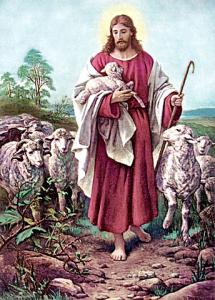
I am the good shepherd: the good shepherd giveth his life for the sheep. But he that is an hireling, and not the shepherd, whose own the sheep are not, seeth the wolf coming, and leaveth the sheep, and fleeth: and the wolf catcheth them, and scattereth the sheep. The hireling fleeth, because he is an hireling, and careth not for the sheep.
—John 10.11-13
The Strength of Sin Is the Law
Religious contexts also afford at least one and sometimes two tools to the would-be predator. First of all, clergy, teachers, and parents are official guides to belief and practice for the people under their care (whatever their age). Their approval or disapproval on these issues is thus very weighty. And, depending on the religion, beliefs and practices can have implications for—or flat-out cover—most or all of life.
The other tool, available in more specific religious contexts, is that of claiming special inspiration from the divine. This is common in cults,1 but not all cults display it, and not all groups that do are cults. In Christian contexts, this is often described as the “gift of prophecy.” In some ways it’s a better tool, because the abuser can claim not just expertise, but personal intimacy with the divine—and approval or disapproval on that basis cuts a lot deeper. It also introduces the idea that the “prophet” can see your secrets, inflating victims’ guilt and fear. But this can also make it more difficult to wield; if the “prophet” claims to know something that’s palpably false, the lie risks exposure. Some abusers use other tools to beat this threat down when it emerges; others silently avoid it, or even lose some of their power because of it.
The Profile
But all this is psychology. Again we ask: who can be an abuser?

Well … almost anyone. Abusers come in every creed, institution, gender, ethnicity, age, and so on. And the point here is not that you should be paranoid, it’s a point about what abuse is. What defines predators is motive (control), means (power), and opportunity (trust)—nothing else. There’s no way to pre-empt abuse by only hiring women as teachers, or by banning gay men from seminaries, or by legally suppressing churches, or anything like that. You have to deal with the actual, ugly thing. You have to learn what abusers want, how they go about getting it, and how to recognize the patterns that give it away. That’s the way to stop it.
Because abuse is a mode of human behavior, not a kind of person. That mode of behavior appeals to people because it gets them something they want. It’s a little bit like addiction, in that a person who has abused in the past has to be treated as a permanent risk; but that’s because we need to protect vulnerable people, not because predators are some kind of magical non-human race like elves. Abuse is learned: it is chosen, and can be chosen against.
Continued in Shame, Shame and Saint Disney.
Footnotes
1Cult is a difficult word to define, partly because many definitions are tactical—meant to make it available as a term to smear opponents, rather than to tell the audience something about the group being smeared. For the purposes of this series, when I say “cult,” I mean “a group centered on and controlled to an unhealthy extent by an individual leader, and displaying beliefs and practices (usually religious or paranormal in nature) that are strange and extreme relative to the culture the group exists in.” Cults are typically small, but they don’t have to be: the Church of Scientology, which (even by conservative estimates) has tens of thousands of members, meets this definition of a cult.
Previous Post

March 6, 2021
Wolves In the Fold, Pt. 2: Some Things Abuse Is Not
Next Post

March 16, 2021 A Fisking of Bishop Barron's "We're All Becoming Platonists Now"
Browse Our Archives
Select a Category abuse antifascism art bad Catholic celibacy chastity Church crucifixion culture war eros forgiveness gay gender homophobia ikons language liturgy peace poems politics Pope Francis prayer pro-life race recommendations reform repentance review sacraments saints satire scandal schism scripture sex suffering theology Uncategorized violence
Select a Month October 2026 September 2026 August 2026 July 2026 June 2026 May 2026 April 2026 March 2026 February 2026 January 2026 December 2025 November 2025 October 2025 September 2025 August 2025 July 2025 June 2025 May 2025 April 2025 March 2025 February 2025 January 2025 December 2024 November 2024 October 2024 September 2024 August 2024 July 2024 June 2024 May 2024 April 2024 March 2024 February 2024 January 2024 December 2023 November 2023 October 2023 September 2023 August 2023 July 2023 June 2023 May 2023 April 2023 March 2023 February 2023 January 2023 December 2022 November 2022 October 2022 September 2022 August 2022 July 2022 June 2022 May 2022 April 2022 March 2022 February 2022 January 2022 December 2021 November 2021 October 2021 September 2021 August 2021 July 2021 June 2021 May 2021 April 2021 March 2021 February 2021 January 2021 December 2020 November 2020 October 2020 September 2020 August 2020 July 2020 June 2020 May 2020 April 2020 March 2020 February 2020 January 2020 December 2019 November 2019 October 2019 September 2019 August 2019 July 2019
Follow Us!
TAKE THE
Religious Wisdom Quiz
How long was Israel in Egyptian bondage?
Select your answer to see how you score.
500 years 400 years 300 years 200 years
Related posts from Mudblood Catholic

With My Body, I Thee Worship: Part Two



TRENDING AT PATHEOS Catholic

In one sense walking into Westminster Abbey is like walking down the...

'Super Scam Me' Exposes AI Jon Bon Jovi...
Leslie Pickett believed she was in a relationship with Jon Bon Jovi....

The Brazilian Remake of Kendricks' 'Flywheel' Opens in...
“Flywheel,” the story that launched the Kendrick Brothers’ filmmaking career is getting...

The Dangers of Gradual Accommodation (Winking at Sin)
Recently, the “law of gradualness” resurfaced during the opening of a weeklong,...

The Iron Gates and the Lion of the...
Yesterday, I didn't finish my report about, well, yesterday. So I'll...

The Image: On the Horror of Capitalism and...
The Image Then went the Pharisees, and took counsel how they might...
view all Catholic blogs
Ad-Free & Subscriber Log-In Subscription Support
- About Us
- 2026 Calendar
- Videos
- Podcasts
- Library of World Religions
- Faith In Media Tracker
- Advertise With Us
- Write for Us
- Privacy Policy
- Terms of Service
- Do Not Sell My Data
- Contact Us
- Radiant Digital
- Manage Newsletter Subscriptions
- Unsubscribe From Notifications
- Sitemap
Copyright 2008-2026, Patheos. All rights reserved.
Subscription Support Ad-Free & Subscriber Log-In
Follow Patheos