
BuddhistCatholicContemplativeEvangelicalGeneral ChristianHinduJewishLatter-day SaintMuslimNew VisionsProgressive Christian
Beliefs
- Buddhist
- Catholic
- Contemplative
- Evangelical
- General Christian
- Hindu
- Jewish
- Latter-day Saint
- More Voices
- Muslim
- New Visions
- Pagan
- Progressive Christian
Topics
- Religion News
- Food and Religion
- Sports and Religion
- Religious Art
- Religious Music and Entertainment
- Religious Events
- History and Religion
- Style and Religion
- Politics and Religion
- Women in Religion
- Recreation Outdoors and Religion
- Business Finance and Religion
- Careers Workplace and Religion
- Education and Religion
- Family Parenting and Religion
- Health Fitness and Religion
- Home and Religion
- Relationships and Religion
- Technology and Religion
- Travel and Religion
Columnists
- Buddhist Columnists
- Business Finance and Religion Columnists
- Careers Workplace and Religion Columnists
- Catholic Columnists
- Contemplative Columnists
- Education and Religion Columnists
- Evangelists Columnists
- Family Parenting and Religion Columnists
- General Christian Columnists
- Health Fitness and Religion Columnists
- Hindu Columnists
- History and Religion Columnists
- Home and Religion Columnists
- Jewish Columnists
- More Voices Columnists
- Latter Day Columnists
- Muslim Columnists
- New Visions Columnists
- Nonreligious Columnists
- Pagan Columnists
- Politics and Religion Columnists
- Progressive Columnists
- Recreation Outdoors and Religion Columnists
- Relationships and Religion Columnists
- Religion News Columnists
- Religious Art Columnists
- Religious Events Columnists
- Religious Music and Entertainment Columnists
- Sports and Religion Columnists
- Style and Religion Columnists
- Technology and Religion Columnists
- Travel and Religion Columnists
- Women in Religion Columnists
Resource Library
- 2026 Calendar
- Library of World Religions
- The 100 Most Holy Places on Earth
- Patheos Answers
- Podcasts
- Videos
- Faith Leaders Database
- Anglican Episcopalian
- Bahai
- Baptist
- Buddhism
- Christianity
- Confucianism
- Eastern Orthodoxy
- Hinduism
- Holiness and Pentecostal
- ISKCON
- Islam
- Judaism
- Lutheran
- Methodist
- The Church of Jesus Christ of Latter-day Saints
- New Age
- Paganism
- Presbytarian and Reformed
- Protestantism
- Religion Behind the Scenes
- Roman Catholic
- Scientology
- Shia Islam
- Sikhism
- Sufism
- Sunni Islam
- Taoism
- Zen
- See all religions
Research Tools
 Ad-Free & Subscriber Log-In Subscription Support
Ad-Free & Subscriber Log-In Subscription Support
Follow Patheos 

- Trending:
- Forgiveness
- |
- Marriage
- |
- Consciousness
- |
- Death Penalty
- |
- Election
- |
- Halloween

- Home
- Catholic
- The McCarrick Report: Quo Vadis
The McCarrick Report: Quo Vadis
Last updated on: December 4, 2020 at 9:45 am by Gabriel Blanchard
The McCarrick Report: Quo Vadis 2020-12-04T09:45:49-04:00 Gabriel Blanchard
Patheos Explore the world's faith through different perspectives on religion and spirituality! Patheos has the views of the prevalent religions and spiritualities of the world.
THIS SERIES DEALS WITH SEXUAL ABUSE. PLEASE READ WITH CAUTION.
AN INTRODUCTION AND FURTHER DISCLAIMERS MAY BE FOUND HERE.
Almighty and everlasting God, who didst deign to share our mortal flesh, and of thine inestimable love gave up thyself to suffer, and be spit upon, and to die: Grant us, we beseech thee, a mind to remember thy saving Passion and glorious Resurrection alway, that we may serve thee with joy in this mortal life, and be received at last into immortality, to behold thy face for ever; who livest and reignest with the Father and the Holy Ghost, world without end. Amen.
Previous posts: The Victims; The Monster and the Mirror; The Bishops’ Gambit; Pope John Paul II; Pope Benedict XVI; Pope Francis; The Venom of Viganò; Den of Thieves.
Lost Lambs
Well, we’ve got to go somewhere from here. Here sucks.
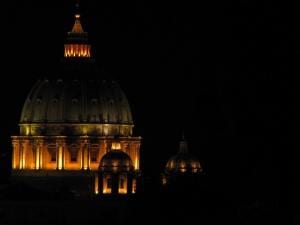
Several people I know have left the Church over this. I’m not sure whether any of my acquaintances have left the faith altogether over it, but that wouldn’t surprise me. People have killed themselves over this. If the hypothesis set forth in The Keepers is correct, priests have murdered people over this.
A lot of Catholics say if a person leaves because of sin in the Church, it shows that their faith was in the Church instead of in God. That is an extremely fucked up attitude. Of course people had faith in the Church. She told them to. The Catholic Church claims to be guided by the Holy Ghost, protected from doctrinal error. It’s devastating to find out that anyone told you bald-faced lies to protect the man who raped your child. How the hell do you reconcile that betrayal with those claims to divine authority? How dare we try to shame people for not being able to do it?
When a wolf chases a lamb away from the flock, you don’t blame the lamb. If you find it with a mangled leg, you don’t grab it by that leg. If it bleats in terror, you don’t tell it to shut up and be grateful you found it.
Can some people, even some victims, hold on to their faith? Yes. I did. But that is an incredibly personal issue, and the answer is different for every person. You don’t get to demand something that colossal from other people. That’s between them and God. He is their judge, not you, and is both more just and more compassionate than you’ll ever be.
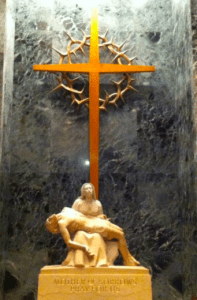
What About Reform?
For this, I have ideas. Now, like I said at the beginning, I am not a trained theologian or a canon lawyer. I’m a loudmouthed internet fag who likes church history. I am open to other ideas, and I expect to be absolutely schooled (once I’ve forgotten to expect it) by somebody who does have expertise.
But as far as I can tell, episcopal responsibility has been out to lunch since around 1970. Bishops chirp about how much better things are now, but we can’t know that for at least another twenty years. Victims often don’t report sexual abuse immediately; a gap of years or decades is common. Nor, clearly, can we trust the USCCB as a body or its individual members to tell the truth about how many clergy have been accused—or which ones—or of what—or whether there are any accusations at all. As just this one report shows, dozens of powerful clergy can know about something, and still do nothing about it for decades.
Hence, despite my ignorance, for all I know my ideas are as good as anybody’s. I honestly don’t think it’ll hurt if I make some suggestions. In all of what follows, the power to dispense from the rule would be reserved to the Pope (at any rate in the Latin Church—I’m completely, instead of just very, out of my depth with Eastern canon law).
1. Defrock Offenders
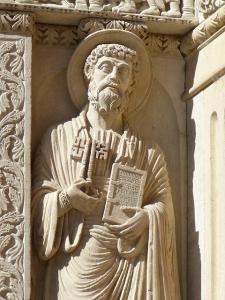
No matter what their rank is, defrock1 clergy found guilty of even one count of sexual abuse. Same goes for knowingly concealing a guilty cleric from the civil authorities.
Bishops sometimes do this already. As I mentioned earlier in this series, Pope Benedict XVI streamlined the process, which was pretty difficult for a long time. (There are reasons for this. Holy Orders shouldn’t be treated lightly. Moreover a malicious bishop could use it as a weapon against an embarrassing priest.) But, as I understand it, it’s still largely at the bishop’s discretion. What I’m talking about is making this a mandatory punishment for this specific offense.
Also, I specify abuse here. Violating clerical vows of chastity is serious, and should be appropriately disciplined; but there’s a world of difference between breaking a vow out of weakness, or even out of presumption, and preying upon someone vulnerable. If we defrocked every priest with weaknesses we just wouldn’t have priests.
2. Confront Statutes of Limitations Lobbying
This is a twofold issue, civil and ecclesiastical. Civil authorities determine their own statutes of limitations; I don’t even know if canon law has them. What I do know, not even from research but because it’s in the damn news, is that Catholic dioceses and clergy have lobbied to prevent the statute of limitations from being extended. This is a disgrace to the Church and an insult to the victims, and to the God in whose image the victims are made. As if myopic, self-centered whining about SNAP being out to get the Church weren’t enough!
I suggest that anyone in Holy Orders be expressly forbidden to make any kind of financial donation to any cause that tries to keep the statute of limitations from being extended. This would apply both in their official capacities and as private persons, and would include former clerics who have been defrocked.
3. Restore the Rite of Degradation
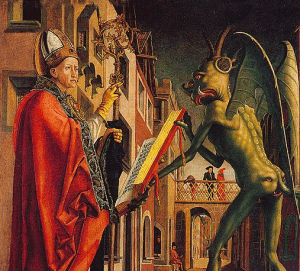
The Rite of Degradation was a public, liturgical act that ceremonially stripped a cleric of his authority. The form of the ritual is basically an ordination in reverse. The offender enters in the full regalia of whatever office he held; one by one, the celebrant removes each symbol—miter, crozier, book of the Gospels, gloves, stole, everything. Even his hands, which were anointed with holy oil to consecrate them for the sacraments, are (lightly) scraped with a knife. At the end, the offender has been ritually and canonically reduced to the status of a layman.2
I think this should be brought back, at the very least in cases of sexual abuse or concealing abuse. These are not just heinous offenses in themselves. They betray and scandalize the whole Church, to say nothing of the world outside. I think it should be made very clear that this is a public concern, and that the people this man has injured deserve to be publicly vindicated. It’s especially important, because the hierarchy have tried to bring state power to bear against victims of abuse (via statutes of limitations, NDAs, and so forth).
4. Impose Poverty on Bishops
Require vows of poverty from all bishops upon taking office. This is only partly to prevent more Michael J. Bransfields, though honestly he’s enough of a reason by himself in my opinion.
But the real idea behind this is simple. Shepherds should smell like sheep. Not sheep that have two cars and a nanny and a summer home in Maine. Not sheep that are bathed and perfumed and manicured (or ungulicured, I guess) and present a pleasant façade to the neighbors. Sheep. If you’re not willing to do that, you’re not willing to be a bishop. Not in terms of purpose. You’re just willing to adopt the trappings and the powers that behaving like a good bishop would deserve.3
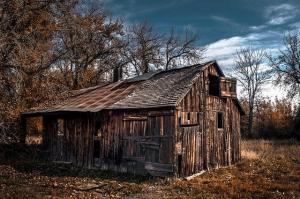
This is the kind of place God decided to stay,
when he first visited in person.
This doesn’t mean that bishops can never appear in the courts of the wealthy and the powerful, or vice versa. But when they do, the contrast should shock. If a Senator or a President wants to come talk to a prince of the Church, fine—let him come to a cheap duplex in a questionable neighborhood. Unless the politician thinks he’s too good for the people he ostensibly serves. The priest certainly shouldn’t.
5. Establish Lay Accountability
The last several decades have made me start thinking that maybe clergy should not wield supreme power. And there’s nothing unorthodox about that, or even anticlerical. Because here’s the thing: ordination gives you the power to celebrate the sacraments, and to teach. It does not make you better than the laity, or even smart. The only mere human ever to live entirely without sin possessed no degree of Holy Orders at all.
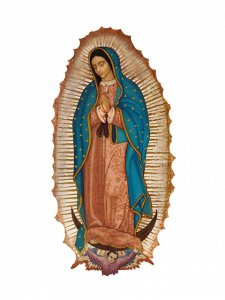
So far as I know, this suggestion has no precedent. But sweeping reforms aren’t completely strange; the current form of papal conclaves didn’t exist for a thousand years of Catholic history. Insisting that priests alone be allowed to do things you don’t need a priest for is clericalism. And I have to think it’s a terrible burden on priests, who have plenty to do just with what is specifically clerical.
So! Establish a lay review board in every diocese. All members must be laity,4 and fifty percent of the members must be women.5 This board will have:
- Full access to the secret archives of the diocese, and entitlement to receive reports of misconduct and send them to the Vatican without going through the bishop. No more “discretion” about an archbishop publicly groping a helpless seminarian.
- Authority over diocesan finances. No more sneakily moving donations around to “protect” them from SNAP suits.
- Veto power over candidates for Holy Orders. If they’ve noticed seminarians being weird with their little ones (or their of-age ones, for that matter), the bishop doesn’t just get to ignore them.
Obviously there would need to be some limits on these powers. The board members wouldn’t be better than the clergy, any more than the clergy would be better than the board members. But these seem like a great place to start.
6. Restore Mystagogy
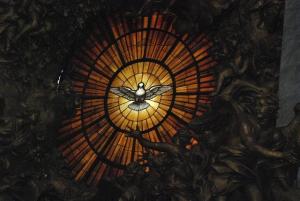
We all know about catechumens. Catechesis is basic teaching in the faith that prepares you for baptism, or (if you grew up Catholic) helps you understand your baptism. Well, once upon a time, for a year after your baptism, you were a neophyte.6 And for that year, you kept receiving instruction, from a kind of mentor called a mystagogue. In particular, they explained the meaning of the sacraments, and the liturgy in general, to the new initiates of the faith.
The common opinion of trads in this country is that catechesis has been a shambles, and I actually agree with them for once. But I don’t just want to bring mystagogy back as Catechize 2: Catechize Harder. I do think teaching the liturgy clearly is really important, and should have a season to itself. Don’t just jam it in with all the other stuff RCIA does in the lead-up to the Easter Vigil. But, in addition, I suggest that mystagogues give the neophytes a basic idea of canon law, and of where to go when authorities try to abuse their powers.
Turn Thine Eyes of Mercy Towards Us
There’s an ancient story about St. Peter’s time in Rome, preserved in a Latin version of a second century document. He came there during the reign of Nero; the fire of 64 struck, and Christianity was outlawed. St. Peter was quietly leaving the city, when Christ appeared to him, going toward it. The apostle asked him, “Where are you going, Lord?”—in Latin, Quo vadis, Domine? He answered, “I am going to Rome to be crucified again.” St. Peter then recognized that it was his time, as Christ had told him beforehand. So he turned around and went back into Rome. At his own request, he was crucified upside down, because he was not worthy to die the same way his Master had.
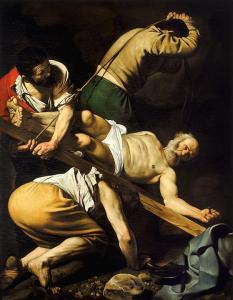
The next few decades are going to be rough on priests. Even good priests are going to have to bear the suspicion, hostility, and gossip that bad priests have earned for them. That’s genuinely sad. I hope I can support good priests somehow. But that’s how this works. Sign up to follow a rabbi who got castigated and crucified, and you’re going to have to deal with some unkindness. More than that, you have to earn our trust now. We’re not going to give it away free again, not to priests, not after this; you’ll have to accept that.
They’re probably going to stay rough on us laity, too. We’re still limping from the last few. That’s what the world is like.
‘Sovegna vos a temps de ma dolor’
Poi s’ascose nel foco che gl’affina
—Purgatorio XXVI.147-148
Footnotes
1Or laicize, if you insist on being correct over being clear.
2Neither this rite nor any other removes the priestly character from the soul of the offender; nothing can. Nor does it release him from his vow of celibacy or his duty to recite the breviary. Originally, the Rite of Degradation was also a legal act: clergy were largely immune to trial by the secular power. The rite concluded by handing the offender over to the civil authorities, with a plea for mercy in judgment. We don’t have the same immunities for clergy today (not on paper, anyway), but this doesn’t mean the rite wouldn’t be helpful in the ways I’ve described.
3I’m not saying that bishops deserve to be miserable, either; though the very fact that our minds link poverty with misery should tell us a lot. But, well, All things are lawful for me; but not all things edify.
4I’d lean against allowing even religious brothers and sisters to be members of these boards, though of course they are technically laity as well. The problem here is cultural, not sacramental.
5Not because the Church is, or should be, a democracy. But if (as documents like Mulieris Dignitatem state) there is a specifically feminine genius, and if women can be saints and doctors of the Church, then I think we’d be fools not to make a point of including them in something like this.
6Though similar in meaning, the English noob is a false cognate.
Previous Post

December 1, 2020
The McCarrick Report: Den of Thieves
Next Post
December 12, 2020 Would You Like Some Murder With Your Heresy?
Browse Our Archives
Select a Category abuse antifascism art bad Catholic celibacy chastity Church crucifixion culture war eros forgiveness gay gender homophobia ikons language liturgy peace poems politics Pope Francis prayer pro-life race recommendations reform repentance review sacraments saints satire scandal schism scripture sex suffering theology Uncategorized violence
Select a Month October 2026 September 2026 August 2026 July 2026 June 2026 May 2026 April 2026 March 2026 February 2026 January 2026 December 2025 November 2025 October 2025 September 2025 August 2025 July 2025 June 2025 May 2025 April 2025 March 2025 February 2025 January 2025 December 2024 November 2024 October 2024 September 2024 August 2024 July 2024 June 2024 May 2024 April 2024 March 2024 February 2024 January 2024 December 2023 November 2023 October 2023 September 2023 August 2023 July 2023 June 2023 May 2023 April 2023 March 2023 February 2023 January 2023 December 2022 November 2022 October 2022 September 2022 August 2022 July 2022 June 2022 May 2022 April 2022 March 2022 February 2022 January 2022 December 2021 November 2021 October 2021 September 2021 August 2021 July 2021 June 2021 May 2021 April 2021 March 2021 February 2021 January 2021 December 2020 November 2020 October 2020 September 2020 August 2020 July 2020 June 2020 May 2020 April 2020 March 2020 February 2020 January 2020 December 2019 November 2019 October 2019 September 2019 August 2019 July 2019
Follow Us!
TAKE THE
Religious Wisdom Quiz
What does the name "Jesus" mean?
Select your answer to see how you score.
Shepherd Prince of peace The Lord saves God is love
Related posts from Mudblood Catholic
With My Body, I Thee Worship: Part Two
With My Body, I Thee Worship: Part One

TRENDING AT PATHEOS Catholic

When Halloween Unmasks Married Hearts
Written by Dr. David K. Ewen from Eternal Truth Bible College Behind...

Aristotle. He’s been called the father of logic, the father of the...

Methodist Central Hall and Westminster Abbey
Situated on the same square is Methodist Central Hall and Westminster Abbey. ...

57th Dove Awards Honor Dolly Parton, Crown New...
On gospel music’s biggest night, the 57th annual GMA Dove Awards honored...

The First Eucharistic Controversy: Christ’s Real Presence
For Catholics, the Eucharist is the source and summit of the Christian...

What a Stop Sign Can Teach Us About...
How to Make a Decision When You Can't Hear God Main point:...
view all Catholic blogs
Ad-Free & Subscriber Log-In Subscription Support
- About Us
- 2026 Calendar
- Videos
- Podcasts
- Library of World Religions
- Faith In Media Tracker
- Advertise With Us
- Write for Us
- Privacy Policy
- Terms of Service
- Do Not Sell My Data
- Contact Us
- Radiant Digital
- Manage Newsletter Subscriptions
- Unsubscribe From Notifications
- Sitemap
Copyright 2008-2026, Patheos. All rights reserved.
Subscription Support Ad-Free & Subscriber Log-In
Follow Patheos