
BuddhistCatholicContemplativeEvangelicalGeneral ChristianHinduJewishLatter-day SaintMuslimNew VisionsProgressive Christian
Beliefs
- Buddhist
- Catholic
- Contemplative
- Evangelical
- General Christian
- Hindu
- Jewish
- Latter-day Saint
- More Voices
- Muslim
- New Visions
- Pagan
- Progressive Christian
Topics
- Religion News
- Food and Religion
- Sports and Religion
- Religious Art
- Religious Music and Entertainment
- Religious Events
- History and Religion
- Style and Religion
- Politics and Religion
- Women in Religion
- Recreation Outdoors and Religion
- Business Finance and Religion
- Careers Workplace and Religion
- Education and Religion
- Family Parenting and Religion
- Health Fitness and Religion
- Home and Religion
- Relationships and Religion
- Technology and Religion
- Travel and Religion
Columnists
- Buddhist Columnists
- Business Finance and Religion Columnists
- Careers Workplace and Religion Columnists
- Catholic Columnists
- Contemplative Columnists
- Education and Religion Columnists
- Evangelists Columnists
- Family Parenting and Religion Columnists
- General Christian Columnists
- Health Fitness and Religion Columnists
- Hindu Columnists
- History and Religion Columnists
- Home and Religion Columnists
- Jewish Columnists
- More Voices Columnists
- Latter Day Columnists
- Muslim Columnists
- New Visions Columnists
- Nonreligious Columnists
- Pagan Columnists
- Politics and Religion Columnists
- Progressive Columnists
- Recreation Outdoors and Religion Columnists
- Relationships and Religion Columnists
- Religion News Columnists
- Religious Art Columnists
- Religious Events Columnists
- Religious Music and Entertainment Columnists
- Sports and Religion Columnists
- Style and Religion Columnists
- Technology and Religion Columnists
- Travel and Religion Columnists
- Women in Religion Columnists
Resource Library
- 2026 Calendar
- Library of World Religions
- The 100 Most Holy Places on Earth
- Patheos Answers
- Podcasts
- Videos
- Faith Leaders Database
- Anglican Episcopalian
- Bahai
- Baptist
- Buddhism
- Christianity
- Confucianism
- Eastern Orthodoxy
- Hinduism
- Holiness and Pentecostal
- ISKCON
- Islam
- Judaism
- Lutheran
- Methodist
- The Church of Jesus Christ of Latter-day Saints
- New Age
- Paganism
- Presbytarian and Reformed
- Protestantism
- Religion Behind the Scenes
- Roman Catholic
- Scientology
- Shia Islam
- Sikhism
- Sufism
- Sunni Islam
- Taoism
- Zen
- See all religions
Research Tools
 Ad-Free & Subscriber Log-In Subscription Support
Ad-Free & Subscriber Log-In Subscription Support
Follow Patheos 

- Trending:
- Forgiveness
- |
- Marriage
- |
- Consciousness
- |
- Death Penalty
- |
- Election
- |
- Halloween

- Home
- Catholic
- CST 105B: What Else Is Wrong With Capitalism?
CST 105B: What Else Is Wrong With Capitalism?
Last updated on: June 22, 2020 at 6:54 pm by Gabriel Blanchard
CST 105B: What Else Is Wrong With Capitalism? 2020-06-22T18:54:08-04:00 Gabriel Blanchard
Patheos Explore the world's faith through different perspectives on religion and spirituality! Patheos has the views of the prevalent religions and spiritualities of the world.
For previous posts in this series, see CST 101, 102, 103, 104, and 105A.
Capitalism also ignores the effects of scale in its neat little picture of enlightened self-interest. Even if your enterprise start from the bottom—which is rare, but we’ll get to that later—once you’re big enough, your production costs go down, which allows you to undercut smaller businesses by selling the same product (or a better one, or a worse one) for less. Do this enough and competitors go out of business or get bought out, not because of anything wrong with their products but because they can’t keep up with your business model—a business model you can afford only because you already have more money than they do. That may not sound terrible, but its effect is to stymie the competition that capitalism claims it values as a way of keeping quality high. The natural tendency of capitalism over time, unless directly interfered with—which is the thing capitalists keep saying is an affront against common sense and God and the existence of puppies—is to amass money and power in the hands of a few, who are thus rendered, effectively, not responsible to anyone.

But the encyclicals of the last hundred and thirty years or so, the ones which have explicitly confronted capitalism (and other things, yes) in the context of Catholic teaching, identify two problems with capitalism, two problems that are inextricably bound together: the problem of promoting the common good, and the problem of exploitation [human beings have rights and dignity that rise above being treated as things, which capitalism always does to workers].
First, the common good. Human beings are sinful, as we know, but human beings are nonetheless made for communion with God and with each other. Selfishness is real, but selfishness is not the only human impulse, nor the final defining factor in human behavior. The responsibility of both the Church and secular society, in differing ways, is to promote the common good—the shared interests of every person in society—something which can only be attained through cooperation and good will. But capitalism takes as foundational that the state has no business promoting the common good (in direct contradiction to the Church’s teaching on the subject) and that selfishness is the only reliable motivator. That’s a much darker and more toxic idea of humanity than the doctrine of original sin; but when you tell people that they are selfish and nothing else, they will tend to behave that way. And it is in the nature of selfishness to be destructive, not beneficial, because we were created to cooperate; and the corruption caused by selfishness builds on itself, it gets worse over time, it saps virtue and energy and intelligence—put another way, enlightened self-interest does not remain enlightened for long. You can’t build a healthy, happy society by telling it to not just allow for but actively rely on evil. It’s metaphysical nonsense.
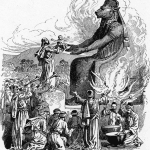
And secondly, exploitation. I don’t know whether private property as defined by Marxists (i.e., an individual owning the means of production for a mass of others, who are therefore beholden to him for their work and well-being) is intrinsically unjust; the Church has not said as much, and I don’t yet understand the theory of value well enough to have an opinion of my own. But it is definitely true in practice that the owners of capital—i.e., the means of production, so things like factories and corporations—have been exploiting workers since the Industrial Revolution, and continue to do so. Jeff Bezos isn’t worth $150 billion because he did $150 billion worth of work; no billionaire is, because it is not actually possible to earn a billion dollars. He’s worth $150 billion because his employees generated all that value and, rather than apportioning their compensation either equally to everyone or in accord with their actual needs, he paid them a wage and kept all the rest of the profits that their work generated for himself.
For the defenders of capitalism working on a thousand-word reply on how the Catholic Church only rejects this because she has been infiltrated by commies, (1) no, and (2) it’s not clear from the Church’s encyclicals that she insists profits must be divided equally or equitably: what she insists on is that every person is entitled to a just wage (something Scripture is also eloquent about), and she includes things like “the ability to support yourself and your family” under the heading of justice. Capitalist claims notwithstanding, consent alone has never been the sole determinant of whether an economic transaction is just. A person can consent to be harmed, e.g. through slavery or prostitution; and a person with enough power can so arrange society that the poor are not merely disadvantaged, but have no real choice save to accept the exploitation of the capitalist in order to survive. These are precisely the “sins that cry out to heaven for vengeance” in the Catholic moral tradition, and to defend them is to defend sin and error, whether it calls itself economic liberty or not.
Previous Post

June 17, 2020
CST 105A: What's Wrong With Capitalism?
Next Post
June 29, 2020 By the Waters of Babylon
Browse Our Archives
Select a Category abuse antifascism art bad Catholic celibacy chastity Church crucifixion culture war eros forgiveness gay gender homophobia ikons language liturgy peace poems politics Pope Francis prayer pro-life race recommendations reform repentance review sacraments saints satire scandal schism scripture sex suffering theology Uncategorized violence
Select a Month October 2026 September 2026 August 2026 July 2026 June 2026 May 2026 April 2026 March 2026 February 2026 January 2026 December 2025 November 2025 October 2025 September 2025 August 2025 July 2025 June 2025 May 2025 April 2025 March 2025 February 2025 January 2025 December 2024 November 2024 October 2024 September 2024 August 2024 July 2024 June 2024 May 2024 April 2024 March 2024 February 2024 January 2024 December 2023 November 2023 October 2023 September 2023 August 2023 July 2023 June 2023 May 2023 April 2023 March 2023 February 2023 January 2023 December 2022 November 2022 October 2022 September 2022 August 2022 July 2022 June 2022 May 2022 April 2022 March 2022 February 2022 January 2022 December 2021 November 2021 October 2021 September 2021 August 2021 July 2021 June 2021 May 2021 April 2021 March 2021 February 2021 January 2021 December 2020 November 2020 October 2020 September 2020 August 2020 July 2020 June 2020 May 2020 April 2020 March 2020 February 2020 January 2020 December 2019 November 2019 October 2019 September 2019 August 2019 July 2019
Follow Us!
TAKE THE
Religious Wisdom Quiz
Where was Jesus placed after He died?
Select your answer to see how you score.
A cave of fire A tomb A temple A pyramid
Related posts from Mudblood Catholic

With My Body, I Thee Worship: Part One



TRENDING AT PATHEOS Catholic

The Iron Gates and the Lion of the...
Yesterday, I didn't finish my report about, well, yesterday. So I'll...

Dolly Parton’s Last Song Wins Dove Award with...
Bluegrass band The Grascals, speaking on the red carpet at the 57th...

The Image: On the Horror of Capitalism and...
The Image Then went the Pharisees, and took counsel how they might...

We are approaching the date of our new American national holiday: October...

Letters on Living the Faith by C.S. Lewis
Most of us met C.S. Lewis as a public intellectual. Mere Christianity....

When Halloween Unmasks Married Hearts
Written by Dr. David K. Ewen from Eternal Truth Bible College Behind...
view all Catholic blogs
Ad-Free & Subscriber Log-In Subscription Support
- About Us
- 2026 Calendar
- Videos
- Podcasts
- Library of World Religions
- Faith In Media Tracker
- Advertise With Us
- Write for Us
- Privacy Policy
- Terms of Service
- Do Not Sell My Data
- Contact Us
- Radiant Digital
- Manage Newsletter Subscriptions
- Unsubscribe From Notifications
- Sitemap
Copyright 2008-2026, Patheos. All rights reserved.
Subscription Support Ad-Free & Subscriber Log-In
Follow Patheos