
BuddhistCatholicContemplativeEvangelicalGeneral ChristianHinduJewishLatter-day SaintMuslimNew VisionsProgressive Christian
Beliefs
- Buddhist
- Catholic
- Contemplative
- Evangelical
- General Christian
- Hindu
- Jewish
- Latter-day Saint
- More Voices
- Muslim
- New Visions
- Pagan
- Progressive Christian
Topics
- Religion News
- Food and Religion
- Sports and Religion
- Religious Art
- Religious Music and Entertainment
- Religious Events
- History and Religion
- Style and Religion
- Politics and Religion
- Women in Religion
- Recreation Outdoors and Religion
- Business Finance and Religion
- Careers Workplace and Religion
- Education and Religion
- Family Parenting and Religion
- Health Fitness and Religion
- Home and Religion
- Relationships and Religion
- Technology and Religion
- Travel and Religion
Columnists
- Buddhist Columnists
- Business Finance and Religion Columnists
- Careers Workplace and Religion Columnists
- Catholic Columnists
- Contemplative Columnists
- Education and Religion Columnists
- Evangelists Columnists
- Family Parenting and Religion Columnists
- General Christian Columnists
- Health Fitness and Religion Columnists
- Hindu Columnists
- History and Religion Columnists
- Home and Religion Columnists
- Jewish Columnists
- More Voices Columnists
- Latter Day Columnists
- Muslim Columnists
- New Visions Columnists
- Nonreligious Columnists
- Pagan Columnists
- Politics and Religion Columnists
- Progressive Columnists
- Recreation Outdoors and Religion Columnists
- Relationships and Religion Columnists
- Religion News Columnists
- Religious Art Columnists
- Religious Events Columnists
- Religious Music and Entertainment Columnists
- Sports and Religion Columnists
- Style and Religion Columnists
- Technology and Religion Columnists
- Travel and Religion Columnists
- Women in Religion Columnists
Resource Library
- 2026 Calendar
- Library of World Religions
- The 100 Most Holy Places on Earth
- Patheos Answers
- Podcasts
- Videos
- Faith Leaders Database
- Anglican Episcopalian
- Bahai
- Baptist
- Buddhism
- Christianity
- Confucianism
- Eastern Orthodoxy
- Hinduism
- Holiness and Pentecostal
- ISKCON
- Islam
- Judaism
- Lutheran
- Methodist
- The Church of Jesus Christ of Latter-day Saints
- New Age
- Paganism
- Presbytarian and Reformed
- Protestantism
- Religion Behind the Scenes
- Roman Catholic
- Scientology
- Shia Islam
- Sikhism
- Sufism
- Sunni Islam
- Taoism
- Zen
- See all religions
Research Tools
 Ad-Free & Subscriber Log-In Subscription Support
Ad-Free & Subscriber Log-In Subscription Support
Follow Patheos 

- Trending:
- Forgiveness
- |
- Marriage
- |
- Consciousness
- |
- Death Penalty
- |
- Election
- |
- Halloween

- Home
- Catholic
- A Slip of the Tongue, Part Two
A Slip of the Tongue, Part Two
Last updated on: November 11, 2019 at 4:46 pm by Gabriel Blanchard
A Slip of the Tongue, Part Two 2019-11-11T16:46:32-04:00 Gabriel Blanchard
Patheos Explore the world's faith through different perspectives on religion and spirituality! Patheos has the views of the prevalent religions and spiritualities of the world.
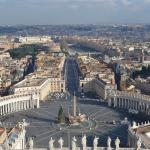
In my last, I discussed various sins of the tongue, and, in particular, the fact that giving others the benefit of the doubt is not an above-and-beyond act of generosity on Catholic grounds, but a requirement. I also said that the problem with distrusting the Holy See is not that there is no justification for doing so, but that it is in point of fact a bad idea, and promised to explore that a little.
The Catholic doctrine of the papacy is that, when the Pope invokes his full authority as the shepherd of the universal Church—which he may do either on his own, or gathered with the Church’s bishops in council—the Holy Ghost protects him from teaching theological error. This belief is grounded partly on Scriptures such as Matthew 16, Luke 10, and John 14–16; partly also on the principle that there could be no permanent unity in the Church without a concrete principle of unity, and that such a principle must have a supernatural guarantee of preserving the truth, if it is to maintain real unity with Christ and not merely the continuity of an earthly institution. There are a lot of different ways of approaching the doctrine of papal infallibility, and I couldn’t exhaust them here if I wished to: but “When the Pope invokes his full authority, he cannot err theologically” is a quick-and-dirty summary of the Catholic belief.
There are several things that this grace does not cover. It does not, for example, mean that the Holy Father cannot have mixed or even malicious motives, either in his theological pronouncements or anything else: the guarantee is that what he teaches will be correct, not that he will be pure of heart in teaching it. (Caiaphas was quite right about the facts when he said that it was expedient that one man should die for the people.) It does not guarantee that the Pope’s private opinions, even about theological matters, will always be right. It does not guarantee that a Pope will ever actually invoke his full authority; most circumstances don’t require that level of certainty. It does not protect the Pope from sinning, or from being misinformed, or from failing to make himself clear. The way I put is that, while the full exercise of his authority is invincibly protected by the Holy Ghost, nothing else is protected to that same absolute degree; and therefore, every other thing can go wrong, and, given enough time, almost certainly will.
Here’s the thing, though. No one except the Pope and the Church in union with him enjoys that same kind of definitive protection from God. Every other person, including every other Catholic—be he a conservative cardinal, a successful author, the CEO of a Catholic media network, or an ostentatiously unchaste Twitter influencer (Twitfluencer?)—is therefore at least one degree more fallible than the Pope, no matter how much wiser and holier and smarter they might be. That doesn’t mean wisdom or sanctity or intelligence aren’t well worth having, but it does mean that one ingredient in those things, if one accepts the Catholic religion, is a readiness to surrender one’s own judgment to any infallible definitions made by the Holy See, because, on the premises set forth by the Church, those definitions are divinely guaranteed to be correct. Exhaustive? No. Easy to grasp? No. Well-meaning? No. But correct.
Now, it’s worth adding that even when the Pope doesn’t invoke his full authority, his judgments shouldn’t be casually dismissed. When he directs that a change be made in the Catechism, for example, even if he’s not making an infallible definition, that’s obviously him acting as a pastor and teacher rather than simply expressing a private opinion: it could in theory be incorrect, but it’s far more reasonable to assume the opposite. Non-infallible judgments can be wrong, but when they come from the Vicar of Christ, it isn’t at all likely.
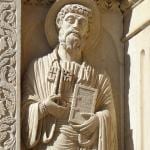
We are responsible for what we think and say. Yet the temptation to listen to hearsay, snap judgments, and even slanders of the Holy Father is something that the Church herself—her priests, her catechists, her liturgists, her religious, and above all her bishops—must bear some responsibility for. The drastic disciplinary changes of the 60s and 70s would have disoriented many people in any case; the horrific scandals of sexual and financial corruption that have been revealed over the last few decades, these would have provoked a massive failure of trust and a considerable amount of apostasy in any case, both among victims and among those who learned of the scandals. The combination of the two is deadly indeed; and while, say, instituting 24/7 Eucharistic Adoration for a week in all our parishes would certainly be a good thing to do, measures like these are only thoughts and prayers. They must be incarnated in authentic reform: as the body without the spirit is dead, so faith without works is dead, and take note of what corresponds to what in St James’ analogy there.
The hostility to Pope Francis evinced by men like Cardinal Burke or Raymond Arroyo or Taylor Marshall, because it paints itself as traditional, accordingly gives the false impression that it will restore stability to a chaotic and faithless Church. It’s not the truth. Merely going back to the outward forms of a time when we trusted the Church is not going to fix anything, and it’s the only thing these proto-schismatics really have to offer. The office of Peter—the office, not the æsthetics or the habits or the policies—is what is founded upon a Rock. An apparelled alb, however beautiful, is only fabric; and fabric burns as well as anything else, when it’s exposed to the fires of hell that Christ promised would not prevail against that Rock.
Images via Pixabay
Previous Post

November 6, 2019
A Slip of the Tongue, Part One
Next Post
November 15, 2019 A Program for Reform, Part One
Browse Our Archives
Select a Category abuse antifascism art bad Catholic celibacy chastity Church crucifixion culture war eros forgiveness gay gender homophobia ikons language liturgy peace poems politics Pope Francis prayer pro-life race recommendations reform repentance review sacraments saints satire scandal schism scripture sex suffering theology Uncategorized violence
Select a Month October 2026 September 2026 August 2026 July 2026 June 2026 May 2026 April 2026 March 2026 February 2026 January 2026 December 2025 November 2025 October 2025 September 2025 August 2025 July 2025 June 2025 May 2025 April 2025 March 2025 February 2025 January 2025 December 2024 November 2024 October 2024 September 2024 August 2024 July 2024 June 2024 May 2024 April 2024 March 2024 February 2024 January 2024 December 2023 November 2023 October 2023 September 2023 August 2023 July 2023 June 2023 May 2023 April 2023 March 2023 February 2023 January 2023 December 2022 November 2022 October 2022 September 2022 August 2022 July 2022 June 2022 May 2022 April 2022 March 2022 February 2022 January 2022 December 2021 November 2021 October 2021 September 2021 August 2021 July 2021 June 2021 May 2021 April 2021 March 2021 February 2021 January 2021 December 2020 November 2020 October 2020 September 2020 August 2020 July 2020 June 2020 May 2020 April 2020 March 2020 February 2020 January 2020 December 2019 November 2019 October 2019 September 2019 August 2019 July 2019
Follow Us!
TAKE THE
Religious Wisdom Quiz
What does "Bethel" mean in Hebrew?
Select your answer to see how you score.
House of God God's Dwelling City of Light Holy Ground
Related posts from Mudblood Catholic
With My Body, I Thee Worship: Part One


TRENDING AT PATHEOS Catholic

The Problem with False Prophets
Miller’s Station UMC| 10/18/26| Anchor Verse: Jeremiah 23: 1, 9-23 I...

Emotion in Early Christianity by Andrew Crislip
Andrew Crislip’s Emotion in Early Christianity examines an often overlooked dimension of...

16 Spiritual Touchstones for a More Grounded Life
After decades of spiritual study, here are 16 principles I try...

Catholic Evangelization: Sharing Your Faith Every Day
Welcome back to the Graceful Awakening mini-series called, “From Faith to Mission.” ...

The Pillar of the Boatmen: the Ancient Monument...
The Pillar of the Boatmen is a Romano-Gaulish sculpture that dates from...

In one sense walking into Westminster Abbey is like walking down the...
view all Catholic blogs
Ad-Free & Subscriber Log-In Subscription Support
- About Us
- 2026 Calendar
- Videos
- Podcasts
- Library of World Religions
- Faith In Media Tracker
- Advertise With Us
- Write for Us
- Privacy Policy
- Terms of Service
- Do Not Sell My Data
- Contact Us
- Radiant Digital
- Manage Newsletter Subscriptions
- Unsubscribe From Notifications
- Sitemap
Copyright 2008-2026, Patheos. All rights reserved.
Subscription Support Ad-Free & Subscriber Log-In
Follow Patheos