
BuddhistCatholicContemplativeEvangelicalGeneral ChristianHinduJewishLatter-day SaintMuslimNew VisionsProgressive Christian
Beliefs
- Buddhist
- Catholic
- Contemplative
- Evangelical
- General Christian
- Hindu
- Jewish
- Latter-day Saint
- More Voices
- Muslim
- New Visions
- Pagan
- Progressive Christian
Topics
- Religion News
- Food and Religion
- Sports and Religion
- Religious Art
- Religious Music and Entertainment
- Religious Events
- History and Religion
- Style and Religion
- Politics and Religion
- Women in Religion
- Recreation Outdoors and Religion
- Business Finance and Religion
- Careers Workplace and Religion
- Education and Religion
- Family Parenting and Religion
- Health Fitness and Religion
- Home and Religion
- Relationships and Religion
- Technology and Religion
- Travel and Religion
Columnists
- Buddhist Columnists
- Business Finance and Religion Columnists
- Careers Workplace and Religion Columnists
- Catholic Columnists
- Contemplative Columnists
- Education and Religion Columnists
- Evangelists Columnists
- Family Parenting and Religion Columnists
- General Christian Columnists
- Health Fitness and Religion Columnists
- Hindu Columnists
- History and Religion Columnists
- Home and Religion Columnists
- Jewish Columnists
- More Voices Columnists
- Latter Day Columnists
- Muslim Columnists
- New Visions Columnists
- Nonreligious Columnists
- Pagan Columnists
- Politics and Religion Columnists
- Progressive Columnists
- Recreation Outdoors and Religion Columnists
- Relationships and Religion Columnists
- Religion News Columnists
- Religious Art Columnists
- Religious Events Columnists
- Religious Music and Entertainment Columnists
- Sports and Religion Columnists
- Style and Religion Columnists
- Technology and Religion Columnists
- Travel and Religion Columnists
- Women in Religion Columnists
Resource Library
- 2026 Calendar
- Library of World Religions
- The 100 Most Holy Places on Earth
- Patheos Answers
- Podcasts
- Videos
- Faith Leaders Database
- Anglican Episcopalian
- Bahai
- Baptist
- Buddhism
- Christianity
- Confucianism
- Eastern Orthodoxy
- Hinduism
- Holiness and Pentecostal
- ISKCON
- Islam
- Judaism
- Lutheran
- Methodist
- The Church of Jesus Christ of Latter-day Saints
- New Age
- Paganism
- Presbytarian and Reformed
- Protestantism
- Religion Behind the Scenes
- Roman Catholic
- Scientology
- Shia Islam
- Sikhism
- Sufism
- Sunni Islam
- Taoism
- Zen
- See all religions
Research Tools
 Ad-Free & Subscriber Log-In Subscription Support
Ad-Free & Subscriber Log-In Subscription Support
Follow Patheos 

- Trending:
- Forgiveness
- |
- Marriage
- |
- Consciousness
- |
- Death Penalty
- |
- Election
- |
- Halloween

- Home
- Catholic
- A Program for Reform, Part One
A Program for Reform, Part One
Last updated on: November 15, 2019 at 11:46 pm by Gabriel Blanchard
A Program for Reform, Part One 2019-11-15T23:46:33-04:00 Gabriel Blanchard
Patheos Explore the world's faith through different perspectives on religion and spirituality! Patheos has the views of the prevalent religions and spiritualities of the world.
Wanna mess around and massively reform the Catholic Church? haha jk … unless?
The sex abuse scandals, and the financial corruption that has come to light a little more recently, have wounded the Church’s image considerably. And while we can argue endlessly over whether the Church, insofar as she is the Body of Christ, deserves the bad repute her priests and bishops have earned for her, we can perhaps agree that her priests and bishops deserve it.
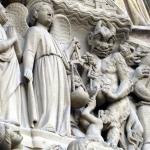
But vindictiveness, however deserved, isn’t going to help past victims or the Church’s future. And the brute fact is, there isn’t a lot that the laity can do without the clergy’s coöperation. What we can do is: (i) pray; (ii) advocate for reform to the clergy; (iii) take indirect measures to put pressure on the clergy which might move them to act.
(i) rarely feels like we’re actually doing something effective, not least because so many people lazily invoke prayer as a substitute for action. And (i) is nevertheless the most important thing. But, to be blunt, I’m not great at believing, still less at explaining why, (i) genuinely is the most important thing, and I don’t propose to try either the believing or the explaining here. Nor do I mean to explore (iii), at least not for the moment—I don’t understand it well enough. Things like donating to groups that lobby for an end to statutes of limitations would be an example of indirect measures; but it’s a complicated and, to me, confusing subject, not least because the intersection of the Church’s legitimate claims to independence from the state and the state’s legitimate claims to prosecute criminals who happen to be employed by the Church is inevitably going to be a tangled affair in any society that observes a separation between Church and state.
But (ii) is something we can articulate as laymen whether the hierarchy listens or not, and may also be a standard we can use to measure the sincerity of the hierarchy’s repentance. Not because we are their judges before God—we’re not—but because we are going to have to decide whether, when, and how far to trust any individual priest or bishop, and after these scandals we’re going to need a hell of a lot more than a Roman collar to serve as a metric.
As I see it, the hierarchy’s general betrayal of the laity is threefold: sexual (primarily the abuse crisis; to a far lesser extent, infidelity to clerical or religious vows of chastity), financial (corruption, theft, and other misuses of Church income—all of which is derived either from donations or from things like tuition fees at Catholic schools), and authoritative (most obviously, the bishops covering up all these things; most destructively, the corruption of spiritual authority by abusers and their enablers). All three areas urgently need to be reformed.
Coïncidentally, the three realms of sex, money, and power correspond neatly to the three vows taken by religious of chastity, poverty, and obedience. Then again, perhaps it isn’t much of a coïncidence. Religious life began with the hermits of the Egyptian desert, half-isolated from a Church that they believed had become worldly and corrupt. Some people have suggested that the fervor of the religious life is the best index of the true vitality of the Church in any place and time; maybe they’re right. Regardless, I’d like to explore some possibilities for advocating reform in the Church: sexual reform, financial reform, and authoritative reform.
Images via Pixabay
Previous Post

November 11, 2019
A Slip of the Tongue, Part Two
Next Post
November 20, 2019 A Program for Reform, Part Two
Browse Our Archives
Select a Category abuse antifascism art bad Catholic celibacy chastity Church crucifixion culture war eros forgiveness gay gender homophobia ikons language liturgy peace poems politics Pope Francis prayer pro-life race recommendations reform repentance review sacraments saints satire scandal schism scripture sex suffering theology Uncategorized violence
Select a Month October 2026 September 2026 August 2026 July 2026 June 2026 May 2026 April 2026 March 2026 February 2026 January 2026 December 2025 November 2025 October 2025 September 2025 August 2025 July 2025 June 2025 May 2025 April 2025 March 2025 February 2025 January 2025 December 2024 November 2024 October 2024 September 2024 August 2024 July 2024 June 2024 May 2024 April 2024 March 2024 February 2024 January 2024 December 2023 November 2023 October 2023 September 2023 August 2023 July 2023 June 2023 May 2023 April 2023 March 2023 February 2023 January 2023 December 2022 November 2022 October 2022 September 2022 August 2022 July 2022 June 2022 May 2022 April 2022 March 2022 February 2022 January 2022 December 2021 November 2021 October 2021 September 2021 August 2021 July 2021 June 2021 May 2021 April 2021 March 2021 February 2021 January 2021 December 2020 November 2020 October 2020 September 2020 August 2020 July 2020 June 2020 May 2020 April 2020 March 2020 February 2020 January 2020 December 2019 November 2019 October 2019 September 2019 August 2019 July 2019
Follow Us!
TAKE THE
Religious Wisdom Quiz
Why did God command the Israelites to eat unleavened bread?
Select your answer to see how you score.
It was a symbol of humility It was the only bread they knew how to make Yeast was considered unclean They had to leave Egypt quickly
Related posts from Mudblood Catholic
With My Body, I Thee Worship: Part One



Vile Bodies, Part One: Give or Take
TRENDING AT PATHEOS Catholic

Letters on Living the Faith by C.S. Lewis
Most of us met C.S. Lewis as a public intellectual. Mere Christianity....

When Halloween Unmasks Married Hearts
Written by Dr. David K. Ewen from Eternal Truth Bible College Behind...

Aristotle. He’s been called the father of logic, the father of the...

Methodist Central Hall and Westminster Abbey
Situated on the same square is Methodist Central Hall and Westminster Abbey. ...

57th Dove Awards Honor Dolly Parton, Crown New...
On gospel music’s biggest night, the 57th annual GMA Dove Awards honored...

The First Eucharistic Controversy: Christ’s Real Presence
For Catholics, the Eucharist is the source and summit of the Christian...
view all Catholic blogs
Ad-Free & Subscriber Log-In Subscription Support
- About Us
- 2026 Calendar
- Videos
- Podcasts
- Library of World Religions
- Faith In Media Tracker
- Advertise With Us
- Write for Us
- Privacy Policy
- Terms of Service
- Do Not Sell My Data
- Contact Us
- Radiant Digital
- Manage Newsletter Subscriptions
- Unsubscribe From Notifications
- Sitemap
Copyright 2008-2026, Patheos. All rights reserved.
Subscription Support Ad-Free & Subscriber Log-In
Follow Patheos