
BuddhistCatholicContemplativeEvangelicalGeneral ChristianHinduJewishLatter-day SaintMuslimNew VisionsProgressive Christian
Beliefs
- Buddhist
- Catholic
- Contemplative
- Evangelical
- General Christian
- Hindu
- Jewish
- Latter-day Saint
- More Voices
- Muslim
- New Visions
- Pagan
- Progressive Christian
Topics
- Religion News
- Food and Religion
- Sports and Religion
- Religious Art
- Religious Music and Entertainment
- Religious Events
- History and Religion
- Style and Religion
- Politics and Religion
- Women in Religion
- Recreation Outdoors and Religion
- Business Finance and Religion
- Careers Workplace and Religion
- Education and Religion
- Family Parenting and Religion
- Health Fitness and Religion
- Home and Religion
- Relationships and Religion
- Technology and Religion
- Travel and Religion
Columnists
- Buddhist Columnists
- Business Finance and Religion Columnists
- Careers Workplace and Religion Columnists
- Catholic Columnists
- Contemplative Columnists
- Education and Religion Columnists
- Evangelists Columnists
- Family Parenting and Religion Columnists
- General Christian Columnists
- Health Fitness and Religion Columnists
- Hindu Columnists
- History and Religion Columnists
- Home and Religion Columnists
- Jewish Columnists
- More Voices Columnists
- Latter Day Columnists
- Muslim Columnists
- New Visions Columnists
- Nonreligious Columnists
- Pagan Columnists
- Politics and Religion Columnists
- Progressive Columnists
- Recreation Outdoors and Religion Columnists
- Relationships and Religion Columnists
- Religion News Columnists
- Religious Art Columnists
- Religious Events Columnists
- Religious Music and Entertainment Columnists
- Sports and Religion Columnists
- Style and Religion Columnists
- Technology and Religion Columnists
- Travel and Religion Columnists
- Women in Religion Columnists
Resource Library
- 2026 Calendar
- Library of World Religions
- The 100 Most Holy Places on Earth
- Patheos Answers
- Podcasts
- Videos
- Faith Leaders Database
- Anglican Episcopalian
- Bahai
- Baptist
- Buddhism
- Christianity
- Confucianism
- Eastern Orthodoxy
- Hinduism
- Holiness and Pentecostal
- ISKCON
- Islam
- Judaism
- Lutheran
- Methodist
- The Church of Jesus Christ of Latter-day Saints
- New Age
- Paganism
- Presbytarian and Reformed
- Protestantism
- Religion Behind the Scenes
- Roman Catholic
- Scientology
- Shia Islam
- Sikhism
- Sufism
- Sunni Islam
- Taoism
- Zen
- See all religions
Research Tools
 Ad-Free & Subscriber Log-In Subscription Support
Ad-Free & Subscriber Log-In Subscription Support
Follow Patheos 

- Trending:
- Forgiveness
- |
- Marriage
- |
- Consciousness
- |
- Death Penalty
- |
- Election
- |
- Halloween

- Home
- Catholic
- Forgiveness and Its Discontents, Part Three
Forgiveness and Its Discontents, Part Three
Last updated on: October 12, 2019 at 2:41 pm by Gabriel Blanchard
Forgiveness and Its Discontents, Part Three 2019-10-12T14:41:33-04:00 Gabriel Blanchard
Patheos Explore the world's faith through different perspectives on religion and spirituality! Patheos has the views of the prevalent religions and spiritualities of the world.

At an individual level, I’d be willing to bet most (1) white people in this country aren’t contemptuous of other races or ethnicities, at the very least not on a conscious level. But personal prejudice is not the only form racism takes. Systemic patterns that disadvantage people of color and profit whites are also a thing, and also deserve to be dealt with; they are also unjust and damaging (and are thus a threat to peace). And white people need to educate ourselves and be honest about the ways we profit from these patterns. (2) In other language, we don’t just need individual repentance for personal acts and attitudes that are either overtly bigoted or complacent: we need national repentance for national sin.
I don’t propose to prove that there is such a thing as national sin. A lot of conservatives protest the idea that there can be such a thing, on the grounds that nations are just aggregates of individual people, and it’s only the individuals that have real existence. But if this were true, well, there goes any notion of Just War Theory—how could a nation have the right to defend itself, if nations aren’t real things? And you can forget “Judeo-Christian values,” too, since they’re rooted in a book (the Torah) that quite explicitly treats national sin and national repentance as realities. So I’m going to treat that as a fact and move on to its implications.
(3) With respect to people of color, America is in a state of impenitent, largely unconfessed, and indeed largely unrecognized sin. Racism runs deep in us. It’s easy to talk about “the Frontier”; harder to realize that the overwhelming majority of this country was taken by force from First Nations, and some of those peoples were uprooted from their homelands and exiled; even today, the sovereign territory of First Nations is repeatedly violated, in defiance not only of justice but of explicit guarantees made by the United States government. As for black Americans, most were brought here by the slave trade, and even when slavery was legally ended through the Civil War, segregation kept them a legal as well as a social underclass. It’s still less than seventy years since segregation was repealed; did we really think it didn’t still have societal consequences? Visiting the iniquity of the fathers upon the children, the source of Judeo-Christian values says, unto the third and fourth generation.

So what penance do we need to do to make this right? I am no expert. Reparations—particularly to First Nations, blacks, and Hawaiian islanders—would be appropriate, though I don’t know how they’d work and they really wouldn’t be enough. Getting the average white guy to appreciate the fact and colossal scale of the problem is needed, and is probably the place to start.
Circling back to Brandt Jean’s decision to forgive his brother’s murderer, we now have some context to appreciate the outrage surrounding it. The point was not, for most people, that Jean should not have forgiven, nor that any forgiveness that took place should have been secret. It’s that having white people, who participate in a system that has historically benefited them at the expense of people of color, cheering for a person of color being gracious to a white person, is—let’s be gentle and call it tacky. When you factor in the additional facts that the white person in question was a cop (who have a history of being the specific enforcers of white power over POCs) and received a fairly lenient sentence for murder (and in a former slave state that just loves jailing people), the tackiness becomes extreme.
There is also a much darker and more urgent side to the furor. Joshua Brown, a key witness in the Jean case, was shot and killed less than two weeks after giving testimony. (4) Nor is Brown’s death an isolated incident: six young men connected with the 2014 protests in Ferguson have been killed, at least two in confirmed homicides (both were shot and found later in torched cars). One activist, Rev. Darryl Gray, discovered a strange box in his car that, when investigated by the bomb squad, turned out to contain a six foot long python. The need for white Americans to repent isn’t only a question of online faux pas or half-hearted anti-racism, it’s a matter of violence. (5) Without repentance, making the gestures of forgiveness enables evil instead of defeating it.
There is a lot that I’m leaving out here, especially about the way class and race interact in America, and the implications that has for recognizing and repenting of national sins. But this post is pretty hefty as is, so I will leave it here.
(1) Most, i.e. at least 51%. Hopefully higher!
(2) Note: educate ourselves, not go around demanding free education from people of color; and be honest about, not be noisily ashamed of.
(3) I’ve here used the terminology that I understand to be most widely preferred by people of color; I hope I haven’t been mistaken, and I apologize if I tread on any toes.
(4) A police search of Brown’s apartment found bags of weed that were totally already there when we got here, you guys. So the facts that he had no known enemies and did have a steady and secure income, and that he was afraid to testify because he was scared he’d get shot, are definitely not relevant or suspicious.
(5) Do not even think the words black-on-black crime, please and thank you. In addition to being a distraction from anything useful you could be doing, like asking yourself whether maybe you do profit from an unjust system and whether you might be able to help fix it, it also tends to have racist implications: we don’t call it white-on-white crime when a white guy robs a convenience store; nor, perhaps more tellingly, do we call it white-on-black crime when a white person kills a black person. The reason I specify that white Americans need to repent is that, generally speaking, we’re the ones profiting from an unjust system.
Images via Pixabay
Previous Post

October 9, 2019
Forgiveness and Its Discontents, Part Two
Next Post
October 15, 2019 Five Quick Takes
Browse Our Archives
Select a Category abuse antifascism art bad Catholic celibacy chastity Church crucifixion culture war eros forgiveness gay gender homophobia ikons language liturgy peace poems politics Pope Francis prayer pro-life race recommendations reform repentance review sacraments saints satire scandal schism scripture sex suffering theology Uncategorized violence
Select a Month October 2026 September 2026 August 2026 July 2026 June 2026 May 2026 April 2026 March 2026 February 2026 January 2026 December 2025 November 2025 October 2025 September 2025 August 2025 July 2025 June 2025 May 2025 April 2025 March 2025 February 2025 January 2025 December 2024 November 2024 October 2024 September 2024 August 2024 July 2024 June 2024 May 2024 April 2024 March 2024 February 2024 January 2024 December 2023 November 2023 October 2023 September 2023 August 2023 July 2023 June 2023 May 2023 April 2023 March 2023 February 2023 January 2023 December 2022 November 2022 October 2022 September 2022 August 2022 July 2022 June 2022 May 2022 April 2022 March 2022 February 2022 January 2022 December 2021 November 2021 October 2021 September 2021 August 2021 July 2021 June 2021 May 2021 April 2021 March 2021 February 2021 January 2021 December 2020 November 2020 October 2020 September 2020 August 2020 July 2020 June 2020 May 2020 April 2020 March 2020 February 2020 January 2020 December 2019 November 2019 October 2019 September 2019 August 2019 July 2019
Follow Us!
TAKE THE
Religious Wisdom Quiz
What food did Elijah eat in the wilderness?
Select your answer to see how you score.
Bread and meat Figs and wine Manna Fish and honey
Related posts from Mudblood Catholic
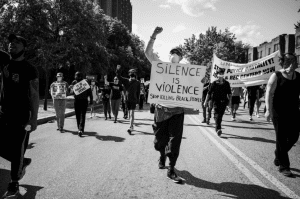

Vile Bodies, Part Two: The Dream of Burning...
Thoughts on National Repentance, Part III: A Sample...
TRENDING AT PATHEOS Catholic

We are approaching the date of our new American national holiday: October...

Letters on Living the Faith by C.S. Lewis
Most of us met C.S. Lewis as a public intellectual. Mere Christianity....

When Halloween Unmasks Married Hearts
Written by Dr. David K. Ewen from Eternal Truth Bible College Behind...

Aristotle. He’s been called the father of logic, the father of the...

Methodist Central Hall and Westminster Abbey
Situated on the same square is Methodist Central Hall and Westminster Abbey. ...

57th Dove Awards Honor Dolly Parton, Crown New...
On gospel music’s biggest night, the 57th annual GMA Dove Awards honored...
view all Catholic blogs
Ad-Free & Subscriber Log-In Subscription Support
- About Us
- 2026 Calendar
- Videos
- Podcasts
- Library of World Religions
- Faith In Media Tracker
- Advertise With Us
- Write for Us
- Privacy Policy
- Terms of Service
- Do Not Sell My Data
- Contact Us
- Radiant Digital
- Manage Newsletter Subscriptions
- Unsubscribe From Notifications
- Sitemap
Copyright 2008-2026, Patheos. All rights reserved.
Subscription Support Ad-Free & Subscriber Log-In
Follow Patheos