
BuddhistCatholicContemplativeEvangelicalGeneral ChristianHinduJewishLatter-day SaintMuslimNew VisionsProgressive Christian
Beliefs
- Buddhist
- Catholic
- Contemplative
- Evangelical
- General Christian
- Hindu
- Jewish
- Latter-day Saint
- More Voices
- Muslim
- New Visions
- Pagan
- Progressive Christian
Topics
- Religion News
- Food and Religion
- Sports and Religion
- Religious Art
- Religious Music and Entertainment
- Religious Events
- History and Religion
- Style and Religion
- Politics and Religion
- Women in Religion
- Recreation Outdoors and Religion
- Business Finance and Religion
- Careers Workplace and Religion
- Education and Religion
- Family Parenting and Religion
- Health Fitness and Religion
- Home and Religion
- Relationships and Religion
- Technology and Religion
- Travel and Religion
Columnists
- Buddhist Columnists
- Business Finance and Religion Columnists
- Careers Workplace and Religion Columnists
- Catholic Columnists
- Contemplative Columnists
- Education and Religion Columnists
- Evangelists Columnists
- Family Parenting and Religion Columnists
- General Christian Columnists
- Health Fitness and Religion Columnists
- Hindu Columnists
- History and Religion Columnists
- Home and Religion Columnists
- Jewish Columnists
- More Voices Columnists
- Latter Day Columnists
- Muslim Columnists
- New Visions Columnists
- Nonreligious Columnists
- Pagan Columnists
- Politics and Religion Columnists
- Progressive Columnists
- Recreation Outdoors and Religion Columnists
- Relationships and Religion Columnists
- Religion News Columnists
- Religious Art Columnists
- Religious Events Columnists
- Religious Music and Entertainment Columnists
- Sports and Religion Columnists
- Style and Religion Columnists
- Technology and Religion Columnists
- Travel and Religion Columnists
- Women in Religion Columnists
Resource Library
- 2026 Calendar
- Library of World Religions
- The 100 Most Holy Places on Earth
- Patheos Answers
- Podcasts
- Videos
- Faith Leaders Database
- Anglican Episcopalian
- Bahai
- Baptist
- Buddhism
- Christianity
- Confucianism
- Eastern Orthodoxy
- Hinduism
- Holiness and Pentecostal
- ISKCON
- Islam
- Judaism
- Lutheran
- Methodist
- The Church of Jesus Christ of Latter-day Saints
- New Age
- Paganism
- Presbytarian and Reformed
- Protestantism
- Religion Behind the Scenes
- Roman Catholic
- Scientology
- Shia Islam
- Sikhism
- Sufism
- Sunni Islam
- Taoism
- Zen
- See all religions
Research Tools
 Ad-Free & Subscriber Log-In Subscription Support
Ad-Free & Subscriber Log-In Subscription Support
Follow Patheos 

- Trending:
- Forgiveness
- |
- Marriage
- |
- Consciousness
- |
- Death Penalty
- |
- Election
- |
- Halloween
 Mostly Muslim
-
Faith & Spirituality
-
Personal/Life
-
Society & Culture
- Home
- Muslim
- Being with Cancer and the One Who Watches Over Us
Being with Cancer and the One Who Watches Over Us
Last updated on: June 13, 2019 at 9:00 am by Guest Contributor
Being with Cancer and the One Who Watches Over Us 2019-06-12T21:25:18-05:00 Guest Contributor
Patheos Explore the world's faith through different perspectives on religion and spirituality! Patheos has the views of the prevalent religions and spiritualities of the world.
Written by Iljas Baker
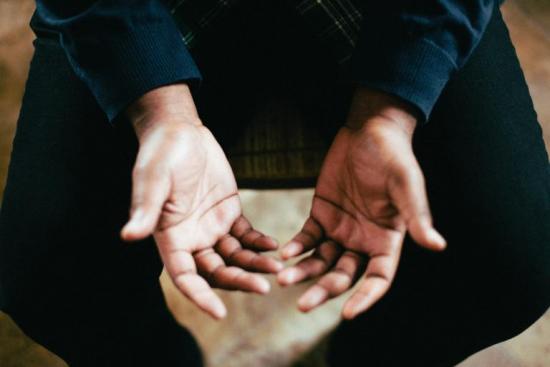
Photo by Jeremy Yap on Unsplash
If you must call it a battle, let it be the doctors’ battle; for you, there are the virtues to attend to.
Just as we are each unique, so are our illnesses and our responses to them. My symptoms were abdominal pain, flushing, sudden weight loss, and fatigue. A CAT scan a few weeks before Ramadhan in 2014 revealed a large tumour on my small intestine and a large number of smaller tumours on my liver.
After various tests, my oncologist diagnosed neuroendocrine tumours (NETs), which are extremely rare, especially in Thailand where I live. She said a tumour on the intestine had metastasized to a number of locations on the liver. They couldn’t all be treated at the same time, but if left untreated they would be life-threatening.
My initial response to the diagnosis, apart from the shock, was to see this as a test from God (“Do men think that they will be left alone on saying, ‘We believe’, and that they will not be put to the test?” (Qur’an 29:2)) and thereafter a medical issue requiring expert advice and the application of whatever medical technologies were available and affordable. The hospital I was attending was a small hospital specializing in cancer founded by one of the Thai princesses, but it had little or no experience in treating NETs.
Initially, my oncologist decided that the tumours on the liver should be treated using trans-arterial chemo-embolization (TACE), which involves targeting the tumours with chemotherapy and stopping the flow of blood to them. Days before the treatment was to go ahead I received a phone call from the hospital informing me that they had decided to change the therapeutic strategy and remove the large tumour on the intestine first.
My initial response to the diagnosis, apart from the shock, was to see this as a test from God (“Do men think that they will be left alone on saying, ‘We believe’, and that they will not be put to the test?” (Qur’an 29:2))
I discovered later that this is standard procedure in Europe and the United States. The Thai hospital staff appeared to be learning fast about something that was unfamiliar to them. I was given a date for the surgery and an appointment to see the surgeon – who was not a resident of the hospital I was attending – to talk about the operation and sign the usual disclaimers.
Since the initial diagnosis, I had read up on neuroendocrine tumours (NETs) and discovered this was the type of cancer Steve Jobs had, although his first manifested in the pancreas before metastasizing to the liver. But more importantly, I discovered that surgery on persons with NETs can lead to a “carcinoid crisis” during the operation and can be fatal.
An octreotide (a synthetic hormone) drip during surgery is considered mandatory by doctors who have experience of NETs. But most doctors, apparently, know little or nothing about them because of their rarity. When I mentioned an octreotide drip to the surgeon on the occasion that we met, he bluntly and unequivocally stated that it wasn’t necessary. I was concerned but didn’t have enough knowledge to persuade him of his error. But I wasn’t going to leave it at that: “Tie your camel first, then put your trust in Allah,” said the Prophet Muhammad (peace be upon him).
Later, I searched on the Internet and found a couple of papers in medical journals written by oncologists who had experience with NETs and who explained (in medical language) that preparing the patient with octreotide was absolutely essential before and during surgery. I passed these papers on to my case oncologist, asking her to make sure the surgeon was aware of these expert opinions and prayed to Allah subhana wa ta’ala (God, the most Glorified and High).
A few days before the surgery was to take place, someone from the hospital phoned me to ask me to come and see my case doctor, who subsequently informed me that the surgery was to be postponed for 15 days so that I could inject myself daily with octreotide in preparation for the surgery. She also said that I would have an octreotide drip for the duration of the surgery. I thanked Allah for this.
As the day of the operation drew close, I started feeling very anxious because of my lack of confidence in the doctors and an overactive imagination. I prayed often to Allah to relieve me of my anxiety. I tried to surrender all these feelings to Allah subhana wa ta’ala, but my anxiety persisted.
One evening, when praying, suddenly the advice of my Indonesian spiritual guide, Bapak Muhammad Subuh Sumihadiwijojo, the founder of Subud, came into my mind with great clarity: Allah would respond to my need if I could really let go of the anxiety and surrender completely to Him. Somehow I was able to let go and suddenly my anxiety vanished. Even on the morning of the surgery, I could detect no feeling of anxiety. In fact, I felt happy. Alhamdulillah!
The surgery was successful but the after-effects were really heavy, especially the abdominal pain, frequent diarrhea, and profound fatigue. It took about three months to recover. At times, I really longed to get back to normal and felt a bit depressed by my situation. When I felt like this, I tried to surrender such feelings to Allah subhana wa ta’ala and prayed to Him to increase me in patience.
A strange and delightful thing happened. At night when I was sleeping, someone would come to me in my dreams and tell me jokes and I would laugh a lot—the jokes seemed really good, but I could never remember them. One night, a really funny scene played out in my dream and I woke up laughing out loud. I felt much more positive after these experiences.
At times, I really longed to get back to normal and felt a bit depressed by my situation. When I felt like this, I tried to surrender such feelings to Allah subhana wa ta’ala and prayed to Him to increase me in patience.
After recovering from the surgery and getting back to more or less normal health, I resumed teaching at the university, exercising, and eating well, and I put on weight.
I subsequently underwent four sessions of trans-arterial chemo-embolization therapy, each 4 to 6 months apart. According to my doctor, the results were good, although at this point a number of quite small tumours remained. Recovery time from each treatment episode was about two weeks.
Apart from the medication prior, during, and immediately after the treatment, I was prescribed no regular medication whatsoever, and I took no alternative medicines or herbs. Although I had to stop the Ramadhan fast of 2014 in order to prepare for the surgery, I felt well enough to do it in 2015, 2016, 2017, 2018 and 2019.
I have six-monthly MRI sessions to check my condition, and at first I really hated these sessions. I felt alienated from them, just as I felt alienated from the treatment and the whole hospital experience. My previous experience of hospitals was very limited and in fact, I had no experience as an in-patient since an overnight stay in childhood. Out-patient visits have always been brief and uncomplicated. So this routine with the cancer hospital was really hard to take, made worse I think by a preference for natural treatments and by being critical of allopathic medicine.
I really do feel there is One who watches over us and the most important thing I have to do is to behave towards Allah subhana wa ta’ala with the proper adab: Not doubting that He has power over all things, not being unhappy with His tests, and not trying to predict His will for me.
On one occasion I was lying in the MRI tunnel feeling really alienated when again, some words from my spiritual guide came clearly into my mind: “There is no place without the presence of God.” I realized at that moment that Allah was watching over me while I was in the MRI machine, just as He was looking after me on the treatment table, and that feeling alienated from these things was tantamount to being alienated from God. My feelings of alienation suddenly vanished, and I became relaxed. Those feelings of alienation, thankfully, have never reappeared.
I underwent a fifth session of TACE about six months ago. The recovery period was longer and heavier this time, but I am now back to my normal routine and at the moment, I am taking no medication of any kind.
According to current medical science, there is no cure for NETs cancer once it has metastasized, and so treatment aims to prolong life and reduce the symptoms of the disease. Be that as it may, I really do feel there is One who watches over us and the most important thing I have to do is to behave towards Allah subhana wa ta’ala with the proper adab (respect and etiquette): Not doubting that He has power over all things, not being unhappy with His tests, and not trying to predict His will for me. Ameen.
Follow Mostly Muslim on Facebook HERE.
Want your voice to be heard? JOIN OUR TEAM or send your guest submission to [email protected]! Visit the “Contribute to MM” page for more details.

Next Post

July 26, 2019 Meditations On the Beautiful Signs of Allah
Browse Our Archives
Select a Category Afterlife Culture Dealing with Others English Faith & Spirituality Inspiration Letters to the Ummah Personal / Life Poetry Ramadan Reality Check Reflections Relationships Religion Society & Culture Uncategorized Urdu Women
Select a Month September 2020 May 2020 April 2020 March 2020 January 2020 December 2019 October 2019 September 2019 August 2019 July 2019 June 2019 May 2019 April 2019 March 2019 February 2019 January 2019 December 2018 November 2018 October 2018 September 2018 August 2018 July 2018 June 2018 May 2018 April 2018 March 2018 February 2018 January 2018 December 2017 November 2017 October 2017 September 2017 August 2017 July 2017 June 2017 May 2017 April 2017 March 2017 February 2017 January 2017 December 2016 November 2016 October 2016 September 2016 August 2016 July 2016 June 2016 March 2016 November 2015 October 2015 June 2015 May 2015 February 2015 July 2014 June 2014 May 2014 April 2014 March 2014
Follow Us!
TAKE THE
Religious Wisdom Quiz
What does "Apostle" mean in Greek?
Select your answer to see how you score.
One who is sent Preacher Elder King
Related posts from Mostly Muslim
My Journey to Self-Expression and Interfaith Love as...

Solitude and the Virus | An Unexpected Silver...

Finding Meaning and Gratitude When Dealing with Loss

Reflections on Life on My Way to Bangladesh
TRENDING AT PATHEOS Muslim

25 Years Later: How Much Has Changed for...
As we approach the 25th anniversary of September 11th, I’ve found myself...

Podcast: Third Spaces & The Rise of Yemeni...
In the latest episode of The Artistic Foodies Podcast, hosts Abbas...

HalalFest Picks: Best 60 Halal Spots for Super...
Back in 2016, I came up with a list of 29...

Unity Is America’s Strength — Division Is Its...
by Hidayatullah Ahsan When Valentina Gomez, a Republican candidate for Congress in...

Zohran Mamdani and New York’s Fight Against Islamophobia
This past June, against all odds, Zohran Mamdani won the Democratic primary...

What the Fourth of July Means to a...
As we mark another Fourth of July, millions of Americans will celebrate...
view all Muslim blogs
Ad-Free & Subscriber Log-In Subscription Support
- About Us
- 2026 Calendar
- Videos
- Podcasts
- Library of World Religions
- Faith In Media Tracker
- Advertise With Us
- Write for Us
- Privacy Policy
- Terms of Service
- Do Not Sell My Data
- Contact Us
- Radiant Digital
- Manage Newsletter Subscriptions
- Unsubscribe From Notifications
- Sitemap
Copyright 2008-2026, Patheos. All rights reserved.
Subscription Support Ad-Free & Subscriber Log-In
Follow Patheos