
BuddhistCatholicContemplativeEvangelicalGeneral ChristianHinduJewishLatter-day SaintMuslimNew VisionsProgressive Christian
Beliefs
- Buddhist
- Catholic
- Contemplative
- Evangelical
- General Christian
- Hindu
- Jewish
- Latter-day Saint
- More Voices
- Muslim
- New Visions
- Pagan
- Progressive Christian
Topics
- Religion News
- Food and Religion
- Sports and Religion
- Religious Art
- Religious Music and Entertainment
- Religious Events
- History and Religion
- Style and Religion
- Politics and Religion
- Women in Religion
- Recreation Outdoors and Religion
- Business Finance and Religion
- Careers Workplace and Religion
- Education and Religion
- Family Parenting and Religion
- Health Fitness and Religion
- Home and Religion
- Relationships and Religion
- Technology and Religion
- Travel and Religion
Columnists
- Buddhist Columnists
- Business Finance and Religion Columnists
- Careers Workplace and Religion Columnists
- Catholic Columnists
- Contemplative Columnists
- Education and Religion Columnists
- Evangelists Columnists
- Family Parenting and Religion Columnists
- General Christian Columnists
- Health Fitness and Religion Columnists
- Hindu Columnists
- History and Religion Columnists
- Home and Religion Columnists
- Jewish Columnists
- More Voices Columnists
- Latter Day Columnists
- Muslim Columnists
- New Visions Columnists
- Nonreligious Columnists
- Pagan Columnists
- Politics and Religion Columnists
- Progressive Columnists
- Recreation Outdoors and Religion Columnists
- Relationships and Religion Columnists
- Religion News Columnists
- Religious Art Columnists
- Religious Events Columnists
- Religious Music and Entertainment Columnists
- Sports and Religion Columnists
- Style and Religion Columnists
- Technology and Religion Columnists
- Travel and Religion Columnists
- Women in Religion Columnists
Resource Library
- 2026 Calendar
- Library of World Religions
- The 100 Most Holy Places on Earth
- Patheos Answers
- Podcasts
- Videos
- Faith Leaders Database
- Anglican Episcopalian
- Bahai
- Baptist
- Buddhism
- Christianity
- Confucianism
- Eastern Orthodoxy
- Hinduism
- Holiness and Pentecostal
- ISKCON
- Islam
- Judaism
- Lutheran
- Methodist
- The Church of Jesus Christ of Latter-day Saints
- New Age
- Paganism
- Presbytarian and Reformed
- Protestantism
- Religion Behind the Scenes
- Roman Catholic
- Scientology
- Shia Islam
- Sikhism
- Sufism
- Sunni Islam
- Taoism
- Zen
- See all religions
Research Tools
 Ad-Free & Subscriber Log-In Subscription Support
Ad-Free & Subscriber Log-In Subscription Support
Follow Patheos 

- Trending:
- Forgiveness
- |
- Marriage
- |
- Consciousness
- |
- Death Penalty
- |
- Election
- |
- Halloween
 Mostly Muslim
-
Faith & Spirituality
-
Personal/Life
-
Society & Culture
- Home
- Muslim
- A Painful Secret: Ramadan, Mental Illness, and Not Being Able to Fast
A Painful Secret: Ramadan, Mental Illness, and Not Being Able to Fast
Last updated on: March 6, 2019 at 11:26 am by Stephenie Bushra Khan
A Painful Secret: Ramadan, Mental Illness, and Not Being Able to Fast 2019-03-06T11:26:45-06:00 Stephenie Bushra Khan
Patheos Explore the world's faith through different perspectives on religion and spirituality! Patheos has the views of the prevalent religions and spiritualities of the world.

Photo by Tim Chow on Unsplash
Every year, even months ahead, my Muslim friends watch in anticipation of the crescent moon, which I call the Prophet’s moon. They look forward to Ramadan as a time of reflection and as a time to get closer to Allah. I even have friends with major illness such as diabetes and others, as well as pregnancy, who risk their health or lives in fasting so they will not miss out on this blessed month. Even still fasting if they become ill; this is great dedication.
My Reality
I cannot fast because of medical reasons. I ask my doctor every year if I can fast. There was a time, when I was younger, that I fasted every day during Ramadan. Now I feel that I am deeply missing out on something—on a way to get closer to Allah.
I find it hard to explain to people why I cannot fast, because I do not have a physical disorder, but a mood disorder. If I fast, I become extremely ill. As I said before, there are many who fast who have a severe physical disorder, even though it is a big risk to their lives. As for myself, I take a lot of medication for my mood disorder, but I find it difficult to explain it to others. I simply cannot fast. For me, it is shameful. I feel left out, but not by choice. You cannot see a mental illness like a physical illness. You look completely normal to everyone else.
My husband fasts for the full 30 days. I get up with him to prepare breakfast for him (suhur), and for fajr prayer. I try to make sure that he eats and drinks properly. He has a heart condition. In the evening I help him break the fast with dates, and with black chickpea curry (chola), and beef barley split pea soup (haleem), and fruits. I also cook another meal of regular food which he can eat after that, and make mango lassi for him. My duty in Ramadan is to make sure that he is well fed and does not get sick.
The Essence of Ramadan
But still, the whole idea about Ramadan is not just avoiding eating or drinking—it is what comes out of your mouth in words, and how you plan to conduct your life. It is how you purify your life. It is how you plan to live your life after Ramadan.
Even though I do not fast, I go to iftar (the evening meal) at the mosque and at other people’s homes. They insist that I break the fast with them. I make sure that I am the last one to eat and let them eat their fill.
Spiritually, I feel left out. However, there are always things that I can do. The most important thing I can do is to be mindful of how I conduct myself, whether it’s Ramadan or not. It is to be a kind and compassionate person, and make sure that my words and actions do not hurt anyone. I should try to be as merciful and compassionate as God is.
There are also the five daily prayers to keep up. I can read the Quran each day, and to try to comprehend it, and read the biography of the Prophet, peace be upon him. I can reach out to others who are sick or have less.
I am alone most of the time during Ramadan. It is a time of reflection on what is going on in the world, to those who are less fortunate and those who are suffering from poverty and from wars. It is a time to visit those who are sick, and to pray for them. It is a time to help out and possibly do voluntary work.
A person who is not fasting can also do meditation and dhikr, and think about all the things that they have done in the past year. We can also try to ask forgiveness for our sins, and to make up for them by doing good, and thinking about what we can do better after Ramadan. I try to reflect on the impact I have on other people’s lives, or on other living things, as if I were going to die this very day. What would my legacy be on this earth? You can think about it as if it were a life review.
We should walk and sit outside, and admire God’s beauty, and reflect on this. Through these signs, there is proof that there is a God. Think of all the different signs of nature which are in the Quran. Just look around… We should simply sit and meditate on these things, and just observe what is going on inside of and around us— it is truly a miracle.
Mostly for me, with my illness, the physical struggle is to not become dehydrated. I can cut down on food and unnecessary snacks, although I have to keep a regular routine of eating, drinking, and sleeping. But for me, there is also the emotional strain of fasting. I have a great deal of yearning inside of me, and guilt. I do not hide the fact that I am not fasting, although it is hard to explain to others when it is not a physical illness.
Ramadan is a time of togetherness. We meet our community members every day for Tarawi prayers and at the mosque for iftar on the weekends. We all see each other together, which we do not always do, and we pray together as brothers and sisters in jamaat (congregation). We listen to the Quran every day in beautiful recitation. There is a beautiful bond and brotherhood during Ramadan.
If someone does not fast during Ramadan, they can make provisions for the sustenance of someone who is less fortunate, who cannot provide for themselves; this intention has to be done before Ramadan. This is not an excuse, and is only something for those who are not well enough to fast. Also, if you are temporarily sick or traveling outside your home to a certain distance, you do not have to fast, but you should make it up afterwards.
What Ramadan Is Not
Fasting should not be looked at as a time to eat excessively in the evenings, or to eat more gourmet foods, or as a time when we should go shopping in celebration. A lot of people gain weight during Ramadan because they miss the point. They overeat, and they sleep during the day and eat all this gourmet food at night. This is not the purpose of Ramadan. Others still have to work all day and are around food and non-Muslims who are very curious about the fast, and around temptation. This is truly a test.
This is a time for reflection about how others work hard even when they do not have enough to eat. One feels intense hunger and thirst. It makes us humble. It should make us humble and cause us to think about life. We should act as if this is our last Ramadan. We never know if we will make another Ramadan. We have to carry on mindfully to continue this humility after Ramadan.
There are many things that we can do even if we do not fast. Just being observant about how God is in our lives every day, and loving Him. I always light candles and incense in front of a vase of flowers to honor Allah every day. Every day, we should think of God and show it through our conduct, not just in Ramadan, but in how we interact with all living things even after the blessed month is over. Our actions should make Allah pleased with us every day. We should look at everything as sacred and as a creation of God, and act accordingly so that we do not hurt anyone or destroy anyone mentally or physically.
Ramadan is a time of worship—not a free for all celebration, where all you do is gain weight, and get nothing spiritual out of it. I feel sorry that I cannot fast, but God does not want me to destroy myself either, to the point that I cannot perform other acts of worship or to do my duty towards family or others. I still have a great responsibility to Allah and to others. He does not want me or others sick to the point of dysfunction or death. It’s like committing suicide in the name of God; He does not want that.
So please forgive me; I have the same responsibility for the same acts of worship as others. I also love Allah and devote my life to Him as much as those who fast for Allah. He wants me to love myself as well, and to take care of myself. Someone will always ask, “Do you fast?” and you will not always know how to answer due to the regret, but just say that I am trying my best to please Allah despite my challenges. It is up to Allah to see my intention, and I can only hope that others understand.
Follow Mostly Muslim on Facebook HERE.
Want your voice to be heard? JOIN OUR TEAM or send your guest submission to [email protected]! Visit the “Contribute to MM” page for more details.

About Stephenie Bushra Khan
Stephenie Bushra Khan is a converted Muslim, a poet, and local artist in Temecula, California. She is originally from Winchendon, Massachusetts. You can read more about the author here.
Previous Post

May 17, 2018
Ramadan Is a Month of Healing
Next Post
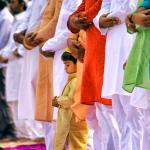
May 25, 2018 Ramadan: A Time to Practice Self-Compassion, Not Self-Judgment
Browse Our Archives
Select a Category Afterlife Culture Dealing with Others English Faith & Spirituality Inspiration Letters to the Ummah Personal / Life Poetry Ramadan Reality Check Reflections Relationships Religion Society & Culture Uncategorized Urdu Women
Select a Month September 2020 May 2020 April 2020 March 2020 January 2020 December 2019 October 2019 September 2019 August 2019 July 2019 June 2019 May 2019 April 2019 March 2019 February 2019 January 2019 December 2018 November 2018 October 2018 September 2018 August 2018 July 2018 June 2018 May 2018 April 2018 March 2018 February 2018 January 2018 December 2017 November 2017 October 2017 September 2017 August 2017 July 2017 June 2017 May 2017 April 2017 March 2017 February 2017 January 2017 December 2016 November 2016 October 2016 September 2016 August 2016 July 2016 June 2016 March 2016 November 2015 October 2015 June 2015 May 2015 February 2015 July 2014 June 2014 May 2014 April 2014 March 2014
Follow Us!
TAKE THE
Religious Wisdom Quiz
What did God provide for meat for Israel in the desert?
Select your answer to see how you score.
Fish Goat Quail Beef
Related posts from Mostly Muslim

A New Year, Another Opportunity for a Fresh...
My Battle with Mental Illness and Shame: The...
The Miracle of the Azaan (Muslim Call to...
Except Those Who Have Faith and Do Good
TRENDING AT PATHEOS Muslim

25 Years Later: How Much Has Changed for...
As we approach the 25th anniversary of September 11th, I’ve found myself...

Podcast: Third Spaces & The Rise of Yemeni...
In the latest episode of The Artistic Foodies Podcast, hosts Abbas...

HalalFest Picks: Best 60 Halal Spots for Super...
Back in 2016, I came up with a list of 29...

Unity Is America’s Strength — Division Is Its...
by Hidayatullah Ahsan When Valentina Gomez, a Republican candidate for Congress in...

Zohran Mamdani and New York’s Fight Against Islamophobia
This past June, against all odds, Zohran Mamdani won the Democratic primary...

What the Fourth of July Means to a...
As we mark another Fourth of July, millions of Americans will celebrate...
view all Muslim blogs
Ad-Free & Subscriber Log-In Subscription Support
- About Us
- 2026 Calendar
- Videos
- Podcasts
- Library of World Religions
- Faith In Media Tracker
- Advertise With Us
- Write for Us
- Privacy Policy
- Terms of Service
- Do Not Sell My Data
- Contact Us
- Radiant Digital
- Manage Newsletter Subscriptions
- Unsubscribe From Notifications
- Sitemap
Copyright 2008-2026, Patheos. All rights reserved.
Subscription Support Ad-Free & Subscriber Log-In
Follow Patheos