
BuddhistCatholicContemplativeEvangelicalGeneral ChristianHinduJewishLatter-day SaintMuslimNew VisionsProgressive Christian
Beliefs
- Buddhist
- Catholic
- Contemplative
- Evangelical
- General Christian
- Hindu
- Jewish
- Latter-day Saint
- More Voices
- Muslim
- New Visions
- Pagan
- Progressive Christian
Topics
- Religion News
- Food and Religion
- Sports and Religion
- Religious Art
- Religious Music and Entertainment
- Religious Events
- History and Religion
- Style and Religion
- Politics and Religion
- Women in Religion
- Recreation Outdoors and Religion
- Business Finance and Religion
- Careers Workplace and Religion
- Education and Religion
- Family Parenting and Religion
- Health Fitness and Religion
- Home and Religion
- Relationships and Religion
- Technology and Religion
- Travel and Religion
Columnists
- Buddhist Columnists
- Business Finance and Religion Columnists
- Careers Workplace and Religion Columnists
- Catholic Columnists
- Contemplative Columnists
- Education and Religion Columnists
- Evangelists Columnists
- Family Parenting and Religion Columnists
- General Christian Columnists
- Health Fitness and Religion Columnists
- Hindu Columnists
- History and Religion Columnists
- Home and Religion Columnists
- Jewish Columnists
- More Voices Columnists
- Latter Day Columnists
- Muslim Columnists
- New Visions Columnists
- Nonreligious Columnists
- Pagan Columnists
- Politics and Religion Columnists
- Progressive Columnists
- Recreation Outdoors and Religion Columnists
- Relationships and Religion Columnists
- Religion News Columnists
- Religious Art Columnists
- Religious Events Columnists
- Religious Music and Entertainment Columnists
- Sports and Religion Columnists
- Style and Religion Columnists
- Technology and Religion Columnists
- Travel and Religion Columnists
- Women in Religion Columnists
Resource Library
- 2026 Calendar
- Library of World Religions
- The 100 Most Holy Places on Earth
- Patheos Answers
- Podcasts
- Videos
- Faith Leaders Database
- Anglican Episcopalian
- Bahai
- Baptist
- Buddhism
- Christianity
- Confucianism
- Eastern Orthodoxy
- Hinduism
- Holiness and Pentecostal
- ISKCON
- Islam
- Judaism
- Lutheran
- Methodist
- The Church of Jesus Christ of Latter-day Saints
- New Age
- Paganism
- Presbytarian and Reformed
- Protestantism
- Religion Behind the Scenes
- Roman Catholic
- Scientology
- Shia Islam
- Sikhism
- Sufism
- Sunni Islam
- Taoism
- Zen
- See all religions
Research Tools
 Ad-Free & Subscriber Log-In Subscription Support
Ad-Free & Subscriber Log-In Subscription Support
Follow Patheos 

- Trending:
- Forgiveness
- |
- Marriage
- |
- Consciousness
- |
- Death Penalty
- |
- Election
- |
- Halloween
 Mostly Muslim
-
Faith & Spirituality
-
Personal/Life
-
Society & Culture
- Home
- Muslim
- Why I Don’t Believe in Saying “My Islam”
Why I Don’t Believe in Saying “My Islam”
Last updated on: December 26, 2019 at 9:27 am by Iman
Why I Don’t Believe in Saying “My Islam” 2019-12-26T09:27:44-06:00 Iman
Patheos Explore the world's faith through different perspectives on religion and spirituality! Patheos has the views of the prevalent religions and spiritualities of the world.
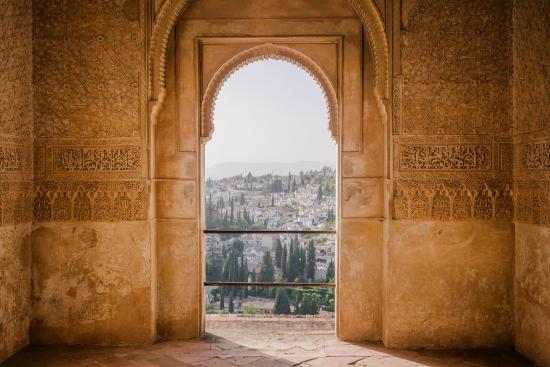
Photo by Victoriano Izquierdo on Unsplash
Almost five years ago, I had a transition in my life where I went from being what some might call, “less religious” to “more religious.” During that time, I fell in love with Islam in a way that I never had before. A big reason for that was because I was finally learning to differentiate between my parents’ culture (“back home”) and Islam, and I realized that Islam is infinitely better.
I think many people who go through a journey similar to mine, especially in America and the West, feel it’s a blessing that we’re out of a dominating Eastern culture, where there’s often confusion between what’s Islamic and what’s cultural. Because of this, I was under the impression that we have a more “pure” version of Islam here, which is largely uncontaminated by cultural influences — or at least, where we are able to tell when culture might be trying to seep into a part of Islam which should be left alone.
Islam is for all people and all places— it’s not rigid, inflexible, or unchanging. But the principles should never be compromised, no matter where a person is from; this is where things can get a little murky.
But I think what I failed to realize is that how I view Islam here in America is tainted by my own cultural understanding as well. And to an extent, that’s okay and unavoidable no matter where a person comes from. Because Islam is for all people and all places — it’s not rigid, inflexible, or unchanging. But the principles should never be compromised, no matter where a person is from; this is where things can get a little murky.
The problem is, Islam is beautiful and perfect, but society’s sense of morality will never be consistent. For example: 100 years ago, today’s popular women’s fashion would have been considered scandalous. 50 years ago, it would have been considered sexy. Today, it’s normal. 50 years from now, it will be old-fashioned. 100 years from now, it will be considered conservative.
Society’s norms and morals are ever-changing. Islam, on the other hand, gives us a consistent moral compass to follow. But that only happens if we allow it to. It’s not easy to stand apart from the crowd, but sometimes it’s what our religion asks from us for our own good.
Umar ibn al-Khattab (RA) said, “Take account of yourselves before you are taken to account. Weigh your deeds before they are weighed.” As Muslims, we can say “This is my Islam, don’t judge me for my Islam” as much as we want, but at the end of the day (or, the end of this life) Allah (swt) Himself will be the only one judging us. He knows our circumstances more than we even do.
Society’s norms and morals are ever-changing. Islam, on the other hand, gives us a consistent moral compass to follow. But that only happens if we allow it to.
He knows whether we were able to wear the hijab, even if we said we weren’t ready, or that we think it’s a symbol of patriarchal oppression, or that we think it’s not mentioned in the Qur’an (even though we don’t understand Qur’anic Arabic or are choosing to ignore the evidence provided to us). He knows whether we really needed that tattoo or not. He knows whether we were able to pray 5 prayers a day or not, regardless of what our reasoning was for skipping them. He sees us when we’re sinning in public or private, even if we tell ourselves that it’s okay and that Islam allows it.
He knows what our intentions are every time we say to someone, “Don’t judge me,” because they are giving us advice that we don’t want to follow. He knows when someone ignores their conscience to follow their desires, while claiming that Islam allows this.
We often say, “Only Allah has the right to judge,” but don’t realize the truth in this, and what it really means. It’s a weighty statement.
He knows when someone ignores their conscience to follow their desires, while claiming that Islam allows this.
We can say that Islam means “submission to God,” but the evidence of whether or not we believe this is in our actions. Every year, we celebrate Eid-ul-Adha. This is one of only two religious holidays that we have. And what are we commemorating? The unquestioning sacrifice of Ibraheem (as). When God asked him to sacrifice his son, he didn’t even ask, “Why?”
We’re being asked for a lot less than sacrificing our children with our own hands. Whether or not we choose to submit is a different story.
The reason I don’t believe in saying “my Islam” is because to me, that’s the beginning of a slippery slope. The minute I start believing that Islam is here to serve me and change for me, rather than me following Islam in order to serve Allah, that’s when I’m losing sight of what’s important.
Faith (iman) is a personal thing, but Islam itself is a path that we are all traveling on together. Nobody is perfect, and their struggles are nobody’s business but their own. But publicizing the shortcomings in our faith and labeling it as a different, personal brand of Islam is an injustice to our perfect religion.
Everyone has different circumstances, and it’s true that there’s often room for flexibility within our religion, but we need to keep in mind that Islam is one Straight Path. Leaving that path to make our lives easier is only going to get us so far. I think this often happens when we lose sight of the fact that this life is only a test and is extremely temporary compared to the Afterlife. Everything we do should be a deposit for the next life, not just a way to find ease or enjoyment in this one.
The minute I start believing that Islam is here to serve me and change for me, rather than me following Islam in order to serve Allah, that’s when I’m losing sight of what’s important.
“The Afterlife is much greater and longer lasting.” (Qur’an 64:15)
“And Shaytan will say when the matter has been concluded, ‘Indeed, Allah had promised you the promise of truth. And I promised you, but I betrayed you. But I had no authority over you except that I invited you, and you responded to me. So don’t blame me, but blame yourselves. I cannot be called to your aid, nor can you be called to my aid. Indeed, I deny your association of me [with Allah ] before. Indeed, for the wrongdoers is a painful punishment.'” (Qur’an 14:22)
Follow Mostly Muslim on Facebook HERE.
Want your voice to be heard? Send your submission to [email protected]! Visit the “Contribute to MM” page for more details.
Previous Post

January 24, 2017
"Is Allah Punishing Me?"
Next Post

February 6, 2017 Let's Talk About Hijab and Self-Esteem
Browse Our Archives
Select a Category Afterlife Culture Dealing with Others English Faith & Spirituality Inspiration Letters to the Ummah Personal / Life Poetry Ramadan Reality Check Reflections Relationships Religion Society & Culture Uncategorized Urdu Women
Select a Month September 2020 May 2020 April 2020 March 2020 January 2020 December 2019 October 2019 September 2019 August 2019 July 2019 June 2019 May 2019 April 2019 March 2019 February 2019 January 2019 December 2018 November 2018 October 2018 September 2018 August 2018 July 2018 June 2018 May 2018 April 2018 March 2018 February 2018 January 2018 December 2017 November 2017 October 2017 September 2017 August 2017 July 2017 June 2017 May 2017 April 2017 March 2017 February 2017 January 2017 December 2016 November 2016 October 2016 September 2016 August 2016 July 2016 June 2016 March 2016 November 2015 October 2015 June 2015 May 2015 February 2015 July 2014 June 2014 May 2014 April 2014 March 2014
Follow Us!
TAKE THE
Religious Wisdom Quiz
Who was the mother of John the Baptist?
Select your answer to see how you score.
Hannah Elizabeth Mary Deborah
Related posts from Mostly Muslim
My Journey to Self-Expression and Interfaith Love as...

Solitude and the Virus | An Unexpected Silver...
Finding Meaning and Gratitude When Dealing with Loss

Reflections on Life on My Way to Bangladesh
TRENDING AT PATHEOS Muslim

25 Years Later: How Much Has Changed for...
As we approach the 25th anniversary of September 11th, I’ve found myself...

Podcast: Third Spaces & The Rise of Yemeni...
In the latest episode of The Artistic Foodies Podcast, hosts Abbas...

HalalFest Picks: Best 60 Halal Spots for Super...
Back in 2016, I came up with a list of 29...

Unity Is America’s Strength — Division Is Its...
by Hidayatullah Ahsan When Valentina Gomez, a Republican candidate for Congress in...

Zohran Mamdani and New York’s Fight Against Islamophobia
This past June, against all odds, Zohran Mamdani won the Democratic primary...

What the Fourth of July Means to a...
As we mark another Fourth of July, millions of Americans will celebrate...
view all Muslim blogs
Ad-Free & Subscriber Log-In Subscription Support
- About Us
- 2026 Calendar
- Videos
- Podcasts
- Library of World Religions
- Faith In Media Tracker
- Advertise With Us
- Write for Us
- Privacy Policy
- Terms of Service
- Do Not Sell My Data
- Contact Us
- Radiant Digital
- Manage Newsletter Subscriptions
- Unsubscribe From Notifications
- Sitemap
Copyright 2008-2026, Patheos. All rights reserved.
Subscription Support Ad-Free & Subscriber Log-In
Follow Patheos