
BuddhistCatholicContemplativeEvangelicalGeneral ChristianHinduJewishLatter-day SaintMuslimNew VisionsProgressive Christian
Beliefs
- Buddhist
- Catholic
- Contemplative
- Evangelical
- General Christian
- Hindu
- Jewish
- Latter-day Saint
- More Voices
- Muslim
- New Visions
- Pagan
- Progressive Christian
Topics
- Religion News
- Food and Religion
- Sports and Religion
- Religious Art
- Religious Music and Entertainment
- Religious Events
- History and Religion
- Style and Religion
- Politics and Religion
- Women in Religion
- Recreation Outdoors and Religion
- Business Finance and Religion
- Careers Workplace and Religion
- Education and Religion
- Family Parenting and Religion
- Health Fitness and Religion
- Home and Religion
- Relationships and Religion
- Technology and Religion
- Travel and Religion
Columnists
- Buddhist Columnists
- Business Finance and Religion Columnists
- Careers Workplace and Religion Columnists
- Catholic Columnists
- Contemplative Columnists
- Education and Religion Columnists
- Evangelists Columnists
- Family Parenting and Religion Columnists
- General Christian Columnists
- Health Fitness and Religion Columnists
- Hindu Columnists
- History and Religion Columnists
- Home and Religion Columnists
- Jewish Columnists
- More Voices Columnists
- Latter Day Columnists
- Muslim Columnists
- New Visions Columnists
- Nonreligious Columnists
- Pagan Columnists
- Politics and Religion Columnists
- Progressive Columnists
- Recreation Outdoors and Religion Columnists
- Relationships and Religion Columnists
- Religion News Columnists
- Religious Art Columnists
- Religious Events Columnists
- Religious Music and Entertainment Columnists
- Sports and Religion Columnists
- Style and Religion Columnists
- Technology and Religion Columnists
- Travel and Religion Columnists
- Women in Religion Columnists
Resource Library
- 2026 Calendar
- Library of World Religions
- The 100 Most Holy Places on Earth
- Patheos Answers
- Podcasts
- Videos
- Faith Leaders Database
- Anglican Episcopalian
- Bahai
- Baptist
- Buddhism
- Christianity
- Confucianism
- Eastern Orthodoxy
- Hinduism
- Holiness and Pentecostal
- ISKCON
- Islam
- Judaism
- Lutheran
- Methodist
- The Church of Jesus Christ of Latter-day Saints
- New Age
- Paganism
- Presbytarian and Reformed
- Protestantism
- Religion Behind the Scenes
- Roman Catholic
- Scientology
- Shia Islam
- Sikhism
- Sufism
- Sunni Islam
- Taoism
- Zen
- See all religions
Research Tools
 Ad-Free & Subscriber Log-In Subscription Support
Ad-Free & Subscriber Log-In Subscription Support
Follow Patheos 

- Trending:
- Forgiveness
- |
- Marriage
- |
- Consciousness
- |
- Death Penalty
- |
- Election
- |
- Halloween
 The Mormon Therapist
- Home
- Latter-day Saint
- Health, Fitness and Religion
- The Principle of Modesty: Why We Are Getting it Wrong
The Principle of Modesty: Why We Are Getting it Wrong
Last updated on: July 13, 2017 at 11:12 am by Natasha Helfer
The Principle of Modesty: Why We Are Getting it Wrong 2017-07-13T11:12:52-05:00 Natasha Helfer
Patheos Explore the world's faith through different perspectives on religion and spirituality! Patheos has the views of the prevalent religions and spiritualities of the world.
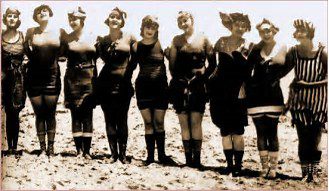
Image found on bing.com – free to share and use page.
There are many ways that our current modesty rhetoric falls dreadfully short of teaching this principle correctly. We tend to focus mostly on women’s attire – instead of the much deeper meaning of the word. Both men and women should find the assertions we make about the impact women’s clothing offensive. The fact remains that fashion has changed throughout history. What has been deemed “modest” has changed throughout time, including within our own LDS standards. I have seen men and women sexually objectify others. And I have seen supposedly “immodestly” dressed women treated respectfully in many settings as well as many “modestly” dressed women ogled at.
We teach this principle incorrectly. We place responsibility incorrectly. We body shame. We objectify women as much by covering them up as we do when we undress them — when it’s done from the space of projecting our own ideas/values/judgments unto others. This happens as much in religious cultures as it happens in the media and advertising industries. And the ways I have seen many in our communities self-righteously judge others in their manner of dress (especially women), is an immodest practice all in of itself. I’m honored to have our guest writer today – an active LDS young single adult who is not letting us get away with these false teachings.
Today’s guest post is written by Josie Sherwood. Opinions shared on guest posts may not completely reflect the positions of the blog’s author.
Josie Sherwood is 18 and a sophomore at Arizona State University. In her Young Single Adults ward, she serves as choir director and pianist. She is the eldest of three siblings.
A few days ago, I was flipping through The Latter-Day Saint Woman, (the Basic Manual for Women, Part A) when I came across a troubling passage. Actually, I came across many troubling passages, but I will only focus on one in this post. On page 64, in a chapter on chastity and modesty, the book states:
We are responsible for the effect our dress standards have on others. Anything that causes improper thoughts or sets a bad example before others is not modest. It is especially important that we teach young girls not to wear clothes that would encourage young men to have improper thoughts.
The archaic assertion that women are literally “responsible” for any “effect” the way they dress has on men is astounding. Girls and women are not in any way “responsible” for the way a man thinks or behaves. The implications of this view make women culpable for the actions of men while painting men as brutish animals without self-control or accountability for their own thoughts and actions.
The first thing I did was to check and make sure the book I had was the most recent edition. It was. The manual was last updated in 2000, and is currently available on the LDS website.
I believe that this paragraph and any others that similarly assign men any less than full responsibility for their own thoughts and actions should be removed. If women are even partially to blame “for the effect [their] dress standards have on others,” then women who are victims of sexual assault, harassment, and/or rape are necessarily somehow at fault. This is wrong.
Once, I wore a dress to school. It was perfectly modest according to LDS standards. I wear it to church often. On my way to class, a group of young men followed me for a bit and made lewd comments. I was practically in tears. It didn’t matter that I was dressed modestly. Those young men chose to entertain and express their “improper thoughts” anyway, regardless of my knee-length hemlines and covered shoulders. Every day there are women in my university classes dressed in dozens of different ways, some regarded by the church as modest and some not. Most men on campus still manage to interact respectfully with them on a daily basis without regard to the way that they are dressed. In my experience, the way women are treated is not as much a reflection of their dress as it is a reflection of the individual characters and mindsets of the men around them.
The way women and girls dress does not dictate the thoughts of men and boys. Men and boys make their own choices and are responsible for themselves, their own thoughts, and their own actions. It is wrong to instruct girls to cover themselves for boys because what girls wear has nothing to do with how boys choose to see them.
The church no longer holds that women who are victims of sexual violence need to repent. In line with this current practice, women are not (and should not be) responsible for how their dress affects others. This statement in the manual is therefore inconsistent with modern church teachings.
I would replace the paragraph with a section on an attitude of modesty. In the scriptures, modesty is very often a demeanor, a humble and kind way of living. Modesty is largely about how you treat and communicate with others. But in the chapter on modesty in the manual, there was hardly anything at all about an attitude of modesty. Someone could be completely covered from the neck down, but still be entirely immodest in their manner and treatment of others. Modesty should not be (and is not in the scriptures) all about dress. It is a behavior, appearance, and manner. Modesty is much more than how we dress.
“Yea, all of you be subject one to another, and be clothed with humility: for God resisteth the proud, and giveth grace to the humble.” —1 Peter 5:5
“Yea, they were men of truth and soberness, for they had been taught to keep the commandments of God and to walk uprightly before him.” —Alma 53:21
“Behold, this was the iniquity of thy sister Sodom, pride, fulness of bread, and abundance of idleness was in her and in her daughters, neither did she strengthen the hand of the poor and needy.” —Ezekiel 16:49

Josie Sherwood
As we teach and discuss modesty in the church, especially among women, I wish there was more of an emphasis on an attitude of modesty—modesty in terms of who we are rather than what we wear. The discussion of modesty is not currently gender neutral. Interestingly, a brief search on the LDS website highlights the gaping chasm between modesty for men and modesty for women in LDS culture. Searching “modest women” results in various references to “appropriate” dress, hemlines, and accepted styles of attire and grooming, while searching “modest men” generates results describing character, a lack of worldly resources, and humility. When church leaders speak about modesty to women, modesty is about the clothes they wear and how they cover their bodies. When church leaders speak about modesty to men, modesty is about their personal character and their humble acts or circumstances (i.e., a modest home). I would like to see modesty taught to girls and women not in a way that forces them to be at least partially responsible for men’s actions and pretends that men are helplessly manipulated by pieces of fabric, but rather in a way that empowers women to embrace modesty as a lifestyle and not just a dress style.
I believe that at least removing the paragraph (and other similar passages) from current church resources will be a step toward a revised curriculum that more accurately reflects the modern views of the LDS church and its members.
The front page of the book encourages readers to email their suggestions for the manual to [email protected]. I decided to send an email containing the views expressed here, and would encourage any of you who feel similarly to compose one as well. It has been 16 years since this manual and its companion had a revision, and it desperately needs one.
Natasha Helfer Parker, LCMFT, CST can be reached at natashaparker.org and runs an online practice, Symmetry Solutions, which focuses on helping families and individuals with faith concerns, sexuality and mental health. She hosts the Mormon Mental Health and Mormon Sex Info Podcasts, writes a regular column for Sunstone Magazine and is the current president of the Mormon Mental Health Association. She has over 20 years of experience working with primarily an LDS/Mormon clientele.
Previous Post

July 8, 2017
How do we define pornography?
Next Post

July 12, 2017 Faith Transition Seen Through the Lens of Trauma
Browse Our Archives
Select a Category Abortion Abuse Addiction Adolescents Anger Anxiety BDSM Bipolar Disorder Body Image Boundaries Children Circumcision Civil Rights Consent COVID19-Coronavirus Death Depression Divorce Domestic Violence Emotional Abuse Erectile Dysfunction Faith Crisis/Faith Transition Gender Identity Gender Roles Gospel Teachings Grief Homosexuality Infidelity LGBTQ LGBTQ+ Male Issues Marriage Masturbation Menopause Mental Health Mindfulness Miscarriage Missions Mixed-Faith Obsessive Compulsive Disorder Parenting Perfectionism Physical Abuse Physical Health Pornography Premature Ejaculation PTSD Race Relations Relationships Rest Righteousness Self Care Self Injury Self-Esteem Sexual Abuse Sexual Disorders Sexual Education Sexuality Single Adults Social Media Spirituality Suicide Survey Temple Issues Transgender Health Trauma Uncategorized Violence Women's Issues Word of Wisdom
Select a Month September 2020 August 2020 July 2020 June 2020 May 2020 April 2020 March 2020 February 2020 January 2020 December 2019 November 2019 October 2019 August 2019 July 2019 June 2019 May 2019 April 2019 March 2019 February 2019 December 2018 November 2018 April 2018 March 2018 February 2018 January 2018 December 2017 November 2017 October 2017 September 2017 August 2017 July 2017 June 2017 May 2017 March 2017 January 2017 December 2016 November 2016 October 2016 September 2016 August 2016 July 2016 June 2016 May 2016 April 2016 February 2016 January 2016 December 2015 November 2015 October 2015 July 2015 February 2015 January 2015 November 2014 September 2014 August 2014 July 2014 June 2014 April 2014 February 2014 December 2013 November 2013 October 2013 September 2013 August 2013 July 2013 May 2013 April 2013 March 2013 February 2013 January 2013 November 2012 October 2012 September 2012 August 2012 July 2012 May 2012 April 2012 February 2012 January 2012 December 2011 November 2011 October 2011 September 2011 August 2011 July 2011 June 2011 May 2011 April 2011 March 2011 February 2011 January 2011 December 2010 November 2010 October 2010 September 2010 August 2010 July 2010 June 2010 May 2010 April 2010 March 2010 February 2010 January 2010 December 2009 November 2009 October 2009 September 2009 August 2009 July 2009 June 2009 May 2009 April 2009 March 2009 February 2009
Follow Us!
TAKE THE
Religious Wisdom Quiz
What does the name "Moses" mean?
Select your answer to see how you score.
Delivered Judge Saved Drawn out (of water)
Related posts from The Mormon Therapist

Comments on Navigating Mixed Faith Marriages


A Letter to Mixed Faith Couples
TRENDING AT PATHEOS Latter-day Saint

Did Prayer Cure His Cancer? Or Was It...
At 4 AM one morning, Joshua W. Brown’s wife awoke to a...

8 Ways a Near-Death Experience Rewires the Soul
Does Consciousness Survive Physical Death? After 50 Years of Research, Dr. Raymond...

Holy Longing: What Our Restlessness Is Telling Us
“One can find so many pains when the rain is falling.” -John...

What this is NOT about. This blog is definitely not about...

Who said the Israelites were God’s chosen? That’s right, they did. Who...

The Spirit World Is the Real World: God...
A Monk’s Wisdom on Body and Spirit I sit with Brother Martin...
view all Latter-day Saint blogs
Ad-Free & Subscriber Log-In Subscription Support
- About Us
- 2026 Calendar
- Videos
- Podcasts
- Library of World Religions
- Faith In Media Tracker
- Advertise With Us
- Write for Us
- Privacy Policy
- Terms of Service
- Do Not Sell My Data
- Contact Us
- Radiant Digital
- Manage Newsletter Subscriptions
- Unsubscribe From Notifications
- Sitemap
Copyright 2008-2026, Patheos. All rights reserved.
Subscription Support Ad-Free & Subscriber Log-In
Follow Patheos