
BuddhistCatholicContemplativeEvangelicalGeneral ChristianHinduJewishLatter-day SaintMuslimNew VisionsProgressive Christian
Beliefs
- Buddhist
- Catholic
- Contemplative
- Evangelical
- General Christian
- Hindu
- Jewish
- Latter-day Saint
- More Voices
- Muslim
- New Visions
- Pagan
- Progressive Christian
Topics
- Religion News
- Food and Religion
- Sports and Religion
- Religious Art
- Religious Music and Entertainment
- Religious Events
- History and Religion
- Style and Religion
- Politics and Religion
- Women in Religion
- Recreation Outdoors and Religion
- Business Finance and Religion
- Careers Workplace and Religion
- Education and Religion
- Family Parenting and Religion
- Health Fitness and Religion
- Home and Religion
- Relationships and Religion
- Technology and Religion
- Travel and Religion
Columnists
- Buddhist Columnists
- Business Finance and Religion Columnists
- Careers Workplace and Religion Columnists
- Catholic Columnists
- Contemplative Columnists
- Education and Religion Columnists
- Evangelists Columnists
- Family Parenting and Religion Columnists
- General Christian Columnists
- Health Fitness and Religion Columnists
- Hindu Columnists
- History and Religion Columnists
- Home and Religion Columnists
- Jewish Columnists
- More Voices Columnists
- Latter Day Columnists
- Muslim Columnists
- New Visions Columnists
- Nonreligious Columnists
- Pagan Columnists
- Politics and Religion Columnists
- Progressive Columnists
- Recreation Outdoors and Religion Columnists
- Relationships and Religion Columnists
- Religion News Columnists
- Religious Art Columnists
- Religious Events Columnists
- Religious Music and Entertainment Columnists
- Sports and Religion Columnists
- Style and Religion Columnists
- Technology and Religion Columnists
- Travel and Religion Columnists
- Women in Religion Columnists
Resource Library
- 2026 Calendar
- Library of World Religions
- The 100 Most Holy Places on Earth
- Patheos Answers
- Podcasts
- Videos
- Faith Leaders Database
- Anglican Episcopalian
- Bahai
- Baptist
- Buddhism
- Christianity
- Confucianism
- Eastern Orthodoxy
- Hinduism
- Holiness and Pentecostal
- ISKCON
- Islam
- Judaism
- Lutheran
- Methodist
- The Church of Jesus Christ of Latter-day Saints
- New Age
- Paganism
- Presbytarian and Reformed
- Protestantism
- Religion Behind the Scenes
- Roman Catholic
- Scientology
- Shia Islam
- Sikhism
- Sufism
- Sunni Islam
- Taoism
- Zen
- See all religions
Research Tools
 Ad-Free & Subscriber Log-In Subscription Support
Follow Patheos 

- Trending:
- Advent
- |
- Forgiveness
- |
- Thanksgiving
- |
- Election
- |
- Seasonal Holidays
- |
- Marriage

- Home
- Buddhist
- History and Religion
- If I Stop Becoming, Will I Disappear?
If I Stop Becoming, Will I Disappear?
Last updated on: November 28, 2026 at 6:42 am by James Ford
If I Stop Becoming, Will I Disappear? 2026-11-28T06:42:44-08:00 James Ford
Patheos Explore the world's faith through different perspectives on religion and spirituality! Patheos has the views of the prevalent religions and spiritualities of the world.
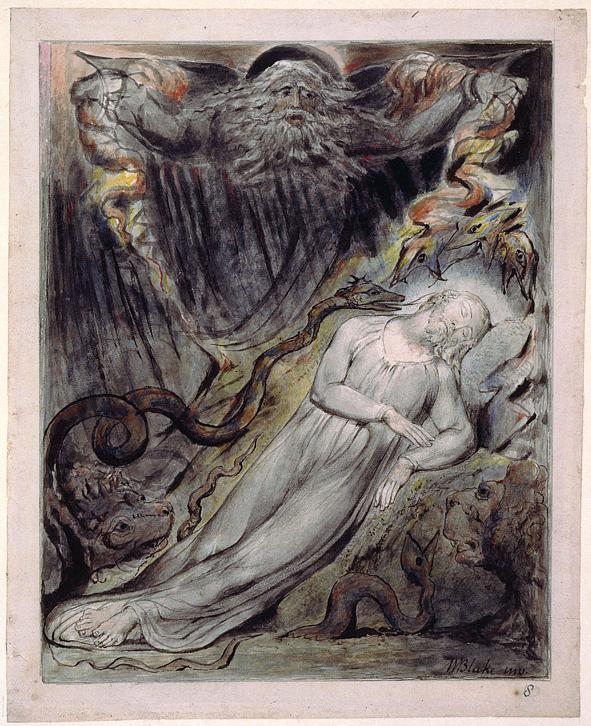
Christ’s Troubled Dream
William Blake
1816-20
(At our most recent half day Zen retreat, Dr Chris Hoff, a senior dharma teacher with Empty Moon Zen gave the talk. I asked if I could reprint it here at Monkey Mind, and he graciously consented.)
“Save a ghost”. – Zen Koan
The other night at dinner a friend offered a word for something I have struggled with for much of my life: sameness. It stuck. I have known that boredom is hard for me for as long as I can remember. I get restless when there is nothing to anticipate, when the day feels like one I have lived before. When my friend named sameness, I recognized something underneath that restlessness. I am afraid that an ordinary life will make me disappear. Saying that aloud feels vulnerable. There is something uncomfortable about admitting how much movement I require to feel that I am here.
I turned sixty this year, and I am sliding toward retirement within a couple of years. I am finding the this impending transition hard. There are things I want about this next part of life, including room in the day and freedom to choose how I spend my time. Running alongside those wishes is an uneasiness I have had trouble explaining. The roles I have performed have given me and my days purpose. People have needed me. There has been work to do, something to prepare for, a reason to get up and enter the world. I now feel how much of my identity has solidified around those expectations.
The impending retirement has me imagining days with fewer of these demands. From a distance, this sounds desirable. But as I get closer to it, I experience questions about who I will be when my calendar has fewer obligations. I imagine missing the feeling that something depends on my presence. I can imagine discovering how much reassurance has come from being busy, even while I have complained about the busyness. The wish for relief and the fear of becoming unnecessary can be experienced at the same time. I am learning how uncomfortable that coexistence can be.
Sixty has also given these questions a weight they might not have had earlier in my life. Time feels finite in a way beyond any idea I can discuss. There are futures I will inhabit and futures I will never get to. Decisions about how to spend a year also holds the knowledge that the years are being spent. Under these conditions, an uneventful afternoon can acquire a strange urgency. I can begin to treat this experience as proof that I am wasting what remains of my time. Even rest can become something I assess for whether it was worth the time.
Much of my work concerns possibility, how people move through transitions, how stories shape what becomes available to them, how a future begins to open. I still care about this work. I also have to consider what happens when possibility becomes a requirement I place on my own life. The next project can offer a future in which I recognize myself. Trust me, I’ve been planning a few. There I am, contributing, learning, making something happen. Without a project, I may have to experience a version of myself whose value feels harder to justify. This is where the fear of disappearing begins to speak to me.
I know I need to be careful with that fear. It would be easy to turn it into another criticism of myself, another example of an attachment I should have outgrown through my Zen practice. This fear in my life has a history. Being useful may have helped someone find belonging. The achievements I have experienced may have brought recognition in a life where recognition was scarce. All the activity may have provided a way to endure loneliness. I want to approach this restlessness with enough care to hear what it has been trying to make happen. I now know that there is a frightened question inside it all about whether I will continue to have a place.
Our culture gives that question plenty of encouragement. I am not immune. We are asked what we do, what we are working on, what comes next. Retirement itself gets presented as a project requiring purpose, reinvention, and evidence of vitality. A person can leave employment and enter expectations about making the most of life. Even leisure comes with a demand to become someone through it. Under these conditions, the wish to have an ordinary day can feel like a failure of imagination. I find myself struggling to find language for a life whose worth exceeds what I can report about it.
This is where Zen practice becomes difficult for me in a way I think I need. We sit down, and the sitting often feels uneventful. The sitting offers little assistance with the project of being interesting. Many thoughts arrive about what I should be doing. I begin evaluating the period: whether I am settling, whether anything is changing, whether this is a good use of time. My searching for progress has followed me onto the cushion. I have brought the same concern about making life count for something into a practice that asks me to attend to the life taking place.
Suzuki Roshi spoke about practicing without a gaining idea. I take it as a challenge to the habit of making each activity justify itself through a promised result. I can approach meditation as a way to acquire calm or become someone who handles aging with grace. I can make peace into an achievement and then feel like a failure when I am restless. Practice gives me an opportunity to notice these requirements as come up. There is the sitting, the breath, the body growing older, and my insistence that all of it should lead somewhere I can approve of or at least make sense of.
My fear of sameness also deserves exploration. An afternoon looks like another afternoon. The same person is across the table. The same street is outside the door. I can decide that I know what is here before I have given it much attention. This familiarity becomes a conclusion that closes my encounters with the world. Meanwhile, the person across the table has had a day I have yet to hear about. My body is carrying something it wasn’t yesterday. The street contains a tree whose leaves have begun to turn. Repetition and change are taking place together. If I can notice.
If I do notice, the observations offer no guarantee that boredom will dissolve. I can see the leaves and remain restless. I can understand impermanence and still want someone to ask me for help. I think practice must make room for this. Otherwise, I create an image of the person I ought to become. You know, content with little, at home in silence, released from the need for recognition. Then I compare myself with that person. The effort to become an accomplished ordinary person begins to resemble every other practice I participate in to earn permission to be here.
For those of us in recovery, the difficulty with an uneventful day may be familiar. A life can grow steadier and more serene while some part of us continues to search for intensity. The crisis ends, commitments become possible, people begin to trust that we will show up. There is much to be grateful for, but this gratitude can coexist with discomfort. Some of us discover that we have little experience inhabiting the space that opens when the urgency dissolves. It can take time to become used to a day that asks us to live through it without an emergency or some drama giving it life.
Recovery also offers a communal answer to the fear of disappearing. I can return to a room where people recognize me. I may have no insight to offer. I may be tired of my own story. But someone still makes room for me. Over time, such experiences can teach me something about belonging that all the achievements have difficulty teaching. My presence enters the lives of others through repetition. In repetition I learn who has been absent. I hear a change in someone’s voice. Relationships happen through the practice of returning, including on evenings when I have nothing to contribute beyond being there.
I need this understanding as I approach retirement. Being needed has given me a place, and I can honor what has mattered about that. I can also begin to notice the relationships in which my place survives a change in usefulness. Who can I sit with when I have nothing to teach? Who knows how to spend an afternoon with me without requiring an account of what I have accomplished? There is vulnerability in allowing someone to experience me without the protection of a role. I may have to learn how to receive the company and care I have spent so much time offering. Not an easy task.
Zen’s teaching of no fixed self, points to this vulnerability. For someone afraid of disappearing, talk of letting go of self can sound alarming. I want to be careful here. I understand the teaching as an invitation to investigate how this person called Chris comes into being through relationships, habits, memories, and conditions. The teacher and therapist have been among those forms. Other forms become possible as conditions change. I need to let grief belong in these changes. My roles can have served life for decades and still become something I am leaving. There is no requirement to feel serene about its passing.
I think about the people who helped make those roles possible, the teachers whose words I carry, the communities whose trust allowed me to practice. My work has always depended on lives beyond my own. Remembering this changes how I understand stepping back. Other people will carry responsibilities, make decisions, and develop ways of working I could never have done. That can bring relief and sadness. It also asks for humility. I have participated in something that will continue changing through other people’s care. Learning to let them take their place may become part of my practice.
I also want to leave room for the possibility that boredom is telling the truth about a life that needs attention. Some things I am learning include how work can become deadening. A relationship can lose contact. Exhaustion can drain the capacity to feel interest. People need companionship and circumstances that allow them to flourish. Spiritual language can obscure these needs when we use it to urge acceptance before listening. In my own transition, I want to remain curious about what needs changing and what I am being asked to mourn. Both of these deserve more attention than an instruction from someone to appreciate what I have.
For now, the practice I can imagine is modest. There might be a short part of the day I leave unclaimed by a project. I could walk without collecting ideas for something to write. I could eat lunch without giving the meal a second purpose. When restlessness appears, I could listen for the story behind it. Perhaps it says that I am falling behind, that people will forget me, that I am running out of time. I can hear and fell those fears while remaining on the cushion for another breath.
There may also be sadness waiting in that space. Slowing down can bring us into contact with years we have lived and choices whose consequences we are carrying. Turning sixty has invited this reckoning. I find myself grieving opportunities I passed over, versions of myself that never happened, Relationships that were lost, the time spent pursuing things whose importance has changed. A new undertaking can give me somewhere to direct that feeling. I want some willingness to feel the feelings and let them have their time. Grief is part of this season, and I need friends capable of allowing it to be there.
I began this piece with the fear that an ordinary life would make me disappear. I can still feel it. I have no finished account of how to grow older, how to retire, or how to inhabit a day without asking it to confirm my importance. What I have is this question and a practice in which I can bring it into the room. Today, I can sit among others who are living through changes of their own. When the bell rings, we will have spent some time together. That time will belong to our lives, including the parts we have yet to understand.
History and Religion
Previous Post

November 27, 2026
James Ishmael Ford's books on Zen
Recent Comments
"Allowing anger to contaminate one's hard disk can be detrimental to one's holistic well being. ..."
Hot Anger: Meeting Anger in Zen ..."
"I love this koan. every which way you turn it bites you, Thirty years on ..."
Nanquan Cuts the Cat: A Jesuit ..."
"As a substitute for religion, Zen is probably better than taking drugs. However, it can ..."
The Selling of Zen at the ..."
"Craving and aversion are detrimental to one's peace and happiness. Easter is a wake up ..."
Easter: A Zen Buddhist Appreciation
Browse Our Archives
Select a Category A Christmas Carol Abolitionist African-American Ahmadiyya Alan Watts Aldous Huxley Allen Ginsberg Amedkar Jayanti American politics American Zen Anaheim Zen Sangha Anglican Annie Besant April Fool Armageddon Art and Religion artificial intellegence Atheist Awakening B R Ambedkar Barlaam & Josaphat Beatnik Between Bhagavad Gita Bible biography birthday bodhisattva Bodhisattva Precepts Book burning Book of Common Prayer Book of Mormon Brahmo Samaj Buddha Buddhism Buddhist Buddhist Lord's Prayer Butterflies Calendars cartoons cat ChatGPT Chicken Tortilla Soup choices Christian atheism Christian mysticism Christian origins Christian Science Christian Zen Christianity Christianity and Buddhism christmas Christmas Truce Christopher Isherwood Church of Later Day Saints Cinco de Mayo circus covenant critical thinking culture D. T. Suzuki Dalit Buddhism Daniel Defoe Desert Fathers and Mothers dharma talk Dogen Donald Trump Dongshan's Five Ranks Dorothy Day dream Duty Easter ecology Edwin Arnold emptiness Empty Moon Zen Network Episcopal Church Eternal Now Ethics evolution existentialism Faith fantasy Fathers Day film film review fire Five Ranks Folk music food Form and emptiness Four Seals Francis of Assisi Francis Xavier Free thinker friendship George MacDonald Gerald Heard Glenn Taylor Webb God Good Friday Gospel of Gospel of Mark Gospel of Thomas grace Graduate Theological Unioin Graduate Theological Union Guanyin H R Blyth Hakuin Ekaku Hanamatsuri Hanukkah Harada Yasutani Zen Heart Sutra Henry David Thoreau Hermann Hesse Hinduism History and Religion history of religion Holy Spirit home Hospitality Icon Ides of March Isaac Newton Islam Islamic mysticism Jack Kerouac James Luther Adams Jiddu Krishnamurti Joan of Arc Johannes Gutenberg John Donne joke Judaism justice karma kensho King James Bible koan Koun Yamada Kyoto School Lewis Carrol Liberal Christianity Liberal Religion Life Plan Community Liminal literature Literature and Religion Liturgy Lord's Prayer Love Mahatma Gandhi Mahayana Martin Luther King Jr Mary Baker Eddy Mary Magdelene Mary Oliver Mayflower Compact Meditation memories memory metaphor money money and religioin Mormons Mother's Day movie review mysticism mythic Neighborhood Unitarian Universalist Church New Thought Nichiren Buddhism Nonduality not knowing Omar Khayyam Pacific School of Religion pagan Palm Sunday Passover peace Pentecost perennialism Phantastes Philip Kapleau philosophy Pilgrimage poetry Poetry and Religion politics Prayer Precepts Printing Press prophecy prophetic spirituality psychology Pure Land Queer religion queering religion Quietism Ram Mohan Roy rebirth recipe Relationships and religion religion religion and history Religious syncretism Resistance Retirement Retreat review Rissho Kosei Kai Ritual Robert Aitken Roshi Robert Ingersoll Rohatsu Romani religion Rosie the Riveter saints samadhi SanboZen Sangha Satyagraha science science and reigion science and religion science fiction seminary sermon Sesshin Sex and Religion Shinran Sikh Sikh tradition silence Social Justice Socially Engaged Buddhism Society and religion Soto Zen soul spiritual community spiritual practice Spirituality Sufism Suicide superstition Taoism Television Teresa of Avila Thanksgiving theological schools Theosophy Thomas Merton Time Transcendentalism Transcendentalist Trinitarian Trinity Uncategorized unitarian Unitarian Christianity Unitarian Universalist Universalism Vajrayana Vedanta Walking war Willa Cather William Ellery Channing wisdom women and religion women in religion World Teacher Writing zazen Zen Zen Center Zen inspired retriement zen meditation Zen Precepts Zen women
Select a Month November 2026 October 2026 September 2026 August 2026 July 2026 June 2026 May 2026 April 2026 March 2026 February 2026 January 2026 December 2025 November 2025 October 2025 September 2025 August 2025 July 2025 June 2025 May 2025 April 2025 March 2025 February 2025 January 2025 December 2024 November 2024 October 2024 September 2024 August 2024 July 2024 June 2024 May 2024 April 2024 March 2024 February 2024 January 2024 December 2023 November 2023 October 2023 September 2023 August 2023 July 2023 June 2023 May 2023 April 2023 March 2023 February 2023 January 2023 December 2022 November 2022 October 2022 September 2022 August 2022 July 2022 June 2022 May 2022 April 2022 March 2022 February 2022 January 2022 December 2021 November 2021 October 2021 September 2021 August 2021 July 2021 June 2021 May 2021 April 2021 March 2021 February 2021 January 2021 December 2020 November 2020 October 2020 September 2020 August 2020 July 2020 June 2020 May 2020 April 2020 March 2020 February 2020 January 2020 December 2019 November 2019 October 2019 September 2019 August 2019 July 2019 June 2019 May 2019 April 2019 March 2019 February 2019 January 2019 December 2018 November 2018 October 2018 September 2018 August 2018 July 2018 June 2018 May 2018 April 2018 March 2018 February 2018 January 2018 December 2017 November 2017 October 2017 September 2017 August 2017 July 2017 June 2017 May 2017 April 2017 March 2017 February 2017 January 2017 December 2016 November 2016 October 2016 September 2016 August 2016 July 2016 June 2016 May 2016 April 2016 March 2016 February 2016 January 2016 December 2015 November 2015 October 2015 September 2015 August 2015 July 2015 June 2015 May 2015 April 2015 March 2015 February 2015 January 2015 December 2014 November 2014 October 2014 September 2014 August 2014 July 2014 June 2014 May 2014 April 2014 March 2014 February 2014 January 2014 December 2013 November 2013 October 2013 September 2013 August 2013 July 2013 June 2013 May 2013 April 2013 March 2013 February 2013 January 2013 December 2012 November 2012 October 2012 September 2012 August 2012 July 2012 June 2012 May 2012 April 2012 March 2012 February 2012 January 2012 December 2011 November 2011 October 2011 September 2011 August 2011 July 2011 June 2011 May 2011 April 2011 March 2011 February 2011 January 2011 December 2010 November 2010 October 2010 September 2010 August 2010 July 2010 June 2010 May 2010 April 2010 March 2010 February 2010 January 2010 December 2009 November 2009 October 2009 September 2009 August 2009 July 2009 June 2009 May 2009 April 2009 March 2009 February 2009 January 2009 December 2008 November 2008 October 2008 September 2008 August 2008 July 2008 June 2008 May 2008 April 2008 March 2008 February 2008 January 2008 December 2007 November 2007 October 2007 September 2007 August 2007 July 2007 June 2007 May 2007 April 2007 March 2007 February 2007 January 2007 December 2006 November 2006 October 2006 September 2006
Follow Us!
TAKE THE
Religious Wisdom Quiz
What was the name of the disciple who replaced Judas Iscariot?
Select your answer to see how you score.
Matthias Timothy Silas Barnabas
Related posts from Monkey Mind
James Ishmael Ford's books on Zen
Taking Refuge in the (Zen) Sangha
Recalling the Amazing Alexandra David-Neel
The Great Matter: Walking the Zen Way
TRENDING AT PATHEOS Buddhist

A Modest Proposal for President Trump
Trump should just quit the loser Republicans who failed him so badly...

Jesus is Coming with Glory and Power
https://www.youtube.com/watch?v=_lt60EDHOQ4&list=RD_lt60EDHOQ4&start_radio=1

The Late Francis Frangipane & the Failure Too...
I learned today that another one of my heroes has gone to...

Thomas Paine, the Smiths, the apostles in England,...
I'm pleased to announce that the Becoming Brigham Black Friday Sale,...

CatholicTV Series: Six Black Catholics on Path to...
WATERTOWN, Mass., November 9, 2026 – In recognition of Black Catholic History...

New Advent Journal Invites Catholics to Be Pilgrims
Florissant, MO, November 16, 2026— What if Advent were more than a...
view all Buddhist blogs
What Are Your Thoughts?leave a comment
Ad-Free & Subscriber Log-In Subscription Support
- About Us
- 2026 Calendar
- Videos
- Podcasts
- Library of World Religions
- Faith In Media Tracker
- Advertise With Us
- Write for Us
- Privacy Policy
- Terms of Service
- Do Not Sell My Data
- Contact Us
- Radiant Digital
- Manage Newsletter Subscriptions
- Unsubscribe From Notifications
- Sitemap
Copyright 2008-2026, Patheos, part of the Radiant Digital network of media brands. All rights reserved.
Subscription Support Ad-Free & Subscriber Log-In
Follow Patheos