
BuddhistCatholicContemplativeEvangelicalGeneral ChristianHinduJewishLatter-day SaintMuslimNew VisionsProgressive Christian
Beliefs
- Buddhist
- Catholic
- Contemplative
- Evangelical
- General Christian
- Hindu
- Jewish
- Latter-day Saint
- More Voices
- Muslim
- New Visions
- Pagan
- Progressive Christian
Topics
- Religion News
- Food and Religion
- Sports and Religion
- Religious Art
- Religious Music and Entertainment
- Religious Events
- History and Religion
- Style and Religion
- Politics and Religion
- Women in Religion
- Recreation Outdoors and Religion
- Business Finance and Religion
- Careers Workplace and Religion
- Education and Religion
- Family Parenting and Religion
- Health Fitness and Religion
- Home and Religion
- Relationships and Religion
- Technology and Religion
- Travel and Religion
Columnists
- Buddhist Columnists
- Business Finance and Religion Columnists
- Careers Workplace and Religion Columnists
- Catholic Columnists
- Contemplative Columnists
- Education and Religion Columnists
- Evangelists Columnists
- Family Parenting and Religion Columnists
- General Christian Columnists
- Health Fitness and Religion Columnists
- Hindu Columnists
- History and Religion Columnists
- Home and Religion Columnists
- Jewish Columnists
- More Voices Columnists
- Latter Day Columnists
- Muslim Columnists
- New Visions Columnists
- Nonreligious Columnists
- Pagan Columnists
- Politics and Religion Columnists
- Progressive Columnists
- Recreation Outdoors and Religion Columnists
- Relationships and Religion Columnists
- Religion News Columnists
- Religious Art Columnists
- Religious Events Columnists
- Religious Music and Entertainment Columnists
- Sports and Religion Columnists
- Style and Religion Columnists
- Technology and Religion Columnists
- Travel and Religion Columnists
- Women in Religion Columnists
Resource Library
- 2026 Calendar
- Library of World Religions
- The 100 Most Holy Places on Earth
- Patheos Answers
- Podcasts
- Videos
- Faith Leaders Database
- Anglican Episcopalian
- Bahai
- Baptist
- Buddhism
- Christianity
- Confucianism
- Eastern Orthodoxy
- Hinduism
- Holiness and Pentecostal
- ISKCON
- Islam
- Judaism
- Lutheran
- Methodist
- The Church of Jesus Christ of Latter-day Saints
- New Age
- Paganism
- Presbytarian and Reformed
- Protestantism
- Religion Behind the Scenes
- Roman Catholic
- Scientology
- Shia Islam
- Sikhism
- Sufism
- Sunni Islam
- Taoism
- Zen
- See all religions
Research Tools
 Ad-Free & Subscriber Log-In Subscription Support
Follow Patheos 

- Trending:
- Advent
- |
- Forgiveness
- |
- Thanksgiving
- |
- Election
- |
- Seasonal Holidays
- |
- Marriage

- Home
- Buddhist
- History and Religion
- Recalling Zen historian David Chadwick
Recalling Zen historian David Chadwick
Last updated on: February 24, 2026 at 8:29 am by James Ford
Recalling Zen historian David Chadwick 2026-02-24T08:29:41-08:00 James Ford
Patheos Explore the world's faith through different perspectives on religion and spirituality! Patheos has the views of the prevalent religions and spiritualities of the world.
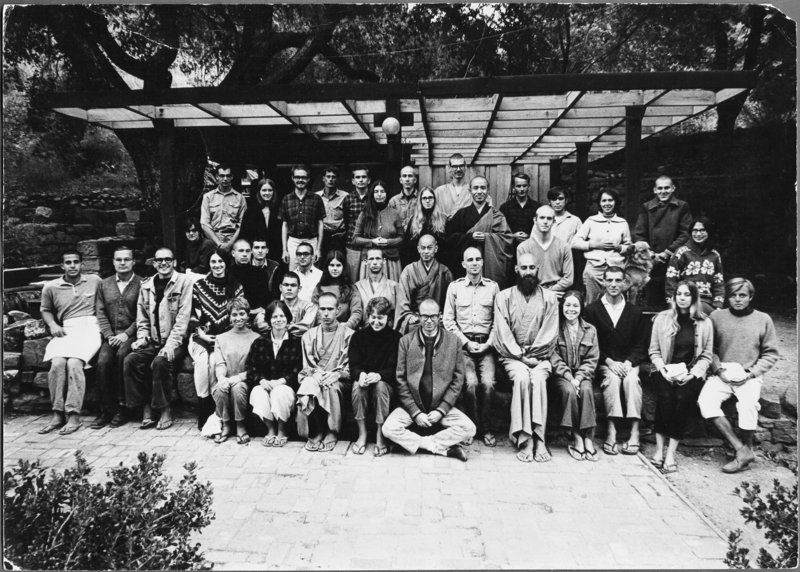
Tassajara. 1967
I was saddened to learn that David Chadwick died at his home in Bali yesterday. He’s devoted much of his life to archiving the early history of the San Francisco Zen Center, itself the epicenter in the founding of convert Zen in North America. The term “Zen Center” was coined as the group separated from Sokoji Soto Zen Mission of San Francisco. Along the way he wrote one of the most charming Zen memoirs of the genre I’ve read, Thank You, And Okay!: An American Zen Failure in Japan. The Zen teacher Richard Baker blurbed with the comment “Years of expensive Zen training gone to waste.”
Later, David wrote the magisterial biography of the founding teacher of the San Francisco Zen Center, Crooked Cucumber: The Life and Teachings of Shunryu Suzuki. Most recently he published a second memoir, Tassajara Stories: A Sort of Memoir/Oral History of the First Zen Buddhist Monastery in the West – The First Year, 1967.
I’ve known David for many years, first meeting him when he was living in the Zen teacher John Tarrant’s barn. Eccentric, complicated, brilliant, and a wonderful human being.
He was born in Fort Worth on the 9th of February, 1945. He began Zen practice in 1966 and was ordained a priest by Suzuki Roshi in 1971. In 2013 he and his wife Katrinka McKay moved to Bali. He died on the 23rd of February, 2026.
I will miss him deeply.
Another historian of our contemporary Zen scene and its principals, Richard Bryan McDaniel interviewed him a few years ago. And with Richard’s permission, I reprint that interview here.
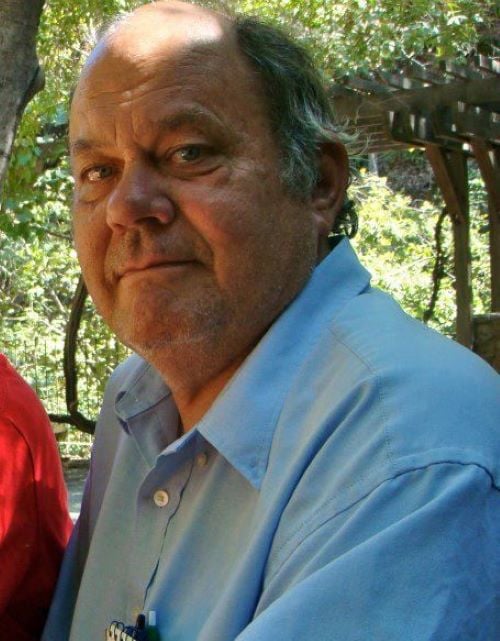
David Chadwick
There are a handful of digital archives I refer to regularly in the composition of these profiles. One of the most useful is cuke.com maintained by David Chadwick. David is the author of Crooked Cucumber, generally accepted as the official biography of Shunryu Suzuki. Cuke.com originated as a supplement to the book, which was published in 1999. In the 24 years since, the site expanded and a second site – shunryusuzuki.com – added. The combined archives are so extensive that David compares them to the Winchester Mystery House in San Jose, California. “It’s a big, giant, sprawling mansion where the woman who owned it thought she’d die if she stopped adding to it. So it’s got stairways to nowhere and it’s got all these rooms. Now it’s like a theme park. Well, Cuke Archives, I’d say, is like a Winchester mansion the size of Los Angeles.” That’s a mite overstated, but the sites do contain a lot of material.
David now lives in Bali. There is an eleven-hour time difference between Bali and Atlantic Canada, where I live. He has just finished dinner when our video chat begins; I’m only on my second cup of coffee of the morning.
“When I was very young, my father was a reader in the Christian Science Church,” he tells me. “And when I was maybe six or something, he quit. And being a reader, that’s like being a minister. He quit because he thought it was too dualistic. He thought it elevated Jesus beyond just being a person who’d awakened. So he got into some New Thought Christian writers like Ernest Holmes, William Walter, and Emmet Fox.”
The New Thought Movement – like Christian Science – holds that illness arises from the mind and can be cured by “right thinking.” It developed at the end of the 19th century and maintained that Christianity – rightly understood – was the culmination of a succession of wisdom traditions which included the ancient Greeks, Daoism, Vedanta, and Buddhism.
“Very influenced by Emerson, Thoreau, there was obviously Buddhist influence on it,” David says. “Anyway, it was a great way to be raised. In our home, God was not an outside power. It was mind. It was mind only. So I’m very grateful for it.”
His father died when David was eleven, but he left a strong influence on his son. “He was my first teacher. He was a really good guy, really nice guy, very gentle.”
After graduating high school in 1963, David spent some time in Mississippi and Chicago involved with the political causes of the day. He lived and worked with the staff of Students for a Democratic Society and met people like Tom Hayden and Rennie Davis. He admits, however, that he “was just a pest. I was a crazy kid, and they were all like policy wonks.”
Then he spent over a year in Mexico. “I was going to school, but I also smoked a lot of pot, and I really got into walking around town and talking to people. I played guitar in a whore house and really got into Spanish. Then in Acapulco I had my first LSD trip, which was really great. And then some friends of mine from Mexico said, ‘Hey, it’s happening in San Francisco.’ So I made my way out there and for about half a year I was sort of grooving on the hippie scene. I had a few more acid trips, and that really tied into the stuff my father had taught me. And I felt like I needed to meditate. So I found the San Francisco Zen Center, and I just plunged right into it. I loved it.” He was 21 at the time.
“Why did you feel you had to meditate?”
“Because one can see, if one is observing oneself, that the mind is way too busy and way too petty normally. So what you want to do is slow it down.”
“This is something you were aware of when you were twenty-one?”
“Oh yeah. So slow it down. And the thing is you can bust through with acid, and I took acid like with the Psychedelic Experience, very seriously, meditating, fasting, no talking.”
The Psychedelic Experience was a manual composed by Timothy Leary, Ralph Metzner, and Richard Alpert – who later became the Hindu teacher, Baba Ram Dass. It describes what amounted to a sacramental approach to the use of psychedelics loosely based on the Tibetan Buddhist Book of the Dead.
“So I had really profound experiences, but I didn’t do it a lot. I think I had eight trips in all. And that made me think, ‘All right, that’s not going to do it. That’s just like taking a trip there, getting an idea that there’s mind beyond normal mind.’ What I needed was . . . I think I had an image of the wind and time wearing down mountains rather than just blowing them up. And I stumbled on some books on Zen. I wasn’t a big reader, but I found Zen Flesh, Zen Bones and The Zen Teaching of Huang Po translated by John Blofeld, a really great book. I read and re-read Lin Yutang’s translation of the Dao De Jing.”
Shunryu Suzuki was away when David first knocked on the door of the San Francisco Zen Center, so instead he was introduced to Dainin Katagiri, or Katagiri Sensei as he was called. “And I had a discussion with him and said, ‘I think I need a teacher and to meditate with a group,’ which was the perfect thing to say. That’s what they do. That’s the trip, right? And he said, ‘Well, Suzuki Roshi should be your teacher. And he’s in Japan right now, but he’ll be back soon.’ I said, ‘Well, why can’t you be my teacher?’ He said, ‘Well, I could be your teacher, but here he would be your teacher.’”
Katagiri gave him introductory meditation instruction. And eventually Suzuki returned and became David’s teacher, and David decided to commit to the practice for a year. “And I never thought about it again.”
“They won you over?”
“Yeah.”
“How?”
“For one thing, I wasn’t a true believer. I wasn’t that type. And it wasn’t a true believing place. Nobody tried to convert you although some were encouraging. I got to know some people little by little. I liked them. It was cool. But then I hadn’t been there very long when we hear that we’re going be buying land for a monastery. So I was there at this very exciting time. I had some time there in its smaller form, then we were gearing up to buy land in the woods down south to build a monastery. And so I got involved in that. And then we heard there’s this place near the land we’re trying to buy called Tassajara Springs, and it’s really cool. So when we go there, it’s actually contiguous with Tassajara Springs, the same land. And we can walk there in about an hour. So that was great. And then at the last minute I hear, oh, we’re buying Tassajara now as well. And that doubles the money. We were raising $20,000 as a down payment on $150,000 then all of a sudden we’re raising $300,000. That didn’t mean much to me, but Zen Center’s whole annual budget, I’ve heard different figures, $8,000 a year, $12,000 is the highest I heard. So everybody got in the action, but Dick Baker’s genius came out and his energy.”
Richard Baker was Shunryu Suzuki’s most prominent student and would become his only Dharma heir. He managed a capital campaign which engaged people like Alan Watts, Allen Gingberg, and the Grateful Dead. “But what really did it was Dick and Suzuki going to the East Coast and meeting very wealthy donors. Chester Carlson who invented Xerox, a great philanthropist, wonderful man. He supported a lot of good things. Edward Johnson, not really the founder of Fidelity, but what he took over as Fidelity was not at all what Fidelity became. He made it what it became. So we had the CEO of the biggest investment company in the world helping with the fund.”
I ask David why it was a group of California hippies thought building a monastery was a good idea. To David, it seemed a natural thing to do. “And not all of us had been hippies. I’d called myself a semi-hippie. But Suzuki and his students wanted to have a place where they could practice together and live together and be more focused and not have to go home every day. A place to go for a period of time and have a retreat where it’s not just from five in the morning till nine at night. It’s 24 hours. It’s all the time.”
“And why would people want to do that?” I ask.
“Well, for people who get into meditation that’s pretty much a universal tradition. Now our monastery was not a monastery like any other monastery that had ever been. There were women as well as men, married people, unmarried couples. It was really lay oriented. From the first, there were kids. And Suzuki had never seen anything like that. But he listened to his students and together they put something together, and it worked, and it was great.”
“I’m still not getting the why,” I persist. “What did you think you were going to get from all this effort?”
“Good question. One of the fundamental teachings of Zen from a Soto point of view is not to seek an end, not to seek a goal. That what you are doing is learning how to practice, how to cultivate your self, how to be somebody who awakens and to accept yourself as you are, not to try to be someone else, not to try to be something else. So, the practice of meditation, of living together with others, of working together, these are not unique to Buddhism; they are in Christian monasteries too. Monastics, contemplatives of whatever tradition have a tremendous amount in common. Suzuki especially de-emphasized having any sort of practising with a goal. However, there are two sides to everything. You actually can’t do it without having a goal. So, it’s completely paradoxical, and he’d say if it’s not paradoxical, it’s not true, it’s not Buddhism.”
“Let me put this question this way: Why did you think this was a good use of your time?”
“Oh man, I grooved on it. It was great, I loved it. I loved the meditation; I loved the work. I loved and respected the people I was with. And I didn’t worry about it a lot, I just did it. When you do something and it makes you feel better and it makes you feel like you’re getting to some sort of bigger, wider stage in your life, it’s self-evidently good. And you’re also being encouraged by living with others. You know? Everybody’s getting up at 4.30 to go sit at 5:00. It’s great. A lot of it’s like dancing. If we were a dance company and we were getting together and dancing, people wouldn’t ask, ‘What are you trying to get out of this? What’s your goal? What do you hope to accomplish?’ They’d see that the dance itself was rewarding.”
“And that’s the way you felt?”
“I don’t know how I felt. I just did it. And it was good. I loved it. And one of the purposes of having a period of your life when there’s more focus in a retreat-like way is it can give you discipline. It can dig grooves so that you can continue it in your life. You know, Suzuki said, ‘If you want to learn to concentrate, go to a noisy place. If you want peace of mind, do it in an unpeaceful place.’ It’s easy to do it if you’re in beautiful surroundings. So he said that Tassajara, this is all good, but you can’t live here forever. I mean, some people lived there a long, long time. I was there about seven years.”
David speaks with great fondness of his time with Suzuki and what he calls the old temple – Sokoji – which had been established in San Francisco by Japanese Soto authorities in 1934.
“It had an intimacy and a practice that could never be recreated again. And one thing you learn is to appreciate what you’ve got at the time, because it’s not going to last no matter what it is.” He chuckles. “I know that living in Bali too. So, at Sokoji we would have two sittings in the morning with a walking kinhin in between. So two 40-minute sittings. And of course, for the first one you’re getting there early, you get there ten minutes early so you’re sitting 50 minutes, ten-minutes walking, another 40-minute period. Then we would chant the Heart Sutra in Sino-Japanese three times, a little faster each time. And that was the most dynamic chanting I have ever experienced. Nothing we did in the future ever compared to it. After that, we’d all walk out, and Suzuki Roshi would stand at the door and individually bow at each one of us. And that was great. There was a 5:00 p.m. sitting too. That was it. And we’d have a one-day sesshin once a month, and he’d be able to meet each of us and talk. But he just emphasized daily meditation. He did not emphasize enlightenment. He talked about enlightenment, but he said practice is enlightenment – you know – the practice, learning the practice and doing it. It was great.”
“You said he was your teacher. It’s a curious term in some ways. What did Suzuki Roshi teach you?”
“He’d say, ‘Well, I really don’t have anything to teach you.’ But he taught us. He was a good example.”
“Is a ‘good example’ the same as being a ‘teacher’?”
“People talk about transmission, mind to mind transmission. He’d say there’s nothing to transmit. So what did he teach? He taught, ‘Be yourself.’ He said, ‘All I have to teach is zazen and practice.’ He said, ‘I’d rather not give talks. We don’t really need that. We just meditate together, work together, eat together. That’s enough. You don’t need more than that. You don’t need any teaching.’ But the other side of that, of course, is there was teaching. He gave lots of talks. So Zen is called the way beyond words and letters, but you don’t have any ‘beyond words and letters’ unless you’ve got something to give up, unless you know the words and letters and get beyond them. You don’t get beyond words and letters by not knowing the words and letters and just not learning anything. So yeah, he was very short on teaching, and it bothered some people. They’d go find other teachers that would give them koans and meet them daily.”
“You said you spent seven years at Tassajara. Was that continuous? Did you ever take a break?
“I had breaks. Sure. We were pretty loose. I mean, if you were there for a three-month practice period, you were not supposed to leave the whole ninety days. You could if you had to see a doctor. Or if you had a job that took you to town shopping. Or later when I was the director or the head monk, there’d be meetings in the city.”
“You were the boss?”
“Yeah. That’s not the boss. When I was director Dick Baker was the boss. There was no other boss!” he says with a laugh. “Dick was the abbot after Suzuki died. When Suzuki died, I was the assistant director of Tassajara. We were all so young. Just amazing. So many of us in our twenties.” He chuckles at the memory, but it’s an important point. What strikes me as I look at the old photos of SFZC or Los Angeles or Rochester is how youthful the faces are. One can almost sense that these people were so young and naïve they didn’t understand how improbable the things they were doing and accomplishing were.
“We did a good job. It was an unusual group. We didn’t have experts telling us what to do. We didn’t pay lawyers exorbitant sums. I’d go visit our Tassajara lawyer and give him bread.”
“And at the end of seven years?”
“Well, it wasn’t quite like that. I was there almost all the time the first five years. And in that time I was gone about half a year studying Japanese intensively in Monterey. But when Suzuki died, then Dick Baker asked me to be the work leader in the city, or the board decided or something. He was only back a couple of months himself from Japan. And so I became the work leader in the city for a year. Year after that, ’73, I was work leader at Green Gulch [Zen Center’s organic farm] and Baker’s jisha [attendant]. He called it MJ, Main Jisha. He had three jishas, one at Green Gulch, one in the city, one at Tassajara. And I was the main one who would go with him off to Tassajara or to City Center or if there’s some event or something. And we got along fine. But I also was work leader there at Green Gulch. I don’t know how I did both, but it wasn’t hard. And then the next year, ’74, I went down to be the head monk. And I was there the whole winter, spring, through the whole guest season, five months. And then in the fall, I became the director. And I was director for a year. And he wanted me to stay. He wanted me to stay and be director because he liked the way I did it. And I said, ‘I can’t stay any longer. I got to get out of here.’”
After leaving Tassajara, David held a variety of posts at SFZC. He became the manager of the Green Gulch Green Grocer shop on the corner opposite City Center at Page and Laguna Streets, where Zen Center had moved when they became too large to stay at Sokoji. He also was the host of the center’s vegetarian restaurant, Greens, for a bit. But things were changing.
In 1983 Richard Baker ceased being abbot of the San Francisco Zen Center. Some people maintain he was fired; David tells me that Baker actually resigned because he was unwilling to accept new conditions imposed by the board as a result of his behaviour and leadership style. Reb Anderson, a Dharma heir of Baker, became the new abbot. David remained close to Baker and, in the spring of 1985, moved to Green Gulch Farm where he was a transitional director for year. In 1987, he was on the SFZC board of directors and was instrumental in creating a new multiple abbot system with term limits because of difficulties with the new abbot.
Then, in 1988, his former wife – Daya Goldschlag – moved with their son to Spokane, and David decided to go to Japan for a few years. Katagiri invited him to join him for a while at Shogoji, a Soto Zen training temple in Kyushu. After his time at the temple, David spent another “half a year checking out other practice centres, meeting teachers, visiting Suzuki’s temple and family, seeing friends and friends of friends, and improving my Japanese.”
I ask him how he came to write Crooked Cucumber.
“I had a friend, Michael Katz, who was a very successful literary agent, and he said, ‘Write a book while you’re in Japan.’ I said, ‘I don’t want output there, I want input.’” But in fact he did write letters about what he was experiencing. “And then I’d make copies and send them to friends and family. Michael said, ‘We can make these into a book.’ So he sent me money to buy a laptop and mailed me software including a typing tutor and told me to get to where I could type in the dark. And so I was going to the temple, having sanzen with the abbot, Shodo Harada, doing zazen and teaching English. And I wrote a lot and had many experiences. Michael got me a deal with Penguin and a small advance; that was nice.” The book was entitled Thank You and Ok!: An American Zen Failure in Japan.
“It focused on Katagiri,” he explains, “half about the time I spent with him and other monks at Shogoji and the other half about living with my new wife and going to Sogenji. And it had some about Suzuki, but I started taking all the Suzuki stuff out of it, thinking this should keep the focus on Katagiri. So I had this Suzuki material, and I started collecting more. Michael and I talked about it and thought, well, we should do a book on Suzuki. It just evolved from the one book to the other. It was just something that happened. And then because I wrote the book, I started a website for it, back when websites were just starting. And so I got a nice little short name, cuke.com. And it was just for some material relating to the book. And then people would write things, and I started putting in interviews or something that had to do with the book, and putting in the Suzuki lectures and just kept doing it, and added shunryusuzuki.com and it just kept growing until the Cuke Archives became like . . . You know the Winchester mansion in San Jose?”
Here’s a long form interview with David.
Here Brad Warner interviews him.
And here he talks about his days in Tassjara.
New Visions
History and Religion
Previous Post

February 21, 2026
Zen and the Broken Places
Next Post
March 16, 2026 Zen Master Soen Nakagawa
Recent Comments
"Allowing anger to contaminate one's hard disk can be detrimental to one's holistic well being. ..."
Hot Anger: Meeting Anger in Zen ..."
"I love this koan. every which way you turn it bites you, Thirty years on ..."
Nanquan Cuts the Cat: A Jesuit ..."
"As a substitute for religion, Zen is probably better than taking drugs. However, it can ..."
The Selling of Zen at the ..."
"Craving and aversion are detrimental to one's peace and happiness. Easter is a wake up ..."
Easter: A Zen Buddhist Appreciation
Browse Our Archives
Select a Category A Christmas Carol Abolitionist African-American Ahmadiyya Alan Watts Aldous Huxley Allen Ginsberg Amedkar Jayanti American politics American Zen Anaheim Zen Sangha Anglican Annie Besant April Fool Armageddon Art and Religion artificial intellegence Atheist Awakening B R Ambedkar Barlaam & Josaphat Beatnik Between Bhagavad Gita Bible biography birthday bodhisattva Bodhisattva Precepts Book burning Book of Common Prayer Book of Mormon Brahmo Samaj Buddha Buddhism Buddhist Buddhist Lord's Prayer Butterflies Calendars cartoons cat ChatGPT Chicken Tortilla Soup choices Christian atheism Christian mysticism Christian origins Christian Science Christian Zen Christianity Christianity and Buddhism christmas Christmas Truce Christopher Isherwood Church of Later Day Saints Cinco de Mayo circus covenant critical thinking culture D. T. Suzuki Dalit Buddhism Daniel Defoe Desert Fathers and Mothers dharma talk Dogen Donald Trump Dongshan's Five Ranks Dorothy Day dream Duty Easter ecology Edwin Arnold emptiness Empty Moon Zen Network Episcopal Church Eternal Now Ethics evolution existentialism Faith fantasy Fathers Day film film review fire Five Ranks Folk music food Form and emptiness Four Seals Francis of Assisi Francis Xavier Free thinker friendship George MacDonald Gerald Heard Glenn Taylor Webb God Good Friday Gospel of Gospel of Mark Gospel of Thomas grace Graduate Theological Unioin Graduate Theological Union Guanyin H R Blyth Hakuin Ekaku Hanamatsuri Hanukkah Harada Yasutani Zen Heart Sutra Henry David Thoreau Hermann Hesse Hinduism History and Religion history of religion Holy Spirit home Hospitality Icon Ides of March Isaac Newton Islam Islamic mysticism Jack Kerouac James Luther Adams Jiddu Krishnamurti Joan of Arc Johannes Gutenberg John Donne joke Judaism justice karma kensho King James Bible koan Koun Yamada Kyoto School Lewis Carrol Liberal Christianity Liberal Religion Life Plan Community Liminal literature Literature and Religion Liturgy Lord's Prayer Love Mahatma Gandhi Mahayana Martin Luther King Jr Mary Baker Eddy Mary Magdelene Mary Oliver Mayflower Compact Meditation memories memory metaphor money money and religioin Mormons Mother's Day movie review mysticism mythic Neighborhood Unitarian Universalist Church New Thought Nichiren Buddhism Nonduality not knowing Omar Khayyam Pacific School of Religion pagan Palm Sunday Passover peace Pentecost perennialism Phantastes Philip Kapleau philosophy Pilgrimage poetry Poetry and Religion politics Prayer Precepts Printing Press prophecy prophetic spirituality psychology Pure Land Queer religion queering religion Quietism Ram Mohan Roy rebirth recipe Relationships and religion religion religion and history Religious syncretism Resistance Retirement Retreat review Rissho Kosei Kai Ritual Robert Aitken Roshi Robert Ingersoll Rohatsu Romani religion Rosie the Riveter saints samadhi SanboZen Sangha Satyagraha science science and reigion science and religion science fiction seminary sermon Sesshin Sex and Religion Shinran Sikh Sikh tradition silence Social Justice Socially Engaged Buddhism Society and religion Soto Zen soul spiritual community spiritual practice Spirituality Sufism Suicide superstition Taoism Television Teresa of Avila Thanksgiving theological schools Theosophy Thomas Merton Time Transcendentalism Transcendentalist Trinitarian Trinity Uncategorized unitarian Unitarian Christianity Unitarian Universalist Universalism Vajrayana Vedanta Walking war Willa Cather William Ellery Channing wisdom women and religion women in religion World Teacher Writing zazen Zen Zen Center Zen inspired retriement zen meditation Zen Precepts Zen women
Select a Month October 2026 September 2026 August 2026 July 2026 June 2026 May 2026 April 2026 March 2026 February 2026 January 2026 December 2025 November 2025 October 2025 September 2025 August 2025 July 2025 June 2025 May 2025 April 2025 March 2025 February 2025 January 2025 December 2024 November 2024 October 2024 September 2024 August 2024 July 2024 June 2024 May 2024 April 2024 March 2024 February 2024 January 2024 December 2023 November 2023 October 2023 September 2023 August 2023 July 2023 June 2023 May 2023 April 2023 March 2023 February 2023 January 2023 December 2022 November 2022 October 2022 September 2022 August 2022 July 2022 June 2022 May 2022 April 2022 March 2022 February 2022 January 2022 December 2021 November 2021 October 2021 September 2021 August 2021 July 2021 June 2021 May 2021 April 2021 March 2021 February 2021 January 2021 December 2020 November 2020 October 2020 September 2020 August 2020 July 2020 June 2020 May 2020 April 2020 March 2020 February 2020 January 2020 December 2019 November 2019 October 2019 September 2019 August 2019 July 2019 June 2019 May 2019 April 2019 March 2019 February 2019 January 2019 December 2018 November 2018 October 2018 September 2018 August 2018 July 2018 June 2018 May 2018 April 2018 March 2018 February 2018 January 2018 December 2017 November 2017 October 2017 September 2017 August 2017 July 2017 June 2017 May 2017 April 2017 March 2017 February 2017 January 2017 December 2016 November 2016 October 2016 September 2016 August 2016 July 2016 June 2016 May 2016 April 2016 March 2016 February 2016 January 2016 December 2015 November 2015 October 2015 September 2015 August 2015 July 2015 June 2015 May 2015 April 2015 March 2015 February 2015 January 2015 December 2014 November 2014 October 2014 September 2014 August 2014 July 2014 June 2014 May 2014 April 2014 March 2014 February 2014 January 2014 December 2013 November 2013 October 2013 September 2013 August 2013 July 2013 June 2013 May 2013 April 2013 March 2013 February 2013 January 2013 December 2012 November 2012 October 2012 September 2012 August 2012 July 2012 June 2012 May 2012 April 2012 March 2012 February 2012 January 2012 December 2011 November 2011 October 2011 September 2011 August 2011 July 2011 June 2011 May 2011 April 2011 March 2011 February 2011 January 2011 December 2010 November 2010 October 2010 September 2010 August 2010 July 2010 June 2010 May 2010 April 2010 March 2010 February 2010 January 2010 December 2009 November 2009 October 2009 September 2009 August 2009 July 2009 June 2009 May 2009 April 2009 March 2009 February 2009 January 2009 December 2008 November 2008 October 2008 September 2008 August 2008 July 2008 June 2008 May 2008 April 2008 March 2008 February 2008 January 2008 December 2007 November 2007 October 2007 September 2007 August 2007 July 2007 June 2007 May 2007 April 2007 March 2007 February 2007 January 2007 December 2006 November 2006 October 2006 September 2006
Follow Us!
TAKE THE
Religious Wisdom Quiz
True or False: In Luke's Gospel, the angels appeared to wealthy merchants to announce Jesus' birth.
Select your answer to see how you score.
FALSE TRUE
Related posts from Monkey Mind
Taking Refuge in the (Zen) Sangha
The Great Matter: Walking the Zen Way
Keizan Jokin: The Zen Master Ancestor You Don't...

What Zen Practice Actually Does With Anger
TRENDING AT PATHEOS Buddhist

For many years, Catholicism has been caught up in division over the...

'Statements of Faith' never get shorter
Nothing demonstrates a conservative commitment to faith and faithfulness like a "statement...

Michele's Reviews - Future Grace by John Piper
In God's Place, at God's Pace, by Future Grace Impatience is...

Bama Gramma's Blackout Christmas: the Power of Light...
Another Christmas Skit: I have an alter ego: Bama Gramma. She shows...

Thanksgiving as a Way of Life: A Christian...
Each year, Thanksgiving brings families and friends together to share meals, stories,...

Two Women Doctors Who Went Against the Current
Women physicians who transformed healthcare for "Indians" “I shall have an advantage...
view all Buddhist blogs
What Are Your Thoughts?leave a comment
Ad-Free & Subscriber Log-In Subscription Support
- About Us
- 2026 Calendar
- Videos
- Podcasts
- Library of World Religions
- Faith In Media Tracker
- Advertise With Us
- Write for Us
- Privacy Policy
- Terms of Service
- Do Not Sell My Data
- Contact Us
- Radiant Digital
- Manage Newsletter Subscriptions
- Unsubscribe From Notifications
- Sitemap
Copyright 2008-2026, Patheos, part of the Radiant Digital network of media brands. All rights reserved.
Subscription Support Ad-Free & Subscriber Log-In
Follow Patheos