
BuddhistCatholicContemplativeEvangelicalGeneral ChristianHinduJewishLatter-day SaintMuslimNew VisionsProgressive Christian
Beliefs
- Buddhist
- Catholic
- Contemplative
- Evangelical
- General Christian
- Hindu
- Jewish
- Latter-day Saint
- More Voices
- Muslim
- New Visions
- Pagan
- Progressive Christian
Topics
- Religion News
- Food and Religion
- Sports and Religion
- Religious Art
- Religious Music and Entertainment
- Religious Events
- History and Religion
- Style and Religion
- Politics and Religion
- Women in Religion
- Recreation Outdoors and Religion
- Business Finance and Religion
- Careers Workplace and Religion
- Education and Religion
- Family Parenting and Religion
- Health Fitness and Religion
- Home and Religion
- Relationships and Religion
- Technology and Religion
- Travel and Religion
Columnists
- Buddhist Columnists
- Business Finance and Religion Columnists
- Careers Workplace and Religion Columnists
- Catholic Columnists
- Contemplative Columnists
- Education and Religion Columnists
- Evangelists Columnists
- Family Parenting and Religion Columnists
- General Christian Columnists
- Health Fitness and Religion Columnists
- Hindu Columnists
- History and Religion Columnists
- Home and Religion Columnists
- Jewish Columnists
- More Voices Columnists
- Latter Day Columnists
- Muslim Columnists
- New Visions Columnists
- Nonreligious Columnists
- Pagan Columnists
- Politics and Religion Columnists
- Progressive Columnists
- Recreation Outdoors and Religion Columnists
- Relationships and Religion Columnists
- Religion News Columnists
- Religious Art Columnists
- Religious Events Columnists
- Religious Music and Entertainment Columnists
- Sports and Religion Columnists
- Style and Religion Columnists
- Technology and Religion Columnists
- Travel and Religion Columnists
- Women in Religion Columnists
Resource Library
- 2026 Calendar
- Library of World Religions
- The 100 Most Holy Places on Earth
- Patheos Answers
- Podcasts
- Videos
- Faith Leaders Database
- Anglican Episcopalian
- Bahai
- Baptist
- Buddhism
- Christianity
- Confucianism
- Eastern Orthodoxy
- Hinduism
- Holiness and Pentecostal
- ISKCON
- Islam
- Judaism
- Lutheran
- Methodist
- The Church of Jesus Christ of Latter-day Saints
- New Age
- Paganism
- Presbytarian and Reformed
- Protestantism
- Religion Behind the Scenes
- Roman Catholic
- Scientology
- Shia Islam
- Sikhism
- Sufism
- Sunni Islam
- Taoism
- Zen
- See all religions
Research Tools
 Ad-Free & Subscriber Log-In Subscription Support
Ad-Free & Subscriber Log-In Subscription Support
Follow Patheos 

- Trending:
- Forgiveness
- |
- Marriage
- |
- Consciousness
- |
- Death Penalty
- |
- Election
- |
- Halloween

- Home
- Buddhist
- History and Religion
- Yogi Chen & Chinese Vajrayana: A Personal Account
Yogi Chen & Chinese Vajrayana: A Personal Account
Last updated on: September 21, 2025 at 7:06 am by James Ford
Yogi Chen & Chinese Vajrayana: A Personal Account 2025-09-21T07:06:07-07:00 James Ford
Patheos Explore the world's faith through different perspectives on religion and spirituality! Patheos has the views of the prevalent religions and spiritualities of the world.
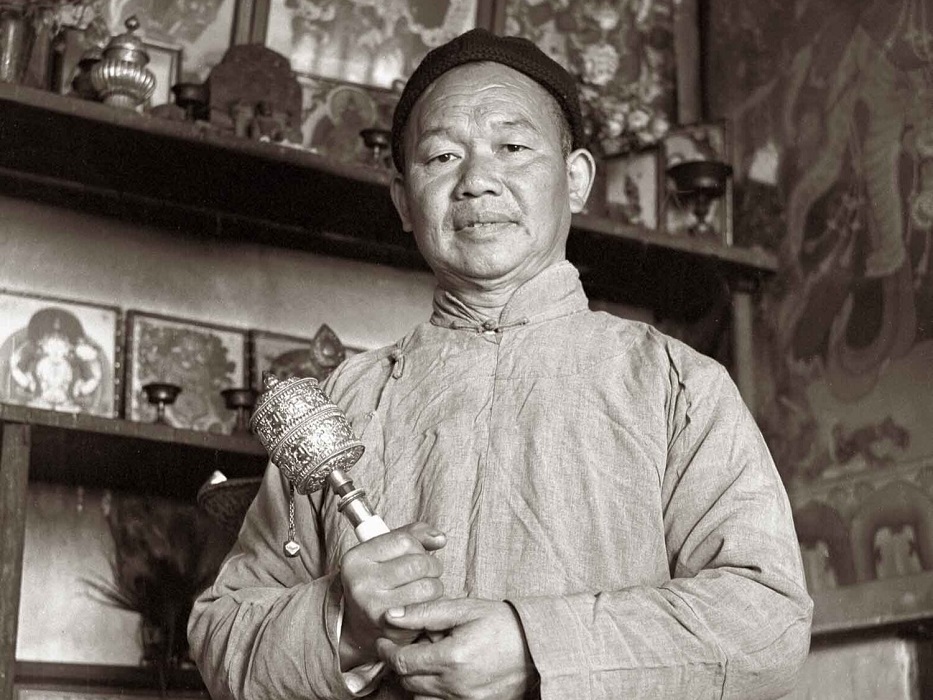
My friend Ken Ireland wrote this memoir of his encounters with the Chinese Vajrayana teacher C. M. Chen, best known perhaps, as Yogi Chen, for his Buddha, S.J. blog. I thought it worth wider distribution, and with his kind permission, I offer it here at Monkey Mind.
When Father Bob Ochs and I lived together on Hillegass Avenue, we both began serious conversations with Buddhists — conversations with the intense inquiry that Jesuits are well known for. In the Spring of 1974, during the SAT retreat, Naranjo introduced Yogi C. M. Chen, whom he called a high tantric initiate. Ochs told me that he felt an immediate karmic connection with Master Chen.
I recall only a few things about that talk, which, frankly, puzzled me. It was interesting. Nothing was wrong, or offensive, or gibberish, but I had assumed that Chen was going to talk about the Tibetan tantra instead of listing, condemning, and crying real tears about the number of monks and nuns Chairman Mao and the Red Guards had murdered.
Tharang Tulku had established the Nyingma Institute on Berkeley’s Holy Hill in 1969 and focused on teaching meditation. Although the Dalai Lama fled Lhasa for Northern India in 1959, by 1974, he was a high-ranking monk living in a North Indian Hill Station, almost totally dedicated to helping other Tibetans escape and creating an exile community. There were no crowds of Western followers. The number of Westerners undertaking monastic training was just a handful.
Master Chen told me that he fled Tibet with the 16th Karmapa in 1959 and settled in Kalimpong (but I may have the timeline mixed up). The 16th Karmapa had a significant impact on Master Chen as the sponsor of his three-year retreat. During that period, Chen wrote “Buddhist Meditation Systematic and Practical,” with the help of Sangharakshita (Dennis Philip Edward Lingwood). He also attracted a few Western students. It was through them that he immigrated to Berkeley, California, in 1972, and moved into a small walk-up on Shattuck Avenue.
Yogi Chen, as we called him, left his wife and son and in about 1926 (or perhaps 1929). He told me that he traveled from his native Hunan Province to Eastern Tibet in search of an authentic Buddhism that he could not find in Chinese (mostly reformed Chan) monasteries. Over the next 25 years or more, he undertook every major practice of all four Tibetan schools and actually practiced them. He’d lived in a cave, in the charnel grounds, and did the three-year, three-month solitary retreat.
Bob Ochs began visiting Chen and assisting his practice: driving him to Timber Cove at Jenner on the California Coast, which Chen identified as the Palace of the Dragon King, or to his retreat property in Cazadero, which he claimed was the navel of the Dragon. Chen had identified these power spots using geomancy.
Chen offered three traditional Tibetan fire pujas: to the Yiddam of the God of Wealth, to the Blue Manifestation of Lord Buddha for health, and to Kurukulla, a Vajrayana goddess associated with love, enchantment, and magnetic attraction. Wealth, health, and love. He also prayed for the dead, chanting while driving through a cemetery, and “Powa,” a ritual for the transference of consciousness to guide the recently deceased to a Pure Land free from suffering. He also released fish and frogs back into the wild, which was associated with long life. That covers the basics that people normally pray for. Performing these rituals for people who requested them was his practice. It seemed to me to be primitive and magical, quite far from my Ignatian spiritual exercises, but it offered me an opportunity to experience esoteric Buddhism.
Bob Ochs was interested in this esoteric ritual practice. He became Chen’s assistant — a complicated affair, procuring offerings, all manner of things, flowers, incense, birthday cakes, precious stones, seeds, colored cloth, and thread; then there was the long journey to Timber Cove, or Cazadero, or a cemetery; after that was the actual preparation of the site, building the fire, or loading the boat. Bob told me that he’d hoped that participating in all these activities with Master Chen would give him a key to a deeper understanding of the mystery of the Mass. If Bob and Chen discussed this directly, he never told me about the substance of their conversations.
Bob also mentioned, almost offhand, that Chen claimed to have had visions of the Virgin Mary — and they had serious conversations about Saint Ignatius.
Bob did this for perhaps two years. I accompanied him when there was room in his car or when there was another car for other participants. Then suddenly, their relationship ended. I am unclear about the exact circumstances, but Bob, in an elliptical way, explained that perhaps Chen had understood that he was presenting himself as a serious Dharma student, but Bob was a Catholic priest and would remain a Catholic priest who was not interested in the rigorous Buddhist practice. He also didn’t know Tibetan or Chinese, and at 45, was probably not going to dedicate the years required for proficiency. Or it could have been far simpler: they were both Enneagram One. Or it might have been a cultural impasse: Chen was more comfortable in the immigrant Chinese community. (which is, by the way, where he would find his dharma hier, a young PhD student from UC Berkeley, Dr. Yutang Lin).
I owe Bob a deep debt of gratitude: he encouraged me to visit Chen; he was the first authentic Buddhist practitioner with whom I had actual conversations. I remember standing on Shattuck Avenue at a public phone dialing the number that Bob had given me. Chen answered right away. I asked if and when I could visit. Chen replied, “Now is the appropriate time.”
I began to visit Chen in his one-room walk-up on Shattuck Avenue a few times a month. I liked him enormously, although I didn’t feel as strong a karmic connection with him as Bob had, or imagined he had. I decided that rather than present myself as a student, I would be a friend. Of course, I helped with the preparation for the various pujas, but I also helped him prepare for the US naturalization examination.
Over 10 years, we also talked about meditation, relationships, Tibetan Buddhism, Jesus, and Ignatius of Loyola. His answers were always straightforward and unpredictable. When I asked him for meditation instruction, he began what was to become an investigation into impermanence that lasted for two decades. I was not particularly interested in ritual practice, but I helped. I took him shopping. I drove him to Jenner and Cazadero. The ethnic Tibetan and Chinese tangkas, statues of Buddhist yidams on old towels carefully positioned on turned-over cardboard boxes, didn’t drive me away. I enjoyed his company and our conversations in the car. I was awestruck that he could sleep in a moving car on a bumpy dirt road.
Ochs helped Chen publish several free booklets about various Buddhist topics. I also became involved in the publication of Chen’s Dharma books. After Chen died in 1987, I spent nearly 5 years editing his book on Zen, “Lighthouse in the Ocean of Chan,” from a transcription of the first English translation, studying it, and trying to straighten out the awkward English of Dr. Fa-Yen Kog, a monk from the Thervaden tradition who did the first English translation. Eventually, Chen’s dharma heir, Dr. Yutang Lin, dissatisfied with my efforts, undertook a completely new translation from Chen’s original Chinese manuscript. He thanked me for providing an English rough draft to work from, and I paid for printing the first 500 books.
At some point, Yogi Chen seemed to focus on his ethnic Chinese students, devotees, and turn away from the few Western practitioners (with one notable exception, Juan Bulnes, a Chilean whom I knew from Naranjo’s groups). When I first visited him, most of the requests came from people in Hong Kong associated with D.T. Shen, an uber-wealthy Buddhist mogul who owned a huge shipping line. Later, they were mostly Chinese who’d immigrated from Taiwan. I suspect that Shen had died and his support had dried up.
In the early to mid-80s, after helping Chen for a week — gathering all the offerings for a fire puja to the God of Wealth, setting up, being his assistant during the burn — as we gathered around the dying embers, the time he usually gave some dharma remarks, he said, “There are so many Chinese people here today, I will speak in Chinese.” The wealthy Chinese owners of several gas stations in the Central Valley were offered some teaching that was off limits to the rest of us because we were not rich and Chinese. That marked the point at which I began to withdraw.
But Chen continued to have a profound influence on my life and practice. I no longer visited, but I knew one Western lady, also from Naranjo’s groups, who cleaned his room and acted as a kind of secretary a few days a week. He dictated thoughtful and helpful responses to my written notes and questions. My assessment: he was the real deal, and of all the religious practitioners I’d ever met, he was most likely to have had real visions of the Virgin Mary.
Yogi Chen lived in a shabby SRO hotel on Shattuck Ave. It may have even been called the Shattuck Arms. But the residents were not grad students or junior faculty, rather indigent Hispanic day laborers, mostly people of color, sex workers, drug addicts, some with obvious mental issues, and a few retirees. Chen was equally beaming and courteous to every resident, though he avoided one or two. He told me they’d threatened him. I never felt entirely safe visiting him. I always called beforehand or came for a set appointment.
The walls had not been painted in a decade; once white, they were now brown, and there was a faint, musty odor. The shared toilet was clean; it smelled of disinfectant, but it was grey and brown rather than shiny porcelain. Chen’s room was clean, but the chairs were cheap cast-off yard furniture from the nearby Goodwill Store. The piles of threadbare towels were clean. He used them for everything, even as altar cloths for the elaborate Tibetan shrine that occupied a quarter of the living space. He could have easily asked DT Shen for more money to rent a more comfortable apartment, but Chen was a true renunciate; I have met others in India. If they exist in America, I have not met them.
I had several very powerful experiences with Yogi Chen. I am writing about these separately at the end of my story. They are so far outside what most Westerners consider normal that taking them as anything other than aberrations or hallucinations might lead people to discount the power of Master Chen’s teachings or my sanity. However, they affected my life profoundly. I hold them in a category labeled “I don’t know what the hell was going on and perhaps never will.”
On the second or third visit, I asked him for the meditation instruction that I’d missed at the SAT retreat. I sat down and listened attentively. He may have said something about paying attention to the breath, but suddenly, in a flash, I seemed to disconnect from my body. I could have sworn that he was speaking in Mandarin, and I understood perfectly. He was smiling at me broadly and laughing. The feeling was euphoric. I also knew that I was still connected to the reality that presented itself in that room that morning. It ended, though it’s hard to pinpoint precisely when, and he continued his instruction. The euphoria lingered for several hours. Somehow, asking him about what had happened seemed inappropriate, like handing back a gift.
In 1975, when I was doing the 19th Annotation Adaptation of the Spiritual Exercises while weighing whether or not to leave the Jesuits, Chen and I had several long conversations about Ignatius and the prayer life of the Jesuits. I remember him telling me quite clearly to study Ignatius and pray to him. I think I said, Don’t worry. Our SAT group finished the last exercises of Naranjo’s version of the Arica Training, Lines and Crossing Over, which was a three-day meditation done prostrate, face down. By the end, I was more clear that I would leave the Jesuits rather than be ordained. I decided to move to San Francisco with Hal Slate, who was also in SAT, and we rented an apartment on Frederick Street with easy access to the Castro. In other words, I gave up trying to be a saint.
I was still meditating every morning, keeping a journal, and trying to make some sense out of the Gay Liberation that I’d fallen into the middle of. One morning, as I sat, I looked down the long corridor that opened onto the busy street, and Saint Ignatius stood in the doorway. I really mean Saint Ignatius appeared and stood in the doorway. This was not a dream. It was Ignatius, luminous and brightly colored, dressed like the famous Rubens painting in the Gesù, though my memory tells me that there was something slightly reminiscent of a Tibetan teacher or saint around his halo. He was very tall, eight or nine feet up to the ceiling.
I wasn’t frightened, though more than slightly intimidated at first. There was no message, no reprimand for quitting the Jesuits, no instruction about how to conduct my life. I don’t remember that he exuded some heavenly kindness. That would fit the cliche. He just looked at me directly, almost just checking in, letting me know that he had not and would not abandon me. Then he vanished. I’ve told very few people about this vision, and might edit it out if I publish this account to my blog. Truly super-normal activity usually comes with expectations of saintly behavior that I am unwilling to commit to and don’t think is required. And it may have been a powerful hallucination. I am willing to keep that question open.
Yogi Chen died in 1987. I was one of only a few Westerners at his cremation in a small mortuary in El Cerrito. I was overwhelmed with emotion. I promised to return to a serious practice. I found a small neighborhood Zen temple in the Castro and began a regular meditation practice.
In 1989, I lost a very dear friend, Nancy Storm, a woman who’d been like a mother to me. The day she died, I called Yutang Lin and asked him to perform Powa. That night, in the middle of a very deep sleep, I suddenly woke, sat straight up in bed, and opened my eyes to watch a vivid sequence of events: Yogi Chen swept into Nancy’s hospital room. He was flying. He grabbed her by the hair and pulled her naked body out of bed. Then they both disappeared. I was stunned; I could not fall back to sleep.
Early the next morning, Nancy’s daughter phoned and asked me to help her donate the hospital bed that Nancy had bought for her room in the retirement home. I made a series of phone calls; none of the local AIDS hospices wanted it unless it came with a warranty, which I didn’t have. Then a gay friend who was doing design work for the Zen Center Hospice Project gave me the number of the director, Frank Ostaseski. Could the Hospice use the bed? Frank said, Of course. How could we move it across town? I had a truck. Frank said, Let’s meet and be delivery men. We set a time.
Frank was not my picture of a deathbed priest. I liked him immediately. He was also very persuasive — between the time we loaded the bed onto my truck and unloaded it at Zen Center, I was signed up for the upcoming Zen Center Hospice Volunteer Training Program. By the end of that initial Training, I’d met Issan Dorsey Roshi and Zenshin Phil Whalen.
Within 24 hours of requesting the Powa ritual for Nancy, I’d laid the foundation for my return to serious Buddhist practice. I could not have known that this simple trip would lead to directing the first residential Buddhist Hospice in the United States. I would leave the work I’d been doing for 20 years, live in a Zen community, and spend 30 years of serious work with the koans. I was just helping a man carry a bed across San Francisco.
More Voices
History and Religion
Previous Post

September 17, 2025
Hildegard as a Pan-Spiritual Saint
Next Post
October 5, 2025 The Gods of Small Things: A Zen Meditation
Recent Comments
"Allowing anger to contaminate one's hard disk can be detrimental to one's holistic well being. ..."
Hot Anger: Meeting Anger in Zen ..."
"I love this koan. every which way you turn it bites you, Thirty years on ..."
Nanquan Cuts the Cat: A Jesuit ..."
"As a substitute for religion, Zen is probably better than taking drugs. However, it can ..."
The Selling of Zen at the ..."
"Craving and aversion are detrimental to one's peace and happiness. Easter is a wake up ..."
Easter: A Zen Buddhist Appreciation
Browse Our Archives
Select a Category A Christmas Carol Abolitionist African-American Ahmadiyya Alan Watts Aldous Huxley Allen Ginsberg Amedkar Jayanti American politics American Zen Anaheim Zen Sangha Anglican Annie Besant April Fool Armageddon Art and Religion artificial intellegence Atheist Awakening B R Ambedkar Barlaam & Josaphat Beatnik Between Bhagavad Gita Bible biography birthday bodhisattva Bodhisattva Precepts Book burning Book of Common Prayer Book of Mormon Brahmo Samaj Buddha Buddhism Buddhist Buddhist Lord's Prayer Butterflies Calendars cartoons cat ChatGPT Chicken Tortilla Soup choices Christian atheism Christian mysticism Christian origins Christian Science Christian Zen Christianity Christianity and Buddhism christmas Christmas Truce Christopher Isherwood Church of Later Day Saints Cinco de Mayo circus covenant critical thinking culture D. T. Suzuki Dalit Buddhism Daniel Defoe Desert Fathers and Mothers dharma talk Dogen Donald Trump Dongshan's Five Ranks Dorothy Day dream Duty Easter ecology Edwin Arnold emptiness Empty Moon Zen Network Episcopal Church Eternal Now Ethics evolution existentialism Faith fantasy Fathers Day film film review fire Five Ranks Folk music food Form and emptiness Four Seals Francis of Assisi Francis Xavier Free thinker friendship George MacDonald Gerald Heard Glenn Taylor Webb God Good Friday Gospel of Gospel of Mark Gospel of Thomas grace Graduate Theological Unioin Graduate Theological Union Guanyin H R Blyth Hakuin Ekaku Hanamatsuri Hanukkah Harada Yasutani Zen Heart Sutra Henry David Thoreau Hermann Hesse Hinduism History and Religion history of religion Holy Spirit home Hospitality Icon Ides of March Isaac Newton Islam Islamic mysticism Jack Kerouac James Luther Adams Jiddu Krishnamurti Joan of Arc Johannes Gutenberg John Donne joke Judaism justice karma kensho King James Bible koan Koun Yamada Kyoto School Lewis Carrol Liberal Christianity Liberal Religion Life Plan Community Liminal literature Literature and Religion Liturgy Lord's Prayer Love Mahatma Gandhi Mahayana Martin Luther King Jr Mary Baker Eddy Mary Magdelene Mary Oliver Mayflower Compact Meditation memories memory metaphor money money and religioin Mormons Mother's Day movie review mysticism mythic Neighborhood Unitarian Universalist Church New Thought Nichiren Buddhism Nonduality not knowing Omar Khayyam Pacific School of Religion pagan Palm Sunday Passover peace Pentecost perennialism Phantastes Philip Kapleau philosophy Pilgrimage poetry Poetry and Religion politics Prayer Precepts Printing Press prophecy prophetic spirituality psychology Pure Land Queer religion queering religion Quietism Ram Mohan Roy rebirth recipe Relationships and religion religion religion and history Religious syncretism Resistance Retirement Retreat review Rissho Kosei Kai Ritual Robert Aitken Roshi Robert Ingersoll Rohatsu Romani religion Rosie the Riveter saints samadhi SanboZen Sangha Satyagraha science science and reigion science and religion science fiction seminary sermon Sesshin Sex and Religion Shinran Sikh Sikh tradition silence Social Justice Socially Engaged Buddhism Society and religion Soto Zen soul spiritual community spiritual practice Spirituality Sufism Suicide superstition Taoism Television Teresa of Avila Thanksgiving theological schools Theosophy Thomas Merton Time Transcendentalism Transcendentalist Trinitarian Trinity Uncategorized unitarian Unitarian Christianity Unitarian Universalist Universalism Vajrayana Vedanta Walking war Willa Cather William Ellery Channing wisdom women and religion women in religion World Teacher Writing zazen Zen Zen Center Zen inspired retriement zen meditation Zen Precepts Zen women
Select a Month September 2026 August 2026 July 2026 June 2026 May 2026 April 2026 March 2026 February 2026 January 2026 December 2025 November 2025 October 2025 September 2025 August 2025 July 2025 June 2025 May 2025 April 2025 March 2025 February 2025 January 2025 December 2024 November 2024 October 2024 September 2024 August 2024 July 2024 June 2024 May 2024 April 2024 March 2024 February 2024 January 2024 December 2023 November 2023 October 2023 September 2023 August 2023 July 2023 June 2023 May 2023 April 2023 March 2023 February 2023 January 2023 December 2022 November 2022 October 2022 September 2022 August 2022 July 2022 June 2022 May 2022 April 2022 March 2022 February 2022 January 2022 December 2021 November 2021 October 2021 September 2021 August 2021 July 2021 June 2021 May 2021 April 2021 March 2021 February 2021 January 2021 December 2020 November 2020 October 2020 September 2020 August 2020 July 2020 June 2020 May 2020 April 2020 March 2020 February 2020 January 2020 December 2019 November 2019 October 2019 September 2019 August 2019 July 2019 June 2019 May 2019 April 2019 March 2019 February 2019 January 2019 December 2018 November 2018 October 2018 September 2018 August 2018 July 2018 June 2018 May 2018 April 2018 March 2018 February 2018 January 2018 December 2017 November 2017 October 2017 September 2017 August 2017 July 2017 June 2017 May 2017 April 2017 March 2017 February 2017 January 2017 December 2016 November 2016 October 2016 September 2016 August 2016 July 2016 June 2016 May 2016 April 2016 March 2016 February 2016 January 2016 December 2015 November 2015 October 2015 September 2015 August 2015 July 2015 June 2015 May 2015 April 2015 March 2015 February 2015 January 2015 December 2014 November 2014 October 2014 September 2014 August 2014 July 2014 June 2014 May 2014 April 2014 March 2014 February 2014 January 2014 December 2013 November 2013 October 2013 September 2013 August 2013 July 2013 June 2013 May 2013 April 2013 March 2013 February 2013 January 2013 December 2012 November 2012 October 2012 September 2012 August 2012 July 2012 June 2012 May 2012 April 2012 March 2012 February 2012 January 2012 December 2011 November 2011 October 2011 September 2011 August 2011 July 2011 June 2011 May 2011 April 2011 March 2011 February 2011 January 2011 December 2010 November 2010 October 2010 September 2010 August 2010 July 2010 June 2010 May 2010 April 2010 March 2010 February 2010 January 2010 December 2009 November 2009 October 2009 September 2009 August 2009 July 2009 June 2009 May 2009 April 2009 March 2009 February 2009 January 2009 December 2008 November 2008 October 2008 September 2008 August 2008 July 2008 June 2008 May 2008 April 2008 March 2008 February 2008 January 2008 December 2007 November 2007 October 2007 September 2007 August 2007 July 2007 June 2007 May 2007 April 2007 March 2007 February 2007 January 2007 December 2006 November 2006 October 2006 September 2006
Follow Us!
TAKE THE
Religious Wisdom Quiz
What is the Christian response to being wronged?
Select your answer to see how you score.
Forgive Hold a grudge Gossip Revenge
Related posts from Monkey Mind


A Zen Buddhist Response to this Moment


The Suchness of Crows: The Zen teachings of...
TRENDING AT PATHEOS Buddhist

Janie Learns the Way of the Cross: A...
Teaching children about Jesus' Passion can be challenging. Many parents and educators...

Looking For Good Catholic Writing - October 2026
He alone extends the heavens, and he walks upon the waves of...

In "Irreplaceable," our book on vocation and technology, Trevor Sutton and I...

I was strolling through the top floor of the brand new Parthenon...

What Does Gêvâh Mean For Kimberley Guifoyle &...
This week, a lot of the news is focused on Kimberly Guilfoyle....

INNER CIRCLE: Profound Mystery (Of Christ In All...
Ephesians 5:31-32 “For this reason, a man will leave his father and...
view all Buddhist blogs
What Are Your Thoughts?leave a comment
Ad-Free & Subscriber Log-In Subscription Support
- About Us
- 2026 Calendar
- Videos
- Podcasts
- Library of World Religions
- Faith In Media Tracker
- Advertise With Us
- Write for Us
- Privacy Policy
- Terms of Service
- Do Not Sell My Data
- Contact Us
- Radiant Digital
- Manage Newsletter Subscriptions
- Unsubscribe From Notifications
- Sitemap
Copyright 2008-2026, Patheos. All rights reserved.
Subscription Support Ad-Free & Subscriber Log-In
Follow Patheos