
BuddhistCatholicContemplativeEvangelicalGeneral ChristianHinduJewishLatter-day SaintMuslimNew VisionsProgressive Christian
Beliefs
- Buddhist
- Catholic
- Contemplative
- Evangelical
- General Christian
- Hindu
- Jewish
- Latter-day Saint
- More Voices
- Muslim
- New Visions
- Pagan
- Progressive Christian
Topics
- Religion News
- Food and Religion
- Sports and Religion
- Religious Art
- Religious Music and Entertainment
- Religious Events
- History and Religion
- Style and Religion
- Politics and Religion
- Women in Religion
- Recreation Outdoors and Religion
- Business Finance and Religion
- Careers Workplace and Religion
- Education and Religion
- Family Parenting and Religion
- Health Fitness and Religion
- Home and Religion
- Relationships and Religion
- Technology and Religion
- Travel and Religion
Columnists
- Buddhist Columnists
- Business Finance and Religion Columnists
- Careers Workplace and Religion Columnists
- Catholic Columnists
- Contemplative Columnists
- Education and Religion Columnists
- Evangelists Columnists
- Family Parenting and Religion Columnists
- General Christian Columnists
- Health Fitness and Religion Columnists
- Hindu Columnists
- History and Religion Columnists
- Home and Religion Columnists
- Jewish Columnists
- More Voices Columnists
- Latter Day Columnists
- Muslim Columnists
- New Visions Columnists
- Nonreligious Columnists
- Pagan Columnists
- Politics and Religion Columnists
- Progressive Columnists
- Recreation Outdoors and Religion Columnists
- Relationships and Religion Columnists
- Religion News Columnists
- Religious Art Columnists
- Religious Events Columnists
- Religious Music and Entertainment Columnists
- Sports and Religion Columnists
- Style and Religion Columnists
- Technology and Religion Columnists
- Travel and Religion Columnists
- Women in Religion Columnists
Resource Library
- 2026 Calendar
- Library of World Religions
- The 100 Most Holy Places on Earth
- Patheos Answers
- Podcasts
- Videos
- Faith Leaders Database
- Anglican Episcopalian
- Bahai
- Baptist
- Buddhism
- Christianity
- Confucianism
- Eastern Orthodoxy
- Hinduism
- Holiness and Pentecostal
- ISKCON
- Islam
- Judaism
- Lutheran
- Methodist
- The Church of Jesus Christ of Latter-day Saints
- New Age
- Paganism
- Presbytarian and Reformed
- Protestantism
- Religion Behind the Scenes
- Roman Catholic
- Scientology
- Shia Islam
- Sikhism
- Sufism
- Sunni Islam
- Taoism
- Zen
- See all religions
Research Tools
 Ad-Free & Subscriber Log-In Subscription Support
Ad-Free & Subscriber Log-In Subscription Support
Follow Patheos 

- Trending:
- Forgiveness
- |
- Marriage
- |
- Consciousness
- |
- Death Penalty
- |
- Election
- |
- Halloween

- Home
- Buddhist
- Zen, Sangha, Authentic Spiritual Community
Zen, Sangha, Authentic Spiritual Community
Last updated on: May 6, 2025 at 11:24 am by James Ford
Zen, Sangha, Authentic Spiritual Community 2025-05-06T11:24:27-07:00 James Ford
Patheos Explore the world's faith through different perspectives on religion and spirituality! Patheos has the views of the prevalent religions and spiritualities of the world.
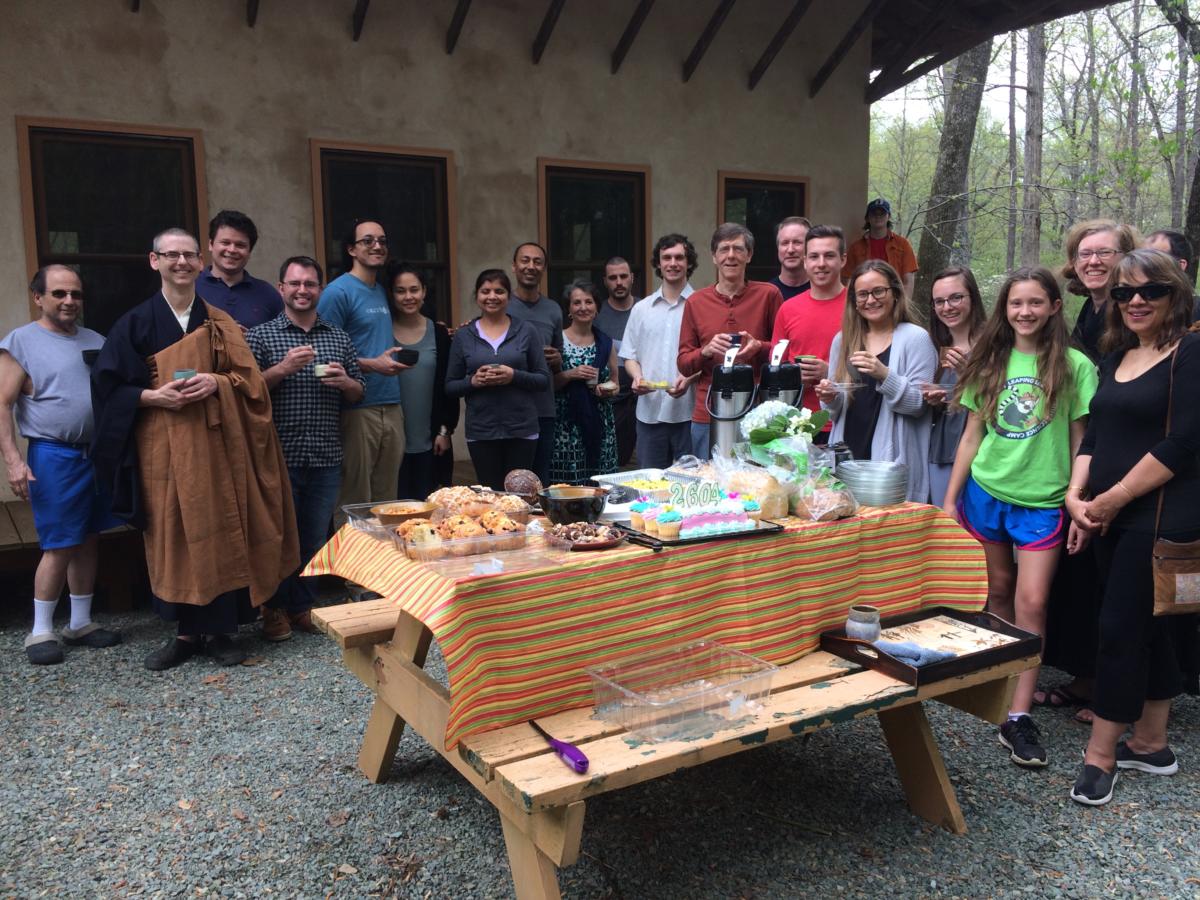
North Carolina Zen Center
(I had the privilege of reading Teshin Matthew Sweger‘s recent talk at the North Carolina Zen Center. While it was addressed directly to his community, I thought it touched directly on issues for all our Zen sanghas, and, really, for spiritual communities at large. I asked for permission to reprint it here, and the roshi graciously consented…)
Today, I want to talk about Sangha and how to be in community.
When I first came to Zen practice, community was not at the top of my list. I was drawn to zazen. To the stillness. To the rigor of koans. To the mystery and sharpness of Zen philosophy. But community? Not so much..
And yet long ago, I came to realize that community work, sangha work, is at the heart of our practice. And especially now. We are living in an era of profound loneliness and disconnection. According to a 2024 Gallup survey, 20% of U.S. adults report feeling lonely every single day—
I know many of you feel that disconnection. There is also a lot of fear right now. Real fear. And it’s not just personal—it’s systemic.
In these past months, we’ve all watched with alarm as our democratic norms have been purposely eroded, as universities and research organization have gotten their funding cut, as public officials talk openly about deporting people without due process—even defying court orders to do so. We’re seeing economic uncertainty, rising anxiety, and protests erupting across the country in response.
This is not abstract. This is the air we’re breathing right now. This isn’t abstract. It’s the atmosphere we’re living in. As someone said recently, the crisis is here.
And at the same time, religious communities are diminishing. In 2021 for the first time since WW2, less than 50% of Americans report belonging to a religious community. Its not just religious communities. Community involvement in general has decreased across the board as people feel compelled to be online more and more.
I have felt this myself for many years now. Way back in 1996, my teacher gave a dharma talk about what back then was the beginnings of the internet. He said: We are more and more becoming extended senses trying to connect with extended senses.
For the last 10 years I have noticed how fragmented people’s attention is and disembodied people have become and I am concerned about how much rudimentary work is needed as people take up this practice.
That is why, as many of you know, I have been hesitant to embrace online Dharma fully. Instead, I feel compelled to return as much as possible to in-person embodied community based practice. Now this isn’t to say that online offerings are a mistake. In fact, at times it has been amazing to see how technologies like zoom have offered people a lifeline when they have no way to be here in person.
But whether it is online or in-person, I have been feeling more and more the importance of Sangha. The third treasure. The living, breathing, imperfect practice of being together.
So, here is a question: How are we doing? I think we are doing pretty good.
People are practicing.. Our retreats have generally been full. Sunday mornings are vibrant, our workdays have been enlivening. There is real generosity here, and real care.
So we are doing pretty good. And yet….I believe we could also do better. So before we move on, let me ask you. How are you doing with Sangha?
Lets all take what I call the The Cushion Commitment Meter: If your participation in Sangha—not just physically but energetically, relationally—were a meditation cushion, what would it look like?
A full, firm, buckwheat-stuffed zafu—supporting others as well as yourself?
Perhaps more of a Half-filled cushion, not so supportive? Perhaps one of those inflatable cushions, Quietly deflating in the closet?
This isn’t about guilt. It’s about practice.
Let’s talk about that. But before I do, I want to say that this is just as much about me as it is about you. And I will get into that a bit later. But let me offer a few reflections about what I think we could do better at:
First: We need to show up more.
I want to speak plainly here. There are times I’m dismayed when I walk into the zendo for an evening or early morning sit and see a sparce few people. It’s hard to believe given how full Sundays have been but it’s just a couple of us. I know everyone is busy. I know we have families, jobs, responsibilities. That’s true for me too. But what we are offering here is something rare—a space of stillness, reflection, and community in a world that is anything but.
If the times we’ve set don’t work, I want to hear from you. I honestly don’t know if it’s a bad time, or if something else is going on. But silence here—ironically—isn’t helpful.
Talk to me. Let’s figure it out together. This isn’t just my zendo—it’s ours.
Number 2: we need to take more responsibility for the life of this Sangha.
Right now, it’s a small handful of committed folks—week after week—who are holding the container. Whether it’s the Zendo Team, Sunday caretaking, or simply showing up early to turn on the lights and light the incense, it’s been a small group most of the work.
I am grateful for them. Truly. But community isn’t something we receive—it’s something we build.
If you are a member here, please consider joining a committee, joining the zendo team, offering your expertise or your energy. Worried you aren’t qualified? If you can bow and carry a zabuton without falling over, congratulations—you’re qualified.”
Zen practice is just as much about work practice as it is the cushion. If you don’t know where to put your energy, talk to Shojun or me.
Let me honest…you will not get what you want out of zen practice until you find a path to serve in Sangha.
Number 3.
It’s what I’ll call quiet quitting, Sangha-style. Or the disappearing act.
This one has been on my mind for quite some time. Sometimes it comes up as I get a notice from Paypal that a member has stopped their monthly contribution. But more often it is simply a noticing. Someone is gone. Sometimes that disappearance follows an interaction—something I said, something another Sangha member did or didn’t do. And sometimes, there’s no visible reason at all.
Just… silence. Now, I understand that sometimes people need to move on. Sometimes the teacher-student relationship has run its course. Other times, life pulls us in another direction. And that’s okay. But what’s disheartening is not the leaving. It’s the silence around it.
This is especially important if you have committed to Shoken and Jukai. I am dismayed at how little I see some folks who have taken Jukai or committed to being a formal student. With both commitments it is understood that a part of this path is staying in contact, even when it’s hard. Maybe especially when it’s hard.
Because ours is a tradition where “don’t turn away” is central to our practice, we cannot normalize ghosting as an acceptable form of conflict resolution.
And more importantly: it robs you of the opportunity to truly practice with whatever fire has arisen.
This and many of the things I am bringing may be old habits. I imagine when someone drops off the radar, that this isn’t the only place or situation that this happens for that person. After all, we don’t come into Sangha as blank slates. We come with histories. With habits. With models of what community is—or what it isn’t.
A funny story about that….When I practiced at the Rochester Zen Center, I remember having some family visit and I invited them to attend the dharma talk on Sunday. After I showed them around my aunt whispered to me: why is everyone so sad and despondent? What she was referring to was the fact that people were in silence and looking down as they walked by. They were attending to their practice. But to her, it came across as sad and despondent.
Many of the models we carry were formed in families, schools, churches, and relationships that may or may not have held us well.
I want to say something about the psychology of ghosting. Much of the time it comes from anger, but it also comes from fear, or shame, and most of all, assumption.
I have heard it all: I thought you would be too busy to want to talk. I thought you wouldn’t want to hear it. I thought I would come across as a practice failure. I didn’t want to be a bother.
But every one of those is an assumption. And if our practice is about anything, it’s about challenging our assumptions….about everything.
In my own practice, when I catch myself assuming the worst about someone or myself or a situation—when I feel slighted or shut out or misunderstood—I try to stop and ask questions. I try to poke holes in the story I’m telling myself and ask: What else might be true? What am I not seeing?
We all project our ideas and assumptions onto others. WE think for sure we know what someone is thinking or feeling. We attribute and read in motive and intent to texts, to emails, to what is said or what isn’t said. But all of that is poison for you and for Sangha.
So two strategies you might consider. First of all, take a breath, and then muster some courage and ask a question of that person. Did you mean this or that? The second strategy of course is to simply drop the thoughts, the stories, the attributed motives and simply come back to what is right in front of you.
Whatever you do don’t act on those thoughts.
Disappearing is not Dharma. It’s defense.
Sometimes I think about putting a banner over the zendo entrance: ‘Abandon All Assumptions, Ye Who Enter Here.’ Might save us all a lot of trouble.”
And let me offer a reminder here: Change doesn’t happen in a burst. It happens through presence. Through repetition. Through staying.
We used to call people who came and went in sudden bursts of enthusiasm “shooting stars.”
Enthusiastic. And then—gone.
But the transformation that Zen points to doesn’t come from shooting star energy. It comes from showing up. Over time. Through boredom. Through discomfort. Through resistance.
Ok…. Number (4) Saying hello.
When someone new walks into the zendo—whether it’s their first time sitting or they’ve just moved to the area—they’re not just coming to check out a schedule. They’re stepping into something unknown. They’re taking a risk. They’re hoping—quietly, maybe even unconsciously—that this might be a place where they can belong.
We’ve all been the new person somewhere. And we all know the feeling of sitting by ourselves while everyone else seems to know exactly where to go and how to act. It doesn’t take much—a warm hello, a gentle smile, a quiet “Is this your first time here?”—to make all the difference.
And I want to say: many of you are already doing this. So thank you.
Visitors often tell me they felt welcomed when they arrived. That someone reached out. That they weren’t ignored. And—there’s room to grow.
There are still days when someone slips in and slips out, never spoken to. And it’s not because people are unfriendly—it’s often just that we’re unsure. We don’t want to intrude. We think, “Someone else will probably say something.”
But here’s the practice: If you see someone you don’t recognize—say hello. And please:
Don’t worry about saying the perfect thing. Don’t wait until you feel totally confident or social or “Zen enough.” Just offer yourself. Offer your presence. “Saying hello after sitting isn’t small talk. It’s small practice.”
By the way….this how we should approach dokusan, too. You could say for many people this is a crucial practice. Too often I hear: I didn’t have anything to bring up! And I usually say, well what if I did?
You don’t have to bring something polished. In fact, I prefer you don’t. You don’t need to know what to say. You just need to show up—authentically—and be willing to meet another human being. That’s the whole of it.
And look, I get it, I’m an introvert too: sometimes it’s easier to sit facing a wall than to sit facing a Sangha member we’ve had tension with or approaching someone we don’t know. At least the wall doesn’t stare back.
When I first started practicing, the last thing I wanted was small talk after sitting. Or potlucks. Or committees. But something shifted.
one day it hit me— What we love about the stories from Zen is the interaction between people. Most of the koans are a back and forth between teacher and student or between peers.
Zen isn’t just about realization on the cushion. It’s about how we meet the world. How we meet each other. It’s about relationship.
Here is a passage from Joan Sutherland a teacher in our shared lineage who said this about the old zen masters:
We spend a lot of time in the company of our thoughts and feelings, and sometimes we are a companion to silence. But Even a hermit sits in a web of connections with things visible and invisible. Our meditation is made not just of the vastness and the deep engine of concentration; it is also made of these relationships. And then one day, for no apparent reason, something in particular comes to fetch us:. A particular intimate meeting with a particular other opens us to an intimate relationship with life itself.
Practice is about making us fetchable. It helps us to recognize what gets in the way of our being fetched, and then it gives us a method to deconstruct the obstacle. Most people find this difficult to do on their own, that’s where the power of intimate meetings comes in.
So yes our little community here is important and….to recognize that the practice of community happens on so many levels. In every meeting with both animate and inanimate beings.
In commenting on the old encounter dialogues of the masters she says: they could be mild, probing, or literally upending, but are never about winning an argument or making someone feel stupid. Over and over again—tirelessly, relentlessly—they are an invitation to freedom. In a time of crisis, talking about freedom or even modeling a free life wasn’t enough; these intimate meetings allowed people to experience freedom for themselves.
And then she cites this beautiful example of an encounter dialogue between a monk and Master Shitou: A monk asked Shitou “What about liberation?” “Who binds you?” countered Shitou. “What about the Pure Land?”Shitou said “Who corrupts you?” “What about nirvana?” Shitou said “Who keeps you in the cycle of birth and death?”
Each time, the monk asked about some grand spiritual concept—liberation, the Pure Land, nirvana—and each time Shitou turned the mirror back to the monks own body and mind.
Who binds you? Who corrupts you? Who keeps you trapped?
Don’t reaching for something “out there.” Only the intimate confrontation with one’s own mind, one’s own entanglements.
Shitou brings forth birth and death
Not as distant philosophical ideas, but as the living reality of our practice. And these are Hard to face. But that’s exactly why, when we begin this practice we are taught to find our breath. Because our practice is about facing what we don’t want to face. And that’s good news.
Because as practitioners we recognize that we can’t wait for the world, and everyone else to come as we prefer.
As we stay, as we cultivate our practice, what was hidden becomes easier to see and recognize. And what becomes visible is the second great mark of suffering: change.
We begin to see: We can’t keep what we want. We can’t keep away what we don’t want. We can’t always be with who we want to be with. We can’t avoid being with those who irritate us.
And in fact—there should be people in the Sangha who challenge you.
How else will we see ourselves clearly? How else will we face the mind—the wants, the non-wants, the attachments, the aversions?
Ok, last one….
I’ve noticed that sometimes, after Sunday service, a few people slip out the back. Quietly. No conversation. And I wonder—Do they have to be somewhere? Or is there a kind of unease there? A discomfort in staying and connecting?
I wonder that because—truthfully—sometimes I feel the same way. After a full morning of prep, dokusan, giving a talk… I feel that tug too. That impulse to vanish.
But I know that staying matters
And I want to say this too: I have a lot to work on. Really?? Yes….really.
I know that I can come across as distracted or too busy. And Sometimes that comes across as uncaring. I sometimes neglect texts or emails. I am terrible at emails! I don’t think I will ever like emails, but I will say this: If you want to talk, let’s talk in person. In that spirit, very shortly I will be making more space in my week for longer one on one practice meetings with anyone who would find them helpful.
Shojun and I also plan to begin doing Sangha Circles to hear your thoughts about practice and this community. So be on the lookout for that soon as well.
The membership committee is trying to tighten up things as well. When someone new walks through these doors and becomes a member, we want to make sure they feel welcome, are educated about our practice and offerings and they know how to engage.
But the reality is that I’m also a dad, and a therapist. And right now, that takes a great deal of time and energy. Things should stabilize in, oh, ten years.
and so I will disappoint some of you in my ability to respond effectively to your needs. But I do want to also get to know you as a member and a student so that we can practice together effectively.
So this morning, I’ve asked a lot of us. I’ve asked us to look honestly—at how we show up, how we pull away, how we project and assume and protect ourselves.
I’ve asked us to stay—when it would be easier to slip out quietly, to find reasons not to belong.
True Intimacy Isn’t Based on Agreement
This is perhaps the most radical teaching of all. That intimacy, connection, Sangha—it’s not built on shared opinions. It’s built on. Shared silence. Shared confusion. Shared effort. As soon as we try to build community around shared ideology, we’re on a tightrope. But shared practice? That can hold contradictions. It can hold people who vote differently. Who grieve differently. Who stumble into this space not knowing what they believe. Because practice isn’t belief—it’s embodiment.
In Zen, we say that practice isn’t about fixing something. It’s about revealing what’s already whole.
And community—Sangha—is one of the ways wholeness becomes visible. Because in the end, we don’t practice just for ourselves. We practice for this world. And this world needs us—rooted, awake, and not running away.
Contemplative
Previous Post
April 24, 2025
Mr Arnold & His Light of Asia
Next Post

May 10, 2025 Dreaming Mother's Day
Recent Comments
"Allowing anger to contaminate one's hard disk can be detrimental to one's holistic well being. ..."
Hot Anger: Meeting Anger in Zen ..."
"I love this koan. every which way you turn it bites you, Thirty years on ..."
Nanquan Cuts the Cat: A Jesuit ..."
"As a substitute for religion, Zen is probably better than taking drugs. However, it can ..."
The Selling of Zen at the ..."
"Craving and aversion are detrimental to one's peace and happiness. Easter is a wake up ..."
Easter: A Zen Buddhist Appreciation
Browse Our Archives
Select a Category A Christmas Carol Abolitionist African-American Ahmadiyya Alan Watts Aldous Huxley Allen Ginsberg Amedkar Jayanti American politics American Zen Anaheim Zen Sangha Anglican Annie Besant April Fool Armageddon Art and Religion artificial intellegence Atheist Awakening B R Ambedkar Barlaam & Josaphat Beatnik Between Bhagavad Gita Bible biography birthday bodhisattva Bodhisattva Precepts Book burning Book of Common Prayer Book of Mormon Brahmo Samaj Buddha Buddhism Buddhist Buddhist Lord's Prayer Butterflies Calendars cartoons cat ChatGPT Chicken Tortilla Soup choices Christian atheism Christian mysticism Christian origins Christian Science Christian Zen Christianity Christianity and Buddhism christmas Christmas Truce Christopher Isherwood Church of Later Day Saints Cinco de Mayo circus covenant critical thinking culture D. T. Suzuki Dalit Buddhism Daniel Defoe Desert Fathers and Mothers dharma talk Dogen Donald Trump Dongshan's Five Ranks Dorothy Day dream Duty Easter ecology Edwin Arnold emptiness Empty Moon Zen Network Episcopal Church Eternal Now Ethics evolution existentialism Faith fantasy Fathers Day film film review fire Five Ranks Folk music food Form and emptiness Four Seals Francis of Assisi Francis Xavier Free thinker friendship George MacDonald Gerald Heard Glenn Taylor Webb God Good Friday Gospel of Gospel of Mark Gospel of Thomas grace Graduate Theological Unioin Graduate Theological Union Guanyin H R Blyth Hakuin Ekaku Hanamatsuri Hanukkah Harada Yasutani Zen Heart Sutra Henry David Thoreau Hermann Hesse Hinduism History and Religion history of religion Holy Spirit home Hospitality Icon Ides of March Isaac Newton Islam Islamic mysticism Jack Kerouac James Luther Adams Jiddu Krishnamurti Joan of Arc Johannes Gutenberg John Donne joke Judaism justice karma kensho King James Bible koan Koun Yamada Kyoto School Lewis Carrol Liberal Christianity Liberal Religion Life Plan Community Liminal literature Literature and Religion Liturgy Lord's Prayer Love Mahatma Gandhi Mahayana Martin Luther King Jr Mary Baker Eddy Mary Magdelene Mary Oliver Mayflower Compact Meditation memories memory metaphor money money and religioin Mormons Mother's Day movie review mysticism mythic Neighborhood Unitarian Universalist Church New Thought Nichiren Buddhism Nonduality not knowing Omar Khayyam Pacific School of Religion pagan Palm Sunday Passover peace Pentecost perennialism Phantastes Philip Kapleau philosophy Pilgrimage poetry Poetry and Religion politics Prayer Precepts Printing Press prophecy prophetic spirituality psychology Pure Land Queer religion queering religion Quietism Ram Mohan Roy rebirth recipe Relationships and religion religion religion and history Religious syncretism Resistance Retirement Retreat review Rissho Kosei Kai Ritual Robert Aitken Roshi Robert Ingersoll Rohatsu Romani religion Rosie the Riveter saints samadhi SanboZen Sangha Satyagraha science science and reigion science and religion science fiction seminary sermon Sesshin Sex and Religion Shinran Sikh Sikh tradition silence Social Justice Socially Engaged Buddhism Society and religion Soto Zen soul spiritual community spiritual practice Spirituality Sufism Suicide superstition Taoism Television Teresa of Avila Thanksgiving theological schools Theosophy Thomas Merton Time Transcendentalism Transcendentalist Trinitarian Trinity Uncategorized unitarian Unitarian Christianity Unitarian Universalist Universalism Vajrayana Vedanta Walking war Willa Cather William Ellery Channing wisdom women and religion women in religion World Teacher Writing zazen Zen Zen Center Zen inspired retriement zen meditation Zen Precepts Zen women
Select a Month September 2026 August 2026 July 2026 June 2026 May 2026 April 2026 March 2026 February 2026 January 2026 December 2025 November 2025 October 2025 September 2025 August 2025 July 2025 June 2025 May 2025 April 2025 March 2025 February 2025 January 2025 December 2024 November 2024 October 2024 September 2024 August 2024 July 2024 June 2024 May 2024 April 2024 March 2024 February 2024 January 2024 December 2023 November 2023 October 2023 September 2023 August 2023 July 2023 June 2023 May 2023 April 2023 March 2023 February 2023 January 2023 December 2022 November 2022 October 2022 September 2022 August 2022 July 2022 June 2022 May 2022 April 2022 March 2022 February 2022 January 2022 December 2021 November 2021 October 2021 September 2021 August 2021 July 2021 June 2021 May 2021 April 2021 March 2021 February 2021 January 2021 December 2020 November 2020 October 2020 September 2020 August 2020 July 2020 June 2020 May 2020 April 2020 March 2020 February 2020 January 2020 December 2019 November 2019 October 2019 September 2019 August 2019 July 2019 June 2019 May 2019 April 2019 March 2019 February 2019 January 2019 December 2018 November 2018 October 2018 September 2018 August 2018 July 2018 June 2018 May 2018 April 2018 March 2018 February 2018 January 2018 December 2017 November 2017 October 2017 September 2017 August 2017 July 2017 June 2017 May 2017 April 2017 March 2017 February 2017 January 2017 December 2016 November 2016 October 2016 September 2016 August 2016 July 2016 June 2016 May 2016 April 2016 March 2016 February 2016 January 2016 December 2015 November 2015 October 2015 September 2015 August 2015 July 2015 June 2015 May 2015 April 2015 March 2015 February 2015 January 2015 December 2014 November 2014 October 2014 September 2014 August 2014 July 2014 June 2014 May 2014 April 2014 March 2014 February 2014 January 2014 December 2013 November 2013 October 2013 September 2013 August 2013 July 2013 June 2013 May 2013 April 2013 March 2013 February 2013 January 2013 December 2012 November 2012 October 2012 September 2012 August 2012 July 2012 June 2012 May 2012 April 2012 March 2012 February 2012 January 2012 December 2011 November 2011 October 2011 September 2011 August 2011 July 2011 June 2011 May 2011 April 2011 March 2011 February 2011 January 2011 December 2010 November 2010 October 2010 September 2010 August 2010 July 2010 June 2010 May 2010 April 2010 March 2010 February 2010 January 2010 December 2009 November 2009 October 2009 September 2009 August 2009 July 2009 June 2009 May 2009 April 2009 March 2009 February 2009 January 2009 December 2008 November 2008 October 2008 September 2008 August 2008 July 2008 June 2008 May 2008 April 2008 March 2008 February 2008 January 2008 December 2007 November 2007 October 2007 September 2007 August 2007 July 2007 June 2007 May 2007 April 2007 March 2007 February 2007 January 2007 December 2006 November 2006 October 2006 September 2006
Follow Us!
TAKE THE
Religious Wisdom Quiz
We are the tribe assigned to carry the sacred objects and serve in worship. Who are we?
Select your answer to see how you score.
The Tribe of Naphtali The Tribe of Judah The Danites The Levites
Related posts from Monkey Mind

Keizan Jokin: The Zen Master Ancestor You Don't...

What Zen Practice Actually Does With Anger

Nanquan Cuts the Cat: A Jesuit commentary on...

On Taking Refuge in the Dharma
TRENDING AT PATHEOS Buddhist

The Sermon on the Mount, Part I: Matthew...
The Sermon on the Mount, Part I (Matthew 4:12-5:12) St. Matthew moves...

What's up from Crossway: Reviewing some of their latest A few weeks...

Janie Learns the Way of the Cross: A...
Teaching children about Jesus' Passion can be challenging. Many parents and educators...

Looking For Good Catholic Writing - October 2026
He alone extends the heavens, and he walks upon the waves of...

In "Irreplaceable," our book on vocation and technology, Trevor Sutton and I...

I was strolling through the top floor of the brand new Parthenon...
view all Buddhist blogs
What Are Your Thoughts?leave a comment
Ad-Free & Subscriber Log-In Subscription Support
- About Us
- 2026 Calendar
- Videos
- Podcasts
- Library of World Religions
- Faith In Media Tracker
- Advertise With Us
- Write for Us
- Privacy Policy
- Terms of Service
- Do Not Sell My Data
- Contact Us
- Radiant Digital
- Manage Newsletter Subscriptions
- Unsubscribe From Notifications
- Sitemap
Copyright 2008-2026, Patheos. All rights reserved.
Subscription Support Ad-Free & Subscriber Log-In
Follow Patheos