
BuddhistCatholicContemplativeEvangelicalGeneral ChristianHinduJewishLatter-day SaintMuslimNew VisionsProgressive Christian
Beliefs
- Buddhist
- Catholic
- Contemplative
- Evangelical
- General Christian
- Hindu
- Jewish
- Latter-day Saint
- More Voices
- Muslim
- New Visions
- Pagan
- Progressive Christian
Topics
- Religion News
- Food and Religion
- Sports and Religion
- Religious Art
- Religious Music and Entertainment
- Religious Events
- History and Religion
- Style and Religion
- Politics and Religion
- Women in Religion
- Recreation Outdoors and Religion
- Business Finance and Religion
- Careers Workplace and Religion
- Education and Religion
- Family Parenting and Religion
- Health Fitness and Religion
- Home and Religion
- Relationships and Religion
- Technology and Religion
- Travel and Religion
Columnists
- Buddhist Columnists
- Business Finance and Religion Columnists
- Careers Workplace and Religion Columnists
- Catholic Columnists
- Contemplative Columnists
- Education and Religion Columnists
- Evangelists Columnists
- Family Parenting and Religion Columnists
- General Christian Columnists
- Health Fitness and Religion Columnists
- Hindu Columnists
- History and Religion Columnists
- Home and Religion Columnists
- Jewish Columnists
- More Voices Columnists
- Latter Day Columnists
- Muslim Columnists
- New Visions Columnists
- Nonreligious Columnists
- Pagan Columnists
- Politics and Religion Columnists
- Progressive Columnists
- Recreation Outdoors and Religion Columnists
- Relationships and Religion Columnists
- Religion News Columnists
- Religious Art Columnists
- Religious Events Columnists
- Religious Music and Entertainment Columnists
- Sports and Religion Columnists
- Style and Religion Columnists
- Technology and Religion Columnists
- Travel and Religion Columnists
- Women in Religion Columnists
Resource Library
- 2026 Calendar
- Library of World Religions
- The 100 Most Holy Places on Earth
- Patheos Answers
- Podcasts
- Videos
- Faith Leaders Database
- Anglican Episcopalian
- Bahai
- Baptist
- Buddhism
- Christianity
- Confucianism
- Eastern Orthodoxy
- Hinduism
- Holiness and Pentecostal
- ISKCON
- Islam
- Judaism
- Lutheran
- Methodist
- The Church of Jesus Christ of Latter-day Saints
- New Age
- Paganism
- Presbytarian and Reformed
- Protestantism
- Religion Behind the Scenes
- Roman Catholic
- Scientology
- Shia Islam
- Sikhism
- Sufism
- Sunni Islam
- Taoism
- Zen
- See all religions
Research Tools
 Ad-Free & Subscriber Log-In Subscription Support
Ad-Free & Subscriber Log-In Subscription Support
Follow Patheos 

- Trending:
- Forgiveness
- |
- Marriage
- |
- Consciousness
- |
- Death Penalty
- |
- Election
- |
- Halloween

- Home
- Buddhist
- History and Religion
- The Eternal Now: Zen and the mysterious arts of meeting time
The Eternal Now: Zen and the mysterious arts of meeting time
Last updated on: August 10, 2024 at 7:47 am by James Ford
The Eternal Now: Zen and the mysterious arts of meeting time 2024-08-10T07:47:49-07:00 James Ford
Patheos Explore the world's faith through different perspectives on religion and spirituality! Patheos has the views of the prevalent religions and spiritualities of the world.
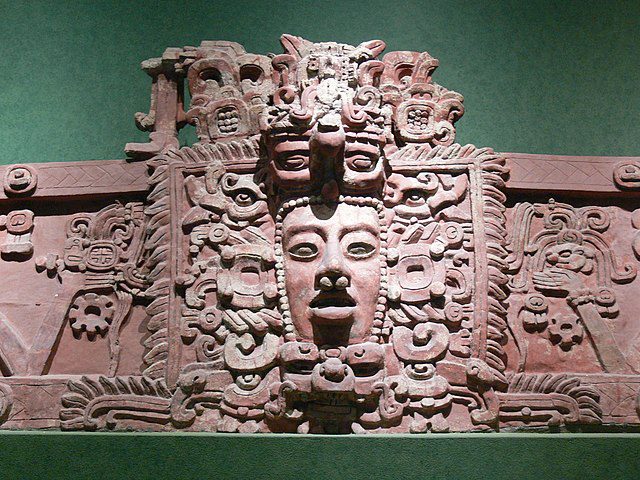
Mayan mask from Placeres, Campeche, circa 250- 600 CE.
Nothing truly real is forgotten eternally, because everything real comes from eternity and goes to eternity.
Paul Tillich, the Eternal Now
August the 11th is a very interesting date. In the famous Mayan long count calendar, the beginning of it all is, in our Gregorian translation, the 11th of August in 3114 before our common era.
Mostly when I think of calendars I find myself considering beginnings.
January 1st in our culture, now a meta cultural thing noticed pretty much everywhere around the globe, even when other more ancient forms of counting time exists.
I’m also intrigued by first days. So, July 16th, for instance.
counted in Islamic culture marking when Mohammed and his companions fled from Medina on that date in 622 (according to the good old Gregorian). And it becomes the Islamic New Year.
Of course my favorite has to be the beginning marked out by James Ussher, then the Anglican Archbishop of Armagh, and Primate of All Ireland. Through a very rational investigation of the genealogies of the Bible, he established the creation of the world on the 23rd of October, in the 4004th year before the common era. A good start.
Going back to the 1st of January. And why. One might think the new year should be marked by a solstice or an equinox. While it is true this season roughly is when the Earth is closest to the sun, it doesn’t appear the ancients were aware of this. Instead there’s some speculation that this date follows a tradition that dates to 153 before the common era when the Romans started dating years from the inauguration of the term of the two consuls who ruled for a year. And that beginning was the festival of Janus, the two-faced god of doors and beginnings. It was then enshrined in Julius Caesar’s reformed calendar which would eventually become normative throughout the empire, and therefore much of Europe and the Near East, although March somewhere in the neighborhood of the equinox gave 1 January a bit of a run for its money for quite a while, but was finally established for Europe and anywhere Europe exercised its muscle with the Gregorian reform of the Julian calendar.
The Chinese new year follows a lunar calendar with solar corrections on a regular basis, and falls somewhere been January 21st and February 20th. Wikipedia tells me that while we do a traditional numbering from the reign of the Yellow Emperor three thousand years before the common era, this seems more an adaptation of overseas Chinese than something observed in China itself, and for those who use this date, there are three different ones to choose between.
India, on the other hand, never seems to have established a common counter for the sub continent. Although dates associated with the spring seem most popular. Africa has a similar lack of a continent wide date, although in North America and elsewhere within the African diaspora the Yorba Odunde festival, which takes on the 2nd of June is increasingly popular. Similarly, the indigenous peoples of the Americas have no commonly accepted date, although spring remains popular. One exception to that general rule is the Pueblo peoples, who mark the 22nd of December, which is a bit closer to the seasonal markers than the 1st of January.
A bit of digging around the web reveals the earliest recorded celebration of a “new year” took place in Mesopotamia somewhere in the neighborhood of two millennia before that common era. I understand most inhabitants of the ancient Near East, foremost among the the Egyptians started their new years on the autumnal equinox. While the Greeks liked the winter solstice.
It appears for a number of reasons, not least the near world dominance of European colonialism up until relatively recently has made the Gregorian calendar the calendar. With the notable tweak of dropping the term AD, Anon Domino, in the “Year of our Lord,” and with it BC meaning Before Christ in favor of the more neutral “Before the Common Era,” and “After the Common Era.” This has been helped along by the fact the dating going back to Jesus’ birth is generally considered to be off by somewhere between four and six years, and had nothing to do with the first of January. Still, for some the dating is a bitter pill. Again, thanks to Wikipedia, I see that the religious studies scholar Raimon Panikkar spoke for many when he contends that using the designation BCE/CE is a “return… to the most bigoted Christian colonialism” towards non-Christians, who do not necessarily consider the time period following the beginning of the calendar to be a “common era.”
It is hard to miss the colonialist implications of continuing the Gregorian calendar. On the other hand former United Nations Secretary-General Kofi Annan argues, “[T]he Christian calendar no longer belongs exclusively to Christians. People of all faiths have taken to using it simply as a matter of convenience. There is so much interaction between people of different faiths and cultures – different civilizations, if you like – that some shared way of reckoning time is a necessity. And so the Christian Era has become the Common Era.”
All that noted, I find with the Maya long count a small bubbling of thoughts on the end.
Not all that long ago, because one version of the Mayan calendar ended in 2012, it became quite a vehicle for people looking for end times. A perennial of the human heart. As well as for those who like to make money off people looking for end times.
It looks like some people did very well with that particular end time…
Of course ends of the world abound. Religions love ’em. In Judaism, Christianity and Islam, following, it would appear, Zoroastrianism, time runs on a straight line toward one great end. But there are other ways to engage the idea. For instance in Buddhism and Hinduism end times tend to be the end of cycles in what appear to be an endless spiral.
In contemporary popular culture we’ve introduced any number of variations on the theme. We continue to get various second rate prophets regularly predicting ends with varying degree of media hype. Also, some New Agers buy into end times with considerable enthusiasm. The Long Count calendar being a most recent version. But, also I recall 1987’s Harmonic Convergence, one of the more benign versions of end times as great shifts.
Even secular versions proliferate. I still vividly recall friends stocking up on goods in anticipating of airplanes falling out of the sky for Y2K. And, even I find my heart strings tugged by the idea/prediction of the Singularity propagated by Ray Kurzweil and others, that moment when artificial intelligence achieves sentience. A moment where I personally would hope our new overlords at least find us amusing…
So, there we are.
I suspect most end of the world schemes are projections of our individual body knowing we all will die, that each and every one of us will indeed come to an end of time, and space, and, well, pretty much everything…
And without a doubt there are ends coming. The Buddha was brutally right when he said everything composed of parts will come apart. And, we are all made up of parts. And somewhere in our bodies, we know this. Even if not consciously our bodies know there is an end.
When it comes to consciousness, or even if it is only bubbling below the surface, it’s part of our live. So, small wonder some hope for an escape pod. The most common fantasy is that “I,” the composite of causes and conditions that coalesce for a moment as “me,” is not really from this place, which will at the appropriate time, escape this mortal coil and go on to a rightful place…
Heaven. Hell. A new life.
It brings to my imagination that old movie When Worlds Collide. It was made in 1951 and had a half life on television re-running any number of times during my childhood. I recall the tingle of hope as the passengers on the escaped rocket ship crash lands and in full technicolor (considering we didn’t have color television, either I saw it in theaters as well, or my lovely and ever imaginative memory has filled in the color…) everyone walks into the landscape of their, our, new home world.
So, here we are. In our own moment. A moment with its own dreams of beginning. And its own dreams of endings.
Now, I think we can take this all in a number of ways.
For one. We can just embrace each new end time as true. Make peace with various storm deities or stock up on guns and energy bars. But I have to admit this doesn’t work for me.
For another. We can dismiss it all. I have inclinations in that direction. I know I’ve pretty consistently made fun of my friends who bought into the Harmonic Convergence and then again with Y2K and, while I didn’t seem to have too many friends into the Long Count apocalypse, I didn’t pass on the chance to mock it.
But, then I think of the Singularity. And the hard fact we all do die. Real death.
And, I find myself forced to look a bit deeper, and even, maybe, a tad more compassionately. There is something important within this intuition of an end.
Here we are in fact swimming into deep waters. Reality is in fact more complex than any of our stories about it. While death is an inevitability, each moment seems in fact to live for ever in some very real sense. This is not a fabrication, it is a truth. Everything exists forever in one very real sense.
There is just now. It is not the past. It is not the future.
And. The half life from past to present can be sliced to infinity even as the half life from now to the future can be cut infinitely. Also, I suspect, strongly, the relentless singular direction of time is only part of the truth. Time and matter seem to be part of one thing that taken together doesn’t actually look like matter and time rushing from the past toward the future…
And, more important, these things are not simply ideas we can play with, they point to something our human mind/bodies seem able to know in a sense similar to how we know a broken arm or a kiss.
The secret is found in presence.
It is always about presence. This mysterious reality, where beginnings and endings vanish, time itself suspends, and the face of God is revealed. The moment. This moment.
When we don’t turn from the end, we in fact also find the beginning. And in that moment, In that fraction of a moment.
Worlds birth.
Worlds collapse,
Words collapse as we face into the gift of this moment.
The eternal now.
The place where we find our saving.
New Visions
History and Religion
Previous Post

August 4, 2024
Zen & the Fine Art of Boredom
Next Post

August 13, 2024 There’s a (W)Hole in the Soul
Recent Comments
"Allowing anger to contaminate one's hard disk can be detrimental to one's holistic well being. ..."
Hot Anger: Meeting Anger in Zen ..."
"I love this koan. every which way you turn it bites you, Thirty years on ..."
Nanquan Cuts the Cat: A Jesuit ..."
"As a substitute for religion, Zen is probably better than taking drugs. However, it can ..."
The Selling of Zen at the ..."
"Craving and aversion are detrimental to one's peace and happiness. Easter is a wake up ..."
Easter: A Zen Buddhist Appreciation
Browse Our Archives
Select a Category A Christmas Carol Abolitionist African-American Ahmadiyya Alan Watts Aldous Huxley Allen Ginsberg Amedkar Jayanti American politics American Zen Anaheim Zen Sangha Anglican Annie Besant April Fool Armageddon Art and Religion artificial intellegence Atheist Awakening B R Ambedkar Barlaam & Josaphat Beatnik Between Bhagavad Gita Bible biography birthday bodhisattva Bodhisattva Precepts Book burning Book of Common Prayer Book of Mormon Brahmo Samaj Buddha Buddhism Buddhist Buddhist Lord's Prayer Butterflies Calendars cartoons cat ChatGPT Chicken Tortilla Soup choices Christian atheism Christian mysticism Christian origins Christian Science Christian Zen Christianity Christianity and Buddhism christmas Christmas Truce Christopher Isherwood Church of Later Day Saints Cinco de Mayo circus covenant critical thinking culture D. T. Suzuki Dalit Buddhism Daniel Defoe Desert Fathers and Mothers dharma talk Dogen Donald Trump Dongshan's Five Ranks Dorothy Day dream Duty Easter ecology Edwin Arnold emptiness Empty Moon Zen Network Episcopal Church Eternal Now Ethics evolution existentialism Faith fantasy Fathers Day film film review fire Five Ranks Folk music food Form and emptiness Four Seals Francis of Assisi Francis Xavier Free thinker friendship George MacDonald Gerald Heard Glenn Taylor Webb God Good Friday Gospel of Gospel of Mark Gospel of Thomas grace Graduate Theological Unioin Graduate Theological Union Guanyin H R Blyth Hakuin Ekaku Hanamatsuri Hanukkah Harada Yasutani Zen Heart Sutra Henry David Thoreau Hermann Hesse Hinduism History and Religion history of religion Holy Spirit home Hospitality Icon Ides of March Isaac Newton Islam Islamic mysticism Jack Kerouac James Luther Adams Jiddu Krishnamurti Joan of Arc Johannes Gutenberg John Donne joke Judaism justice karma kensho King James Bible koan Koun Yamada Kyoto School Lewis Carrol Liberal Christianity Liberal Religion Life Plan Community Liminal literature Literature and Religion Liturgy Lord's Prayer Love Mahatma Gandhi Mahayana Martin Luther King Jr Mary Baker Eddy Mary Magdelene Mary Oliver Mayflower Compact Meditation memories memory metaphor money money and religioin Mormons Mother's Day movie review mysticism mythic Neighborhood Unitarian Universalist Church New Thought Nichiren Buddhism Nonduality not knowing Omar Khayyam Pacific School of Religion pagan Palm Sunday Passover peace Pentecost perennialism Phantastes Philip Kapleau philosophy Pilgrimage poetry Poetry and Religion politics Prayer Precepts Printing Press prophecy prophetic spirituality psychology Pure Land Queer religion queering religion Quietism Ram Mohan Roy rebirth recipe Relationships and religion religion religion and history Religious syncretism Resistance Retirement Retreat review Rissho Kosei Kai Ritual Robert Aitken Roshi Robert Ingersoll Rohatsu Romani religion Rosie the Riveter saints samadhi SanboZen Sangha Satyagraha science science and reigion science and religion science fiction seminary sermon Sesshin Sex and Religion Shinran Sikh Sikh tradition silence Social Justice Socially Engaged Buddhism Society and religion Soto Zen soul spiritual community spiritual practice Spirituality Sufism Suicide superstition Taoism Television Teresa of Avila Thanksgiving theological schools Theosophy Thomas Merton Time Transcendentalism Transcendentalist Trinitarian Trinity Uncategorized unitarian Unitarian Christianity Unitarian Universalist Universalism Vajrayana Vedanta Walking war Willa Cather William Ellery Channing wisdom women and religion women in religion World Teacher Writing zazen Zen Zen Center Zen inspired retriement zen meditation Zen Precepts Zen women
Select a Month September 2026 August 2026 July 2026 June 2026 May 2026 April 2026 March 2026 February 2026 January 2026 December 2025 November 2025 October 2025 September 2025 August 2025 July 2025 June 2025 May 2025 April 2025 March 2025 February 2025 January 2025 December 2024 November 2024 October 2024 September 2024 August 2024 July 2024 June 2024 May 2024 April 2024 March 2024 February 2024 January 2024 December 2023 November 2023 October 2023 September 2023 August 2023 July 2023 June 2023 May 2023 April 2023 March 2023 February 2023 January 2023 December 2022 November 2022 October 2022 September 2022 August 2022 July 2022 June 2022 May 2022 April 2022 March 2022 February 2022 January 2022 December 2021 November 2021 October 2021 September 2021 August 2021 July 2021 June 2021 May 2021 April 2021 March 2021 February 2021 January 2021 December 2020 November 2020 October 2020 September 2020 August 2020 July 2020 June 2020 May 2020 April 2020 March 2020 February 2020 January 2020 December 2019 November 2019 October 2019 September 2019 August 2019 July 2019 June 2019 May 2019 April 2019 March 2019 February 2019 January 2019 December 2018 November 2018 October 2018 September 2018 August 2018 July 2018 June 2018 May 2018 April 2018 March 2018 February 2018 January 2018 December 2017 November 2017 October 2017 September 2017 August 2017 July 2017 June 2017 May 2017 April 2017 March 2017 February 2017 January 2017 December 2016 November 2016 October 2016 September 2016 August 2016 July 2016 June 2016 May 2016 April 2016 March 2016 February 2016 January 2016 December 2015 November 2015 October 2015 September 2015 August 2015 July 2015 June 2015 May 2015 April 2015 March 2015 February 2015 January 2015 December 2014 November 2014 October 2014 September 2014 August 2014 July 2014 June 2014 May 2014 April 2014 March 2014 February 2014 January 2014 December 2013 November 2013 October 2013 September 2013 August 2013 July 2013 June 2013 May 2013 April 2013 March 2013 February 2013 January 2013 December 2012 November 2012 October 2012 September 2012 August 2012 July 2012 June 2012 May 2012 April 2012 March 2012 February 2012 January 2012 December 2011 November 2011 October 2011 September 2011 August 2011 July 2011 June 2011 May 2011 April 2011 March 2011 February 2011 January 2011 December 2010 November 2010 October 2010 September 2010 August 2010 July 2010 June 2010 May 2010 April 2010 March 2010 February 2010 January 2010 December 2009 November 2009 October 2009 September 2009 August 2009 July 2009 June 2009 May 2009 April 2009 March 2009 February 2009 January 2009 December 2008 November 2008 October 2008 September 2008 August 2008 July 2008 June 2008 May 2008 April 2008 March 2008 February 2008 January 2008 December 2007 November 2007 October 2007 September 2007 August 2007 July 2007 June 2007 May 2007 April 2007 March 2007 February 2007 January 2007 December 2006 November 2006 October 2006 September 2006
Follow Us!
TAKE THE
Religious Wisdom Quiz
Who was thrown into a pit by his jealous brothers?
Select your answer to see how you score.
Moses Joseph Peter David
Related posts from Monkey Mind

Keizan Jokin: The Zen Master Ancestor You Don't...

What Zen Practice Actually Does With Anger

Nanquan Cuts the Cat: A Jesuit commentary on...

On Taking Refuge in the Dharma
TRENDING AT PATHEOS Buddhist

Swimfan: Forgotten Aughts Pleasures
This is a recovery effort. In 2002, My Big Fat Greek Wedding...

Top Three Anti-Catholic Lies About Catholicism
This is my initial transcript for the video, "THE 3 WORST...

Pope Leo Celebrates Mass for Nurses & Docs...
I don't have any idea how he did it, but Pope Leo...

The Sermon on the Mount, Part I: Matthew...
The Sermon on the Mount, Part I (Matthew 4:12-5:12) St. Matthew moves...

What's up from Crossway: Reviewing some of their latest A few weeks...

Janie Learns the Way of the Cross: A...
Teaching children about Jesus' Passion can be challenging. Many parents and educators...
view all Buddhist blogs
What Are Your Thoughts?leave a comment
Ad-Free & Subscriber Log-In Subscription Support
- About Us
- 2026 Calendar
- Videos
- Podcasts
- Library of World Religions
- Faith In Media Tracker
- Advertise With Us
- Write for Us
- Privacy Policy
- Terms of Service
- Do Not Sell My Data
- Contact Us
- Radiant Digital
- Manage Newsletter Subscriptions
- Unsubscribe From Notifications
- Sitemap
Copyright 2008-2026, Patheos. All rights reserved.
Subscription Support Ad-Free & Subscriber Log-In
Follow Patheos