
BuddhistCatholicContemplativeEvangelicalGeneral ChristianHinduJewishLatter-day SaintMuslimNew VisionsProgressive Christian
Beliefs
- Buddhist
- Catholic
- Contemplative
- Evangelical
- General Christian
- Hindu
- Jewish
- Latter-day Saint
- More Voices
- Muslim
- New Visions
- Pagan
- Progressive Christian
Topics
- Religion News
- Food and Religion
- Sports and Religion
- Religious Art
- Religious Music and Entertainment
- Religious Events
- History and Religion
- Style and Religion
- Politics and Religion
- Women in Religion
- Recreation Outdoors and Religion
- Business Finance and Religion
- Careers Workplace and Religion
- Education and Religion
- Family Parenting and Religion
- Health Fitness and Religion
- Home and Religion
- Relationships and Religion
- Technology and Religion
- Travel and Religion
Columnists
- Buddhist Columnists
- Business Finance and Religion Columnists
- Careers Workplace and Religion Columnists
- Catholic Columnists
- Contemplative Columnists
- Education and Religion Columnists
- Evangelists Columnists
- Family Parenting and Religion Columnists
- General Christian Columnists
- Health Fitness and Religion Columnists
- Hindu Columnists
- History and Religion Columnists
- Home and Religion Columnists
- Jewish Columnists
- More Voices Columnists
- Latter Day Columnists
- Muslim Columnists
- New Visions Columnists
- Nonreligious Columnists
- Pagan Columnists
- Politics and Religion Columnists
- Progressive Columnists
- Recreation Outdoors and Religion Columnists
- Relationships and Religion Columnists
- Religion News Columnists
- Religious Art Columnists
- Religious Events Columnists
- Religious Music and Entertainment Columnists
- Sports and Religion Columnists
- Style and Religion Columnists
- Technology and Religion Columnists
- Travel and Religion Columnists
- Women in Religion Columnists
Resource Library
- 2026 Calendar
- Library of World Religions
- The 100 Most Holy Places on Earth
- Patheos Answers
- Podcasts
- Videos
- Faith Leaders Database
- Anglican Episcopalian
- Bahai
- Baptist
- Buddhism
- Christianity
- Confucianism
- Eastern Orthodoxy
- Hinduism
- Holiness and Pentecostal
- ISKCON
- Islam
- Judaism
- Lutheran
- Methodist
- The Church of Jesus Christ of Latter-day Saints
- New Age
- Paganism
- Presbytarian and Reformed
- Protestantism
- Religion Behind the Scenes
- Roman Catholic
- Scientology
- Shia Islam
- Sikhism
- Sufism
- Sunni Islam
- Taoism
- Zen
- See all religions
Research Tools
 Ad-Free & Subscriber Log-In Subscription Support
Ad-Free & Subscriber Log-In Subscription Support
Follow Patheos 

- Trending:
- Forgiveness
- |
- Marriage
- |
- Consciousness
- |
- Death Penalty
- |
- Election
- |
- Halloween

- Home
- Buddhist
- History and Religion
- Swami Vivekananda on the Buddha’s Message
Swami Vivekananda on the Buddha’s Message
Last updated on: April 17, 2024 at 4:34 pm by James Ford
Swami Vivekananda on the Buddha’s Message 2024-04-17T16:34:03-07:00 James Ford
Patheos Explore the world's faith through different perspectives on religion and spirituality! Patheos has the views of the prevalent religions and spiritualities of the world.
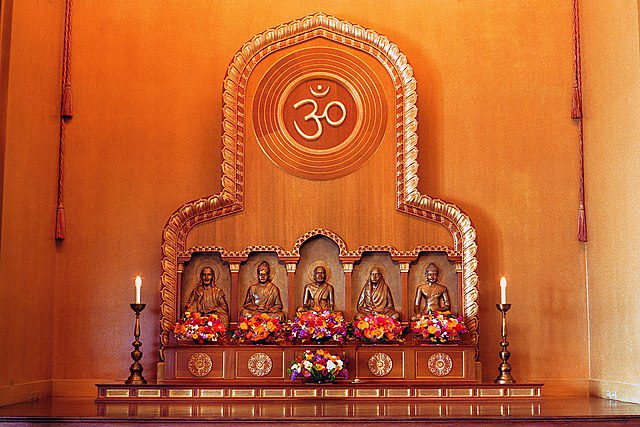
Vedanta Society Altar
New Temple
Vedanta Society of Northern California
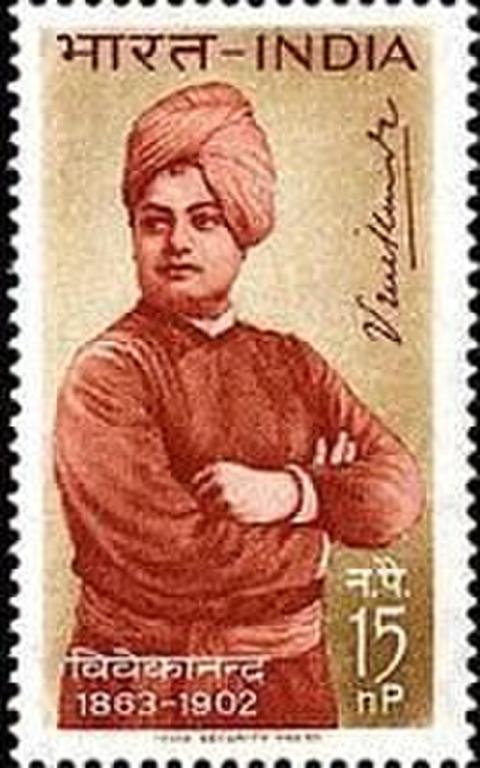
Swami Vivekananda was a close disciple of the Nineteenth century Hindu saint Ramakrishna. He became one of the founders of the Ramakrishna Order, which today is represented in the West by the Vedanta Society. The swami is justly considered a major spiritual figure on the world stage at the turn of the Nineteenth and Twentieth centuries.
What follows is a talk the swami gave at, I believe, Union Square Hall in San Francisco on the 18th of March, in 1900. This talk was part of a series featured at his free Sunday lectures, where Swami Vivekananda addressed contributions of various figures of the world’s religions.
Details of Vedanta’s perennialism can rightly be criticized. When Swami Vivekananda proclaimed that all religions are true, one scholar dryly noted he meant all religions are Vedanta. But there’s something deeply wonderful going on, as well. Even with projection, misunderstanding, misinterpretation, and prejudices, there’s a deep heart process going on. Something that might even be more important than technical accuracy.
I find this worth a read, showing something kind of wonderful going on between the lines.
May be all find that space between the lines…
The Buddha’s Message to the World
Swami Vivekananda
Buddhism is historically the most important religion — historically, not philosophically — because it was the most tremendous religious movement that the world ever saw, the most gigantic spiritual wave ever to burst upon human society. There is no civilisation on which its effect has not been felt in some way or other.
The followers of Buddha were most enthusiastic and very missionary in spirit. They were the first among the adherents of various religions not to remain content with the limited sphere of their Mother Church. They spread far and wide. They travelled east and west, north and south. They reached into darkest Tibet; they went into Persia, Asia Minor; they went into Russia, Poland, and many other countries of the Western world. They went into China, Korea, Japan; they went into Burma, Siam, the East Indies, and beyond. When Alexander the Great, through his military conquests, brought the Mediterranean world in contact with India, the wisdom of India at once found a channel through which to spread over vast portions of Asia and Europe. Buddhist priests went out teaching among the different nations; and as they taught, superstition and priestcraft began to vanish like mist before the sun.
To understand this movement properly you should know what conditions prevailed in India at the time Buddha came, just as to understand Christianity you have to grasp the state of Jewish society at the time of Christ. It is necessary that you have an idea of Indian society six hundred years before the birth of Christ, by which time Indian civilization had already completed its growth.
When you study the civilization of India, you find that it has died and revived several times; this is its peculiarity. Most races rise once and then decline for ever. There are two kinds of people; those who grow continually and those whose growth comes to an end. The peaceful nations, India and China, fall down, yet rise again; but the others, once they go down, do not come up — they die. Blessed are the peacemakers, for they shall enjoy the earth.
At the time Buddha was born, India was in need of a great spiritual leader, a prophet. There was already a most powerful body of priests. You will understand the situation better if you remember the history of the Jews — how they had two types of religious leaders, priests and prophets, the priests keeping the people in ignorance and grinding superstitions into their minds. The methods of worship the priests prescribed were only a means by which they could dominate the people. All through the Old Testament, you find the prophets challenging the superstitions of the priests. The outcome of this fight was the triumph of the prophets and the defeat of the priests.
Priests believe that there is a God, but that this God can be approached and known only through them. People can enter the Holy of Holies only with the permission of the priests. You must pay them, worship them, place everything in their hands. Throughout the history of the world, this priestly tendency has cropped up again and again — this tremendous thirst for power, this tiger-like thirst, seems a part of human nature. The priests dominate you, lay down a thousand rules for you. They describe simple truths in roundabout ways. They tell you stories to support their own superior position. If you want to thrive in this life or go to heaven after death, you have to pass through their hands. You have to perform all kinds of ceremonies and rituals. All this has made life so complicated and has so confused the brain that if I give you plain words, you will go home unsatisfied. You have become thoroughly befuddled. The less you understand, the better you feel! The prophets have been giving warnings against the priests and their superstitions and machinations; but the vast mass of people have not yet learnt to heed these warnings — education is yet to come to them.
Men must have education. They speak of democracy, of the equality of all men, these days. But how will a man know he is equal with all? He must have a strong brain, a clear mind free of nonsensical ideas; he must pierce through the mass of superstitions encrusting his mind to the pure truth that is in his inmost Self. Then he will know that all perfections, all powers are already within himself, that these have not to be given him by others. When he realizes this, he becomes free that moment, he achieves equality. He also realizes that every one else is equally as perfect as he, and he does not have to exercise any power, physical, mental or moral, over his brother men. He abandons the idea that there was ever any man who was lower than himself. Then he can talk of equality; not until then.
Now, as I was telling you, among the Jews there was a continuous struggle between the priests and the prophets; and the priests sought to monopolise power and knowledge, till they themselves began to lose them and the chains they had put on the feet of the people were on their own feet. The masters always become slaves before long. The culmination of the struggle was the victory of Jesus of Nazareth. This triumph is the history of Christianity. Christ at last succeeded in overthrowing the mass of witchcraft. This great prophet killed the dragon of priestly selfishness, rescued from its clutches the jewel of truth, and gave it to all the world, so that whosoever desired to possess it would have absolute freedom to do so, and would not have to wait on the pleasure of any priest or priests.
The Jews were never a very philosophical race: they had not the subtlety of the Indian brain nor did they have the Indian’s psychic power. The priests in India, the Brahmins, possessed great intellectual and psychic powers. It was they who began the spiritual development of India, and they accomplished wonderful things. But the time came when the free spirit of development that had at first actuated the Brahmins disappeared. They began to arrogate powers and privileges to themselves. If a Brahmin killed a man, he would not be punished. The Brahmin, by his very birth, is the lord of the universe! Even the most wicked Brahmin must be worshipped!
But while the priests were flourishing, there existed also the poet-prophets called Sannyâsins. All Hindus, whatever their castes may be, must, for the sake of attaining spirituality, give up their work and prepare for death. No more is the world to be of any interest to them. They must go out and become Sannyasins. The Sannyasins have nothing to do with the two thousand ceremonies that the priests have invented: Pronounce certain words — ten syllables, twenty syllables, and so on — all these things are nonsense.
So these poet-prophets of ancient India repudiated the ways of the priest and declared the pure truth. They tried to break the power of the priests, and they succeeded a little. But in two generations their disciples went back to the superstitious, roundabout ways of the priests — became priests themselves: “You can get truth only through us!” Truth became crystallised again, and again prophets came to break the encrustations and free the truth, and so it went on. Yes, there must be all the time the man, the prophet, or else humanity will die.
You wonder why there have to be all these roundabout methods of the priests. Why can you not come directly to the truth? Are you ashamed of God’s truth that you have to hide it behind all kinds of intricate ceremonies and formulas? Are you ashamed of God that you cannot confess His truth before the world? Do you call that being religious and spiritual? The priests are the only people fit for the truth! The masses are not fit for it! It must be diluted! Water it down a little!
Take the Sermon on the Mount and the Gitâ — they are simplicity itself. Even the streetwalker can understand them. How grand! In them you find the truth clearly and simply revealed. But no, the priests would not accept that truth can be found so directly. They speak of two thousand heavens and two thousand hells. If people follow their prescriptions, they will go to heaven! If they do not obey the rules, they will go to hell!
But the people shall learn the truth. Some are afraid that if the full truth is given to all, it will hurt them. They should not be given the unqualified truth — so they say. But the world is not much better off by compromising truth. What worse can it be than it is already? Bring truth out! If it is real, it will do good. When people protest and propose other methods, they only make apologies for witchcraft.
India was full of it in Buddha’s day. There were the masses of people, and they were debarred from all knowledge. If just a word of the Vedas entered the ears of a man, terrible punishment was visited upon him. The priests had made a secret of the Vedas — the Vedas that contained the spiritual truths discovered by the ancient Hindus!
At last one man could bear it no more. He had the brain, the power, and the heart — a heart as infinite as the broad sky. He felt how the masses were being led by the priests and how the priests were glorying in their power, and he wanted to do something about it. He did not want any power over any one, and he wanted to break the mental and spiritual bonds of men. His heart was large. The heart, many around us may have, and we also want to help others. But we do not have the brain; we do not know the ways and means by which help can be given. But this man had the brain to discover the means of breaking the bondages of souls. He learnt why men suffer, and he found the way out of suffering. He was a man of accomplishment, he worked everything out; he taught one and all without distinction and made them realise the peace of enlightenment. This was the man Buddha.
You know from Arnold’s poem, The Light of Asia, how Buddha was born a prince and how the misery of the world struck him deeply; how, although brought up and living in the lap of luxury, he could not find comfort in his personal happiness and security; how he renounced the world, leaving his princess and new-born son behind; how he wandered searching for truth from teacher to teacher; and how he at last attained to enlightenment. You know about his long mission, his disciples, his organizations. You all know these things.
Buddha was the triumph in the struggle that had been going on between the priests and the prophets in India. One thing can be said for these Indian priests — they were not and never are intolerant of religion; they never have persecuted religion. Any man was allowed to preach against them. Theirs is such a religion; they never molested any one for his religious views. But they suffered from the peculiar weaknesses of all the priests: they also sought power, they also promulgated rules and regulations and made religion unnecessarily complicated, and thereby undermined the strength of those who followed their religion.
Buddha cut through all these excrescences. He preached the most tremendous truths. He taught the very gist of the philosophy of the Vedas to one and all without distinction, he taught it to the world at large, because one of his great messages was the equality of man. Men are all equal. No concession there to anybody! Buddha was the great preacher of equality. Every man and woman has the same right to attain spirituality — that was his teaching. The difference between the priests and the other castes he abolished. Even the lowest were entitled to the highest attainments; he opened the door of Nirvâna to one and all. His teaching was bold even for India. No amount of preaching can ever shock the Indian soul, but it was hard for India to swallow Buddha’s doctrine. How much harder it must be for you!
His doctrine was this: Why is there misery in our life? Because we are selfish. We desire things for ourselves — that is why there is misery. What is the way out? The giving up of the self. The self does not exist; the phenomenal world, all this that we perceive, is all that exists. There is nothing called soul underlying the cycle of life and death. There is the stream of thought, one thought following another in succession, each thought coming into existence and becoming non-existent at the same moment, that is all; there is no thinker of the thought, no soul. The body is changing all the time; so is mind, consciousness. The self therefore is a delusion. All selfishness comes of holding on to the self, to this illusory self. If we know the truth that there is no self, then we will be happy and make others happy.
This was what Buddha taught. And he did not merely talk; he was ready to give up his own life for the world. He said, “If sacrificing an animal is good, sacrificing a man is better”, and he offered himself as a sacrifice. He said, “This animal sacrifice is another superstition. God and soul are the two big superstitions. God is only a superstition invented by the priests. If there is a God, as these Brahmins preach, why is there so much misery in the world? He is just like me, a slave to the law of causation. If he is not bound by the law of causation, then why does he create? Such a God is not at all satisfactory. There is the ruler in heaven that rules the universe according to his sweet will and leaves us all here to die in misery — he never has the goodness to look at us for a moment. Our whole life is continuous suffering; but this is not sufficient punishment — after death we must go to places where we have other punishments. Yet we continually perform all kinds of rites and ceremonies to please this creator of the world!”
Buddha said, “These ceremonials are all wrong. There is but one ideal in the world. Destroy all delusions; what is true will remain. As soon as the clouds are gone, the sun will shine”. How to kill the self? Become perfectly unselfish, ready to give up your life even for an ant. Work not for any superstition, not to please any God, not to get any reward, but because you are seeking your own release by killing your self. Worship and prayer and all that, these are all nonsense. You all say, “I thank God” — but where does He live? You do not know, and yet you are all going crazy about God.
Hindus can give up everything except their God. To deny God is to cut off the very ground from under the feet of devotion. Devotion and God the Hindus must cling to. They can never relinquish these. And here, in the teaching of Buddha, are no God and no soul — simply work. What for? Not for the self, for the self is a delusion. We shall be ourselves when this delusion has vanished. Very few are there in the world that can rise to that height and work for work’s sake.
Yet the religion of Buddha spread fast. It was because of the marvelous love which, for the first time in the history of humanity, overflowed a large heart and devoted itself to the service not only of all men but of all living things — a love which did not care for anything except to find a way of release from suffering for all beings.
Man was loving God and had forgotten all about his brother man. The man who in the name of God can give up his very life, can also turn around and kill his brother man in the name of God. That was the state of the world. They would sacrifice the son for the glory of God, would rob nations for the glory of God, would kill thousands of beings for the glory of God, would drench the earth with blood for the glory of God. This was the first time they turned to the other God — man. It is man that is to be loved. It was the first wave of intense love for all men — the first wave of true unadulterated wisdom — that, starting from India, gradually inundated country after country, north, south, east, west.
This teacher wanted to make truth shine as truth. No softening, no compromise, no pandering to the priests, the powerful, the kings. No bowing before superstitious traditions, however hoary; no respect for forms and books just because they came down from the distant past. He rejected all scriptures, all forms of religious practice. Even the very language, Sanskrit, in which religion had been traditionally taught in India, he rejected, so that his followers would not have any chance to imbibe the superstitions which were associated with it.
There is another way of looking at the truth we have been discussing: the Hindu way. We claim that Buddha’s great doctrine of selflessness can be better understood if it is looked at in our way. In the Upanishads there is already the great doctrine of the Âtman and the Brahman. The Atman, Self, is the same as Brahman, the Lord. This Self is all that is; It is the only reality. Mâyâ, delusion, makes us see It as different. There is one Self, not many. That one Self shines in various forms. Man is man’s brother because all men are one. A man is not only my brother, say the Vedas, he is myself. Hurting any part of the universe, I only hurt myself. I am the universe. It is a delusion that I think I am Mr. So-and-so — that is the delusion.
The more you approach your real Self, the more this delusion vanishes. The more all differences and divisions disappear, the more you realise all as the one Divinity. God exists; but He is not the man sitting upon a cloud. He is pure Spirit. Where does He reside? Nearer to you than your very self. He is the Soul. How can you perceive God as separate and different from yourself? When you think of Him as some one separate from yourself, you do not know Him. He is you yourself. That was the doctrine of the prophets of India.
It is selfishness that you think that you see Mr. So-and-so and that all the world is different from you. You believe you are different from me. You do not take any thought of me. You go home and have your dinner and sleep. If I die, you still eat, drink, and are merry. But you cannot really be happy when the rest of the world is suffering. We are all one. It is the delusion of separateness that is the root of misery. Nothing exists but the Self; there is nothing else.
Buddha’s idea is that there is no God, only man himself. He repudiated the mentality which underlies the prevalent ideas of God. He found it made men weak and superstitious. If you pray to God to give you everything, who is it, then, that goes out and works? God comes to those who work hard. God helps them that help themselves. An opposite idea of God weakens our nerves, softens our muscles, makes us dependent. Everything independent is happy; everything dependent is miserable. Man has infinite power within himself, and he can realise it — he can realise himself as the one infinite Self. It can be done; but you do not believe it. You pray to God and keep your powder dry all the time.
Buddha taught the opposite. Do not let men weep. Let them have none of this praying and all that. God is not keeping shop. With every breath you are praying in God. I am talking; that is a prayer. You are listening; that is a prayer. Is there ever any movement of yours, mental or physical, in which you do not participate in the infinite Divine Energy? It is all a constant prayer. If you call only a set of words prayer, you make prayer superficial. Such prayers are not much good; they can scarcely bear any real fruit.
Is prayer a magic formula, by repeating which, even is you do not work hard, you gain miraculous results? No. All have to work hard; all have to reach the depths of that infinite Energy. Behind the poor, behind the rich, there is the same infinite Energy. It is not that one man works hard, and another by repeating a few words achieves results. This universe is a constant prayer. If you take prayer in this sense, I am with you. Words are not necessary. Better is silent prayer.
The vast majority of people do not understand the meaning of this doctrine. In India any compromise regarding the Self means that we have given power into the hands of the priests and have forgotten the great teachings of the prophets. Buddha knew this; so he brushed aside all the priestly doctrines and practices and made man stand on his own feet. It was necessary for him to go against the accustomed ways of the people; he had to bring about revolutionary changes. As a result this sacrificial religion passed away from India for ever, and was never revived.
Buddhism apparently has passed away from India; but really it has not. There was an element of danger in the teaching of Buddha — it was a reforming religion. In order to bring about the tremendous spiritual change he did, he had to give many negative teachings. But if a religion emphasises the negative side too much, it is in danger of eventual destruction. Never can a reforming sect survive if it is only reforming; the formative elements alone — the real impulse, that is, the principles — live on and on. After a reform has been brought about, it is the positive side that should be emphazised; after the building is finished the scaffolding must be taken away.
It so happened in India that as time went on, the followers of Buddha emphasized the negative aspect of his teachings too much and thereby caused the eventual downfall of their religion. The positive aspects of truth were suffocated by the forces of negation; and thus India repudiated the destructive tendencies that flourished in the name of Buddhism. That was the decree of the Indian national thought.
The negative elements of Buddhism — there is no God and no soul —died out. I can say that God is the only being that exists; it is a very positive statement. He is the one reality. When Buddha says there is no soul, I say, “Man, thou art one with the universe; thou art all things.” How positive! The reformative element died out; but the formative element has lived through all time. Buddha taught kindness towards lower beings; and since then there has not been a sect in India that has not taught charity to all beings, even to animals. This kindness, this mercy, this charity — greater than any doctrine — are what Buddhism left to us.
The life of Buddha has an especial appeal. All my life I have been very fond of Buddha, but not of his doctrine. I have more veneration for that character than for any other — that boldness, that fearlessness, and that tremendous love! He was born for the good of men. Others may seek God, others may seek truth for themselves; he did not even care to know truth for himself. He sought truth because people were in misery. How to help them, that was his only concern. Throughout his life he never had a thought for himself. How can we ignorant, selfish, narrow-minded human beings ever understand the greatness of this man?
And consider his marvelous brain! No emotionalism. That giant brain never was superstitious. Believe not because an old manuscript has been produced, because it has been handed down to you from your forefathers, because your friends want you to — but think for yourself; search truth for yourself; realise it yourself. Then if you find it beneficial to one and many, give it to people. Soft-brained men, weak-minded, chicken-hearted, cannot find the truth. One has to be free, and as broad as the sky. One has to have a mind that is crystal clear; only then can truth shine in it. We are so full of superstitions! Even in your country where you think you are highly educated, how full of narrownesses and superstitions you are! Just think, with all your claims to civilisation in this country, on one occasion I was refused a chair to sit on, because I was a Hindu.
Six hundred years before the birth of Christ, at the time when Buddha lived, the people of India must have had wonderful education. Extremely free-minded they must have been. Great masses followed him. Kings gave up their thrones; queens gave up their thrones. People were able to appreciate and embrace his teaching, so revolutionary, so different from what they had been taught by the priests through the ages! But their minds have been unusually free and broad.
And consider his death. If he was great in life, he was also great in death. He ate food offered to him by a member of a race similar to your American Indians. Hindus do not touch them, because they eat everything indiscriminately. He told his disciples, “Do not eat this food, but I cannot refuse it. Go to the man and tell him he has done me one of the greatest services of my life — he has released me from the body.” An old man came and sat near him — he had walked miles and miles to see the Master — and Buddha taught him. When he found a disciple weeping, he reproved him, saying, “What is this? Is this the result of all my teaching? Let there be no false bondage, no dependence on me, no false glorification of this passing personality. The Buddha is not a person; he is a realization. Work out your own salvation.”
Even when dying, he would not claim any distinction for himself. I worship him for that. What you call Buddhas and Christs are only the names of certain states of realization. Of all the teachers of the world, he was the one who taught us most to be self-reliant, who freed us not only from the bondages of our false selves but from dependence on the invisible being or beings called God or gods. He invited every one to enter into that state of freedom which he called Nirvana. All must attain to it one day; and that attainment is the complete fulfillment of man.
Hindu
History and Religion
Previous Post
April 15, 2024
My Three body Problem: Zen, Jesus, and a Holy Communion
Next Post

April 20, 2024 When You Come to a Fork in the Road: A Zen Meditation
Recent Comments
"Allowing anger to contaminate one's hard disk can be detrimental to one's holistic well being. ..."
Hot Anger: Meeting Anger in Zen ..."
"I love this koan. every which way you turn it bites you, Thirty years on ..."
Nanquan Cuts the Cat: A Jesuit ..."
"As a substitute for religion, Zen is probably better than taking drugs. However, it can ..."
The Selling of Zen at the ..."
"Craving and aversion are detrimental to one's peace and happiness. Easter is a wake up ..."
Easter: A Zen Buddhist Appreciation
Browse Our Archives
Select a Category A Christmas Carol Abolitionist African-American Ahmadiyya Alan Watts Aldous Huxley Allen Ginsberg Amedkar Jayanti American politics American Zen Anaheim Zen Sangha Anglican Annie Besant April Fool Armageddon Art and Religion artificial intellegence Atheist Awakening B R Ambedkar Barlaam & Josaphat Beatnik Between Bhagavad Gita Bible biography birthday bodhisattva Bodhisattva Precepts Book burning Book of Common Prayer Book of Mormon Brahmo Samaj Buddha Buddhism Buddhist Buddhist Lord's Prayer Butterflies Calendars cartoons cat ChatGPT Chicken Tortilla Soup choices Christian atheism Christian mysticism Christian origins Christian Science Christian Zen Christianity Christianity and Buddhism christmas Christmas Truce Christopher Isherwood Church of Later Day Saints Cinco de Mayo circus covenant critical thinking culture D. T. Suzuki Dalit Buddhism Daniel Defoe Desert Fathers and Mothers dharma talk Dogen Donald Trump Dongshan's Five Ranks Dorothy Day dream Duty Easter ecology Edwin Arnold emptiness Empty Moon Zen Network Episcopal Church Eternal Now Ethics evolution existentialism Faith fantasy Fathers Day film film review fire Five Ranks Folk music food Form and emptiness Four Seals Francis of Assisi Francis Xavier Free thinker friendship George MacDonald Gerald Heard Glenn Taylor Webb God Good Friday Gospel of Gospel of Mark Gospel of Thomas grace Graduate Theological Unioin Graduate Theological Union Guanyin H R Blyth Hakuin Ekaku Hanamatsuri Hanukkah Harada Yasutani Zen Heart Sutra Henry David Thoreau Hermann Hesse Hinduism History and Religion history of religion Holy Spirit home Hospitality Icon Ides of March Isaac Newton Islam Islamic mysticism Jack Kerouac James Luther Adams Jiddu Krishnamurti Joan of Arc Johannes Gutenberg John Donne joke Judaism justice karma kensho King James Bible koan Koun Yamada Kyoto School Lewis Carrol Liberal Christianity Liberal Religion Life Plan Community Liminal literature Literature and Religion Liturgy Lord's Prayer Love Mahatma Gandhi Mahayana Martin Luther King Jr Mary Baker Eddy Mary Magdelene Mary Oliver Mayflower Compact Meditation memories memory metaphor money money and religioin Mormons Mother's Day movie review mysticism mythic Neighborhood Unitarian Universalist Church New Thought Nichiren Buddhism Nonduality not knowing Omar Khayyam Pacific School of Religion pagan Palm Sunday Passover peace Pentecost perennialism Phantastes Philip Kapleau philosophy Pilgrimage poetry Poetry and Religion politics Prayer Precepts Printing Press prophecy prophetic spirituality psychology Pure Land Queer religion queering religion Quietism Ram Mohan Roy rebirth recipe Relationships and religion religion religion and history Religious syncretism Resistance Retirement Retreat review Rissho Kosei Kai Ritual Robert Aitken Roshi Robert Ingersoll Rohatsu Romani religion Rosie the Riveter saints samadhi SanboZen Sangha Satyagraha science science and reigion science and religion science fiction seminary sermon Sesshin Sex and Religion Shinran Sikh Sikh tradition silence Social Justice Socially Engaged Buddhism Society and religion Soto Zen soul spiritual community spiritual practice Spirituality Sufism Suicide superstition Taoism Television Teresa of Avila Thanksgiving theological schools Theosophy Thomas Merton Time Transcendentalism Transcendentalist Trinitarian Trinity Uncategorized unitarian Unitarian Christianity Unitarian Universalist Universalism Vajrayana Vedanta Walking war Willa Cather William Ellery Channing wisdom women and religion women in religion World Teacher Writing zazen Zen Zen Center Zen inspired retriement zen meditation Zen Precepts Zen women
Select a Month September 2026 August 2026 July 2026 June 2026 May 2026 April 2026 March 2026 February 2026 January 2026 December 2025 November 2025 October 2025 September 2025 August 2025 July 2025 June 2025 May 2025 April 2025 March 2025 February 2025 January 2025 December 2024 November 2024 October 2024 September 2024 August 2024 July 2024 June 2024 May 2024 April 2024 March 2024 February 2024 January 2024 December 2023 November 2023 October 2023 September 2023 August 2023 July 2023 June 2023 May 2023 April 2023 March 2023 February 2023 January 2023 December 2022 November 2022 October 2022 September 2022 August 2022 July 2022 June 2022 May 2022 April 2022 March 2022 February 2022 January 2022 December 2021 November 2021 October 2021 September 2021 August 2021 July 2021 June 2021 May 2021 April 2021 March 2021 February 2021 January 2021 December 2020 November 2020 October 2020 September 2020 August 2020 July 2020 June 2020 May 2020 April 2020 March 2020 February 2020 January 2020 December 2019 November 2019 October 2019 September 2019 August 2019 July 2019 June 2019 May 2019 April 2019 March 2019 February 2019 January 2019 December 2018 November 2018 October 2018 September 2018 August 2018 July 2018 June 2018 May 2018 April 2018 March 2018 February 2018 January 2018 December 2017 November 2017 October 2017 September 2017 August 2017 July 2017 June 2017 May 2017 April 2017 March 2017 February 2017 January 2017 December 2016 November 2016 October 2016 September 2016 August 2016 July 2016 June 2016 May 2016 April 2016 March 2016 February 2016 January 2016 December 2015 November 2015 October 2015 September 2015 August 2015 July 2015 June 2015 May 2015 April 2015 March 2015 February 2015 January 2015 December 2014 November 2014 October 2014 September 2014 August 2014 July 2014 June 2014 May 2014 April 2014 March 2014 February 2014 January 2014 December 2013 November 2013 October 2013 September 2013 August 2013 July 2013 June 2013 May 2013 April 2013 March 2013 February 2013 January 2013 December 2012 November 2012 October 2012 September 2012 August 2012 July 2012 June 2012 May 2012 April 2012 March 2012 February 2012 January 2012 December 2011 November 2011 October 2011 September 2011 August 2011 July 2011 June 2011 May 2011 April 2011 March 2011 February 2011 January 2011 December 2010 November 2010 October 2010 September 2010 August 2010 July 2010 June 2010 May 2010 April 2010 March 2010 February 2010 January 2010 December 2009 November 2009 October 2009 September 2009 August 2009 July 2009 June 2009 May 2009 April 2009 March 2009 February 2009 January 2009 December 2008 November 2008 October 2008 September 2008 August 2008 July 2008 June 2008 May 2008 April 2008 March 2008 February 2008 January 2008 December 2007 November 2007 October 2007 September 2007 August 2007 July 2007 June 2007 May 2007 April 2007 March 2007 February 2007 January 2007 December 2006 November 2006 October 2006 September 2006
Follow Us!
TAKE THE
Religious Wisdom Quiz
In the Parable of the Talents, what did the faithful servants receive?
Select your answer to see how you score.
Nothing Riches Punishment More responsibility
Related posts from Monkey Mind


A Zen Buddhist Response to this Moment

Zen and the Dance of Not Knowing
TRENDING AT PATHEOS Buddhist

Nearly every morning, I make the drive to Detroit with my high-school-age...

The Real AI Story Is Adoption Without Trust
Artificial intelligence has crossed a political threshold. It is no longer a...

A new article, written by Jeff Lindsay and Gale L. Pooley,...

Swimfan: Forgotten Aughts Pleasures
This is a recovery effort. In 2002, My Big Fat Greek Wedding...

Top Three Anti-Catholic Lies About Catholicism
This is my initial transcript for the video, "THE 3 WORST...

Pope Leo Celebrates Mass for Nurses & Docs...
I don't have any idea how he did it, but Pope Leo...
view all Buddhist blogs
What Are Your Thoughts?leave a comment
Ad-Free & Subscriber Log-In Subscription Support
- About Us
- 2026 Calendar
- Videos
- Podcasts
- Library of World Religions
- Faith In Media Tracker
- Advertise With Us
- Write for Us
- Privacy Policy
- Terms of Service
- Do Not Sell My Data
- Contact Us
- Radiant Digital
- Manage Newsletter Subscriptions
- Unsubscribe From Notifications
- Sitemap
Copyright 2008-2026, Patheos. All rights reserved.
Subscription Support Ad-Free & Subscriber Log-In
Follow Patheos