
BuddhistCatholicContemplativeEvangelicalGeneral ChristianHinduJewishLatter-day SaintMuslimNew VisionsProgressive Christian
Beliefs
- Buddhist
- Catholic
- Contemplative
- Evangelical
- General Christian
- Hindu
- Jewish
- Latter-day Saint
- More Voices
- Muslim
- New Visions
- Pagan
- Progressive Christian
Topics
- Religion News
- Food and Religion
- Sports and Religion
- Religious Art
- Religious Music and Entertainment
- Religious Events
- History and Religion
- Style and Religion
- Politics and Religion
- Women in Religion
- Recreation Outdoors and Religion
- Business Finance and Religion
- Careers Workplace and Religion
- Education and Religion
- Family Parenting and Religion
- Health Fitness and Religion
- Home and Religion
- Relationships and Religion
- Technology and Religion
- Travel and Religion
Columnists
- Buddhist Columnists
- Business Finance and Religion Columnists
- Careers Workplace and Religion Columnists
- Catholic Columnists
- Contemplative Columnists
- Education and Religion Columnists
- Evangelists Columnists
- Family Parenting and Religion Columnists
- General Christian Columnists
- Health Fitness and Religion Columnists
- Hindu Columnists
- History and Religion Columnists
- Home and Religion Columnists
- Jewish Columnists
- More Voices Columnists
- Latter Day Columnists
- Muslim Columnists
- New Visions Columnists
- Nonreligious Columnists
- Pagan Columnists
- Politics and Religion Columnists
- Progressive Columnists
- Recreation Outdoors and Religion Columnists
- Relationships and Religion Columnists
- Religion News Columnists
- Religious Art Columnists
- Religious Events Columnists
- Religious Music and Entertainment Columnists
- Sports and Religion Columnists
- Style and Religion Columnists
- Technology and Religion Columnists
- Travel and Religion Columnists
- Women in Religion Columnists
Resource Library
- 2026 Calendar
- Library of World Religions
- The 100 Most Holy Places on Earth
- Patheos Answers
- Podcasts
- Videos
- Faith Leaders Database
- Anglican Episcopalian
- Bahai
- Baptist
- Buddhism
- Christianity
- Confucianism
- Eastern Orthodoxy
- Hinduism
- Holiness and Pentecostal
- ISKCON
- Islam
- Judaism
- Lutheran
- Methodist
- The Church of Jesus Christ of Latter-day Saints
- New Age
- Paganism
- Presbytarian and Reformed
- Protestantism
- Religion Behind the Scenes
- Roman Catholic
- Scientology
- Shia Islam
- Sikhism
- Sufism
- Sunni Islam
- Taoism
- Zen
- See all religions
Research Tools
 Ad-Free & Subscriber Log-In Subscription Support
Follow Patheos 

- Trending:
- Advent
- |
- Forgiveness
- |
- Thanksgiving
- |
- Election
- |
- Seasonal Holidays
- |
- Marriage

- Home
- Buddhist
- Home and Religion
- On the Spirituality of Duty: A Zen Teacher’s Meditation
On the Spirituality of Duty: A Zen Teacher’s Meditation
Last updated on: November 15, 2023 at 5:45 pm by James Ford
On the Spirituality of Duty: A Zen Teacher’s Meditation 2023-11-15T17:45:41-08:00 James Ford
Patheos Explore the world's faith through different perspectives on religion and spirituality! Patheos has the views of the prevalent religions and spiritualities of the world.

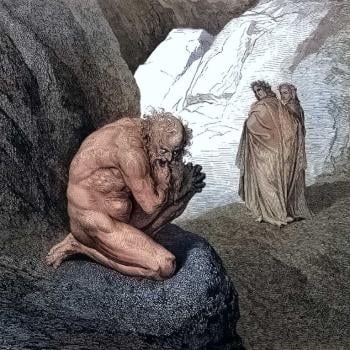
Good Samaritan
artist unknown
1873
Public domain
Eight years ago, Jan & I retired from our respective positions, she as research librarian at the wondrous Perkins School for the Blind, and me as minister of the First Unitarian Church of Providence. We shrunk our worldly goods as best we could, sold our home, and moved back to our native California.
Our intention was to be near Jan’s mom who lives in the once independent city and since 1932, a neighborhood of Los Angeles called Tujunga. (A fun fact. While it sounds Spanish, Tujunga is actually from the indigenous Tongva and means, quite suitably for us, “the old woman’s place.”)
Mom was aging and we wanted to be nearby. We explored locations as far away as four hours, but despite an interest in a co-housing community in Fresno and a love affair with the Central coast, quickly realized the foolishness of relocating across the continent, and still being that too far away for being very useful. We began to look much closer to mom, decided an hour was a good outer distance, and quickly fell in love with Long Beach.
We were able to swap pretty close dollar to dollar the price of our house in Pawtucket for a condo four blocks from the beach in the Alamitos Beach neighborhood. We loved it. And for eight years it’s been our home. I think it fair to say as far as homes and neighborhoods go we’ve never been happier with where we were.
And all things change.
While mom is in pretty good health for 96, she is 96. And in order to avoid assisted living we are moving in with her.
The move has been a trial for all of us. As I write this we’ve emptied mom’s living room and put our furniture there, the balance of the furniture, shrunk once more, is stacked in half of mom’s garage along with the remains of the most drastic cutting of my personal library ever. With about fifty or sixty or seventy books on shelving here and the last hundred or so beyond are boxed and stored with the furniture. (The balance of the rest, some eighty or so boxes are going to a home where they will be loved and cared for.)
Today we drive back to the condo to carry away (we desperately hope) the very last of our worldly goods. Friday the condo will be painted, then there’s the matter of a new carpet, replacing a damaged door to one of the bathrooms, and, well, then, are you interested in a condo in a lovely neighborhood filled with coffee shops and restaurants and interesting stuff walking distance from the beach? It will be for sale for an obscenely high price.
And. Well. Here we are. In the course of our lives, my mother lived with us for the last seven years of her life. My maternal auntie lived with us for the last twenty plus years of her life. And now we’re going to live with Jan’s mom.
I think about that showing up.
And I think about duty. Especially I think of the spirituality of duty.
Here I find my thoughts going to the Bhagavad Gita. It was much beloved among my Transcendentalist ancestors. Although I also love pointing out Ralph Waldo Emerson’s enthusiastic endorsement of the Bhagavad Gita as a great “Buddhist” classic. For me, in part enjoying emphasizing his mischaracterization of the great Hindu classic. But, not to be missed, Emerson’s enthusiasm for the text itself, if sorting out the differing spiritualities of the East wasn’t quite yet in place.
In the Gita I find a thread that calls to the heart and tells us something about death and birth, and life, and our choices in that place among the living. Chapter three is devoted to “karma yoga.” Here yoga means spiritual discipline, while karma means both the sum of a person’s actions, and here those specific actions that create a spiritual life. Conscience and action. In that meeting of intention and action we begin to find a sense of conscience that is both spiritual, and very much grounded in this world. In the specifics of life.
Duty.
The karma yoga of the Bhagavad Gita is the spiritual practice of action in this world. It is informed by seeking a proper understanding of what is going on. And then, well, and then acting. It is complicated. The Gita itself turns on a fratricidal war where God tells Arjuna to take up his responsibility and to fight. There is within the mess a unity. And, well. Also. In another situation where a Zen master advises a samurai to fight knowing that everything is empty. Much like Krishna telling Arjuna to fight knowing everything is the play of the mystery. But my spiritual grandfather calling us to notice there’s going to be blood. Real blood. And real widows. And real orphans.
It’s messy. It’s awful. And. And. Karma and the yoga of karma. Duty is not an easy thing. Discerning and then acting are difficult and can be very hard.
And In my own life I’ve learned we have to act on insufficient information. Pretty much always. But, nonetheless, we must act. Here is duty.
In this world even opting out, a choice to not acting, is itself an action, of course. Because everything is connected, and every choice has a consequence. Or really there are many actions coming together in any given situation, and many consequences flowing from the moment of choice. That crimson ribbon, knotted for a moment. Like blood coagulating.
And, so, conscience. What is it that we find when we dig in deep, when we look honestly at our hearts and at the world? What is it that says it would be okay to lay our life down for another, friend, or country, or something else?
Our human experience is buffeted and tossed, bruised, and banged; and somewhere along the line all of us, every precious one of us is damaged. You. me. No one escapes. If you think otherwise, you’re a master of denial. And, while denial might be a pretty good strategy for a while, in the long haul it betrays us.
Instead, I try to not turn away from the hurt, the hurts. As the Gita tells us, notice, and act. The yoga of duty.
The reason these hurts become a great hurt living a coiled serpent within us is simple enough. Our sense of these hurts rises out of our intuitions of wholeness and the fact of our separateness.
We need to see how we are separate, where babies die, and old people starve to death, where each and every one of us has experienced loss and longing. For some harder than for others, but none escapes. In this realm all of us are damaged goods. And, somehow, damaged or not, each separate thing, each of us, is precious beyond saying. That, too, is true.
Within the bruising, if we allow ourselves to experience it, we see, we taste, we know another truth.
Wholeness. Just about everyone, maybe everyone, has some body-knowing we are connected, totally connected each of us with everyone and everything else. Why is this so? I don’t know, although I have opinions. What I do know is that our sense of this wholeness comes to us unbidden out of our experience of separation. A grace. A thread, a crimson ribbon winding around our hearts tugging us in directions.
It is the source of our conscience, it tells us who we are, and it tells us our place in this world. It is the sacred text written on our hearts. We notice how our dreams are invaded by this deep knowledge of our source and home: our radical interdependence. Our quiet moments proclaim it. Instances of grace intrude it into our lives, singing the angel song of deepest connection.
Our bodies know the connection. And, so, I invite the critical step of turning our hearts to noticing this unity when it presents. Here the mysteries of duty reveal themselves.
And then, perhaps, another question comes to us. If we continue to follow the ribbon we discover a mystery: we are separate and one. A conundrum. But a reality. It’s not that we are either separate or we are connected. And with that the thread leads to another invitation, to move beyond the conundrum, beyond self and other.
Out of that wonderment the great invitation sung to us from before the creation of the heavens and the earth. The words and the music proclaim a connection deeper than two or one. Found as we engage our lives, our responsibilities, as we step up.
A healing way that can be found as we explore the connections, as we follow the thread, as we trace along the ribbon.
Our world can go in several different ways. Most of them not good. All of them dangerous.
But we have some guidance and we have some examples.
What we need to learn in our lives both as individuals and citizens follows the same course. And that course was so wonderfully sung to us by the poet Mary Oliver.
“To live in this world you must be able to do three things: to love what is mortal; to hold it against your bones knowing your own life depends on it; and, when the time comes to let it go, to let it go.”
Here we are, mortal beings. We are herd animals. We need each other. For so much from care in our infancy, to the gift of language, to the skills it takes to survive, to others to love and be loved by, to having caring hands to deliver us back to the soil. All of that mortal mortal stuff.
For me I experience this and I experience many many things. But most of all, an electric current running through it all is that most human thing: love.
And then there is the current of our actual lives. The bones that give us our shape. Family, of course. For good and for ill. Our nation states, for sure. For good and for ill. And, our shared humanity and our shared obligations as the conscious creatures for the care of this whole beautiful fragile world. All of it. For good and for ill.
Here I find our duty. To care and to be engaged.
We need the larger perspective. We need to avoid the blandishments of turning away from the perceived other.
But if we love and keep loving. If we show up. And we show up again.
If we learn the art of letting go even as we hold to our bones, then things happen.
Here is our duty.
The yoga of duty. The spirituality of duty.
Home and Religion
History and Religion
Previous Post

November 7, 2023
Remembering the Other Guy: Alfred Russel Wallace
Next Post
November 19, 2023 Guidelines for Seated Meditation: A Traditional Zen Text
Recent Comments
"Allowing anger to contaminate one's hard disk can be detrimental to one's holistic well being. ..."
Hot Anger: Meeting Anger in Zen ..."
"I love this koan. every which way you turn it bites you, Thirty years on ..."
Nanquan Cuts the Cat: A Jesuit ..."
"As a substitute for religion, Zen is probably better than taking drugs. However, it can ..."
The Selling of Zen at the ..."
"Craving and aversion are detrimental to one's peace and happiness. Easter is a wake up ..."
Easter: A Zen Buddhist Appreciation
Browse Our Archives
Select a Category A Christmas Carol Abolitionist African-American Ahmadiyya Alan Watts Aldous Huxley Allen Ginsberg Amedkar Jayanti American politics American Zen Anaheim Zen Sangha Anglican Annie Besant April Fool Armageddon Art and Religion artificial intellegence Atheist Awakening B R Ambedkar Barlaam & Josaphat Beatnik Between Bhagavad Gita Bible biography birthday bodhisattva Bodhisattva Precepts Book burning Book of Common Prayer Book of Mormon Brahmo Samaj Buddha Buddhism Buddhist Buddhist Lord's Prayer Butterflies Calendars cartoons cat ChatGPT Chicken Tortilla Soup choices Christian atheism Christian mysticism Christian origins Christian Science Christian Zen Christianity Christianity and Buddhism christmas Christmas Truce Christopher Isherwood Church of Later Day Saints Cinco de Mayo circus covenant critical thinking culture D. T. Suzuki Dalit Buddhism Daniel Defoe Desert Fathers and Mothers dharma talk Dogen Donald Trump Dongshan's Five Ranks Dorothy Day dream Duty Easter ecology Edwin Arnold emptiness Empty Moon Zen Network Episcopal Church Eternal Now Ethics evolution existentialism Faith fantasy Fathers Day film film review fire Five Ranks Folk music food Form and emptiness Four Seals Francis of Assisi Francis Xavier Free thinker friendship George MacDonald Gerald Heard Glenn Taylor Webb God Good Friday Gospel of Gospel of Mark Gospel of Thomas grace Graduate Theological Unioin Graduate Theological Union Guanyin H R Blyth Hakuin Ekaku Hanamatsuri Hanukkah Harada Yasutani Zen Heart Sutra Henry David Thoreau Hermann Hesse Hinduism History and Religion history of religion Holy Spirit home Hospitality Icon Ides of March Isaac Newton Islam Islamic mysticism Jack Kerouac James Luther Adams Jiddu Krishnamurti Joan of Arc Johannes Gutenberg John Donne joke Judaism justice karma kensho King James Bible koan Koun Yamada Kyoto School Lewis Carrol Liberal Christianity Liberal Religion Life Plan Community Liminal literature Literature and Religion Liturgy Lord's Prayer Love Mahatma Gandhi Mahayana Martin Luther King Jr Mary Baker Eddy Mary Magdelene Mary Oliver Mayflower Compact Meditation memories memory metaphor money money and religioin Mormons Mother's Day movie review mysticism mythic Neighborhood Unitarian Universalist Church New Thought Nichiren Buddhism Nonduality not knowing Omar Khayyam Pacific School of Religion pagan Palm Sunday Passover peace Pentecost perennialism Phantastes Philip Kapleau philosophy Pilgrimage poetry Poetry and Religion politics Prayer Precepts Printing Press prophecy prophetic spirituality psychology Pure Land Queer religion queering religion Quietism Ram Mohan Roy rebirth recipe Relationships and religion religion religion and history Religious syncretism Resistance Retirement Retreat review Rissho Kosei Kai Ritual Robert Aitken Roshi Robert Ingersoll Rohatsu Romani religion Rosie the Riveter saints samadhi SanboZen Sangha Satyagraha science science and reigion science and religion science fiction seminary sermon Sesshin Sex and Religion Shinran Sikh Sikh tradition silence Social Justice Socially Engaged Buddhism Society and religion Soto Zen soul spiritual community spiritual practice Spirituality Sufism Suicide superstition Taoism Television Teresa of Avila Thanksgiving theological schools Theosophy Thomas Merton Time Transcendentalism Transcendentalist Trinitarian Trinity Uncategorized unitarian Unitarian Christianity Unitarian Universalist Universalism Vajrayana Vedanta Walking war Willa Cather William Ellery Channing wisdom women and religion women in religion World Teacher Writing zazen Zen Zen Center Zen inspired retriement zen meditation Zen Precepts Zen women
Select a Month November 2026 October 2026 September 2026 August 2026 July 2026 June 2026 May 2026 April 2026 March 2026 February 2026 January 2026 December 2025 November 2025 October 2025 September 2025 August 2025 July 2025 June 2025 May 2025 April 2025 March 2025 February 2025 January 2025 December 2024 November 2024 October 2024 September 2024 August 2024 July 2024 June 2024 May 2024 April 2024 March 2024 February 2024 January 2024 December 2023 November 2023 October 2023 September 2023 August 2023 July 2023 June 2023 May 2023 April 2023 March 2023 February 2023 January 2023 December 2022 November 2022 October 2022 September 2022 August 2022 July 2022 June 2022 May 2022 April 2022 March 2022 February 2022 January 2022 December 2021 November 2021 October 2021 September 2021 August 2021 July 2021 June 2021 May 2021 April 2021 March 2021 February 2021 January 2021 December 2020 November 2020 October 2020 September 2020 August 2020 July 2020 June 2020 May 2020 April 2020 March 2020 February 2020 January 2020 December 2019 November 2019 October 2019 September 2019 August 2019 July 2019 June 2019 May 2019 April 2019 March 2019 February 2019 January 2019 December 2018 November 2018 October 2018 September 2018 August 2018 July 2018 June 2018 May 2018 April 2018 March 2018 February 2018 January 2018 December 2017 November 2017 October 2017 September 2017 August 2017 July 2017 June 2017 May 2017 April 2017 March 2017 February 2017 January 2017 December 2016 November 2016 October 2016 September 2016 August 2016 July 2016 June 2016 May 2016 April 2016 March 2016 February 2016 January 2016 December 2015 November 2015 October 2015 September 2015 August 2015 July 2015 June 2015 May 2015 April 2015 March 2015 February 2015 January 2015 December 2014 November 2014 October 2014 September 2014 August 2014 July 2014 June 2014 May 2014 April 2014 March 2014 February 2014 January 2014 December 2013 November 2013 October 2013 September 2013 August 2013 July 2013 June 2013 May 2013 April 2013 March 2013 February 2013 January 2013 December 2012 November 2012 October 2012 September 2012 August 2012 July 2012 June 2012 May 2012 April 2012 March 2012 February 2012 January 2012 December 2011 November 2011 October 2011 September 2011 August 2011 July 2011 June 2011 May 2011 April 2011 March 2011 February 2011 January 2011 December 2010 November 2010 October 2010 September 2010 August 2010 July 2010 June 2010 May 2010 April 2010 March 2010 February 2010 January 2010 December 2009 November 2009 October 2009 September 2009 August 2009 July 2009 June 2009 May 2009 April 2009 March 2009 February 2009 January 2009 December 2008 November 2008 October 2008 September 2008 August 2008 July 2008 June 2008 May 2008 April 2008 March 2008 February 2008 January 2008 December 2007 November 2007 October 2007 September 2007 August 2007 July 2007 June 2007 May 2007 April 2007 March 2007 February 2007 January 2007 December 2006 November 2006 October 2006 September 2006
Follow Us!
TAKE THE
Religious Wisdom Quiz
True or False: The Gospel of John records seven miracles (signs) of Jesus.
Select your answer to see how you score.
TRUE FALSE
Related posts from Monkey Mind
Taking Refuge in the (Zen) Sangha
The Great Matter: Walking the Zen Way
Keizan Jokin: The Zen Master Ancestor You Don't...
What Zen Practice Actually Does With Anger
TRENDING AT PATHEOS Buddhist

Jesus is Coming with Glory and Power
https://www.youtube.com/watch?v=_lt60EDHOQ4&list=RD_lt60EDHOQ4&start_radio=1

The Late Francis Frangipane & the Failure Too...
I learned today that another one of my heroes has gone to...

Thomas Paine, the Smiths, the apostles in England,...
I'm pleased to announce that the Becoming Brigham Black Friday Sale,...

CatholicTV Series: Six Black Catholics on Path to...
WATERTOWN, Mass., November 9, 2026 – In recognition of Black Catholic History...

New Advent Journal Invites Catholics to Be Pilgrims
Florissant, MO, November 16, 2026— What if Advent were more than a...

INNER CIRCLE: John's Quantum Gospel
INTRODUCTION In this next Inner Circle series, which I anticipate will...
view all Buddhist blogs
What Are Your Thoughts?leave a comment
Ad-Free & Subscriber Log-In Subscription Support
- About Us
- 2026 Calendar
- Videos
- Podcasts
- Library of World Religions
- Faith In Media Tracker
- Advertise With Us
- Write for Us
- Privacy Policy
- Terms of Service
- Do Not Sell My Data
- Contact Us
- Radiant Digital
- Manage Newsletter Subscriptions
- Unsubscribe From Notifications
- Sitemap
Copyright 2008-2026, Patheos, part of the Radiant Digital network of media brands. All rights reserved.
Subscription Support Ad-Free & Subscriber Log-In
Follow Patheos