
BuddhistCatholicContemplativeEvangelicalGeneral ChristianHinduJewishLatter-day SaintMuslimNew VisionsProgressive Christian
Beliefs
- Buddhist
- Catholic
- Contemplative
- Evangelical
- General Christian
- Hindu
- Jewish
- Latter-day Saint
- More Voices
- Muslim
- New Visions
- Pagan
- Progressive Christian
Topics
- Religion News
- Food and Religion
- Sports and Religion
- Religious Art
- Religious Music and Entertainment
- Religious Events
- History and Religion
- Style and Religion
- Politics and Religion
- Women in Religion
- Recreation Outdoors and Religion
- Business Finance and Religion
- Careers Workplace and Religion
- Education and Religion
- Family Parenting and Religion
- Health Fitness and Religion
- Home and Religion
- Relationships and Religion
- Technology and Religion
- Travel and Religion
Columnists
- Buddhist Columnists
- Business Finance and Religion Columnists
- Careers Workplace and Religion Columnists
- Catholic Columnists
- Contemplative Columnists
- Education and Religion Columnists
- Evangelists Columnists
- Family Parenting and Religion Columnists
- General Christian Columnists
- Health Fitness and Religion Columnists
- Hindu Columnists
- History and Religion Columnists
- Home and Religion Columnists
- Jewish Columnists
- More Voices Columnists
- Latter Day Columnists
- Muslim Columnists
- New Visions Columnists
- Nonreligious Columnists
- Pagan Columnists
- Politics and Religion Columnists
- Progressive Columnists
- Recreation Outdoors and Religion Columnists
- Relationships and Religion Columnists
- Religion News Columnists
- Religious Art Columnists
- Religious Events Columnists
- Religious Music and Entertainment Columnists
- Sports and Religion Columnists
- Style and Religion Columnists
- Technology and Religion Columnists
- Travel and Religion Columnists
- Women in Religion Columnists
Resource Library
- 2026 Calendar
- Library of World Religions
- The 100 Most Holy Places on Earth
- Patheos Answers
- Podcasts
- Videos
- Faith Leaders Database
- Anglican Episcopalian
- Bahai
- Baptist
- Buddhism
- Christianity
- Confucianism
- Eastern Orthodoxy
- Hinduism
- Holiness and Pentecostal
- ISKCON
- Islam
- Judaism
- Lutheran
- Methodist
- The Church of Jesus Christ of Latter-day Saints
- New Age
- Paganism
- Presbytarian and Reformed
- Protestantism
- Religion Behind the Scenes
- Roman Catholic
- Scientology
- Shia Islam
- Sikhism
- Sufism
- Sunni Islam
- Taoism
- Zen
- See all religions
Research Tools
 Ad-Free & Subscriber Log-In Subscription Support
Follow Patheos 

- Trending:
- Advent
- |
- Forgiveness
- |
- Thanksgiving
- |
- Election
- |
- Seasonal Holidays
- |
- Marriage

- Home
- Buddhist
- History and Religion
- Guidelines for Seated Meditation: A Traditional Zen Text
Guidelines for Seated Meditation: A Traditional Zen Text
Last updated on: November 19, 2023 at 8:44 am by James Ford
Guidelines for Seated Meditation: A Traditional Zen Text 2023-11-19T08:44:08-08:00 James Ford
Patheos Explore the world's faith through different perspectives on religion and spirituality! Patheos has the views of the prevalent religions and spiritualities of the world.
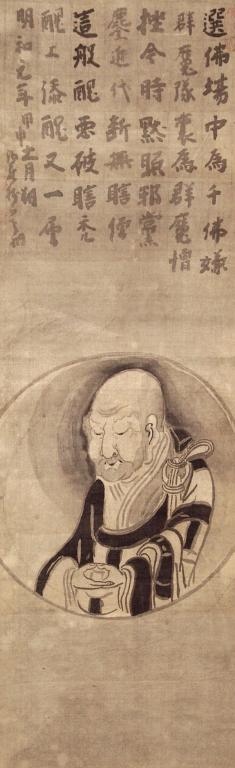
Hakuin Ekaku meditating
self-portrait
1764
Eisei Bunko Museum
One who embarks on the path of awakening aspiring to master Wisdom is a Bodhisattva motivated by Great Compassion, taking the Great Vows to save all beings with the cultivation of Samadhi, and not seeking Liberation for one’s own sake alone.
Zhanglu Zongze
There are three critical meditation manuals within the Zen tradition. The first was composed sometime at the beginning of the twelfth century. The other two were composed in the first half of the thirteenth.
We know almost nothing about the Chinese master Zhanglu Zongze, the author of the first of these manuals. But this text is considered foundational within the Japanese Rinzai school.
The second is from the Japanese Soto Zen master Eihei Dogen and was published either in 1227 or 1233. Interestingly both closely patterned on the earlier document. This included Dogen including verbatim passages in his version.
The third is from another Soto master, Keizan Jokin, a fourth-generation successor to Dogen often considered the second founder of Japanese Soto Zen. I can’t find a first publication date, but Keizan died in 1325.
Each is worth a deep dive. But what follows here is one, the first, Master Zhanglu Zongze’s Guidelines. It isn’t the first Chinese meditation manual, but it is the first unambiguously presenting what we understand as seated Zen meditation.
It is so important that the Rinzai school counts it as one of their four “essential texts,” included with the Shin Shin Ming, “Faith in Mind,” the Cheng-dao ke, the “Song of Awakening,” and the Shiniu, the “Ten Oxherding Pictures.”
I was surprised to discover that as important as it is, it’s really hard to find a translation of it into English.
I wrote to several of my friends who are both Zen people and of a scholarly turn. One of them, Ruben Habito, one of the senior representatives of the Sanbo Zen school here in North America and Professor of World Religions and Spirituality as well as Director of Spiritual Formation at Perkins School of Theology at Southern Methodist University, in Dallas, Texas.
Roshi Habito not only gave me details situating the text, he provided his own translation of the text, and then graciously allowed me to provide its first publication here at Monkey Mind, in 2018. I’ve added in those comments above and am offering Professor Habito’s translation, introduction, and commentary once more, as a help to anyone walking the Zen way.
Guidelines for Seated Meditation
Translation, Introduction, and Commentary
by Ruben Habito
Maria Kannon Zen Center
Dallas, Texas
Introduction
Guidelines for Seated Meditation (Zazengi 坐禅儀) is one of the Four Scriptural Texts of the Zen School (Zenshū Shibu Roku) used for study by novice monks in the Rinzai Zen School in Japan, the three others being Faith in Mind, the Ten Oxherding Pictures, and the Song of Enlightenment.
It is attributed to Master Zhanglu Zongze of the Northern Song era (early twelfth century), about whom little is known except for his having edited a compilation of rules of monastic life. Chan/Zen scholar Carl Bielefeldt introduces this text and provides historical and contextual background in an article included in the volume entitled Traditions of Meditation in Chinese Buddhism edited by Peter Gregory (Kuroda Institute Studies in East Asian Buddhism 4, Honolulu: University of Hawaii Press 1986, pp. 129-161), comparing it with manuals of meditation written before and after it, tracing possible influences, and mapping further developments among the different schools of meditation.
The Text
One who embarks on the path of awakening aspiring to master Wisdom is a Bodhisattva motivated by Great Compassion, taking the Great Vows to save all beings with the cultivation of Samadhi, and not seeking Liberation for one’s own sake alone.
In taking this path you must abandon entanglement in the multitude of external events, putting everything to rest, and allowing the mind and body to be as one and come to a point of stillness.
Regulate your intake of food and drink – neither too little nor too much. Find a balance in your sleep, neither being sleep-deprived nor oversleeping.
To practice seated meditation, find a quiet place and prepare to sit on a thick mat, wearing loose and comfortable clothing. Sit with a proper posture in a formal and dignified manner. One may sit in the full cross-legged (lotus) position, first placing the right foot upon the upper left thigh area, and then placing the left foot upon the upper right thigh area, with soles of both feet upward. Or one may sit in the half cross-legged (lotus) position, whereby the left leg is laid across the right thigh – with the left foot resting upon the right upper thigh area. Then on the left foot, place the right hand (palm upwards). Rest the left hand (palm upwards) on the palm of the right hand and allow the thumbs to touch.
Slowly raise the upper torso by straightening the lower back, and sway the body gently to the left and right, then front and back, allowing it to settle so that an upright sitting posture is achieved. Sit without leaning to the left nor to the right, neither bend over forward nor lean backward. With your back straightened, align the neck and head with one another, and take the form of a seated Buddha, steady and unmoved. Arrange your posture in a way that enables the breath to come in and out freely and unhindered.
The ears should be aligned with the shoulders; the nose with the navel. The tongue should touch the palate, the teeth together, and the lips closed. The eyes should remain slightly open so as to prevent sleepiness. Attaining samādhi in this way will be a powerful experience. Monks in ancient times sat in meditation in this way– with the eyes slightly open. Chan master Fayan Yuantong would loudly scold those who sat in meditation with their eyes closed – telling them that they were abiding in the ‘Black Mountain Cave of Mara’, that is, falling into the trap of nihilism. This is very important for those of you who are earnest practitioners: do not fall into this trap.
The body should be settled and stable, so you can breathe with awareness, and tension should be released from the entire mid-section of your body. Think no thoughts of good or evil. When a thought arises – be aware of it – awareness dissolves the thought. As you keep on practicing in this way over time, thoughts are set aside and oneness is attained. This is the heart of seated meditation.
It is my humble view that the practice of seated meditation is the Dharma Gate of true ease and joy. Some of those who try this practice may become ill – this is because they do not pay careful attention to how this should be practiced correctly. If one truly practices with a correct understanding and pay careful attention to the instructions, the natural outcome is for one to become lighthearted and joyful, with a clear mind, and one will be able to engage in one’s day to day activities with a sense of genuine inner freedom and contentment.
One who attains this state of enlightened mind is like a dragon that has touched the water and freely roams the sky, or a tiger whose roar echoes through the deep mountains. Even for those practitioners who have not gone that far, this practice will propel them with an inherent power like the wind blowing through flames and making them even stronger. If you apply yourself wholeheartedly to this practice of seated meditation, you will be carried on by a gentle wind blowing and guiding you on in the right direction, without exerting too much effort, and enlightenment will be on your horizon. Therefor you must unflaggingly engage in this practice in an earnest way and not give up when adversities arise.
As one goes further to higher levels of awareness, Mara the tempter may lurk along the way, placing obstacles before you. However, if you keep your eyes straight on the path and not be deflected, and without giving in to doubt, you will prevail. Texts such as the Surangama Sutra, Tiantai’s ‘Great Calm Insight’, and Guifeng’s ‘Principles of Practice and Enlightenment’, explain in detail about these tempters and their wiles, and how one might be able to overcome them. Read these works, so one need not be overly concerned about these matters.
In coming out of the state of Samadhi, move your body slowly, remaining calm, without hurrying – maintain a state of serenity through the transition from one state to another. After formal meditation practice is over, it is important to maintain that momentum of Samadhi at all times, taking appropriate measures to be able to do so. Holding on to this power of Samadhi is a serious undertaking – like that of holding a precious baby in your arms. Holding it in this way, the power of Samadhi will gradually increase in one’s day to day life.
Cultivating Samadhi is of utmost importance. If one’s Samadhi is not ripe, one will have no sense of direction and will be confused even in attaining an experience of realization.
To find a pearl that lies deep underneath the waters, one must first calm the waves of the ocean. If the water continues to be perturbed, there is no way of finding that pearl. Only as the water becomes still, and the view becomes clear, will the pearl appear in its natural brilliance, and will thus be discovered.
The Sutra of Perfect Enlightenment says; ‘The unhindered and pure Wisdom arises from Samadhi.’ The Lotus Sutra says; ‘In a quiet place let one practice stillness, regulating the mind. Sit in this way, and be like the unmovable Mount Sumeru.’
To arrive at that state that is beyond the ordinary and the holy, Samadhi is vital and necessary. Monks in ancient times were able to freely determine their time of death, seated or standing up, through the power of their Samadhi. There are those who do not fully understand that seated meditation is geared toward the realization of one’s true self, and are thus not able to overcome the pull of evil karma. People of ancient times said, ‘Those without Samadhi become confounded and don’t know what to do when they approach the time of their death’.
For those of you who earnestly aspire to practice seated meditation, I encourage you to read the above over and over. In doing so, and in engaging yourself wholeheartedly in the practice, you will bring benefit both to self and other, and with no doubt at all come to a full realization of your true self.
Translator’s Commentary
Guidelines for Seated Meditation appears to be a rather simple and straightforward text and is readily understood by one seeking directions for undertaking a spiritual search. It provides detailed instructions on very practical matters that need to be put in place, including finding balance in one’s lifestyle (neither too much nor too little food, neither lacking sleep or too much of it, etc.), taking an appropriate posture that will be conducive to stillness, being aware of one’s breathing, not pursuing thoughts and judgments and cultivating a calm state of mind (Samādhi).
I would like to highlight one feature among others that is central to the message of this text, a crucial theme that all of us earnest in our spiritual practice are called to heed, and place in the forefront of our horizon and vision for our day to day lives.
This is the opening paragraph’s emphatic note that this practice of seated meditation is undertaken not for one’s own self alone, but is motivated by Great Compassion, by a heart that seeks the liberation of all beings from suffering and delusion. In other words, one is drawn into this practice of seated meditation not because one seeks a haven of peace and contentment for oneself, in retiring to a quiet corner to shield oneself from the troubles and pains of this world, but rather precisely because one is in search of a way to address these pains and sufferings and shed light on where their causes lie, that is, deep in the human heart of each one of us, beginning with oneself.
The recitation of the Four Great Vows of the Bodhisattva, usually conducted at the end of periods of meditation or of ritual services in centers of Mahāyāna practice, is a constant reminder of this horizon of Great Compassion as the background and motivating power of seated meditation practice:
Sentient beings are numberless, I vow to liberate them. Delusions are inexhaustible, I vow to end them. Dharma Gates are countless, I vow to master them. The Awakened Way is unsurpassable, I vow to embody it.
The frequent recitation of these Great Vows can on the one hand serve as a constant reminder that my spiritual practice, and for that matter my life in its entirety, is bound together with that of all beings in an intimate web of interconnectedness, and that my destiny and my individual fulfillment and happiness cannot be separated from that of each and every sentient being in this universe. This very breath which sustains me and keeps me alive is the same power that keeps every sentient being alive each in our own respective ways. The very awareness of this breath we take, inhaling, exhaling, again inhaling and exhaling, a central component in seated meditation practice, can as such open us to a direct experience of this vast horizon of intimate interconnectedness with all, and can bring forth a heart and mind replete and overflowing with gratitude. On the other hand though, the recitation can turn into a matter of habit, and though we say the words, the repetition can make us oblivious of and benumbed to the dynamic reality that it signifies.
To forestall this relegation of what is meant to be a deeply significant and transformative act of committing my entire being to the liberation of all beings and of fully embodying the Awakened Way into a mere repetitive event, I recommend the cultivation of a habit of mind that keeps attuned to the actual events happening in the world around us, keeping an attentive eye and ear. We can call this the cultivation of the eyes and ears of Kannon (Avalokitesvara), ‘the One who beholds and hears the cries of the world’, the Bodhisattva of Compassion that stands as a symbolic figure of all that we seek and aspire to be in embarking on our spiritual practice.
The media barrage us with the many sad and painful, tragic events happening in our contemporary world, with tens of millions of our fellow human beings forced to flee their homes due to threats on their lives by military violence or by other factors such as discrimination, economic deprivation, and so on, and our hearts cry out in pain and sorrow and anguish, in solidarity with those in such circumstances. As we learn of the ecological devastation being wreaked on our natural habitat on a global scale due to human thoughtlessness and greed, causing the extinction of more and more species of living beings on this planet, the cry of our mother Earth becomes our own cry. As we learn of the way many of our fellow human beings are deprived of basic needs of food, shelter and clothing, or denied a place in human society due to discriminatory attitudes or due to unjust political, economic, social and other institutional structures, our hearts cry out in anguish and in solidarity with those in pain.
It is in the midst of this cry of pain and anguish and sorrow that the Great Vow resonates deeply and inspires us with a new resolve: ‘Sentient beings are numberless, I vow to liberate them’. The very recitation of the vow emboldens us to do everything within our own capacity to live for and work for the alleviation of the suffering of our fellow beings. It empowers me to make decisions whereby I may align my life in the direction of bringing about a transformation of social, economic, cultural, religious and other institutions in the direction of justice, equality, and the well-being of all. My practice of seated meditation then becomes the powerhouse for me to be able to engage wholeheartedly in this task of world transformation, beginning with my own self.
There are other features related to spiritual practice worth highlighting that emerge from this text, which I intend to unpack at some future occasion.
History and Religion
Guidelines for Seated Meditation
Previous Post

November 15, 2023
On the Spirituality of Duty: A Zen Teacher's Meditation
Next Post

November 21, 2023 A Faithful Skeptic: Margaret Fuller's Transcendentalist "Credo"
Recent Comments
"Allowing anger to contaminate one's hard disk can be detrimental to one's holistic well being. ..."
Hot Anger: Meeting Anger in Zen ..."
"I love this koan. every which way you turn it bites you, Thirty years on ..."
Nanquan Cuts the Cat: A Jesuit ..."
"As a substitute for religion, Zen is probably better than taking drugs. However, it can ..."
The Selling of Zen at the ..."
"Craving and aversion are detrimental to one's peace and happiness. Easter is a wake up ..."
Easter: A Zen Buddhist Appreciation
Browse Our Archives
Select a Category A Christmas Carol Abolitionist African-American Ahmadiyya Alan Watts Aldous Huxley Allen Ginsberg Amedkar Jayanti American politics American Zen Anaheim Zen Sangha Anglican Annie Besant April Fool Armageddon Art and Religion artificial intellegence Atheist Awakening B R Ambedkar Barlaam & Josaphat Beatnik Between Bhagavad Gita Bible biography birthday bodhisattva Bodhisattva Precepts Book burning Book of Common Prayer Book of Mormon Brahmo Samaj Buddha Buddhism Buddhist Buddhist Lord's Prayer Butterflies Calendars cartoons cat ChatGPT Chicken Tortilla Soup choices Christian atheism Christian mysticism Christian origins Christian Science Christian Zen Christianity Christianity and Buddhism christmas Christmas Truce Christopher Isherwood Church of Later Day Saints Cinco de Mayo circus covenant critical thinking culture D. T. Suzuki Dalit Buddhism Daniel Defoe Desert Fathers and Mothers dharma talk Dogen Donald Trump Dongshan's Five Ranks Dorothy Day dream Duty Easter ecology Edwin Arnold emptiness Empty Moon Zen Network Episcopal Church Eternal Now Ethics evolution existentialism Faith fantasy Fathers Day film film review fire Five Ranks Folk music food Form and emptiness Four Seals Francis of Assisi Francis Xavier Free thinker friendship George MacDonald Gerald Heard Glenn Taylor Webb God Good Friday Gospel of Gospel of Mark Gospel of Thomas grace Graduate Theological Unioin Graduate Theological Union Guanyin H R Blyth Hakuin Ekaku Hanamatsuri Hanukkah Harada Yasutani Zen Heart Sutra Henry David Thoreau Hermann Hesse Hinduism History and Religion history of religion Holy Spirit home Hospitality Icon Ides of March Isaac Newton Islam Islamic mysticism Jack Kerouac James Luther Adams Jiddu Krishnamurti Joan of Arc Johannes Gutenberg John Donne joke Judaism justice karma kensho King James Bible koan Koun Yamada Kyoto School Lewis Carrol Liberal Christianity Liberal Religion Life Plan Community Liminal literature Literature and Religion Liturgy Lord's Prayer Love Mahatma Gandhi Mahayana Martin Luther King Jr Mary Baker Eddy Mary Magdelene Mary Oliver Mayflower Compact Meditation memories memory metaphor money money and religioin Mormons Mother's Day movie review mysticism mythic Neighborhood Unitarian Universalist Church New Thought Nichiren Buddhism Nonduality not knowing Omar Khayyam Pacific School of Religion pagan Palm Sunday Passover peace Pentecost perennialism Phantastes Philip Kapleau philosophy Pilgrimage poetry Poetry and Religion politics Prayer Precepts Printing Press prophecy prophetic spirituality psychology Pure Land Queer religion queering religion Quietism Ram Mohan Roy rebirth recipe Relationships and religion religion religion and history Religious syncretism Resistance Retirement Retreat review Rissho Kosei Kai Ritual Robert Aitken Roshi Robert Ingersoll Rohatsu Romani religion Rosie the Riveter saints samadhi SanboZen Sangha Satyagraha science science and reigion science and religion science fiction seminary sermon Sesshin Sex and Religion Shinran Sikh Sikh tradition silence Social Justice Socially Engaged Buddhism Society and religion Soto Zen soul spiritual community spiritual practice Spirituality Sufism Suicide superstition Taoism Television Teresa of Avila Thanksgiving theological schools Theosophy Thomas Merton Time Transcendentalism Transcendentalist Trinitarian Trinity Uncategorized unitarian Unitarian Christianity Unitarian Universalist Universalism Vajrayana Vedanta Walking war Willa Cather William Ellery Channing wisdom women and religion women in religion World Teacher Writing zazen Zen Zen Center Zen inspired retriement zen meditation Zen Precepts Zen women
Select a Month October 2026 September 2026 August 2026 July 2026 June 2026 May 2026 April 2026 March 2026 February 2026 January 2026 December 2025 November 2025 October 2025 September 2025 August 2025 July 2025 June 2025 May 2025 April 2025 March 2025 February 2025 January 2025 December 2024 November 2024 October 2024 September 2024 August 2024 July 2024 June 2024 May 2024 April 2024 March 2024 February 2024 January 2024 December 2023 November 2023 October 2023 September 2023 August 2023 July 2023 June 2023 May 2023 April 2023 March 2023 February 2023 January 2023 December 2022 November 2022 October 2022 September 2022 August 2022 July 2022 June 2022 May 2022 April 2022 March 2022 February 2022 January 2022 December 2021 November 2021 October 2021 September 2021 August 2021 July 2021 June 2021 May 2021 April 2021 March 2021 February 2021 January 2021 December 2020 November 2020 October 2020 September 2020 August 2020 July 2020 June 2020 May 2020 April 2020 March 2020 February 2020 January 2020 December 2019 November 2019 October 2019 September 2019 August 2019 July 2019 June 2019 May 2019 April 2019 March 2019 February 2019 January 2019 December 2018 November 2018 October 2018 September 2018 August 2018 July 2018 June 2018 May 2018 April 2018 March 2018 February 2018 January 2018 December 2017 November 2017 October 2017 September 2017 August 2017 July 2017 June 2017 May 2017 April 2017 March 2017 February 2017 January 2017 December 2016 November 2016 October 2016 September 2016 August 2016 July 2016 June 2016 May 2016 April 2016 March 2016 February 2016 January 2016 December 2015 November 2015 October 2015 September 2015 August 2015 July 2015 June 2015 May 2015 April 2015 March 2015 February 2015 January 2015 December 2014 November 2014 October 2014 September 2014 August 2014 July 2014 June 2014 May 2014 April 2014 March 2014 February 2014 January 2014 December 2013 November 2013 October 2013 September 2013 August 2013 July 2013 June 2013 May 2013 April 2013 March 2013 February 2013 January 2013 December 2012 November 2012 October 2012 September 2012 August 2012 July 2012 June 2012 May 2012 April 2012 March 2012 February 2012 January 2012 December 2011 November 2011 October 2011 September 2011 August 2011 July 2011 June 2011 May 2011 April 2011 March 2011 February 2011 January 2011 December 2010 November 2010 October 2010 September 2010 August 2010 July 2010 June 2010 May 2010 April 2010 March 2010 February 2010 January 2010 December 2009 November 2009 October 2009 September 2009 August 2009 July 2009 June 2009 May 2009 April 2009 March 2009 February 2009 January 2009 December 2008 November 2008 October 2008 September 2008 August 2008 July 2008 June 2008 May 2008 April 2008 March 2008 February 2008 January 2008 December 2007 November 2007 October 2007 September 2007 August 2007 July 2007 June 2007 May 2007 April 2007 March 2007 February 2007 January 2007 December 2006 November 2006 October 2006 September 2006
Follow Us!
TAKE THE
Religious Wisdom Quiz
What color is traditionally worn by priests during the season of Advent?
Select your answer to see how you score.
Purple White Red Green
Related posts from Monkey Mind

A Zen Buddhist Response to this Moment

The Suchness of Crows: The Zen teachings of...
TRENDING AT PATHEOS Buddhist

Smart people saying smart things (11.24.26)
Please take time to listen to Perry Bacon, Sarah Posner, Adam Serwer,...

The Contingency of Our Technology
Last week we were hit with a raft of massive technology outages....

In 1939, President Franklin D. Roosevelt moved Thanksgiving from November 30 to...

Reasons for Restraint: Ricardo Gonzalez, Florida and Dec...
The Morning of January 3 I begin with the dead. On the...

I published this column for Thanksgiving 2012 in the Deseret News....

For many years, Catholicism has been caught up in division over the...
view all Buddhist blogs
What Are Your Thoughts?leave a comment
Ad-Free & Subscriber Log-In Subscription Support
- About Us
- 2026 Calendar
- Videos
- Podcasts
- Library of World Religions
- Faith In Media Tracker
- Advertise With Us
- Write for Us
- Privacy Policy
- Terms of Service
- Do Not Sell My Data
- Contact Us
- Radiant Digital
- Manage Newsletter Subscriptions
- Unsubscribe From Notifications
- Sitemap
Copyright 2008-2026, Patheos, part of the Radiant Digital network of media brands. All rights reserved.
Subscription Support Ad-Free & Subscriber Log-In
Follow Patheos