
BuddhistCatholicContemplativeEvangelicalGeneral ChristianHinduJewishLatter-day SaintMuslimNew VisionsProgressive Christian
Beliefs
- Buddhist
- Catholic
- Contemplative
- Evangelical
- General Christian
- Hindu
- Jewish
- Latter-day Saint
- More Voices
- Muslim
- New Visions
- Pagan
- Progressive Christian
Topics
- Religion News
- Food and Religion
- Sports and Religion
- Religious Art
- Religious Music and Entertainment
- Religious Events
- History and Religion
- Style and Religion
- Politics and Religion
- Women in Religion
- Recreation Outdoors and Religion
- Business Finance and Religion
- Careers Workplace and Religion
- Education and Religion
- Family Parenting and Religion
- Health Fitness and Religion
- Home and Religion
- Relationships and Religion
- Technology and Religion
- Travel and Religion
Columnists
- Buddhist Columnists
- Business Finance and Religion Columnists
- Careers Workplace and Religion Columnists
- Catholic Columnists
- Contemplative Columnists
- Education and Religion Columnists
- Evangelists Columnists
- Family Parenting and Religion Columnists
- General Christian Columnists
- Health Fitness and Religion Columnists
- Hindu Columnists
- History and Religion Columnists
- Home and Religion Columnists
- Jewish Columnists
- More Voices Columnists
- Latter Day Columnists
- Muslim Columnists
- New Visions Columnists
- Nonreligious Columnists
- Pagan Columnists
- Politics and Religion Columnists
- Progressive Columnists
- Recreation Outdoors and Religion Columnists
- Relationships and Religion Columnists
- Religion News Columnists
- Religious Art Columnists
- Religious Events Columnists
- Religious Music and Entertainment Columnists
- Sports and Religion Columnists
- Style and Religion Columnists
- Technology and Religion Columnists
- Travel and Religion Columnists
- Women in Religion Columnists
Resource Library
- 2026 Calendar
- Library of World Religions
- The 100 Most Holy Places on Earth
- Patheos Answers
- Podcasts
- Videos
- Faith Leaders Database
- Anglican Episcopalian
- Bahai
- Baptist
- Buddhism
- Christianity
- Confucianism
- Eastern Orthodoxy
- Hinduism
- Holiness and Pentecostal
- ISKCON
- Islam
- Judaism
- Lutheran
- Methodist
- The Church of Jesus Christ of Latter-day Saints
- New Age
- Paganism
- Presbytarian and Reformed
- Protestantism
- Religion Behind the Scenes
- Roman Catholic
- Scientology
- Shia Islam
- Sikhism
- Sufism
- Sunni Islam
- Taoism
- Zen
- See all religions
Research Tools
 Ad-Free & Subscriber Log-In Subscription Support
Ad-Free & Subscriber Log-In Subscription Support
Follow Patheos 

- Trending:
- Forgiveness
- |
- Marriage
- |
- Consciousness
- |
- Death Penalty
- |
- Election
- |
- Halloween

- Home
- Buddhist
- History and Religion
- A Brief History of Zen Buddhism Come West
A Brief History of Zen Buddhism Come West
Last updated on: November 27, 2023 at 7:10 pm by James Ford
A Brief History of Zen Buddhism Come West 2023-11-27T19:10:55-08:00 James Ford
Patheos Explore the world's faith through different perspectives on religion and spirituality! Patheos has the views of the prevalent religions and spiritualities of the world.
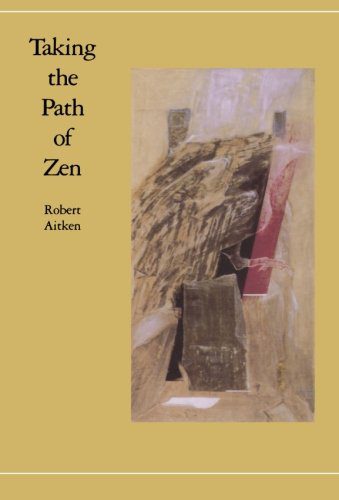
Taking the Path of Zen
Robert Aitken
“Ordinary people and saints living together. Dragons and snakes all mixed up.”
Blue Cliff Record
From one angle Zen did proceed from the brow of Zeus. Like Athena, a goddess of intelligence and wisdom. It is here. This is it. Fully present.
It has always been. What you see is what you get. And it is ready to be engaged.
From another angle Zen has a history. And a recent part of that history is how Zen, the pearl of great price of Asian wisdom has come West and spread across the Global North. It has also touched other parts of the globe, but that’s for another time. Here a little more of that history.
Among the various maybes and possibilities of that history of Zen coming West, specifically to North America, is the suggestion that possibly a Chinese expedition including five Buddhist monks led by the Bhikshu Hui Shen touched at points along the California coast sometime before the fifth century of our common era. It’s unlikely, but possible. And I do enjoy thinking maybe, possibly.
Zen certainly came to North America in the nineteenth century with Chinese workers. Chinese Buddhism, however, is not so clearly sectarian, but it can easily be assumed among these immigrants were a number of Chan practitioners.
The Chinese brought Buddhism and Zen here decades before white Americans noticed. In 1853 the Sze Yap Company, one of the earliest of the Chinese Six Companies, built what appears be the first known Buddhist temple in San Francisco at the corner of Pine and Kearney. Interestingly this happened within two years of the benevolent association’s founding, suggesting a high priority.
Within a quarter of a century there were eight Buddhist temples serving Chinese immigrants in San Francisco alone, and there were hundreds on the West coast. Outside the Chinese community these temples were usually called joss houses, and by the 1860s were attracting tourist attention. No doubt some among those visitors began to look more deeply into what was being offered. Chinese Buddhism is not so sectarian as Japanese Buddhism. So, the offerings included Zen, or more properly Chan, as well as Pure Land teachings. And it could be hard to sort one thread out from the others.
Japanese immigrants would create perhaps the first unambiguously Zen communities here in North America. In 1922, after establishing a temple in Hawaii, the Reverend Hosen Isobe established a Soto Zen temple in Los Angeles. A couple of years later he founded another temple in San Francisco. Others would follow. A decade after Reverend Isobe’s first foundation, the Reverend Nanshin Okamoto founded a Rinzai Zen temple on Maui.
And here it is important to note an almost immediate divide.
Part of the sadness for the Buddhist sanghas in the West, like their Christian counterparts, are the lines between ethnic communities from East and West. They’re not hard and fast, but neither are they easy to cross. So, it is relatively rare to see someone of European or African descent in the communities originally gathered to support Chinese, Japanese, Vietnamese, or Korean immigrants and their children, and now grandchildren. Similarly, there’s not a lot of crossover from the birthright communities the other way.
Some people of color, Latinx and African American have walked into variations of the same problems. These were people who’ve deeply seen the hurt. And who believed there is a possibility of healing in this Buddhist and Zen way. And who were willing to deal with those added on problems, slights, insults, and other hurts of being minority members of Buddhist temples and centers.
When we consider how we humans treat others that are not immediately “like us,” it becomes easy to see how theological doctrines like original sin may arise. It seems so deep, so pervasive, that anyone hoping to bridge great chasms might despair. And it probably needs to be added in, culture is important, and identity, and this wanting to protect is not an unmitigated evil. It’s very, very complicated. And, thankfully, some persist in crossing those boundaries.
Among those who’ve been able to persist, we’re now seeing teachers begin to appear. The first African American monk I’m aware of was Saunders Smith ordained as Suhita Dharma (and Thich An Duc) in 1974. He received Taman, the Vietnamese version of Inka, in 2006. The next two first fully acknowledged African American Zen teachers I’m aware of are Merle Kodo Boyd, who received dharma transmission in 2006 and Inka 2015. And Jules Shuzen Harris, who received Denkai transmission in 2002, dharma transmission in 2007, and Inka in 2019. Others have followed. And the problems continue, if somewhat attenuated by a lot of conscious effort.
As an aside, I’m also noticing how birthright and convert are often outdated distinctions. Or, at least not accurate enough. Many Jewish Zen practitioners say they’ve never converted. I’ve noticed this among Zen practitioners, as well. And. Increasingly there are people not of Asian descent who were born into Buddhist and Zen identified families. Just as for generations now there are people of Asian descent who are deeply culturally Christian. And of course, to keep it all lively, people of Asian descent raised nonreligious or perhaps Christian, or something else, who discover Buddhism and Zen other than at home, often in a classroom. Lots of messiness. Many invitations into a certain humility, especially when tempted to make categorical assertions about the human heart.
A possibly more useful distinction could be birthright and non-natal, that is people born into the Zen way and those who came to it later. Whatever, a generally acceptable term of art has yet been settled on. Perhaps revealing how liminal our moment is. How it is complicated, both dangerous and overflowing with possibilities.
Still. And…
Half a century ago Dr Martin Luther King, Jr observed Sunday morning as the most segregated hour in America. The divides at our religious moments continue. And it has turned out to be no different for Buddhists. For the self-reflecting person this reveals one more aspect of the usually unconscious but harsh divides between the dominant ethnicity and any minorities of any sort. And that part about religion being about social cohesion. Much hurt follows. And continues.
Probably it’s impossible to completely separate out a religious community from a larger cultural identity. This would apply both to the larger culture and any minority cultures within a larger community. For me this apparently unconscious repeating of ancient tribal-like patterns is harsh and sobering. Especially as in North America we live in cultures that rhetorically see themselves as expressly not based in where our ancestors came from. There never really has been a “melting pot.”
I’ve tasted just a bit of what that othering can look like when finding myself among Japanese Zen priests and in attending Japanese descent Buddhist communities. Small but accumulating slights, together with the odd direct insult making sure I’m not missing the othering. Mixed abundantly with genuine welcoming at the same time. Sometimes from the same people.
So, what to do? I find it all an invitation into humility. One I fail at constantly, but constantly aspire to. Frankly, what we fail at constantly, but into which we’re constantly invited. Like Zen itself, it is a constant invitation into intimacy. Which, it turns out, brings many, many facets of our humanity.
And there are reasons to hope. Zen communities in the West have had more obvious success in addressing gender equity, although it still is a work in progress. One of the first handful of Zen teachers in the wave at the end of the nineteen sixties and beginning of the nineteen seventies, Houn Jiyu Kennett, was a woman. Today among the more prominent women who are Zen teachers are Jan Chozen Bays, Bobbie Rhodes, Joan Halifax, Melissa Myozen Blacker, Wendy Egyoku Nakao, and Enkyo Pat O’Hara, just to begin a long list. That has only worked because the majority of people involved pay attention to the actual problems, and most all involved really try to open their, our hearts.
What we’re about in this project is too important for us to not confront our failings. Noticing this lacuna in my, and I suspect many people’s understanding of this tradition and its communities, invites further examination about the nature of religious communities, writ large.
That said there is something emerging here in North America and the West.
And it has history. It has a story. And that story of this emerging community of practice can be outlined briefly. In the years before the Second World War a handful of Zen teachers began to work with Westerners. Among them the Soto missionary Soyu Matsuoka, the Rinzai master Sokei-an, and the priest Nyogen Senzaki, a disciple of the renowned Rinzai master Soyen Shaku who himself visited America to participate in the 1893 World Parliament of Religions in Chicago.
Probably the most important thing for reaching the non-Asian community during these years were the writings of D. T. Suzuki, another disciple of Soyen Shaku, a lay Rinzai practitioner and scholar who wrote compellingly of something called Zen enlightenment. A British admirer, Alan Watts, took Suzuki’s writings and ran with it. Sokei-an’s America widow Ruth Fuller Sasaki would immigrate to Japan, ordain, and then lead a translation team who would join in the project begun by Suzuki in providing an increasing wealth of Zen materials in English. The Beats picked up the rhetoric, and Zen, and enlightenment, and koans, especially the sound of one hand clapping became a part of the intellectual counterculture.
In the 1950s and early 1960s a number of personalities central to the establishment of Zen as practice began to take their place here. Shunryu Suzuki representing Soto Zen, Rinzai priests Joshu Sasaki and Eido Shimano settled in America. Before the 1960s were over Hsuan Hua would bring Chinese Chan, while Thich Thein An and Thich Nhat Hanh brought Vietnamese Thien. Thich Nhat Hanh’s Buddhism departing from normative Vietnamese Zen in some very interesting ways. And his influence on Buddhism in the West is hard to overstate. In 1972 Omori Sogen established a Rinzai temple in Hawaii, the first officially independent Rinzai institution outside of Japan.
As an aside in Europe, while there is a long history of Buddhism coming the Europe and Europeans reacting, the reach of Zen is first primarily through the writings of D. T. Suzuki. In 1970 when Taishen Deshimaru established the Association Zen d’Europe, which not only takes root, but today seems to represent a significant percent of European Zen practitioners.
Also, in the early 1970s Jiyu Kennett would establish a branch of what came to be called the Order of Buddhist Contemplatives in England, and today seems to represent the largest Zen oriented organization in Great Britain. The Vietnamese master Thich Nhat Hanh would spend much of his life centered in France. Other lineages would follow, including a relatively robust Sotoshu mission.
Of particular interest are the several Zen Christian lineages. The first notable figure in this movement is the German Jesuit Zen master Hugo Enomiya-Lassale. Father Lassale like most of the Zen Christians practice within the SanboZen lineage, and sometimes their community.
Returning to North America. Philip Kapleau, Robert Aitken, and Richard Baker would become the first Americans of European descent to be acknowledged as teachers. Philip Kapleau’s lineage would also have a part in the establishment of European Zen. It wouldn’t be until 1972 that the Korean master Seung Sahn arrived, but his peripatetic nature quickly assuring a version of Korean Son would also become a widely available option. In the same year the Rinzai priest Sogen Omori established a training temple in Hawaii. Finally in 2007 the Korean Taego priest Jongmae Park initiated a domestic training program for North Americans and Europeans.
Some of these would not make significant inroads among European and African descent people. For instance, while the Venerable Hsuan Hua’s community is extensive, it only counts a handful of non-Chinese descent people. While this is also largely true of the mission of the Venerable Sheng Yen, his dharma transmission to several lay heirs is gradually becoming significant in our shaping North American and Western Zen beyond the Chinese descent enclave.
That less direct influence can also be said of the Korean Jogye based communities in the West, although it should be noted the other Korean Zen organization, the Taego Order is now aggressive in attempting to bridge the gap between East and West establishing temples and Zen meditation groups across North America and Europe.
As I write this what I’ve come to think of as the “great die off” is beginning. The first generation of convert Zen practitioners and teachers, my generation are rapidly aging. Within two decades a goodly majority of us will have died. A decade after that, perhaps two or three extremely aged teachers will still be around to tell of the heady days when it all began. Maybe not even those two or three.
There are now some substantial Zen communities. The San Francisco Zen complex is perhaps the largest. Significant training centers exist around the country. There are literally hundreds of small centers. There are several training monasteries. And many teachers. There are three established trans-lineage institutions for teachers, the Soto Zen Buddhist Association, the American Zen Teachers Association, and the Lay Zen Teachers Association. Others are forming.
Our Zen teachers in the West include monastics, priests, householders, men, women, and people who live variously within the fluidity of human sexuality. I have been particularly proud of how we’ve faced sexuality, and issues of gender. Again, nowhere near a done deal. But there have been mind boggling changes in a few decades; and it shows us a way forward. And should give us hope.
Our communities tend to identify largely with the American progressive camp. I suspect largely because interest in religions outside of one’s birth communities comes with some of the freedoms that accompany higher education and higher income levels, and with that the assumptions of a more cosmopolitan perspective. Certainly, the demographics of the North American Zen communities show well educated people who at least began in the middle and upper middle classes. Again, for those who notice the demographics, class and access to Zen training for those not financially privileged joins the issues of race among the problematic issues of this emergent movement.
One of the most interesting things I’ve seen as I look at Zen as it is forming in the West is how there is no hard divide between a larger community of believers and a smaller professional class. When people speak of Zen ad their relationship to it, they almost always use the term “practice,” saying they are “Zen practitioners.” Not believers. Often, not even Buddhists. Practitioners.
There are no reliable numbers that I know of for this community. But, based on my observations, I’d hazard here in America, people of European, African, and Asian descent specifically committed to Zen and its disciplines as defined as North American Zen probably number between ten to fifteen thousand people. Perhaps more. Unlikely to be fewer. Those ten to fifteen thousand or more people are gathered into communities of practice and depth all across the country, although there is a weighting toward the West and East coasts. Almost all are small. Possibly with only one or two exceptions, all are very precarious.
And. Of course, there’s the die off coming. As small as our numbers are I believe there are enough younger people here and continuing to come in to pretty much assure there will continue to be a Zen presence. I suspect it will be dicey, but I am pretty sure something will continue.
What isn’t really clear, is out of the plethora of Zen practices that are flowering, which are the ones that will survive? I look at the San Francisco Zen Center complex, with its three anchoring institutions, the City Center, Green Gulch, and its rural training temple Tassajara, as well as its various branches gathered as “Branching Streams,” and there is no doubt younger people are attracted and are committing to the rigors of their requirements, which include a five year residency. The other major institutions, the White Plum and the Kwan Um, while they have different expectations for their members, there remain serious commitments to practice.
The other two major lineages the White Plum, a Japanese derived lineage that is rooted in the Soto school but is heavily marked by the transmission of a reformed koan curriculum has at least as many participants as Branching Streams. However, while there is a historic home temple, the Zen Center of Los Angeles, the individual sub lineages are wildly diverse and the closer one looks the harder it is to see what holds it together beyond the lineage itself and perhaps a lingering admiration for its founder’s charismatic and visionary first successor among the converts, Bernie Glassman. The Kwan Um also has a center training temple in Cumberland, Rhode Island. It has a more centralized training program, but it has mutated from its founder’s vision of a combined monastic and householder leadership, becoming almost exclusively a lay organization.
Once I posted a query on social media at several sites devoted to Zen practice asking about what formation experiences were expected, the necessary if not sufficient conditions in forming priests and teachers. The information I gleaned was too disparate to be part of any quantitative reflection. But I did notice how some very significant contemporary Western Zen teachers in their years of formation and practice, did not have that significant monastic experience. And I suspect this is going to continue to be a significant element of our forming North American Zen community.
In Japanese Zen one who leads first spends time in the monastery, usually between one and three years, and usually then trundles off to the family temple and a life as a parish minister. Some stay and dig in. Among those some small number will be recognized as masters of the way. In Soto “dharma transmission” is bestowed around the time one assumes pastoral duties and the home temple. The sense of “mastery” is usually associated with the title “shiki.” A shiki is a person allowed to lead a training monastery. Rinzai does not conflate that priestly authorization allowing one to lead that home temple with dharma transmission, instead reserving “Transmission” for those who become shiki within their school.
In China and Korea there was no direct connection between ordination as a monk or nun and dharma transmission, although almost all who received dharma transmission were monastics. Although it is important to note there have been from the beginning householders who’ve received transmission. The Taego order holds several transmission lines. With the interesting footnote that in Europe a Kwan Um Zen master has crossed over to the Taego, bring Seung Sanhn’s transmission into that community.
But the bottom line for the vast majority of continental Zen, the mainland of China and Korea and Vietnam in practice there is an assumption that some form of monasticism is what actual Zen practitioners do. Chinese versions are different than Japanese. In Chinese lineages there is no parish priest option for those who want to ordain but marry, as in Japan. Normative practice is monastic. Or, for some, but a notable minority, householder practice. The Korean derived Kwan Um school was founded in North America and the West to be both monastic and lay. Although over the years the monastic option has largely fallen away, leaving an organization where the large majority of its teachers are householders.
And with that, householders. The foundational literature of Zen is full of examples of enlightened lay practitioners. Some even receive dharma transmission. Always a minority, but from close to the beginning always an actual real option.
In truth all Asian cultures most householders don’t have formal practices. Instead, a believer embraces a life marked by devotion, and support of the “professional” practitioners sometimes as a practice, sometimes as a way of accumulating merit, and more likely mostly some combination.
That noted, there have always been practicing householders.
And here in North America and the West, practicing householders count for the majority of Zen practitioners. It is an overarching fact of Zen in North America and the West.
And. So. Here they are. Here we are. Many making Zen and the intimate way a central part of lives that also have a significant experience within the world. Working. Marrying. Raising children. To one degree or another, a normative assumption of being a Zen person is being a Zen practitioner no matter what else is true. And here we find that somewhere between ten and fifteen thousand people who identify as people of the Zen way.
What this new category of spiritual practitioner is, doesn’t have a good name. Lay suggests not serious. It also implies professionals and those who consume their services. Maybe Householder Zen. But that doesn’t fully describe it, either. There are monastics. And there are many priests. The new baseline for this convert community is the assumption everyone is a practitioner.
Where will this lead?
People have views. But the reality is we don’t know.
Which is just perfect for a tradition founded in Not Knowing…
History and Religion

About James Ishmael Ford
James Ishmael Ford is the author of Zen Master Who: A Guide to the People and Stories of Zen You can read more about the author here.
Previous Post
November 25, 2023
A Zen Meditation on our American Thanksgiving
Next Post
November 28, 2023 When the Buddha Became a Christian Saint
Recent Comments
"Allowing anger to contaminate one's hard disk can be detrimental to one's holistic well being. ..."
Hot Anger: Meeting Anger in Zen ..."
"I love this koan. every which way you turn it bites you, Thirty years on ..."
Nanquan Cuts the Cat: A Jesuit ..."
"As a substitute for religion, Zen is probably better than taking drugs. However, it can ..."
The Selling of Zen at the ..."
"Craving and aversion are detrimental to one's peace and happiness. Easter is a wake up ..."
Easter: A Zen Buddhist Appreciation
Browse Our Archives
Select a Category A Christmas Carol Abolitionist African-American Ahmadiyya Alan Watts Aldous Huxley Allen Ginsberg Amedkar Jayanti American politics American Zen Anaheim Zen Sangha Anglican Annie Besant April Fool Armageddon Art and Religion artificial intellegence Atheist Awakening B R Ambedkar Barlaam & Josaphat Beatnik Between Bhagavad Gita Bible biography birthday bodhisattva Bodhisattva Precepts Book burning Book of Common Prayer Book of Mormon Brahmo Samaj Buddha Buddhism Buddhist Buddhist Lord's Prayer Butterflies Calendars cartoons cat ChatGPT Chicken Tortilla Soup choices Christian atheism Christian mysticism Christian origins Christian Science Christian Zen Christianity Christianity and Buddhism christmas Christmas Truce Christopher Isherwood Church of Later Day Saints Cinco de Mayo circus covenant critical thinking culture D. T. Suzuki Dalit Buddhism Daniel Defoe Desert Fathers and Mothers dharma talk Dogen Donald Trump Dongshan's Five Ranks Dorothy Day dream Duty Easter ecology Edwin Arnold emptiness Empty Moon Zen Network Episcopal Church Eternal Now Ethics evolution existentialism Faith fantasy Fathers Day film film review fire Five Ranks Folk music food Form and emptiness Four Seals Francis of Assisi Francis Xavier Free thinker friendship George MacDonald Gerald Heard Glenn Taylor Webb God Good Friday Gospel of Gospel of Mark Gospel of Thomas grace Graduate Theological Unioin Graduate Theological Union Guanyin H R Blyth Hakuin Ekaku Hanamatsuri Hanukkah Harada Yasutani Zen Heart Sutra Henry David Thoreau Hermann Hesse Hinduism History and Religion history of religion Holy Spirit home Hospitality Icon Ides of March Isaac Newton Islam Islamic mysticism Jack Kerouac James Luther Adams Jiddu Krishnamurti Joan of Arc Johannes Gutenberg John Donne joke Judaism justice karma kensho King James Bible koan Koun Yamada Kyoto School Lewis Carrol Liberal Christianity Liberal Religion Life Plan Community Liminal literature Literature and Religion Liturgy Lord's Prayer Love Mahatma Gandhi Mahayana Martin Luther King Jr Mary Baker Eddy Mary Magdelene Mary Oliver Mayflower Compact Meditation memories memory metaphor money money and religioin Mormons Mother's Day movie review mysticism mythic Neighborhood Unitarian Universalist Church New Thought Nichiren Buddhism Nonduality not knowing Omar Khayyam Pacific School of Religion pagan Palm Sunday Passover peace Pentecost perennialism Phantastes Philip Kapleau philosophy Pilgrimage poetry Poetry and Religion politics Prayer Precepts Printing Press prophecy prophetic spirituality psychology Pure Land Queer religion queering religion Quietism Ram Mohan Roy rebirth recipe Relationships and religion religion religion and history Religious syncretism Resistance Retirement Retreat review Rissho Kosei Kai Ritual Robert Aitken Roshi Robert Ingersoll Rohatsu Romani religion Rosie the Riveter saints samadhi SanboZen Sangha Satyagraha science science and reigion science and religion science fiction seminary sermon Sesshin Sex and Religion Shinran Sikh Sikh tradition silence Social Justice Socially Engaged Buddhism Society and religion Soto Zen soul spiritual community spiritual practice Spirituality Sufism Suicide superstition Taoism Television Teresa of Avila Thanksgiving theological schools Theosophy Thomas Merton Time Transcendentalism Transcendentalist Trinitarian Trinity Uncategorized unitarian Unitarian Christianity Unitarian Universalist Universalism Vajrayana Vedanta Walking war Willa Cather William Ellery Channing wisdom women and religion women in religion World Teacher Writing zazen Zen Zen Center Zen inspired retriement zen meditation Zen Precepts Zen women
Select a Month September 2026 August 2026 July 2026 June 2026 May 2026 April 2026 March 2026 February 2026 January 2026 December 2025 November 2025 October 2025 September 2025 August 2025 July 2025 June 2025 May 2025 April 2025 March 2025 February 2025 January 2025 December 2024 November 2024 October 2024 September 2024 August 2024 July 2024 June 2024 May 2024 April 2024 March 2024 February 2024 January 2024 December 2023 November 2023 October 2023 September 2023 August 2023 July 2023 June 2023 May 2023 April 2023 March 2023 February 2023 January 2023 December 2022 November 2022 October 2022 September 2022 August 2022 July 2022 June 2022 May 2022 April 2022 March 2022 February 2022 January 2022 December 2021 November 2021 October 2021 September 2021 August 2021 July 2021 June 2021 May 2021 April 2021 March 2021 February 2021 January 2021 December 2020 November 2020 October 2020 September 2020 August 2020 July 2020 June 2020 May 2020 April 2020 March 2020 February 2020 January 2020 December 2019 November 2019 October 2019 September 2019 August 2019 July 2019 June 2019 May 2019 April 2019 March 2019 February 2019 January 2019 December 2018 November 2018 October 2018 September 2018 August 2018 July 2018 June 2018 May 2018 April 2018 March 2018 February 2018 January 2018 December 2017 November 2017 October 2017 September 2017 August 2017 July 2017 June 2017 May 2017 April 2017 March 2017 February 2017 January 2017 December 2016 November 2016 October 2016 September 2016 August 2016 July 2016 June 2016 May 2016 April 2016 March 2016 February 2016 January 2016 December 2015 November 2015 October 2015 September 2015 August 2015 July 2015 June 2015 May 2015 April 2015 March 2015 February 2015 January 2015 December 2014 November 2014 October 2014 September 2014 August 2014 July 2014 June 2014 May 2014 April 2014 March 2014 February 2014 January 2014 December 2013 November 2013 October 2013 September 2013 August 2013 July 2013 June 2013 May 2013 April 2013 March 2013 February 2013 January 2013 December 2012 November 2012 October 2012 September 2012 August 2012 July 2012 June 2012 May 2012 April 2012 March 2012 February 2012 January 2012 December 2011 November 2011 October 2011 September 2011 August 2011 July 2011 June 2011 May 2011 April 2011 March 2011 February 2011 January 2011 December 2010 November 2010 October 2010 September 2010 August 2010 July 2010 June 2010 May 2010 April 2010 March 2010 February 2010 January 2010 December 2009 November 2009 October 2009 September 2009 August 2009 July 2009 June 2009 May 2009 April 2009 March 2009 February 2009 January 2009 December 2008 November 2008 October 2008 September 2008 August 2008 July 2008 June 2008 May 2008 April 2008 March 2008 February 2008 January 2008 December 2007 November 2007 October 2007 September 2007 August 2007 July 2007 June 2007 May 2007 April 2007 March 2007 February 2007 January 2007 December 2006 November 2006 October 2006 September 2006
Follow Us!
TAKE THE
Religious Wisdom Quiz
What is the longest book of the Bible?
Select your answer to see how you score.
Genesis Psalms 2 Chronicles Numbers
Related posts from Monkey Mind

Keizan Jokin: The Zen Master Ancestor You Don't...

What Zen Practice Actually Does With Anger

Nanquan Cuts the Cat: A Jesuit commentary on...

On Taking Refuge in the Dharma
TRENDING AT PATHEOS Buddhist

In one sense walking into Westminster Abbey is like walking down the...

'Super Scam Me' Exposes AI Jon Bon Jovi...
Leslie Pickett believed she was in a relationship with Jon Bon Jovi....

The Brazilian Remake of Kendricks' 'Flywheel' Opens in...
“Flywheel,” the story that launched the Kendrick Brothers’ filmmaking career is getting...

The Dangers of Gradual Accommodation (Winking at Sin)
Recently, the “law of gradualness” resurfaced during the opening of a weeklong,...

The Iron Gates and the Lion of the...
Yesterday, I didn't finish my report about, well, yesterday. So I'll...

The Image: On the Horror of Capitalism and...
The Image Then went the Pharisees, and took counsel how they might...
view all Buddhist blogs
What Are Your Thoughts?leave a comment
Ad-Free & Subscriber Log-In Subscription Support
- About Us
- 2026 Calendar
- Videos
- Podcasts
- Library of World Religions
- Faith In Media Tracker
- Advertise With Us
- Write for Us
- Privacy Policy
- Terms of Service
- Do Not Sell My Data
- Contact Us
- Radiant Digital
- Manage Newsletter Subscriptions
- Unsubscribe From Notifications
- Sitemap
Copyright 2008-2026, Patheos. All rights reserved.
Subscription Support Ad-Free & Subscriber Log-In
Follow Patheos