
BuddhistCatholicContemplativeEvangelicalGeneral ChristianHinduJewishLatter-day SaintMuslimNew VisionsProgressive Christian
Beliefs
- Buddhist
- Catholic
- Contemplative
- Evangelical
- General Christian
- Hindu
- Jewish
- Latter-day Saint
- More Voices
- Muslim
- New Visions
- Pagan
- Progressive Christian
Topics
- Religion News
- Food and Religion
- Sports and Religion
- Religious Art
- Religious Music and Entertainment
- Religious Events
- History and Religion
- Style and Religion
- Politics and Religion
- Women in Religion
- Recreation Outdoors and Religion
- Business Finance and Religion
- Careers Workplace and Religion
- Education and Religion
- Family Parenting and Religion
- Health Fitness and Religion
- Home and Religion
- Relationships and Religion
- Technology and Religion
- Travel and Religion
Columnists
- Buddhist Columnists
- Business Finance and Religion Columnists
- Careers Workplace and Religion Columnists
- Catholic Columnists
- Contemplative Columnists
- Education and Religion Columnists
- Evangelists Columnists
- Family Parenting and Religion Columnists
- General Christian Columnists
- Health Fitness and Religion Columnists
- Hindu Columnists
- History and Religion Columnists
- Home and Religion Columnists
- Jewish Columnists
- More Voices Columnists
- Latter Day Columnists
- Muslim Columnists
- New Visions Columnists
- Nonreligious Columnists
- Pagan Columnists
- Politics and Religion Columnists
- Progressive Columnists
- Recreation Outdoors and Religion Columnists
- Relationships and Religion Columnists
- Religion News Columnists
- Religious Art Columnists
- Religious Events Columnists
- Religious Music and Entertainment Columnists
- Sports and Religion Columnists
- Style and Religion Columnists
- Technology and Religion Columnists
- Travel and Religion Columnists
- Women in Religion Columnists
Resource Library
- 2026 Calendar
- Library of World Religions
- The 100 Most Holy Places on Earth
- Patheos Answers
- Podcasts
- Videos
- Faith Leaders Database
- Anglican Episcopalian
- Bahai
- Baptist
- Buddhism
- Christianity
- Confucianism
- Eastern Orthodoxy
- Hinduism
- Holiness and Pentecostal
- ISKCON
- Islam
- Judaism
- Lutheran
- Methodist
- The Church of Jesus Christ of Latter-day Saints
- New Age
- Paganism
- Presbytarian and Reformed
- Protestantism
- Religion Behind the Scenes
- Roman Catholic
- Scientology
- Shia Islam
- Sikhism
- Sufism
- Sunni Islam
- Taoism
- Zen
- See all religions
Research Tools
 Ad-Free & Subscriber Log-In Subscription Support
Ad-Free & Subscriber Log-In Subscription Support
Follow Patheos 

- Trending:
- Forgiveness
- |
- Marriage
- |
- Consciousness
- |
- Death Penalty
- |
- Election
- |
- Halloween

- Home
- Buddhist
- Home and Religion
- The Dance of Welcoming in Spiritual Communities
The Dance of Welcoming in Spiritual Communities
Last updated on: September 24, 2023 at 4:25 pm by James Ford
The Dance of Welcoming in Spiritual Communities 2023-09-24T16:25:55-07:00 James Ford
Patheos Explore the world's faith through different perspectives on religion and spirituality! Patheos has the views of the prevalent religions and spiritualities of the world.
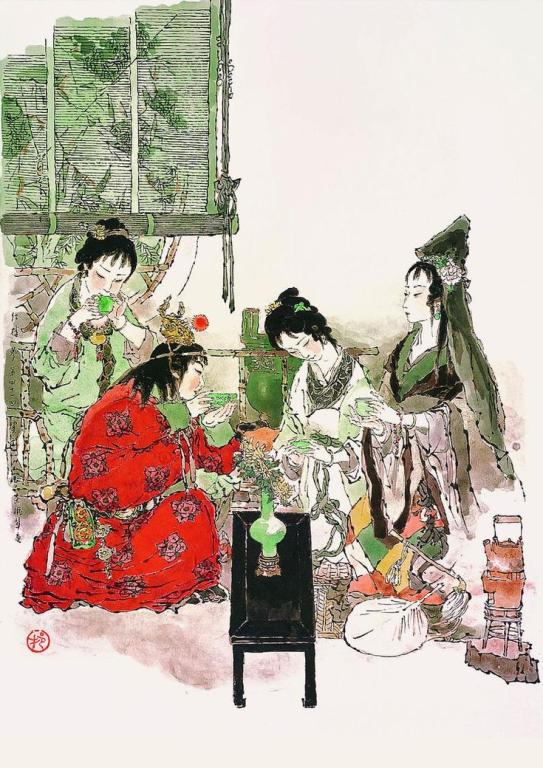
Tea time with friends
(traditional Chinese print)
(A sermon by James Ishmael Ford, delivered at the Neighborhood Unitarian Universalist Church in Pasadena, on the 24th of September, 2023)
***
One day while walking quietly together, out of the silence the Buddha’s attendant Ananda declared, “Teacher, to have companions and comrades on the great way is so amazing! I have come to realize that friendship is fully half of an authentic spiritual life. They proceeded along quietly for a while more, before out of that silence the Holy One responded. “No, dear one. Without companions and comrades, no one can live into the deep, finding the true harmonies of life, to achieve authentic wisdom. To say it simply, friendship is the whole of the spiritual life.”
Upaddha Sutta (author’s paraphrase)
When Reverend Omega invited me to speak today and told me that a touchstone for recent sermons has been “welcoming,” I immediately thought of a saying I’d heard many years ago. Invite the guest and treat that person as the emissary of God. For three days.
Three is one of those magical numbers that we humans really like. It has been called the “prefect number.” It pops up in pretty much, maybe in all, of the world’s religions, often centrally. Think of Christianity’s Trinity or Hinduism’s Trimurti. In the west at least, “three” often conveys the sense of completeness. And I suspect that’s part of the admonition. Three and done.
However, what if after those three days the guest isn’t gone, isn’t so clear. Make broad hints over breakfast? So, where are you going to next? Maybe something more direct? You know, poke them with a sharp stick. In church of course, all we have to do with a visitor if we want to get rid of them, is on the fourth day to invite them to join a committee. If we’re serious ask them to chair it. That can take care of any lingering problems with, well, lingering.
Now, while what the boundaries are, are unclear, the call to welcome, to some form of hospitality itself is ubiquitous. There are clear admonitions in Judaism and in Islam to treat the stranger, sojourner, refugee with care. There are similar admonitions in ancient Greece, where hospitality was considered a “sacred obligation.” In both India and Nepal there’s a guiding principle, Atithi devo bhava, which means the “guest is God.”
The ancestors tell us welcoming is important. Maybe we feel it is true in our guts. I do. But we, I mean UUs specifically, spiritually we’re from Missouri. So, why? Picking at the whole thing of welcoming there are questions. Who are we inviting? What are we to do when the person arrives? And when are we free of the obligations? Or are we ever?
And with that, what about the guest? I think of the parable of the Good Samaritan. People seem always to assume they play the part of the Samaritan. Actually, I suspect, we’re supposed to hear it from the perspective of the victim. After all, sometimes, maybe more often than we think, we’re actually the guest. And with that all those questions. Who is inviting us? What are we to do when we arrive? And when are we free of the obligations? Or are we ever?
And then there’s the deeper why, yet Why hospitality? Why guests? Why hosts?
For me “guest” and “host” are themselves deeply important spiritual terms. The Zen way has been my primary spiritual discipline for well beyond fifty years. The core assertion of Zen is the exact identity of our individuality, precious and temporary, and the great mystery of wholeness, sometimes called one, and in Zen more often called empty or boundless. In ancient Zen literature, these two perspectives, the phenomenal world and that boundless are often framed as guest and host.
Guest stands for the passing self, you, and me. Host is that place beyond distinctions and separation. Our common sense tells us that we are one or the other. But those roles can and do change. The dynamic of it all is the play of the universe, rising, interacting, falling, and then repeating in some new combination. Sometimes we’re host. Sometimes we’re guest. Sometimes we cannot tell the difference.
Understanding this in a bone and marrow way is about healing the ancient wound. Despite what you may pick up about Zen in popular culture, this healing project is what Zen is actually about. I feel I can go farther. There are deep intimations in many, I suspect all of the world’s religions that call us into relationships as the heart of the perennial wisdom.
And that’s where we come in. Unitarian Universalists. Our spirituality is very much this worldly. Our encounters with the deep are found in how we meet each other and the cries of the world. So, guest and host. And the practice, our core spiritual practice, is welcoming. The secrets of intimacy.
Another way to say what we are being invited into with this admonition to welcoming here in this community is radical hospitality. I’m sure this is not the first or second or third time you’ve heard the term. We UUs use it a lot these days.
As near as I can tell it’s most closely associated originally with the Benedictine Order in the Catholic Church. And mostly it seems to live at the farther left wing of the Christian community. But then we UUs don’t claim uniqueness in our tradition, only focus on the here and now. We have a way, a path, a sort of religious naturalism, and I suggest very near the heart of this way is reaching out to another.
This call to welcoming is a call to open arms, and, absolutely, to open eyes. Embracing hospitality even radical hospitality, doesn’t mean not being responsible. There are dangers in this life, and that includes human behaviors. Guest and host is the dance of the heart. And nearly all dances have rules of some sort.
It is against all this I find myself reflecting on Reverend Omega’s charge. Welcoming. And back to who is being welcomed? I think of the Passover tradition where there’s always an extra place at the table. If you’re unfamiliar, that setting is for Elijah. In Jewish folklore, and carried over into Christian myth, as well as in Islam, Elijah is a bringer of good news, a prophet or sometimes an angel of God. So, the guest, whether stranger, or the poor, or the lost and the left behind, that person sometimes turns out to be God. The guest is God as they say in the great subcontinent.
When we set out a place for a stranger, when we are welcoming, we are opening our hearts to new possibilities. When we accept being welcomed, we are also inviting ourselves to some place of vulnerability and exposure. Which the wise sometimes says is divine.
In many ways I consider this practice of welcoming of extending and accepting welcome, as the central spiritual practice of Unitarian Universalism. And practice, a delightful pun in our language, meaning both preparing and doing. And. Probably why my immediate thought when the question of welcome is raised, was what are the actual obligations?
You know, for us here and now. In this world. Those rules. The pattern of the dance.
Definitely, there are bounds. So as an example, I found a rule at a Catholic Worker farm in England. If you don’t know the Catholic workers, I hope you’ll take a little time to look them up. They are the embodiment of radical hospitality.
That said, the rule.
You need to live peacefully with the other people here. If you are violent or if you threaten any of the other people living in the house it is possible that we will ask you to leave without warning. We also have some kitchen rules and we can make other rules when it is necessary. If you break any of the rules you may get a formal warning. If you receive more warnings you will be banned for one or two weeks. After 4 warnings you will be asked to leave.
Now, in the mix, it also means erring on the side of generosity, of kindness. The Catholic workers allowed four egregious examples of bad behavior before someone was asked to move on. But move on is also part of the dance.
So, getting to the nitty gritty. What does welcoming look like, from both sides the dance? When we are being invited into the mystery, into a way of healing our ancient wounds, how do we engage? What rules of thumb govern the dance of welcoming?
Let me suggest we might find what we need in a rough outline sort of way through Emily Post. She, or these days, probably the team of researchers passed through an editor’s pen, suggests six good rules of thumb for playing the part of the host. Invite clearly. Plan well. Be welcoming and attentive. Be flexible and gracious. Be the leader of the pack. And finally. Be appreciative. Each one of these could be the subject of a talk, certainly is an invitation into reflection, contemplation, meditation, prayer.
Similarly, Emily Post gives us six rules of thumb for playing the part of the guest. Tell the host whether you’re attending. Be on time. Be a willing participant. Offer to help when you can. Don’t overindulge. And finally. Thank your host twice.
You want to be welcoming? You want to be welcomed? You think there may be something profound and true in this meeting of hearts, of guest and of host? Can it reveal the secrets of human companionship, and maybe even be a path into the healing of broken hearts? Well, if it’s as important as it claims to be, as we may feel in the depths of our beings that it may be, then we take our guidance from wisdom whereever it may come. Even, from Emily Post.
Welcoming. And specifically welcoming within spiritual community. We are inviting and at the same time being invited into covenant. A wonderful old word, central to our liberal religious community existing as we do without creeds, statements of belief to define us. Covenant is not a one-way road. Rules for guest. Rules for host. Loose, forgiving, but there. Covenant is about responsibility. People are responsible for their actions. And when we gather within covenant, we are expected to hold each other to bounds of decency and care.
And it turns out we’re being invited to discover within these relationships of welcome, mystery and beauty. Hope and possibility. This is important, we’re talking about the contours of our lives. And what might be.
Of course, anyone who has taken on a serious practice of any kind, music, art, whatever. You learn the rules. You embody the rules. For a time. And then you need to let go of the rules. In Zen we speak of not knowing. Like that.
With Radical hospitality for me it means to be willing to not know precisely what the boundaries are. To be comfortable with a little discomfort. We humans tend to be, well, weird. Cut us some slack. Radical hospitality, the heart of welcoming means taking chances. Knowing there are ways it can go wrong, but again erring on the side of generosity, erring on the side of love. Love. Another word. For another time. But lingering in the background of all this welcoming.
Often, out of the practices of welcoming, it seems, we discover ever deeper intimacies with what at one time we thought were “others.” Other people. Other creatures. This planet upon which we walk, and the air that we breathe. Our spirituality of welcoming, of presence, often ends up a call to reaching out, and to helping. To each other. And to our planet. The great dance of hearts, the intimate way.
This way really boils down simply enough. I recall when I first attended a Unitarian Universalist worship service. Forty years ago, now. A little more. The sermon, well, it wasn’t all that much. But, in the coffee hour following I found myself explaining to a member who asked me about my religious orientation, that I was a Buddhist.
She was in her eighties, probably late eighties, had that tightly curled white hair favored by some in her generation. Gosh, as I think about it, she would be pushing a hundred and twenty today. Anyway, she had thick-lensed glasses that made her eyes appear owl-like. I recall they were brown and at least within my imagination speckled with bits of yellow. I also feel I recall a hint of gardenias hanging in the air.
She responded enthusiastically to my statement, “Oh wonderful. I don’t know anything about Buddhism.” There was a pause then she asked one of the great questions. “Please tell me what about it has made you a better person?” Interesting question. I’m still working on it.
If you want to understand what welcoming can be? She showed it. It really is a spiritual practice. And, maybe, it is our primary spiritual practice. This is what we find within the covenants of presence we make to and with each other in the dance of welcome. Setting a place for Elijah. Taking the place of the Samaritan, taking the place of the victim. We open ourselves and we may even find we’ve been the robbers. Intimate. Dynamic. Wildly open.
This is an ancient lesson. Again, we’re not unique in what we’re about, what we bring is a particular focus to the ancient project. For us we call it siding with love. And with that I recall the words of the 133rd Psalm, in Stephen Mitchell’s wonderful Buddhist interpretation.
How wonderful it is to live in harmony with all people,
like stepping out of the bath.
Your body fresh and vibrant.
Like a morning dew, glistening
on the tiniest blade of grass
It is God’s infinite blessing,
A taste of eternal life.
Thank you so much for welcoming me among you.
Thank you.
Amen.
New Visions
More Voices
Home and Religion
Previous Post

September 17, 2023
A Word of Advice for a Unitarian Universalist Congregation
Next Post

September 26, 2023 That holy spirit, always resting wherever it wishes
Recent Comments
"Allowing anger to contaminate one's hard disk can be detrimental to one's holistic well being. ..."
Hot Anger: Meeting Anger in Zen ..."
"I love this koan. every which way you turn it bites you, Thirty years on ..."
Nanquan Cuts the Cat: A Jesuit ..."
"As a substitute for religion, Zen is probably better than taking drugs. However, it can ..."
The Selling of Zen at the ..."
"Craving and aversion are detrimental to one's peace and happiness. Easter is a wake up ..."
Easter: A Zen Buddhist Appreciation
Browse Our Archives
Select a Category A Christmas Carol Abolitionist African-American Ahmadiyya Alan Watts Aldous Huxley Allen Ginsberg Amedkar Jayanti American politics American Zen Anaheim Zen Sangha Anglican Annie Besant April Fool Armageddon Art and Religion artificial intellegence Atheist Awakening B R Ambedkar Barlaam & Josaphat Beatnik Between Bhagavad Gita Bible biography birthday bodhisattva Bodhisattva Precepts Book burning Book of Common Prayer Book of Mormon Brahmo Samaj Buddha Buddhism Buddhist Buddhist Lord's Prayer Butterflies Calendars cartoons cat ChatGPT Chicken Tortilla Soup choices Christian atheism Christian mysticism Christian origins Christian Science Christian Zen Christianity Christianity and Buddhism christmas Christmas Truce Christopher Isherwood Church of Later Day Saints Cinco de Mayo circus covenant critical thinking culture D. T. Suzuki Dalit Buddhism Daniel Defoe Desert Fathers and Mothers dharma talk Dogen Donald Trump Dongshan's Five Ranks Dorothy Day dream Duty Easter ecology Edwin Arnold emptiness Empty Moon Zen Network Episcopal Church Eternal Now Ethics evolution existentialism Faith fantasy Fathers Day film film review fire Five Ranks Folk music food Form and emptiness Four Seals Francis of Assisi Francis Xavier Free thinker friendship George MacDonald Gerald Heard Glenn Taylor Webb God Good Friday Gospel of Gospel of Mark Gospel of Thomas grace Graduate Theological Unioin Graduate Theological Union Guanyin H R Blyth Hakuin Ekaku Hanamatsuri Hanukkah Harada Yasutani Zen Heart Sutra Henry David Thoreau Hermann Hesse Hinduism History and Religion history of religion Holy Spirit home Hospitality Icon Ides of March Isaac Newton Islam Islamic mysticism Jack Kerouac James Luther Adams Jiddu Krishnamurti Joan of Arc Johannes Gutenberg John Donne joke Judaism justice karma kensho King James Bible koan Koun Yamada Kyoto School Lewis Carrol Liberal Christianity Liberal Religion Life Plan Community Liminal literature Literature and Religion Liturgy Lord's Prayer Love Mahatma Gandhi Mahayana Martin Luther King Jr Mary Baker Eddy Mary Magdelene Mary Oliver Mayflower Compact Meditation memories memory metaphor money money and religioin Mormons Mother's Day movie review mysticism mythic Neighborhood Unitarian Universalist Church New Thought Nichiren Buddhism Nonduality not knowing Omar Khayyam Pacific School of Religion pagan Palm Sunday Passover peace Pentecost perennialism Phantastes Philip Kapleau philosophy Pilgrimage poetry Poetry and Religion politics Prayer Precepts Printing Press prophecy prophetic spirituality psychology Pure Land Queer religion queering religion Quietism Ram Mohan Roy rebirth recipe Relationships and religion religion religion and history Religious syncretism Resistance Retirement Retreat review Rissho Kosei Kai Ritual Robert Aitken Roshi Robert Ingersoll Rohatsu Romani religion Rosie the Riveter saints samadhi SanboZen Sangha Satyagraha science science and reigion science and religion science fiction seminary sermon Sesshin Sex and Religion Shinran Sikh Sikh tradition silence Social Justice Socially Engaged Buddhism Society and religion Soto Zen soul spiritual community spiritual practice Spirituality Sufism Suicide superstition Taoism Television Teresa of Avila Thanksgiving theological schools Theosophy Thomas Merton Time Transcendentalism Transcendentalist Trinitarian Trinity Uncategorized unitarian Unitarian Christianity Unitarian Universalist Universalism Vajrayana Vedanta Walking war Willa Cather William Ellery Channing wisdom women and religion women in religion World Teacher Writing zazen Zen Zen Center Zen inspired retriement zen meditation Zen Precepts Zen women
Select a Month September 2026 August 2026 July 2026 June 2026 May 2026 April 2026 March 2026 February 2026 January 2026 December 2025 November 2025 October 2025 September 2025 August 2025 July 2025 June 2025 May 2025 April 2025 March 2025 February 2025 January 2025 December 2024 November 2024 October 2024 September 2024 August 2024 July 2024 June 2024 May 2024 April 2024 March 2024 February 2024 January 2024 December 2023 November 2023 October 2023 September 2023 August 2023 July 2023 June 2023 May 2023 April 2023 March 2023 February 2023 January 2023 December 2022 November 2022 October 2022 September 2022 August 2022 July 2022 June 2022 May 2022 April 2022 March 2022 February 2022 January 2022 December 2021 November 2021 October 2021 September 2021 August 2021 July 2021 June 2021 May 2021 April 2021 March 2021 February 2021 January 2021 December 2020 November 2020 October 2020 September 2020 August 2020 July 2020 June 2020 May 2020 April 2020 March 2020 February 2020 January 2020 December 2019 November 2019 October 2019 September 2019 August 2019 July 2019 June 2019 May 2019 April 2019 March 2019 February 2019 January 2019 December 2018 November 2018 October 2018 September 2018 August 2018 July 2018 June 2018 May 2018 April 2018 March 2018 February 2018 January 2018 December 2017 November 2017 October 2017 September 2017 August 2017 July 2017 June 2017 May 2017 April 2017 March 2017 February 2017 January 2017 December 2016 November 2016 October 2016 September 2016 August 2016 July 2016 June 2016 May 2016 April 2016 March 2016 February 2016 January 2016 December 2015 November 2015 October 2015 September 2015 August 2015 July 2015 June 2015 May 2015 April 2015 March 2015 February 2015 January 2015 December 2014 November 2014 October 2014 September 2014 August 2014 July 2014 June 2014 May 2014 April 2014 March 2014 February 2014 January 2014 December 2013 November 2013 October 2013 September 2013 August 2013 July 2013 June 2013 May 2013 April 2013 March 2013 February 2013 January 2013 December 2012 November 2012 October 2012 September 2012 August 2012 July 2012 June 2012 May 2012 April 2012 March 2012 February 2012 January 2012 December 2011 November 2011 October 2011 September 2011 August 2011 July 2011 June 2011 May 2011 April 2011 March 2011 February 2011 January 2011 December 2010 November 2010 October 2010 September 2010 August 2010 July 2010 June 2010 May 2010 April 2010 March 2010 February 2010 January 2010 December 2009 November 2009 October 2009 September 2009 August 2009 July 2009 June 2009 May 2009 April 2009 March 2009 February 2009 January 2009 December 2008 November 2008 October 2008 September 2008 August 2008 July 2008 June 2008 May 2008 April 2008 March 2008 February 2008 January 2008 December 2007 November 2007 October 2007 September 2007 August 2007 July 2007 June 2007 May 2007 April 2007 March 2007 February 2007 January 2007 December 2006 November 2006 October 2006 September 2006
Follow Us!
TAKE THE
Religious Wisdom Quiz
Which harvest festival is also called the Feast of Booths?
Select your answer to see how you score.
Passover Sukkot Hanukkah Purim
Related posts from Monkey Mind

A Zen Buddhist Response to this Moment

The American Unitarian Association Marks Two Hundred Years
Thomas and the Canonical Gospels: Shared Sayings

Wandering Close to Home: Reviewing a new Zen...
TRENDING AT PATHEOS Buddhist

The First Eucharistic Controversy: Christ’s Real Presence
For Catholics, the Eucharist is the source and summit of the Christian...

What a Stop Sign Can Teach Us About...
How to Make a Decision When You Can't Hear God Main point:...

Archdiocese Hosts Military Marriage Retreat in Germany
RASTATT, Germany — The transient military lifestyle, with its frequent deployments and...

Nearly every morning, I make the drive to Detroit with my high-school-age...

The Real AI Story Is Adoption Without Trust
Artificial intelligence has crossed a political threshold. It is no longer a...

A new article, written by Jeff Lindsay and Gale L. Pooley,...
view all Buddhist blogs
What Are Your Thoughts?leave a comment
Ad-Free & Subscriber Log-In Subscription Support
- About Us
- 2026 Calendar
- Videos
- Podcasts
- Library of World Religions
- Faith In Media Tracker
- Advertise With Us
- Write for Us
- Privacy Policy
- Terms of Service
- Do Not Sell My Data
- Contact Us
- Radiant Digital
- Manage Newsletter Subscriptions
- Unsubscribe From Notifications
- Sitemap
Copyright 2008-2026, Patheos. All rights reserved.
Subscription Support Ad-Free & Subscriber Log-In
Follow Patheos