
BuddhistCatholicContemplativeEvangelicalGeneral ChristianHinduJewishLatter-day SaintMuslimNew VisionsProgressive Christian
Beliefs
- Buddhist
- Catholic
- Contemplative
- Evangelical
- General Christian
- Hindu
- Jewish
- Latter-day Saint
- More Voices
- Muslim
- New Visions
- Pagan
- Progressive Christian
Topics
- Religion News
- Food and Religion
- Sports and Religion
- Religious Art
- Religious Music and Entertainment
- Religious Events
- History and Religion
- Style and Religion
- Politics and Religion
- Women in Religion
- Recreation Outdoors and Religion
- Business Finance and Religion
- Careers Workplace and Religion
- Education and Religion
- Family Parenting and Religion
- Health Fitness and Religion
- Home and Religion
- Relationships and Religion
- Technology and Religion
- Travel and Religion
Columnists
- Buddhist Columnists
- Business Finance and Religion Columnists
- Careers Workplace and Religion Columnists
- Catholic Columnists
- Contemplative Columnists
- Education and Religion Columnists
- Evangelists Columnists
- Family Parenting and Religion Columnists
- General Christian Columnists
- Health Fitness and Religion Columnists
- Hindu Columnists
- History and Religion Columnists
- Home and Religion Columnists
- Jewish Columnists
- More Voices Columnists
- Latter Day Columnists
- Muslim Columnists
- New Visions Columnists
- Nonreligious Columnists
- Pagan Columnists
- Politics and Religion Columnists
- Progressive Columnists
- Recreation Outdoors and Religion Columnists
- Relationships and Religion Columnists
- Religion News Columnists
- Religious Art Columnists
- Religious Events Columnists
- Religious Music and Entertainment Columnists
- Sports and Religion Columnists
- Style and Religion Columnists
- Technology and Religion Columnists
- Travel and Religion Columnists
- Women in Religion Columnists
Resource Library
- 2026 Calendar
- Library of World Religions
- The 100 Most Holy Places on Earth
- Patheos Answers
- Podcasts
- Videos
- Faith Leaders Database
- Anglican Episcopalian
- Bahai
- Baptist
- Buddhism
- Christianity
- Confucianism
- Eastern Orthodoxy
- Hinduism
- Holiness and Pentecostal
- ISKCON
- Islam
- Judaism
- Lutheran
- Methodist
- The Church of Jesus Christ of Latter-day Saints
- New Age
- Paganism
- Presbytarian and Reformed
- Protestantism
- Religion Behind the Scenes
- Roman Catholic
- Scientology
- Shia Islam
- Sikhism
- Sufism
- Sunni Islam
- Taoism
- Zen
- See all religions
Research Tools
 Ad-Free & Subscriber Log-In Subscription Support
Ad-Free & Subscriber Log-In Subscription Support
Follow Patheos 

- Trending:
- Forgiveness
- |
- Marriage
- |
- Consciousness
- |
- Death Penalty
- |
- Election
- |
- Halloween

- Home
- Buddhist
- History and Religion
- Reflecting on my Gurus: Heard, Huxley, and Isherwood. A Small Appreciation.
Reflecting on my Gurus: Heard, Huxley, and Isherwood. A Small Appreciation.
Last updated on: September 15, 2023 at 9:17 am by James Ford
Reflecting on my Gurus: Heard, Huxley, and Isherwood. A Small Appreciation. 2023-09-15T09:17:33-07:00 James Ford
Patheos Explore the world's faith through different perspectives on religion and spirituality! Patheos has the views of the prevalent religions and spiritualities of the world.
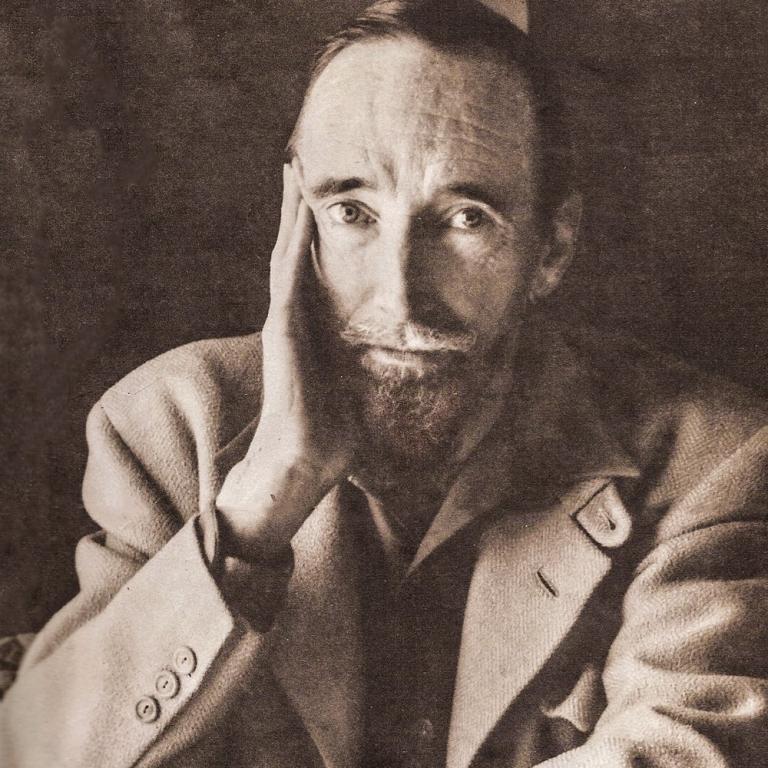
Gerald Heard
The other day I came across a wonderful little essay “The Minimum Working Hypothesis,” It was Aldous Huxley’s attempt at providing a core to his belief in a perennial wisdom. It triggered a wave of thoughts for me. And in particular how much I owe to him and two of his colleagues Gerald Heard and Christopher Isherwood. One more distantly, but two inescapably.
It inspired me to pause and gather a few thoughts about these three people and the threads that came together to inform me at the beginning of my adult life. More actually, as I was beginning to think of having an adult life.
Henry Fitzgerald Heard was born in 1889, the son of an Anglican priest. He graduated from Cambridge University, and then taught briefly at Oxford.
He was first known in the 1930s as a popular science commentator on the BBC. He was widely admired, although some saw the very range of his interests reduced him to gadfly status. Ultimately he wrote thirty-five books ranging from mysteries, to science fiction, to science, philosophy, history, and religion.
Heard was deeply interested in the conflict between human advances in technology while remaining stagnant or worse regarding the spiritual and psychological life. He believed there was an evolutionary spiritual movement connected to mysticism. Although, as he saw it, this positive direction was constantly stymied by this imbalance, where humanity over focused on individuation to the detriment of our sense of interdependence, wonder, curiosity, and love.
He emigrated to Los Angeles in 1937. His longtime friend Aldous Huxley accompanied him. Noting the physical similarities between Southern California and the ancient Near East, he reveled in both the prevalence of crank religions and it being the meeting place of authentic traditions gathering from east and west. It was there that he met the remarkable Swami Prabhavananda, a monk of the Ramakrishna Order and minister of the Vedanta Society of Southern California. The swami founded monasteries and convents in Hollywood, Santa Barbara, and Trabuco Canyon.
As I think of it, the swami is a fourth figure in my spiritual formation. I met him mainly through his translation work with Isherwood. That and through Isherwood’s memoir My Guru and His Disciple. And, well, through his imprint on all three I’m writing about here…
In 1943 Heard purchased property in Trabuco Canyon in Orange County, where with Aldous Huxley he established his Trabuco College. It was a retreat center for the just beginning Human Potential Movement and is generally credited as the pattern for Esalen Institute. Heard envisioned it as a sort of semi-monastery, where he would mentor a new class of neo-brahmins, spiritual leaders for a new age.
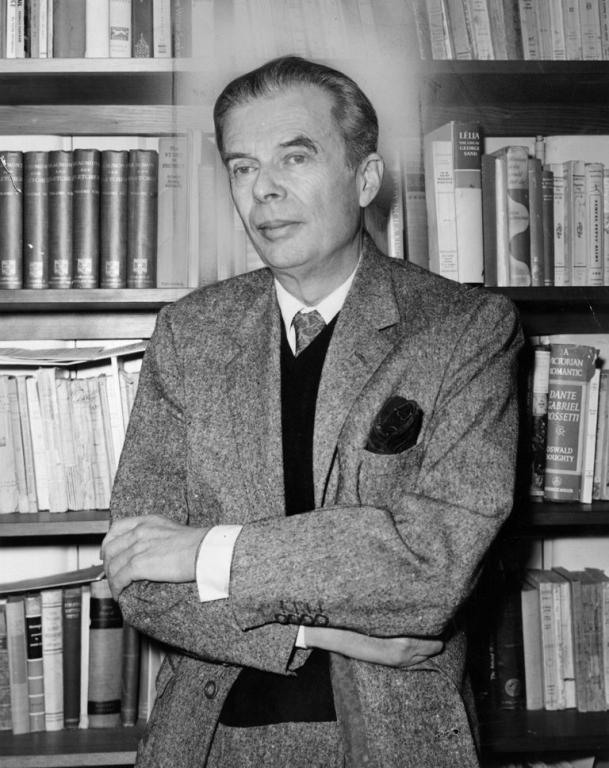
Aldous Huxley
(Hearld-Examiner)
Heard was for a substantial period of time a successful public speaker and writer. Those thirty-five books. His later years were devoted to experimental psychotherapy, the rising psychedelic movement, and parapsychology. He was a popular early presenter at the Esalen Institute in Big Sur when it was opened. His core message that there was an emerging universal religion that synthesized the wisdom of east and west.
While once widely known, his star has faded. The college would pass on to the Vedanta Society as the nucleus for a monastery.
This said, his importance to Huxley and to Isherwood is hard to calculate, but was substantial.
Personally, I was never attracted to his writings. Well, except for the three novels beginning with A Taste for Honey, featuring a Mr Mycroft, who might or might not be Sherlock Holmes.
Aldous Leonard Huxley was born to English intellectual royalty in 1894. He was the third child of the writer Leonard Huxley and Julia Arnold, the niece of Mathew Arnold. His grandfather was Thomas Huxley, “Darwin’s Bulldog.” Aldous was named by his mother for a character in one of her sister’s novels. He earned his degree at Oxford. During the first world war he was rejected by the army because of his poor eyesight.
Huxley achieved fame as the author of satiric novels through the 1920s and the very beginning of the 1930s. In my late teens I read many of these novels, starting with Chrome Yellow.
While in England, through Heard’s influence, Huxley embraced pacifism. In the interwar period he was embroiled in the practical questions of pacifism, and his thinking continued to evolve a social and spiritual sense. As the gathering clouds of war began to overtake the 1930s, he found himself increasingly isolated in England. And he followed Heard to America in 1937.
My own intellectual and spiritual life would be touched by two nonfiction books of his, one written just before the war, Grey Eminence, a spiritual and political biography. The other not too many years after, The Devils of Loudin, touching on the dangers inherent in self-absorption. Although I have to admit at this point my memories of it are visual, pretty much of the movie rather than the book I read. That said what one can call warnings about the spiritual life woven through these two books found a place in my heart.
Of course, it’s his 1945 book, the Perennial Philosophy that has proven the most important to me over the years. The core thesis is that the purpose of our lives is to find the “immanent and transcendent Ground of all being.” As he says in his introduction,
“Rudiments of the Perennial Philosophy may be found among the traditionary lore of primitive peoples in every region of the world, and in its fully developed forms it has a place in every one of the higher religions. A version of this Highest Common Factor in all preceding and subsequent theologies was first committed to writing more than twenty-five centuries ago, and since that time the inexhaustible theme has been treated again and again, from the standpoint of every religious tradition and in all the principal languages of Asia and Europe.”
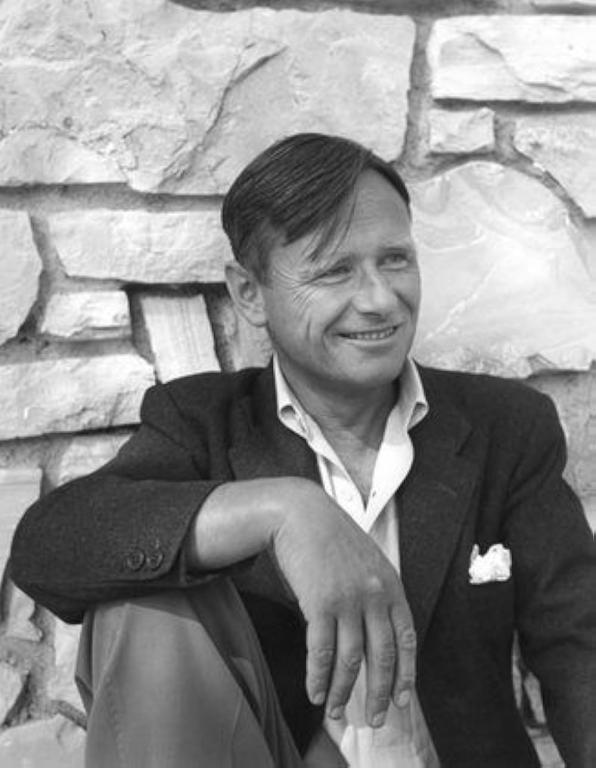
Christopher Isherwood (photo by Ampas:S. Roth)
In essence he illustrates a relatively simple thesis with a wonderful collection of quotations from the world’s religious literature. Part of its charm is that he preferred lesser-known quotes to the tried and true of comparative spiritualities. Not a scholarly book, and lacking citations that I wish for, it is nonetheless something of a handbook of the universalist spiritual life.
It was condemned and it was praised. Over the years I believe his Perennial Philosophy has only been outsold by Brave New World.
I’m grateful that it fell into my hands at a right moment.
The third party of this literary and spiritual trinity is Christopher Isherwood.
Christopher William Bradshaw Isherwood was born in 1904. The family was monied. He attended Cambridge, but his satirical writings led him to be invited to leave without a degree. He also spent six months a King’s College.
His first novel was published in 1928, and from then Isherwood was considered one of the new literary lights.
Heard and Huxley had a significant role in converting Isherwood to pacifism. Noted at the time because he was one of the early writers to warn about rising fascism and to endorse an armed resistance.
Isherwood left England in 1939. After a brief period in New York, he followed Heard and Huxley to Los Angeles.
At first, he embraced Heard’s “New Pacifism,” as a discipline. Listening to him talk about mysticism and yoga sparked another flame. Heard and Huxley then introduced him to Swami Prabhavananda. When the war broke out, while Isherwood was a registered pacifist, he was also too old for the draft. The swami suggested he move into the Vedanta center. Through the war years he lived there, by his own description as a “demi-monk.”
It was during this time he assisted Swami Prabhavananda in producing a translation of the Bhagavad Gita.: The Song of God, which was published in 1944. This would be the translation I first read. In fact, I read all three of Prabhavananda and Isherwood collaborations, the Gita, Shankara’s Crest-Jewel of Discrimination, and How to Know God: The Yoga Aphorisms of Patanjali.
But it would be his wonderful 1965 study, Ramakrishna and His Disciples that would fire my adolescent imagination as I had turned from my Fundamentalist upbringing and quickly passed through a hard rationalist atheism. I cannot say how important it was to me at that turning moment in my life.
So, what can I say about these three. They were all from England’s privileged classes. Each enjoyed first rate classical educations. Two were gay. Each had success pretty much right from the start. Critics say Isherwood was less of an intellectual than either Heard or Huxley, they each were brilliant. And, each in their own ways touched my spiritual life. Heard largely indirectly, but Huxley and Isherwood through my reading quite a fair number of their books.
Because of them, I flirted with Vedanta. But only briefly. I admired much of what that tradition offered, and still does and I still admire them. What they did do was infuse me with a broad tolerance of the world’s spiritualities and implanted an assumption I could find wisdom, saving wisdom, anywhere around the world.
My journey would continue. My principal touchstone would turn out to be Zen Buddhism, informed in many ways by the rationalist and Transcendentalist Unitarian Universalism.
Today, from the vantage of my seventy-five years, I look back on these teachers of my youth. And I feel enormous gratitude. Tidal waves of gratitude.
Endless bows…
***
Here’s a clip of Alan Watts discussing Gerald Heard
New Visions
More Voices
History and Religion

Next Post

September 17, 2023 A Word of Advice for a Unitarian Universalist Congregation
Recent Comments
"Allowing anger to contaminate one's hard disk can be detrimental to one's holistic well being. ..."
Hot Anger: Meeting Anger in Zen ..."
"I love this koan. every which way you turn it bites you, Thirty years on ..."
Nanquan Cuts the Cat: A Jesuit ..."
"As a substitute for religion, Zen is probably better than taking drugs. However, it can ..."
The Selling of Zen at the ..."
"Craving and aversion are detrimental to one's peace and happiness. Easter is a wake up ..."
Easter: A Zen Buddhist Appreciation
Browse Our Archives
Select a Category A Christmas Carol Abolitionist African-American Ahmadiyya Alan Watts Aldous Huxley Allen Ginsberg Amedkar Jayanti American politics American Zen Anaheim Zen Sangha Anglican Annie Besant April Fool Armageddon Art and Religion artificial intellegence Atheist Awakening B R Ambedkar Barlaam & Josaphat Beatnik Between Bhagavad Gita Bible biography birthday bodhisattva Bodhisattva Precepts Book burning Book of Common Prayer Book of Mormon Brahmo Samaj Buddha Buddhism Buddhist Buddhist Lord's Prayer Butterflies Calendars cartoons cat ChatGPT Chicken Tortilla Soup choices Christian atheism Christian mysticism Christian origins Christian Science Christian Zen Christianity Christianity and Buddhism christmas Christmas Truce Christopher Isherwood Church of Later Day Saints Cinco de Mayo circus covenant critical thinking culture D. T. Suzuki Dalit Buddhism Daniel Defoe Desert Fathers and Mothers dharma talk Dogen Donald Trump Dongshan's Five Ranks Dorothy Day dream Duty Easter ecology Edwin Arnold emptiness Empty Moon Zen Network Episcopal Church Eternal Now Ethics evolution existentialism Faith fantasy Fathers Day film film review fire Five Ranks Folk music food Form and emptiness Four Seals Francis of Assisi Francis Xavier Free thinker friendship George MacDonald Gerald Heard Glenn Taylor Webb God Good Friday Gospel of Gospel of Mark Gospel of Thomas grace Graduate Theological Unioin Graduate Theological Union Guanyin H R Blyth Hakuin Ekaku Hanamatsuri Hanukkah Harada Yasutani Zen Heart Sutra Henry David Thoreau Hermann Hesse Hinduism History and Religion history of religion Holy Spirit home Hospitality Icon Ides of March Isaac Newton Islam Islamic mysticism Jack Kerouac James Luther Adams Jiddu Krishnamurti Joan of Arc Johannes Gutenberg John Donne joke Judaism justice karma kensho King James Bible koan Koun Yamada Kyoto School Lewis Carrol Liberal Christianity Liberal Religion Life Plan Community Liminal literature Literature and Religion Liturgy Lord's Prayer Love Mahatma Gandhi Mahayana Martin Luther King Jr Mary Baker Eddy Mary Magdelene Mary Oliver Mayflower Compact Meditation memories memory metaphor money money and religioin Mormons Mother's Day movie review mysticism mythic Neighborhood Unitarian Universalist Church New Thought Nichiren Buddhism Nonduality not knowing Omar Khayyam Pacific School of Religion pagan Palm Sunday Passover peace Pentecost perennialism Phantastes Philip Kapleau philosophy Pilgrimage poetry Poetry and Religion politics Prayer Precepts Printing Press prophecy prophetic spirituality psychology Pure Land Queer religion queering religion Quietism Ram Mohan Roy rebirth recipe Relationships and religion religion religion and history Religious syncretism Resistance Retirement Retreat review Rissho Kosei Kai Ritual Robert Aitken Roshi Robert Ingersoll Rohatsu Romani religion Rosie the Riveter saints samadhi SanboZen Sangha Satyagraha science science and reigion science and religion science fiction seminary sermon Sesshin Sex and Religion Shinran Sikh Sikh tradition silence Social Justice Socially Engaged Buddhism Society and religion Soto Zen soul spiritual community spiritual practice Spirituality Sufism Suicide superstition Taoism Television Teresa of Avila Thanksgiving theological schools Theosophy Thomas Merton Time Transcendentalism Transcendentalist Trinitarian Trinity Uncategorized unitarian Unitarian Christianity Unitarian Universalist Universalism Vajrayana Vedanta Walking war Willa Cather William Ellery Channing wisdom women and religion women in religion World Teacher Writing zazen Zen Zen Center Zen inspired retriement zen meditation Zen Precepts Zen women
Select a Month September 2026 August 2026 July 2026 June 2026 May 2026 April 2026 March 2026 February 2026 January 2026 December 2025 November 2025 October 2025 September 2025 August 2025 July 2025 June 2025 May 2025 April 2025 March 2025 February 2025 January 2025 December 2024 November 2024 October 2024 September 2024 August 2024 July 2024 June 2024 May 2024 April 2024 March 2024 February 2024 January 2024 December 2023 November 2023 October 2023 September 2023 August 2023 July 2023 June 2023 May 2023 April 2023 March 2023 February 2023 January 2023 December 2022 November 2022 October 2022 September 2022 August 2022 July 2022 June 2022 May 2022 April 2022 March 2022 February 2022 January 2022 December 2021 November 2021 October 2021 September 2021 August 2021 July 2021 June 2021 May 2021 April 2021 March 2021 February 2021 January 2021 December 2020 November 2020 October 2020 September 2020 August 2020 July 2020 June 2020 May 2020 April 2020 March 2020 February 2020 January 2020 December 2019 November 2019 October 2019 September 2019 August 2019 July 2019 June 2019 May 2019 April 2019 March 2019 February 2019 January 2019 December 2018 November 2018 October 2018 September 2018 August 2018 July 2018 June 2018 May 2018 April 2018 March 2018 February 2018 January 2018 December 2017 November 2017 October 2017 September 2017 August 2017 July 2017 June 2017 May 2017 April 2017 March 2017 February 2017 January 2017 December 2016 November 2016 October 2016 September 2016 August 2016 July 2016 June 2016 May 2016 April 2016 March 2016 February 2016 January 2016 December 2015 November 2015 October 2015 September 2015 August 2015 July 2015 June 2015 May 2015 April 2015 March 2015 February 2015 January 2015 December 2014 November 2014 October 2014 September 2014 August 2014 July 2014 June 2014 May 2014 April 2014 March 2014 February 2014 January 2014 December 2013 November 2013 October 2013 September 2013 August 2013 July 2013 June 2013 May 2013 April 2013 March 2013 February 2013 January 2013 December 2012 November 2012 October 2012 September 2012 August 2012 July 2012 June 2012 May 2012 April 2012 March 2012 February 2012 January 2012 December 2011 November 2011 October 2011 September 2011 August 2011 July 2011 June 2011 May 2011 April 2011 March 2011 February 2011 January 2011 December 2010 November 2010 October 2010 September 2010 August 2010 July 2010 June 2010 May 2010 April 2010 March 2010 February 2010 January 2010 December 2009 November 2009 October 2009 September 2009 August 2009 July 2009 June 2009 May 2009 April 2009 March 2009 February 2009 January 2009 December 2008 November 2008 October 2008 September 2008 August 2008 July 2008 June 2008 May 2008 April 2008 March 2008 February 2008 January 2008 December 2007 November 2007 October 2007 September 2007 August 2007 July 2007 June 2007 May 2007 April 2007 March 2007 February 2007 January 2007 December 2006 November 2006 October 2006 September 2006
Follow Us!
TAKE THE
Religious Wisdom Quiz
The beginning of knowledge starts with this.
Select your answer to see how you score.
Understanding Fear of the Lord Wisdom Instruction
Related posts from Monkey Mind

Rings of Fire: A Zen Meditation
Zen's Precepts and the Dance of an Authentic...
Wherein the Author Tries to Sell His Zen...
TRENDING AT PATHEOS Buddhist

The Iron Gates and the Lion of the...
Yesterday, I didn't finish my report about, well, yesterday. So I'll...

Dolly Parton’s Last Song Wins Dove Award with...
Bluegrass band The Grascals, speaking on the red carpet at the 57th...

The Image: On the Horror of Capitalism and...
The Image Then went the Pharisees, and took counsel how they might...

We are approaching the date of our new American national holiday: October...

Letters on Living the Faith by C.S. Lewis
Most of us met C.S. Lewis as a public intellectual. Mere Christianity....

When Halloween Unmasks Married Hearts
Written by Dr. David K. Ewen from Eternal Truth Bible College Behind...
view all Buddhist blogs
What Are Your Thoughts?leave a comment
Ad-Free & Subscriber Log-In Subscription Support
- About Us
- 2026 Calendar
- Videos
- Podcasts
- Library of World Religions
- Faith In Media Tracker
- Advertise With Us
- Write for Us
- Privacy Policy
- Terms of Service
- Do Not Sell My Data
- Contact Us
- Radiant Digital
- Manage Newsletter Subscriptions
- Unsubscribe From Notifications
- Sitemap
Copyright 2008-2026, Patheos. All rights reserved.
Subscription Support Ad-Free & Subscriber Log-In
Follow Patheos