
BuddhistCatholicContemplativeEvangelicalGeneral ChristianHinduJewishLatter-day SaintMuslimNew VisionsProgressive Christian
Beliefs
- Buddhist
- Catholic
- Contemplative
- Evangelical
- General Christian
- Hindu
- Jewish
- Latter-day Saint
- More Voices
- Muslim
- New Visions
- Pagan
- Progressive Christian
Topics
- Religion News
- Food and Religion
- Sports and Religion
- Religious Art
- Religious Music and Entertainment
- Religious Events
- History and Religion
- Style and Religion
- Politics and Religion
- Women in Religion
- Recreation Outdoors and Religion
- Business Finance and Religion
- Careers Workplace and Religion
- Education and Religion
- Family Parenting and Religion
- Health Fitness and Religion
- Home and Religion
- Relationships and Religion
- Technology and Religion
- Travel and Religion
Columnists
- Buddhist Columnists
- Business Finance and Religion Columnists
- Careers Workplace and Religion Columnists
- Catholic Columnists
- Contemplative Columnists
- Education and Religion Columnists
- Evangelists Columnists
- Family Parenting and Religion Columnists
- General Christian Columnists
- Health Fitness and Religion Columnists
- Hindu Columnists
- History and Religion Columnists
- Home and Religion Columnists
- Jewish Columnists
- More Voices Columnists
- Latter Day Columnists
- Muslim Columnists
- New Visions Columnists
- Nonreligious Columnists
- Pagan Columnists
- Politics and Religion Columnists
- Progressive Columnists
- Recreation Outdoors and Religion Columnists
- Relationships and Religion Columnists
- Religion News Columnists
- Religious Art Columnists
- Religious Events Columnists
- Religious Music and Entertainment Columnists
- Sports and Religion Columnists
- Style and Religion Columnists
- Technology and Religion Columnists
- Travel and Religion Columnists
- Women in Religion Columnists
Resource Library
- 2026 Calendar
- Library of World Religions
- The 100 Most Holy Places on Earth
- Patheos Answers
- Podcasts
- Videos
- Faith Leaders Database
- Anglican Episcopalian
- Bahai
- Baptist
- Buddhism
- Christianity
- Confucianism
- Eastern Orthodoxy
- Hinduism
- Holiness and Pentecostal
- ISKCON
- Islam
- Judaism
- Lutheran
- Methodist
- The Church of Jesus Christ of Latter-day Saints
- New Age
- Paganism
- Presbytarian and Reformed
- Protestantism
- Religion Behind the Scenes
- Roman Catholic
- Scientology
- Shia Islam
- Sikhism
- Sufism
- Sunni Islam
- Taoism
- Zen
- See all religions
Research Tools
 Ad-Free & Subscriber Log-In Subscription Support
Ad-Free & Subscriber Log-In Subscription Support
Follow Patheos 

- Trending:
- Forgiveness
- |
- Marriage
- |
- Consciousness
- |
- Death Penalty
- |
- Election
- |
- Halloween

- Home
- Buddhist
- Relationships and Religion
- Spilling the Beans: Or, What I learned by living for seventy-five years
Spilling the Beans: Or, What I learned by living for seventy-five years
Last updated on: July 18, 2023 at 7:09 am by James Ford
Spilling the Beans: Or, What I learned by living for seventy-five years 2023-07-18T07:09:40-07:00 James Ford
Patheos Explore the world's faith through different perspectives on religion and spirituality! Patheos has the views of the prevalent religions and spiritualities of the world.
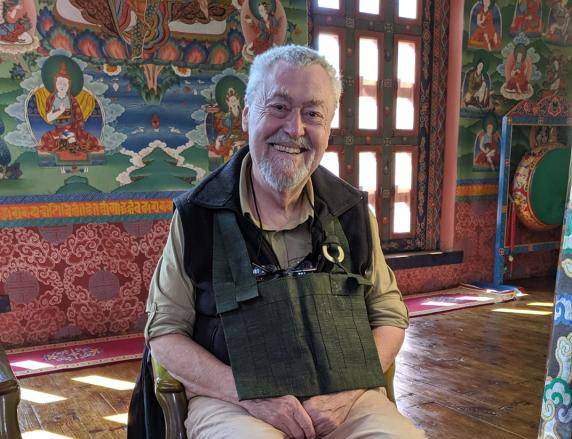
James Ishmael Ford
in Bhutan
Beloved, we have existed within you for all of our days.
Before the earth was formed and the mountains arose, before stars and dreams, before any beginnings and all the endings, it is holy. You are holy. Even in the midst of our worst, you are there. And always you whisper a call to return.
A thousand years for you are no more than yesterday, like a watch in the night. You are found in the rising flood, and in the growing grass. And in our dreams.
We are like the grass growing in the morning which is cut down in the evening. We are consumed in the play of the cosmos, indifferent to our joy and pain, and so often we miss the harmony of the worlds.
Our secret sins, our separation from the world and you brings consequences. And our years are as a tale that has been told. We live seventy years, or if we are strong, eighty. But strength and sorrow, it is quickly cut away, and we fly into our many parts.
Who knows the power of the cosmos and the consequences of our choices?
So, Beloved, teach us the way, teach us to notice our passing days, and turn our hearts to wisdom. Meet us in our struggles, satisfy us with mercy. Allow us to rejoice and be glad all of our days.
Make us to find our way into the flow of causes and conditions, let the way of harmony open for us, and let us come into your glory.
As your children, let the beauty of the heaven be upon us and establish in our hands the work of the holy.
Psalm 90 (my paraphrase)
I was born in Oakland, California, on the 17th of July 1948.
Seventy-five.
Three quarters of a century.
The author of the 90th Psalm puts human life at seventy, unless strong, unless lucky, and then eighty. Tradition, and the text, credits Moses with authorship. Scholars tend to place it to the fifth century before our common era, parts likely a fair bit older. At the very least it was written some twenty-five hundred years ago.
I’m intrigued that our American Social Security actuarial tables give me the odds of living another decade and change. A bonus five years over antiquity, at least if one wasn’t a slave or poor. Although this guesstimate is calculated with that additional factor of my being seventy-five accounted for. This year an American woman’s odds at birth, factoring only gender and being an American is eighty-one and change, while an American man’s is seventy-six and change. So, few real changes at all. The big difference I think is tose outer numbers attach to more people. Which is good. It strongly looks like anyone who lives longer, dipping past a hundred, has one feature going in common with that cohort, their parents were also extremely long-lived.
As to me. I’m overweight, prone to back spasms, and my doctors have me taking ten pills a day, a couple of them pretty strong medicine. Otherwise, I’m in relatively good shape. Unless something is unfolding deep within my body that I’m unaware of, I kind of think I might make that additional decade.
It’s all been interesting. Which some say is a curse. And there have been some very hard times. But, well, some astonishing moments of joy and clarity, as well. As they say, on the one hand, it’s been one long weird trip. And, on another, I swear, it’s been the blink of an eye.
And. Well. Among the things I’ve learned in my seventy-five years is that one shouldn’t assume much of anything. Death, it can come like that proverbial thief in the night. And whatever else, it will come. The price of our birth is our death. Another little lesson I’ve picked up in the gutters and alleyways of life.
For a detailed account of my life, I wrote this in 2015. In that year when Jan retired as a librarian I retired as a parish minister, and we moved back to the Los Angeles area in order to be close to Jan’s mom. We bought a condo in Long Beach. Eight years now since we relocated from Providence. And Jan’s mom’s world began to shrink. As of some months ago for all practical purposes we’ve moved in with her in the Tujunga neighborhood of LA.
And here we are. Jan and me. At seventy-five living with my mother-in-law. We are not sure what’s next. We’re reluctant to sell the condo, and putting off any such decision for a while.
That said, here we are.
Do I have any words of wisdom to celebrate the day? People are sometimes asked that question. I recall how Aldous Huxley lamenting all he could offer in his old age was the advice to be a little kinder. Not bad. Not bad, at all. And, if only…
At the heart of the matter as I’ve found it is some strange and wondrous thing that human beings can experience. Or encounter. Something. The words fail as we approach it. I’ve pursed it. It has pursued me. And, in that thing I have what little wisdom I have to share.
I’ve struggled with how best to define this, well, let’s say thing.
Alan Watts was a big deal in my youth and young adulthood. His romantic interpretation of Zen was a large part of why I began to practice. He had more than a few problems, and soon after I took up Zen in more traditional ways, I stopped reading him. (I should note today I consider him more important in my life as a bridge between my Zen and my natal Christianity.)
These days when I think about this thing, this most important thing, I find myself returning to something in wrote in one of his books that I did read, the Book on the Taboo Against Knowing Who You Are.
As he described it and as I see it the universe is God. God is the universe. There is no part of the universe that is not divine. But there is a mystery of part and whole. Each part, each star and planet, and each and everything on the planets are God’s dreams. Some of the dreams are pleasant and some are not. But they’re all God.
Alan Watts takes this pantheistic view of God and the universe and elaborates.
“(R)emember that God isn’t shaped like a person. People have skins and there is always something outside our skins. If there weren’t, we wouldn’t know the difference between what is inside and outside our bodies. But God has no skin and no shape because there isn’t any outside to him. The inside and outside of God are the same….
“God is the Self of the world, but you can’t see God for the same reason that, without a mirror, you can’t see your own eyes, and you certainly can’t bite your own teeth or look inside your head. Your self is that cleverly hidden because it is God hiding.”
Then Watts suggests the whole play of the universe is God playing hide-and-seek. He goes on to make an argument that bad things happen for the drama of it. I think his narrative begins to fall apart there. So, from there we might find more a more useful of God image in the Bhagavad Gita in chapter 18:
“That knowledge by which one undivided spiritual nature is seen in all living entities, though they are divided into innumerable forms, you should understand to be in the mode of goodness.”
I find it a pretty good shorthand for the thing we can find as we look deeply into the matter of who we are within this passing strange universe, this isn’t a bad image.
Another pointer can be found in the shorthand of the Zen way found in the Heart Sutra: form is emptiness, emptiness is form. Instead of empty, we might say boundless. If we take a pantheistic stance, boundless is God. The no-thing, the every-thing of which we are made, within which we exist, and to which we return. In every single moment of our existence. I don’t see God as a being who is in any way like a human. But, rather a very good symbol or sign for the majesty of it all, and for how we as human beings often encounter it. The language of religion feels right to me. Holy. Sacred. Whirlwind. Storm. Still small voice. God.
And there’s something else we can miss in taking a simple materialistic view. In this knowing we are not limited to our seventy or eighty years. There are genuine ways in which we are immortal. Or, at least we exist fully within the play of time and space. Both separate and mortal and connected and eternal. Again the language of heart of poetry of religion feels most right.
So, a take away? Some small words that approximate wisdom for my seventy-fifth birthday?
It may all be a game from some perspective. But its real for you and me. There’s a ton of suffering out there. And those of us who got pretty good hands in the current shuffle, I believe we have some obligations. Which is something I don’t think the good Mr Watts ever actually got, but which we find pushed to its logical conclusions in the Gita. And, while I deeply believe in our mutual responsibility, I draw short of the version called for in the Gita. Duty, yes. Duty forms a significant part of my life. But we also can make choices, as well. And our fate isn’t completely written in the stars. With that I think Aldous Huxley got it best, try to be a little kinder to each other.
This thing about being one thing, you and me and the universe, I do like calling that whole of it all, God. For us as human beings it’s all holy. This is the task I suggest is as close as we’re going to get to meaning and purpose: Knowing who we really are for ourselves, giving eyes and hands back to God. Living in the dance.
The project of our ending suffering is twofold. The first is our intimate encounter, that awakening thing. The second is real-world. Helping. In various ways, being of use. Of discovering the duty that comes with our birth, the things we need do between birth and death.
From dark to dark. The light inside the dark. The dark inside the light. Bleeding through the cracks in the heart of the universe. Those cracks in your heart. And mine…
Okay, I’m running on here.
But that’s it in a nutshell. What I have to offer after seventy-five years.
Please, look for yourself for the saving moment, your deepest awakening into the mystery.
Please, try to be a little kinder to each other.
New Visions
More Voices
Relationships and Religion
About James Ishmael Ford
James Ishmael Ford is a Zen teacher and Unitarian minister. His sixth book "The Intimate Way of Zen" is due from Shambhala Publications in the spring of 2024. You can read more about the author here.
Previous Post

July 16, 2023
A Brief Universalist Spiritual Reading Guide
Next Post

July 21, 2023 Remembering Colonel Ingersoll
Recent Comments
"Allowing anger to contaminate one's hard disk can be detrimental to one's holistic well being. ..."
Hot Anger: Meeting Anger in Zen ..."
"I love this koan. every which way you turn it bites you, Thirty years on ..."
Nanquan Cuts the Cat: A Jesuit ..."
"As a substitute for religion, Zen is probably better than taking drugs. However, it can ..."
The Selling of Zen at the ..."
"Craving and aversion are detrimental to one's peace and happiness. Easter is a wake up ..."
Easter: A Zen Buddhist Appreciation
Browse Our Archives
Select a Category A Christmas Carol Abolitionist African-American Ahmadiyya Alan Watts Aldous Huxley Allen Ginsberg Amedkar Jayanti American politics American Zen Anaheim Zen Sangha Anglican Annie Besant April Fool Armageddon Art and Religion artificial intellegence Atheist Awakening B R Ambedkar Barlaam & Josaphat Beatnik Between Bhagavad Gita Bible biography birthday bodhisattva Bodhisattva Precepts Book burning Book of Common Prayer Book of Mormon Brahmo Samaj Buddha Buddhism Buddhist Buddhist Lord's Prayer Butterflies Calendars cartoons cat ChatGPT Chicken Tortilla Soup choices Christian atheism Christian mysticism Christian origins Christian Science Christian Zen Christianity Christianity and Buddhism christmas Christmas Truce Christopher Isherwood Church of Later Day Saints Cinco de Mayo circus covenant critical thinking culture D. T. Suzuki Dalit Buddhism Daniel Defoe Desert Fathers and Mothers dharma talk Dogen Donald Trump Dongshan's Five Ranks Dorothy Day dream Duty Easter ecology Edwin Arnold emptiness Empty Moon Zen Network Episcopal Church Eternal Now Ethics evolution existentialism Faith fantasy Fathers Day film film review fire Five Ranks Folk music food Form and emptiness Four Seals Francis of Assisi Francis Xavier Free thinker friendship George MacDonald Gerald Heard Glenn Taylor Webb God Good Friday Gospel of Gospel of Mark Gospel of Thomas grace Graduate Theological Unioin Graduate Theological Union Guanyin H R Blyth Hakuin Ekaku Hanamatsuri Hanukkah Harada Yasutani Zen Heart Sutra Henry David Thoreau Hermann Hesse Hinduism History and Religion history of religion Holy Spirit home Hospitality Icon Ides of March Isaac Newton Islam Islamic mysticism Jack Kerouac James Luther Adams Jiddu Krishnamurti Joan of Arc Johannes Gutenberg John Donne joke Judaism justice karma kensho King James Bible koan Koun Yamada Kyoto School Lewis Carrol Liberal Christianity Liberal Religion Life Plan Community Liminal literature Literature and Religion Liturgy Lord's Prayer Love Mahatma Gandhi Mahayana Martin Luther King Jr Mary Baker Eddy Mary Magdelene Mary Oliver Mayflower Compact Meditation memories memory metaphor money money and religioin Mormons Mother's Day movie review mysticism mythic Neighborhood Unitarian Universalist Church New Thought Nichiren Buddhism Nonduality not knowing Omar Khayyam Pacific School of Religion pagan Palm Sunday Passover peace Pentecost perennialism Phantastes Philip Kapleau philosophy Pilgrimage poetry Poetry and Religion politics Prayer Precepts Printing Press prophecy prophetic spirituality psychology Pure Land Queer religion queering religion Quietism Ram Mohan Roy rebirth recipe Relationships and religion religion religion and history Religious syncretism Resistance Retirement Retreat review Rissho Kosei Kai Ritual Robert Aitken Roshi Robert Ingersoll Rohatsu Romani religion Rosie the Riveter saints samadhi SanboZen Sangha Satyagraha science science and reigion science and religion science fiction seminary sermon Sesshin Sex and Religion Shinran Sikh Sikh tradition silence Social Justice Socially Engaged Buddhism Society and religion Soto Zen soul spiritual community spiritual practice Spirituality Sufism Suicide superstition Taoism Television Teresa of Avila Thanksgiving theological schools Theosophy Thomas Merton Time Transcendentalism Transcendentalist Trinitarian Trinity Uncategorized unitarian Unitarian Christianity Unitarian Universalist Universalism Vajrayana Vedanta Walking war Willa Cather William Ellery Channing wisdom women and religion women in religion World Teacher Writing zazen Zen Zen Center Zen inspired retriement zen meditation Zen Precepts Zen women
Select a Month September 2026 August 2026 July 2026 June 2026 May 2026 April 2026 March 2026 February 2026 January 2026 December 2025 November 2025 October 2025 September 2025 August 2025 July 2025 June 2025 May 2025 April 2025 March 2025 February 2025 January 2025 December 2024 November 2024 October 2024 September 2024 August 2024 July 2024 June 2024 May 2024 April 2024 March 2024 February 2024 January 2024 December 2023 November 2023 October 2023 September 2023 August 2023 July 2023 June 2023 May 2023 April 2023 March 2023 February 2023 January 2023 December 2022 November 2022 October 2022 September 2022 August 2022 July 2022 June 2022 May 2022 April 2022 March 2022 February 2022 January 2022 December 2021 November 2021 October 2021 September 2021 August 2021 July 2021 June 2021 May 2021 April 2021 March 2021 February 2021 January 2021 December 2020 November 2020 October 2020 September 2020 August 2020 July 2020 June 2020 May 2020 April 2020 March 2020 February 2020 January 2020 December 2019 November 2019 October 2019 September 2019 August 2019 July 2019 June 2019 May 2019 April 2019 March 2019 February 2019 January 2019 December 2018 November 2018 October 2018 September 2018 August 2018 July 2018 June 2018 May 2018 April 2018 March 2018 February 2018 January 2018 December 2017 November 2017 October 2017 September 2017 August 2017 July 2017 June 2017 May 2017 April 2017 March 2017 February 2017 January 2017 December 2016 November 2016 October 2016 September 2016 August 2016 July 2016 June 2016 May 2016 April 2016 March 2016 February 2016 January 2016 December 2015 November 2015 October 2015 September 2015 August 2015 July 2015 June 2015 May 2015 April 2015 March 2015 February 2015 January 2015 December 2014 November 2014 October 2014 September 2014 August 2014 July 2014 June 2014 May 2014 April 2014 March 2014 February 2014 January 2014 December 2013 November 2013 October 2013 September 2013 August 2013 July 2013 June 2013 May 2013 April 2013 March 2013 February 2013 January 2013 December 2012 November 2012 October 2012 September 2012 August 2012 July 2012 June 2012 May 2012 April 2012 March 2012 February 2012 January 2012 December 2011 November 2011 October 2011 September 2011 August 2011 July 2011 June 2011 May 2011 April 2011 March 2011 February 2011 January 2011 December 2010 November 2010 October 2010 September 2010 August 2010 July 2010 June 2010 May 2010 April 2010 March 2010 February 2010 January 2010 December 2009 November 2009 October 2009 September 2009 August 2009 July 2009 June 2009 May 2009 April 2009 March 2009 February 2009 January 2009 December 2008 November 2008 October 2008 September 2008 August 2008 July 2008 June 2008 May 2008 April 2008 March 2008 February 2008 January 2008 December 2007 November 2007 October 2007 September 2007 August 2007 July 2007 June 2007 May 2007 April 2007 March 2007 February 2007 January 2007 December 2006 November 2006 October 2006 September 2006
Follow Us!
TAKE THE
Religious Wisdom Quiz
Thrown into a muddy cistern for prophesying doom, I sank into the mire until rescued. What was my crime?
Select your answer to see how you score.
False prophecy Treason Blasphemy Prophesying Jerusalem's fall
Related posts from Monkey Mind

Keizan Jokin: The Zen Master Ancestor You Don't...

What Zen Practice Actually Does With Anger

Nanquan Cuts the Cat: A Jesuit commentary on...

On Taking Refuge in the Dharma
TRENDING AT PATHEOS Buddhist

Nearly every morning, I make the drive to Detroit with my high-school-age...

The Real AI Story Is Adoption Without Trust
Artificial intelligence has crossed a political threshold. It is no longer a...

A new article, written by Jeff Lindsay and Gale L. Pooley,...

Swimfan: Forgotten Aughts Pleasures
This is a recovery effort. In 2002, My Big Fat Greek Wedding...

Top Three Anti-Catholic Lies About Catholicism
This is my initial transcript for the video, "THE 3 WORST...

Pope Leo Celebrates Mass for Nurses & Docs...
I don't have any idea how he did it, but Pope Leo...
view all Buddhist blogs
What Are Your Thoughts?leave a comment
Ad-Free & Subscriber Log-In Subscription Support
- About Us
- 2026 Calendar
- Videos
- Podcasts
- Library of World Religions
- Faith In Media Tracker
- Advertise With Us
- Write for Us
- Privacy Policy
- Terms of Service
- Do Not Sell My Data
- Contact Us
- Radiant Digital
- Manage Newsletter Subscriptions
- Unsubscribe From Notifications
- Sitemap
Copyright 2008-2026, Patheos. All rights reserved.
Subscription Support Ad-Free & Subscriber Log-In
Follow Patheos