
BuddhistCatholicContemplativeEvangelicalGeneral ChristianHinduJewishLatter-day SaintMuslimNew VisionsProgressive Christian
Beliefs
- Buddhist
- Catholic
- Contemplative
- Evangelical
- General Christian
- Hindu
- Jewish
- Latter-day Saint
- More Voices
- Muslim
- New Visions
- Pagan
- Progressive Christian
Topics
- Religion News
- Food and Religion
- Sports and Religion
- Religious Art
- Religious Music and Entertainment
- Religious Events
- History and Religion
- Style and Religion
- Politics and Religion
- Women in Religion
- Recreation Outdoors and Religion
- Business Finance and Religion
- Careers Workplace and Religion
- Education and Religion
- Family Parenting and Religion
- Health Fitness and Religion
- Home and Religion
- Relationships and Religion
- Technology and Religion
- Travel and Religion
Columnists
- Buddhist Columnists
- Business Finance and Religion Columnists
- Careers Workplace and Religion Columnists
- Catholic Columnists
- Contemplative Columnists
- Education and Religion Columnists
- Evangelists Columnists
- Family Parenting and Religion Columnists
- General Christian Columnists
- Health Fitness and Religion Columnists
- Hindu Columnists
- History and Religion Columnists
- Home and Religion Columnists
- Jewish Columnists
- More Voices Columnists
- Latter Day Columnists
- Muslim Columnists
- New Visions Columnists
- Nonreligious Columnists
- Pagan Columnists
- Politics and Religion Columnists
- Progressive Columnists
- Recreation Outdoors and Religion Columnists
- Relationships and Religion Columnists
- Religion News Columnists
- Religious Art Columnists
- Religious Events Columnists
- Religious Music and Entertainment Columnists
- Sports and Religion Columnists
- Style and Religion Columnists
- Technology and Religion Columnists
- Travel and Religion Columnists
- Women in Religion Columnists
Resource Library
- 2026 Calendar
- Library of World Religions
- The 100 Most Holy Places on Earth
- Patheos Answers
- Podcasts
- Videos
- Faith Leaders Database
- Anglican Episcopalian
- Bahai
- Baptist
- Buddhism
- Christianity
- Confucianism
- Eastern Orthodoxy
- Hinduism
- Holiness and Pentecostal
- ISKCON
- Islam
- Judaism
- Lutheran
- Methodist
- The Church of Jesus Christ of Latter-day Saints
- New Age
- Paganism
- Presbytarian and Reformed
- Protestantism
- Religion Behind the Scenes
- Roman Catholic
- Scientology
- Shia Islam
- Sikhism
- Sufism
- Sunni Islam
- Taoism
- Zen
- See all religions
Research Tools
 Ad-Free & Subscriber Log-In Subscription Support
Ad-Free & Subscriber Log-In Subscription Support
Follow Patheos 

- Trending:
- Forgiveness
- |
- Marriage
- |
- Consciousness
- |
- Death Penalty
- |
- Election
- |
- Halloween

- Home
- Buddhist
- Herman Hesse’s “Butterflies: Reflections, Tales, and Verse” A Review
Herman Hesse’s “Butterflies: Reflections, Tales, and Verse” A Review
Last updated on: June 16, 2023 at 9:31 am by James Ford
Herman Hesse’s “Butterflies: Reflections, Tales, and Verse” A Review 2023-06-16T09:31:27-07:00 James Ford
Patheos Explore the world's faith through different perspectives on religion and spirituality! Patheos has the views of the prevalent religions and spiritualities of the world.
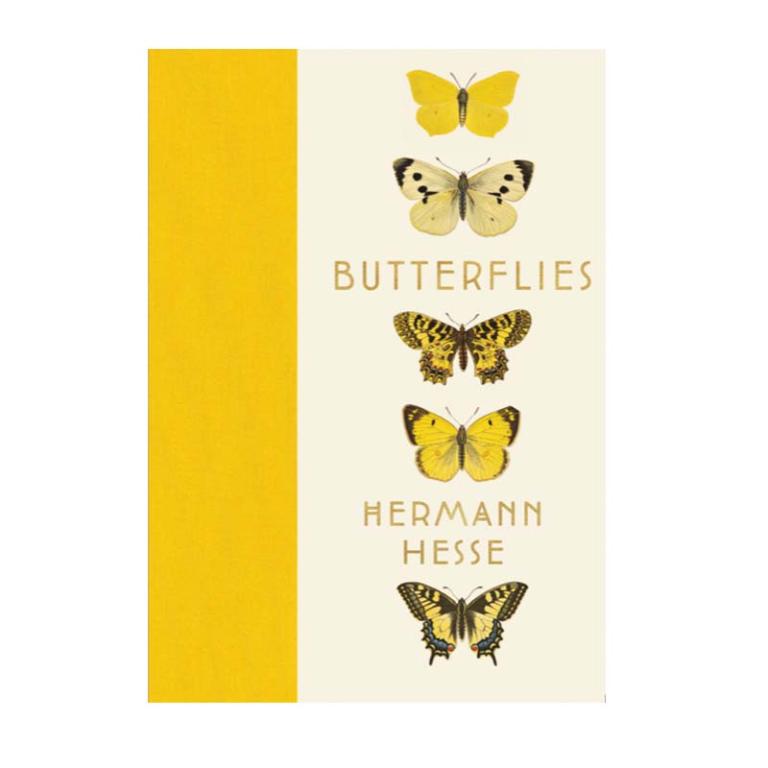
“Butterflies” by Hermann Hesse
When the rain beats down on the pear blossoms, a butterfly flies up.
A Zen koan by way of Dahui Zonggao
Butterflies: Reflections, Tales and Verse by Hermann Hesse
Selected by Volker Michels
Illustrations by Jakob Hübner
Translated from the German by Elisabeth Lauffer
Kales Press, a WW Norton affiliate
Hardcover / 5×7 inches / 136 pages / 110 full-color engraved copper illustrations
When the good folk at Kales Press told me they had a follow up volume to Hermann Hesse’s Trees: An Anthology of Writings and Paintings, and wondered if I was interested in looking at a review copy, I didn’t hesitate. Yes, I wrote back. Yes!
These days I mostly read with e-readers. So just holding Butterflies was a delight. As a thing it’s a beautiful book.
Like the first Kales book, the essays, stories, and poems in this volume were selected by Volker Michel, perhaps the foremost living authority on Hermann Hesse. This volume is translated by Elisabeth Lauffer. And with a profusion of illustrations by Jakob Hübner.
As I said in my review of Trees, Hermann Hesse has a special place in my heart, and stands as a singular figure in my formation as a pilgrim on the inner ways. A Nobel laureate in literature, Hesse’s books include Demian, Steppenwolf, Siddhartha, and the Glass Bead Game. Possibly my favorite of his books was the novella, Journey to the East.
And.
I loved Trees.
And possibly Butterflies is even more compelling.
Without preamble we’re invited into Hesse’s world of butterflies. An editorial note in the end matter tells us this opening section was originally a preface to a book of photographs of butterflies by Adolf Portmann. It is everything Hesse. Lyrical, meditative, and at times challenging.
For me among the challenges was that Hesse was a collector of butterflies. With nets and killing jars and mountings. At least in his youth, and perhaps later. In the opening essay he offers up a defense similar to that for hunters, if on a smaller scale. The collector is the person who cares most. So they’re always in the forefront of those defending the environments butterflies (and moths) need. May be true. And, from my time and place, a bit off. An almost unsavory enterprise.
And. Well. Hesse did know and love and write about butterflies. Hesse tells us:
Butterflies, our intended focus here, are a beloved bit of creation, like flowers, favored by many as a prized and powerful object of astonishment, an especially lovely means of experience, of intuiting the great miracle, of honoring life.
A bit further along he adds:
Furthermore, because the butterfly is a festive lover and stunning shape-shifter, it has come to symbolize both impermanence and eternal persistence; from time immemorial, humans have embraced the butterfly as an allegorical and heraldic figure of the soul.
The essays show the life and wonder of butterflies, and equally the life and wonder of their admirers. Who sometimes love them so much they capture, kill, and display them. I found myself wondering about the hunting thing. It wasn’t part of my childhood. It’s not a thing today, at least not near as common as in the past. A little digging showed me that the great passion among Europeans and presumably Americans for collecting butterflies hit a peak at the turn of the nineteenth and twentieth centuries, and then after the First World War slipped into a relentless decline.
So, Hesse was brought up in a moment. He is both very much representative of that moment, and at the very same time he speaks to universals of our human experience. He writes Butterflies with that singular insight into our human psyche which marks all his writings. Hunting and hunting’s ambiguities are present. As are the mysteries that are butterflies. Which remained a lifetime obsession for Hesse.
Enchantment and beauty are, alas,
Little more than hints or highs,
Such delights we know must pass,
However well they satisfy.
Volker Michels, in his Afterword points out our ancient human fascination with butterflies. He cites their images on Egyptian tombs and fabricated into Mycenaean jewelry. He also cites from that large collection sometimes called “fake Buddha” quotes, where the Holy One is said to have acknowledged butterflies as his teachers. Maybe they were, but in fact the Buddha never gave them credit. A small mistake in Michels erudite essay.
Although. Because it caught my imagination I looked to see if the Buddha did cites butterflies anywhere. It appears not. Although he did mention bees. And it appears English translators have interposed butterflies for bees on occasion. But not as teachers, not in the direct way Michels misquotes.
The closest the Buddha comes is to cite that thing about moths and flames in a verse “Like moths to the flame,” the Adhipataka Sutta:
Rushing up but then too far, they miss the point;
Only causing ever newer bonds to grow.
So obsessed are some by what is seen and heard,
They fly just like these moths — straight into the flames.
Another important lesson. And, actually, one I find running throughout Hesse’s book.
Volker Michels makes a wonderful gift for us, first in the actual selection of the pieces, and then as a conclusion, in his insightful reflection. Michels points us through a little of the science of butterflies and then more deeply their range as metaphors for death and rebirth, as well as for grace and love. As Hesse himself tells us “Wonder is where it starts, and though wonder is also where it ends, this no futile path.”
As I read the volume it evoked that koan which comes to us from the great twelfth century Chan master. Perhaps not the Buddha, but a Buddha. One can say.
When the rain beats down on the pear blossoms, a butterfly flies up.
There’s the teacher and the teaching. And Hesse gets it.
Hesse joined the dream worlds and shaped them for our delight. In contemplating butterflies he revisited the spirit of that treasure of world literature from the fourth century before our common era, master Zhuangzi who wrote of a man who dreamed he was a butterfly, awoke, and then wondered if in fact he was a butterfly dreaming he was a human.
Everything a butterfly evokes is here. Including the most important thing.
Hesse gets it. And points our hearts in that direction.
Butterflies is a lovely haunting volume. The sad and beautiful ghost of the Giant Peacock Moth reminds me of desire and regret, and when joined to the temporality of butterflies and moths, well…
Dreams pile upon dreams, like mountains of clouds. Or, as Hesse sings
A late-summer gift, day after day
Of sweet warmth. Umbels below,
The butterfly drifts along its way,
Tired wings a golden glow.
The book is lavishly illustrated with butterflies rendered by Jakob Hübner, who lived through the second half of the eighteenth century and the first quarter of the nineteenth.
The translator Elisabeth Lauffer has received numerous awards for her work, most recently named to the Kirkus list of best fiction in translation in 2022.
Buy it. Read it. You won’t regret it…
New Visions
More Voices

About James Ishmael Ford
Author, Zen teacher, and Unitarian minister, James Ford's sixth book, the Intimate Way of Zen will be released in Spring, 2024, by Shambhala Publications You can read more about the author here.

Next Post

June 14, 2023 Thinking of Edward FitzGerald and his rendition of Omar Khayyam's Rubaiyat.
Recent Comments
"Allowing anger to contaminate one's hard disk can be detrimental to one's holistic well being. ..."
Hot Anger: Meeting Anger in Zen ..."
"I love this koan. every which way you turn it bites you, Thirty years on ..."
Nanquan Cuts the Cat: A Jesuit ..."
"As a substitute for religion, Zen is probably better than taking drugs. However, it can ..."
The Selling of Zen at the ..."
"Craving and aversion are detrimental to one's peace and happiness. Easter is a wake up ..."
Easter: A Zen Buddhist Appreciation
Browse Our Archives
Select a Category A Christmas Carol Abolitionist African-American Ahmadiyya Alan Watts Aldous Huxley Allen Ginsberg Amedkar Jayanti American politics American Zen Anaheim Zen Sangha Anglican Annie Besant April Fool Armageddon Art and Religion artificial intellegence Atheist Awakening B R Ambedkar Barlaam & Josaphat Beatnik Between Bhagavad Gita Bible biography birthday bodhisattva Bodhisattva Precepts Book burning Book of Common Prayer Book of Mormon Brahmo Samaj Buddha Buddhism Buddhist Buddhist Lord's Prayer Butterflies Calendars cartoons cat ChatGPT Chicken Tortilla Soup choices Christian atheism Christian mysticism Christian origins Christian Science Christian Zen Christianity Christianity and Buddhism christmas Christmas Truce Christopher Isherwood Church of Later Day Saints Cinco de Mayo circus covenant critical thinking culture D. T. Suzuki Dalit Buddhism Daniel Defoe Desert Fathers and Mothers dharma talk Dogen Donald Trump Dongshan's Five Ranks Dorothy Day dream Duty Easter ecology Edwin Arnold emptiness Empty Moon Zen Network Episcopal Church Eternal Now Ethics evolution existentialism Faith fantasy Fathers Day film film review fire Five Ranks Folk music food Form and emptiness Four Seals Francis of Assisi Francis Xavier Free thinker friendship George MacDonald Gerald Heard Glenn Taylor Webb God Good Friday Gospel of Gospel of Mark Gospel of Thomas grace Graduate Theological Unioin Graduate Theological Union Guanyin H R Blyth Hakuin Ekaku Hanamatsuri Hanukkah Harada Yasutani Zen Heart Sutra Henry David Thoreau Hermann Hesse Hinduism History and Religion history of religion Holy Spirit home Hospitality Icon Ides of March Isaac Newton Islam Islamic mysticism Jack Kerouac James Luther Adams Jiddu Krishnamurti Joan of Arc Johannes Gutenberg John Donne joke Judaism justice karma kensho King James Bible koan Koun Yamada Kyoto School Lewis Carrol Liberal Christianity Liberal Religion Life Plan Community Liminal literature Literature and Religion Liturgy Lord's Prayer Love Mahatma Gandhi Mahayana Martin Luther King Jr Mary Baker Eddy Mary Magdelene Mary Oliver Mayflower Compact Meditation memories memory metaphor money money and religioin Mormons Mother's Day movie review mysticism mythic Neighborhood Unitarian Universalist Church New Thought Nichiren Buddhism Nonduality not knowing Omar Khayyam Pacific School of Religion pagan Palm Sunday Passover peace Pentecost perennialism Phantastes Philip Kapleau philosophy Pilgrimage poetry Poetry and Religion politics Prayer Precepts Printing Press prophecy prophetic spirituality psychology Pure Land Queer religion queering religion Quietism Ram Mohan Roy rebirth recipe Relationships and religion religion religion and history Religious syncretism Resistance Retirement Retreat review Rissho Kosei Kai Ritual Robert Aitken Roshi Robert Ingersoll Rohatsu Romani religion Rosie the Riveter saints samadhi SanboZen Sangha Satyagraha science science and reigion science and religion science fiction seminary sermon Sesshin Sex and Religion Shinran Sikh Sikh tradition silence Social Justice Socially Engaged Buddhism Society and religion Soto Zen soul spiritual community spiritual practice Spirituality Sufism Suicide superstition Taoism Television Teresa of Avila Thanksgiving theological schools Theosophy Thomas Merton Time Transcendentalism Transcendentalist Trinitarian Trinity Uncategorized unitarian Unitarian Christianity Unitarian Universalist Universalism Vajrayana Vedanta Walking war Willa Cather William Ellery Channing wisdom women and religion women in religion World Teacher Writing zazen Zen Zen Center Zen inspired retriement zen meditation Zen Precepts Zen women
Select a Month September 2026 August 2026 July 2026 June 2026 May 2026 April 2026 March 2026 February 2026 January 2026 December 2025 November 2025 October 2025 September 2025 August 2025 July 2025 June 2025 May 2025 April 2025 March 2025 February 2025 January 2025 December 2024 November 2024 October 2024 September 2024 August 2024 July 2024 June 2024 May 2024 April 2024 March 2024 February 2024 January 2024 December 2023 November 2023 October 2023 September 2023 August 2023 July 2023 June 2023 May 2023 April 2023 March 2023 February 2023 January 2023 December 2022 November 2022 October 2022 September 2022 August 2022 July 2022 June 2022 May 2022 April 2022 March 2022 February 2022 January 2022 December 2021 November 2021 October 2021 September 2021 August 2021 July 2021 June 2021 May 2021 April 2021 March 2021 February 2021 January 2021 December 2020 November 2020 October 2020 September 2020 August 2020 July 2020 June 2020 May 2020 April 2020 March 2020 February 2020 January 2020 December 2019 November 2019 October 2019 September 2019 August 2019 July 2019 June 2019 May 2019 April 2019 March 2019 February 2019 January 2019 December 2018 November 2018 October 2018 September 2018 August 2018 July 2018 June 2018 May 2018 April 2018 March 2018 February 2018 January 2018 December 2017 November 2017 October 2017 September 2017 August 2017 July 2017 June 2017 May 2017 April 2017 March 2017 February 2017 January 2017 December 2016 November 2016 October 2016 September 2016 August 2016 July 2016 June 2016 May 2016 April 2016 March 2016 February 2016 January 2016 December 2015 November 2015 October 2015 September 2015 August 2015 July 2015 June 2015 May 2015 April 2015 March 2015 February 2015 January 2015 December 2014 November 2014 October 2014 September 2014 August 2014 July 2014 June 2014 May 2014 April 2014 March 2014 February 2014 January 2014 December 2013 November 2013 October 2013 September 2013 August 2013 July 2013 June 2013 May 2013 April 2013 March 2013 February 2013 January 2013 December 2012 November 2012 October 2012 September 2012 August 2012 July 2012 June 2012 May 2012 April 2012 March 2012 February 2012 January 2012 December 2011 November 2011 October 2011 September 2011 August 2011 July 2011 June 2011 May 2011 April 2011 March 2011 February 2011 January 2011 December 2010 November 2010 October 2010 September 2010 August 2010 July 2010 June 2010 May 2010 April 2010 March 2010 February 2010 January 2010 December 2009 November 2009 October 2009 September 2009 August 2009 July 2009 June 2009 May 2009 April 2009 March 2009 February 2009 January 2009 December 2008 November 2008 October 2008 September 2008 August 2008 July 2008 June 2008 May 2008 April 2008 March 2008 February 2008 January 2008 December 2007 November 2007 October 2007 September 2007 August 2007 July 2007 June 2007 May 2007 April 2007 March 2007 February 2007 January 2007 December 2006 November 2006 October 2006 September 2006
Follow Us!
TAKE THE
Religious Wisdom Quiz
What did Isaiah say about Egypt's future in his oracles?
Select your answer to see how you score.
It would prosper It would rule Persia It would be conquered It would conquer Israel
Related posts from Monkey Mind

The American Unitarian Association Marks Two Hundred Years
Thomas and the Canonical Gospels: Shared Sayings

Rings of Fire: A Zen Meditation
Zen's Precepts and the Dance of an Authentic...
TRENDING AT PATHEOS Buddhist

A new article, written by Jeff Lindsay and Gale L. Pooley,...

Swimfan: Forgotten Aughts Pleasures
This is a recovery effort. In 2002, My Big Fat Greek Wedding...

Top Three Anti-Catholic Lies About Catholicism
This is my initial transcript for the video, "THE 3 WORST...

Pope Leo Celebrates Mass for Nurses & Docs...
I don't have any idea how he did it, but Pope Leo...

The Sermon on the Mount, Part I: Matthew...
The Sermon on the Mount, Part I (Matthew 4:12-5:12) St. Matthew moves...

What's up from Crossway: Reviewing some of their latest A few weeks...
view all Buddhist blogs
What Are Your Thoughts?leave a comment
Ad-Free & Subscriber Log-In Subscription Support
- About Us
- 2026 Calendar
- Videos
- Podcasts
- Library of World Religions
- Faith In Media Tracker
- Advertise With Us
- Write for Us
- Privacy Policy
- Terms of Service
- Do Not Sell My Data
- Contact Us
- Radiant Digital
- Manage Newsletter Subscriptions
- Unsubscribe From Notifications
- Sitemap
Copyright 2008-2026, Patheos. All rights reserved.
Subscription Support Ad-Free & Subscriber Log-In
Follow Patheos