
BuddhistCatholicContemplativeEvangelicalGeneral ChristianHinduJewishLatter-day SaintMuslimNew VisionsProgressive Christian
Beliefs
- Buddhist
- Catholic
- Contemplative
- Evangelical
- General Christian
- Hindu
- Jewish
- Latter-day Saint
- More Voices
- Muslim
- New Visions
- Pagan
- Progressive Christian
Topics
- Religion News
- Food and Religion
- Sports and Religion
- Religious Art
- Religious Music and Entertainment
- Religious Events
- History and Religion
- Style and Religion
- Politics and Religion
- Women in Religion
- Recreation Outdoors and Religion
- Business Finance and Religion
- Careers Workplace and Religion
- Education and Religion
- Family Parenting and Religion
- Health Fitness and Religion
- Home and Religion
- Relationships and Religion
- Technology and Religion
- Travel and Religion
Columnists
- Buddhist Columnists
- Business Finance and Religion Columnists
- Careers Workplace and Religion Columnists
- Catholic Columnists
- Contemplative Columnists
- Education and Religion Columnists
- Evangelists Columnists
- Family Parenting and Religion Columnists
- General Christian Columnists
- Health Fitness and Religion Columnists
- Hindu Columnists
- History and Religion Columnists
- Home and Religion Columnists
- Jewish Columnists
- More Voices Columnists
- Latter Day Columnists
- Muslim Columnists
- New Visions Columnists
- Nonreligious Columnists
- Pagan Columnists
- Politics and Religion Columnists
- Progressive Columnists
- Recreation Outdoors and Religion Columnists
- Relationships and Religion Columnists
- Religion News Columnists
- Religious Art Columnists
- Religious Events Columnists
- Religious Music and Entertainment Columnists
- Sports and Religion Columnists
- Style and Religion Columnists
- Technology and Religion Columnists
- Travel and Religion Columnists
- Women in Religion Columnists
Resource Library
- 2026 Calendar
- Library of World Religions
- The 100 Most Holy Places on Earth
- Patheos Answers
- Podcasts
- Videos
- Faith Leaders Database
- Anglican Episcopalian
- Bahai
- Baptist
- Buddhism
- Christianity
- Confucianism
- Eastern Orthodoxy
- Hinduism
- Holiness and Pentecostal
- ISKCON
- Islam
- Judaism
- Lutheran
- Methodist
- The Church of Jesus Christ of Latter-day Saints
- New Age
- Paganism
- Presbytarian and Reformed
- Protestantism
- Religion Behind the Scenes
- Roman Catholic
- Scientology
- Shia Islam
- Sikhism
- Sufism
- Sunni Islam
- Taoism
- Zen
- See all religions
Research Tools
 Ad-Free & Subscriber Log-In Subscription Support
Ad-Free & Subscriber Log-In Subscription Support
Follow Patheos 

- Trending:
- Forgiveness
- |
- Marriage
- |
- Consciousness
- |
- Death Penalty
- |
- Election
- |
- Halloween

- Home
- Buddhist
- THIRD PURE PRECEPT: Zen’s Shorthand for the Bodhisattva Vow
THIRD PURE PRECEPT: Zen’s Shorthand for the Bodhisattva Vow
Last updated on: February 4, 2023 at 11:23 am by James Ford
THIRD PURE PRECEPT: Zen’s Shorthand for the Bodhisattva Vow 2023-02-04T11:23:19-08:00 James Ford
Patheos Explore the world's faith through different perspectives on religion and spirituality! Patheos has the views of the prevalent religions and spiritualities of the world.
THIRD PURE PRECEPT
Zen’s Shorthand for the Bodhisattva Vow
A talk delivered at
Empty Moon Zen‘s
Saturday morning Zoom gathering
To remind you.
The three pure precepts are derived from verse 183 in the Dhammapada, a collection of sayings attributed to Gautama Siddhartha, the Buddha of history. The verse goes: “Renounce all evil; practice all good; keep your mind pure—thus all the Buddhas taught.”
There we clearly see the first two of the pure precepts, ceasing from evil, and doing good.
The third line is rewritten and the fourth is dropped. I suggest that fourth line is unnecessary in the framing of the pure precepts, although its heart is retained as the precepts writ large. Critically that third line is shifted as part of the whole Mahayana project. The great way, of which Zen is a part.
After ceasing from evil. Or trying to understand and finding actions to match that understanding. After doing good. Or trying to understand and finding actions to match that understanding. Here we come to a critical turning. Our teacher Aitken Roshi suggests the rewriting of that line is a “shift from the ideal of personal perfection to the ideal of oneness with all beings.”
Taking them all together. The Zen teacher Daido Loori tells us that this new formulation is very significant. “’Not creating evil,’ ‘practicing good,’ and ‘actualizing good for others’” he writes, are the foundation “upon which all of the moral teachings of the Buddha are based. The life of each one of us.” I think this is true. It is, I find, the summation of the ethical or moral container of our way.
But three pure precepts doesn’t stop there. It is an invitation into something profound. While “cease from evil” is an invitation to turn our lives in a direction, and the “do good” is an expression of the harmonies of a realized life, that third line opens us into the dynamics of this mysterious life.
The most straightforward presentation of this third pure precept is “do good for others.” I’m also fond of the version “save the many beings.” Although we have to unpack that save part a little to fully appreciate the nuancing. Shunryu Suzuki’s version of the line is “I vow to live and be lived for the benefit of all beings” reveals the wonderful messiness of our way. Another friend suggests the line can be rendered simply “awaken.” I agree. But again, that begs a lot of unpacking.
At its heart this third of the pure precepts is about the heart of the Mahayana, a turn from a spirituality based in my own saving, a singular project. And by the bye, one I do not disdain, it is something wonderful. But in our way, that turning is into a profound realization we’re all in this together. Our loss. And our gain. Yours and mine, they cannot in any final analysis be unraveled.
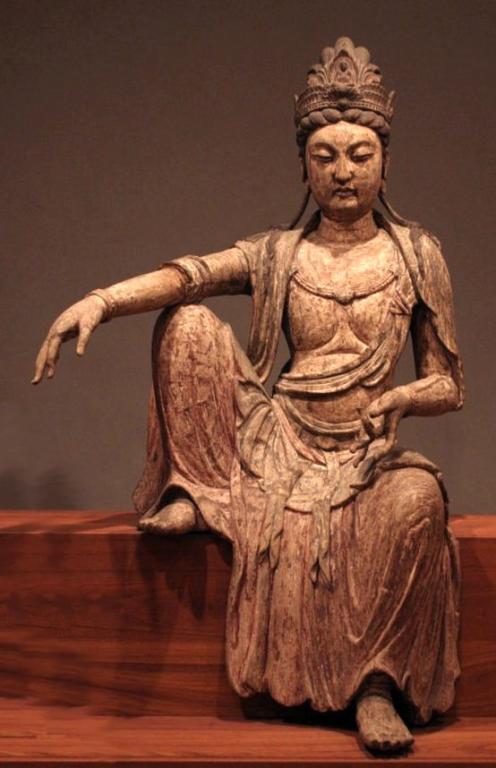
The word for this sense, this call, ultimately this vow, is Bodhisattva. Bodhisattva is the expression of not precisely two, but not exactly one. It opens us to the dynamic of our understanding of that ancient human intuition which is expressed in the dharmic traditions as nonduality. And which modern spiritual scholars have seen is clearly found in all the great religions. As well as among people without any particular religion.
In the third pure precept we come to Bodhisattva mind and the Bodhisattva vow.
I understand that whenever he would give talks, the early Zen missionary to the barbarians of North America Nyogen Senzaki would always address his audience as “bodhisattvas.” A friend who knows his way around the dharma life, once suggested to me that when Senzaki did this, the sensei was throwing out a net, hoping to snare a wise heart or two.
To address each other as bodhisattvas is an expression of realization, and with that, an invitation. Not unlike a koan.
I sometimes say to someone who has done a small mitzvah, a kindness of one sort or another, “you’re a bodhisattva.” I hope in the same spirit. Okay, in my case maybe with a little bit of snark. But then I stand solidly within my age, and our times just drip with irony. Marx, I’ve heard, opined that history repeats itself, first as tragedy, then as farce. While it isn’t always clear where are today, tragedy or farce; there seems nonetheless always to be room for a little sarcasm.
Knowing us. You and me. Looking within and at each other and knowing yes there is bodhisattva – in reality, and in potential. But knowing the rest as well. People as foolish and greedy and hateful and overflowing with unhealthy opinions. You know, knowing the mess. For me that calls for a hint of irony when calling each other bodhisattvas. You know. Nothing like a good joke. Okay, for me, and thinking of what we are capable of, and what sometimes do, despite our bodhisattvaness; I’m not against even a bad joke.
And there is a joke here. When we say about any specific person, bodhisattva. At least in the sense of taking something that is in all the glory of the causes and conditions and decsions that have kept it going, you know, you or me. And then pushing it, prodding it, pulling it, shaping it, until we find something new. Same stuff, but new. Take your favorite villain. And can you then find the bodhisattva there? The Enlightenment being.
Me, I think of those invitations. And the precepts really are invitations. I think especially of this third of the pure precepts is inviting us into our true lives as bodhisattvas. And to what that actually means in a life. As vow, perhaps.
But let’s pause for a moment and consider the bodhisattva as an idea.
In its original use it appears to be what the Buddha, Gautama Siddhartha was called in the Jataka tales, those extracanonical stories of his previous lives. Mostly they’re children’s stories, and they sometimes offer heavy handed morals. They’re also fun, when they don’t take really weird turns. Okay that can be fun, too. The point for bodhisattva here, is that in these stories the being who will be Buddha has not fully realized that place, state, however you might want to describe it, but is on the way. Fully on the way. Maybe even more there than not.
The word bodhisattva shifted from that use in the tales, and quickly came to be the term of art to describe someone on the Buddha way. Specifically for one who has achieved bodhicitta, the mind of awakening. The term is developed in a text called the Ten Stage Sutra, itself collected as part of the Avatamsaka Sutra, the Flower Ornament.
Bodhicitta is a complicated experience. The desire for ourselves is natural. It is noticing the hurt of our lives and with that wanting something. Healing. Saving. Lots of good words out there. Each of course, a bit misleading. And each pointing. This deeply personal, all about me part, is probably always the first part. But that feeling, longing, is only dipping our toe into the lake. It isn’t enough. It turns out. We need the full dive. Which is to wish that healing, that saving for everyone.
And here’s the thing. When everyone is part of our desire for healing, for saving, for awakening; that is the mind of awakening.
In the family of the Great Way a bodhisattva is further understood as someone who has walked the way and has achieved awakening. But rather than passing from the world, vows to remain contaminated, to be a part, to know the hurt, and the longing, until all and everything can also enter the great awakening.
Now, in Zen this is a bit of a bait and switch. Back to the jokiness of our way.
Because we are all so intimately connected that one cannot achieve awakening without everyone and everything else. And there’s a further joke inside that joke. That is none of us has ever been separated. Not ever.
As the movie says “everything everywhere all at once.”
An Indian monk named Shantideva saw this all as a vow. You may recall vow. From one angle our precepts are vows. When I think of the third pure precept, Shantideva’s words echo in the phrase I vow to save all beings. I vow to heal all beings. I vow to awaken all beings.
He sang his vow:
May I be the doctor and the medicine
And may I be the nurse
For all sick beings in the world
Until everyone is healed.
May I become an inexhaustible treasure
For those who are poor and destitute;
May I turn into all things they could need
And may these be placed close beside them.
May I be a protector for those without one,
A guide for all travelers on the way;
May I be a bridge, a boat, and a ship
For all who wish to cross the water.
May I be an island for those who seek one
And a lamp for those desiring light;
May I be a bed for all who wish to rest
And a servant for all who want a servant.
May I be a wishing jewel, a magic vase,
Powerful mantras, and great medicine;
May I become a wish-fulfilling tree
And a cow of plenty for the world.
And like space
And all the great elements such as earth,
May I always support the life
Of all the boundless creatures.
And until they pass away from pain
May I also be the source of life
For all the realms of the varied beings
that reach into the ends of space.*
As an aside, when I read the beatitudes in the Christian tradition, me, I hear this vow. The gates are everywhere when our hearts turn to the mystery.
And with that, briefly back to the joke. I’m much taken with the complexities within this vow. On the face of it, it is a call to an ultimately unhealthy state, a complete surrender of self to another. You can’t say something more against the grain of our culture and our ideas of what we should be doing with our lives. And I agree. Totally. But. Or, maybe that’s an “and.” I more than suspect there is something deeper here, something revealed in that Zen family joke: we’re really all one in this. And what is done for one is done for all.
A dream. It’s like a dream.
Or, maybe a bit of a joke.
But also serious. As serious as life and death.
I vow to save the many beings.
I vow to awaken the many beings.
Awaken.
Awaken.
* English Translation of the Bodhicaryāvatāra “The Way of the Bodhisattva” by Shantideva, Translation by Padmakara Translation Group , Shambhala 2011 pages, Section 3.7-34 (slightly adapted)

Recent Comments
"Allowing anger to contaminate one's hard disk can be detrimental to one's holistic well being. ..."
Hot Anger: Meeting Anger in Zen ..."
"I love this koan. every which way you turn it bites you, Thirty years on ..."
Nanquan Cuts the Cat: A Jesuit ..."
"As a substitute for religion, Zen is probably better than taking drugs. However, it can ..."
The Selling of Zen at the ..."
"Craving and aversion are detrimental to one's peace and happiness. Easter is a wake up ..."
Easter: A Zen Buddhist Appreciation
Browse Our Archives
Select a Category A Christmas Carol Abolitionist African-American Ahmadiyya Alan Watts Aldous Huxley Allen Ginsberg Amedkar Jayanti American politics American Zen Anaheim Zen Sangha Anglican Annie Besant April Fool Armageddon Art and Religion artificial intellegence Atheist Awakening B R Ambedkar Barlaam & Josaphat Beatnik Between Bhagavad Gita Bible biography birthday bodhisattva Bodhisattva Precepts Book burning Book of Common Prayer Book of Mormon Brahmo Samaj Buddha Buddhism Buddhist Buddhist Lord's Prayer Butterflies Calendars cartoons cat ChatGPT Chicken Tortilla Soup choices Christian atheism Christian mysticism Christian origins Christian Science Christian Zen Christianity Christianity and Buddhism christmas Christmas Truce Christopher Isherwood Church of Later Day Saints Cinco de Mayo circus covenant critical thinking culture D. T. Suzuki Dalit Buddhism Daniel Defoe Desert Fathers and Mothers dharma talk Dogen Donald Trump Dongshan's Five Ranks Dorothy Day dream Duty Easter ecology Edwin Arnold emptiness Empty Moon Zen Network Episcopal Church Eternal Now Ethics evolution existentialism Faith fantasy Fathers Day film film review fire Five Ranks Folk music food Form and emptiness Four Seals Francis of Assisi Francis Xavier Free thinker friendship George MacDonald Gerald Heard Glenn Taylor Webb God Good Friday Gospel of Gospel of Mark Gospel of Thomas grace Graduate Theological Unioin Graduate Theological Union Guanyin H R Blyth Hakuin Ekaku Hanamatsuri Hanukkah Harada Yasutani Zen Heart Sutra Henry David Thoreau Hermann Hesse Hinduism History and Religion history of religion Holy Spirit home Hospitality Icon Ides of March Isaac Newton Islam Islamic mysticism Jack Kerouac James Luther Adams Jiddu Krishnamurti Joan of Arc Johannes Gutenberg John Donne joke Judaism justice karma kensho King James Bible koan Koun Yamada Kyoto School Lewis Carrol Liberal Christianity Liberal Religion Life Plan Community Liminal literature Literature and Religion Liturgy Lord's Prayer Love Mahatma Gandhi Mahayana Martin Luther King Jr Mary Baker Eddy Mary Magdelene Mary Oliver Mayflower Compact Meditation memories memory metaphor money money and religioin Mormons Mother's Day movie review mysticism mythic Neighborhood Unitarian Universalist Church New Thought Nichiren Buddhism Nonduality not knowing Omar Khayyam Pacific School of Religion pagan Palm Sunday Passover peace Pentecost perennialism Phantastes Philip Kapleau philosophy Pilgrimage poetry Poetry and Religion politics Prayer Precepts Printing Press prophecy prophetic spirituality psychology Pure Land Queer religion queering religion Quietism Ram Mohan Roy rebirth recipe Relationships and religion religion religion and history Religious syncretism Resistance Retirement Retreat review Rissho Kosei Kai Ritual Robert Aitken Roshi Robert Ingersoll Rohatsu Romani religion Rosie the Riveter saints samadhi SanboZen Sangha Satyagraha science science and reigion science and religion science fiction seminary sermon Sesshin Sex and Religion Shinran Sikh Sikh tradition silence Social Justice Socially Engaged Buddhism Society and religion Soto Zen soul spiritual community spiritual practice Spirituality Sufism Suicide superstition Taoism Television Teresa of Avila Thanksgiving theological schools Theosophy Thomas Merton Time Transcendentalism Transcendentalist Trinitarian Trinity Uncategorized unitarian Unitarian Christianity Unitarian Universalist Universalism Vajrayana Vedanta Walking war Willa Cather William Ellery Channing wisdom women and religion women in religion World Teacher Writing zazen Zen Zen Center Zen inspired retriement zen meditation Zen Precepts Zen women
Select a Month September 2026 August 2026 July 2026 June 2026 May 2026 April 2026 March 2026 February 2026 January 2026 December 2025 November 2025 October 2025 September 2025 August 2025 July 2025 June 2025 May 2025 April 2025 March 2025 February 2025 January 2025 December 2024 November 2024 October 2024 September 2024 August 2024 July 2024 June 2024 May 2024 April 2024 March 2024 February 2024 January 2024 December 2023 November 2023 October 2023 September 2023 August 2023 July 2023 June 2023 May 2023 April 2023 March 2023 February 2023 January 2023 December 2022 November 2022 October 2022 September 2022 August 2022 July 2022 June 2022 May 2022 April 2022 March 2022 February 2022 January 2022 December 2021 November 2021 October 2021 September 2021 August 2021 July 2021 June 2021 May 2021 April 2021 March 2021 February 2021 January 2021 December 2020 November 2020 October 2020 September 2020 August 2020 July 2020 June 2020 May 2020 April 2020 March 2020 February 2020 January 2020 December 2019 November 2019 October 2019 September 2019 August 2019 July 2019 June 2019 May 2019 April 2019 March 2019 February 2019 January 2019 December 2018 November 2018 October 2018 September 2018 August 2018 July 2018 June 2018 May 2018 April 2018 March 2018 February 2018 January 2018 December 2017 November 2017 October 2017 September 2017 August 2017 July 2017 June 2017 May 2017 April 2017 March 2017 February 2017 January 2017 December 2016 November 2016 October 2016 September 2016 August 2016 July 2016 June 2016 May 2016 April 2016 March 2016 February 2016 January 2016 December 2015 November 2015 October 2015 September 2015 August 2015 July 2015 June 2015 May 2015 April 2015 March 2015 February 2015 January 2015 December 2014 November 2014 October 2014 September 2014 August 2014 July 2014 June 2014 May 2014 April 2014 March 2014 February 2014 January 2014 December 2013 November 2013 October 2013 September 2013 August 2013 July 2013 June 2013 May 2013 April 2013 March 2013 February 2013 January 2013 December 2012 November 2012 October 2012 September 2012 August 2012 July 2012 June 2012 May 2012 April 2012 March 2012 February 2012 January 2012 December 2011 November 2011 October 2011 September 2011 August 2011 July 2011 June 2011 May 2011 April 2011 March 2011 February 2011 January 2011 December 2010 November 2010 October 2010 September 2010 August 2010 July 2010 June 2010 May 2010 April 2010 March 2010 February 2010 January 2010 December 2009 November 2009 October 2009 September 2009 August 2009 July 2009 June 2009 May 2009 April 2009 March 2009 February 2009 January 2009 December 2008 November 2008 October 2008 September 2008 August 2008 July 2008 June 2008 May 2008 April 2008 March 2008 February 2008 January 2008 December 2007 November 2007 October 2007 September 2007 August 2007 July 2007 June 2007 May 2007 April 2007 March 2007 February 2007 January 2007 December 2006 November 2006 October 2006 September 2006
Follow Us!
TAKE THE
Religious Wisdom Quiz
Who prayed for rain after a long drought and sent his servant to look seven times?
Select your answer to see how you score.
Hosea Samuel Elijah Isaiah
Related posts from Monkey Mind


Which Is the True Qian? A Koan About...


TRENDING AT PATHEOS Buddhist

The Problem with False Prophets
Miller’s Station UMC| 10/18/26| Anchor Verse: Jeremiah 23: 1, 9-23 I...

Emotion in Early Christianity by Andrew Crislip
Andrew Crislip’s Emotion in Early Christianity examines an often overlooked dimension of...

16 Spiritual Touchstones for a More Grounded Life
After decades of spiritual study, here are 16 principles I try...

Catholic Evangelization: Sharing Your Faith Every Day
Welcome back to the Graceful Awakening mini-series called, “From Faith to Mission.” ...

The Pillar of the Boatmen: the Ancient Monument...
The Pillar of the Boatmen is a Romano-Gaulish sculpture that dates from...

In one sense walking into Westminster Abbey is like walking down the...
view all Buddhist blogs
What Are Your Thoughts?leave a comment
Ad-Free & Subscriber Log-In Subscription Support
- About Us
- 2026 Calendar
- Videos
- Podcasts
- Library of World Religions
- Faith In Media Tracker
- Advertise With Us
- Write for Us
- Privacy Policy
- Terms of Service
- Do Not Sell My Data
- Contact Us
- Radiant Digital
- Manage Newsletter Subscriptions
- Unsubscribe From Notifications
- Sitemap
Copyright 2008-2026, Patheos. All rights reserved.
Subscription Support Ad-Free & Subscriber Log-In
Follow Patheos