
BuddhistCatholicContemplativeEvangelicalGeneral ChristianHinduJewishLatter-day SaintMuslimNew VisionsProgressive Christian
Beliefs
- Buddhist
- Catholic
- Contemplative
- Evangelical
- General Christian
- Hindu
- Jewish
- Latter-day Saint
- More Voices
- Muslim
- New Visions
- Pagan
- Progressive Christian
Topics
- Religion News
- Food and Religion
- Sports and Religion
- Religious Art
- Religious Music and Entertainment
- Religious Events
- History and Religion
- Style and Religion
- Politics and Religion
- Women in Religion
- Recreation Outdoors and Religion
- Business Finance and Religion
- Careers Workplace and Religion
- Education and Religion
- Family Parenting and Religion
- Health Fitness and Religion
- Home and Religion
- Relationships and Religion
- Technology and Religion
- Travel and Religion
Columnists
- Buddhist Columnists
- Business Finance and Religion Columnists
- Careers Workplace and Religion Columnists
- Catholic Columnists
- Contemplative Columnists
- Education and Religion Columnists
- Evangelists Columnists
- Family Parenting and Religion Columnists
- General Christian Columnists
- Health Fitness and Religion Columnists
- Hindu Columnists
- History and Religion Columnists
- Home and Religion Columnists
- Jewish Columnists
- More Voices Columnists
- Latter Day Columnists
- Muslim Columnists
- New Visions Columnists
- Nonreligious Columnists
- Pagan Columnists
- Politics and Religion Columnists
- Progressive Columnists
- Recreation Outdoors and Religion Columnists
- Relationships and Religion Columnists
- Religion News Columnists
- Religious Art Columnists
- Religious Events Columnists
- Religious Music and Entertainment Columnists
- Sports and Religion Columnists
- Style and Religion Columnists
- Technology and Religion Columnists
- Travel and Religion Columnists
- Women in Religion Columnists
Resource Library
- 2026 Calendar
- Library of World Religions
- The 100 Most Holy Places on Earth
- Patheos Answers
- Podcasts
- Videos
- Faith Leaders Database
- Anglican Episcopalian
- Bahai
- Baptist
- Buddhism
- Christianity
- Confucianism
- Eastern Orthodoxy
- Hinduism
- Holiness and Pentecostal
- ISKCON
- Islam
- Judaism
- Lutheran
- Methodist
- The Church of Jesus Christ of Latter-day Saints
- New Age
- Paganism
- Presbytarian and Reformed
- Protestantism
- Religion Behind the Scenes
- Roman Catholic
- Scientology
- Shia Islam
- Sikhism
- Sufism
- Sunni Islam
- Taoism
- Zen
- See all religions
Research Tools
 Ad-Free & Subscriber Log-In Subscription Support
Ad-Free & Subscriber Log-In Subscription Support
Follow Patheos 

- Trending:
- Forgiveness
- |
- Marriage
- |
- Consciousness
- |
- Death Penalty
- |
- Election
- |
- Halloween

- Home
- Buddhist
- A Path for Spiritual Adults: Francis David & the Natural Jesus
A Path for Spiritual Adults: Francis David & the Natural Jesus
Last updated on: November 15, 2022 at 4:34 pm by James Ford
A Path for Spiritual Adults: Francis David & the Natural Jesus 2022-11-15T16:34:58-08:00 James Ford
Patheos Explore the world's faith through different perspectives on religion and spirituality! Patheos has the views of the prevalent religions and spiritualities of the world.
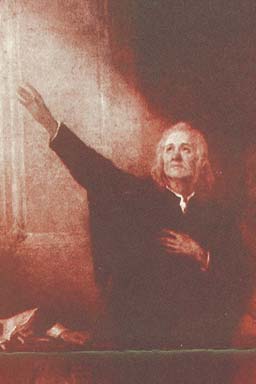
In this world there have always been many opinions about faith and salvation. You need not think alike to love alike. There must be knowledge in faith also. Sanctified reason is the lantern of faith. Religious reform can never be all at once, but gradually step by step. If they offer something better, I will gladly learn. The most important spiritual function is conscience, the source of all spiritual joy and happiness. Conscience will not be quieted by anything less than truth and justice. We must accept God’s truth in this lifetime. Salvation must be accomplished here on earth. God is indivisible. Egy Az Isten. God is one.
Francis David (arranged by Richard Fewkes)
It was today, the 15th of November in 1579 that Ferenc Dávid, Francis David in American style English, died in prison. Not a bad moment, I think to pause and consider the vagaries of liberal religion.
My colleague in the Unitarian Universalist ministry, Fred Wooden once wrote that liberal religion has three forms here in North America. They are “the open heart, the open hand, and the open mind.” He used his own congregation at the time, Fountain Street, as an example of the open heart. They weren’t looking for doctrinal explorations, they were just good Baptists who followed their hearts right into liberal religion.
Our historic Unitarian tradition is no doubt the grand example of the “open mind” path. Now that doesn’t mean consider every option no matter how unlikely it is. Rather “open mind” means a deep rational, “I’m from Missouri” approach to all matters religious. It means you don’t believe it just because someone said it.
I hope obviously how traditional Universalism is a lovely example, along with Fountain Street’s one-off congregation, of that “open heart” style of religion.
And, today, in a theologically unsophisticated era, while definitely heirs to the open mind and the open heart, the Unitarian Universalist world writ large is up to its ears in social concern and action. So, today more than anything grand examples of that “open hand” style of liberal religion.
Then I started thinking about the boundary Fred put on his meditation of “North America.” Now there was obviously a purpose for him in that. His reflection was quite brief, and he wanted to think about these currents here, and how they don’t even necessarily coalesce as Unitarian Universalism. Me, it sparked a whole different line of thought. Being of a historical as well as a theological turn of heart, it made me think about our spiritual cousins, those Hungarian-speaking Unitarians we’re celebrating today.
We have few dirext historical ties. They are a Reformation church with all their influences rooted in Continental Protestantism. We, on the other hand, are a pure Enlightenment expression, rooted institutionally in Anglicanism and even more within those various attempts to separate from Anglicanism.
But we are both currents of liberal religion. As communities, while we both have very strong “open mind” foundations, we also have evolved in very different ways. Today we’re much more into that “open hand” and they more than anything else, I would say, live into that “open heart.” I believe there are some strong reasons for this that go right back to our separate foundations.
And this opens for me the story of Francis David, one of the most compelling spiritual figures, frankly, of world religion. His story deserves to be told over and over again. Here we are presented with a fierce intellect and questing spirit, a religious leader and social rebel, with in my opinion more substance, certainly more intellectual and spiritual rigor than either Calvin or Luther, or, any of the rest of that Reformation gang.
As I see it Francis David at least started as a follower of that open mind. And, of course, he doesn’t stand alone, along with Francis David we get a whole cast of characters, I’ll be focusing on three here counting David, and out of their encounters and actions we have a story that more truly than most, as we listen closely, I believe we will find, is our story.
Francis David was born at the beginning of the sixteenth century in Kolozavar, today Cluj, in the kingdom or principality of Transylvania. Kingdom, that is, from the perspective of the Transylvanians themselves, but principality in fact as they were within the thrall of the Ottoman Empire.
His father was a shoemaker, but his mother came from Hungarian nobility, so he had social access. His intellectual capacities were recognized early on and patrons supported his education, even sending him to Wittenberg for four years for advanced studies, after which he was ordained a Catholic priest. Spiritually restless, and intellectually rigorous, he chaffed at the strictures of the Catholic faith, eventually converting to Lutheranism. He quickly was elected the Lutheran bishop for Transylvania.
Under the influence of George Biandrata, physician to the king and a significant spiritual intellect in his own right, David continued to wrestle with his faith and eventually declared for the more rationalist Calvinism, then quickly becoming the Calvinist bishop of Transylvania.
The evolution of his faith continued. He and Dr Biandrata found themselves deeply influenced by the Spanish anti-Trinitarian Michael Servetus and the great Dutch humanist philosopher Erasmus. Among the problems for David was the lack of any scriptural clarity around the nature of the Holy Spirit, and with that the whole idea of God being described as a trinity.
In the meantime Dr Biandrata arranged for his friend to be appointed court preacher. His command of the scriptures, his eloquence both in pulpit and in debate, and with his ability to speak with equal eloquence in Hungarian, German and Latin, it appears no one was able to meet him head to head in disputation. And significantly, gradually, actually not that gradually, Francis David’s preaching and eloquence became more and more obviously anti-Trinitarian.
These questions and disputes gradually spread beyond the court. It may be hard in our time and place to understand how powerful and compelling these questions were. Or, the physical danger that accompanied questioning such bedrock assumptions – an area that neither Luther nor Calvin ever dared go. Of course David knew this was dangerous territory. As did Biandrata, naturally more cautious than his friend, who exercised his influence to keep David from fully and publicly expressing the flood of doubts touching on all manner of ecclesial matters that his studies had raised in his heart. For a time. For a time.
Not that the central question about the nature of God wasn’t being discussed. In fact the disputes among Hungarian speaking theologians eventually became formal debates and even synods, and these would rivet the public’s attention, as well as the court, and the king, who shortly will become our third actor in this story. David and Biandrata published a catechism, and David published a book, “On the True and False Knowledge of the One God,” which clearly laid out a Unitarian theology. David dedicated the book to the king, writing, “There is no greater piece of folly than to try to exercise power over conscience and soul, both of which are subject only to their creator.” I find it interesting we won’t hear the likes of this again until Roger Williams. Increasingly these positions became the teachings of many Transylvanian congregations. A church began to gather.
As to Transylvania, John Sigismund ruled the “Eastern Hungarian Kingdom,” what we call Transylvania, he was also subject within the swirling political scene to the Ottoman sultan Suleiman the Great. I suspect the surprising religious tolerance of the Ottomans may have had some influence on the king, but hard to say with any certainty at this distance. What we do know, is that however many the tributaries that flowed into the king’s heart, two things came out of that deep well.
First, in 1568, the king promulgated an edict of tolerance, the first proclamation of religious freedom anywhere in Europe. In his proclamation the king declared, “Preachers shall be allowed to preach the Gospel everywhere, each according to his own understanding of it. If the community wish to accept such preaching, well and good; if not, they shall not be compelled, but shall be allowed to keep the preachers they prefer. No one shall be made to suffer on account of his religion, since faith is the gift of God.” While not complete freedom, which was limited to Catholics, Lutherans, Calvinists, and Unitarians. But it also extended official tolerance to Orthodox Christians, Jews, and Muslims.
It was a significant, an enormously significant act. In the rest of Europe at this time blood was flowing freely over religious disputes, Catholics killing Protestants, and Protestants killing Catholics as well as other Protestants, and everybody killing Jews. In Transylvania something else was happening.
And, second, and in my heart completely connected to that declaration, King John Sigismund embraced the new Unitarian faith preached by Francis David. With the king’s patronage and the institutional insights of Dr Biandrata, Francis David, for the third time in his life was elected a bishop, this time for the new Unitarian church.
For a handful of years something wonderful flourished in Transylvania. But then in 1571, under clouded circumstances the king died. His successor was a Catholic, and almost immediately persecutions began. This led to a bitter division between Dr Biandrata and the bishop. David’s thinking continued to advance, following the dictates of his scholarship, his spiritual insight, and his conscience. Dr Biandrata warned his colleague now was not the time to proclaim his ever more radical positions, they needed to protect their new church. But the bishop refused to be silent.
Finally the doctor, fearing for the fragile church, joined those who denounced the bishop, and having lost his principal defender, David was quickly arrested, tried, and convicted of heresy. He was thrown into prison, where not long after, he died. Today, as I noted at the beginning, in 1579.
The church barely survived the persecutions, which would in fact prove simply to be the first of many over the ensuing years. But, it survived, and it survives. I find it important to recall how that church survives as much, possibly more due to the efforts of Dr Biandrata’s sense of an open hand than to Bishop David’s relentless following of the open mind. Both were critical. As, I want to add, was the King’s more pure way of the open heart. There’s an irony for you.
But also we have a lesson about the open hand, which I suggest was Dr Biandrata’s complement to Bishop David’s open mind. The wisdom of the open hand is not just a call to justice making, like it is so clearly in many contemporary Untiarian Universalist congregations, but also a call to live in the world we actually live in, not some other.
So, I’m haunted by that hard decision the doctor made, and the fact that Biandrata is not remembered fondly because he denounced David. But without him it is unlikely there would be anything to remember but something that happened briefly a long time ago. So, for me a reminder that the open hand is about the work of justice, and it is also about the arts of practical living. A critical aspect of the open hand is to know when to hold your cards, when to play them, and when to fold ‘em.
So, what’s the take away? Well, one more observation. As I dig into how we actually engage liberal religion, for a healthy and long lasting community, we need all three aspects, heart, head, and hand. We can easily lead with one or another just as validly. But, without the way of the open heart, to what purpose would we put all our energy? We need that insight into the great currents of compassion, of love that informs actions in ways that are healthful and ultimately, useful. And, absolutely, today we need that way of the open mind, being critical and reflective and analytical which can save us from so many spiritual dead ends. And putting it together, living in this world, we need that open hand.
And, obviously not easy. Hard calls are made all along the way. And bad endings are always a possibility.
This is a path for spiritual adults.
The great way of liberal religion…
Previous Post

November 14, 2022
Nellie Bly Begins her Trip Around the World in Under Eighty Days
Next Post
November 16, 2022 Good Old, Bad Old Alan Watts: An Ongoing Appreciation
Browse Our Archives
Select a Category A Christmas Carol Abolitionist African-American Ahmadiyya Alan Watts Aldous Huxley Allen Ginsberg Amedkar Jayanti American politics American Zen Anaheim Zen Sangha Anglican Annie Besant April Fool Armageddon Art and Religion artificial intellegence Atheist Awakening B R Ambedkar Barlaam & Josaphat Beatnik Between Bhagavad Gita Bible biography birthday bodhisattva Bodhisattva Precepts Book burning Book of Common Prayer Book of Mormon Brahmo Samaj Buddha Buddhism Buddhist Buddhist Lord's Prayer Butterflies Calendars cartoons cat ChatGPT Chicken Tortilla Soup choices Christian atheism Christian mysticism Christian origins Christian Science Christian Zen Christianity Christianity and Buddhism christmas Christmas Truce Christopher Isherwood Church of Later Day Saints Cinco de Mayo circus covenant critical thinking culture D. T. Suzuki Dalit Buddhism Daniel Defoe Desert Fathers and Mothers dharma talk Dogen Donald Trump Dongshan's Five Ranks Dorothy Day dream Duty Easter ecology Edwin Arnold emptiness Empty Moon Zen Network Episcopal Church Eternal Now Ethics evolution existentialism Faith fantasy Fathers Day film film review fire Five Ranks Folk music food Form and emptiness Four Seals Francis of Assisi Francis Xavier Free thinker friendship George MacDonald Gerald Heard Glenn Taylor Webb God Good Friday Gospel of Gospel of Mark Gospel of Thomas grace Graduate Theological Unioin Graduate Theological Union Guanyin H R Blyth Hakuin Ekaku Hanamatsuri Hanukkah Harada Yasutani Zen Heart Sutra Henry David Thoreau Hermann Hesse Hinduism History and Religion history of religion Holy Spirit home Hospitality Icon Ides of March Isaac Newton Islam Islamic mysticism Jack Kerouac James Luther Adams Jiddu Krishnamurti Joan of Arc Johannes Gutenberg John Donne joke Judaism justice karma kensho King James Bible koan Koun Yamada Kyoto School Lewis Carrol Liberal Christianity Liberal Religion Life Plan Community Liminal literature Literature and Religion Liturgy Lord's Prayer Love Mahatma Gandhi Mahayana Martin Luther King Jr Mary Baker Eddy Mary Magdelene Mary Oliver Mayflower Compact Meditation memories memory metaphor money money and religioin Mormons Mother's Day movie review mysticism mythic Neighborhood Unitarian Universalist Church New Thought Nichiren Buddhism Nonduality not knowing Omar Khayyam Pacific School of Religion pagan Palm Sunday Passover peace Pentecost perennialism Phantastes Philip Kapleau philosophy Pilgrimage poetry Poetry and Religion politics Prayer Precepts Printing Press prophecy prophetic spirituality psychology Pure Land Queer religion queering religion Quietism Ram Mohan Roy rebirth recipe Relationships and religion religion religion and history Religious syncretism Resistance Retirement Retreat review Rissho Kosei Kai Ritual Robert Aitken Roshi Robert Ingersoll Rohatsu Romani religion Rosie the Riveter saints samadhi SanboZen Sangha Satyagraha science science and reigion science and religion science fiction seminary sermon Sesshin Sex and Religion Shinran Sikh Sikh tradition silence Social Justice Socially Engaged Buddhism Society and religion Soto Zen soul spiritual community spiritual practice Spirituality Sufism Suicide superstition Taoism Television Teresa of Avila Thanksgiving theological schools Theosophy Thomas Merton Time Transcendentalism Transcendentalist Trinitarian Trinity Uncategorized unitarian Unitarian Christianity Unitarian Universalist Universalism Vajrayana Vedanta Walking war Willa Cather William Ellery Channing wisdom women and religion women in religion World Teacher Writing zazen Zen Zen Center Zen inspired retriement zen meditation Zen Precepts Zen women
Select a Month September 2026 August 2026 July 2026 June 2026 May 2026 April 2026 March 2026 February 2026 January 2026 December 2025 November 2025 October 2025 September 2025 August 2025 July 2025 June 2025 May 2025 April 2025 March 2025 February 2025 January 2025 December 2024 November 2024 October 2024 September 2024 August 2024 July 2024 June 2024 May 2024 April 2024 March 2024 February 2024 January 2024 December 2023 November 2023 October 2023 September 2023 August 2023 July 2023 June 2023 May 2023 April 2023 March 2023 February 2023 January 2023 December 2022 November 2022 October 2022 September 2022 August 2022 July 2022 June 2022 May 2022 April 2022 March 2022 February 2022 January 2022 December 2021 November 2021 October 2021 September 2021 August 2021 July 2021 June 2021 May 2021 April 2021 March 2021 February 2021 January 2021 December 2020 November 2020 October 2020 September 2020 August 2020 July 2020 June 2020 May 2020 April 2020 March 2020 February 2020 January 2020 December 2019 November 2019 October 2019 September 2019 August 2019 July 2019 June 2019 May 2019 April 2019 March 2019 February 2019 January 2019 December 2018 November 2018 October 2018 September 2018 August 2018 July 2018 June 2018 May 2018 April 2018 March 2018 February 2018 January 2018 December 2017 November 2017 October 2017 September 2017 August 2017 July 2017 June 2017 May 2017 April 2017 March 2017 February 2017 January 2017 December 2016 November 2016 October 2016 September 2016 August 2016 July 2016 June 2016 May 2016 April 2016 March 2016 February 2016 January 2016 December 2015 November 2015 October 2015 September 2015 August 2015 July 2015 June 2015 May 2015 April 2015 March 2015 February 2015 January 2015 December 2014 November 2014 October 2014 September 2014 August 2014 July 2014 June 2014 May 2014 April 2014 March 2014 February 2014 January 2014 December 2013 November 2013 October 2013 September 2013 August 2013 July 2013 June 2013 May 2013 April 2013 March 2013 February 2013 January 2013 December 2012 November 2012 October 2012 September 2012 August 2012 July 2012 June 2012 May 2012 April 2012 March 2012 February 2012 January 2012 December 2011 November 2011 October 2011 September 2011 August 2011 July 2011 June 2011 May 2011 April 2011 March 2011 February 2011 January 2011 December 2010 November 2010 October 2010 September 2010 August 2010 July 2010 June 2010 May 2010 April 2010 March 2010 February 2010 January 2010 December 2009 November 2009 October 2009 September 2009 August 2009 July 2009 June 2009 May 2009 April 2009 March 2009 February 2009 January 2009 December 2008 November 2008 October 2008 September 2008 August 2008 July 2008 June 2008 May 2008 April 2008 March 2008 February 2008 January 2008 December 2007 November 2007 October 2007 September 2007 August 2007 July 2007 June 2007 May 2007 April 2007 March 2007 February 2007 January 2007 December 2006 November 2006 October 2006 September 2006
Follow Us!
TAKE THE
Religious Wisdom Quiz
What is the main theme of the Ten Commandments?
Select your answer to see how you score.
How to live and treat others How to earn your way to Heaven How to live in Jewish society How to be successful
Related posts from Monkey Mind


Which Is the True Qian? A Koan About...


TRENDING AT PATHEOS Buddhist

Emotion in Early Christianity by Andrew Crislip
Andrew Crislip’s Emotion in Early Christianity examines an often overlooked dimension of...

16 Spiritual Touchstones for a More Grounded Life
After decades of spiritual study, here are 16 principles I try...

Catholic Evangelization: Sharing Your Faith Every Day
Welcome back to the Graceful Awakening mini-series called, “From Faith to Mission.” ...

The Pillar of the Boatmen: the Ancient Monument...
The Pillar of the Boatmen is a Romano-Gaulish sculpture that dates from...

In one sense walking into Westminster Abbey is like walking down the...

'Super Scam Me' Exposes AI Jon Bon Jovi...
Leslie Pickett believed she was in a relationship with Jon Bon Jovi....
view all Buddhist blogs
Ad-Free & Subscriber Log-In Subscription Support
- About Us
- 2026 Calendar
- Videos
- Podcasts
- Library of World Religions
- Faith In Media Tracker
- Advertise With Us
- Write for Us
- Privacy Policy
- Terms of Service
- Do Not Sell My Data
- Contact Us
- Radiant Digital
- Manage Newsletter Subscriptions
- Unsubscribe From Notifications
- Sitemap
Copyright 2008-2026, Patheos. All rights reserved.
Subscription Support Ad-Free & Subscriber Log-In
Follow Patheos