
BuddhistCatholicContemplativeEvangelicalGeneral ChristianHinduJewishLatter-day SaintMuslimNew VisionsProgressive Christian
Beliefs
- Buddhist
- Catholic
- Contemplative
- Evangelical
- General Christian
- Hindu
- Jewish
- Latter-day Saint
- More Voices
- Muslim
- New Visions
- Pagan
- Progressive Christian
Topics
- Religion News
- Food and Religion
- Sports and Religion
- Religious Art
- Religious Music and Entertainment
- Religious Events
- History and Religion
- Style and Religion
- Politics and Religion
- Women in Religion
- Recreation Outdoors and Religion
- Business Finance and Religion
- Careers Workplace and Religion
- Education and Religion
- Family Parenting and Religion
- Health Fitness and Religion
- Home and Religion
- Relationships and Religion
- Technology and Religion
- Travel and Religion
Columnists
- Buddhist Columnists
- Business Finance and Religion Columnists
- Careers Workplace and Religion Columnists
- Catholic Columnists
- Contemplative Columnists
- Education and Religion Columnists
- Evangelists Columnists
- Family Parenting and Religion Columnists
- General Christian Columnists
- Health Fitness and Religion Columnists
- Hindu Columnists
- History and Religion Columnists
- Home and Religion Columnists
- Jewish Columnists
- More Voices Columnists
- Latter Day Columnists
- Muslim Columnists
- New Visions Columnists
- Nonreligious Columnists
- Pagan Columnists
- Politics and Religion Columnists
- Progressive Columnists
- Recreation Outdoors and Religion Columnists
- Relationships and Religion Columnists
- Religion News Columnists
- Religious Art Columnists
- Religious Events Columnists
- Religious Music and Entertainment Columnists
- Sports and Religion Columnists
- Style and Religion Columnists
- Technology and Religion Columnists
- Travel and Religion Columnists
- Women in Religion Columnists
Resource Library
- 2026 Calendar
- Library of World Religions
- The 100 Most Holy Places on Earth
- Patheos Answers
- Podcasts
- Videos
- Faith Leaders Database
- Anglican Episcopalian
- Bahai
- Baptist
- Buddhism
- Christianity
- Confucianism
- Eastern Orthodoxy
- Hinduism
- Holiness and Pentecostal
- ISKCON
- Islam
- Judaism
- Lutheran
- Methodist
- The Church of Jesus Christ of Latter-day Saints
- New Age
- Paganism
- Presbytarian and Reformed
- Protestantism
- Religion Behind the Scenes
- Roman Catholic
- Scientology
- Shia Islam
- Sikhism
- Sufism
- Sunni Islam
- Taoism
- Zen
- See all religions
Research Tools
 Ad-Free & Subscriber Log-In Subscription Support
Ad-Free & Subscriber Log-In Subscription Support
Follow Patheos 

- Trending:
- Forgiveness
- |
- Marriage
- |
- Consciousness
- |
- Death Penalty
- |
- Election
- |
- Halloween

- Home
- Buddhist
- A FEAST FOR SAINTS BARLAAM & JOSAPHAT: A Meditation on Syncretisms of Several Varieties
A FEAST FOR SAINTS BARLAAM & JOSAPHAT: A Meditation on Syncretisms of Several Varieties
Last updated on: November 28, 2023 at 6:58 am by James Ford
A FEAST FOR SAINTS BARLAAM & JOSAPHAT: A Meditation on Syncretisms of Several Varieties 2023-11-28T06:58:26-08:00 James Ford
Patheos Explore the world's faith through different perspectives on religion and spirituality! Patheos has the views of the prevalent religions and spiritualities of the world.
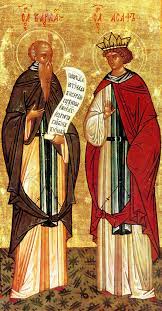
There is a tradition. It tells us one of Jesus’ apostles, Thomas, who we know as the Doubter, carried the message of Jesus all the way to India. There he found responsive hearts on the Malabar coast, and a small community began to flourish. Another tradition says that a few centuries later the king of the area, Abenner was told by astrologers that his newborn son Josaphat would one day set aside kingship and become an exemplar of the Christian way.
The king decided this would be a terrible thing. So, he launched a persecution of the church, hoping there would be nothing for his son to convert to. In the meantime, the king had his young son kept isolated in a pleasure palace, where the boy would never hear the good news.
One day the now young man secretly left the palace to see the wider world. Almost immediately he met the Christian hermit Barlaam. Barlaam told him of the way of unfolding love, and the message touched Josephat’s heart. He returned and told his father, who saw it was over, made his peace with it, and stopped the persecutions.
He then shared his throne with Josaphat. Eventually, King Abenner found the way touch him, as well. He abdicated his share of the throne to become a Christian hermit. Josaphat continued to rule for a time, but eventually he too abandoned rulership as the astrologers foretold, embraced a monastic life and sought out his old teacher Barlaam. They lived in holy companionship for the rest of their lives. During those years people came from all over the world to hear his guidance into the intimate. After Barlaam and Josaphat’s deaths, people continued, right to this day, to make pilgrimages to their graves as healing shrines.
(sermon begins at 1:08:16)
This story was recorded in the Roman Martyrology. And the 27th of November in the West and the 26th of August in the East were set aside as a feast in honor of the saints Barlaam and Josaphat. Their celebration was woven into the great cycles of worship of the Christian churches.
Then, in the nineteenth century along with embracing a critical analysis of the scriptures, scholars began investigating many of the accumulated traditions of the church. Quickly they found the true source of this story about Barlaam and Josaphat. Following the sources through some interesting twists and turns, they found the story was really that of the Buddha. By the early twentieth century the mainstream liturgical churches had all quietly dropped the Christian celebration of this version of the life of the Buddha from their calendars.
The 27th of November. Today. Noticing this opened a floodgate of thoughts and feelings for me about, well, many things. But especially what might happen when we open our hearts to liminal spaces. You know, those spots where things meet and overlap, where contradictions congregate, where, well, where our hearts might open.
Me, the deep root of my spirituality is Zen Buddhism. It is rich and nourishing. I am eternally grateful for finding it early in my life. But, as Joanna Macy, one of my teachers described it, my natal tradition is Christianity. So, among other consequences to this fact, I’m particularly interested in those places where Buddhism and Christianity meet. Today I would like to share a little about those meetings, like the story of Barlaam and Josaphat, and then reflect briefly on what doors I find all that opening for me, and, who knows, maybe for you, as well.
You’ve probably heard stories of how Jesus traveled to India or perhaps Tibet. The idea has quite a sustained following, especially in India. The primary source for this, Nicolas Notovitch’s Life of St Issa, Best of the Sons of Men first published in 1894 and has never gone out of print. I love the idea. And I wish it were true. Sadly, Notovitch’s book has been exposed as a fraud numerous times. Not that that unpleasantness has caused any decline in its popularity. But for me wanting something to be true, isn’t enough.
That isn’t to say there hasn’t been a bucket full of contact between the traditions over the centuries. The Silk Road pretty much guaranteed that. But to the direct point of Jesus and Buddhism, there is absolutely no need for Jesus to have a Buddhist or any other non-Jewish influence. Everything we have of his teachings in the earliest strata documents, either reflect the normative Judaism of his time or are a wonderful extrapolation from those teachings and currents of that moment and place. To assert otherwise is to put oneself in the category of the people who figure the ancient Egyptians couldn’t have built the pyramids, so, well, flying saucers.
However, then there’s what happened after Jesus’ death. Several substantial scholars note possible connections between Buddhism and forming Christianity. Elaine Pagels, for instance, in her deep examination of the Gospel of Thomas, noncanonical but of considerable antiquity with roughly the same dating as the Gospel of John, writes, how “Some of it looks like Buddhism, and may have in fact been influenced by a well-established Buddhist tradition at the time these texts were first written.” “May have,” however is an important phrase not to be glossed over.
Many scholars see influences on Christianity through Gnosticism, which clearly has identifiable Buddhist connections. There are, nonetheless, some obvious stumbling blocks to anyone, say like me, who would love to see a Buddhist Christian synthesis from the beginning. But there is a gigantic problem in any such enterprise. The core elements of traditional Christian monotheism and the core Buddhist observation that attempting to establish anything not subject to change is at the heart of human suffering, becomes a circle very hard to square. These are wildly different traditions.
Still there was a substantial Buddhist presence in the Eastern reaches of Alexander’s empire. The Gandharan Buddhist community in present day Pakistan and Afghanistan definitely sent missions westward. And pretty much as soon as we start getting a Christian literature, Buddhism is noted. Clement of Alexandria who died in 215, alludes to Buddhism in his writings. And by the early third and fourth centuries there are numerous if garbled Buddhist references from Hippolytus, Epiphanius, Cyril of Jerusalem, and even the great Saint Jerome.
But here’s my favorite thing in the Buddhist Christian saga. Since the seventeenth century people have been aware of a long-lost Christian mission to China. At that time Chinese scholars found a stele, a monument, erected in the eighth century. The text on it written in Chinese and Syriac recounts the early seventh century mission of Bishop Alopen, and the establishment of the “Luminous Religion,” as a Chinese branch of the Church of the East, sometimes called the Nestorian Church. Incidentally it was in all likelihood a mission from the Malabar Coast, and the real Thomas Church where the mythical Josaphat lived. The religion flourished for about two hundred years before being swept away during a persecution of Buddhism. For years it was tantalizing, but everything known was limited to what was on that single stele.
However, when the Dunhuang library was uncovered in 1900, an East Asian version the Dead Sea Scroll find, arguably even more important for its breadth and depth, among the fifty thousand documents uncovered were a trove of Luminous Religion texts. What’s particularly interesting in reading them is how the Luminous Religion doesn’t quite line up with normative Christianity in some interesting ways. The trinity, for instance, is mentioned, as is the incarnation. But there’s no reference to a crucifixion, or a resurrection. In addition, the Luminous Religion had clearly synthesized Christianity with both Buddhism and most of all with Taoism.
The only substantive question is how much syncretism? The texts use lots of Taoist and Buddhist terminology. What we don’t know is how much those terms were bent to Christian usage and how much they were simply adopted with something like their original meaning. Honest scholarship is divided on the subject. All can be sure something rich and compelling birthed in that strange and dangerous moment. And flourished for a time. Me, I love the Taoist and Buddhist way of reading those texts, and dream of that church, and what could have been.
So, here we are today. Another strange and dangerous moment. Terms like “interfaith dialog,” “cultural appropriation” and “syncretism” are used to describe a lot of what is going on. For me they point to a range of things from how people thoughtlessly take someone’s sacred symbols as decorations to how our deepest quest for meaning and purpose, our individual quests and our mutating cultures, of which religion are always an aspect, are fragmenting and reforming.
As a Zen person, someone formed within Western and specifically American culture, but who early in life turned to an East Asian spiritual mission, I’m fascinated by the number of Jewish and Christian Zen practitioners there are here in the West. These are people who feel strongly they’re not leaving their natal tradition, but are embracing Zen’s practice, and most importantly, its core teachings. I’m not talking spiritual tourists. Some of our most important Zen teachers in the West identify as Jewish and Christian.
People watching this meeting of Buddhism and Christianity are increasingly speaking of a Nondual Christianity. It’s an emerging theological perspective. It takes a stance that arose in the Indian subcontinent and applies it to the Christian tradition. I won’t try to unpack nonduality here in any substantive way.
Actually, a precise definition is going to be elusive, anyway. Different religions approach nonduality, well, differently. But in essence nondual suggests an intimate relationship between the multiplicity of things, finding some kind of binding unity among those many things. Some see the many a dream of the one. Others that the one is a substratum to all phenomena. In Zen Buddhism, given our particular wrinkle on nonduality, we say, “not one, not two.” Or, as a kind of shorthand, simply, “Not two.”
This Not two is at the heart of Zen’s enlightenment experience. It is found where we open our hearts and minds, and in an eruption of perception, discover the world is more intimate than words can say. That’s another shorthand in Zen, by the bye. Intimate.
As it turns out pretty much all religions have some kind of analog to this perspective of a binding unity somewhere in their traditions. Usually this it’s found in the mystical aspect of that tradition. In Christianity we see all sorts of places for this starting with aspects of the Gospel of John (remember those possible Buddhist connections?). That’s where we find the line “I am the vine and you are the branches.”
This can all be seen within the mystical traditions of Christianity, particularly as found in the continuing thread from the Pseudo Dionysius, to the author of the Cloud of Unknowing, to John of the Cross and Theresa of Avila, to Meister Eckhardt to a host of modern writers; all of whom can fairly be gathered together under the general rubric of “Nondual Christian.” And that, as they say, only begins a list.
So, what to do with this? I’ve actually written and discarded two different conclusions before writing what follows. So many ways to go from here. So many opportunities, invitations, and, well, warnings. Of course, all the religions have a lot that’s incompatible. A lot. First, how those basic truth claims among the religions are wildly different. Traditional Christianity’s peculiar version of monotheism. Buddhism’s claim of a wild and fruitful insubstantiality. Facts on the ground.
Next, a great deal of what religion is about is cultural cohesion. At its ugliest it is crowd control, defining who is in and who is out. This stuff about our intimate connections we find in mystical religion is anathema to that cultural cohesion aspect of religion. And so we see some pretty ugly pushback. In some parts of the world to speak of the oneness of us all can get you killed.
Religion is an expression of culture. And we, as I feel a need to keep repeating, are in a wild and dangerous time. Cultures are unraveling. People are afraid. But, at the same time, something new is emerging, a world perspective. A universalism rooted in that nondual perception. Now, I believe this universal is always going to have a local expression. Near as I can tell the universal is always only known in some particular.
At its best, in my view, when we see the syncretistic expressions of spirituality, like in these wonderful meetings of Buddhism and Christianity, at least some of these meetings, I believe we’re seeing the rise of a new cultural expression. What that is which is emerging is not yet clear. But something is happening. Did I mention dangerous? Did I note people are pushing back? Did I say in some places this sort of thing can get you killed?
So. And. To end this, a shift to the confessional. My place in this mess.
I’m not sure now, perhaps twenty years ago, certainly close to it. I found myself sitting in the sanctuary of the First Unitarian Society in Newton, a suburban Boston church I was serving at the time as their senior minister. Not a lot earlier I’d been made a senior Zen teacher in one of the Japanese koan lineages. The church is a lovely building, a little neo-Gothic cathedral. Something unusual for any Unitarian church. It even had seven steps leading up to an altar. And above the altar, which for those interested in mashing up traditions featured a Unitarian flaming chalice, there was a lovely stained-glass window of Jesus with the little children.
I can picture it to this day. I was sitting in the third pew from the front on the aisle on the lectern side. I stared up at that window. I’d long loved it, sort of the best of Christianity. Or at least my dream Christianity. When out of the blue I recalled that line from the renowned ninth century Chinese Zen master, Zhaozhou, as he was about to embark on pilgrimage after his teacher’s death. “If I see deeper than a hundred-year-old sage, I’ll teach him. If a seven-year-old has something to teach, I will listen humbly.”
And in a moment, all my sense of knowing, the years of practice, the confirmations, the acknowledgments, all my accumulated wisdom dropped from me like an unnecessary winter coat on a clear Spring morning.
In that moment there was only me sitting on that hard pew, the slight chill of the air, and the unique mix of smells in that old sanctuary. A perfume of forgotten days. And, of course, that window. Jesus. My lovely childhood Jesus. And the children. All the little children. Us. All of us. No high. No low. No exceptions. Intimates. Not really one. Not exactly two.
Intimate. Receptive. Open. A kind of not knowing. What I find within the not knowing, within this openness is this. I felt every prayer I’d ever prayed had been answered. Everything as it is whispering to me, “just this,” “just this.” The windows. Each of them, just this. The altar. Just this. The pulpit. Just this. The dust motes flying in the air. Just this. The faint mildew smell. Just this.
And. Jesus and the little children. I realized I didn’t need anything more. It really has always been present. The universal singing in every particular. Intimate. And in that moment, everything was complete, in all its brokenness, with all its distinctions. Everything was perfect just as it is, everything fitting together seamlessly, like that box and its lid.
And with that, I felt a call to be of use. A call to join in a healing of the many wounds. The call of the family. A dream out of the dream. But that’s for another reflection.
For now. For here. Just this. Intimate. Intimate.
Amen.

About James Ishmael Ford
James Ishmael Ford's next book, the Intimate Way of Zen, will be published by Shambhala in July, 2023. It is now available for preorder. You can read more about the author here.
Previous Post

November 25, 2022
The Motley Bodhisattva: Patron for those who Walk Between Religions
Next Post
November 28, 2022 A Vision of William Blake: The Original Spiritual If Not Religious
Browse Our Archives
Select a Category A Christmas Carol Abolitionist African-American Ahmadiyya Alan Watts Aldous Huxley Allen Ginsberg Amedkar Jayanti American politics American Zen Anaheim Zen Sangha Anglican Annie Besant April Fool Armageddon Art and Religion artificial intellegence Atheist Awakening B R Ambedkar Barlaam & Josaphat Beatnik Between Bhagavad Gita Bible biography birthday bodhisattva Bodhisattva Precepts Book burning Book of Common Prayer Book of Mormon Brahmo Samaj Buddha Buddhism Buddhist Buddhist Lord's Prayer Butterflies Calendars cartoons cat ChatGPT Chicken Tortilla Soup choices Christian atheism Christian mysticism Christian origins Christian Science Christian Zen Christianity Christianity and Buddhism christmas Christmas Truce Christopher Isherwood Church of Later Day Saints Cinco de Mayo circus covenant critical thinking culture D. T. Suzuki Dalit Buddhism Daniel Defoe Desert Fathers and Mothers dharma talk Dogen Donald Trump Dongshan's Five Ranks Dorothy Day dream Duty Easter ecology Edwin Arnold emptiness Empty Moon Zen Network Episcopal Church Eternal Now Ethics evolution existentialism Faith fantasy Fathers Day film film review fire Five Ranks Folk music food Form and emptiness Four Seals Francis of Assisi Francis Xavier Free thinker friendship George MacDonald Gerald Heard Glenn Taylor Webb God Good Friday Gospel of Gospel of Mark Gospel of Thomas grace Graduate Theological Unioin Graduate Theological Union Guanyin H R Blyth Hakuin Ekaku Hanamatsuri Hanukkah Harada Yasutani Zen Heart Sutra Henry David Thoreau Hermann Hesse Hinduism History and Religion history of religion Holy Spirit home Hospitality Icon Ides of March Isaac Newton Islam Islamic mysticism Jack Kerouac James Luther Adams Jiddu Krishnamurti Joan of Arc Johannes Gutenberg John Donne joke Judaism justice karma kensho King James Bible koan Koun Yamada Kyoto School Lewis Carrol Liberal Christianity Liberal Religion Life Plan Community Liminal literature Literature and Religion Liturgy Lord's Prayer Love Mahatma Gandhi Mahayana Martin Luther King Jr Mary Baker Eddy Mary Magdelene Mary Oliver Mayflower Compact Meditation memories memory metaphor money money and religioin Mormons Mother's Day movie review mysticism mythic Neighborhood Unitarian Universalist Church New Thought Nichiren Buddhism Nonduality not knowing Omar Khayyam Pacific School of Religion pagan Palm Sunday Passover peace Pentecost perennialism Phantastes Philip Kapleau philosophy Pilgrimage poetry Poetry and Religion politics Prayer Precepts Printing Press prophecy prophetic spirituality psychology Pure Land Queer religion queering religion Quietism Ram Mohan Roy rebirth recipe Relationships and religion religion religion and history Religious syncretism Resistance Retirement Retreat review Rissho Kosei Kai Ritual Robert Aitken Roshi Robert Ingersoll Rohatsu Romani religion Rosie the Riveter saints samadhi SanboZen Sangha Satyagraha science science and reigion science and religion science fiction seminary sermon Sesshin Sex and Religion Shinran Sikh Sikh tradition silence Social Justice Socially Engaged Buddhism Society and religion Soto Zen soul spiritual community spiritual practice Spirituality Sufism Suicide superstition Taoism Television Teresa of Avila Thanksgiving theological schools Theosophy Thomas Merton Time Transcendentalism Transcendentalist Trinitarian Trinity Uncategorized unitarian Unitarian Christianity Unitarian Universalist Universalism Vajrayana Vedanta Walking war Willa Cather William Ellery Channing wisdom women and religion women in religion World Teacher Writing zazen Zen Zen Center Zen inspired retriement zen meditation Zen Precepts Zen women
Select a Month September 2026 August 2026 July 2026 June 2026 May 2026 April 2026 March 2026 February 2026 January 2026 December 2025 November 2025 October 2025 September 2025 August 2025 July 2025 June 2025 May 2025 April 2025 March 2025 February 2025 January 2025 December 2024 November 2024 October 2024 September 2024 August 2024 July 2024 June 2024 May 2024 April 2024 March 2024 February 2024 January 2024 December 2023 November 2023 October 2023 September 2023 August 2023 July 2023 June 2023 May 2023 April 2023 March 2023 February 2023 January 2023 December 2022 November 2022 October 2022 September 2022 August 2022 July 2022 June 2022 May 2022 April 2022 March 2022 February 2022 January 2022 December 2021 November 2021 October 2021 September 2021 August 2021 July 2021 June 2021 May 2021 April 2021 March 2021 February 2021 January 2021 December 2020 November 2020 October 2020 September 2020 August 2020 July 2020 June 2020 May 2020 April 2020 March 2020 February 2020 January 2020 December 2019 November 2019 October 2019 September 2019 August 2019 July 2019 June 2019 May 2019 April 2019 March 2019 February 2019 January 2019 December 2018 November 2018 October 2018 September 2018 August 2018 July 2018 June 2018 May 2018 April 2018 March 2018 February 2018 January 2018 December 2017 November 2017 October 2017 September 2017 August 2017 July 2017 June 2017 May 2017 April 2017 March 2017 February 2017 January 2017 December 2016 November 2016 October 2016 September 2016 August 2016 July 2016 June 2016 May 2016 April 2016 March 2016 February 2016 January 2016 December 2015 November 2015 October 2015 September 2015 August 2015 July 2015 June 2015 May 2015 April 2015 March 2015 February 2015 January 2015 December 2014 November 2014 October 2014 September 2014 August 2014 July 2014 June 2014 May 2014 April 2014 March 2014 February 2014 January 2014 December 2013 November 2013 October 2013 September 2013 August 2013 July 2013 June 2013 May 2013 April 2013 March 2013 February 2013 January 2013 December 2012 November 2012 October 2012 September 2012 August 2012 July 2012 June 2012 May 2012 April 2012 March 2012 February 2012 January 2012 December 2011 November 2011 October 2011 September 2011 August 2011 July 2011 June 2011 May 2011 April 2011 March 2011 February 2011 January 2011 December 2010 November 2010 October 2010 September 2010 August 2010 July 2010 June 2010 May 2010 April 2010 March 2010 February 2010 January 2010 December 2009 November 2009 October 2009 September 2009 August 2009 July 2009 June 2009 May 2009 April 2009 March 2009 February 2009 January 2009 December 2008 November 2008 October 2008 September 2008 August 2008 July 2008 June 2008 May 2008 April 2008 March 2008 February 2008 January 2008 December 2007 November 2007 October 2007 September 2007 August 2007 July 2007 June 2007 May 2007 April 2007 March 2007 February 2007 January 2007 December 2006 November 2006 October 2006 September 2006
Follow Us!
TAKE THE
Religious Wisdom Quiz
Who saw a vision of a valley full of dry bones?
Select your answer to see how you score.
Amos Ezekiel Daniel Micah
Related posts from Monkey Mind


Which Is the True Qian? A Koan About...


TRENDING AT PATHEOS Buddhist

Emotion in Early Christianity by Andrew Crislip
Andrew Crislip’s Emotion in Early Christianity examines an often overlooked dimension of...

16 Spiritual Touchstones for a More Grounded Life
After decades of spiritual study, here are 16 principles I try...

Catholic Evangelization: Sharing Your Faith Every Day
Welcome back to the Graceful Awakening mini-series called, “From Faith to Mission.” ...

The Pillar of the Boatmen: the Ancient Monument...
The Pillar of the Boatmen is a Romano-Gaulish sculpture that dates from...

In one sense walking into Westminster Abbey is like walking down the...

'Super Scam Me' Exposes AI Jon Bon Jovi...
Leslie Pickett believed she was in a relationship with Jon Bon Jovi....
view all Buddhist blogs
Ad-Free & Subscriber Log-In Subscription Support
- About Us
- 2026 Calendar
- Videos
- Podcasts
- Library of World Religions
- Faith In Media Tracker
- Advertise With Us
- Write for Us
- Privacy Policy
- Terms of Service
- Do Not Sell My Data
- Contact Us
- Radiant Digital
- Manage Newsletter Subscriptions
- Unsubscribe From Notifications
- Sitemap
Copyright 2008-2026, Patheos. All rights reserved.
Subscription Support Ad-Free & Subscriber Log-In
Follow Patheos