
BuddhistCatholicContemplativeEvangelicalGeneral ChristianHinduJewishLatter-day SaintMuslimNew VisionsProgressive Christian
Beliefs
- Buddhist
- Catholic
- Contemplative
- Evangelical
- General Christian
- Hindu
- Jewish
- Latter-day Saint
- More Voices
- Muslim
- New Visions
- Pagan
- Progressive Christian
Topics
- Religion News
- Food and Religion
- Sports and Religion
- Religious Art
- Religious Music and Entertainment
- Religious Events
- History and Religion
- Style and Religion
- Politics and Religion
- Women in Religion
- Recreation Outdoors and Religion
- Business Finance and Religion
- Careers Workplace and Religion
- Education and Religion
- Family Parenting and Religion
- Health Fitness and Religion
- Home and Religion
- Relationships and Religion
- Technology and Religion
- Travel and Religion
Columnists
- Buddhist Columnists
- Business Finance and Religion Columnists
- Careers Workplace and Religion Columnists
- Catholic Columnists
- Contemplative Columnists
- Education and Religion Columnists
- Evangelists Columnists
- Family Parenting and Religion Columnists
- General Christian Columnists
- Health Fitness and Religion Columnists
- Hindu Columnists
- History and Religion Columnists
- Home and Religion Columnists
- Jewish Columnists
- More Voices Columnists
- Latter Day Columnists
- Muslim Columnists
- New Visions Columnists
- Nonreligious Columnists
- Pagan Columnists
- Politics and Religion Columnists
- Progressive Columnists
- Recreation Outdoors and Religion Columnists
- Relationships and Religion Columnists
- Religion News Columnists
- Religious Art Columnists
- Religious Events Columnists
- Religious Music and Entertainment Columnists
- Sports and Religion Columnists
- Style and Religion Columnists
- Technology and Religion Columnists
- Travel and Religion Columnists
- Women in Religion Columnists
Resource Library
- 2026 Calendar
- Library of World Religions
- The 100 Most Holy Places on Earth
- Patheos Answers
- Podcasts
- Videos
- Faith Leaders Database
- Anglican Episcopalian
- Bahai
- Baptist
- Buddhism
- Christianity
- Confucianism
- Eastern Orthodoxy
- Hinduism
- Holiness and Pentecostal
- ISKCON
- Islam
- Judaism
- Lutheran
- Methodist
- The Church of Jesus Christ of Latter-day Saints
- New Age
- Paganism
- Presbytarian and Reformed
- Protestantism
- Religion Behind the Scenes
- Roman Catholic
- Scientology
- Shia Islam
- Sikhism
- Sufism
- Sunni Islam
- Taoism
- Zen
- See all religions
Research Tools
 Ad-Free & Subscriber Log-In Subscription Support
Follow Patheos 

- Trending:
- Advent
- |
- Forgiveness
- |
- Thanksgiving
- |
- Election
- |
- Seasonal Holidays
- |
- Marriage

- Home
- Buddhist
- Making It Personal: The Karma and Rebirth Debate in Modernist Buddhisms
Making It Personal: The Karma and Rebirth Debate in Modernist Buddhisms
Last updated on: October 18, 2022 at 10:39 am by James Ford
Making It Personal: The Karma and Rebirth Debate in Modernist Buddhisms 2022-10-18T10:39:30-07:00 James Ford
Patheos Explore the world's faith through different perspectives on religion and spirituality! Patheos has the views of the prevalent religions and spiritualities of the world.
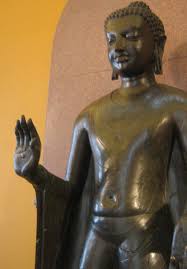
When I was planning my stopover in Bangkok on a trip to Bhutan I wanted to visit the Mahayana Buddhist monastery where the English Buddhist John Blofeld’s ashes were interred. My friend the Buddhist scholar Justin Whitaker connected me to Will Yaryan. Will was a mostly retired professor of religious studies keeping his hand in at the Mahachulalongkornrajavidyalaya University in Bangkok. Justin said Will knew a lot of people. My, he was right. I’ll forever be grateful for the connections Will provided, both to visit Blofeld’s resting place, but also the site where the Trappist monk and interspiritual saint Thomas Merton died.
So, recently, when I discovered an essay Will had written, “Big Tent” Buddhism: Searching for Common Ground Among Western and Asian “Buddhisms”, I quickly read it. It turns out it is available several places around the interwebs, I link to where I found it.
The overall thesis is compelling. And it had a couple of digressions I found tantalizing, including references to Universalism and specifically the Theravadin monk Buddhadasa’s version. but I found myself particularly attracted to a specific part of the essay, where he discussed the well-known debate between Stephen Batchelor and B. Alan Wallace. Will introduces a very human element drawing upon Stephen Schettini, who knew the men when all three were Vajrayana monastics together.
I found it a telling comment on many things, not least of which is the debate in contemporary and modernist Buddhisms over the centrality of the classic understandings of karma and rebirth. And what might actually fit the word “classic.” But it goes even deeper by introducing the totally human part of debate. And I found it invites something worth noticing how and what we can know.
For me one among several conclusions out of this read is that the entire project really is a matter of investigating the mysteries of intimacy, of knowing as a discovery of unknowing, of letting go, of letting be, but with a deep and abiding conviction that all we need is found within presence.
But, perhaps you’ll have a different take away. I suggest even if you’re familiar with the debate, this will be worth a read.
Excerpt from Big Tent Buddhisms
Will Yaryan
The ideas of former Tibetan and Zen Buddhist monk Stephen Batchelor, author of the controversial Buddhism Without Beliefs, 48 have been especially contentious. The antipathy of traditional (although modernized) Buddhists toward secular Buddhists could be seen in the critical response Batchelor’s views received from B. Alan Wallace.
They could be spiritual twins. Both went to Dharamsala, India, in the early 1970s to study at the Tibetan Works & Archives, after it was established by the Dalai Lama, and both ordained as monks. B. Alan Wallace from Pasadena, the son of a professor at a Baptist seminary, was three years older than Stephen Batchelor who was born in Scotland and raised by a single mother in a London suburb. Both were sent by the Dalai Lamai to Switzerland to study with Geshé Rabten, first at the Tibet Institute Rikon, then located at Le Mont-Pèlerin, and later at the Swiss hamlet of Schwendi where they helped the contemplative Tibetan monk establish Tharpa Choeling (now Rabten Choeling). Joining them there was Stephen Schettini, who two years ago published a memoir, The Novice, with the subtitle “Why I Became a Buddhist Monk, Why I Quit, and What I Learned.”
Wallace and Batchelor have become proponents of two seemingly diametrically opposed views of Buddhism. Wallace represents the traditionalists, and Batchelor the secularists, and their views were aired in a sometimes contentious exchange during the last year in the pages of Mandala, a quarterly published by the Foundation for the Preservation of the Mahayana Tradition (FPMT) established by followers of Lama Thubten Yeshe. Wallace began with “Distorted Visions of Buddhism: Agnostic and Atheist,” and Batchelor responded with “An Open Letter to B. Alan Wallace.” Stephen Schettinni weighed in with his own reminiscences of the two one-time friends with “An Old Story of Faith and Doubt.” Buddhist blogger Ted Meissner has also made extensive comments on his Secular Buddhist blog. This is no tempest in a teapot, but a serious discussion of fundamental differences between two prominent Western Buddhists that raises question about whether all “buddhisms” can fit under the same big tent.
Wallace is not subtle, and comes out with both guns blazing. Calling Batchelor’s opinions in numerous books “ridiculous,” “groundless speculation” and even “illegitimate,” he writes that his old colleague was “recreating Buddhism to conform to his current views” despite the “consensus by professional scholars and contemplatives throughout history,” and ignoring the “most compelling evidence of what the Buddha taught.” Wallace takes aim at Batchelor’s ideas presented in Buddhism Without Beliefs (1997) and most recently in Confession of a Buddhist Atheist (2010), which show, Wallace argues, his “strong antipathy toward religion and religious institutions” and his “blind acceptance of materialist assumptions about consciousness.” Wallace then pulls out his Weapons of Mass Destruction and links this “scientific materialism” with “the unspeakable tragedy of communist regimes’ attempts to annihilate Buddhism from the face of the earth.” (Granted, he piggybacks this on a critique of atheist Sam Harris who advocated the practice of Buddhism while making similar allegations against religion in general).
The real target of Wallace’s over-the-top ire is undoubtedly Batchelor’s denial of rebirth and karma. Wallace believes rebirth was central to the Buddha’s teaching, and was a unique position for his time. Batchelor thinks it was a prevailing belief in the Indian worldview and that the Buddha neither affirmed nor denied it, but rather treated it as irrelevant. Wallace thinks his old comrade thus takes the “illegitimate option to reinvent the Buddha and his teachings based on one’s own prejudices.” He says this is the route followed by Batchelor and “other like-minded people who are intent on reshaping the Buddha in their own images.” Wallace believes an experience of the Buddha’s wisdom can be accessed through meditation, and he criticizes Batchelor’s account for describing “the experiences of those who have failed to calm the restlessness and lethargy of their own minds through the practice of samadhi, and failed to realize emptiness or transcend language and concepts through the practice of vipashyana.”
Near the end of his diatribe, Wallace calls Batchelor and Harris “both decent, well-intentioned men,” but says their writings may be regarded as “near enemies” of the true Buddhist virtues described by the commentator Buddhaghosa: loving-kindness, compassion, empathetic joy, and equanimity. Their view of the Buddha’s teaching are “false facsimiles of all those that have been handed down reverently from one generation to the next since the time of the Buddha.”
Batchelor’s response is more measured and collegial. He begins by apologizing for “any offence I might inadvertently have caused you and others through my writing.” He recognizes that his views might “conflict with Buddhist orthodoxy” and might seem “puzzling, objectionable and even heretical to followers of traditional Buddhist schools.” His students, however, have included many frustrated by traditional forms of Buddhism who find themselves confronted with a “Church-like institution that requires unconditional allegiance to a teacher and acceptance of a non-negotiable set of doctrinal beliefs.” Batchelor writes that he left the Tibetan monastery where they had been colleagues because “I could no longer in good faith accept certain traditional beliefs.” He then went to Korean to study as a monk in the Zen tradition” which he found “refreshing and liberating.”
As for rebirth, Batchelor says, “the Buddha would have regarded this entire argument as being beside the point.” Batchelor continues to study the Pali Canon, an authority on which both former monks agree, but they come to different conclusions about the meaning of suttas based on different selections and interpretation. Both cite the Kalama Sutta. Batchelor adds that “this is the only text I know of in the Pali Canon where the Buddha explicitly states that the practice of the Dharma is valid and worthwhile ‘even if there is no hereafter and there are no fruits of actions good or ill.’ This is the closest he comes to an agnostic position on the subject.” He notes also that he and Wallace both cite passages describing the Buddha’s awakening. “It is hardly surprising that you select a Pali text that describes it in terms of remembering past lives, while I prefer to cite the accounts that don’t.”
Batchelor’s view of the intractability of language is particularly galling to Wallace who quotes him as saying: “We can no more step out of language and imagination than we can step out of our bodies.” This contradicts Wallace’s certainty that experiences confirming his traditional view are gained through meditation and practice, outside of our linguistic cages. Batchelor sees this as an attempt to claim privileged insight into the texts.
“The Pali canon might be the most uncontested record of what the Buddha taught, but that doesn’t mean it speaks in a single, unambiguous voice. One hears multiple voices, some apparently contradicting others. In part, this is because the Buddha taught dialogically, addressing the needs of different audiences, rather than imposing a single one-size-fits-all doctrine. And it is precisely this diversity, I feel that has allowed for different forms of the Dharma to evolve and flourish.”
I can think of no better words for a manifesto of “Big Tent Buddhism.”
Schettini, the ex-novice, has a unique perspective. “Alan and Stephen were both elder monks and teachers in our little community, and so role models to the rest of us.” The two shared close quarters but differed in temperament. He says Batchelor “put on an air of nonchalance” while Wallace seemed “uncomfortable in his skin.” Wallace is “a loyal traditionalist and authority figure” who feels “both qualified and responsible to state what is acceptable and what is not.” On the other hand, Batchelor “is more concerned about the plausibility of the teachings ascribed to the Buddha than dependent on whether or not he actually taught them.” The crux of the difference, according to Schettini, is that “what to Alan is historical fact is to Stephen debatable.” Batchelor’s rewriting of history and reconstruction of what’s been “true” for traditional Buddhists “undermines the august pretentions of scholarship and tradition and infuriates Alan.”
What’s troubling to Schettini about the exchange of his elder monks is that “Alan questions Stephen’s integrity. That’s not debate; it’s personal.” Wallace’s tone is unfriendly and rude, treating him as an upstart while claiming to be a paragon of correctness. “Alan sees himself as representative of the tradition in a way that Stephen is not… I think that icons are important fixtures in the Dharma landscape and so are iconoclasts.” Wallace’s creed raises two important questions for Schettini: Are these teachings and people really sacred? Is Alan trying to keep Buddhism pure? He says Buddhism a religion for Wallace, and therefore sacred, but not for Batchelor. And the former novice agrees with Batchelor that purity is impossible. “Buddhism is a construct.” Can Western Buddhism not handle diversity? – he asks. As for himself, “I lost faith in the scholarly illusion of the straight and narrow…I don’t know exactly what the Buddha taught. I wasn’t there.”
The great debate between Batchelor and Wallace puts in stark contrast the traditionalist and the secular incarnations of buddhisms. Traditionalists like Wallace abound; he publishes frequently, is leading a retreat in Phuket in Thailand as I write, and speaks and teaches his version of the dhamma around the globe. Batchelor, on the other hand, has spawned a generation of followers with his doubts about purity and the “true” tradition, gathering a new generation of hardcore, pragmatic and secular Buddhists to his orbit. Can the disciples of each all hang out together in today’s “big tent Buddhism”?
Previous Post

October 17, 2022
The Not Exactly Zen Wisdom of Abba John the Dwarf
Next Post
October 21, 2022 Incense for Jack Kerouac
Browse Our Archives
Select a Category A Christmas Carol Abolitionist African-American Ahmadiyya Alan Watts Aldous Huxley Allen Ginsberg Amedkar Jayanti American politics American Zen Anaheim Zen Sangha Anglican Annie Besant April Fool Armageddon Art and Religion artificial intellegence Atheist Awakening B R Ambedkar Barlaam & Josaphat Beatnik Between Bhagavad Gita Bible biography birthday bodhisattva Bodhisattva Precepts Book burning Book of Common Prayer Book of Mormon Brahmo Samaj Buddha Buddhism Buddhist Buddhist Lord's Prayer Butterflies Calendars cartoons cat ChatGPT Chicken Tortilla Soup choices Christian atheism Christian mysticism Christian origins Christian Science Christian Zen Christianity Christianity and Buddhism christmas Christmas Truce Christopher Isherwood Church of Later Day Saints Cinco de Mayo circus covenant critical thinking culture D. T. Suzuki Dalit Buddhism Daniel Defoe Desert Fathers and Mothers dharma talk Dogen Donald Trump Dongshan's Five Ranks Dorothy Day dream Duty Easter ecology Edwin Arnold emptiness Empty Moon Zen Network Episcopal Church Eternal Now Ethics evolution existentialism Faith fantasy Fathers Day film film review fire Five Ranks Folk music food Form and emptiness Four Seals Francis of Assisi Francis Xavier Free thinker friendship George MacDonald Gerald Heard Glenn Taylor Webb God Good Friday Gospel of Gospel of Mark Gospel of Thomas grace Graduate Theological Unioin Graduate Theological Union Guanyin H R Blyth Hakuin Ekaku Hanamatsuri Hanukkah Harada Yasutani Zen Heart Sutra Henry David Thoreau Hermann Hesse Hinduism History and Religion history of religion Holy Spirit home Hospitality Icon Ides of March Isaac Newton Islam Islamic mysticism Jack Kerouac James Luther Adams Jiddu Krishnamurti Joan of Arc Johannes Gutenberg John Donne joke Judaism justice karma kensho King James Bible koan Koun Yamada Kyoto School Lewis Carrol Liberal Christianity Liberal Religion Life Plan Community Liminal literature Literature and Religion Liturgy Lord's Prayer Love Mahatma Gandhi Mahayana Martin Luther King Jr Mary Baker Eddy Mary Magdelene Mary Oliver Mayflower Compact Meditation memories memory metaphor money money and religioin Mormons Mother's Day movie review mysticism mythic Neighborhood Unitarian Universalist Church New Thought Nichiren Buddhism Nonduality not knowing Omar Khayyam Pacific School of Religion pagan Palm Sunday Passover peace Pentecost perennialism Phantastes Philip Kapleau philosophy Pilgrimage poetry Poetry and Religion politics Prayer Precepts Printing Press prophecy prophetic spirituality psychology Pure Land Queer religion queering religion Quietism Ram Mohan Roy rebirth recipe Relationships and religion religion religion and history Religious syncretism Resistance Retirement Retreat review Rissho Kosei Kai Ritual Robert Aitken Roshi Robert Ingersoll Rohatsu Romani religion Rosie the Riveter saints samadhi SanboZen Sangha Satyagraha science science and reigion science and religion science fiction seminary sermon Sesshin Sex and Religion Shinran Sikh Sikh tradition silence Social Justice Socially Engaged Buddhism Society and religion Soto Zen soul spiritual community spiritual practice Spirituality Sufism Suicide superstition Taoism Television Teresa of Avila Thanksgiving theological schools Theosophy Thomas Merton Time Transcendentalism Transcendentalist Trinitarian Trinity Uncategorized unitarian Unitarian Christianity Unitarian Universalist Universalism Vajrayana Vedanta Walking war Willa Cather William Ellery Channing wisdom women and religion women in religion World Teacher Writing zazen Zen Zen Center Zen inspired retriement zen meditation Zen Precepts Zen women
Select a Month November 2026 October 2026 September 2026 August 2026 July 2026 June 2026 May 2026 April 2026 March 2026 February 2026 January 2026 December 2025 November 2025 October 2025 September 2025 August 2025 July 2025 June 2025 May 2025 April 2025 March 2025 February 2025 January 2025 December 2024 November 2024 October 2024 September 2024 August 2024 July 2024 June 2024 May 2024 April 2024 March 2024 February 2024 January 2024 December 2023 November 2023 October 2023 September 2023 August 2023 July 2023 June 2023 May 2023 April 2023 March 2023 February 2023 January 2023 December 2022 November 2022 October 2022 September 2022 August 2022 July 2022 June 2022 May 2022 April 2022 March 2022 February 2022 January 2022 December 2021 November 2021 October 2021 September 2021 August 2021 July 2021 June 2021 May 2021 April 2021 March 2021 February 2021 January 2021 December 2020 November 2020 October 2020 September 2020 August 2020 July 2020 June 2020 May 2020 April 2020 March 2020 February 2020 January 2020 December 2019 November 2019 October 2019 September 2019 August 2019 July 2019 June 2019 May 2019 April 2019 March 2019 February 2019 January 2019 December 2018 November 2018 October 2018 September 2018 August 2018 July 2018 June 2018 May 2018 April 2018 March 2018 February 2018 January 2018 December 2017 November 2017 October 2017 September 2017 August 2017 July 2017 June 2017 May 2017 April 2017 March 2017 February 2017 January 2017 December 2016 November 2016 October 2016 September 2016 August 2016 July 2016 June 2016 May 2016 April 2016 March 2016 February 2016 January 2016 December 2015 November 2015 October 2015 September 2015 August 2015 July 2015 June 2015 May 2015 April 2015 March 2015 February 2015 January 2015 December 2014 November 2014 October 2014 September 2014 August 2014 July 2014 June 2014 May 2014 April 2014 March 2014 February 2014 January 2014 December 2013 November 2013 October 2013 September 2013 August 2013 July 2013 June 2013 May 2013 April 2013 March 2013 February 2013 January 2013 December 2012 November 2012 October 2012 September 2012 August 2012 July 2012 June 2012 May 2012 April 2012 March 2012 February 2012 January 2012 December 2011 November 2011 October 2011 September 2011 August 2011 July 2011 June 2011 May 2011 April 2011 March 2011 February 2011 January 2011 December 2010 November 2010 October 2010 September 2010 August 2010 July 2010 June 2010 May 2010 April 2010 March 2010 February 2010 January 2010 December 2009 November 2009 October 2009 September 2009 August 2009 July 2009 June 2009 May 2009 April 2009 March 2009 February 2009 January 2009 December 2008 November 2008 October 2008 September 2008 August 2008 July 2008 June 2008 May 2008 April 2008 March 2008 February 2008 January 2008 December 2007 November 2007 October 2007 September 2007 August 2007 July 2007 June 2007 May 2007 April 2007 March 2007 February 2007 January 2007 December 2006 November 2006 October 2006 September 2006
Follow Us!
TAKE THE
Religious Wisdom Quiz
Which Gospel begins "In the beginning was the Word"?
Select your answer to see how you score.
John Luke Matthew Mark
Related posts from Monkey Mind
James Ishmael Ford's books on Zen
Taking Refuge in the (Zen) Sangha
Recalling the Amazing Alexandra David-Neel
The Great Matter: Walking the Zen Way
TRENDING AT PATHEOS Buddhist

Jesus is Coming with Glory and Power
https://www.youtube.com/watch?v=_lt60EDHOQ4&list=RD_lt60EDHOQ4&start_radio=1

The Late Francis Frangipane & the Failure Too...
I learned today that another one of my heroes has gone to...

Thomas Paine, the Smiths, the apostles in England,...
I'm pleased to announce that the Becoming Brigham Black Friday Sale,...

CatholicTV Series: Six Black Catholics on Path to...
WATERTOWN, Mass., November 9, 2026 – In recognition of Black Catholic History...

New Advent Journal Invites Catholics to Be Pilgrims
Florissant, MO, November 16, 2026— What if Advent were more than a...

INNER CIRCLE: John's Quantum Gospel
INTRODUCTION In this next Inner Circle series, which I anticipate will...
view all Buddhist blogs
Ad-Free & Subscriber Log-In Subscription Support
- About Us
- 2026 Calendar
- Videos
- Podcasts
- Library of World Religions
- Faith In Media Tracker
- Advertise With Us
- Write for Us
- Privacy Policy
- Terms of Service
- Do Not Sell My Data
- Contact Us
- Radiant Digital
- Manage Newsletter Subscriptions
- Unsubscribe From Notifications
- Sitemap
Copyright 2008-2026, Patheos, part of the Radiant Digital network of media brands. All rights reserved.
Subscription Support Ad-Free & Subscriber Log-In
Follow Patheos