
BuddhistCatholicContemplativeEvangelicalGeneral ChristianHinduJewishLatter-day SaintMuslimNew VisionsProgressive Christian
Beliefs
- Buddhist
- Catholic
- Contemplative
- Evangelical
- General Christian
- Hindu
- Jewish
- Latter-day Saint
- More Voices
- Muslim
- New Visions
- Pagan
- Progressive Christian
Topics
- Religion News
- Food and Religion
- Sports and Religion
- Religious Art
- Religious Music and Entertainment
- Religious Events
- History and Religion
- Style and Religion
- Politics and Religion
- Women in Religion
- Recreation Outdoors and Religion
- Business Finance and Religion
- Careers Workplace and Religion
- Education and Religion
- Family Parenting and Religion
- Health Fitness and Religion
- Home and Religion
- Relationships and Religion
- Technology and Religion
- Travel and Religion
Columnists
- Buddhist Columnists
- Business Finance and Religion Columnists
- Careers Workplace and Religion Columnists
- Catholic Columnists
- Contemplative Columnists
- Education and Religion Columnists
- Evangelists Columnists
- Family Parenting and Religion Columnists
- General Christian Columnists
- Health Fitness and Religion Columnists
- Hindu Columnists
- History and Religion Columnists
- Home and Religion Columnists
- Jewish Columnists
- More Voices Columnists
- Latter Day Columnists
- Muslim Columnists
- New Visions Columnists
- Nonreligious Columnists
- Pagan Columnists
- Politics and Religion Columnists
- Progressive Columnists
- Recreation Outdoors and Religion Columnists
- Relationships and Religion Columnists
- Religion News Columnists
- Religious Art Columnists
- Religious Events Columnists
- Religious Music and Entertainment Columnists
- Sports and Religion Columnists
- Style and Religion Columnists
- Technology and Religion Columnists
- Travel and Religion Columnists
- Women in Religion Columnists
Resource Library
- 2026 Calendar
- Library of World Religions
- The 100 Most Holy Places on Earth
- Patheos Answers
- Podcasts
- Videos
- Faith Leaders Database
- Anglican Episcopalian
- Bahai
- Baptist
- Buddhism
- Christianity
- Confucianism
- Eastern Orthodoxy
- Hinduism
- Holiness and Pentecostal
- ISKCON
- Islam
- Judaism
- Lutheran
- Methodist
- The Church of Jesus Christ of Latter-day Saints
- New Age
- Paganism
- Presbytarian and Reformed
- Protestantism
- Religion Behind the Scenes
- Roman Catholic
- Scientology
- Shia Islam
- Sikhism
- Sufism
- Sunni Islam
- Taoism
- Zen
- See all religions
Research Tools
 Ad-Free & Subscriber Log-In Subscription Support
Ad-Free & Subscriber Log-In Subscription Support
Follow Patheos 

- Trending:
- Forgiveness
- |
- Marriage
- |
- Consciousness
- |
- Death Penalty
- |
- Election
- |
- Halloween

- Home
- Buddhist
- Zen Master Dogen & the Koan of Shikantaza
Zen Master Dogen & the Koan of Shikantaza
Last updated on: September 22, 2022 at 7:02 am by James Ford
Zen Master Dogen & the Koan of Shikantaza 2022-09-22T07:02:37-07:00 James Ford
Patheos Explore the world's faith through different perspectives on religion and spirituality! Patheos has the views of the prevalent religions and spiritualities of the world.
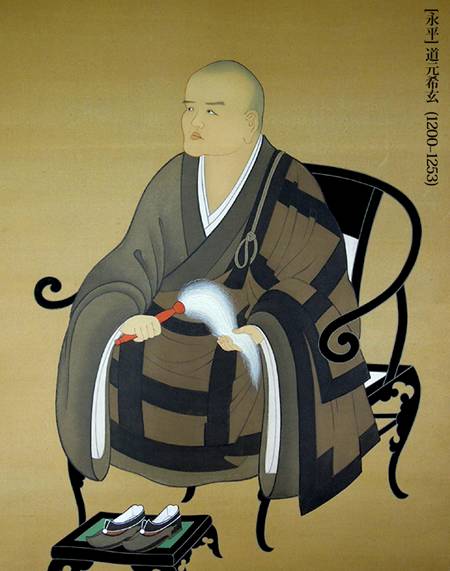
Eihei Dogen died on this day, the 22nd of September, 1253, in Kyoto. He was fifty-three.
And. Oh, my. What he accomplished in those fifty-three years…
In his magisterial study, Dogen’s Manuals of Zen Meditation, Carl Bielefeldt begins by telling us “The Zen school is the Meditation school, and the character of Zen can be traced in the tradition of its meditation teaching.”
As most people interested in the matter know, the word Zen is the Japanese pronunciation of the Chinese word Chan, which itself is the Chinese pronunciation of Dhyana, which literally means concentration but is understood to mean meditation. Zen is a school of Buddhism devoted to meditation.
No doubt Zen offers a richness of training possibilities beyond that practice. But at the heart of the matter is meditation. This discipline that is Zen meditation has evolved from classic Buddhist meditation associated with Gautama Siddhartha. It comes to us starting with Vipassana or “insight,” and Samatha or “concentration.” But, it is washed through the whole of Chinese culture with some influence by way of Confucian culture and more from Daoism. And perhaps even more important it is infused with the great insight of our original awakening. It becomes a unique gift of the Zen schools.
The practice of Zen meditation is sometimes called mokusho, or “silent illumination, “or shikantaza, “just sitting.” In his essay the “Method of No Method,” the Chan master Sheng Yen writes:
“This “just sitting” in Chinese is zhiguan dazuo. Literally, this means “just mind sitting.” Some of you are familiar with the Japanese transliteration, shikantaza. It has the flavor of “Just mind your own business.” What business? The business of minding yourself just sitting. At least, you should be clear that you’re sitting. “Mind yourself just sitting” entails knowing that your body is sitting there. This does not mean minding a particular part of your body or getting involved in a particular sensation. Instead, your whole body, your whole being is sitting there.”
I’ve also found my great grand teacher Hakuun Yasutani also gives a very helpful pointer.
“Shikantaza is the mind of someone facing death. Let us imagine that you are engaged in a duel of swordsmanship of the kind that used to take place in ancient Japan. As you face your opponent you are unceasingly watchful, set, ready. Were you to relax your vigilance even momentarily, you would be cut down instantly. A crowd gathers to see the fight. Since you are not blind you see them from the corner of your eye, and since you are not deaf you hear them. But not for an instant is your mind captured by these impressions.”
The principal document for many of us comes from the thirteenth century Soto Zen master Eihei Dogen’s wonderful Fukanazengi. It comes to us in two versions. The first is a very early publication dated from 1233, although clearly based on thoughts dashed off earlier. Carl Bieledfeldt suggests the second edition appears to date from 1243, a decade after his first attempt. There are other editions and it is hard to say what should be considered the definitive version.
The text is based on a Chinese document, the Zuochan yi written by Changlu Zonze which dates from the beginning of the twelfth century. Although Dogen is critical of that original manual and definitely brings his own stamp to the matter. And by his second version, the so-called vulgate version, he is presenting his mature understanding of the practice.
And here’s where I might be considered a bit controversial. As I read the text in both versions I see the matter of just sitting, of shikantaza being presented as a koan. For me its as plain as the nose on your face and the critical key to understanding Dogen’s manual.
Let’s look at the text.
FUKANZAZENGI
(Translated by Norman Waddell & Masao Abe)
The Way is originally perfect and all-pervading. How could it be contingent upon practice and realization? The Dharma-vehicle is utterly free and un-trammeled. What need is there for our concentrated effort? Indeed, the Whole Body is far beyond the world’s dust. Who could believe in a means to brush it clean?1 It is never apart from you right where you are. What use is there going off here and there to practice?
A means to brush it clean is an allusion to the famous verse contest by which the Sixth Zen Patriarch Hui-neng received the Dharma transmission from the Fifth Patriarch Hung-jen. The verse of Shen-hsiu, Hung-jen’s chief disciple, was: “This body is the Bodhi tree; the mind like a bright mirror on a stand. Constantly strive to brush it clean. Do not allow dust to collect.” Hui- neng responded with the verse: “Basically, Bodhi is not a tree. Neither does the mind-mirror have a stand. From the first there is not a single thing, so where can dust collect?” (CTL, ch. 5).
And yet if there is the slightest discrepancy, the Way is as distant as heaven from earth. If the least like or dislike arises, the mind is lost in confu- sion.2 Suppose you gain pride of understanding, inflate your own achievement, glimpse the wisdom that runs through all things, attain the Way and clarify your mind, raising an aspiration to escalade the very sky. You are making an initial, partial excursion through the frontiers of the Dharma,3 but you are still deficient in the vital Way of total emancipation.
Look at the Buddha himself, who was possessed of great inborn knowledge—the influence of his six years of upright sitting is noticeable still. Or Bodhidharma, who transmitted the Buddha’s mind-seal—the fame of his nine years of wall sitting is celebrated to this day. Since this was the case with the saints of old, how can people today dispense with negotiation of the Way?
You should therefore cease from practice based on intellectual under- standing, pursuing words and following after speech, and learn the backward step that turns your light inward to illuminate your self. Body and mind will drop away of themselves, and your original face will manifest itself. If you wish to attain suchness, you should practice suchness without delay.
For the practice of Zen, a quiet room is suitable. Eat and drink moderately. Cast aside all involvements, and cease all affairs. Do not think good, do not think bad. Do not administer pros and cons. Cease all the movements of the conscious mind, the gauging of all thoughts and views. Have no designs on becoming a Buddha. The practice of Zen (sanzen) has nothing whatever to do with the four bodily attitudes of moving, standing, sitting, or lying down.
At the place where you regularly sit, spread out a layer of thick matting and place a cushion on it. Sit either in the full-lotus or half-lotus posture. In the full-lotus posture, you first place your right foot on your left thigh and your left foot on your right thigh. In the half-lotus, you simply press your left foot against your right thigh. You should have your robes and belt loosely bound and arranged in order. Then place your right hand on your left leg and your left palm facing upwards on your right palm, thumb-tips touching. Sit upright in correct bodily posture, inclining neither to the left nor the right, leaning nei- ther forward nor backward. Be sure your ears are on a plane with your shoulders and your nose in line with your navel. Place your tongue against the front roof of your mouth, with teeth and lips both shut. Your eyes should always remain open. You should breathe gently through your nose.
Once you have adjusted yourself into this posture, take a deep breath, inhale, exhale, rock your body to the right and left, and settle into a steady, unmoving sitting position. Think of not-thinking. How do you think of not-thinking? Nonthinking.4 This in itself is the essential art of zazen.
The zazen I speak of is not learning meditation. It is simply the Dharma-gate of repose and bliss. It is the practice-realization of totally culminated enlightenment. It is things as they are in suchness. No traps or snares can ever reach it. Once its heart is grasped, you are like the dragon when he reaches the water, like the tiger when he enters the mountain. You must know that when you are doing zazen, right there the authentic Dharma is manifesting itself, striking aside dullness and distraction from the first.
When you arise from sitting, move slowly and quietly, calmly and deliberately. Do not rise suddenly or abruptly. In surveying the past, we find that transcendence of ignorance and enlightenment, and dying while sitting or standing, have all depended entirely on the strength gained through zazen.5
Moreover, enlightenment brought on by the opportunity provided by a finger, a banner, a needle, or a mallet, the realization effected by the aid of a fly whisk, a fist, a staff, or a shout, cannot be fully comprehended by human discrimination.6 It cannot be fully known by the practice-realization of supernatural powers.7 It is activity beyond human hearing and seeing, a principle prior to human knowledge or perception.
This being the case, intelligence, or lack of it, does not matter. No distinction exists between the dull and sharp-witted. If you concentrate your effort single-mindedly, you are thereby negotiating the Way with your practice-realization undefiled.8 As you proceed along the Way, you will attain a state of everydayness.9
The Buddha-mind seal, whose customs and traditions extend to all things, is found in both India and China, both in our own world and in other worlds as well. It is simply a matter of devotion to sitting, total commitment to immovable sitting. Although it is said that there are as many minds as there are people, all of them must negotiate the Way solely in zazen. Why leave behind your proper place, which exists right in your own home, and wander aimlessly off to the dusty realms of other lands?10 If you make even a single misstep, you stray from the Great Way lying directly before you.
You have gained the pivotal opportunity of human form. Do not let your time pass in vain. You are maintaining the essential function of the Buddha Way. Would you take meaningless delight in the spark from a flintstone?11 Form and substance are like dewdrops on the grass, destiny like the dart of lightning—vanishing in an instant, disappearing in a flash.
Honored followers of Zen—you who have been long accustomed to groping for the elephant—please do not be suspicious of the true dragon.12 Devote your energy to a Way that points directly to suchness. Revere the person of complete attainment beyond all human agency.13 Gain accord with the enlightenment of the Buddhas. Succeed to the legitimate lineage of the patriarchs’ samadhi. Constantly comport yourselves in such a manner and you are assured of being a person such as they. Your treasure-store will open of itself, and you will use it at will.
Devote your energy to a Way that points directly to suchness. Revere the person of complete attainment beyond all human agency.13 Gain accord with the enlightenment of the Buddhas. Succeed to the legitimate lineage of the patriarchs’ samadhi. Constantly comport yourselves in such a manner and you are assured of being a person such as they. Your treasure-store will open of itself, and you will use it at will.
As I read Dogen over and over again its obvious how deeply informed he is by koan introspection. It isn’t totally clear what the nature of his koan training was, and when he was studying was a transitional period where the huatou form of koan introspection was beginning to include study of lists of koans. However, writing as a person following a koan path it seems obvious Dogen is deeply informed by the koan tradition, and not merely as a reader of Zen anecdotes. A koan informed insight is present on every page he writes. And sometimes, I believe, it would be difficult to understand him if one is not familiar with the koan way.
However, the master is also critical of a one-sided koan practice. He was especially harsh with those who get lost in the sky castles that shadow the koan project. That said in the Fukanzazengi he tips his hat to the koan way, informing us how “enlightenment brought on by the opportunity provided by a finger, a banner, a needle, or a mallet, the realization effected by the aid of a fly whisk, a fist, a staff, or a shout, cannot be fully comprehended by human discrimination.” He gets engaging koans as a leap beyond form and emptiness. Of that there can be no doubt.
But, instead of those many koan Dogen points us to one. First he tells us, “The practice of Zen has nothing whatever to do with the four bodily attitudes of moving, standing, sitting, or lying down.” So, it isn’t simply a matter of assuming a correct posture. Rather he is inviting us elsewhere. Then he tells us where. “The zazen I speak of is not learning meditation. It is simply the Dharma-gate of repose and bliss. It is the practice-realization of totally culminated enlightenment. It is things as they are in suchness.”
This is what he calls practice-enlightenment. In fact I’ve seen that term rendered without the hyphen, simply reading practiceenlightenment. One word. One thing. In some ways it is taking up the koan of just sitting as if it were a huatou, the single koan one needs for a lifetime of engagement.
What I am sure of is this. You want a classic koan? Show me practiceenlightenment.
Here we’re invited into something beyond a mere quietism. And, of course, that’s the shadow of the way of just sitting. People “proof text” the term and warn against “gaining-mind” with unfortunate consequences. We are not being invited into being bumps on some log. Although, sadly, I’ve seen people think that is precisely what shikantaza is.
I offer an alternative understanding. With shikantaza we’re given a place to put our great questions, our deep curiosity, our profound longing. Here we’re being invited into a mysterious alchemy of the heart. Yes, gaining-mind does not carry us across the river. And, it is no different than our awakening.
The mystery of bodhicitta, our desire for awakening is discovered as we experience it, and as we surrender it. But, this isn’t surrender in the sense of burying it or throwing it away. Rather it is a transformation into confidence, or trust, or maybe the right word is faith. Here we discover faith as a matter of heart, as an invitation into an ancient love. Master Taizan Maezumi tells us,
“When you do shikantaza, have faith in the fact that your zazen is the same zazen as the zazen of the Buddhas and Patriarchs. Have this kind of faith. Then, just sit. Since your zazen is the same zazen as that of the Buddhas, you don’t need to worry about anything: just sit. Appreciate that your zazen is the zazen of the Buddha. The zazen of Shakyamuni Buddha is okay; the zazen of the Buddhas and Patriarchs is okay. In other words, you are not sitting; Buddha is sitting.”
If we bring our full selves to the matter, we find something breaks open. Well, sometimes breaks open. Sometimes unfolds like a flower. The images both liberate and trap. We must walk carefully. Gently. And fiercely at the same time. And so Dogen charges us to “Devote your energy to a Way that points directly to suchness.” And, critically he tells us how. “If you concentrate your effort single-mindedly, you are thereby negotiating the Way with your practice-realization undefiled. As you proceed along the Way, you will attain a state of everydayness.”
So, if its a koan how do we engage shikantaza?
Dosho Port, a contemporary Western Zen master tells us about his introduction to shikantaza and his introduction to koan introspection. “Katagiri Roshi’s initial instruction was to become one with the breath and Tangen Roshi advised me to begin muji (the Mu koan) by becoming one with Mu.” Within our discovery of oneness with all things are revealed, all gates are opened.
Just be present.
A koan is an assertion about reality and an invitation to intimacy. What does practice-enligthentment mean? What is nonthinking? Here the koan is to sit down and become Buddha. The state of everydayness. The koan way. The great Zen way.
Just this.
Notes to Waddell & Abe’s translation:
1. The Whole Body [of reality] (tathata ̄) refers to the totality of things in their suchness; the Buddha-nature. The world’s “dust,” giving rise to illusions, defiles the original purity of the Buddha- nature.
2. From the Zen verse Hsinhsinming: “If there is the slightest discrepancy, the Way is as distant as heaven from earth. To realize its manifestation, be neither for nor against. The conflict of likes and dislikes is in itself the disease of the mind. . . . Do not dwell in dualities, and scrupulously avoid pursuing the Way. If there is the least like or dislike, the mind is lost in confusion.”
3. Dharma (hô 法): Truth, Law, the doctrine and teaching of the Buddha, Buddhism. Through- out this translation, “Dharma” refers to Truth, and “dharma(s)” refers to things, the elements of existence, phenomena of your mouth, with teeth and lips both shut. Your eyes should always remain open. You should breathe gently through your nose.
4. These words appear in a dialogue that Dôgen makes the subject of SBGZ Zazenshin: A monk asked Yüeh-shan, “What does one think of when sitting motionlessly in zazen?” Yüeh-shan replied, “You think of not-thinking.” “How do you think of not-thinking?” asked the monk. “Nonthinking,” answered Yüeh-shan.
5. According to the Zen histories, Bodhidharma and the Fourth, Fifth, and Sixth Chinese patriarchs died while seated in zazen. The Third Patriarch died standing under a large tree.
6. These are allusions to the means that Zen masters use to bring students to enlightenment. Chü-chih’s “One-finger Zen” is the subject of Case 3 of the Wu-men-kuan. When Ananda asked Kashyapa if the Buddha had transmitted anything to him besides the golden surplice, Kashyapa called out to him. When Ananda responded, Kashyapa told him to take down the banner at the gate, whereupon Ananda attained enlightenment. The Fifteenth Indian Zen Patriarch, Kanadeva, paid a visit to Nagarjuna. Nagarjuna, without saying a word, instructed an attendant to place a bowl brimming with water before his guest. Kanadeva took up a needle and dropped it into the bowl. As a result of this act, Nagarjuna accepted him as his disciple. One day when Shakyamuni ascended to the teaching-seat, the Bodhisattva Monju (Manjushri) rapped his gavel to signify the opening of the sermon, declaring, “Clearly understood is the Dharma, the royal Dharma. The Dharma, the royal Dharma, is thus,” words usually uttered at the close of a sermon. Shakyamuni, without saying a word, left the teaching seat and retired.
7. The supernatural powers (jinzû 神通) are possessed by beings of exceptional spiritual attainment, enabling them unrestricted freedom of activity, eyes capable of seeing everywhere, ears of hearing all sounds, and so on. Dôgen says that the means used by a master in bringing students to enlightenment are not only beyond human thought, they are also beyond such super- normal powers. Moreover, there is nothing mysterious or supernatural about it; it is normal, every- day activity.
8. Since negotiating the Way (practice-realization) in zazen is practice-realization of ultimate reality, it is beyond all the defiling distinctions and dualities arising from conscious striving.
9. This is an allusion to a dialogue between Chao-chou and his master Nan-ch’üan. Chao- chou asked, “What is the Way?” Nan-ch’üan said, “Your everyday mind, that is the Way.” “Well, does one proceed along it, or not?” asked Chao-chou. “Once you think about going forward, you go wrong,” replied Nan-ch’üan (CTL, ch. 8).
10. An allusion to the parable of the lost son from the Lotus Sutra. An only son left his home and family to live in a distant land. He experienced great hardship, totally unaware of the increas- ing wealth his father was accumulating in the meantime. Many years later, the son returned home and inherited the great treasure that was his original birthright.
11. Spark from a flintstone is a metaphor often used to describe the brevity of human life.
12. An allusion to the well-known story from the Nirvana Sutra of a king who brought an elephant before a group of blind men and had them touch different parts of it. When he asked each of them to describe the beast, they gave widely diverse answers due to the limited nature of their individual experiences.
The true dragon is an allusion to a story in the Latter Han History about a man named Yeh Kung- tzu who had a passion for dragons. He had paintings and carvings of dragons throughout his house. One day a real dragon, hearing about Yeh’s obsession, descended from the sky to pay him a visit. It poked its head through Yeh’s front window, scaring him witless. Dôgen is insinuating that the Japanese of his time, ignorant of the true Dharma, had acquired a passion for false teachings. He tells them that now that he has brought them the real Dharma, they should not doubt its truth.
13. Since zazen is the practice of total reality, everyone who engages in it is a “person of com- plete attainment beyond all human agency” (zetsugaku mui nin 絶学無為人), a descriptive phrase from the Cheng-tao ko.
Previous Post

September 21, 2022
The Zen Minister Considers His Father and Dreams of our Fathers
Next Post
September 23, 2022 An opium-induced, orientalizing fantasia of the unconscious...
Browse Our Archives
Select a Category A Christmas Carol Abolitionist African-American Ahmadiyya Alan Watts Aldous Huxley Allen Ginsberg Amedkar Jayanti American politics American Zen Anaheim Zen Sangha Anglican Annie Besant April Fool Armageddon Art and Religion artificial intellegence Atheist Awakening B R Ambedkar Barlaam & Josaphat Beatnik Between Bhagavad Gita Bible biography birthday bodhisattva Bodhisattva Precepts Book burning Book of Common Prayer Book of Mormon Brahmo Samaj Buddha Buddhism Buddhist Buddhist Lord's Prayer Butterflies Calendars cartoons cat ChatGPT Chicken Tortilla Soup choices Christian atheism Christian mysticism Christian origins Christian Science Christian Zen Christianity Christianity and Buddhism christmas Christmas Truce Christopher Isherwood Church of Later Day Saints Cinco de Mayo circus covenant critical thinking culture D. T. Suzuki Dalit Buddhism Daniel Defoe Desert Fathers and Mothers dharma talk Dogen Donald Trump Dongshan's Five Ranks Dorothy Day dream Duty Easter ecology Edwin Arnold emptiness Empty Moon Zen Network Episcopal Church Eternal Now Ethics evolution existentialism Faith fantasy Fathers Day film film review fire Five Ranks Folk music food Form and emptiness Four Seals Francis of Assisi Francis Xavier Free thinker friendship George MacDonald Gerald Heard Glenn Taylor Webb God Good Friday Gospel of Gospel of Mark Gospel of Thomas grace Graduate Theological Unioin Graduate Theological Union Guanyin H R Blyth Hakuin Ekaku Hanamatsuri Hanukkah Harada Yasutani Zen Heart Sutra Henry David Thoreau Hermann Hesse Hinduism History and Religion history of religion Holy Spirit home Hospitality Icon Ides of March Isaac Newton Islam Islamic mysticism Jack Kerouac James Luther Adams Jiddu Krishnamurti Joan of Arc Johannes Gutenberg John Donne joke Judaism justice karma kensho King James Bible koan Koun Yamada Kyoto School Lewis Carrol Liberal Christianity Liberal Religion Life Plan Community Liminal literature Literature and Religion Liturgy Lord's Prayer Love Mahatma Gandhi Mahayana Martin Luther King Jr Mary Baker Eddy Mary Magdelene Mary Oliver Mayflower Compact Meditation memories memory metaphor money money and religioin Mormons Mother's Day movie review mysticism mythic Neighborhood Unitarian Universalist Church New Thought Nichiren Buddhism Nonduality not knowing Omar Khayyam Pacific School of Religion pagan Palm Sunday Passover peace Pentecost perennialism Phantastes Philip Kapleau philosophy Pilgrimage poetry Poetry and Religion politics Prayer Precepts Printing Press prophecy prophetic spirituality psychology Pure Land Queer religion queering religion Quietism Ram Mohan Roy rebirth recipe Relationships and religion religion religion and history Religious syncretism Resistance Retirement Retreat review Rissho Kosei Kai Ritual Robert Aitken Roshi Robert Ingersoll Rohatsu Romani religion Rosie the Riveter saints samadhi SanboZen Sangha Satyagraha science science and reigion science and religion science fiction seminary sermon Sesshin Sex and Religion Shinran Sikh Sikh tradition silence Social Justice Socially Engaged Buddhism Society and religion Soto Zen soul spiritual community spiritual practice Spirituality Sufism Suicide superstition Taoism Television Teresa of Avila Thanksgiving theological schools Theosophy Thomas Merton Time Transcendentalism Transcendentalist Trinitarian Trinity Uncategorized unitarian Unitarian Christianity Unitarian Universalist Universalism Vajrayana Vedanta Walking war Willa Cather William Ellery Channing wisdom women and religion women in religion World Teacher Writing zazen Zen Zen Center Zen inspired retriement zen meditation Zen Precepts Zen women
Select a Month September 2026 August 2026 July 2026 June 2026 May 2026 April 2026 March 2026 February 2026 January 2026 December 2025 November 2025 October 2025 September 2025 August 2025 July 2025 June 2025 May 2025 April 2025 March 2025 February 2025 January 2025 December 2024 November 2024 October 2024 September 2024 August 2024 July 2024 June 2024 May 2024 April 2024 March 2024 February 2024 January 2024 December 2023 November 2023 October 2023 September 2023 August 2023 July 2023 June 2023 May 2023 April 2023 March 2023 February 2023 January 2023 December 2022 November 2022 October 2022 September 2022 August 2022 July 2022 June 2022 May 2022 April 2022 March 2022 February 2022 January 2022 December 2021 November 2021 October 2021 September 2021 August 2021 July 2021 June 2021 May 2021 April 2021 March 2021 February 2021 January 2021 December 2020 November 2020 October 2020 September 2020 August 2020 July 2020 June 2020 May 2020 April 2020 March 2020 February 2020 January 2020 December 2019 November 2019 October 2019 September 2019 August 2019 July 2019 June 2019 May 2019 April 2019 March 2019 February 2019 January 2019 December 2018 November 2018 October 2018 September 2018 August 2018 July 2018 June 2018 May 2018 April 2018 March 2018 February 2018 January 2018 December 2017 November 2017 October 2017 September 2017 August 2017 July 2017 June 2017 May 2017 April 2017 March 2017 February 2017 January 2017 December 2016 November 2016 October 2016 September 2016 August 2016 July 2016 June 2016 May 2016 April 2016 March 2016 February 2016 January 2016 December 2015 November 2015 October 2015 September 2015 August 2015 July 2015 June 2015 May 2015 April 2015 March 2015 February 2015 January 2015 December 2014 November 2014 October 2014 September 2014 August 2014 July 2014 June 2014 May 2014 April 2014 March 2014 February 2014 January 2014 December 2013 November 2013 October 2013 September 2013 August 2013 July 2013 June 2013 May 2013 April 2013 March 2013 February 2013 January 2013 December 2012 November 2012 October 2012 September 2012 August 2012 July 2012 June 2012 May 2012 April 2012 March 2012 February 2012 January 2012 December 2011 November 2011 October 2011 September 2011 August 2011 July 2011 June 2011 May 2011 April 2011 March 2011 February 2011 January 2011 December 2010 November 2010 October 2010 September 2010 August 2010 July 2010 June 2010 May 2010 April 2010 March 2010 February 2010 January 2010 December 2009 November 2009 October 2009 September 2009 August 2009 July 2009 June 2009 May 2009 April 2009 March 2009 February 2009 January 2009 December 2008 November 2008 October 2008 September 2008 August 2008 July 2008 June 2008 May 2008 April 2008 March 2008 February 2008 January 2008 December 2007 November 2007 October 2007 September 2007 August 2007 July 2007 June 2007 May 2007 April 2007 March 2007 February 2007 January 2007 December 2006 November 2006 October 2006 September 2006
Follow Us!
TAKE THE
Religious Wisdom Quiz
What does "El Shaddai" mean?
Select your answer to see how you score.
God Almighty Prince of Peace God is Judge Provider
Related posts from Monkey Mind


Which Is the True Qian? A Koan About...


TRENDING AT PATHEOS Buddhist

Emotion in Early Christianity by Andrew Crislip
Andrew Crislip’s Emotion in Early Christianity examines an often overlooked dimension of...

16 Spiritual Touchstones for a More Grounded Life
After decades of spiritual study, here are 16 principles I try...

Catholic Evangelization: Sharing Your Faith Every Day
Welcome back to the Graceful Awakening mini-series called, “From Faith to Mission.” ...

The Pillar of the Boatmen: the Ancient Monument...
The Pillar of the Boatmen is a Romano-Gaulish sculpture that dates from...

In one sense walking into Westminster Abbey is like walking down the...

'Super Scam Me' Exposes AI Jon Bon Jovi...
Leslie Pickett believed she was in a relationship with Jon Bon Jovi....
view all Buddhist blogs
Ad-Free & Subscriber Log-In Subscription Support
- About Us
- 2026 Calendar
- Videos
- Podcasts
- Library of World Religions
- Faith In Media Tracker
- Advertise With Us
- Write for Us
- Privacy Policy
- Terms of Service
- Do Not Sell My Data
- Contact Us
- Radiant Digital
- Manage Newsletter Subscriptions
- Unsubscribe From Notifications
- Sitemap
Copyright 2008-2026, Patheos. All rights reserved.
Subscription Support Ad-Free & Subscriber Log-In
Follow Patheos