
BuddhistCatholicContemplativeEvangelicalGeneral ChristianHinduJewishLatter-day SaintMuslimNew VisionsProgressive Christian
Beliefs
- Buddhist
- Catholic
- Contemplative
- Evangelical
- General Christian
- Hindu
- Jewish
- Latter-day Saint
- More Voices
- Muslim
- New Visions
- Pagan
- Progressive Christian
Topics
- Religion News
- Food and Religion
- Sports and Religion
- Religious Art
- Religious Music and Entertainment
- Religious Events
- History and Religion
- Style and Religion
- Politics and Religion
- Women in Religion
- Recreation Outdoors and Religion
- Business Finance and Religion
- Careers Workplace and Religion
- Education and Religion
- Family Parenting and Religion
- Health Fitness and Religion
- Home and Religion
- Relationships and Religion
- Technology and Religion
- Travel and Religion
Columnists
- Buddhist Columnists
- Business Finance and Religion Columnists
- Careers Workplace and Religion Columnists
- Catholic Columnists
- Contemplative Columnists
- Education and Religion Columnists
- Evangelists Columnists
- Family Parenting and Religion Columnists
- General Christian Columnists
- Health Fitness and Religion Columnists
- Hindu Columnists
- History and Religion Columnists
- Home and Religion Columnists
- Jewish Columnists
- More Voices Columnists
- Latter Day Columnists
- Muslim Columnists
- New Visions Columnists
- Nonreligious Columnists
- Pagan Columnists
- Politics and Religion Columnists
- Progressive Columnists
- Recreation Outdoors and Religion Columnists
- Relationships and Religion Columnists
- Religion News Columnists
- Religious Art Columnists
- Religious Events Columnists
- Religious Music and Entertainment Columnists
- Sports and Religion Columnists
- Style and Religion Columnists
- Technology and Religion Columnists
- Travel and Religion Columnists
- Women in Religion Columnists
Resource Library
- 2026 Calendar
- Library of World Religions
- The 100 Most Holy Places on Earth
- Patheos Answers
- Podcasts
- Videos
- Faith Leaders Database
- Anglican Episcopalian
- Bahai
- Baptist
- Buddhism
- Christianity
- Confucianism
- Eastern Orthodoxy
- Hinduism
- Holiness and Pentecostal
- ISKCON
- Islam
- Judaism
- Lutheran
- Methodist
- The Church of Jesus Christ of Latter-day Saints
- New Age
- Paganism
- Presbytarian and Reformed
- Protestantism
- Religion Behind the Scenes
- Roman Catholic
- Scientology
- Shia Islam
- Sikhism
- Sufism
- Sunni Islam
- Taoism
- Zen
- See all religions
Research Tools
 Ad-Free & Subscriber Log-In Subscription Support
Ad-Free & Subscriber Log-In Subscription Support
Follow Patheos 

- Trending:
- Forgiveness
- |
- Marriage
- |
- Consciousness
- |
- Death Penalty
- |
- Election
- |
- Halloween

- Home
- Buddhist
- The Zen Minister Considers His Father and Dreams of our Fathers
The Zen Minister Considers His Father and Dreams of our Fathers
Last updated on: September 21, 2022 at 10:50 am by James Ford
The Zen Minister Considers His Father and Dreams of our Fathers 2022-09-21T10:50:49-07:00 James Ford
Patheos Explore the world's faith through different perspectives on religion and spirituality! Patheos has the views of the prevalent religions and spiritualities of the world.
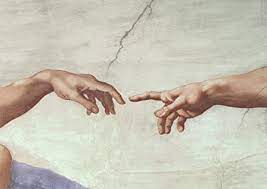
My father James William Ford was born in New Jersey today, the 21st of September, in 1919.
I don’t know all that much about his life before he married my mother.
Some years ago my spouse Jan and I took genetic tests as Christmas presents for each other. One of the interesting things about how mine turned out is that I couldn’t find any other Fords. I briefly thought maybe James wasn’t my biological father. But the sad fact that I not only was his namesake, but in reality I was his favorite, leads me to think the most likely broken link in the genealogical chain is him.
My understanding as best it is, was that his parents died when he was quite young. He was passed around some and eventually ended up in an orphanage. Realizing he might have been an embarrassment as well as an inconvenience makes the orphanage thing make more sense. that and the fact we had no connections to the larger family that I have any memories of.
By sometime in his adolescence he found himself on the streets of New York. He flirted with crime, but wasn’t particularly good at it. After a stint in prison, possibly as part of an early release program James joined the Army and became a medic in the Second World War. He was badly wounded during combat in Italy and permanently lost the use of his right arm.
After he was mustered out, he took the advice of friends who said if you want to get married and you want a nice girl, you have to go to a church. Church doesn’t appear to be where he normally spent his Sundays. But, for reasons beyond my kin, the birthright Catholic, and by the time I knew him a mocking atheist, James chose to attend a Christian Missionary Alliance church in Oakland, California. (The CMA is an accidental denomination formed by independent Baptists who joined together for mission work. They are very conservative, believing Southern Baptists to be dangerously liberal and not at all sure American Baptists are actually Christian.)
With that he met Barbara June Bernard at that church. Barbara also came from hard times. She deserves her own story. But this is about my father and fathers. So, here only this little bit more. Barbara had been engaged to a young man, but he was killed during the war. And this was the situation when Barbara met James.
And James was very handsome and very charming. Charming as the devil. The courtship was a whirlwind, and they married.
I was born in Oakland, California, on the 17th of July 1948. My brother, Donald, was born in San Francisco the next year. For his whole life my father was never able to settle down. During my childhood, we never lived anywhere two years running. James just passed from job to job, always on the look out for the next best thing. Occasionally he ended up in jail, frequently holding the bag for someone else.
For the last several decades of his life, James worked as a bartender.
Aways with compromised health, exacerbated by serious alcoholism, he died on the 22nd of April, 1973.
He was fifty-four years old.
I think of my father. For all he was. Drunk. Often absent. Occasionally abusive. Of course, I guess of course, we were desperately poor. And. As a child he constantly said “I love you.” And as I mentioned, a wound of its own as I was also his favorite. The one who was taken on fishing trips. For my brother that would always be, “I’ll take you next.” Somewhere along the line I noticed. My brother never did not notice. He was the man I hated in my adolescence with an incandescent heat. He was the man I pitied and wished was not shackled to my mother as I rolled into adulthood. He was the mystery of the rest of my adult life.
Psychologist Andrew Samuels tells us “The idea is that, behind the personal father whom we know and to whom we relate, lies an innate psychological structure which influences the way we experience him.” And as part of our inner lives, how we experience ourselves. And with that Jungian analyst Lisa Marchiano explains how “Our culture is awash in constellations of the negative father. The negative father is often punitive, rageful, withholding, ineffective, or selfish. ‘Petty tyrant’ is a phrase that many who grow up with a brutal, angry father use to describe him.
“Men in public life in positions of power or influence who use this for their own gain or prey on those who are weaker can be seen as examples of the negative father. The corporations which are to a large extent responsible for the heedless destruction of the environment are examples of the negative father energy in action. Politicians who capitalize on fear for their own gain are another example.”
The whole image of Patriarchy in all its hard-earned negativity speaks to that kind of father.
But, me, when I think of fathers, mostly I think of absence. I see a lot of young fathers today carrying their children and, perhaps still not a full fifty-fifty with mothers, definitely, worlds more involved with their children than was my experience, I feel pangs of longing and of guilt. For how I was raised. And, how I’ve lived.
So, I think fathers and I think of absence. Apparently in neo-Jungian circles they’ve also turned toward that sense of absence. There’s a whole literature about something called “father hunger.” I get that lack and with it that longing. Very much.
My father’s generation are now called the Greatest Generation. A term I do not successfully wrap my head around. While the term Silent Generation is now used to mark a thin sliver of people between his generation and the Boomers, my generation, that’s how I think of my father’s generation. Silence was in fact a leading characteristic among men of that generation embroiled in the Second world war. They mostly did not talk of the war that had engulfed them either from battle or because they did not go to battle. Shame and guilt crowd up with many other emotions. And in the years following so many rarely showed their emotions.
Although when he was drunk he would remember a couple of events, particularly one terrible battle. A battle I heard enough that it is in fact one of my most looming memories of my childhood.
That noted, speaking generally, there was a gap between the worlds of this deeply silent generation of men and mine, the so-called boomers. And, in addition to that drunken story, my own father was rarely at the loss for a word. But the glibness, it seems to me from the advantage of some distance, it hid something. Another way of keeping silence, I suspect.
As a person who has embraced a spiritual discipline that turns on the power of silence, I have thought a lot about the silence of my father’s generation. It was mostly, it seems to me, a burying of things. The silences of my spiritual discipline is a fronting to what is. This other silence seems to be a turning away from. A burying as deeply as possible. A longing for forgetting.
And it created wounds. Of course. With its own longings. John Steinbeck, another man of that generation, in his first novel, Cup of Gold wrote “’Why do men like me want sons?’ he wondered. ‘It must be because they hope in their poor beaten souls that these new men, who are their blood, will do the things they were not strong enough nor wise enough nor brave enough to do. It is rather like another chance at life; like a new bag of coins at a table of luck after your fortune is gone.’”
James Hillman is particularly important to me. Hillman, who, as long as we’re talking about complex relationships with one’s father, is an interesting example of someone who took his spiritual father, Carl Jung, and starting as his heir at the Jung Institute in Zurich, proceeded to dismantle much of his mentor’s work. That is until the board invited him to leave.
Hillman spent some time thinking about fathers, and absence. He reflected on this idea of the missing father, physically for some, metaphorically for others, that captures so many of our imaginations. Hillman observed how this missing father, “is not (simply) your or my personal father. He is the absent father of our culture, (to use a Jungian term) the viable senex (the lively elder) who provides not only daily bread but spirit through meaning and order.”
The “senex” in archetypal language is the “wise old man,” our image, usually although not exclusively, our positive image of what a man can grow into. The sad thing is that this figure is increasingly experienced as something missing.
I suspect this is a hall mark of our culture today.
That observation makes me think a lot of things. One is that longing itself. I know everyone doesn’t feel this way, but I believe I am not alone in that sense of longing for the father. Maybe, probably, not the actual father of the flesh. My father in the flesh, besides being dead, is a complicated, and not entirely lovable figure. Not much of the wise old man about him when he was breathing. But, rather, with Hillman, I am interested in the father writ large. And our collective desires, our communal lives, and what we need. That larger and the most intimate personal are not in fact that far apart. So, thinking about the father is thinking about what we seek, either consciously or unconsciously.
And so, what to do? With this I hear one of my spiritual fathers, the wonderful Zen master Shunryu Suzuki, who sings to us of a Zen way for engaging. “We say, ‘A good father is not a good father.’ Do you understand? One who thinks he is a good father is not a good father; one who thinks he is a good husband is not a good husband. One who thinks he is one of the worst husbands may be a good one if he is always trying to be a good husband with a single-hearted effort”
Taking up the way wholeheartedly. Humbly. Grateful for the opportunity. Taking on this path of investigation and integration, embracing our lacks and finding who we are, often best symbolized by mothers and fathers, and today, focused on fathers, allows us to be better people. Happier. More focused.
More useful.
And God knows, we need useful.
Previous Post

September 19, 2022
Kyogen Carlson: A Zen Master in an American Grain
Next Post
September 22, 2022 Zen Master Dogen & the Koan of Shikantaza
Browse Our Archives
Select a Category A Christmas Carol Abolitionist African-American Ahmadiyya Alan Watts Aldous Huxley Allen Ginsberg Amedkar Jayanti American politics American Zen Anaheim Zen Sangha Anglican Annie Besant April Fool Armageddon Art and Religion artificial intellegence Atheist Awakening B R Ambedkar Barlaam & Josaphat Beatnik Between Bhagavad Gita Bible biography birthday bodhisattva Bodhisattva Precepts Book burning Book of Common Prayer Book of Mormon Brahmo Samaj Buddha Buddhism Buddhist Buddhist Lord's Prayer Butterflies Calendars cartoons cat ChatGPT Chicken Tortilla Soup choices Christian atheism Christian mysticism Christian origins Christian Science Christian Zen Christianity Christianity and Buddhism christmas Christmas Truce Christopher Isherwood Church of Later Day Saints Cinco de Mayo circus covenant critical thinking culture D. T. Suzuki Dalit Buddhism Daniel Defoe Desert Fathers and Mothers dharma talk Dogen Donald Trump Dongshan's Five Ranks Dorothy Day dream Duty Easter ecology Edwin Arnold emptiness Empty Moon Zen Network Episcopal Church Eternal Now Ethics evolution existentialism Faith fantasy Fathers Day film film review fire Five Ranks Folk music food Form and emptiness Four Seals Francis of Assisi Francis Xavier Free thinker friendship George MacDonald Gerald Heard Glenn Taylor Webb God Good Friday Gospel of Gospel of Mark Gospel of Thomas grace Graduate Theological Unioin Graduate Theological Union Guanyin H R Blyth Hakuin Ekaku Hanamatsuri Hanukkah Harada Yasutani Zen Heart Sutra Henry David Thoreau Hermann Hesse Hinduism History and Religion history of religion Holy Spirit home Hospitality Icon Ides of March Isaac Newton Islam Islamic mysticism Jack Kerouac James Luther Adams Jiddu Krishnamurti Joan of Arc Johannes Gutenberg John Donne joke Judaism justice karma kensho King James Bible koan Koun Yamada Kyoto School Lewis Carrol Liberal Christianity Liberal Religion Life Plan Community Liminal literature Literature and Religion Liturgy Lord's Prayer Love Mahatma Gandhi Mahayana Martin Luther King Jr Mary Baker Eddy Mary Magdelene Mary Oliver Mayflower Compact Meditation memories memory metaphor money money and religioin Mormons Mother's Day movie review mysticism mythic Neighborhood Unitarian Universalist Church New Thought Nichiren Buddhism Nonduality not knowing Omar Khayyam Pacific School of Religion pagan Palm Sunday Passover peace Pentecost perennialism Phantastes Philip Kapleau philosophy Pilgrimage poetry Poetry and Religion politics Prayer Precepts Printing Press prophecy prophetic spirituality psychology Pure Land Queer religion queering religion Quietism Ram Mohan Roy rebirth recipe Relationships and religion religion religion and history Religious syncretism Resistance Retirement Retreat review Rissho Kosei Kai Ritual Robert Aitken Roshi Robert Ingersoll Rohatsu Romani religion Rosie the Riveter saints samadhi SanboZen Sangha Satyagraha science science and reigion science and religion science fiction seminary sermon Sesshin Sex and Religion Shinran Sikh Sikh tradition silence Social Justice Socially Engaged Buddhism Society and religion Soto Zen soul spiritual community spiritual practice Spirituality Sufism Suicide superstition Taoism Television Teresa of Avila Thanksgiving theological schools Theosophy Thomas Merton Time Transcendentalism Transcendentalist Trinitarian Trinity Uncategorized unitarian Unitarian Christianity Unitarian Universalist Universalism Vajrayana Vedanta Walking war Willa Cather William Ellery Channing wisdom women and religion women in religion World Teacher Writing zazen Zen Zen Center Zen inspired retriement zen meditation Zen Precepts Zen women
Select a Month September 2026 August 2026 July 2026 June 2026 May 2026 April 2026 March 2026 February 2026 January 2026 December 2025 November 2025 October 2025 September 2025 August 2025 July 2025 June 2025 May 2025 April 2025 March 2025 February 2025 January 2025 December 2024 November 2024 October 2024 September 2024 August 2024 July 2024 June 2024 May 2024 April 2024 March 2024 February 2024 January 2024 December 2023 November 2023 October 2023 September 2023 August 2023 July 2023 June 2023 May 2023 April 2023 March 2023 February 2023 January 2023 December 2022 November 2022 October 2022 September 2022 August 2022 July 2022 June 2022 May 2022 April 2022 March 2022 February 2022 January 2022 December 2021 November 2021 October 2021 September 2021 August 2021 July 2021 June 2021 May 2021 April 2021 March 2021 February 2021 January 2021 December 2020 November 2020 October 2020 September 2020 August 2020 July 2020 June 2020 May 2020 April 2020 March 2020 February 2020 January 2020 December 2019 November 2019 October 2019 September 2019 August 2019 July 2019 June 2019 May 2019 April 2019 March 2019 February 2019 January 2019 December 2018 November 2018 October 2018 September 2018 August 2018 July 2018 June 2018 May 2018 April 2018 March 2018 February 2018 January 2018 December 2017 November 2017 October 2017 September 2017 August 2017 July 2017 June 2017 May 2017 April 2017 March 2017 February 2017 January 2017 December 2016 November 2016 October 2016 September 2016 August 2016 July 2016 June 2016 May 2016 April 2016 March 2016 February 2016 January 2016 December 2015 November 2015 October 2015 September 2015 August 2015 July 2015 June 2015 May 2015 April 2015 March 2015 February 2015 January 2015 December 2014 November 2014 October 2014 September 2014 August 2014 July 2014 June 2014 May 2014 April 2014 March 2014 February 2014 January 2014 December 2013 November 2013 October 2013 September 2013 August 2013 July 2013 June 2013 May 2013 April 2013 March 2013 February 2013 January 2013 December 2012 November 2012 October 2012 September 2012 August 2012 July 2012 June 2012 May 2012 April 2012 March 2012 February 2012 January 2012 December 2011 November 2011 October 2011 September 2011 August 2011 July 2011 June 2011 May 2011 April 2011 March 2011 February 2011 January 2011 December 2010 November 2010 October 2010 September 2010 August 2010 July 2010 June 2010 May 2010 April 2010 March 2010 February 2010 January 2010 December 2009 November 2009 October 2009 September 2009 August 2009 July 2009 June 2009 May 2009 April 2009 March 2009 February 2009 January 2009 December 2008 November 2008 October 2008 September 2008 August 2008 July 2008 June 2008 May 2008 April 2008 March 2008 February 2008 January 2008 December 2007 November 2007 October 2007 September 2007 August 2007 July 2007 June 2007 May 2007 April 2007 March 2007 February 2007 January 2007 December 2006 November 2006 October 2006 September 2006
Follow Us!
TAKE THE
Religious Wisdom Quiz
What is the number of the beast in Revelation?
Select your answer to see how you score.
144 666 777 1000
Related posts from Monkey Mind


Which Is the True Qian? A Koan About...


TRENDING AT PATHEOS Buddhist

Looking at the Largest Orthodox Cathedral on Earth
There is often a considerable amount of anger and, shall we...

The Problem with False Prophets
Miller’s Station UMC| 10/18/26| Anchor Verse: Jeremiah 23: 1, 9-23 I...

Emotion in Early Christianity by Andrew Crislip
Andrew Crislip’s Emotion in Early Christianity examines an often overlooked dimension of...

16 Spiritual Touchstones for a More Grounded Life
After decades of spiritual study, here are 16 principles I try...

Catholic Evangelization: Sharing Your Faith Every Day
Welcome back to the Graceful Awakening mini-series called, “From Faith to Mission.” ...

The Pillar of the Boatmen: the Ancient Monument...
The Pillar of the Boatmen is a Romano-Gaulish sculpture that dates from...
view all Buddhist blogs
Ad-Free & Subscriber Log-In Subscription Support
- About Us
- 2026 Calendar
- Videos
- Podcasts
- Library of World Religions
- Faith In Media Tracker
- Advertise With Us
- Write for Us
- Privacy Policy
- Terms of Service
- Do Not Sell My Data
- Contact Us
- Radiant Digital
- Manage Newsletter Subscriptions
- Unsubscribe From Notifications
- Sitemap
Copyright 2008-2026, Patheos. All rights reserved.
Subscription Support Ad-Free & Subscriber Log-In
Follow Patheos