
BuddhistCatholicContemplativeEvangelicalGeneral ChristianHinduJewishLatter-day SaintMuslimNew VisionsProgressive Christian
Beliefs
- Buddhist
- Catholic
- Contemplative
- Evangelical
- General Christian
- Hindu
- Jewish
- Latter-day Saint
- More Voices
- Muslim
- New Visions
- Pagan
- Progressive Christian
Topics
- Religion News
- Food and Religion
- Sports and Religion
- Religious Art
- Religious Music and Entertainment
- Religious Events
- History and Religion
- Style and Religion
- Politics and Religion
- Women in Religion
- Recreation Outdoors and Religion
- Business Finance and Religion
- Careers Workplace and Religion
- Education and Religion
- Family Parenting and Religion
- Health Fitness and Religion
- Home and Religion
- Relationships and Religion
- Technology and Religion
- Travel and Religion
Columnists
- Buddhist Columnists
- Business Finance and Religion Columnists
- Careers Workplace and Religion Columnists
- Catholic Columnists
- Contemplative Columnists
- Education and Religion Columnists
- Evangelists Columnists
- Family Parenting and Religion Columnists
- General Christian Columnists
- Health Fitness and Religion Columnists
- Hindu Columnists
- History and Religion Columnists
- Home and Religion Columnists
- Jewish Columnists
- More Voices Columnists
- Latter Day Columnists
- Muslim Columnists
- New Visions Columnists
- Nonreligious Columnists
- Pagan Columnists
- Politics and Religion Columnists
- Progressive Columnists
- Recreation Outdoors and Religion Columnists
- Relationships and Religion Columnists
- Religion News Columnists
- Religious Art Columnists
- Religious Events Columnists
- Religious Music and Entertainment Columnists
- Sports and Religion Columnists
- Style and Religion Columnists
- Technology and Religion Columnists
- Travel and Religion Columnists
- Women in Religion Columnists
Resource Library
- 2026 Calendar
- Library of World Religions
- The 100 Most Holy Places on Earth
- Patheos Answers
- Podcasts
- Videos
- Faith Leaders Database
- Anglican Episcopalian
- Bahai
- Baptist
- Buddhism
- Christianity
- Confucianism
- Eastern Orthodoxy
- Hinduism
- Holiness and Pentecostal
- ISKCON
- Islam
- Judaism
- Lutheran
- Methodist
- The Church of Jesus Christ of Latter-day Saints
- New Age
- Paganism
- Presbytarian and Reformed
- Protestantism
- Religion Behind the Scenes
- Roman Catholic
- Scientology
- Shia Islam
- Sikhism
- Sufism
- Sunni Islam
- Taoism
- Zen
- See all religions
Research Tools
 Ad-Free & Subscriber Log-In Subscription Support
Ad-Free & Subscriber Log-In Subscription Support
Follow Patheos 

- Trending:
- Forgiveness
- |
- Marriage
- |
- Consciousness
- |
- Death Penalty
- |
- Election
- |
- Halloween

- Home
- Buddhist
- A Comment on the Zen Koan of Everyday Life
A Comment on the Zen Koan of Everyday Life
Last updated on: August 2, 2022 at 12:31 pm by James Ford
A Comment on the Zen Koan of Everyday Life 2022-08-02T12:31:43-07:00 James Ford
Patheos Explore the world's faith through different perspectives on religion and spirituality! Patheos has the views of the prevalent religions and spiritualities of the world.
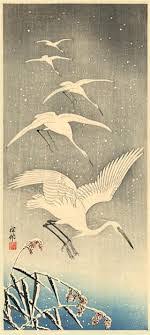
The Genjo Koan
As all things are buddha-dharma, there is delusion and realization, practice, birth and death, and there are buddhas and sentient beings. As the myriad things are without an abiding self, there is no delusion, no realization, no buddha, no sentient being, no birth and death. The buddha way is, basically, leaping clear of the many of the one; thus there are birth and death, delusion and realization, sentient beings and buddhas.
Yet in attachment blossoms fall, and in aversion weeds spread. To carry yourself forward and experience myriad things is delusion. That myriad things come forth and experience themselves is awakening. Those who have great realization of delusion are buddhas; those who are greatly deluded about realization are sentient beings. Further, there are those who continue realizing beyond realization, who are in delusion throughout delusion.
When buddhas are truly buddhas they do not necessarily notice that they are buddhas. However, they are actualized buddhas, who go on actualizing buddhas. When you see forms or hear sounds fully engaging body-and-mind, you grasp things directly. Unlike things and their reflections in the mirror, and unlike the moon and its reflection in the water, when one side is illumined the other side is dark.
To study the buddha way is to study the self. To study the self is to forget the self. To forget the self is to be actualized by myriad things. When actualized by myriad things, your body and mind as well as the bodies and minds of others drop away. No trace of realization remains, and this no-trace continues endlessly.
When you first seek dharma, you imagine you are far away from its environs. But dharma is already correctly transmitted; you are immediately your original self. When you ride in a boat and watch the shore, you might assume that the shore is moving. But when you keep your eyes closely on the boat, you can see that the boat moves. Similarly, if you examine myriad things with a confused body and mind you might suppose that your mind and nature are permanent. When you practice intimately and return to where you are, it will be clear that nothing at all has unchanging self.
Firewood becomes ash, and it does not become firewood again. Yet, do not suppose that the ash is future and the firewood past. You should understand that firewood abides in the phenomenal expression of firewood, which fully includes past and future and is independent of past and future. Ash abides in the phenomenal expression of ash, which fully includes future and past. Just as firewood does not become firewood again after it is ash, you do not return to birth after death.
This being so, it is an established way in buddha-dharma to deny that birth turns into death. Accordingly, birth is understood as no-birth. It is an unshakable teaching in Buddha’s discourse that death does not turn into birth. Accordingly, death is understood as no-death.
Birth is an expression complete this moment. Death is an expression complete this moment. They are like winter and spring. You do not call winter the beginning of spring, nor summer the end of spring.
Enlightenment is like the moon reflected on the water. The moon does not get wet, nor is the water broken. Although its light is wide and great, the moon is reflected even in a puddle an inch wide. The whole moon and the entire sky are reflected in dewdrops on the grass, or even in one drop of water.
Enlightenment does not divide you, just as the moon does not break the water. You cannot hinder enlightenment, just as a drop of water does not hinder the moon in the sky. The depth of the drop is the height of the moon. Each reflection, however long of short its duration, manifests the vastness of the dewdrop, and realizes the limitlessness of the moonlight in the sky.
When dharma does not fill your whole body and mind, you think it is already sufficient. When dharma fills your body and mind, you understand that something is missing.
For example, when you sail out in a boat to the middle of an ocean where no land is in sight, and view the four directions, the ocean looks circular, and does not look any other way. But the ocean is neither round or square; its features are infinite in variety. It is like a palace. It is like a jewel. It only look circular as far as you can see at that time. All things are like this.
Though there are many features in the dusty world and the world beyond conditions, you see and understand only what your eye of practice can reach. In order to learn the nature of the myriad things, you must know that although they may look round or square, the other features of oceans and mountains are infinite in variety; whole worlds are there. It is so not only around you, but also directly beneath your feet, or in a drop of water.
A fish swims in the ocean, and no matter how far it swims there is no end to the water. A bird flies in the sky, and no matter how far it flies there is no end to the air. However, the fish and the bird have never left their elements. When their activity is large their field is large. When their need is small their field is small. Thus, each of them totally covers its full range, and each of them totally experiences its realm. If the bird leaves the air it will die at once. If the fish leaves the water it will die at once.
Know that water is life and air is life. The bird is life and the fish is life. Life must be the bird and life must be the fish.
It is possible to illustrate this with more analogies. Practice, enlightenment, and people are like this.
Now if a bird or a fish tries to reach the end of its element before moving in it, this bird or this fish will not find its way or its place. When you find your place where you are, practice occurs, actualizing the fundamental point. When you find you way at this moment, practice occurs, actualizing the fundamental point; for the place, the way, is neither large nor small, neither yours nor others’. The place, the way, has not carried over from the past and it is not merely arising now.
Accordingly, in the practice-enlightenment of the buddha way, meeting one thing is mastering it–doing one practice is practicing completely. Here is the place; here the way unfolds. The boundary of realization is not distinct, for the realization comes forth simultaneously with the mastery of buddha-dharma.
Do not suppose that what you realize becomes your knowledge and is grasped by your consciousness. Although actualized immediately, the inconceivable may not be apparent. Its appearance is beyond your knowledge. Zen master Baoche of Mt. Mayu was fanning himself. A monk approached and said, “Master, the nature of wind is permanent and there is no place it does not reach. When, then, do you fan yourself?”
“Although you understand that the nature of the wind is permanent,” Baoche replied, “you do not understand the meaning of its reaching everywhere.”
“What is the meaning of its reaching everywhere?” asked the monk again. The master just kept fanning himself. The monk bowed deeply.
The actualization of the buddha-dharma, the vital path of its correct transmission, is like this. If you say that you do not need to fan yourself because the nature of wind is permanent and you can have wind without fanning, you will understand neither permanence nor the nature of wind. The nature of wind is permanent; because of that, the wind of the buddha’s house brings for the gold of the earth and makes fragrant the cream of the long river.
(Written in mid-autumn, the first year of Tempuku 1233, and given to my (Dogen’s) lay student Koshu Yo of Kyushu Island. {Revised in} the fourth year of Kencho {I252}. Translated by Robert Aitken and Kaz Tanahashi and adapted for use in the San Francisco Zen Center.)
***
A Comment on the Koan of Everyday Life
James Ishmael Ford
I love the Genjokoan. And I love its author Eihei Dogen, the great thirteenth century Zen master and founder of Japanese Soto Zen. One can argue the Genjokoan, the Koan of Everyday Life is the summation of Master Dogen’s teachings. One could say it is the summation of Zen’s teaching.
It also offers several entry points for the student of the way. Each tantalizing, each a full presentation, each a gate. Another way to render the term Genjokoan is Actualizing the Fundamental Point. It’s all invitation.
And there are some specific invitations, as well. I think of them as nubs.
The most compelling among the nubs of the fascicle for me is:
To study the buddha way is to study the self. To study the self is to forget the self. To forget the self is to be actualized by myriad things. When actualized by myriad things, your body and mind as well as the bodies and minds of others drop away. No trace of realization remains, and this no-trace continues endlessly.
We can take it as a metaphor. And that could be rich. This essay is filled with metaphors.
Or, we can take it as a koan. The essay is called the koan of everyday life.
I’ve been rolling around the word “metaphor” in my heart and brain for a while of late. And specially how the word metaphor works with the Zen word “koan.” How they meet and how they’re different.
As often happens this past Sunday a friend gave a sermon on the subject of metaphors at the First Unitarian Church of Los Angeles where I currently consult and frequently attend. His was an invitation into the power of metaphor as a way to see larger. And he made it an invitation to people to play with those other ways of seeing things. Good sermon.
Then the concluding reading took the whole thing in a bit of a different direction.
It cited an imaginary dialogue from Gregory Bateson’s Steps to an Ecology of Mind. In the reading we were introduced to “mere metaphor” and offered an invitation instead to sacrament. Sacrament. A rich and complicated word all by itself.
In the dialogue there’s a long and involved conversation about the ballet Swan Lake. What is a swan, especially when a person is playing the swan, who also might become a person? And more, what are we really being invited into within the ballet? “Like” and “Sort of” and “pretend” and as he frames it “pretend-not” are each touched upon in Bateson’s little story.
Bateson’s point is that there is sacrament. Sacrament in the traditional Western usage of an “outward and visible signs of some inward and spiritual grace.” He points out as a for instance in the Eucharist there are some for whom the bread and wine are a metaphor. He uses the word Protestant for that view. He sees that as largely an intellectual engagement. But, for others, he uses the word Catholics, it is a sacrament. And that sacrament is of a different order than, using his word, a “mere” metaphor.
The whole dialogue is meant to take us to an understanding of an invitation to something deeper yet than a metaphor, where “the ‘pretend’ and the ‘pretend-not’ and the ‘really’ somehow get fused together into a single meaning.”
A bit heady, I find. And he wanders around a bit getting to his point. But, I do that, as well. And by the end of it, I feel he touches something.
We can look at koans that way, as well. A koan absolutely can be a metaphor. In fact it usually is. A lot of dharma talks, a lot of essays, use koans as metaphors for aspects of a spiritual life. I’ve even seen koan used as a “Zen teaching story.”
Now, I’m not especially fond of the phrase “mere metaphor.” Metaphors can be powerful teachings and of enormous help in seeing our world larger than at first it might seem. But when looking at koans as a spiritual encounter, I really get how engaging them at a metaphorical level can be called “mere.”
I will not spend a lot of time talking about koans and their history here in this brief reflection. (For a briefest introduction look here. For more, you can read this.)
But one thing I will say is that koan as a teaching story opens us to the value of metaphor.
Koan as actualizing the mystery is what we’re really being invited to.
To study the buddha way is to study the self. To study the self is to forget the self. To forget the self is to be actualized by myriad things. When actualized by myriad things, your body and mind as well as the bodies and minds of others drop away. No trace of realization remains, and this no-trace continues endlessly.
Is it a teaching story? Sure. It can be. And it can be something cutting rather closer to the bone.
What is meant when we engage words like self, especially when we hear that the self itself is actualized by the myriad things, by the world itself. What is dropping away? And what is this tracelessness that continues endlessly?
Koan is a word for this invitation. But what I want to invite here is a consideration of that word sacrament. And how sacrament might inform what we can find within the mystery of koan as a spiritual practice. And, more, how we can inform our inner lives whatever spiritual disciplines we engage.
A koan is an assertion about reality (or, you can sometimes say a reality), joined with an invitation to occupy that space.
Space is a pointing. From the outside we can take it as a metaphor. Words like stand, sit, join, see, feel, are all very good metaphors. Occupy is maybe a bit dryer, but also a metaphor. And along the way there is necessarily a consideration of who is occupying and who is being occupied. Metaphors.
And. Eventually there’s also a collapsing of who and what along with all other conceptual arts.
Here we might find ourselves encountering Dogen’s invitation.
All this very messy as we allow it to present becomes a turning toward, into the real.
So, sacrament. As a person of the Zen way I love that we’re invited with sacrament onto holy ground, to a holy moment. But we’re not, okay, we’re not merely seeing something inside of something else. Although I think that deeper intimacy is implied in the word sacrament. You need bread and wine for the sacrament of communion. We can argue water and rice, but even then there is physical matter involved. And eating, as well. Being and doing are not separate.
On the Zen way we sit down and become Buddha. Sacrament. We haul water we chop wood. Koan. We cook meals. Sacrament. We clean the bathroom. Koan.
When that inner, that other part of reality, from my perspective that aspect of the thing that opens into the wild and unnamable, is not joined, but discovered to have always been there: then we are discovering something.
A sacrament.
A koan.
The mystery revealed.
Previous Post

August 1, 2022
The Zen Jesuit Sings some Psalms
Next Post
August 3, 2022 A Feast for Zen's Layman Pang
Browse Our Archives
Select a Category A Christmas Carol Abolitionist African-American Ahmadiyya Alan Watts Aldous Huxley Allen Ginsberg Amedkar Jayanti American politics American Zen Anaheim Zen Sangha Anglican Annie Besant April Fool Armageddon Art and Religion artificial intellegence Atheist Awakening B R Ambedkar Barlaam & Josaphat Beatnik Between Bhagavad Gita Bible biography birthday bodhisattva Bodhisattva Precepts Book burning Book of Common Prayer Book of Mormon Brahmo Samaj Buddha Buddhism Buddhist Buddhist Lord's Prayer Butterflies Calendars cartoons cat ChatGPT Chicken Tortilla Soup choices Christian atheism Christian mysticism Christian origins Christian Science Christian Zen Christianity Christianity and Buddhism christmas Christmas Truce Christopher Isherwood Church of Later Day Saints Cinco de Mayo circus covenant critical thinking culture D. T. Suzuki Dalit Buddhism Daniel Defoe Desert Fathers and Mothers dharma talk Dogen Donald Trump Dongshan's Five Ranks Dorothy Day dream Duty Easter ecology Edwin Arnold emptiness Empty Moon Zen Network Episcopal Church Eternal Now Ethics evolution existentialism Faith fantasy Fathers Day film film review fire Five Ranks Folk music food Form and emptiness Four Seals Francis of Assisi Francis Xavier Free thinker friendship George MacDonald Gerald Heard Glenn Taylor Webb God Good Friday Gospel of Gospel of Mark Gospel of Thomas grace Graduate Theological Unioin Graduate Theological Union Guanyin H R Blyth Hakuin Ekaku Hanamatsuri Hanukkah Harada Yasutani Zen Heart Sutra Henry David Thoreau Hermann Hesse Hinduism History and Religion history of religion Holy Spirit home Hospitality Icon Ides of March Isaac Newton Islam Islamic mysticism Jack Kerouac James Luther Adams Jiddu Krishnamurti Joan of Arc Johannes Gutenberg John Donne joke Judaism justice karma kensho King James Bible koan Koun Yamada Kyoto School Lewis Carrol Liberal Christianity Liberal Religion Life Plan Community Liminal literature Literature and Religion Liturgy Lord's Prayer Love Mahatma Gandhi Mahayana Martin Luther King Jr Mary Baker Eddy Mary Magdelene Mary Oliver Mayflower Compact Meditation memories memory metaphor money money and religioin Mormons Mother's Day movie review mysticism mythic Neighborhood Unitarian Universalist Church New Thought Nichiren Buddhism Nonduality not knowing Omar Khayyam Pacific School of Religion pagan Palm Sunday Passover peace Pentecost perennialism Phantastes Philip Kapleau philosophy Pilgrimage poetry Poetry and Religion politics Prayer Precepts Printing Press prophecy prophetic spirituality psychology Pure Land Queer religion queering religion Quietism Ram Mohan Roy rebirth recipe Relationships and religion religion religion and history Religious syncretism Resistance Retirement Retreat review Rissho Kosei Kai Ritual Robert Aitken Roshi Robert Ingersoll Rohatsu Romani religion Rosie the Riveter saints samadhi SanboZen Sangha Satyagraha science science and reigion science and religion science fiction seminary sermon Sesshin Sex and Religion Shinran Sikh Sikh tradition silence Social Justice Socially Engaged Buddhism Society and religion Soto Zen soul spiritual community spiritual practice Spirituality Sufism Suicide superstition Taoism Television Teresa of Avila Thanksgiving theological schools Theosophy Thomas Merton Time Transcendentalism Transcendentalist Trinitarian Trinity Uncategorized unitarian Unitarian Christianity Unitarian Universalist Universalism Vajrayana Vedanta Walking war Willa Cather William Ellery Channing wisdom women and religion women in religion World Teacher Writing zazen Zen Zen Center Zen inspired retriement zen meditation Zen Precepts Zen women
Select a Month September 2026 August 2026 July 2026 June 2026 May 2026 April 2026 March 2026 February 2026 January 2026 December 2025 November 2025 October 2025 September 2025 August 2025 July 2025 June 2025 May 2025 April 2025 March 2025 February 2025 January 2025 December 2024 November 2024 October 2024 September 2024 August 2024 July 2024 June 2024 May 2024 April 2024 March 2024 February 2024 January 2024 December 2023 November 2023 October 2023 September 2023 August 2023 July 2023 June 2023 May 2023 April 2023 March 2023 February 2023 January 2023 December 2022 November 2022 October 2022 September 2022 August 2022 July 2022 June 2022 May 2022 April 2022 March 2022 February 2022 January 2022 December 2021 November 2021 October 2021 September 2021 August 2021 July 2021 June 2021 May 2021 April 2021 March 2021 February 2021 January 2021 December 2020 November 2020 October 2020 September 2020 August 2020 July 2020 June 2020 May 2020 April 2020 March 2020 February 2020 January 2020 December 2019 November 2019 October 2019 September 2019 August 2019 July 2019 June 2019 May 2019 April 2019 March 2019 February 2019 January 2019 December 2018 November 2018 October 2018 September 2018 August 2018 July 2018 June 2018 May 2018 April 2018 March 2018 February 2018 January 2018 December 2017 November 2017 October 2017 September 2017 August 2017 July 2017 June 2017 May 2017 April 2017 March 2017 February 2017 January 2017 December 2016 November 2016 October 2016 September 2016 August 2016 July 2016 June 2016 May 2016 April 2016 March 2016 February 2016 January 2016 December 2015 November 2015 October 2015 September 2015 August 2015 July 2015 June 2015 May 2015 April 2015 March 2015 February 2015 January 2015 December 2014 November 2014 October 2014 September 2014 August 2014 July 2014 June 2014 May 2014 April 2014 March 2014 February 2014 January 2014 December 2013 November 2013 October 2013 September 2013 August 2013 July 2013 June 2013 May 2013 April 2013 March 2013 February 2013 January 2013 December 2012 November 2012 October 2012 September 2012 August 2012 July 2012 June 2012 May 2012 April 2012 March 2012 February 2012 January 2012 December 2011 November 2011 October 2011 September 2011 August 2011 July 2011 June 2011 May 2011 April 2011 March 2011 February 2011 January 2011 December 2010 November 2010 October 2010 September 2010 August 2010 July 2010 June 2010 May 2010 April 2010 March 2010 February 2010 January 2010 December 2009 November 2009 October 2009 September 2009 August 2009 July 2009 June 2009 May 2009 April 2009 March 2009 February 2009 January 2009 December 2008 November 2008 October 2008 September 2008 August 2008 July 2008 June 2008 May 2008 April 2008 March 2008 February 2008 January 2008 December 2007 November 2007 October 2007 September 2007 August 2007 July 2007 June 2007 May 2007 April 2007 March 2007 February 2007 January 2007 December 2006 November 2006 October 2006 September 2006
Follow Us!
TAKE THE
Religious Wisdom Quiz
Who was the wife of Isaac?
Select your answer to see how you score.
Sarah Leah Rachel Rebekah
Related posts from Monkey Mind


Which Is the True Qian? A Koan About...


TRENDING AT PATHEOS Buddhist

How to Make a Decision When You Can't...
Main point: It’s much more valuable to stay close to God so...

Archdiocese Hosts Military Marriage Retreat in Germany
RASTATT, Germany — The transient military lifestyle, with its frequent deployments and...

Nearly every morning, I make the drive to Detroit with my high-school-age...

The Real AI Story Is Adoption Without Trust
Artificial intelligence has crossed a political threshold. It is no longer a...

A new article, written by Jeff Lindsay and Gale L. Pooley,...

Swimfan: Forgotten Aughts Pleasures
This is a recovery effort. In 2002, My Big Fat Greek Wedding...
view all Buddhist blogs
Ad-Free & Subscriber Log-In Subscription Support
- About Us
- 2026 Calendar
- Videos
- Podcasts
- Library of World Religions
- Faith In Media Tracker
- Advertise With Us
- Write for Us
- Privacy Policy
- Terms of Service
- Do Not Sell My Data
- Contact Us
- Radiant Digital
- Manage Newsletter Subscriptions
- Unsubscribe From Notifications
- Sitemap
Copyright 2008-2026, Patheos. All rights reserved.
Subscription Support Ad-Free & Subscriber Log-In
Follow Patheos