
BuddhistCatholicContemplativeEvangelicalGeneral ChristianHinduJewishLatter-day SaintMuslimNew VisionsProgressive Christian
Beliefs
- Buddhist
- Catholic
- Contemplative
- Evangelical
- General Christian
- Hindu
- Jewish
- Latter-day Saint
- More Voices
- Muslim
- New Visions
- Pagan
- Progressive Christian
Topics
- Religion News
- Food and Religion
- Sports and Religion
- Religious Art
- Religious Music and Entertainment
- Religious Events
- History and Religion
- Style and Religion
- Politics and Religion
- Women in Religion
- Recreation Outdoors and Religion
- Business Finance and Religion
- Careers Workplace and Religion
- Education and Religion
- Family Parenting and Religion
- Health Fitness and Religion
- Home and Religion
- Relationships and Religion
- Technology and Religion
- Travel and Religion
Columnists
- Buddhist Columnists
- Business Finance and Religion Columnists
- Careers Workplace and Religion Columnists
- Catholic Columnists
- Contemplative Columnists
- Education and Religion Columnists
- Evangelists Columnists
- Family Parenting and Religion Columnists
- General Christian Columnists
- Health Fitness and Religion Columnists
- Hindu Columnists
- History and Religion Columnists
- Home and Religion Columnists
- Jewish Columnists
- More Voices Columnists
- Latter Day Columnists
- Muslim Columnists
- New Visions Columnists
- Nonreligious Columnists
- Pagan Columnists
- Politics and Religion Columnists
- Progressive Columnists
- Recreation Outdoors and Religion Columnists
- Relationships and Religion Columnists
- Religion News Columnists
- Religious Art Columnists
- Religious Events Columnists
- Religious Music and Entertainment Columnists
- Sports and Religion Columnists
- Style and Religion Columnists
- Technology and Religion Columnists
- Travel and Religion Columnists
- Women in Religion Columnists
Resource Library
- 2026 Calendar
- Library of World Religions
- The 100 Most Holy Places on Earth
- Patheos Answers
- Podcasts
- Videos
- Faith Leaders Database
- Anglican Episcopalian
- Bahai
- Baptist
- Buddhism
- Christianity
- Confucianism
- Eastern Orthodoxy
- Hinduism
- Holiness and Pentecostal
- ISKCON
- Islam
- Judaism
- Lutheran
- Methodist
- The Church of Jesus Christ of Latter-day Saints
- New Age
- Paganism
- Presbytarian and Reformed
- Protestantism
- Religion Behind the Scenes
- Roman Catholic
- Scientology
- Shia Islam
- Sikhism
- Sufism
- Sunni Islam
- Taoism
- Zen
- See all religions
Research Tools
 Ad-Free & Subscriber Log-In Subscription Support
Ad-Free & Subscriber Log-In Subscription Support
Follow Patheos 

- Trending:
- Forgiveness
- |
- Marriage
- |
- Consciousness
- |
- Death Penalty
- |
- Election
- |
- Halloween

- Home
- Buddhist
- The Buddhist Temple of Toledo & the Future of Zen in North America
The Buddhist Temple of Toledo & the Future of Zen in North America
Last updated on: April 29, 2022 at 4:30 pm by James Ford
The Buddhist Temple of Toledo & the Future of Zen in North America 2022-04-29T16:30:08-07:00 James Ford
Patheos Explore the world's faith through different perspectives on religion and spirituality! Patheos has the views of the prevalent religions and spiritualities of the world.

The Buddhist Temple of Toledo & the Future of Zen in North America
This past weekend I flew out to the Midwest to attend two events in Toledo.
One was to join as a witness to the denbo ceremony (full dharma transmission) of Karen Do’on Weik.
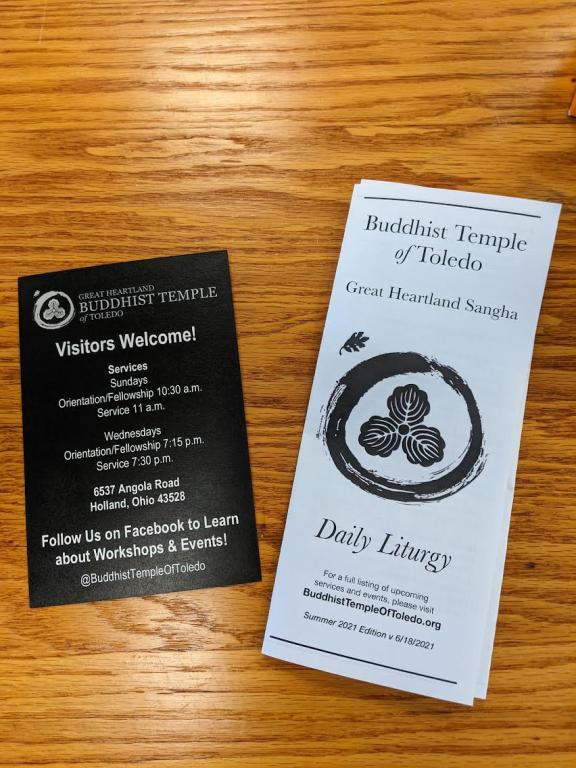
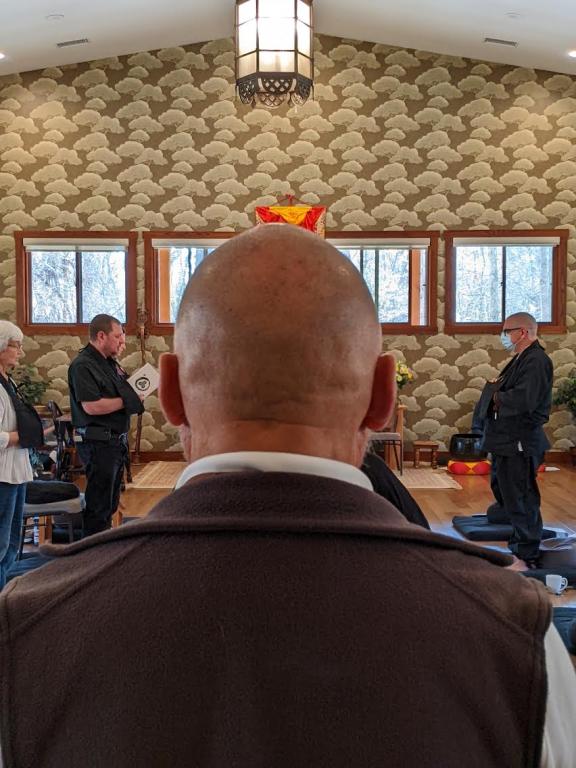
The other was the dedication ceremony for the new temple building for the Buddhist Temple of Toledo on Saturday, the 23rd of April, 2022. It was a wonderful event. Somewhere in the vicinity of two hundred people were present. There were even television crews from two local news programs. It is a big deal in that area. And, I believe, when I think about the state of Zen in North America, the West generally, and East Asia; I think it a significant marker.
 As we face the consequences of the greying of North American Zen, what I’ve called variously the Great Die Off, or the Great Collapse, (I notice others are now using these terms and realize I should have trademarked them) many of us who’ve given the greater part of our lives to the Zen project wonder what will follow.
When I visited this dedication in Toledo, I felt I was seeing one of the more exciting possibilities.
 There are a few things to notice in the run up to the Great Collapse. Zen as a recognizable thing here in North America dates to the early decades of the Twentieth century when the Japanese missionary Reverend Hosen Isobe established temples in Honolulu, San Francisco, and Los Angeles. But it didn’t really cross over to the general population until the 1950s. From that point it took off and would become a current within our broad Western religious scene, and a signal part of the counter culture that arose in the 1960s and early 1970s.
 Teachers from Japan, Korea, Vietnam, and China would all come to live in the West and present the unique forms of their cultural expressions of Zen Buddhism. People from North America and Europe would also go to Asia to train and return as teachers. And, soon people would train in North America and become teachers.

For various reasons few of these teachers would be tightly tied to the institutions of their Asian communities, and the North American Zen landscape would be left free to develop along the lines envisioned by their founding teachers. Or, at least equally so, and perhaps in fact more commonly, as the vagaries of time and event dictated.
 Today there are temples tied closely to immigrant communities that attempt to foster the cultural religious expressions of their home countries. They continue and among them there are very interesting evolutions. Among the converts there are a couple substantial lineage families, principally evolved from the work of early missionary teachers Shunryu Suzuki, Taizan Maezumi, and Seung Sahn. Between them their dharma descendants claim the larger part of the North American Zen scene, creating what I’d call the normative forms of Zen in North America. At least teaching what most people think of as Zen.

Beyond them there are numerous other lineages. Most notable would be that established by Thich Nhat Hanh. His is a Buddhist vision with a Zen component but more eclectic than what many here consider “Zen,” deeply shaped by the unique vision of that teacher. It tends to follow its own trajectory. Among the other “smaller” lineages there is considerable divergence in the focus of their teachings. Some are very exciting. Some are quite worrisome.
This is not meant to establish a comprehensive list of the lineages in the West. But noting the principal communities have been derived from Japanese Soto, the lay koan reformed movement sometimes collectively called Harada Yasutani Zen, and the reformed vision of Korean Zen master Seung Sahn developed. For good and ill.
 Me, I’m not by nature a polemicist. But I read some of the rants about the state of Zen here on social media and often find within the outrage issues with which I share concern. An astonishing large amount of Zen in the West seems concerned with a zazen unconnected to the project of awakening.
Mostly this arises out of the Japanese Soto lineages. At the same time there is a sort of back to Japan movement among both Soto and Rinzai derived lines that feel authenticity is only going to be found in a rigorous transmission of their specific lineage tradition with as few accommodations as possible.
Out of my years as a participant observer I feel we are fully inside that curse of “interesting times.” I also believe blessings travel quite closely with the curse of interesting.
In my view the principal purpose of the Zen project is awakening. I take it a step closer to the bone: Zen is about awakening. I can’t say I’m uninterested in Zen expressions that don’t emphasize this, my associations with the Soto derived communities are too long and too deep to repudiate the don’t worry about awakening, just sit, just do the rituals, and with it an ancient romance with the monastic life, without a word of appreciation. That just sitting, that just doing the rites, can be, and occasionally is an expression of awakening. But, as I see it, the gift of Zen is a path to awakening, and to the integration of insight. Everything else is upaya.
But what this needs to look like is not found, in my view, by turning back to East Asia. With full gratitude, with many bows, with respectful acceptance of the core gifts; we need to make this project our own. By “we” I mean the children of Turtle Island, North America, and the West. With our mixed history, with our dynamic and dangerous moment in time. The we that has arrived here and now.
Among the things I consider necessary givens for an authentic Zen in the West is an assumption of the equality of people as full practitioners beyond categories of sex and gender expression. I consider it necessary to embrace people who are not going to be monastic as fully authentic Zen practitioners, and should circumstances lead that way, as teachers.
 And, I believe it necessary for communities and their leaders to be mindful of the ways in which people are included or excluded. That is, I believe Zen in the West, if we hope for it to succeed, must find accommodations with the society within which we live. And, to be engaged in appropriate ways. Appropriate is, of course, a messy word.
The people who I most admire on the Zen way are largely focused on the project of awakening. Most are not especially interested in the social component, and even on occasion denigrate it as distracting. I respectfully suggest they’re missing several points. First, awakening is not separate from our lives. And this includes both personal lives and social lives.
Personally I wonder about the value of awakening that can only be found within a monastery. And, second, but intimately connected, the transmission of the tradition cannot be separated from finding accommodations within the larger culture. This includes paying attention to the raising of children.

Okay. All that is the background.
Then there is the thing I encountered on the 23rd of April, 2022.
I see a new vision emerging. I would say it sees fairly clearly that for Zen to root here it has to pay attention to two things. Waking Up. Absolutely. Totally. Focused. And. Growing Up. That is all those things that make us better people and members of our communities.
A mature Zen practice needs to attend to waking up and to growing up. How they do it in Toledo offers a pretty good road map to how this might look. They exist as two closely touching, significantly overlapping, but also separate projects.
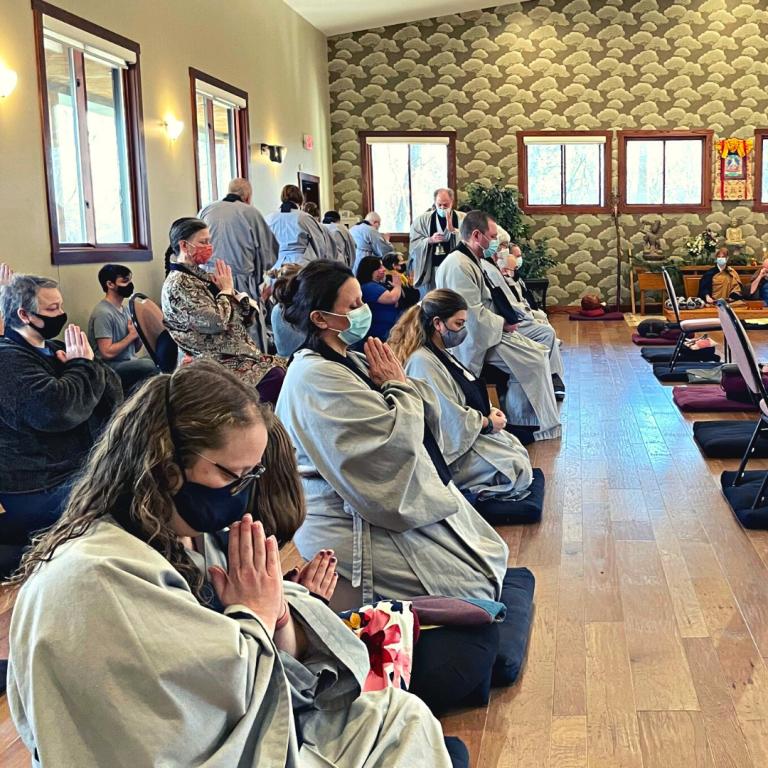
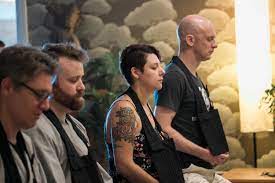
The first is what is emerging as a pretty normative version of Zen practice, which instead of being monastic, is retreat driven. Lots of retreats of various lengths, but rarely if ever exceeding seven days. These retreats are intensive and they’re meant to punctuate lives of regular daily practice. For Toledo the thread that runs through them is what is often called the Harada Yasutani koan curriculum, rooted in the Takujo Hakuin system, but adapted in ways that make it uniquely transferable to the West.
But this is not seen as complete by itself. And, so there is the second aspect, what I’ve called the “church,” and what they call the temple. This is a place for people to come, patterned not on East Asian temple life, but on Western religious patterns circling around a Sunday service which includes educational opportunities for both adults and children. Emphasis on children.
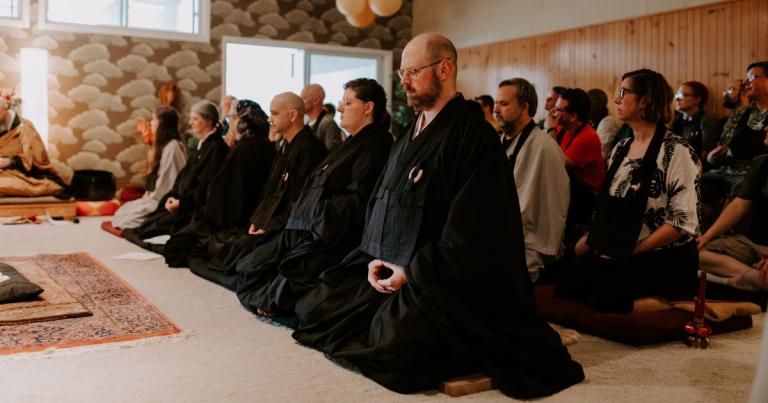
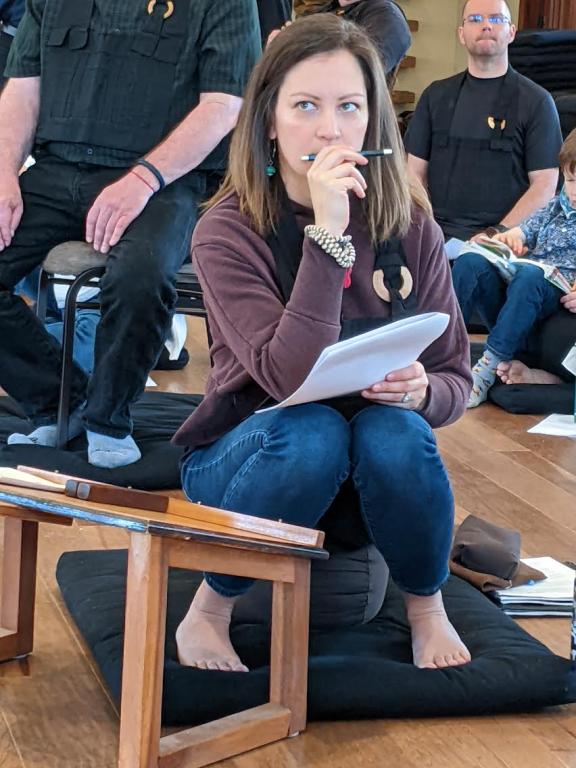
Kids are welcome at the temple. Their noise and disruptions are seen as positive things, and are embraced. Also, they’re not ashamed of being Mahayana Buddhists. Some are Jewish or Christian, many consider themselves as nonreligious. Their doors are open, and open wide. But the temple is a Buddhist temple.
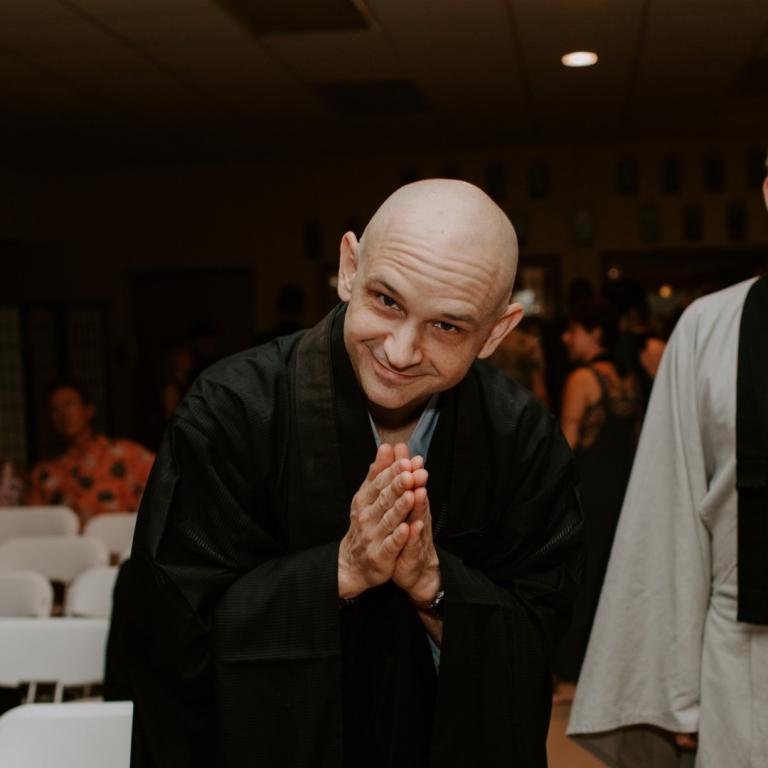
They offer a positive vision of the world, and are inclusive. And they’re engaged. They are aware of social evils, and while reluctantly, and with hesitation, and with reflection, they take communal stands on the issues of the day. Informed by their understanding of Zen Buddhism as a way to live in this world. They present as whole people a whole life.
Not to exaggerate. They’re people. The lack of racial and ethnic diversity is perceived as a wound and a shortcoming. They are aware of class issues and who can participate and who cannot. They see themselves as a work in progress.
Pretty amazing. Truly amazing.
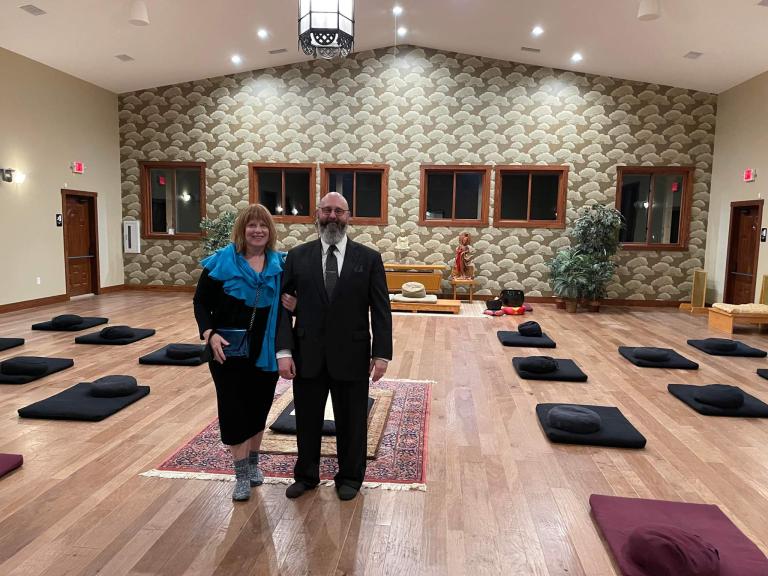
At the dedication of the temple I noticed two particular things. Among the two hundred or so people present, half were under forty. And, it was a long service, and not the most kid-friendly event, but there still were at least a half dozen younger kids present.
Bottom line. Zen, it turns out, is alive and flourishing in the American Mid West.
If you want to see what Zen in the West can look like in the next several decades, look at Toledo.
Next Post

May 1, 2022 Welcome Summer! Holy Beltane...
Browse Our Archives
Select a Category A Christmas Carol Abolitionist African-American Ahmadiyya Alan Watts Aldous Huxley Allen Ginsberg Amedkar Jayanti American politics American Zen Anaheim Zen Sangha Anglican Annie Besant April Fool Armageddon Art and Religion artificial intellegence Atheist Awakening B R Ambedkar Barlaam & Josaphat Beatnik Between Bhagavad Gita Bible biography birthday bodhisattva Bodhisattva Precepts Book burning Book of Common Prayer Book of Mormon Brahmo Samaj Buddha Buddhism Buddhist Buddhist Lord's Prayer Butterflies Calendars cartoons cat ChatGPT Chicken Tortilla Soup choices Christian atheism Christian mysticism Christian origins Christian Science Christian Zen Christianity Christianity and Buddhism christmas Christmas Truce Christopher Isherwood Church of Later Day Saints Cinco de Mayo circus covenant critical thinking culture D. T. Suzuki Dalit Buddhism Daniel Defoe Desert Fathers and Mothers dharma talk Dogen Donald Trump Dongshan's Five Ranks Dorothy Day dream Duty Easter ecology Edwin Arnold emptiness Empty Moon Zen Network Episcopal Church Eternal Now Ethics evolution existentialism Faith fantasy Fathers Day film film review fire Five Ranks Folk music food Form and emptiness Four Seals Francis of Assisi Francis Xavier Free thinker friendship George MacDonald Gerald Heard Glenn Taylor Webb God Good Friday Gospel of Gospel of Mark Gospel of Thomas grace Graduate Theological Unioin Graduate Theological Union Guanyin H R Blyth Hakuin Ekaku Hanamatsuri Hanukkah Harada Yasutani Zen Heart Sutra Henry David Thoreau Hermann Hesse Hinduism History and Religion history of religion Holy Spirit home Hospitality Icon Ides of March Isaac Newton Islam Islamic mysticism Jack Kerouac James Luther Adams Jiddu Krishnamurti Joan of Arc Johannes Gutenberg John Donne joke Judaism justice karma kensho King James Bible koan Koun Yamada Kyoto School Lewis Carrol Liberal Christianity Liberal Religion Life Plan Community Liminal literature Literature and Religion Liturgy Lord's Prayer Love Mahatma Gandhi Mahayana Martin Luther King Jr Mary Baker Eddy Mary Magdelene Mary Oliver Mayflower Compact Meditation memories memory metaphor money money and religioin Mormons Mother's Day movie review mysticism mythic Neighborhood Unitarian Universalist Church New Thought Nichiren Buddhism Nonduality not knowing Omar Khayyam Pacific School of Religion pagan Palm Sunday Passover peace Pentecost perennialism Phantastes Philip Kapleau philosophy Pilgrimage poetry Poetry and Religion politics Prayer Precepts Printing Press prophecy prophetic spirituality psychology Pure Land Queer religion queering religion Quietism Ram Mohan Roy rebirth recipe Relationships and religion religion religion and history Religious syncretism Resistance Retirement Retreat review Rissho Kosei Kai Ritual Robert Aitken Roshi Robert Ingersoll Rohatsu Romani religion Rosie the Riveter saints samadhi SanboZen Sangha Satyagraha science science and reigion science and religion science fiction seminary sermon Sesshin Sex and Religion Shinran Sikh Sikh tradition silence Social Justice Socially Engaged Buddhism Society and religion Soto Zen soul spiritual community spiritual practice Spirituality Sufism Suicide superstition Taoism Television Teresa of Avila Thanksgiving theological schools Theosophy Thomas Merton Time Transcendentalism Transcendentalist Trinitarian Trinity Uncategorized unitarian Unitarian Christianity Unitarian Universalist Universalism Vajrayana Vedanta Walking war Willa Cather William Ellery Channing wisdom women and religion women in religion World Teacher Writing zazen Zen Zen Center Zen inspired retriement zen meditation Zen Precepts Zen women
Select a Month September 2026 August 2026 July 2026 June 2026 May 2026 April 2026 March 2026 February 2026 January 2026 December 2025 November 2025 October 2025 September 2025 August 2025 July 2025 June 2025 May 2025 April 2025 March 2025 February 2025 January 2025 December 2024 November 2024 October 2024 September 2024 August 2024 July 2024 June 2024 May 2024 April 2024 March 2024 February 2024 January 2024 December 2023 November 2023 October 2023 September 2023 August 2023 July 2023 June 2023 May 2023 April 2023 March 2023 February 2023 January 2023 December 2022 November 2022 October 2022 September 2022 August 2022 July 2022 June 2022 May 2022 April 2022 March 2022 February 2022 January 2022 December 2021 November 2021 October 2021 September 2021 August 2021 July 2021 June 2021 May 2021 April 2021 March 2021 February 2021 January 2021 December 2020 November 2020 October 2020 September 2020 August 2020 July 2020 June 2020 May 2020 April 2020 March 2020 February 2020 January 2020 December 2019 November 2019 October 2019 September 2019 August 2019 July 2019 June 2019 May 2019 April 2019 March 2019 February 2019 January 2019 December 2018 November 2018 October 2018 September 2018 August 2018 July 2018 June 2018 May 2018 April 2018 March 2018 February 2018 January 2018 December 2017 November 2017 October 2017 September 2017 August 2017 July 2017 June 2017 May 2017 April 2017 March 2017 February 2017 January 2017 December 2016 November 2016 October 2016 September 2016 August 2016 July 2016 June 2016 May 2016 April 2016 March 2016 February 2016 January 2016 December 2015 November 2015 October 2015 September 2015 August 2015 July 2015 June 2015 May 2015 April 2015 March 2015 February 2015 January 2015 December 2014 November 2014 October 2014 September 2014 August 2014 July 2014 June 2014 May 2014 April 2014 March 2014 February 2014 January 2014 December 2013 November 2013 October 2013 September 2013 August 2013 July 2013 June 2013 May 2013 April 2013 March 2013 February 2013 January 2013 December 2012 November 2012 October 2012 September 2012 August 2012 July 2012 June 2012 May 2012 April 2012 March 2012 February 2012 January 2012 December 2011 November 2011 October 2011 September 2011 August 2011 July 2011 June 2011 May 2011 April 2011 March 2011 February 2011 January 2011 December 2010 November 2010 October 2010 September 2010 August 2010 July 2010 June 2010 May 2010 April 2010 March 2010 February 2010 January 2010 December 2009 November 2009 October 2009 September 2009 August 2009 July 2009 June 2009 May 2009 April 2009 March 2009 February 2009 January 2009 December 2008 November 2008 October 2008 September 2008 August 2008 July 2008 June 2008 May 2008 April 2008 March 2008 February 2008 January 2008 December 2007 November 2007 October 2007 September 2007 August 2007 July 2007 June 2007 May 2007 April 2007 March 2007 February 2007 January 2007 December 2006 November 2006 October 2006 September 2006
Follow Us!
TAKE THE
Religious Wisdom Quiz
What city was known as the City of David?
Select your answer to see how you score.
Jerusalem Nazareth Bethlehem Jericho
Related posts from Monkey Mind


Which Is the True Qian? A Koan About...


TRENDING AT PATHEOS Buddhist

Emotion in Early Christianity by Andrew Crislip
Andrew Crislip’s Emotion in Early Christianity examines an often overlooked dimension of...

16 Spiritual Touchstones for a More Grounded Life
After decades of spiritual study, here are 16 principles I try...

Catholic Evangelization: Sharing Your Faith Every Day
Welcome back to the Graceful Awakening mini-series called, “From Faith to Mission.” ...

The Pillar of the Boatmen: the Ancient Monument...
The Pillar of the Boatmen is a Romano-Gaulish sculpture that dates from...

In one sense walking into Westminster Abbey is like walking down the...

'Super Scam Me' Exposes AI Jon Bon Jovi...
Leslie Pickett believed she was in a relationship with Jon Bon Jovi....
view all Buddhist blogs
Ad-Free & Subscriber Log-In Subscription Support
- About Us
- 2026 Calendar
- Videos
- Podcasts
- Library of World Religions
- Faith In Media Tracker
- Advertise With Us
- Write for Us
- Privacy Policy
- Terms of Service
- Do Not Sell My Data
- Contact Us
- Radiant Digital
- Manage Newsletter Subscriptions
- Unsubscribe From Notifications
- Sitemap
Copyright 2008-2026, Patheos. All rights reserved.
Subscription Support Ad-Free & Subscriber Log-In
Follow Patheos