
BuddhistCatholicContemplativeEvangelicalGeneral ChristianHinduJewishLatter-day SaintMuslimNew VisionsProgressive Christian
Beliefs
- Buddhist
- Catholic
- Contemplative
- Evangelical
- General Christian
- Hindu
- Jewish
- Latter-day Saint
- More Voices
- Muslim
- New Visions
- Pagan
- Progressive Christian
Topics
- Religion News
- Food and Religion
- Sports and Religion
- Religious Art
- Religious Music and Entertainment
- Religious Events
- History and Religion
- Style and Religion
- Politics and Religion
- Women in Religion
- Recreation Outdoors and Religion
- Business Finance and Religion
- Careers Workplace and Religion
- Education and Religion
- Family Parenting and Religion
- Health Fitness and Religion
- Home and Religion
- Relationships and Religion
- Technology and Religion
- Travel and Religion
Columnists
- Buddhist Columnists
- Business Finance and Religion Columnists
- Careers Workplace and Religion Columnists
- Catholic Columnists
- Contemplative Columnists
- Education and Religion Columnists
- Evangelists Columnists
- Family Parenting and Religion Columnists
- General Christian Columnists
- Health Fitness and Religion Columnists
- Hindu Columnists
- History and Religion Columnists
- Home and Religion Columnists
- Jewish Columnists
- More Voices Columnists
- Latter Day Columnists
- Muslim Columnists
- New Visions Columnists
- Nonreligious Columnists
- Pagan Columnists
- Politics and Religion Columnists
- Progressive Columnists
- Recreation Outdoors and Religion Columnists
- Relationships and Religion Columnists
- Religion News Columnists
- Religious Art Columnists
- Religious Events Columnists
- Religious Music and Entertainment Columnists
- Sports and Religion Columnists
- Style and Religion Columnists
- Technology and Religion Columnists
- Travel and Religion Columnists
- Women in Religion Columnists
Resource Library
- 2026 Calendar
- Library of World Religions
- The 100 Most Holy Places on Earth
- Patheos Answers
- Podcasts
- Videos
- Faith Leaders Database
- Anglican Episcopalian
- Bahai
- Baptist
- Buddhism
- Christianity
- Confucianism
- Eastern Orthodoxy
- Hinduism
- Holiness and Pentecostal
- ISKCON
- Islam
- Judaism
- Lutheran
- Methodist
- The Church of Jesus Christ of Latter-day Saints
- New Age
- Paganism
- Presbytarian and Reformed
- Protestantism
- Religion Behind the Scenes
- Roman Catholic
- Scientology
- Shia Islam
- Sikhism
- Sufism
- Sunni Islam
- Taoism
- Zen
- See all religions
Research Tools
 Ad-Free & Subscriber Log-In Subscription Support
Ad-Free & Subscriber Log-In Subscription Support
Follow Patheos 

- Trending:
- Forgiveness
- |
- Marriage
- |
- Consciousness
- |
- Death Penalty
- |
- Election
- |
- Halloween

- Home
- Buddhist
- The Mahayana in a Nutshell: The Four Seals, The Two Truths, and the Three Bodies
The Mahayana in a Nutshell: The Four Seals, The Two Truths, and the Three Bodies
Last updated on: March 7, 2022 at 10:52 am by James Ford
The Mahayana in a Nutshell: The Four Seals, The Two Truths, and the Three Bodies 2022-03-07T10:52:40-08:00 James Ford
Patheos Explore the world's faith through different perspectives on religion and spirituality! Patheos has the views of the prevalent religions and spiritualities of the world.
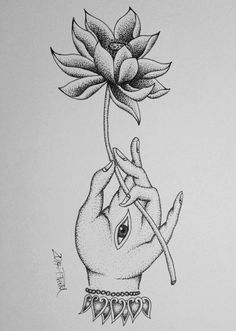
I find the great gift of the Mahayana Buddhist tradition is expressed within the four seals of existence, the two truths, and the three bodies of the buddha.
While I am wary of dogmas, I find these the most helpful pointers to the structures of the human heart of any I’ve encountered in my life. While all things need to be held lightly, subject to mutation and change, these have been the pointers that have so far proven as true as anything I’ve encountered in this saha world, in this passing world.
These assertions about reality and how to find it down to my bones and marrow are why I call myself a Buddhist, and why of the many authentic ways, I bow into the specific tradition that is Zen. If there are any authentic first principles to a spiritual life, certainly the Zen Buddhist spiritual life, they are these.
The four seals are observations about the nature of things, and specifically our human condition. The formulation of the four seals don’t seem to date much earlier than the “The Questions of the Nāga King Sāgara,” the Sāgaranāgarājaparipṛcchā, which itself doesn’t seem to date earlier than the third century before our common era, and is likely much later. Of course, it is simply an explicit ordering of what had been taught for hundreds of years as the heart of the Buddha’s teaching.
The first three are:
1) Impermanence: Everything is made of parts, and they will inevitably come apart. This speaks to the fundamental structures of the universe as well as to the creation of our minds. But it is the mind, it is the heart that it’s most critical for us to understand. We are real. But we are impermanent.
2) No-self or the Emptiness of Self: There is no abiding self. The self is real. As I said, we are real, you and I. Pinch us and we hurt. But our exist4ence is mutable. And in the end, we are mortal. Nothing escapes the dissolution of the body. The wonderful mystery that we are, our unique noticing of the universe, our little corner ends.
3) Dis-ease or Disquiet: The motion of things rising and falling is experienced by humans as painful, causing anxiety and anguish. I call this encounter the buzz. The buzz is in the back of everything we encounter, behind every victory.
These first three are found in some lists as the “marks of existence.” But I find they lack something. And that something is expressed as the fourth seal.
4) There is a way through the hurt. This is the good news of Zen Buddhism. While the buzz belongs to the universe, it’s the experience of everything in motion, the buzz as discomfort, dis-ease, anxiety, or anguish belongs specifically to our human world. Given the size of the cosmos, “human” here would be any being with a consciousness that can discern the first three seals.
There is a way through. Call it enlightenment. Call it awakening. Call it peace.
Buddhism, Zen, is about awakening. The fourth seal of the intimate way.
And there two other teachings that are the great gifts of the Buddha way. Of the next can argue whether it is implicit in the earliest strata of teachings. I think so. But, more importantly, the “two truths” reached its normative form with the fourth century monk Nagarjuna. He established the exact identity of the world as understood with the image of dependent origination and boundlessness. The two truths can be summarized as:
1) Form: Everything exists within a play of mutual causality, creating, living, dying.
2) Emptiness: The absolute emptiness of these rising and falling things.
We humans naturally apprehend the first by close observation. While the second is recessive, and we normally have to seek it with the aid of practices of presence.
Rather more complex is the radical identity of these two truths. While it is possible to find these principles within the Nikayas, the earliest preserved writings, they are not developed for hundreds of years. This is where Nagarjuna and the great apophatic texts, like the Prajnaparamita cycle, sing into our hearts an ancient truth. The formless world and the world of form are in fact one thing.
The second century monk Nagarjuna is generally credited for sorting it out. He presents the facts of these two truths and their absolute identity with the sharpest of razors. Nagarjuna takes no prisoners. Personally, I’ve found what it can really mean best when this insight and the attendant practices to support finding it began in China. The encounters of Zen adepts, as they say, showed rather than explained. And then, again for me, especially through Eihei Dogen’s poetic pen, I found my heart and my being drawn into what these two truths mean as a living reality.
For us on the Zen way the spiritual project is living into these truths. We normally start with our plain observation of the phenomenal world. It is as it is. While temporary and causally related, it is real. And. The next thing to notice is how everything within the phenomenal world is wildly open, boundless, empty.
The spiritual project is to notice the world that we are, that we are boundless, and then beyond either sense of separation. And then letting go of that sense of beyond separation. What in the Zen way is called “not one, not two.”
In many ways this is the pivot observation for Zen.
And there’s one more point, a critical gift of the great way.
Trikaya, the doctrine of the three bodies of Buddha is fully developed by the beginning of the fourth century in the Yogacara school. It describes how we encounter reality. The first two are touched on a lot in Buddhist thinking and within the disciplines of Zen. And, personally, I’m finding the third increasingly important.
1) Nirmanakaya: Within history and within that rising and falling of things.
2) Dharmakaya: As totally empty of substance. There is no part that abides. Everything passes.
3) Sambhogakaya: And a third place, one of mystery. Traditionally this is the “body of bliss.” In my own path I’ve noticed it somewhat differently. Perhaps under the influence of James Hillman and Archetypal psychology, which I’ll discuss in more detail later, but more because of my own experiences tumbling into that liminal space that is not exactly dharmakaya, not exactly nirmanakaya. Increasingly this is my place. Here is where our human minds and hearts engage the mystery. Where the rising and falling feels less concrete, and more fluid. Dream and metaphor are the language of this body.
But, as wonderful as this is, it doesn’t end there. I think of that indigenous woman, so tiny, and her child. Hungry. I think of all the sufferings of our human condition. Those beyond our control, and those within our hands to change.
In this world where we notice we exist within bonds of connection.
This is not about lists. It isn’t about the finest analysis. It’s about a hungry child. It’s about my restless heart. It’s about how we meet the world. And I cannot express my gratitude enough for finding it. Actually, it feels something deeper than finding. As the Zen teacher Zenju Earthlyn Manuel says “It is all very natural to me. I welcome the Dharma as it has welcomed me long before I was born.”
It is organic. It is physical. It is intimate.
It is about not turning away. It is about leaning into the gift and learning to hold with open hands. A bad metaphor, but I hope it points. Hold all things to your heart. But be ready to let go. Mary Oliver sings it best: “To live in this world, you must be able to do three things: to love what is mortal; to hold it against your bones knowing your own life depends on it; and, when the time comes to let it go, to let it go.”
I feel the tugs of our connections. While in some ultimate sense these connections are touchable, but they are not a place we can live. It is boundless and open. Ineffable. Our profound connections with each other and the world become the background of our knowing.
Everything, every blessed thing is joined most intimately within a wild openness.
Previous Post

March 6, 2022
Thinking About Freedom
Next Post
March 9, 2022 What is Zen?
Browse Our Archives
Select a Category A Christmas Carol Abolitionist African-American Ahmadiyya Alan Watts Aldous Huxley Allen Ginsberg Amedkar Jayanti American politics American Zen Anaheim Zen Sangha Anglican Annie Besant April Fool Armageddon Art and Religion artificial intellegence Atheist Awakening B R Ambedkar Barlaam & Josaphat Beatnik Between Bhagavad Gita Bible biography birthday bodhisattva Bodhisattva Precepts Book burning Book of Common Prayer Book of Mormon Brahmo Samaj Buddha Buddhism Buddhist Buddhist Lord's Prayer Butterflies Calendars cartoons cat ChatGPT Chicken Tortilla Soup choices Christian atheism Christian mysticism Christian origins Christian Science Christian Zen Christianity Christianity and Buddhism christmas Christmas Truce Christopher Isherwood Church of Later Day Saints Cinco de Mayo circus covenant critical thinking culture D. T. Suzuki Dalit Buddhism Daniel Defoe Desert Fathers and Mothers dharma talk Dogen Donald Trump Dongshan's Five Ranks Dorothy Day dream Duty Easter ecology Edwin Arnold emptiness Empty Moon Zen Network Episcopal Church Eternal Now Ethics evolution existentialism Faith fantasy Fathers Day film film review fire Five Ranks Folk music food Form and emptiness Four Seals Francis of Assisi Francis Xavier Free thinker friendship George MacDonald Gerald Heard Glenn Taylor Webb God Good Friday Gospel of Gospel of Mark Gospel of Thomas grace Graduate Theological Unioin Graduate Theological Union Guanyin H R Blyth Hakuin Ekaku Hanamatsuri Hanukkah Harada Yasutani Zen Heart Sutra Henry David Thoreau Hermann Hesse Hinduism History and Religion history of religion Holy Spirit home Hospitality Icon Ides of March Isaac Newton Islam Islamic mysticism Jack Kerouac James Luther Adams Jiddu Krishnamurti Joan of Arc Johannes Gutenberg John Donne joke Judaism justice karma kensho King James Bible koan Koun Yamada Kyoto School Lewis Carrol Liberal Christianity Liberal Religion Life Plan Community Liminal literature Literature and Religion Liturgy Lord's Prayer Love Mahatma Gandhi Mahayana Martin Luther King Jr Mary Baker Eddy Mary Magdelene Mary Oliver Mayflower Compact Meditation memories memory metaphor money money and religioin Mormons Mother's Day movie review mysticism mythic Neighborhood Unitarian Universalist Church New Thought Nichiren Buddhism Nonduality not knowing Omar Khayyam Pacific School of Religion pagan Palm Sunday Passover peace Pentecost perennialism Phantastes Philip Kapleau philosophy Pilgrimage poetry Poetry and Religion politics Prayer Precepts Printing Press prophecy prophetic spirituality psychology Pure Land Queer religion queering religion Quietism Ram Mohan Roy rebirth recipe Relationships and religion religion religion and history Religious syncretism Resistance Retirement Retreat review Rissho Kosei Kai Ritual Robert Aitken Roshi Robert Ingersoll Rohatsu Romani religion Rosie the Riveter saints samadhi SanboZen Sangha Satyagraha science science and reigion science and religion science fiction seminary sermon Sesshin Sex and Religion Shinran Sikh Sikh tradition silence Social Justice Socially Engaged Buddhism Society and religion Soto Zen soul spiritual community spiritual practice Spirituality Sufism Suicide superstition Taoism Television Teresa of Avila Thanksgiving theological schools Theosophy Thomas Merton Time Transcendentalism Transcendentalist Trinitarian Trinity Uncategorized unitarian Unitarian Christianity Unitarian Universalist Universalism Vajrayana Vedanta Walking war Willa Cather William Ellery Channing wisdom women and religion women in religion World Teacher Writing zazen Zen Zen Center Zen inspired retriement zen meditation Zen Precepts Zen women
Select a Month September 2026 August 2026 July 2026 June 2026 May 2026 April 2026 March 2026 February 2026 January 2026 December 2025 November 2025 October 2025 September 2025 August 2025 July 2025 June 2025 May 2025 April 2025 March 2025 February 2025 January 2025 December 2024 November 2024 October 2024 September 2024 August 2024 July 2024 June 2024 May 2024 April 2024 March 2024 February 2024 January 2024 December 2023 November 2023 October 2023 September 2023 August 2023 July 2023 June 2023 May 2023 April 2023 March 2023 February 2023 January 2023 December 2022 November 2022 October 2022 September 2022 August 2022 July 2022 June 2022 May 2022 April 2022 March 2022 February 2022 January 2022 December 2021 November 2021 October 2021 September 2021 August 2021 July 2021 June 2021 May 2021 April 2021 March 2021 February 2021 January 2021 December 2020 November 2020 October 2020 September 2020 August 2020 July 2020 June 2020 May 2020 April 2020 March 2020 February 2020 January 2020 December 2019 November 2019 October 2019 September 2019 August 2019 July 2019 June 2019 May 2019 April 2019 March 2019 February 2019 January 2019 December 2018 November 2018 October 2018 September 2018 August 2018 July 2018 June 2018 May 2018 April 2018 March 2018 February 2018 January 2018 December 2017 November 2017 October 2017 September 2017 August 2017 July 2017 June 2017 May 2017 April 2017 March 2017 February 2017 January 2017 December 2016 November 2016 October 2016 September 2016 August 2016 July 2016 June 2016 May 2016 April 2016 March 2016 February 2016 January 2016 December 2015 November 2015 October 2015 September 2015 August 2015 July 2015 June 2015 May 2015 April 2015 March 2015 February 2015 January 2015 December 2014 November 2014 October 2014 September 2014 August 2014 July 2014 June 2014 May 2014 April 2014 March 2014 February 2014 January 2014 December 2013 November 2013 October 2013 September 2013 August 2013 July 2013 June 2013 May 2013 April 2013 March 2013 February 2013 January 2013 December 2012 November 2012 October 2012 September 2012 August 2012 July 2012 June 2012 May 2012 April 2012 March 2012 February 2012 January 2012 December 2011 November 2011 October 2011 September 2011 August 2011 July 2011 June 2011 May 2011 April 2011 March 2011 February 2011 January 2011 December 2010 November 2010 October 2010 September 2010 August 2010 July 2010 June 2010 May 2010 April 2010 March 2010 February 2010 January 2010 December 2009 November 2009 October 2009 September 2009 August 2009 July 2009 June 2009 May 2009 April 2009 March 2009 February 2009 January 2009 December 2008 November 2008 October 2008 September 2008 August 2008 July 2008 June 2008 May 2008 April 2008 March 2008 February 2008 January 2008 December 2007 November 2007 October 2007 September 2007 August 2007 July 2007 June 2007 May 2007 April 2007 March 2007 February 2007 January 2007 December 2006 November 2006 October 2006 September 2006
Follow Us!
TAKE THE
Religious Wisdom Quiz
What was the result of Jesus meeting the Gerasene demoniac?
Select your answer to see how you score.
A storm calmed Demons cast into pigs A man healed of leprosy Bread multiplied
Related posts from Monkey Mind


Which Is the True Qian? A Koan About...


TRENDING AT PATHEOS Buddhist

Swimfan: Forgotten Aughts Pleasures
This is a recovery effort. In 2002, My Big Fat Greek Wedding...

Top Three Anti-Catholic Lies About Catholicism
This is my initial transcript for the video, "THE 3 WORST...

Pope Leo Celebrates Mass for Nurses & Docs...
I don't have any idea how he did it, but Pope Leo...

The Sermon on the Mount, Part I: Matthew...
The Sermon on the Mount, Part I (Matthew 4:12-5:12) St. Matthew moves...

What's up from Crossway: Reviewing some of their latest A few weeks...

Janie Learns the Way of the Cross: A...
Teaching children about Jesus' Passion can be challenging. Many parents and educators...
view all Buddhist blogs
Ad-Free & Subscriber Log-In Subscription Support
- About Us
- 2026 Calendar
- Videos
- Podcasts
- Library of World Religions
- Faith In Media Tracker
- Advertise With Us
- Write for Us
- Privacy Policy
- Terms of Service
- Do Not Sell My Data
- Contact Us
- Radiant Digital
- Manage Newsletter Subscriptions
- Unsubscribe From Notifications
- Sitemap
Copyright 2008-2026, Patheos. All rights reserved.
Subscription Support Ad-Free & Subscriber Log-In
Follow Patheos