
BuddhistCatholicContemplativeEvangelicalGeneral ChristianHinduJewishLatter-day SaintMuslimNew VisionsProgressive Christian
Beliefs
- Buddhist
- Catholic
- Contemplative
- Evangelical
- General Christian
- Hindu
- Jewish
- Latter-day Saint
- More Voices
- Muslim
- New Visions
- Pagan
- Progressive Christian
Topics
- Religion News
- Food and Religion
- Sports and Religion
- Religious Art
- Religious Music and Entertainment
- Religious Events
- History and Religion
- Style and Religion
- Politics and Religion
- Women in Religion
- Recreation Outdoors and Religion
- Business Finance and Religion
- Careers Workplace and Religion
- Education and Religion
- Family Parenting and Religion
- Health Fitness and Religion
- Home and Religion
- Relationships and Religion
- Technology and Religion
- Travel and Religion
Columnists
- Buddhist Columnists
- Business Finance and Religion Columnists
- Careers Workplace and Religion Columnists
- Catholic Columnists
- Contemplative Columnists
- Education and Religion Columnists
- Evangelists Columnists
- Family Parenting and Religion Columnists
- General Christian Columnists
- Health Fitness and Religion Columnists
- Hindu Columnists
- History and Religion Columnists
- Home and Religion Columnists
- Jewish Columnists
- More Voices Columnists
- Latter Day Columnists
- Muslim Columnists
- New Visions Columnists
- Nonreligious Columnists
- Pagan Columnists
- Politics and Religion Columnists
- Progressive Columnists
- Recreation Outdoors and Religion Columnists
- Relationships and Religion Columnists
- Religion News Columnists
- Religious Art Columnists
- Religious Events Columnists
- Religious Music and Entertainment Columnists
- Sports and Religion Columnists
- Style and Religion Columnists
- Technology and Religion Columnists
- Travel and Religion Columnists
- Women in Religion Columnists
Resource Library
- 2026 Calendar
- Library of World Religions
- The 100 Most Holy Places on Earth
- Patheos Answers
- Podcasts
- Videos
- Faith Leaders Database
- Anglican Episcopalian
- Bahai
- Baptist
- Buddhism
- Christianity
- Confucianism
- Eastern Orthodoxy
- Hinduism
- Holiness and Pentecostal
- ISKCON
- Islam
- Judaism
- Lutheran
- Methodist
- The Church of Jesus Christ of Latter-day Saints
- New Age
- Paganism
- Presbytarian and Reformed
- Protestantism
- Religion Behind the Scenes
- Roman Catholic
- Scientology
- Shia Islam
- Sikhism
- Sufism
- Sunni Islam
- Taoism
- Zen
- See all religions
Research Tools
 Ad-Free & Subscriber Log-In Subscription Support
Ad-Free & Subscriber Log-In Subscription Support
Follow Patheos 

- Trending:
- Forgiveness
- |
- Marriage
- |
- Consciousness
- |
- Death Penalty
- |
- Election
- |
- Halloween

- Home
- Buddhist
- A HOLY CURIOSITY: A Meditation on Albert Einstein and Nondual Religion
A HOLY CURIOSITY: A Meditation on Albert Einstein and Nondual Religion
Last updated on: March 13, 2022 at 12:48 pm by James Ford
A HOLY CURIOSITY: A Meditation on Albert Einstein and Nondual Religion 2022-03-13T12:48:27-07:00 James Ford
Patheos Explore the world's faith through different perspectives on religion and spirituality! Patheos has the views of the prevalent religions and spiritualities of the world.
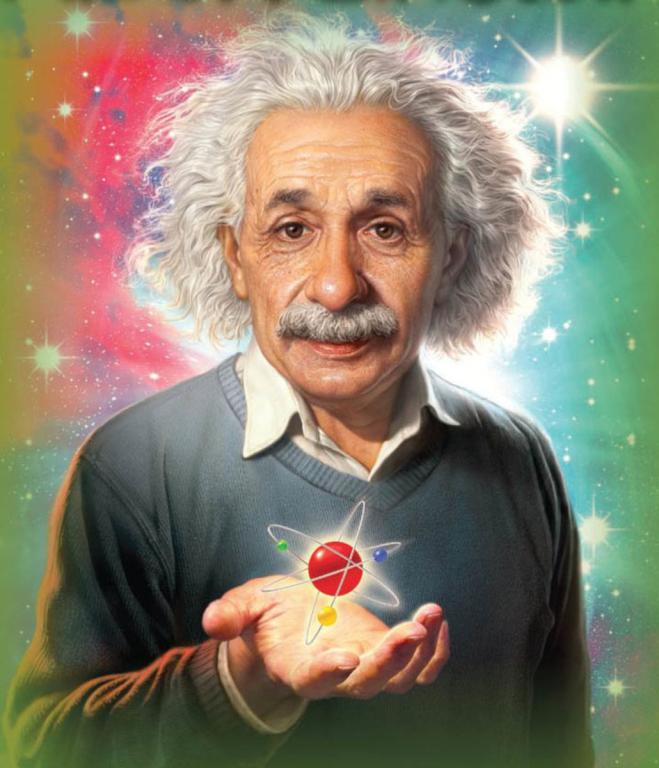
A Holy Curiosity:
A Meditation on Albert Einstein and Nondual Religion
James Ishmael Ford
A Sermon delivered at
the First Unitarian Church of Los Angeles
13 March 2022
The important thing is not to stop questioning. Curiosity has its own reason for existing. One cannot help but be in awe when one contemplates the mysteries of eternity… Never lose a holy curiosity.
Albert Einstein
In 2008, Albert Einstein’s so-called “God Letter” was put up for auction. It was a handwritten page and a half long letter. Despite his full-on embrace of his Jewishness for the whole of his life, the letter was highly critical of his birth religion, lumped together with all religions, as prescientific. He particularly expressed disdain for the common understanding of God, which he saw as simply a field of projection. Among those who bid on the manuscript was the renowned “new atheist,” Richard Dawkins. But the going price was a bit rich for the retired Oxford don. As the letter ended up selling for a bit less than three million dollars.
It was a litany of what Einstein didn’t believe regarding conventional religion, including Judaism. Put a bit more positively it’s not in fact all that different than another famous quote of his. “I believe in Spinoza’s God who reveals himself in the orderly harmony of what exists, not in a God who concerns himself with the fates and actions of human beings.”
In the letter he rejects the word God for its freighting. But in fact, Einstein often used the word God. But for him God and Nature and Cosmos and Universe are simply synonyms. When Einstein used the word God he meant it in a sense he carried throughout his life – that there is something that unites all things, and perhaps is worthy of language of reverence. But, as far as we human beings are concerned, well, we’re on our own.
However, for Einstein, as for all of us who find ourselves living in this world, it appears there was a push-come-to-shove, where he showed how he saw things are complicated, more than a great cosmos to be revered but ultimately separate from the problems of humanity. We find this in another correspondence, this time an exchange with Robert Marcus.
Marcus was a remarkable man, an American Orthodox rabbi. When the second world war began, he immediately enlisted as a chaplain. Marcus would win six battle stars as well as a Bronze Star for personal heroism. As the war ended, he was one of the first chaplains to come to Buchenwald. There he found that while children and youth, by Nazi policy, were the first to be gassed; the inmates, against all odds, had successfully hidden 904 kids. Rabbi Marcus managed to get them to France, from where they were all sent to new homes. Among them was sixteen-year old Elie Wiesel.
In 1949, while still working in Europe, Rabbi Marcus was informed all three of his children had contracted polio, and one of them, his firstborn died. From that period of suffering piled high upon suffering, in the midst of his endless struggle to lessen the hurt of so many, he reached out to Albert Einstein.
On February 12th, Einstein replied.
“Dear Dr Marcus: A human being is part of the whole, called by us ‘Universe,’ a part limited in time and space. He experiences himself, his thoughts and feelings as something separated from the rest – a kind of optical delusion of his consciousness. The striving to free oneself from this delusion is the one issue of true religion. Not to nourish the delusion but to try to overcome it is the way to reach the attainable measure of peace of mind.”
Not including the salutation, three sentences, seventy-eight words. It speaks to possibilities shared within many religions, maybe all. But, before I move into unpacking what that might mean, a bit more about its author. For some a reminder, for others a small introduction.
Albert Einstein was born one hundred and forty-three years ago, tomorrow, the 14th of March 1879, in Ulm, in what was then the kingdom of Wurttemberg, a part of the German Empire.
His family were secular Jews. Einstein was slow to learn to speak. That and his youthful rebelling against rote education has sparked numerous stories of his being slow. By twelve it became obvious the boy was in fact not ordinary. At thirteen he began the study of math, philosophy, and music. In 1900 at twenty-one he earned a teaching degree in math and physics. He had trouble finding a teaching position and ended up working at the patent office. Even then his studies continued, and Einstein won his doctorate in 1905. And he began to publish. Three years later he was appointed a lecturer at the University of Bern. The rest, as they say, is history.
His theories of special and general relativity, and the photoelectric effect, fundamentally changed how people saw the natural world. His work had near immediate practical consequences ranging from laser pointers, to the development of solar power, to stock market forecasting, to the development of paper towels. Of all things.
It is fair to say he would become one of the greatest physicists in history. Much of modern physics either confirms his theories or is engaged in disputing them. He was awarded the Nobel Prize in Physics in 1921. In 1933, escaping the Nazis, he settled in the United States, becoming an American citizen in 1940. Einstein died in Princeton, New Jersey in 1955. He was seventy-six.
He was a public intellectual. With his wild mane of white hair, his willingness to occasionally clown for the camera, he was photogenic and easily identified. His serious commitment to civil rights, especially for African Americans, his work first in defense of Democracies, and later for world peace made Einstein a celebrity scientist. He was a longtime correspondent with Mahatma Gandhi, and a committed socialist. At his death his FBI file was over 1,400 pages long. Einstein’s complicated love life added spice to his legend, including the possibility his first wife Mileva Maric was in fact a collaborator in several of his groundbreaking theories. Einstein remains an endless well of interesting tidbits.
But, for me, I’m most interested in his spirituality. He considered himself a Humanist and was associated with the First Humanist Society of New York, founded by the Unitarian minister Charles Francis Potter. As well as with the Ethical Culture movement and its congregations, where he occasionally attended services. Einstein described himself as a “deeply religious nonbeliever.” If he were alive today, perhaps he’d find resonance with the term spiritual but not religious.
Spiritually Albert Einstein was a species of pantheist. Where God, nature, cosmos, universe are interchangeable terms for some dynamic unity of which everything is a part. I believe, in his thorough going quest to find wisdom within his scientific quest, he was a sort of jnana yogi, seeking wisdom through the cultivation of knowledge. Not mere accumulations of facts; but opening the doors of his perception into wisdom by way of a holy curiosity.
In 1936 Einstein responded to a letter from a sixth-grade girl who asked if scientists pray, and if they did, what did they pray for? He wrote back:
“Scientific research is based on the idea that everything that takes place is determined by laws of nature, and therefore this holds for the actions of people. For this reason, a research scientist will hardly be inclined to believe that events could be influenced by a prayer, i.e. by a wish addressed to a supernatural Being.
“However, it must be admitted that our actual knowledge of these laws is only imperfect and fragmentary, so that, actually, the belief in the existence of basic all-embracing laws in Nature also rests on a sort of faith. All the same this faith has been largely justified so far by the success of scientific research.
“But, on the other hand, every one who is seriously involved in the pursuit of science becomes convinced that a spirit is manifest in the laws of the Universe — a spirit vastly superior to that of man, and one in the face of which we with our modest powers must feel humble. In this way the pursuit of science leads to a religious feeling of a special sort, which is indeed quite different from the religiosity of someone more naive.”
Here we see the faith of science. It’s not long on metaphysics. It’s kind of spare, in fact. There is a bit of an air of triumphalism that isn’t entirely attractive. If, possibly justified. But the really important part is how his “faith,” if you will, is a kind of curiosity. Over and over Einstein speaks of humility and being humble. He calls to a not knowing, and with it a desire to know. So, it notices things. And that is a spirit which arises as the laws of the universe. Which, as I understand this matter, is a constant unfolding of the mysterious ways in which everything is bound up together.
It’s about how we are a whole and a part. Or, as we say in the Zen world, citing the ninth century poem, the Song of the Jewel Mirror Samadhi, “You are not it, but in truth it is you.”
Not one. Not two. The mysterious world of the nondual. Nonduality is a current within the world’s religious traditions. It’s the spiritual of the seventh principal, how we’re all bound up together. And it explains the first, that we are each of us, in our passingness, precious.
For me Einstein offers a map to a spirituality after religion. And it’s worth looking at.
Let’s listen to his letter again, slightly edited for our time and place:
“A human being is part of the whole, called by us ‘Universe,’ a part limited in time and space. We experience ourselves, our thoughts and feelings as something separated from the rest – a kind of optical delusion of our consciousness. The striving to free ourselves from this delusion is the one issue of true religion. Not to nourish the delusion but to try to overcome it is the way to reach the attainable measure of peace of mind.”
Three sentences, seventy-eight words, in the original and in this slight paraphrase.
First, that sentence about the universe. We can call it the world. We can call it God. There’s a lovely term in Koine Greek, Pleroma. It means fullness. Pleroma is used as a theological term in Christianity to mean fullness of God. Although in the New Testament it is also used in several other ways. In Gnosticism it means fullness, as well. But adds in a sense of completeness as contrasted to any form of deficiency. It is a whole that needs no extra.
What I find useful about Pleroma is that it describes a whole that is dynamic and contains, or perhaps better, manifests within relationships. You know, just like this world we notice when we open our eyes and our hearts. Like a kiss. Like cancer. Pleroma, fullness, asserts a kind of universe that is experienced, never static, sometimes terrifying, always, always beautiful.
That universe of which we human beings are a part. But a mysterious part. Temporary, no doubt. But in that shining moment of our existence, we can also notice how everything else within the universe has collaborated in the moment to birth us, to sustain us, and in time, in another moment to take us apart. Only then in another moment to be put back together in new ways. And this is another part of the mystery of it. We are for a moment, for that moment, for this moment the center of this universe. Each of us. As we are.
Then there is what I consider the essential of all religious endeavor. “(S)triving to free oneself from this delusion is the one issue of true religion.” More specifically, as a practice to not nourish this delusion of separation. Einstein doesn’t describe the actual practice other than say to “try.”
I think Einstein’s how, his way of trying, is actually captured in another handwritten note. This one sold at a different auction and won a tad more than a million and a half dollars. It goes, “A calm and humble life will bring more happiness than the pursuit of success and the constant restlessness that comes with it.”
In some ways his theological, his spiritual assertion of our radical interdependence is found as a mystical thread in many religions, all the Abrahamic faiths, in Hinduism, Buddhism, and Taoism. To name the obvious. His approach has a Taoist feel to it, or, perhaps we can see echoes of ancient Greece, the way of the Stoic or the Pyrrhonic path of radical skepticism, which some see as a Western adaptation of Buddhism.
We find ourselves called to a middle way, emphasizing calmness and humility. Humility, to be humble, to not know, to be curious. Here we can see not only the heart of the scientific endeavor, but also a straight-forward description of a spiritual path that is worth walking. Definitely worth a million and a half dollars.
It is noticing the part as a brokenness, a sense of separation from the whole. And the promise to the broken heart, is a kind of healing. He offers something modest, an attainable measure of peace of mind. He says. And I also notice how he modeled his life flowing out of this noticing, in his tireless work for justice. As the Zen missionary Shunryu Suzuki said, “you are perfect as you are. And you can use some improvement.” Einstein worked for racial justice, for economic justice, and for peace. For his entire life.
He saw the connections and felt an endless need to reach out and help.
Now, I can’t say how far Einstein was able to delve into this mysterious place of not knowing within the intimate web of relationships. I think he is a bit like Moses, he saw the promised land. But he did not go there.
Or, in this case he touched it. He saw a certain peace. I believe that.
But there is more to be uncovered. I suggest as have many others, there is a ways to go from these insights, a continuing journey into not knowing, into curiosity of heart, into witnessing the mysteries of our intimate existence. And with that, ever unfolding encounters with grace.
There is going ever more deeply into the truths that the world’s religions and their languages point to.
But which we must walk for ourselves.
However deeply he penetrated into the personal parts of the cosmos, with his holy curiosity, he showed us a way. One we can profitably take up for ourselves. And I hope we do. Each of us.
Who knows? Who knows? The fate of worlds might rest on whether we do, or not.
Amen.
Previous Post

March 12, 2022
STOP THE WAR: A Meditation on a Zen Koan
Next Post
March 13, 2022 Psalm 31: For Ukraine
Browse Our Archives
Select a Category A Christmas Carol Abolitionist African-American Ahmadiyya Alan Watts Aldous Huxley Allen Ginsberg Amedkar Jayanti American politics American Zen Anaheim Zen Sangha Anglican Annie Besant April Fool Armageddon Art and Religion artificial intellegence Atheist Awakening B R Ambedkar Barlaam & Josaphat Beatnik Between Bhagavad Gita Bible biography birthday bodhisattva Bodhisattva Precepts Book burning Book of Common Prayer Book of Mormon Brahmo Samaj Buddha Buddhism Buddhist Buddhist Lord's Prayer Butterflies Calendars cartoons cat ChatGPT Chicken Tortilla Soup choices Christian atheism Christian mysticism Christian origins Christian Science Christian Zen Christianity Christianity and Buddhism christmas Christmas Truce Christopher Isherwood Church of Later Day Saints Cinco de Mayo circus covenant critical thinking culture D. T. Suzuki Dalit Buddhism Daniel Defoe Desert Fathers and Mothers dharma talk Dogen Donald Trump Dongshan's Five Ranks Dorothy Day dream Duty Easter ecology Edwin Arnold emptiness Empty Moon Zen Network Episcopal Church Eternal Now Ethics evolution existentialism Faith fantasy Fathers Day film film review fire Five Ranks Folk music food Form and emptiness Four Seals Francis of Assisi Francis Xavier Free thinker friendship George MacDonald Gerald Heard Glenn Taylor Webb God Good Friday Gospel of Gospel of Mark Gospel of Thomas grace Graduate Theological Unioin Graduate Theological Union Guanyin H R Blyth Hakuin Ekaku Hanamatsuri Hanukkah Harada Yasutani Zen Heart Sutra Henry David Thoreau Hermann Hesse Hinduism History and Religion history of religion Holy Spirit home Hospitality Icon Ides of March Isaac Newton Islam Islamic mysticism Jack Kerouac James Luther Adams Jiddu Krishnamurti Joan of Arc Johannes Gutenberg John Donne joke Judaism justice karma kensho King James Bible koan Koun Yamada Kyoto School Lewis Carrol Liberal Christianity Liberal Religion Life Plan Community Liminal literature Literature and Religion Liturgy Lord's Prayer Love Mahatma Gandhi Mahayana Martin Luther King Jr Mary Baker Eddy Mary Magdelene Mary Oliver Mayflower Compact Meditation memories memory metaphor money money and religioin Mormons Mother's Day movie review mysticism mythic Neighborhood Unitarian Universalist Church New Thought Nichiren Buddhism Nonduality not knowing Omar Khayyam Pacific School of Religion pagan Palm Sunday Passover peace Pentecost perennialism Phantastes Philip Kapleau philosophy Pilgrimage poetry Poetry and Religion politics Prayer Precepts Printing Press prophecy prophetic spirituality psychology Pure Land Queer religion queering religion Quietism Ram Mohan Roy rebirth recipe Relationships and religion religion religion and history Religious syncretism Resistance Retirement Retreat review Rissho Kosei Kai Ritual Robert Aitken Roshi Robert Ingersoll Rohatsu Romani religion Rosie the Riveter saints samadhi SanboZen Sangha Satyagraha science science and reigion science and religion science fiction seminary sermon Sesshin Sex and Religion Shinran Sikh Sikh tradition silence Social Justice Socially Engaged Buddhism Society and religion Soto Zen soul spiritual community spiritual practice Spirituality Sufism Suicide superstition Taoism Television Teresa of Avila Thanksgiving theological schools Theosophy Thomas Merton Time Transcendentalism Transcendentalist Trinitarian Trinity Uncategorized unitarian Unitarian Christianity Unitarian Universalist Universalism Vajrayana Vedanta Walking war Willa Cather William Ellery Channing wisdom women and religion women in religion World Teacher Writing zazen Zen Zen Center Zen inspired retriement zen meditation Zen Precepts Zen women
Select a Month September 2026 August 2026 July 2026 June 2026 May 2026 April 2026 March 2026 February 2026 January 2026 December 2025 November 2025 October 2025 September 2025 August 2025 July 2025 June 2025 May 2025 April 2025 March 2025 February 2025 January 2025 December 2024 November 2024 October 2024 September 2024 August 2024 July 2024 June 2024 May 2024 April 2024 March 2024 February 2024 January 2024 December 2023 November 2023 October 2023 September 2023 August 2023 July 2023 June 2023 May 2023 April 2023 March 2023 February 2023 January 2023 December 2022 November 2022 October 2022 September 2022 August 2022 July 2022 June 2022 May 2022 April 2022 March 2022 February 2022 January 2022 December 2021 November 2021 October 2021 September 2021 August 2021 July 2021 June 2021 May 2021 April 2021 March 2021 February 2021 January 2021 December 2020 November 2020 October 2020 September 2020 August 2020 July 2020 June 2020 May 2020 April 2020 March 2020 February 2020 January 2020 December 2019 November 2019 October 2019 September 2019 August 2019 July 2019 June 2019 May 2019 April 2019 March 2019 February 2019 January 2019 December 2018 November 2018 October 2018 September 2018 August 2018 July 2018 June 2018 May 2018 April 2018 March 2018 February 2018 January 2018 December 2017 November 2017 October 2017 September 2017 August 2017 July 2017 June 2017 May 2017 April 2017 March 2017 February 2017 January 2017 December 2016 November 2016 October 2016 September 2016 August 2016 July 2016 June 2016 May 2016 April 2016 March 2016 February 2016 January 2016 December 2015 November 2015 October 2015 September 2015 August 2015 July 2015 June 2015 May 2015 April 2015 March 2015 February 2015 January 2015 December 2014 November 2014 October 2014 September 2014 August 2014 July 2014 June 2014 May 2014 April 2014 March 2014 February 2014 January 2014 December 2013 November 2013 October 2013 September 2013 August 2013 July 2013 June 2013 May 2013 April 2013 March 2013 February 2013 January 2013 December 2012 November 2012 October 2012 September 2012 August 2012 July 2012 June 2012 May 2012 April 2012 March 2012 February 2012 January 2012 December 2011 November 2011 October 2011 September 2011 August 2011 July 2011 June 2011 May 2011 April 2011 March 2011 February 2011 January 2011 December 2010 November 2010 October 2010 September 2010 August 2010 July 2010 June 2010 May 2010 April 2010 March 2010 February 2010 January 2010 December 2009 November 2009 October 2009 September 2009 August 2009 July 2009 June 2009 May 2009 April 2009 March 2009 February 2009 January 2009 December 2008 November 2008 October 2008 September 2008 August 2008 July 2008 June 2008 May 2008 April 2008 March 2008 February 2008 January 2008 December 2007 November 2007 October 2007 September 2007 August 2007 July 2007 June 2007 May 2007 April 2007 March 2007 February 2007 January 2007 December 2006 November 2006 October 2006 September 2006
Follow Us!
TAKE THE
Religious Wisdom Quiz
What does the name "Jesus" mean?
Select your answer to see how you score.
God is love The Lord saves Shepherd Prince of peace
Related posts from Monkey Mind


Which Is the True Qian? A Koan About...


TRENDING AT PATHEOS Buddhist

The Iron Gates and the Lion of the...
Yesterday, I didn't finish my report about, well, yesterday. So I'll...

Dolly Parton’s Last Song Wins Dove Award with...
Bluegrass band The Grascals, speaking on the red carpet at the 57th...

The Image: On the Horror of Capitalism and...
The Image Then went the Pharisees, and took counsel how they might...

We are approaching the date of our new American national holiday: October...

Letters on Living the Faith by C.S. Lewis
Most of us met C.S. Lewis as a public intellectual. Mere Christianity....

When Halloween Unmasks Married Hearts
Written by Dr. David K. Ewen from Eternal Truth Bible College Behind...
view all Buddhist blogs
Ad-Free & Subscriber Log-In Subscription Support
- About Us
- 2026 Calendar
- Videos
- Podcasts
- Library of World Religions
- Faith In Media Tracker
- Advertise With Us
- Write for Us
- Privacy Policy
- Terms of Service
- Do Not Sell My Data
- Contact Us
- Radiant Digital
- Manage Newsletter Subscriptions
- Unsubscribe From Notifications
- Sitemap
Copyright 2008-2026, Patheos. All rights reserved.
Subscription Support Ad-Free & Subscriber Log-In
Follow Patheos