
BuddhistCatholicContemplativeEvangelicalGeneral ChristianHinduJewishLatter-day SaintMuslimNew VisionsProgressive Christian
Beliefs
- Buddhist
- Catholic
- Contemplative
- Evangelical
- General Christian
- Hindu
- Jewish
- Latter-day Saint
- More Voices
- Muslim
- New Visions
- Pagan
- Progressive Christian
Topics
- Religion News
- Food and Religion
- Sports and Religion
- Religious Art
- Religious Music and Entertainment
- Religious Events
- History and Religion
- Style and Religion
- Politics and Religion
- Women in Religion
- Recreation Outdoors and Religion
- Business Finance and Religion
- Careers Workplace and Religion
- Education and Religion
- Family Parenting and Religion
- Health Fitness and Religion
- Home and Religion
- Relationships and Religion
- Technology and Religion
- Travel and Religion
Columnists
- Buddhist Columnists
- Business Finance and Religion Columnists
- Careers Workplace and Religion Columnists
- Catholic Columnists
- Contemplative Columnists
- Education and Religion Columnists
- Evangelists Columnists
- Family Parenting and Religion Columnists
- General Christian Columnists
- Health Fitness and Religion Columnists
- Hindu Columnists
- History and Religion Columnists
- Home and Religion Columnists
- Jewish Columnists
- More Voices Columnists
- Latter Day Columnists
- Muslim Columnists
- New Visions Columnists
- Nonreligious Columnists
- Pagan Columnists
- Politics and Religion Columnists
- Progressive Columnists
- Recreation Outdoors and Religion Columnists
- Relationships and Religion Columnists
- Religion News Columnists
- Religious Art Columnists
- Religious Events Columnists
- Religious Music and Entertainment Columnists
- Sports and Religion Columnists
- Style and Religion Columnists
- Technology and Religion Columnists
- Travel and Religion Columnists
- Women in Religion Columnists
Resource Library
- 2026 Calendar
- Library of World Religions
- The 100 Most Holy Places on Earth
- Patheos Answers
- Podcasts
- Videos
- Faith Leaders Database
- Anglican Episcopalian
- Bahai
- Baptist
- Buddhism
- Christianity
- Confucianism
- Eastern Orthodoxy
- Hinduism
- Holiness and Pentecostal
- ISKCON
- Islam
- Judaism
- Lutheran
- Methodist
- The Church of Jesus Christ of Latter-day Saints
- New Age
- Paganism
- Presbytarian and Reformed
- Protestantism
- Religion Behind the Scenes
- Roman Catholic
- Scientology
- Shia Islam
- Sikhism
- Sufism
- Sunni Islam
- Taoism
- Zen
- See all religions
Research Tools
 Ad-Free & Subscriber Log-In Subscription Support
Follow Patheos 

- Trending:
- Advent
- |
- Forgiveness
- |
- Thanksgiving
- |
- Election
- |
- Seasonal Holidays
- |
- Marriage

- Home
- Buddhist
- Emptiness is Suchness: Masao Abe and Zen’s Fullness in the Heart of the Great Empty
Emptiness is Suchness: Masao Abe and Zen’s Fullness in the Heart of the Great Empty
Last updated on: February 18, 2022 at 11:55 am by James Ford
Emptiness is Suchness: Masao Abe and Zen’s Fullness in the Heart of the Great Empty 2022-02-18T11:55:24-08:00 James Ford
Patheos Explore the world's faith through different perspectives on religion and spirituality! Patheos has the views of the prevalent religions and spiritualities of the world.
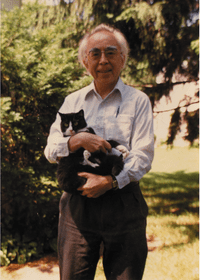
Emptiness is Suchness
First published in the Eastern Buddhist & later reprinted in the anthology of Kyoto School reflections, the Buddha Eye*, as well as elsewhere. There are reasons for its popularity.*
What makes this essay so important to me is how it expresses the fullness of the evolution of Buddhist thinking about emptiness, here traveling through the first uses attributed to the Buddha in the Nikayas, to the Prajanaparamitia literature, to the disruptive assertions of Nagarjuna, to the Madhyamika and Yogacara schools that followed Nagarjuna, then that fateful encounter with Neo-Taoism, and the richness of what I’ve come to call Buddhism with Chinese characteristics, flowering in my life as Zen.
For me each of these views of emptiness are complete in themselves. And all are angles from which to enter the great mystery. Of course, every perspective on emptiness while discrete, is also connected, through history and influence. Of course we need to be cautious in claiming something is the summa of an evolutionary arc.
That noted, and with that caution, what we come to in the Kyoto School’s emptiness, and specifically as presented by Sensei Abe also presents something which contains all that preceded it, is in a sense all those things, and yet, opens doors for the spiritual pilgrim.
JIF
Buddhists emphasize “emptiness” and say that everything is empty. While this is a very important point for Buddhism in general and for Zen in particular, I am afraid that it is quite misleading, or at least very difficult to understand, particularly for the Western mind. I think that “Everything is empty” may be more adequately rendered in this way: “Everything is just as it is.” A pine tree is a pine tree, a bamboo is a bamboo, a dog is a dog, a cat is a cat, you are you, I am I, she is she. Everything is different from everything else. And yet, so long as one and everything retain their uniqueness and particularity, they are free from conflict among themselves. This is the meaning of the saying that everything is empty.
A pine tree has no sense of superiority over bamboo; bamboo has no sense of inferiority to a pine tree. A dog has no sense of superiority over a cat, a cat no sense of inferiority to a dog. We human beings may think that plants and animals entertain such thoughts, but this is merely a projection of human capacities onto the non- human dimension. In fact, plants and animals do not have such a mode of consciousness; they just live naturally, without any sense of evaluation. But human beings are different: we often think of our- selves in comparison to others. Why is he so intelligent? Why am I not as gifted? Why is she so beautiful? Why am I not as beautiful? Some feel superior to others while some feel inferior.
This is because, unlike plants and animals, we human beings possess self-consciousness, and because we are self-conscious we look at ourselves from the outside, through comparison with others.
Although we are “self,” we are not really “self,” because it is from the outside that we look at ourselves. In our daily life, there are moments when we are “here” with ourselves—moments in which we feel a vague sense of unity. But at other moments we find ourselves “there”—looking at ourselves from the outside.
We fluctuate between here and there from moment to moment: homeless, without any place to settle. Within ourselves there is always a breach. On the other hand, plants and animals are just as they are because they have no self-consciousness; they cannot look at themselves from the outside. This is the essential difference between human beings and other living beings.
This characteristic of human beings has a positive aspect. Since we have self-consciousness and are always thinking of something, we can plan, reflect, conceive ideals, and can thus create human cul- ture, science, art, and so forth. As we live, we are all the while thinking how to live, how to develop our lives. This positive aspect, however, is at the same time somewhat problematic, because, as I mentioned above, by means of self-consciousness we look at ourselves from the outside. We are thus separated from ourselves. We are here and there, there and here. We are constantly moving between here and there, between inside and outside. This is the rea- son for our basic restlessness, or fundamental anxiety, which plants and animals do not have. Only human beings are not “just as they are.”
D. T. Suzuki often spoke of “suchness” or “as-it-is-ness.” Plants and animals are living in their “suchness.” But we human beings are sep- arated from our suchness, are never “just-as-we-are.” So far as we are moving between here and there, between inside and outside, looking at ourselves in comparison with others, and looking at ourselves from the outside, we are always restless. This restlessness or anxiety is not something accidental to man, peculiar to certain individuals and not to others. It is not that some have this inner restlessness while others do not. Insofar as one is a human being, one cannot escape this basic anxiety. In fact, strictly speaking it is not that one has this anxiety, but rather that one is this anxiety.
How can we overcome this fundamental restlessness and return to suchness? To do so is the raison d’être and essential task of religion.
According to Genesis, whenever God created something, he “saw that it was good.” When God created Adam and Eve, he blessed them and saw that they too were good. Are we to suppose that the term good in this context is meant in the merely ethical sense? I think not. When God saw that his creation was good, he was not referring to the merely ethical dimension. Rather he was indicating that all of creation was ontologically good, or, to use D. T. Suzuki’s term, that all of creation is in “suchness.”
God created a tree just as a tree, and saw that it was good: it is in “suchness” as a tree. He created a bird: it is really a bird, not a fish. When he created a fish, it is really a fish—very different from a bird. Everything is in its own “suchness.” It was the same when he creat- ed Adam and Eve as it had been with plants and animals and other beings, Adam is really Adam, Eve is really Eve. Adam is good. Eve is good. They are just as they are, respectively and equally. They thus symbolize the original (true) nature of man.
But according to Genesis, Adam and Eve ate the fruit of knowledge—of the knowledge of good and evil. Does this indicate good and evil only in the ethical sense? In my view, the story illustrates far more than that. The eating of the fruit suggests the making of value judgments. You may say, for instance “Today we have good weather, but yesterday we had bad weather,” or “This is a good road, but that one is bad.” Here, the terms good and bad can be made to apply to the weather, the road conditions, etc. It is in this broader sense of knowing good and evil that the fruit of knowledge symbolizes the ability to make value judgments.
The ability to make value judgments is a quality unique to self- consciousness. With self-consciousness one can judge “This is good” or “That is bad,” and so forth. In this way we make distinctions between this and that. We love this and hate that, pursue this and avoid that. Through this capacity for making distinctions, people come to be involved in attachments. Love is a positive attachment. Hate is a negative attachment. By making distinctions, we come to like some things and dislike others. And in this way we become attached to some things and reject others—rejection being the neg- ative form of attachment. We are involved in and confined by our attachments. This is the result of having self-consciousness.
By means of self-consciousness we also make a distinction between ourself and others. As a consequence of this distinction, we become attached to the self, making ourselves the center of the world. We become involved in and limited by the distinction between self and others, the duality between love and hate, and so forth. Distinction turns into opposition, conflict and struggle as soon as the distinction becomes an object of attachment.
But this is not the state of man’s original nature. As God saw, Adam is good and Eve is good, just as plants and animals in their original states are good. Fundamentally everything in the order of original creation is good.
Thus the question is: How can we return to that original goodness, our original suchness? Christianity, I think, has its own answer to this question. In Christianity self-consciousness—the result of eating the fruit of knowledge—is regarded as “sin,” inasmuch as eating the fruit constitutes rebellion against the word of God, who said, “Thou shalt not eat.” It is through the reunion of man and God by virtue of Jesus Christ’s redemptive love that man can return to his original suchness. In Buddhism self-consciousness is regarded as “ignorance,” inasmuch as in self-consciousness we lose the reality of “suchness,” and are limited by our viewing of things in the universe from the outside. As such we even view ourselves from the outside. This outside view of ourselves constitutes the fundamental ignorance inherent in human existence.
Trying to grasp one’s self by one’s self from the outside may be likened metaphorically to a snake trying to swallow its own tail. When the snake bites its tail, it makes a circle. And the more it tries to swallow its tail, the smaller that circle becomes. When the snake carries this effort to swallow its own tail to its final conclusion, the circle turns into a small dot, until finally it must disappear into emptiness. In more concrete terms, the snake must die through its effort. As long as the human self tries to take hold of itself through self-consciousness (out of which feelings of inferiority, superiority, etc. develop), the human ego-self falls into an ever-deepening dilemma. At the extreme point of this dilemma, the ego can no longer support itself and must collapse into emptiness. When the attempt of self-consciousness to grasp itself is pressed to its ultimate conclusion, the human ego must die. The realization of no-self is a necessity for the human ego. Some individuals only come to realize the necessity of confronting this dilemma on their deathbed. Others may existentially intuit the need for resolving this dilemma while still quite young, and thus embark on a religious quest. In any event, the realization of no-self is a “must” for the human ego. We must realize that there is no unchanging, eternal ego-self.
In order to realize emptiness or suchness it is essential to face this dilemma and to break through it. This realization of emptiness is a liberation from that dilemma which is existentially rooted in human consciousness. Awakening to emptiness, which is disclosed through the death of the ego, one realizes one’s “suchness.” This is because the realization of suchness is the positive aspect of the realization of emptiness.
In this realization you are no longer separated from yourself, but are just yourself. No more, no less. There is no gap between you and yourself: you become you. When you realize your own suchness, you realize the suchness of everything at once. A pine tree appears in its suchness. Bamboo manifests itself in its suchness. Dogs and cats appear in their suchness as well. A dog is really a dog. No more, no less. A cat is really a cat. No more, no less. Everything is realized in its distinctiveness.
Then for the first time you come to understand the familiar Zen phrases: “Willows are green, flowers are red,” or “The eyes are hor- izontal, the nose is vertical.” Trees, birds, fish, dogs or cats—from the beginning they always enjoy their suchness. Only man has lost that suchness. He is in ignorance. Therefore he does not know the reality of human life and becomes attached to his life and fears his death. But when ignorance is realized for what it is through the realization of no-self, one may waken to “suchness,” in which everything is realized in its uniqueness and particularity.
This is, however, not just a goal to be reached. It is rather the point of departure for life, for real activity, for “suchness” is the ground of both our being and the world. Not sometime in the future, but here and now we can immediately realize “suchness,” because we are never separated from “suchness,” not even for a moment. It is the ground to which we must return and from which we must start. Without the realization of suchness as our ground or point of departure, our life is restless and groundless. Once we return to that point of suchness, everything is realized in its distinctiveness. The distinctions between self and other, good and evil, life and death are regrasped in the new light of “suchness.” It becomes then the real point of departure for our lives and our activ- ity. However rich or poor in ability we may be, we display that abili- ty in its fullness just as it is, without getting entangled in any feelings of inferiority or superiority. It does not matter whether your ability is grade three, grade five, or eight. You display your own power just as it is, at any given moment and according to any given situation, and can create something new. You can live your life really and fully, without creating conflict with others, so that every day becomes a good day. This is what is meant by the saying “Everything is empty.”
Previous Post

February 17, 2022
Nansen's Troublesome Cat: A Zen Koan and Two Poems
Next Post
February 20, 2022 THUNDER AND LIGHTNING: Frederick Douglass’ Liberation Theology
Browse Our Archives
Select a Category A Christmas Carol Abolitionist African-American Ahmadiyya Alan Watts Aldous Huxley Allen Ginsberg Amedkar Jayanti American politics American Zen Anaheim Zen Sangha Anglican Annie Besant April Fool Armageddon Art and Religion artificial intellegence Atheist Awakening B R Ambedkar Barlaam & Josaphat Beatnik Between Bhagavad Gita Bible biography birthday bodhisattva Bodhisattva Precepts Book burning Book of Common Prayer Book of Mormon Brahmo Samaj Buddha Buddhism Buddhist Buddhist Lord's Prayer Butterflies Calendars cartoons cat ChatGPT Chicken Tortilla Soup choices Christian atheism Christian mysticism Christian origins Christian Science Christian Zen Christianity Christianity and Buddhism christmas Christmas Truce Christopher Isherwood Church of Later Day Saints Cinco de Mayo circus covenant critical thinking culture D. T. Suzuki Dalit Buddhism Daniel Defoe Desert Fathers and Mothers dharma talk Dogen Donald Trump Dongshan's Five Ranks Dorothy Day dream Duty Easter ecology Edwin Arnold emptiness Empty Moon Zen Network Episcopal Church Eternal Now Ethics evolution existentialism Faith fantasy Fathers Day film film review fire Five Ranks Folk music food Form and emptiness Four Seals Francis of Assisi Francis Xavier Free thinker friendship George MacDonald Gerald Heard Glenn Taylor Webb God Good Friday Gospel of Gospel of Mark Gospel of Thomas grace Graduate Theological Unioin Graduate Theological Union Guanyin H R Blyth Hakuin Ekaku Hanamatsuri Hanukkah Harada Yasutani Zen Heart Sutra Henry David Thoreau Hermann Hesse Hinduism History and Religion history of religion Holy Spirit home Hospitality Icon Ides of March Isaac Newton Islam Islamic mysticism Jack Kerouac James Luther Adams Jiddu Krishnamurti Joan of Arc Johannes Gutenberg John Donne joke Judaism justice karma kensho King James Bible koan Koun Yamada Kyoto School Lewis Carrol Liberal Christianity Liberal Religion Life Plan Community Liminal literature Literature and Religion Liturgy Lord's Prayer Love Mahatma Gandhi Mahayana Martin Luther King Jr Mary Baker Eddy Mary Magdelene Mary Oliver Mayflower Compact Meditation memories memory metaphor money money and religioin Mormons Mother's Day movie review mysticism mythic Neighborhood Unitarian Universalist Church New Thought Nichiren Buddhism Nonduality not knowing Omar Khayyam Pacific School of Religion pagan Palm Sunday Passover peace Pentecost perennialism Phantastes Philip Kapleau philosophy Pilgrimage poetry Poetry and Religion politics Prayer Precepts Printing Press prophecy prophetic spirituality psychology Pure Land Queer religion queering religion Quietism Ram Mohan Roy rebirth recipe Relationships and religion religion religion and history Religious syncretism Resistance Retirement Retreat review Rissho Kosei Kai Ritual Robert Aitken Roshi Robert Ingersoll Rohatsu Romani religion Rosie the Riveter saints samadhi SanboZen Sangha Satyagraha science science and reigion science and religion science fiction seminary sermon Sesshin Sex and Religion Shinran Sikh Sikh tradition silence Social Justice Socially Engaged Buddhism Society and religion Soto Zen soul spiritual community spiritual practice Spirituality Sufism Suicide superstition Taoism Television Teresa of Avila Thanksgiving theological schools Theosophy Thomas Merton Time Transcendentalism Transcendentalist Trinitarian Trinity Uncategorized unitarian Unitarian Christianity Unitarian Universalist Universalism Vajrayana Vedanta Walking war Willa Cather William Ellery Channing wisdom women and religion women in religion World Teacher Writing zazen Zen Zen Center Zen inspired retriement zen meditation Zen Precepts Zen women
Select a Month November 2026 October 2026 September 2026 August 2026 July 2026 June 2026 May 2026 April 2026 March 2026 February 2026 January 2026 December 2025 November 2025 October 2025 September 2025 August 2025 July 2025 June 2025 May 2025 April 2025 March 2025 February 2025 January 2025 December 2024 November 2024 October 2024 September 2024 August 2024 July 2024 June 2024 May 2024 April 2024 March 2024 February 2024 January 2024 December 2023 November 2023 October 2023 September 2023 August 2023 July 2023 June 2023 May 2023 April 2023 March 2023 February 2023 January 2023 December 2022 November 2022 October 2022 September 2022 August 2022 July 2022 June 2022 May 2022 April 2022 March 2022 February 2022 January 2022 December 2021 November 2021 October 2021 September 2021 August 2021 July 2021 June 2021 May 2021 April 2021 March 2021 February 2021 January 2021 December 2020 November 2020 October 2020 September 2020 August 2020 July 2020 June 2020 May 2020 April 2020 March 2020 February 2020 January 2020 December 2019 November 2019 October 2019 September 2019 August 2019 July 2019 June 2019 May 2019 April 2019 March 2019 February 2019 January 2019 December 2018 November 2018 October 2018 September 2018 August 2018 July 2018 June 2018 May 2018 April 2018 March 2018 February 2018 January 2018 December 2017 November 2017 October 2017 September 2017 August 2017 July 2017 June 2017 May 2017 April 2017 March 2017 February 2017 January 2017 December 2016 November 2016 October 2016 September 2016 August 2016 July 2016 June 2016 May 2016 April 2016 March 2016 February 2016 January 2016 December 2015 November 2015 October 2015 September 2015 August 2015 July 2015 June 2015 May 2015 April 2015 March 2015 February 2015 January 2015 December 2014 November 2014 October 2014 September 2014 August 2014 July 2014 June 2014 May 2014 April 2014 March 2014 February 2014 January 2014 December 2013 November 2013 October 2013 September 2013 August 2013 July 2013 June 2013 May 2013 April 2013 March 2013 February 2013 January 2013 December 2012 November 2012 October 2012 September 2012 August 2012 July 2012 June 2012 May 2012 April 2012 March 2012 February 2012 January 2012 December 2011 November 2011 October 2011 September 2011 August 2011 July 2011 June 2011 May 2011 April 2011 March 2011 February 2011 January 2011 December 2010 November 2010 October 2010 September 2010 August 2010 July 2010 June 2010 May 2010 April 2010 March 2010 February 2010 January 2010 December 2009 November 2009 October 2009 September 2009 August 2009 July 2009 June 2009 May 2009 April 2009 March 2009 February 2009 January 2009 December 2008 November 2008 October 2008 September 2008 August 2008 July 2008 June 2008 May 2008 April 2008 March 2008 February 2008 January 2008 December 2007 November 2007 October 2007 September 2007 August 2007 July 2007 June 2007 May 2007 April 2007 March 2007 February 2007 January 2007 December 2006 November 2006 October 2006 September 2006
Follow Us!
TAKE THE
Religious Wisdom Quiz
What Christian group believes in continuing revelation from prophets?
Select your answer to see how you score.
Lutherans Presbyterians Latter-day Saints Baptists
Related posts from Monkey Mind
James Ishmael Ford's books on Zen
Taking Refuge in the (Zen) Sangha
Recalling the Amazing Alexandra David-Neel
The Great Matter: Walking the Zen Way
TRENDING AT PATHEOS Buddhist

Jesus is Coming with Glory and Power
https://www.youtube.com/watch?v=_lt60EDHOQ4&list=RD_lt60EDHOQ4&start_radio=1

The Late Francis Frangipane & the Failure Too...
I learned today that another one of my heroes has gone to...

Thomas Paine, the Smiths, the apostles in England,...
I'm pleased to announce that the Becoming Brigham Black Friday Sale,...

CatholicTV Series: Six Black Catholics on Path to...
WATERTOWN, Mass., November 9, 2026 – In recognition of Black Catholic History...

New Advent Journal Invites Catholics to Be Pilgrims
Florissant, MO, November 16, 2026— What if Advent were more than a...

INNER CIRCLE: John's Quantum Gospel
INTRODUCTION In this next Inner Circle series, which I anticipate will...
view all Buddhist blogs
Ad-Free & Subscriber Log-In Subscription Support
- About Us
- 2026 Calendar
- Videos
- Podcasts
- Library of World Religions
- Faith In Media Tracker
- Advertise With Us
- Write for Us
- Privacy Policy
- Terms of Service
- Do Not Sell My Data
- Contact Us
- Radiant Digital
- Manage Newsletter Subscriptions
- Unsubscribe From Notifications
- Sitemap
Copyright 2008-2026, Patheos, part of the Radiant Digital network of media brands. All rights reserved.
Subscription Support Ad-Free & Subscriber Log-In
Follow Patheos