
BuddhistCatholicContemplativeEvangelicalGeneral ChristianHinduJewishLatter-day SaintMuslimNew VisionsProgressive Christian
Beliefs
- Buddhist
- Catholic
- Contemplative
- Evangelical
- General Christian
- Hindu
- Jewish
- Latter-day Saint
- More Voices
- Muslim
- New Visions
- Pagan
- Progressive Christian
Topics
- Religion News
- Food and Religion
- Sports and Religion
- Religious Art
- Religious Music and Entertainment
- Religious Events
- History and Religion
- Style and Religion
- Politics and Religion
- Women in Religion
- Recreation Outdoors and Religion
- Business Finance and Religion
- Careers Workplace and Religion
- Education and Religion
- Family Parenting and Religion
- Health Fitness and Religion
- Home and Religion
- Relationships and Religion
- Technology and Religion
- Travel and Religion
Columnists
- Buddhist Columnists
- Business Finance and Religion Columnists
- Careers Workplace and Religion Columnists
- Catholic Columnists
- Contemplative Columnists
- Education and Religion Columnists
- Evangelists Columnists
- Family Parenting and Religion Columnists
- General Christian Columnists
- Health Fitness and Religion Columnists
- Hindu Columnists
- History and Religion Columnists
- Home and Religion Columnists
- Jewish Columnists
- More Voices Columnists
- Latter Day Columnists
- Muslim Columnists
- New Visions Columnists
- Nonreligious Columnists
- Pagan Columnists
- Politics and Religion Columnists
- Progressive Columnists
- Recreation Outdoors and Religion Columnists
- Relationships and Religion Columnists
- Religion News Columnists
- Religious Art Columnists
- Religious Events Columnists
- Religious Music and Entertainment Columnists
- Sports and Religion Columnists
- Style and Religion Columnists
- Technology and Religion Columnists
- Travel and Religion Columnists
- Women in Religion Columnists
Resource Library
- 2026 Calendar
- Library of World Religions
- The 100 Most Holy Places on Earth
- Patheos Answers
- Podcasts
- Videos
- Faith Leaders Database
- Anglican Episcopalian
- Bahai
- Baptist
- Buddhism
- Christianity
- Confucianism
- Eastern Orthodoxy
- Hinduism
- Holiness and Pentecostal
- ISKCON
- Islam
- Judaism
- Lutheran
- Methodist
- The Church of Jesus Christ of Latter-day Saints
- New Age
- Paganism
- Presbytarian and Reformed
- Protestantism
- Religion Behind the Scenes
- Roman Catholic
- Scientology
- Shia Islam
- Sikhism
- Sufism
- Sunni Islam
- Taoism
- Zen
- See all religions
Research Tools
 Ad-Free & Subscriber Log-In Subscription Support
Ad-Free & Subscriber Log-In Subscription Support
Follow Patheos 

- Trending:
- Forgiveness
- |
- Marriage
- |
- Consciousness
- |
- Death Penalty
- |
- Election
- |
- Halloween

- Home
- Buddhist
- KEIZAN JOKIN’S ZAZEN YOJINKI What to be aware of in zazen, sitting meditation
KEIZAN JOKIN’S ZAZEN YOJINKI What to be aware of in zazen, sitting meditation
Last updated on: January 2, 2022 at 9:31 am by James Ford
KEIZAN JOKIN’S ZAZEN YOJINKI What to be aware of in zazen, sitting meditation 2022-01-02T09:31:45-08:00 James Ford
Patheos Explore the world's faith through different perspectives on religion and spirituality! Patheos has the views of the prevalent religions and spiritualities of the world.
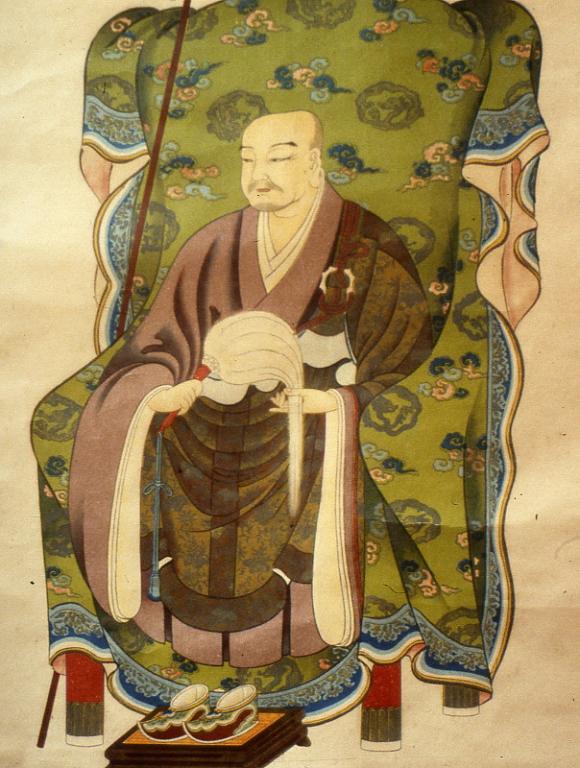
KEIZAN JOKIN’S ZAZEN YOJINKI
What to be aware of in zazen, sitting meditation
Translated by Thomas Cleary
Timeless Spring : A Soto Zen anthology. Weatherhill, Tokyo-New York, 1980, pp. 112-125.
(A couple of years ago I shared the translation of this text by the Venerable Reiho Masunaga. Possibly the most important early text on Zen meditation in the Soto school, here is the version by the American scholar Thomas Cleary.)
Zazen just lets people illumine the mind and rest easy in
their fundamental endowment. This is called showing the
original face and revealing the scenery of the basic ground.
Mind and body drop off, detached whether sitting or lying
down. Therefore we do not think of good or bad, and can
transcend the ordinary and the holy, pass beyond all conception
of illusion and enlightenment, leave the bounds of
sentient beings and buddhas entirely.
So, putting a stop to all concerns, casting off all attachments,
not doing anything at all, the six senses inactive –
who is this, whose name has never been known, cannot
be considered body, cannot be considered mind? When
you try to think of it, thought vanishes; when you try to
speak of it, words come to an end. Like an idiot, like an
ignoramus, high as a mountain, deep as an ocean, not
showing the peak or the invisible depths – shining without
thinking, the source is clear in silent explanation.
Occupying sky and earth, one’s whole body alone is
manifest; a person of immeasurable greatness – like one
who has died utterly, whose eyes are not clouded by any-
thing, whose feet are not supported by anything – where
is there any dust? What is a barrier? The clear water never
had front or back, space will never have inside or out.
Crystal clear and naturally radiant before form and void
are separated, how can object and knowledge exist?
This has always been with us, but it has never had a
name. The third patriarch, a great teacher, temporarily
called it mind; the venerable Nagarjuna provisionally
called it body[1] – seeing the essence and form of the enlightened,
manifesting the bodies of all buddhas, this,
symbolized by the full moon, has neither lack nor excess.
It is this mind which is enlightened itself; the light of
one’s own mind flashes through the past and shines
through the present. Mastering Nagarjuna’s magic symbol,
achieving the concentration of all buddhas, the mind has
no sign of duality, while bodies yet differ in appearance.
Only mind, only body – their difference and sameness are
not the issue; mind changes into body, and when the body
appears they are distinguished. As soon as one wave
moves, ten thousand waves come following; the moment
mental discrimination arises, myriad things burst forth.
That is to say that the four main elements and five clusters
eventually combine, the four limbs and five senses suddenly
appear, and so on down to the thirty six parts of the
body, the twelve fold causal nexus; fabrication flows along,
developing continuity – it only exists because of the combining
of many elements.
Therefore the mind is like the ocean water, the body is
like the waves. As there are no waves without water and
no water without waves, water and waves are not separate,
motion and stillness are not different. Therefore it is
said, “The real person coming and going living and dying
– the imperishable body of the four elements and five
clusters:” [2]
Now zazen is going right into the ocean of enlightenment,
thus manifesting the body of all buddhas. The in-
nate inconceivably clear mind is suddenly revealed and the
original light finally shines everywhere. There is no increase
or decrease in the ocean, and the waves never turn
back. Therefore the enlightened ones have appeared in the
world for the one great purpose of having people realize
the knowledge and vision of enlightenment. And they had
a peaceful, impeccable subtle art, called zazen, which is
the state of absorption that is king of all states of concentration.
If you once rest in this absorption, then you directly
illumine the mind – so we realize it is the main
gate to the way of enlightenment.
Those who wish to illumine the mind should give up
various mixed-up knowledge and interpretation, cast away
both conventional and buddhist principles, cut off all delusive
sentiments, and manifest the one truly real mind –
the clouds of illusion clear up, the mind moon shines
anew. The Buddha said, “Learning and thinking are like
being outside the door; sitting in meditation is returning
home to sit in peace.” How true this is! While learning
and thinking, views have not stopped and the mind is still
stuck – that is why it is like being outside the door. But
in this sitting meditation, zazen, everything is at rest and
you penetrate everywhere – thus it is like returning home
to sit in peace.
The afflictions of the five obscurations[3] all come from
ignorance, and ignorance means not understanding yourself.
Zazen is understanding yourself. Even though you
have eliminated the five obscurations, if you have not
eliminated ignorance, you are not a buddha or an ancestor.
If you want to eliminate ignorance, zazen to discern the
path is the most essential secret.
An ancient said, “When confusion ceases, tranquility
comes; when tranquility comes, wisdom appears, and
when wisdom appears reality is seen.” If you want to put
an end to your illusion you must stop thinking of good
and bad and must give up all involvement in activity; the
mind not thinking and the body not doing is the most essential
point. When delusive attachments end, illusion dies
out. When illusion dies out, the unchanging essence is revealed
and you are always clearly aware of it. It is not absolute
quiescence, it is not activity.
Hence you should avoid all arts and crafts, medical prescription
and augury, as well as songs and dance and
music, disputation, meaningless talk, and honor and profit.
Though poetry and song can be an aid to clarifying the
mind, still you should not be fond of making them; to give
up writing and calligraphy is the superior precedent of the
people of the way, the best way for harmonizing the mind.
You should not be attached to either fine clothing or
dirty rags. Fine clothing instigates greed, and there is also
the fear of theft – therefore it is a hindrance to someone
on the way. To refuse it when someone gives it for some
reason is a praiseworthy act exemplified from ancient
limes. Even if you happen to have fine clothing, still don’t
be concerned about taking care of it; if thieves take it,
don’t chase after it or regret the loss. Old dirty clothes,
washed, mended, and completely cleaned, should be
worn; if you don’t get rid of the dirt you’ll get cold and
become sick – this too causes obstruction on the way. Although
we are not to be anxious for our lives, if clothing,
food, and sleep are not sufficient, this is called the three
insufficiencies, and are all causes of regression.
Any living things, hard things, and spoiled things –
impure food – should not be eaten; with gurgling and
churning in the belly, heat and discomfort of body and
mind, there will be difficulty in sitting. Do not indulge in
attachment to fine food – not only will your body and
mind be uncomfortable, but it means you are still greedy.
You should take enough food just to support life; don’t
savor its taste. If you sit after having eaten your fill it can
cause illness. After big or small meals, don’t sit right
away; rather, wait a while before sitting. In general, men-
dicant monks should be moderate in eating; that means to
limit their portions, eat two parts of three and leave on
part. All usual medicaments, sesame, wild yams, etc., can
be eaten. This is the essential technique of tuning th
body.
When sitting in zazen, do not lean against any wall,
meditation brace or screen. Also don’t sit in a windy place
or up on a high exposed place. These are causes of illness.
When sitting in meditation, your body may seem hot or
cold, uneasy or comfortable, sometimes stiff, sometimes
loose, sometimes heavy, sometimes light, sometimes startled
awake. This is all because the breath is not in tunc
and needs to be tuned. The way of tuning the breath is as
follows: open your mouth, letting the breath be, long or
short, gradually harmonizing it; following it for a while,
when a sense of awareness comes, the breath is then in
good tune. After that let the breath pass naturally through
the nose.
The mind may seem to sink away or float off, sometimes
it seems dull, sometimes it seems sharp. Sometimes you
see through outside the room, sometimes you can see
through your body, sometimes you see forms of buddhas
or bodhisattvas. Sometimes you comprehend scriptures or
treatises. Extraordinary things like this are diseases from
lack of harmony between awareness and breath. When
they happen, sit with the mind resting in the lap. If the
mind sinks into torpor, rest your mind between your eyes
on your hairline (three inches above the center of the
eyebrows). If your mind is distracted and scattered, rest
your mind on the tip of your nose and your lower belly
(one and a half inches below the navel). When sitting all
the time rest the mind in the left palm. When you sit for a
long time, though you do not force the mind to be calm, it
will naturally not be scattered.
Now as for the ancient teachings, though they are traditional
lessons for illuminating the mind, don’t read, write,
or listen to them too much – too much causes disturbance
10 the mind. In general, anything that wears out body and
mind can cause illness. Don’t sit where there are fires,
floods, or bandits, or by the sea, near wineshops, brothels,
or where widows, virgins, or singing girls are. Don’t hang
Mound kings, important officials, powerful people, or
people full of lust and eager for name and fame, or tellers
of tales. As for mass buddhist services and large construction
projects, though they are good things, people who are
concentrating only on sitting should not do them.
Don’t be fond of preaching and teaching, for distraction
and scattered thoughts come from this. Don’t take delight
in crowds or seek for disciples. Don’t study or practice too
many things. Don’t sit where it is extremely bright or
dark, extremely cold or hot, or around roustabouts and
playgirls. You can stay in a monastery where there is a real
teacher, deep in the mountains and hidden valleys. Green
waters and verdant mountains are the place to walk in
meditation; by the streams, under the trees are places to
clear the mind. Observe impermanence, never forget it;
this urges on the will to seek enlightenment.
A sitting mat should be spread thick for comfortable sitting,
and the place of practice should be clean – always
burn incense and offer flowers: the good spirits who guard
the true teaching, as well as buddhas and bodhisattvas,
will cast their shadows there and give protection. If you
place an image of a buddha, bodhisattva, or saint there, no
evil demon or spirit can get at you.
Always abide in great compassion, and dedicate the
boundless power of sitting meditation to all living beings.
Don’t become proud, conceited or self-righteous – these
are qualities of outsiders and ordinary people. Remember
the vow to end afflictions, the vow to realize enlightenment.
Just sitting, not doing anything at all, is the essential
technique for penetrating zen. Always wash your eyes
and feet (before zazen). With body and mind at ease, be-
haviour harmonious, abandon worldly feelings and don’t
cling to feelings of the way.
Although one should not begrudge the teaching, don’t
speak about it unless you are asked – then hold your
peace for three requests, comply if there is a fourth request
in earnest. Of ten things you would say, leave off nine.
Mold growing around the mouth, like a fan in winter, like
a bell hung in the air, not questioning the wind from all
directions – this is characteristic of people of the way. Just
go by the principle of the teaching[4], don’t care about the
person; go by the path and do not congratulate yourself –
this is the most important point to remember.
Zazen is not concerned with teaching, practice, or realization,
yet it contains these three aspects. That is to say,
the criterion of realization depends on enlightenment –
this is not the spirit of zazen. Practice is based on genuine
application – this is not the spirit of zazen. Teaching is
based on eliminating evil and cultivating goodness – this
is not the spirit of zazen. Although teaching is established
within zen, it is not ordinary teaching; it is direct pointing,
simply communicating the way, speaking with the
whole body. The words have no sentences or phrases;
where ideas are ended the reason exhausted, one word
comprehends the ten directions. And yet not a single hair
is raised – is this not the true teaching of the buddhas
and enlightened ancestors?
And although we speak of practice, it is practice without
any doing. That is to say, the body doesn’t do anything,
the mouth does not recite anything,[5] the mind does not
think anything over, the six senses are naturally pure and
clear, not affected by anything. This is not the sixteen-fold
practice of the buddhist disciples[6] or the twelve-fold practice
of those enlightened through understanding of causality,[7]
or the six ways of transcendental practice undertaking
myriad actions done by bodhisattvas;[8] not doing anything
at all, it is therefore called buddhahood, the state of enlightenment.
Just resting in the absorption self-experienced by all enlightened
ones, roaming at play in the four peaceful and
blissful practices of bodhisattvas,[9] is this not the profound,
inconceivable practice of buddhas and ancestors?
Though we may speak of realization, this is realization
without realization, this is the absorption in the king of
concentration, the state of awareness in which you disrover
knowledge of birthlessness, all knowledge, and
spontaneous knowledge; [10] it is the gate of illumination
through which the wisdom of the realized ones [11] opens
up, produced by the method of practice of great ease. It
transcends the patterns of holy and ordinary, goes beyond
the sense of confusion and understanding; is this not the
realization of innate great enlightment?
Also zazen is not concerned with discipline, concentration,
or wisdom, but contains these three studies. That is,
discipline is to prevent wrong and stop evil; in zazen we
see the whole substance as non dual, cast aside myriad
concerns and lay to rest all entanglements. Not concerned
with the buddhist way or the worldly way, forgetting feelings
about the path as well as mundane feelings, no affirmation
or denial, no good or bad – what is there to prevent
or stop? This is the formless discipline of the mind
ground.
Concentration means undivided contemplation; in zazen
we slough off body and mind, abandon confusion and understanding,
immutable and imperturbable, not acting, not
befuddled, like an idiot, like a dunce, like a mountain, like
an ocean, no trace of either motion or stillness arises –
concentrated without any sign of concentration, because
there is no form of concentration, it is called great concentration.
Wisdom is discerning comprehension; in zazen knowledge
disappears of itself, mind and discriminating con-
sciousness is forever forgotten. The wisdom eye throughout
the body has no discernment, but clearly sees the essence
of buddhahood; fundamentally unconfused, cutting
off the conceptual faculty, open and clearly shining all the
way through, this is wisdom without any sign of wisdom;
because it has no sign of wisdom it is called great wisdom.
The teachings expounded by the buddhas in their lifetimes
are all contained in discipline (morality), concentration
(meditation), and wisdom (knowledge); in this zazen,
there is no discipline that is not maintained, no concentration
that is not cultivated, no wisdom that is not
realized. Vanquishing demons, attaining the way, turning
the wheel of the true teaching and returning to extinction,
all depend on this power. Supernormal powers and their
inconceivable functions, emanating light and expounding
the teaching are all in the act of sitting. Investigation of
zen also is sitting in zazen.
If you want to sit in meditation, first find a quiet place
and lay a thick cushion; do not let wind or smoke, rain or
dew in. Keep a clear place to sit, with enough room for
your knees. Although there were people who sat on diamond
seats or boulders in ancient times, they all had sitting
cushions. Where you sit should not be light in the
daytime or dark at night; it should be warm in winter and
cool in summer – that’s the technique.
Cast off mind, intellect, and consciousnesses, cease recollection,
thought, and observation. Don’t aim at becoming a
buddha, don’t be concerned with right or wrong; value
time, as though saving your head from burning. The
Buddha sat upright, Bodhidharma faced a wall, singleminded,
without any other concerns at all. Shishuang was
like a dead tree, Rujing admonished against sleeping while
sitting; “you can only succeed by just sitting, without
need to make use of burning incense, prostrations, remembrance
of buddha names, repentance ceremonies,
reading scriptures or ritual recitations.”[12]
Whenever you sit, you should wear a kashaya (kesa) (exccpt
during the first and last parts of the night when the
daily schedule is not in effect) – don’t neglect this. The
cushion (twelve inches across, thirty-six in circumference)
should not support the whole thighs – it should reach
from midthigh to the base of the spine. This is the way the
buddhas and patriarchs sat. You may sit in full or half
lotus position; the way to sit in full lotus is to put the right
foot on the left thigh, then put the left foot on the right
thigh. Loosen your clothes and straighten them; next put
your right hand on your left foot and your left hand on
your right hand, with your thumbs together near the body
about the level of your navel. Sit up straight, without leaning
to the left or right, front or back. The ears and shoulders,
nose and navel, should be aligned. The tongue is
kept on the roof of the mouth and the breath should pass
through the nose. The mouth should be closed, while the
eyes should be open, though not too widely or too
slightly.[13] Having attuned your body in this way, breathe
deeply through the mouth a couple of times. Next, sitting
steady, sway your body seven or eight times, going from
larger to smaller movements. Then sit upright and intent.
Now think of what doesn’t think – [14] how to think of it?
Not thinking. This is the essential method of zazen. You
should break directly through afflictions and personally
realize enlightenment. When you want to rise from stillness,
first put your hands on your knees, sway your body
seven or eight times, going from small to larger movements.
Open your mouth and breathe out, put your hands
on the ground and lightly rise from your seat.
Walk slowly, circling to the right or left. If torpor and
sleepiness overcomes you while sitting, always move your
body or open your eyes wide; also put your mind on your
hairline between your eyebrows. If you still are not wakeful,
rub your eyes or body. If that still doesn’t wake you
up, get up and walk around, always circling to the left.
Once you have gone a hundred steps or so, your sleepiness
should have vanished. The way to walk is to take a
half step with each breath.[15] You walk as though not walking
anywhere, silent and unmoving. If you still don’t wake
up after walking around like this, either wash your eyes
and cool your forehead, or recite the preface to the precepts
for bodhisattvas, or some such thing – just find
some way not to fall asleep. You should observe that the
matter of life and death is a great one, and impermanence
is swift – what are you doing sleeping when your eye of
the way is not yet clear? If torpor and drowsiness come
over you repeatedly, you should pray, “My habits are
deepseated, and that is why I am enshrouded by drowsiness
– when will my torpor disperse? I pray that the buddhas
and enlightened ancestors will be so compassionate
as to remove my darkness and misery.”
If your mind is scattered, fix your mind on the tip of
your nose and lower belly and count your incoming and
outgoing breaths. If that doesn’t stop your distraction,
then bring a saying to mind and keep it in mind to awaken
you – for example, “What thing comes thus?” “A dog
has no enlightened nature.” “When no thought arises, is
there still any fault? – Mount Everest!” “What is the
meaning of Bodhidharma’s coming from the West? – the
cypress tree in the garden:’ Flavorless sayings like this are
suitable. If (scattering distraction) still doesn’t stop, sit and
focus on the point where the breath ends and the eyes
close forever, or else where the embryo is not yet conceived
and not a single thought is produced; when the
twin void[16] suddenly appears, the scattered mind will
surely come to rest.
After coming out of stillness, when you carry on your
activities without thinking, the present event is the public
affair (koan); when you accomplish practice and realization
without interfusion.[17] then the public affair is the present
happening. That which is before any signs appear, the
situation on the other side of the empty aeon, the spiritual
capacity of all buddhas and patriarchs, is just this one
thing. You should just rest, cease; be cool, passing myriad
years as an instant, be cold ashes, a dead tree, an incense
burner in an ancient shrine, a piece of white silk. This
I pray.
NOTES TO ZAZEN YOJINKI
- In an incident well known in zen circles, the fourteenth patriarch
of zen, the Indian master Nagarjuna, once manifested the
appearance of a circular figure, like the full moon, where he sat to
expound the Dharma; the full moon represents the dharrnakaya,
or body of reality.- The body-mind is represented as being made up of organs
and functions corresponding to the four gross elements: earth,
water, fire, and air; since early times buddhists in India represented
the being to be made up of five clusters: matter, sensation,
perception, relational functions (including emotions, judgements,
etc.), and consciousness.- The five obscurations. or coverings, of the mind in meditation
are greed and lust, anger and hatred, folly and delusion,
drowsiness, and excitement and regret.- This principle is one of the so-called ‘four reliances’ – to rely
on the truth, not the person, which means that anyone can see
reality and become enlightened if they go by the truth which is
as it is because that is its real nature; it is not a question of
human feelings. The other three reliances are to rely on the definitive
teaching, not the incomplete teaching, to rely on the
meaning and not the words, and to rely on wisdom, not conventional
knowledge.- The way this is worded it could refer to mystic spells, and/or
to silent recitation.- This refers to the sixteen stages of mind on the path of insight
(darsanamarga) as defined in the Abhidharmakosa: they
consist of the tolerance and knowledge of the corresponding
truths of suffering, etc., in the ‘higher’ worlds of form and
formlessness (eight more).- This refers to the application of the understanding of the
twelve links of causality: ignorance, activity, consciousness, name
and form, six senses, contact, sensation, desire, attachment, becoming,
birth, old age and death. By removing one link the chain
can be broken.- The six ways of transcendental practice are generosity without
conception of giver, receiver, or gift; morality; tolerance;
effort; meditation; and wisdom. These are transcendent in that
their accomplishment is supposed to involve no sense of subject
or object.- This refers to blissful and peaceful activities of body, mouth,
and mind, and of carrying out vows. According to the Lotus
scripture, for the body this means not associating with powerful
aristocrats, with sorcerers, with criminals or prostitutes, with
butchers, with followers of the vehicles of disciples or selfenlightened
ones, desirous thoughts, with hermaphrodites,
dangerous places, censured things, or keeping young children as
acolytes; once one avoids these ten kinds of people or actions,
one is at ease. As far as the mouth is concerned, it means not to
indulge in talking about the errors of other people or the scriptures,
not to belittle others, not to praise others, not to slander
others, and not to be resentful. As far as mind is concerned, it
means to avoid flattery, depredation, to avoid scorning those of
small actions with one’s own grandiose actions, and to avoid contention.
Carrying out vows in peace and bliss means using the
power of one’s vow to rescue all beings to govern oneself.- Knowledge of the birthlessness, or nonorigination of all
things, was sometimes understood to mean unborn knowledge,
or knowledge that is natural and not fabricated. All knowledge is
spoken of as general and particular; knowing universal relativity,
and knowing the particular relations. Spontaneous knowledge is
the knowledge that has no teacher, that doesn’t come from without.- Tathagata, one who has realized thusness, is an epithet of a
buddha.- This is a statement of Rujing, Dogen’s teacher.
- Rujing told Dogen that it was all right to close the eyes. A
number of recommendations about meditation found in this little
work seem to have come from Rujing’s teaching.- This could be read think of the unthinkable, or think of
what doesn’t think; this is a famous saying of Yaoshan, a disciple
of Shitou and one of the early ancestors of Soto zen in China.- The foot should be moved a distance equal to the length of
the foot. This method of walking in meditation (kinhin) was
taught to Dogen by Rujing.- This refers to the voidness of person and things.
- Interfusion means nondifferentiation, so not interfusing
means differentiation, each thing abiding in its characteristic
state – so called ‘mountain is mountain, river is river.’
Previous Post

January 1, 2022
Recollecting the Zen Pioneer Houn Jiyu Kennett
Next Post
January 4, 2022 Noting the Birthday of the Person Who Dated a Birthday for the World
Browse Our Archives
Select a Category A Christmas Carol Abolitionist African-American Ahmadiyya Alan Watts Aldous Huxley Allen Ginsberg Amedkar Jayanti American politics American Zen Anaheim Zen Sangha Anglican Annie Besant April Fool Armageddon Art and Religion artificial intellegence Atheist Awakening B R Ambedkar Barlaam & Josaphat Beatnik Between Bhagavad Gita Bible biography birthday bodhisattva Bodhisattva Precepts Book burning Book of Common Prayer Book of Mormon Brahmo Samaj Buddha Buddhism Buddhist Buddhist Lord's Prayer Butterflies Calendars cartoons cat ChatGPT Chicken Tortilla Soup choices Christian atheism Christian mysticism Christian origins Christian Science Christian Zen Christianity Christianity and Buddhism christmas Christmas Truce Christopher Isherwood Church of Later Day Saints Cinco de Mayo circus covenant critical thinking culture D. T. Suzuki Dalit Buddhism Daniel Defoe Desert Fathers and Mothers dharma talk Dogen Donald Trump Dongshan's Five Ranks Dorothy Day dream Duty Easter ecology Edwin Arnold emptiness Empty Moon Zen Network Episcopal Church Eternal Now Ethics evolution existentialism Faith fantasy Fathers Day film film review fire Five Ranks Folk music food Form and emptiness Four Seals Francis of Assisi Francis Xavier Free thinker friendship George MacDonald Gerald Heard Glenn Taylor Webb God Good Friday Gospel of Gospel of Mark Gospel of Thomas grace Graduate Theological Unioin Graduate Theological Union Guanyin H R Blyth Hakuin Ekaku Hanamatsuri Hanukkah Harada Yasutani Zen Heart Sutra Henry David Thoreau Hermann Hesse Hinduism History and Religion history of religion Holy Spirit home Hospitality Icon Ides of March Isaac Newton Islam Islamic mysticism Jack Kerouac James Luther Adams Jiddu Krishnamurti Joan of Arc Johannes Gutenberg John Donne joke Judaism justice karma kensho King James Bible koan Koun Yamada Kyoto School Lewis Carrol Liberal Christianity Liberal Religion Life Plan Community Liminal literature Literature and Religion Liturgy Lord's Prayer Love Mahatma Gandhi Mahayana Martin Luther King Jr Mary Baker Eddy Mary Magdelene Mary Oliver Mayflower Compact Meditation memories memory metaphor money money and religioin Mormons Mother's Day movie review mysticism mythic Neighborhood Unitarian Universalist Church New Thought Nichiren Buddhism Nonduality not knowing Omar Khayyam Pacific School of Religion pagan Palm Sunday Passover peace Pentecost perennialism Phantastes Philip Kapleau philosophy Pilgrimage poetry Poetry and Religion politics Prayer Precepts Printing Press prophecy prophetic spirituality psychology Pure Land Queer religion queering religion Quietism Ram Mohan Roy rebirth recipe Relationships and religion religion religion and history Religious syncretism Resistance Retirement Retreat review Rissho Kosei Kai Ritual Robert Aitken Roshi Robert Ingersoll Rohatsu Romani religion Rosie the Riveter saints samadhi SanboZen Sangha Satyagraha science science and reigion science and religion science fiction seminary sermon Sesshin Sex and Religion Shinran Sikh Sikh tradition silence Social Justice Socially Engaged Buddhism Society and religion Soto Zen soul spiritual community spiritual practice Spirituality Sufism Suicide superstition Taoism Television Teresa of Avila Thanksgiving theological schools Theosophy Thomas Merton Time Transcendentalism Transcendentalist Trinitarian Trinity Uncategorized unitarian Unitarian Christianity Unitarian Universalist Universalism Vajrayana Vedanta Walking war Willa Cather William Ellery Channing wisdom women and religion women in religion World Teacher Writing zazen Zen Zen Center Zen inspired retriement zen meditation Zen Precepts Zen women
Select a Month September 2026 August 2026 July 2026 June 2026 May 2026 April 2026 March 2026 February 2026 January 2026 December 2025 November 2025 October 2025 September 2025 August 2025 July 2025 June 2025 May 2025 April 2025 March 2025 February 2025 January 2025 December 2024 November 2024 October 2024 September 2024 August 2024 July 2024 June 2024 May 2024 April 2024 March 2024 February 2024 January 2024 December 2023 November 2023 October 2023 September 2023 August 2023 July 2023 June 2023 May 2023 April 2023 March 2023 February 2023 January 2023 December 2022 November 2022 October 2022 September 2022 August 2022 July 2022 June 2022 May 2022 April 2022 March 2022 February 2022 January 2022 December 2021 November 2021 October 2021 September 2021 August 2021 July 2021 June 2021 May 2021 April 2021 March 2021 February 2021 January 2021 December 2020 November 2020 October 2020 September 2020 August 2020 July 2020 June 2020 May 2020 April 2020 March 2020 February 2020 January 2020 December 2019 November 2019 October 2019 September 2019 August 2019 July 2019 June 2019 May 2019 April 2019 March 2019 February 2019 January 2019 December 2018 November 2018 October 2018 September 2018 August 2018 July 2018 June 2018 May 2018 April 2018 March 2018 February 2018 January 2018 December 2017 November 2017 October 2017 September 2017 August 2017 July 2017 June 2017 May 2017 April 2017 March 2017 February 2017 January 2017 December 2016 November 2016 October 2016 September 2016 August 2016 July 2016 June 2016 May 2016 April 2016 March 2016 February 2016 January 2016 December 2015 November 2015 October 2015 September 2015 August 2015 July 2015 June 2015 May 2015 April 2015 March 2015 February 2015 January 2015 December 2014 November 2014 October 2014 September 2014 August 2014 July 2014 June 2014 May 2014 April 2014 March 2014 February 2014 January 2014 December 2013 November 2013 October 2013 September 2013 August 2013 July 2013 June 2013 May 2013 April 2013 March 2013 February 2013 January 2013 December 2012 November 2012 October 2012 September 2012 August 2012 July 2012 June 2012 May 2012 April 2012 March 2012 February 2012 January 2012 December 2011 November 2011 October 2011 September 2011 August 2011 July 2011 June 2011 May 2011 April 2011 March 2011 February 2011 January 2011 December 2010 November 2010 October 2010 September 2010 August 2010 July 2010 June 2010 May 2010 April 2010 March 2010 February 2010 January 2010 December 2009 November 2009 October 2009 September 2009 August 2009 July 2009 June 2009 May 2009 April 2009 March 2009 February 2009 January 2009 December 2008 November 2008 October 2008 September 2008 August 2008 July 2008 June 2008 May 2008 April 2008 March 2008 February 2008 January 2008 December 2007 November 2007 October 2007 September 2007 August 2007 July 2007 June 2007 May 2007 April 2007 March 2007 February 2007 January 2007 December 2006 November 2006 October 2006 September 2006
Follow Us!
TAKE THE
Religious Wisdom Quiz
How many years between Abraham and David?
Select your answer to see how you score.
800 years 1200 years 1000 years 600 years
Related posts from Monkey Mind


Which Is the True Qian? A Koan About...


TRENDING AT PATHEOS Buddhist

The Sermon on the Mount, Part I: Matthew...
The Sermon on the Mount, Part I (Matthew 4:12-5:12) St. Matthew moves...

What's up from Crossway: Reviewing some of their latest A few weeks...

Janie Learns the Way of the Cross: A...
Teaching children about Jesus' Passion can be challenging. Many parents and educators...

Looking For Good Catholic Writing - October 2026
He alone extends the heavens, and he walks upon the waves of...

In "Irreplaceable," our book on vocation and technology, Trevor Sutton and I...

I was strolling through the top floor of the brand new Parthenon...
view all Buddhist blogs
Ad-Free & Subscriber Log-In Subscription Support
- About Us
- 2026 Calendar
- Videos
- Podcasts
- Library of World Religions
- Faith In Media Tracker
- Advertise With Us
- Write for Us
- Privacy Policy
- Terms of Service
- Do Not Sell My Data
- Contact Us
- Radiant Digital
- Manage Newsletter Subscriptions
- Unsubscribe From Notifications
- Sitemap
Copyright 2008-2026, Patheos. All rights reserved.
Subscription Support Ad-Free & Subscriber Log-In
Follow Patheos