
BuddhistCatholicContemplativeEvangelicalGeneral ChristianHinduJewishLatter-day SaintMuslimNew VisionsProgressive Christian
Beliefs
- Buddhist
- Catholic
- Contemplative
- Evangelical
- General Christian
- Hindu
- Jewish
- Latter-day Saint
- More Voices
- Muslim
- New Visions
- Pagan
- Progressive Christian
Topics
- Religion News
- Food and Religion
- Sports and Religion
- Religious Art
- Religious Music and Entertainment
- Religious Events
- History and Religion
- Style and Religion
- Politics and Religion
- Women in Religion
- Recreation Outdoors and Religion
- Business Finance and Religion
- Careers Workplace and Religion
- Education and Religion
- Family Parenting and Religion
- Health Fitness and Religion
- Home and Religion
- Relationships and Religion
- Technology and Religion
- Travel and Religion
Columnists
- Buddhist Columnists
- Business Finance and Religion Columnists
- Careers Workplace and Religion Columnists
- Catholic Columnists
- Contemplative Columnists
- Education and Religion Columnists
- Evangelists Columnists
- Family Parenting and Religion Columnists
- General Christian Columnists
- Health Fitness and Religion Columnists
- Hindu Columnists
- History and Religion Columnists
- Home and Religion Columnists
- Jewish Columnists
- More Voices Columnists
- Latter Day Columnists
- Muslim Columnists
- New Visions Columnists
- Nonreligious Columnists
- Pagan Columnists
- Politics and Religion Columnists
- Progressive Columnists
- Recreation Outdoors and Religion Columnists
- Relationships and Religion Columnists
- Religion News Columnists
- Religious Art Columnists
- Religious Events Columnists
- Religious Music and Entertainment Columnists
- Sports and Religion Columnists
- Style and Religion Columnists
- Technology and Religion Columnists
- Travel and Religion Columnists
- Women in Religion Columnists
Resource Library
- 2026 Calendar
- Library of World Religions
- The 100 Most Holy Places on Earth
- Patheos Answers
- Podcasts
- Videos
- Faith Leaders Database
- Anglican Episcopalian
- Bahai
- Baptist
- Buddhism
- Christianity
- Confucianism
- Eastern Orthodoxy
- Hinduism
- Holiness and Pentecostal
- ISKCON
- Islam
- Judaism
- Lutheran
- Methodist
- The Church of Jesus Christ of Latter-day Saints
- New Age
- Paganism
- Presbytarian and Reformed
- Protestantism
- Religion Behind the Scenes
- Roman Catholic
- Scientology
- Shia Islam
- Sikhism
- Sufism
- Sunni Islam
- Taoism
- Zen
- See all religions
Research Tools
 Ad-Free & Subscriber Log-In Subscription Support
Ad-Free & Subscriber Log-In Subscription Support
Follow Patheos 

- Trending:
- Forgiveness
- |
- Marriage
- |
- Consciousness
- |
- Death Penalty
- |
- Election
- |
- Halloween

- Home
- Buddhist
- SURPRISED BY JOY: A Meditation on Kensho in Zen, Buddhism, and Literature
SURPRISED BY JOY: A Meditation on Kensho in Zen, Buddhism, and Literature
Last updated on: September 19, 2021 at 5:14 pm by James Ford
SURPRISED BY JOY: A Meditation on Kensho in Zen, Buddhism, and Literature 2021-09-19T17:14:37-07:00 James Ford
Patheos Explore the world's faith through different perspectives on religion and spirituality! Patheos has the views of the prevalent religions and spiritualities of the world.
SURPRISED BY JOY
A Meditation on Kensho in Zen, Buddhism, and Literature
Delivered at the
First Unitarian Church of Los Angeles
September 19, 2021
James Ishmael Ford
“Each branch of coral holds up the moon.”
Blue Cliff Record, Case 100
Let’s reflect on the spiritual path, just a little.
Let’s consider the moment our heart’s turn. That grace when we are gifted with noticing the world with new eyes, where we discover the world is not how we thought it was. When are certainties loosen their death grip, and we catch a glimpse of a larger life. In Zen the word this is kensho, seeing into who we really are. Another term of art for this moment in Zen is satori, to know or to understand.
Kenshos are mysterious invitations into joy. A strange joy. A mysterious joy. A terrible joy.
The words are slippery. What is “who we really are?” What is “known or understood?” And, “joy?” What does that mean?
Now one can try to present the matter logically, spelling out processes and encounters. And there is merit there, not doubt. But, this is a matter of the heart. It’s about how we live in this world. We need to make sure our bodies come along with our minds. So, one can tell stories. In my life, I’ve found stories actually more helpful when approaching these deeper matters of joy and sorrow, of how we meet this world. So. With that.
In my late twenties I began to cobble together a hodgepodge of a self-directed education. I was a High School dropout, but also. I working in a large used bookstore. And I turned it into my private university. Mostly I followed my nose. But I did on occasion take advice. And I was told it could be helpful to read Marcel Proust’s magnum opus, Remembrance of Things Past.
It’s really big. And I took it as something of a challenge. I chose the Modern Library seven volume edition. It was cheap. And I could carry the individual volumes without any trouble. Which was important as I read the first four volumes pretty much entirely while waiting for and riding a bus between home and work. Those four volumes took me about a year. I read other things during the day and evening. Then, as I began the fifth volume, I got so caught up in the book I consumed the last three volumes in a single month. Sort of gobbled them down in large gulps.
That book lingers in my mind’s eye. Taking the whole thing together it encompassed multiple worlds. I fully understand how it becomes one of the great monuments of literature. While I’ve never attempted a re-read, it continues to have a place in how I meet the world, in my sense of who I am.
One passage especially caught me. It would seem I’m not alone in this. But it really touched me, personally. It was a major pointer helping me to unpack my own life experiences. That passage echoing the style of the book itself, is a bit long. It meanders sort of like one of those great rivers, a Mississippi of the heart. The sometime gentle roll, the occasionally flooding, all of it becoming, at least for me, irresistible.
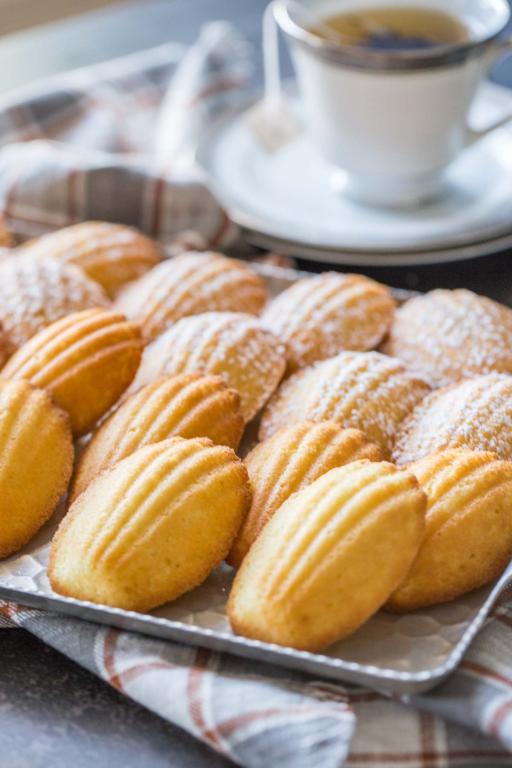
Of course, if you’ve read the book, it’s not about a river. It’s about his meeting with a madeleine. At the time I had to look it up. It’s a kind of cake, although it looks more like a kind of cookie in our American usage.
The passage.
“And soon, mechanically, weary after a dull day with the prospect of a depressing morrow, I raised to my lips a spoonful of the tea in which I had soaked a morsel of the cake. No sooner had the warm liquid and the crumbs with it, touched my palate than a shudder ran through my whole body, and I stopped, intent on the extraordinary changes that were taking place. An exquisite pleasure had invaded my senses, but individual, detached, with no suggestion of its origin. And at once the vicissitudes of life had become indifferent to me…”
I think of that moment. Of that taste. Of that meeting. That simple joy which seems to open into some mystery.
Valentin Louis Georges Eugene Marcel Proust was born in Paris on the 10th of July, 1871. The eldest of two sons in a well-to-do family, their father Catholic, their mother Jewish. In deference to various things they were raised Catholic. It is said that as he aged, Proust became “an atheist and was something of a mystic.” I rather like that combination of contradictions. I identify with similar juxtapositions.
A place of both and. It is a place that invites surprises. Sort of a plot of flowers at the edge of a forest. You never know what will sport out among the tamer crops.
The “well-to-do” proved critical for Proust. Except for a brief period of military service, he remained at his parent’s home until their deaths. Mostly an invalid throughout his life, he rarely left his bedroom. He died in 1922, only fifty-one. Thanks to his brother a prominent surgeon who saw the genius and made sure the book was published, Proust is renowned for his magisterial novel. I’ve already used magnum opus, it really deserves those words, A la recherché du temps perdu, translated variously as Remembrance of Things Past, and In Search of Lost Time. Its seven volumes ran approximately 3,200 pages (actually 4,300 in the Modern Library English version I read. I looked.).
Remembrance of Things Past was called the greatest novel of the twentieth century by Graham Greene and rather more grandly the greatest novel to date by Somerset Maugham. Although I also know Anatole France is said to have said, “Life is too short, and Proust is too long.” In that spirit of both and, I suspect they’re all correct.
At the time as I read that passage about the madeleine, I thought, oh, my, is that a kensho experience? Zen’s word for the turning of the heart toward wisdom, for seeing beyond the dreams and stories we tell ourselves, pointing directly into the “real” of the worlds. This is the heart of the spiritual quest, to know for one’s self, the realities of this universe as some great unfolding.
To find these awakenings of our heart are essential for us to have direction. They birth for us a north star. Perhaps even the star that appeared above Bethlehem. But for us, you and me.
I’m especially taken with how this particular pointing comes from a world class neurotic, who barely could get himself out of bed. Someone who preferred cork-lined walls and his pen to any kind of actual human encounter. And, yet he was able to point true.
The spirit, it turns out, really does rest where it will.
Proust himself reflected on what happened and offers a perspective out of the experience. Something I’ve found useful. Later in the novel he writes.
One minute freed from the order of time has repeated in us, in order to feel it, the man freed from the order of time. And because of that we can understand why he trusts his joy, and even if the simple taste of a Madeleine does not seem logically to contain reasons for this joy, we can understand how the word ‘death’ has no meaning for him: situated outside time, why should he fear for the future?
I truly loved this pointing to something of the human heart’s desire, to encounter with our own lives the call of all the world’s religions. Into, well into something where words begin to fail, get shaky, even completely collapse. Although, in fact once loosened a bit, words, prove how they are magical things. Angels, if you will, in the sense of messengers. At least if we allow them their play, as in a novel, as in a koan. Then we can receive the message, we can find ourselves pointed to a taste of that small cake for ourselves. To find in our own bodies, as our own bodies, something bound in time and beyond time all at once.
Something wonderful. No doubt. And something important. A north star for our lives. Of course, it’s important to note that while it was a taste here, it could be something you see, or hear, or meet with any of the senses. Each part of who we are can be a door into wonder. If we allow ourselves to meet what we meet in the intimate way, the secret of our bodies, the secret of the universes is instantly revealed.
People make a lot of whether any given insight is slight or deep. I suggest that’s actually none of our business. If we take on the intimate way, these tastes, these moments, as the teacher Joko Beck uniformly called them, these small intimations, each in fact simply invite us into a journey. A journey that began before we were born. And a journey that continues well on past these moments, even gloriously crumbly moments like that madeleine. They’re not the culmination, they’re a door, they’re a signpost. They’re a gate, swung wide. Walk through. And. Then tthe journey continues.
Still, they’re important. Critical, even.
In my own life as a student of Zen, I was living in a monastery in that ever-exotic Oakland, California, of which Gertrude Stein whispered, there is no there, there. For me a delightful pointing toward the mysteries of Zen, as well as Oakland, city of my birth. In that monastery during a meal that featured the thinnest of thin broths I had an encounter with a cabbage leaf. I’ve described it before. And honestly, I’m finding the retelling less and less helpful.
The important thing is how it was for me an invitation into immediacy, into intimacy. So, a year or two later, after I left the monastery and as I read about that madeleine, it seemed obvious to me Proust and I touched something similar. There are hundreds, thousands of stories about this meeting. Those are two. Let me offer just one more.
One of the Zen teachers I most admire is the Japanese Rinzai master Yamada Mumon. In his study of the Oxherding Pictures, Zen’s wonderful map of the human heart when he comes around to his own pointing into the moment of the opened heart, he tells a story. Of course, it would be a story.
It’s about an encounter between Ippen Shonin, himself a wonderful and complicated thirteenth century Japanese spiritual seeker and teacher, and the Rinzai Zen master Shinichi Kakushin. Kakushin Roshi had studied with several teachers in Japan, including the founder of Japanese Soto, Eihei Dogen. Eventually he went to China where he studied under Wumen Huikai, the compiler of the koan anthology, the Gateless Gate. It’s one of the most important books in the Zen tradition.
Later when Kakushin returned to Japan he brought a copy of that book with him. A critical moment for Zen in Japan. Maybe an aside, perhaps not, in popular Japanese culture Kakushin Roshi is also said to have introduced soy sauce into the country. I would say the Gateless Gate and soy sauce are of near equal importance.
Ippen Shonin, on the other hand, had been a monk of the Tendai school, a broadly eclectic spiritual tradition that allowed a variety of directions. For him he undertook the study of Pure Land Buddhism, a teaching based in the observation we appear to be living in the last age, where matters are so corrupt that we can’t achieve enlightenment on our own. Fortunately, there’s a Buddha in another dimension, who made a vow that if someone called on his name, he would gather that person into his world, the Western Paradise, the Pure Land, where awakening would be as easy as the unfolding of a flower.
The spiritual practice for Pure Land Buddhism is called, in Japanese, nembutsu. It consists of the phrase “Praise to the Buddha of Infinite Light.” In Japanese “Namu Amida Butsu.” You can think of it like a mantra. Although some would dispute that characterization. Like any authentic spiritual practice its messier than any simplistic description.
Ippen’s father died when he was twenty-five, and he took off the robes, married and assumed his household responsibilities. But he continued his practices. During a pilgrimage a kami, a local god, I think of kami more as moments where time and place collapse into dreams, appeared and informed him he should tell people about the nembutsu. Which he did as an ecstatic, including dancing with the mantra. Something I’d not heard of before as part of nembutsu practice.
However, Ippen didn’t leave it at that. He knew there were many gates. And he was sure he could go deeper into the mystery. So, he also undertook Zen practice under the guidance of Kakushin Roshi. Master Mumon tells about this. At one point the Pure Land ecstatic shared a poem with his Zen teacher, a traditional way of expressing one’s spiritual state.
“In chanting, there is neither self nor Buddha,/Only the sound of Namu Amida Butsu.”
The Zen teacher replied, nice, but you’re not yet mature. Ippen bowed, and continued his contemplations. Soon he came back with a new verse.
“In chanting, there is neither self nor Buddha,/Namu Amida Butsu, Namu Amida Butsu.”
Perhaps you can feel how close he’s getting. Maybe you can even catch a sense of Marcel Proust and his madeleine. Of course, Kakushin tells him, better, but not intimate enough. Ippen then asks for direct explanation, and the Rinzai teacher spontaneously recites.
“In chanting, there is neither self nor Buddha,/Over the back pond, the wind is sighing.”
Perhaps you can feel the breeze which is no other than the chant which is no other than our very lives. Cabbage leaves. And, madeleines. Crumbs that I can taste to this moment. Angels with messages for those ready to hear.
The part that I feel really important to notice about these graces, larger and smaller, is how visceral they are. How intimate to who we are as beings. As I’ve noted there are a hundred gates into this intimate moment. Those closest at hand for us are our senses, seeing, smelling, touching, tasting, hearing, and Buddhists like to point out, the perceiving mind.
But. And this is an important “but.” But we need to understand this invitation is into something alive and dynamic. It is also something that a Jewish Catholic atheist can notice in a cookie, that a former Baptist boy finds as a cabbage leaf in a Buddhist monastery meal, that a Pure Land wanderer can find meeting with a Zen teacher and swapping poems. In a moment each of our senses can and do invite us to notice. It’s about being freed from the order of time, if for a few heartbeats.
And, for me, at least, in this encounter discovering not just gratitude, not even joy, precisely; but a certain sympathy with the whole of creation. Be careful. Each of these words are magic things. Pointing, as they are to the deeper possibilities of our being. Toward that north star.
The psychologist, advocate of dreams and mysteries, James Hillman tells us “Words, like angels, are powers which have invisible power over us…” Me, I love the connection between words and angels, both as mysterious entities with powers that we are not necessarily aware of, or totally understand. And, as I consider gratitude, and joy, and sympathy, I feel, yes, the moments of disruption of the way we think things are, are without a doubt also visitations.
Angels. James Hillman sings to us “Open your heart, your gaze, to the visitations of angels, even if the gifts they bring may not be centerdness and balance but eccentricity and a wholly unfamiliar sense of pleasure called joy.”
Joy, again. For me the great project of insight, of wisdom has not been a path leading me to calm depths. Rather it has been Mr Toad’s wild ride. No doubt the intimate way in its various manifestations offers paths to a certain mysterious joy. A joy that mixes up loss and grief, beauty that breaks the heart, and madeleines and cabbage leaves and, absolutely, poems.
That joy that arises in the face of seeing how everything and everyone is in fact dying from the moment we birth into this world. That joy of discovering we are more intimate than sisters and brothers. Of course, there is sadness. Of course, longing. And hurt. And loss. Of course, all the range of emotions packed into that strange joy. No wonder one of the traditional images of the spiritual path is war. A dangerous image. But one we completely discard at our peril.
That said, at the heart of it all, coming from the side, from the corner of the eye, well not an eye, not some eye; my eye. Something never quite capturable is that mysterious joy. As Hillman sings to us.
“We would like otherworldly visitors to come as distinct voices with clear instructions, but they may only give small signs in dreams, or as sudden hunches and insights that cannot be denied. They feel more as if they emerge from inside and steer you from within like an inner guardian angel” To which there is an addendum. “And, most amazing, it has never forgotten you, although you may have spent most of your life ignoring it.”
Like a madeleine. Like a cabbage leaf. Like a poem.
So, my advice. Be ready for the unexpected. Be ready for heartbreak. And be ready to be surprised by joy.
But be warned. It’s a fierce joy. It’s a terrible joy. It’s confusion, and wonder.
Like an angel appearing from heaven with a message.
Pointing us to new worlds.

Browse Our Archives
Select a Category A Christmas Carol Abolitionist African-American Ahmadiyya Alan Watts Aldous Huxley Allen Ginsberg Amedkar Jayanti American politics American Zen Anaheim Zen Sangha Anglican Annie Besant April Fool Armageddon Art and Religion artificial intellegence Atheist Awakening B R Ambedkar Barlaam & Josaphat Beatnik Between Bhagavad Gita Bible biography birthday bodhisattva Bodhisattva Precepts Book burning Book of Common Prayer Book of Mormon Brahmo Samaj Buddha Buddhism Buddhist Buddhist Lord's Prayer Butterflies Calendars cartoons cat ChatGPT Chicken Tortilla Soup choices Christian atheism Christian mysticism Christian origins Christian Science Christian Zen Christianity Christianity and Buddhism christmas Christmas Truce Christopher Isherwood Church of Later Day Saints Cinco de Mayo circus covenant critical thinking culture D. T. Suzuki Dalit Buddhism Daniel Defoe Desert Fathers and Mothers dharma talk Dogen Donald Trump Dongshan's Five Ranks Dorothy Day dream Duty Easter ecology Edwin Arnold emptiness Empty Moon Zen Network Episcopal Church Eternal Now Ethics evolution existentialism Faith fantasy Fathers Day film film review fire Five Ranks Folk music food Form and emptiness Four Seals Francis of Assisi Francis Xavier Free thinker friendship George MacDonald Gerald Heard Glenn Taylor Webb God Good Friday Gospel of Gospel of Mark Gospel of Thomas grace Graduate Theological Unioin Graduate Theological Union Guanyin H R Blyth Hakuin Ekaku Hanamatsuri Hanukkah Harada Yasutani Zen Heart Sutra Henry David Thoreau Hermann Hesse Hinduism History and Religion history of religion Holy Spirit home Hospitality Icon Ides of March Isaac Newton Islam Islamic mysticism Jack Kerouac James Luther Adams Jiddu Krishnamurti Joan of Arc Johannes Gutenberg John Donne joke Judaism justice karma kensho King James Bible koan Koun Yamada Kyoto School Lewis Carrol Liberal Christianity Liberal Religion Life Plan Community Liminal literature Literature and Religion Liturgy Lord's Prayer Love Mahatma Gandhi Mahayana Martin Luther King Jr Mary Baker Eddy Mary Magdelene Mary Oliver Mayflower Compact Meditation memories memory metaphor money money and religioin Mormons Mother's Day movie review mysticism mythic Neighborhood Unitarian Universalist Church New Thought Nichiren Buddhism Nonduality not knowing Omar Khayyam Pacific School of Religion pagan Palm Sunday Passover peace Pentecost perennialism Phantastes Philip Kapleau philosophy Pilgrimage poetry Poetry and Religion politics Prayer Precepts Printing Press prophecy prophetic spirituality psychology Pure Land Queer religion queering religion Quietism Ram Mohan Roy rebirth recipe Relationships and religion religion religion and history Religious syncretism Resistance Retirement Retreat review Rissho Kosei Kai Ritual Robert Aitken Roshi Robert Ingersoll Rohatsu Romani religion Rosie the Riveter saints samadhi SanboZen Sangha Satyagraha science science and reigion science and religion science fiction seminary sermon Sesshin Sex and Religion Shinran Sikh Sikh tradition silence Social Justice Socially Engaged Buddhism Society and religion Soto Zen soul spiritual community spiritual practice Spirituality Sufism Suicide superstition Taoism Television Teresa of Avila Thanksgiving theological schools Theosophy Thomas Merton Time Transcendentalism Transcendentalist Trinitarian Trinity Uncategorized unitarian Unitarian Christianity Unitarian Universalist Universalism Vajrayana Vedanta Walking war Willa Cather William Ellery Channing wisdom women and religion women in religion World Teacher Writing zazen Zen Zen Center Zen inspired retriement zen meditation Zen Precepts Zen women
Select a Month September 2026 August 2026 July 2026 June 2026 May 2026 April 2026 March 2026 February 2026 January 2026 December 2025 November 2025 October 2025 September 2025 August 2025 July 2025 June 2025 May 2025 April 2025 March 2025 February 2025 January 2025 December 2024 November 2024 October 2024 September 2024 August 2024 July 2024 June 2024 May 2024 April 2024 March 2024 February 2024 January 2024 December 2023 November 2023 October 2023 September 2023 August 2023 July 2023 June 2023 May 2023 April 2023 March 2023 February 2023 January 2023 December 2022 November 2022 October 2022 September 2022 August 2022 July 2022 June 2022 May 2022 April 2022 March 2022 February 2022 January 2022 December 2021 November 2021 October 2021 September 2021 August 2021 July 2021 June 2021 May 2021 April 2021 March 2021 February 2021 January 2021 December 2020 November 2020 October 2020 September 2020 August 2020 July 2020 June 2020 May 2020 April 2020 March 2020 February 2020 January 2020 December 2019 November 2019 October 2019 September 2019 August 2019 July 2019 June 2019 May 2019 April 2019 March 2019 February 2019 January 2019 December 2018 November 2018 October 2018 September 2018 August 2018 July 2018 June 2018 May 2018 April 2018 March 2018 February 2018 January 2018 December 2017 November 2017 October 2017 September 2017 August 2017 July 2017 June 2017 May 2017 April 2017 March 2017 February 2017 January 2017 December 2016 November 2016 October 2016 September 2016 August 2016 July 2016 June 2016 May 2016 April 2016 March 2016 February 2016 January 2016 December 2015 November 2015 October 2015 September 2015 August 2015 July 2015 June 2015 May 2015 April 2015 March 2015 February 2015 January 2015 December 2014 November 2014 October 2014 September 2014 August 2014 July 2014 June 2014 May 2014 April 2014 March 2014 February 2014 January 2014 December 2013 November 2013 October 2013 September 2013 August 2013 July 2013 June 2013 May 2013 April 2013 March 2013 February 2013 January 2013 December 2012 November 2012 October 2012 September 2012 August 2012 July 2012 June 2012 May 2012 April 2012 March 2012 February 2012 January 2012 December 2011 November 2011 October 2011 September 2011 August 2011 July 2011 June 2011 May 2011 April 2011 March 2011 February 2011 January 2011 December 2010 November 2010 October 2010 September 2010 August 2010 July 2010 June 2010 May 2010 April 2010 March 2010 February 2010 January 2010 December 2009 November 2009 October 2009 September 2009 August 2009 July 2009 June 2009 May 2009 April 2009 March 2009 February 2009 January 2009 December 2008 November 2008 October 2008 September 2008 August 2008 July 2008 June 2008 May 2008 April 2008 March 2008 February 2008 January 2008 December 2007 November 2007 October 2007 September 2007 August 2007 July 2007 June 2007 May 2007 April 2007 March 2007 February 2007 January 2007 December 2006 November 2006 October 2006 September 2006
Follow Us!
TAKE THE
Religious Wisdom Quiz
I include truth, righteousness, the gospel, faith, salvation, and the Spirit. What am I?
Select your answer to see how you score.
The armor of God The shield of faith Spiritual weapons The breastplate of righteousness
Related posts from Monkey Mind


Which Is the True Qian? A Koan About...


TRENDING AT PATHEOS Buddhist

In "Irreplaceable," our book on vocation and technology, Trevor Sutton and I...

I was strolling through the top floor of the brand new Parthenon...

What Does Gêvâh Mean For Kimberley Guifoyle &...
This week, a lot of the news is focused on Kimberly Guilfoyle....

INNER CIRCLE: Profound Mystery (Of Christ In All...
Ephesians 5:31-32 “For this reason, a man will leave his father and...

Do Not Rejoice When Your Enemy Falls: The...
Turning an execution into a public spectacle is a disturbing expression of...

'The Chosen' S6 Trailer: The Passion Gets Very...
Not many watching 'The Chosen' worry about spoilers, but just because they...
view all Buddhist blogs
Ad-Free & Subscriber Log-In Subscription Support
- About Us
- 2026 Calendar
- Videos
- Podcasts
- Library of World Religions
- Faith In Media Tracker
- Advertise With Us
- Write for Us
- Privacy Policy
- Terms of Service
- Do Not Sell My Data
- Contact Us
- Radiant Digital
- Manage Newsletter Subscriptions
- Unsubscribe From Notifications
- Sitemap
Copyright 2008-2026, Patheos. All rights reserved.
Subscription Support Ad-Free & Subscriber Log-In
Follow Patheos