
BuddhistCatholicContemplativeEvangelicalGeneral ChristianHinduJewishLatter-day SaintMuslimNew VisionsProgressive Christian
Beliefs
- Buddhist
- Catholic
- Contemplative
- Evangelical
- General Christian
- Hindu
- Jewish
- Latter-day Saint
- More Voices
- Muslim
- New Visions
- Pagan
- Progressive Christian
Topics
- Religion News
- Food and Religion
- Sports and Religion
- Religious Art
- Religious Music and Entertainment
- Religious Events
- History and Religion
- Style and Religion
- Politics and Religion
- Women in Religion
- Recreation Outdoors and Religion
- Business Finance and Religion
- Careers Workplace and Religion
- Education and Religion
- Family Parenting and Religion
- Health Fitness and Religion
- Home and Religion
- Relationships and Religion
- Technology and Religion
- Travel and Religion
Columnists
- Buddhist Columnists
- Business Finance and Religion Columnists
- Careers Workplace and Religion Columnists
- Catholic Columnists
- Contemplative Columnists
- Education and Religion Columnists
- Evangelists Columnists
- Family Parenting and Religion Columnists
- General Christian Columnists
- Health Fitness and Religion Columnists
- Hindu Columnists
- History and Religion Columnists
- Home and Religion Columnists
- Jewish Columnists
- More Voices Columnists
- Latter Day Columnists
- Muslim Columnists
- New Visions Columnists
- Nonreligious Columnists
- Pagan Columnists
- Politics and Religion Columnists
- Progressive Columnists
- Recreation Outdoors and Religion Columnists
- Relationships and Religion Columnists
- Religion News Columnists
- Religious Art Columnists
- Religious Events Columnists
- Religious Music and Entertainment Columnists
- Sports and Religion Columnists
- Style and Religion Columnists
- Technology and Religion Columnists
- Travel and Religion Columnists
- Women in Religion Columnists
Resource Library
- 2026 Calendar
- Library of World Religions
- The 100 Most Holy Places on Earth
- Patheos Answers
- Podcasts
- Videos
- Faith Leaders Database
- Anglican Episcopalian
- Bahai
- Baptist
- Buddhism
- Christianity
- Confucianism
- Eastern Orthodoxy
- Hinduism
- Holiness and Pentecostal
- ISKCON
- Islam
- Judaism
- Lutheran
- Methodist
- The Church of Jesus Christ of Latter-day Saints
- New Age
- Paganism
- Presbytarian and Reformed
- Protestantism
- Religion Behind the Scenes
- Roman Catholic
- Scientology
- Shia Islam
- Sikhism
- Sufism
- Sunni Islam
- Taoism
- Zen
- See all religions
Research Tools
 Ad-Free & Subscriber Log-In Subscription Support
Ad-Free & Subscriber Log-In Subscription Support
Follow Patheos 

- Trending:
- Forgiveness
- |
- Marriage
- |
- Consciousness
- |
- Death Penalty
- |
- Election
- |
- Halloween

- Home
- Buddhist
- The Bodhisattva Path: A Meditation on Soto Zen’s Three Pure Precepts
The Bodhisattva Path: A Meditation on Soto Zen’s Three Pure Precepts
Last updated on: July 31, 2020 at 7:24 am by James Ford
The Bodhisattva Path: A Meditation on Soto Zen’s Three Pure Precepts 2020-07-31T07:24:36-07:00 James Ford
Patheos Explore the world's faith through different perspectives on religion and spirituality! Patheos has the views of the prevalent religions and spiritualities of the world.
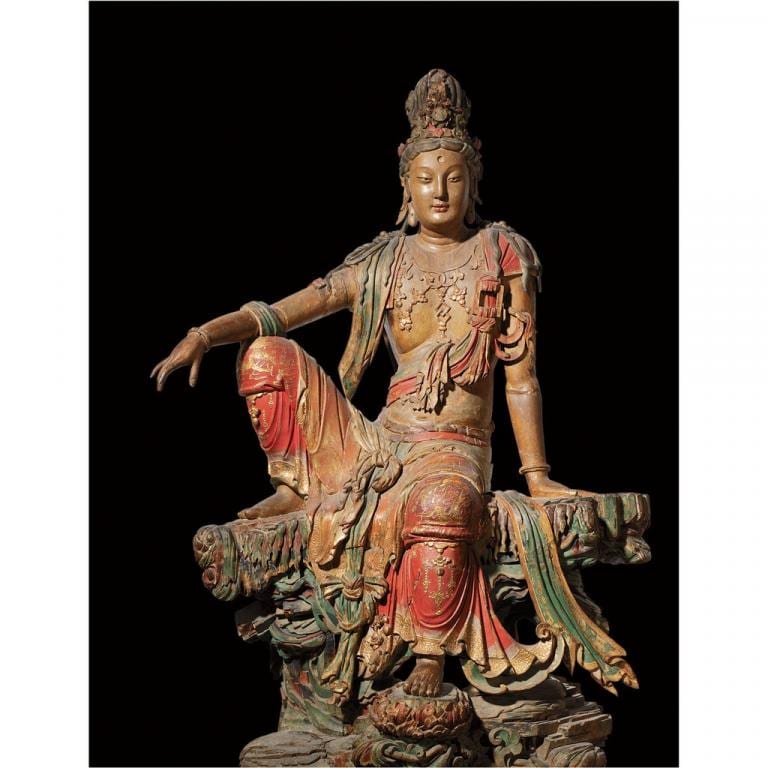
The Bodhisattva Path:
A Meditation on Soto Zen’s Three Pure Precepts
James Myoun Ford
The three pure precepts of Japanese Soto Zen are also known as the three root precepts, because they sink into the deep soil of the tradition. They offer a succinct summation of the Bodhisattva way. I believe the three pure precepts both describe what the awakened heart looks like and offer a simple, if not always easy path to that awakening of our hearts.
They derive ultimately from the Dhammapada, part of the Khuddaka Nikaya collection that purports to be an anthology of the Buddha’s sayings. Specifically verse 183. In Irving Babbitt’s translation (used by Robert Aitken in his wonderful study of the precepts, Mind of Clover) it reads:
“Renounce all evil;
Practice all good;
Keep your mind pure –
Thus all the Buddhas taught”
For another angle on it, in Acharya Buddharakkhita’s translation available at Access to Insight on the web, the verse is rendered:
“To avoid all evil, to cultivate good, and to cleanse one’s mind – this is the teaching of the Buddhas.”
Pretty straightforward. And very much within the Theravada tradition. However, for it to be part of the great way, the Mahayana tradition, it needs a bit of tweaking. As Aitken Roshi says, it needs a “shift from the ideal of personal perfection to the ideal of oneness with all beings.
“And with that the third line is rewritten from a focus on purity or clarity of mind to the great vow of saving all beings.” With that and dropping the fourth line as redundant, we get the three pure precepts. In Aitken Roshi’s version:
“Renounce all evil;
Practice all good;
Save the many beings.”
I’m also fond of Shunryu Suzuki’s version:
“With purity of heart, I vow to refrain from ignorance.
With purity of heart, I vow to reveal beginner’s mind.
With purity of heart, I vow to live, and be lived for the benefit of all beings.”
Probably my favorite of the various versions, at least for now, is Daido Loori’s rendition:
“Not creating evil
Practicing good
Actualizing good for others.”
Let’s look, briefly, at each of these lines.
To cease from evil.
First, that thing about evil. The word is, of course, messy. And for many of us raised within the Abrahamic traditions, and for most of us specifically within Christianity, the word “evil” can be problematic. Merriam-Webster defines evil as “morally reprehensible.” And it is often aligned with another problematic word, “sin.” It implies to the modern ear something objective. For us there are unavoidable echoes of a devil, a tempter laying snares for us all along our lives.
Those of us of a modernist mind, tend not to like that. And, at least in my generation, we prefer words like “ignorance” rather than evil. Just as we prefer sin as “missing the mark.” All, I believe, true. And, I’ll return to that kind of usage. But, also there are things, actions and thoughts that become actions, that damage, that wound, that kill. And, a big part of entering the Buddha way is embracing a fuller view that acknowledges the world we actually occupy. It is a world where joy and sorrow abound, and where everything is connected, and what we do actually matters. There are consequences to every act. Actually, to every thought, because they shapes our perceptions and become actions.
What we do and what we think that leads to actions can, absolutely, can be damaging, wounding, and even kill. So, I don’t see anything “objective” in this. There is no free-floating evil in the air that we might catch like the flu, or coronavirus. Nor is there some objective being out there whispering in our ear, luring us into unhealthy actions. Although it can feel like that. Absolutely it can feel like that.
But the feeling comes from the harsh consequences of our lived lives, not from some outside force. Well, except when we are the recipients of someone else’s bad actions. In the more benign versions, I call that eating someone else’s karma. These things can be bad, broken body and heart bad all the way up to death camp bad. Evil can be an apt term. And, taking the poetry of it, it’s the term of art most of us most find useful.
Then there’s digging into it, and getting past the metaphors, at least a little. Here let’s return to ignorance and missing the mark. And with that how we are caught up in things that might be called evil.
Within the Buddha dharma we tend to understand the impulses that create those ultimately unhealthy actions as the “three poisons,” or the “three root poisons.” The most common framing is “greed, anger, and ignorance.” They are also sometimes called the three demons, which I like if we don’t objectify the demons and put them as forces outside our own hearts
Greed is perhaps the least ambiguous without further analysis. It is the constellation of thoughts and feelings and impulses of desire. It is our longing. Our wanting. And our acting on them.
The second is often framed, and I think unfortunately as anger. We can understand hunger as a natural urge, the thing that lets us know we need nourishment. And we don’t confuse it with obsessive hunger, which is greed. But with anger, there’s a lot of conversation. Particularly as we know there is appropriate anger. Something harmful is done to us or someone else, and anger is a reasonable response. The problem is the same as natural desire becoming greed. When anger becomes free floating, when it becomes, perhaps the best word to describe this is aversion, then we see one of the poisons of our hearts. I’ve found it helpful to say “hatred” for this poison, saving anger for its appropriate use as a rising response to something wrong or unjust. Aversion is perhaps the best word for this feeling and action.
The third term, ignorance also demands some unpacking. While it is less emotional, it also implies some objective lack. Something that can simply be cured by knowledge. That kind of ignorance is real enough. And the fix is learning. But there’s something else that makes it a poison. I’ve come to find it as the constellations of our certainties.
Certainties as those axioms of our lives that rule how we see the world. Like grasping and aversion there is an angle on this that we need. Without some perspectives, some sense of how the world is, we’re lost. But when those perceptions harden and are not open to challenge from better information, then, well, we’re lost in even worse ways.
In the ancient Buddhist mandala of the world near the center these demons are portrayed as a rooster, a snake, and a pig. When they are actualized in our individual lives, they keep the wheel of suffering, the wheel of delusion rolling along. For human beings grasping, aversion, and certainties are the substance of dukkha, the great hurt of our lives.
From a literal perspective, if you can’t do anything else, try not to do evil. From an absolute perspective, each of these things, grasping and aversions and certainties, have no substance. And, from a compassionate perspective, they warn us of our shadows, while inviting us to something larger.
Ceasing from evil, grasping becomes generosity. Ceasing from evil, aversion becomes clarity. And, ceasing from evil, certainties become endless curiosity, the not knowing that our tradition tells us is most intimate.
A magical thing. A human thing. And, the heart of our practice.
And, here we come to the second line.
To do good.
Here, we find what happens as we turn our hearts into the ways of generosity and clarity and curiosity. The technical term that we translate as “good” is kusala. It is usually translated as “skillful,” and is the opposite of the term that we normally translate as “evil,” akusuala. Unskillful, or lacking skill. While I believe there’s a lot to be said for the richness of the terms good and evil, the poetry matters; they also imply essences, which is the great cognitive trap of our human minds. Equally true, and while perhaps not as heartful, “skillful” and “unskillful” at least avoid that trap of literalizing something that is more a process.
Here we see some of the actual practice of our practice. What does doing good, what does being skillful mean for us, both on the pillow, and off? On the pillow it is taking that monkey mind as it wanders in the many directions gently by the hand and returning to the fullness of the moment. Off the pillow it is conforming our actions to the ways of presence and care. It echoes that original line about clearing the mind, that sweeping of the heart, that joining with the world fully and without reservation.
It is the way of care and respect.
I find it interesting how we are woven out of all these things, and also how our personalities tend to lead with one or another. So, I’m a pretty pure greed person. You can see my struggles with this on my body. I can recall a friend of mine, an old Zen hand, when he was told by a teacher that he was a pretty good example of a hate person. And how his immediate response was an explosive “I am not!” He laughs, knowingly as he tells it. We do get ignorance led people on the spiritual path, for sure. But there appear to be fewer of them, and they like other occupations. Politics for one.
Whatever, we’re all born to the flesh, and we are subject to the causes and conditions of our lives. And, we always find an invitation not away from who we are but through who we are. And that flows like a river into the great ocean and takes us to the secret of our Bodhisattva vow, our original vow.
To Save the Many Beings…
Once upon a time, long ago, and far away. Or, maybe it is in a future place. And, possibly it’s happening right here now.
There was a person. (Please insert your name here.)
After aeons of existence, or maybe it was at the beginning of time. She had lived as flowing energies, as minerals, as plants, and as animals. He had been a he many times. She had been a she. Gender and the flow of gender. Peasant ground down by labor. Tyrant oppressing all for power. Lover, many times a lover. A hater. Too many times hating. Oh, and sparks of joy. And intimate moments.
And from that place. Or, maybe it was at the beginning of that place. She, he, the words describing you are all so inadequate, has many names, you use one right now, but there are others, among the most ancient let’s say infinite light, or, if you prefer, infinite life. Infinite life made a vow.
And that vow was to not pass into the great boundless, into the traceless, until everyone and everything could come along. The Bodhisattva vow.
It’s a bit of an inside joke, however. Because we’re already, all of us, in all our joy and suffering, we’re all already there. Here.
But, there’s a boatload on not knowing that truth. And not the good not knowing, the not knowing of hurt, of desire, of hatred, and, of knowing all sorts of things that are not true.
So, you vow, you vowed, you will vow.
For us all to go together.
We call this urge, which is natural as the quenching of thirst bodhichitta. It is a passionate wish to realize our true nature for the sake of the many beings. Of course, that desire for ourselves is bound up in this. We are each of us equally partners in the great mystery. But we all go. Or, none do.
We all are. Or, none of us is.
Barbara O’Brien in a reflection on the Three Pure Precepts calls us to something Hakuin Ekaku, the Eighteenth-century Rinzai priest and reformer of the koan path to which we are heirs, tells us ‘From the sea of effortlessness, let your great uncaused compassion shine forth.”
It’s actually as easy as falling off a log.
Barbara, the author of the recent and wonderful history of Zen, Circle of the Way, tells us how this third of the three precepts can be “expressed in many ways – ‘embrace and sustain all beings;’ ‘actualizing good for others;’ ‘live to benefit all beings;’ ‘be lived for the benefit of all beings.’ The last expression points to effortlessness — the liberated mind naturally and spontaneously gives rise to beneficence. The selfish, ignorant, attached mind gives rise to its opposite.”
And that’s it. Those are the three pure precepts. The Bodhisattva way. The Bodhisattva vow.
For those with the eyes to see, our way is revealed. The great way. The intimate way.
Thank you.
Previous Post

July 29, 2020
Toujours gai: Or, What to do in Hard Times
Next Post
August 1, 2020 LEAVING NO ONE BEHIND: Zen & the Work of Justice
Browse Our Archives
Select a Category A Christmas Carol Abolitionist African-American Ahmadiyya Alan Watts Aldous Huxley Allen Ginsberg Amedkar Jayanti American politics American Zen Anaheim Zen Sangha Anglican Annie Besant April Fool Armageddon Art and Religion artificial intellegence Atheist Awakening B R Ambedkar Barlaam & Josaphat Beatnik Between Bhagavad Gita Bible biography birthday bodhisattva Bodhisattva Precepts Book burning Book of Common Prayer Book of Mormon Brahmo Samaj Buddha Buddhism Buddhist Buddhist Lord's Prayer Butterflies Calendars cartoons cat ChatGPT Chicken Tortilla Soup choices Christian atheism Christian mysticism Christian origins Christian Science Christian Zen Christianity Christianity and Buddhism christmas Christmas Truce Christopher Isherwood Church of Later Day Saints Cinco de Mayo circus covenant critical thinking culture D. T. Suzuki Dalit Buddhism Daniel Defoe Desert Fathers and Mothers dharma talk Dogen Donald Trump Dongshan's Five Ranks Dorothy Day dream Duty Easter ecology Edwin Arnold emptiness Empty Moon Zen Network Episcopal Church Eternal Now Ethics evolution existentialism Faith fantasy Fathers Day film film review fire Five Ranks Folk music food Form and emptiness Four Seals Francis of Assisi Francis Xavier Free thinker friendship George MacDonald Gerald Heard Glenn Taylor Webb God Good Friday Gospel of Gospel of Mark Gospel of Thomas grace Graduate Theological Unioin Graduate Theological Union Guanyin H R Blyth Hakuin Ekaku Hanamatsuri Hanukkah Harada Yasutani Zen Heart Sutra Henry David Thoreau Hermann Hesse Hinduism History and Religion history of religion Holy Spirit home Hospitality Icon Ides of March Isaac Newton Islam Islamic mysticism Jack Kerouac James Luther Adams Jiddu Krishnamurti Joan of Arc Johannes Gutenberg John Donne joke Judaism justice karma kensho King James Bible koan Koun Yamada Kyoto School Lewis Carrol Liberal Christianity Liberal Religion Life Plan Community Liminal literature Literature and Religion Liturgy Lord's Prayer Love Mahatma Gandhi Mahayana Martin Luther King Jr Mary Baker Eddy Mary Magdelene Mary Oliver Mayflower Compact Meditation memories memory metaphor money money and religioin Mormons Mother's Day movie review mysticism mythic Neighborhood Unitarian Universalist Church New Thought Nichiren Buddhism Nonduality not knowing Omar Khayyam Pacific School of Religion pagan Palm Sunday Passover peace Pentecost perennialism Phantastes Philip Kapleau philosophy Pilgrimage poetry Poetry and Religion politics Prayer Precepts Printing Press prophecy prophetic spirituality psychology Pure Land Queer religion queering religion Quietism Ram Mohan Roy rebirth recipe Relationships and religion religion religion and history Religious syncretism Resistance Retirement Retreat review Rissho Kosei Kai Ritual Robert Aitken Roshi Robert Ingersoll Rohatsu Romani religion Rosie the Riveter saints samadhi SanboZen Sangha Satyagraha science science and reigion science and religion science fiction seminary sermon Sesshin Sex and Religion Shinran Sikh Sikh tradition silence Social Justice Socially Engaged Buddhism Society and religion Soto Zen soul spiritual community spiritual practice Spirituality Sufism Suicide superstition Taoism Television Teresa of Avila Thanksgiving theological schools Theosophy Thomas Merton Time Transcendentalism Transcendentalist Trinitarian Trinity Uncategorized unitarian Unitarian Christianity Unitarian Universalist Universalism Vajrayana Vedanta Walking war Willa Cather William Ellery Channing wisdom women and religion women in religion World Teacher Writing zazen Zen Zen Center Zen inspired retriement zen meditation Zen Precepts Zen women
Select a Month September 2026 August 2026 July 2026 June 2026 May 2026 April 2026 March 2026 February 2026 January 2026 December 2025 November 2025 October 2025 September 2025 August 2025 July 2025 June 2025 May 2025 April 2025 March 2025 February 2025 January 2025 December 2024 November 2024 October 2024 September 2024 August 2024 July 2024 June 2024 May 2024 April 2024 March 2024 February 2024 January 2024 December 2023 November 2023 October 2023 September 2023 August 2023 July 2023 June 2023 May 2023 April 2023 March 2023 February 2023 January 2023 December 2022 November 2022 October 2022 September 2022 August 2022 July 2022 June 2022 May 2022 April 2022 March 2022 February 2022 January 2022 December 2021 November 2021 October 2021 September 2021 August 2021 July 2021 June 2021 May 2021 April 2021 March 2021 February 2021 January 2021 December 2020 November 2020 October 2020 September 2020 August 2020 July 2020 June 2020 May 2020 April 2020 March 2020 February 2020 January 2020 December 2019 November 2019 October 2019 September 2019 August 2019 July 2019 June 2019 May 2019 April 2019 March 2019 February 2019 January 2019 December 2018 November 2018 October 2018 September 2018 August 2018 July 2018 June 2018 May 2018 April 2018 March 2018 February 2018 January 2018 December 2017 November 2017 October 2017 September 2017 August 2017 July 2017 June 2017 May 2017 April 2017 March 2017 February 2017 January 2017 December 2016 November 2016 October 2016 September 2016 August 2016 July 2016 June 2016 May 2016 April 2016 March 2016 February 2016 January 2016 December 2015 November 2015 October 2015 September 2015 August 2015 July 2015 June 2015 May 2015 April 2015 March 2015 February 2015 January 2015 December 2014 November 2014 October 2014 September 2014 August 2014 July 2014 June 2014 May 2014 April 2014 March 2014 February 2014 January 2014 December 2013 November 2013 October 2013 September 2013 August 2013 July 2013 June 2013 May 2013 April 2013 March 2013 February 2013 January 2013 December 2012 November 2012 October 2012 September 2012 August 2012 July 2012 June 2012 May 2012 April 2012 March 2012 February 2012 January 2012 December 2011 November 2011 October 2011 September 2011 August 2011 July 2011 June 2011 May 2011 April 2011 March 2011 February 2011 January 2011 December 2010 November 2010 October 2010 September 2010 August 2010 July 2010 June 2010 May 2010 April 2010 March 2010 February 2010 January 2010 December 2009 November 2009 October 2009 September 2009 August 2009 July 2009 June 2009 May 2009 April 2009 March 2009 February 2009 January 2009 December 2008 November 2008 October 2008 September 2008 August 2008 July 2008 June 2008 May 2008 April 2008 March 2008 February 2008 January 2008 December 2007 November 2007 October 2007 September 2007 August 2007 July 2007 June 2007 May 2007 April 2007 March 2007 February 2007 January 2007 December 2006 November 2006 October 2006 September 2006
Follow Us!
TAKE THE
Religious Wisdom Quiz
The righteous person will live by what quality or characteristic?
Select your answer to see how you score.
Holiness Works Obedience Faith
Related posts from Monkey Mind


Which Is the True Qian? A Koan About...


TRENDING AT PATHEOS Buddhist

The Iron Gates and the Lion of the...
Yesterday, I didn't finish my report about, well, yesterday. So I'll...

Dolly Parton’s Last Song Wins Dove Award with...
Bluegrass band The Grascals, speaking on the red carpet at the 57th...

The Image: On the Horror of Capitalism and...
The Image Then went the Pharisees, and took counsel how they might...

We are approaching the date of our new American national holiday: October...

Letters on Living the Faith by C.S. Lewis
Most of us met C.S. Lewis as a public intellectual. Mere Christianity....

When Halloween Unmasks Married Hearts
Written by Dr. David K. Ewen from Eternal Truth Bible College Behind...
view all Buddhist blogs
Ad-Free & Subscriber Log-In Subscription Support
- About Us
- 2026 Calendar
- Videos
- Podcasts
- Library of World Religions
- Faith In Media Tracker
- Advertise With Us
- Write for Us
- Privacy Policy
- Terms of Service
- Do Not Sell My Data
- Contact Us
- Radiant Digital
- Manage Newsletter Subscriptions
- Unsubscribe From Notifications
- Sitemap
Copyright 2008-2026, Patheos. All rights reserved.
Subscription Support Ad-Free & Subscriber Log-In
Follow Patheos