
BuddhistCatholicContemplativeEvangelicalGeneral ChristianHinduJewishLatter-day SaintMuslimNew VisionsProgressive Christian
Beliefs
- Buddhist
- Catholic
- Contemplative
- Evangelical
- General Christian
- Hindu
- Jewish
- Latter-day Saint
- More Voices
- Muslim
- New Visions
- Pagan
- Progressive Christian
Topics
- Religion News
- Food and Religion
- Sports and Religion
- Religious Art
- Religious Music and Entertainment
- Religious Events
- History and Religion
- Style and Religion
- Politics and Religion
- Women in Religion
- Recreation Outdoors and Religion
- Business Finance and Religion
- Careers Workplace and Religion
- Education and Religion
- Family Parenting and Religion
- Health Fitness and Religion
- Home and Religion
- Relationships and Religion
- Technology and Religion
- Travel and Religion
Columnists
- Buddhist Columnists
- Business Finance and Religion Columnists
- Careers Workplace and Religion Columnists
- Catholic Columnists
- Contemplative Columnists
- Education and Religion Columnists
- Evangelists Columnists
- Family Parenting and Religion Columnists
- General Christian Columnists
- Health Fitness and Religion Columnists
- Hindu Columnists
- History and Religion Columnists
- Home and Religion Columnists
- Jewish Columnists
- More Voices Columnists
- Latter Day Columnists
- Muslim Columnists
- New Visions Columnists
- Nonreligious Columnists
- Pagan Columnists
- Politics and Religion Columnists
- Progressive Columnists
- Recreation Outdoors and Religion Columnists
- Relationships and Religion Columnists
- Religion News Columnists
- Religious Art Columnists
- Religious Events Columnists
- Religious Music and Entertainment Columnists
- Sports and Religion Columnists
- Style and Religion Columnists
- Technology and Religion Columnists
- Travel and Religion Columnists
- Women in Religion Columnists
Resource Library
- 2026 Calendar
- Library of World Religions
- The 100 Most Holy Places on Earth
- Patheos Answers
- Podcasts
- Videos
- Faith Leaders Database
- Anglican Episcopalian
- Bahai
- Baptist
- Buddhism
- Christianity
- Confucianism
- Eastern Orthodoxy
- Hinduism
- Holiness and Pentecostal
- ISKCON
- Islam
- Judaism
- Lutheran
- Methodist
- The Church of Jesus Christ of Latter-day Saints
- New Age
- Paganism
- Presbytarian and Reformed
- Protestantism
- Religion Behind the Scenes
- Roman Catholic
- Scientology
- Shia Islam
- Sikhism
- Sufism
- Sunni Islam
- Taoism
- Zen
- See all religions
Research Tools
 Ad-Free & Subscriber Log-In Subscription Support
Ad-Free & Subscriber Log-In Subscription Support
Follow Patheos 

- Trending:
- Forgiveness
- |
- Marriage
- |
- Consciousness
- |
- Death Penalty
- |
- Election
- |
- Halloween

- Home
- Buddhist
- Zen at the End of the World
Zen at the End of the World
Last updated on: June 14, 2020 at 10:16 am by James Ford
Zen at the End of the World 2020-06-14T10:16:52-07:00 James Ford
Patheos Explore the world's faith through different perspectives on religion and spirituality! Patheos has the views of the prevalent religions and spiritualities of the world.
ZEN AT THE END OF THE WORLD
James Ishmael Ford
First it was toilet paper.
Toilet paper. Who would have thought?
For something less than three months Americans were asked to self-quarantine. When we had to go out, we were asked to wear masks, stand at least six feet away from others if at all possible, and to wash our hands with all the energy of Lady Macbeth.
As it turned out for the great swath of our American middle classes, we met this challenge with some grace for, oh, I’m not sure, maybe three weeks? And then it began to unravel. Some of it understandable. Me, I can’t help but think of those who simply could not “self-quarantine.” Among those, people who live, sometimes desperately, paycheck to paycheck. People earning minimum wage and those caught up in the gig economy. People who are in danger of not paying rent, or, not buying food. Others, well, living on the streets has endless consequences. Many reasons to be there, of course. But. There is, for me something particularly heartbreaking about poverty and those as the Scriptures say who have nothing and then what little they may have left, being taken away into the bargain.
Quickly legitimate concerns for the economy that houses and feeds us got mixed up with a good portion of stir-crazy. Add in more than a dash of personal entitlement, and a mélange of conspiracy theories tailored to whether your tastes run to the right or the left of our American political spectrum. And even as Health Care specialists continue to warn us how in general its too early, restrictions enforced by the authority of the states are quickly receding. And people are beginning to resume pre-Covid lives, whether that’s smart, or not.
How goes that line go? Those who don’t study history are doomed to repeat it. While those who are informed are doomed to stand by hopelessly as it repeats. That. And, that other line usually attributed to Mark Twain, which reminds us how history doesn’t actually repeat, but it often rhymes. That. All of it.
Then in a moment America’s original sin was presented in its most flagrant and ugly way. We were all of us confronted with a video tape of a white police officer putting his knee on a black man’s neck, and in eight minutes and forty-six seconds squeezed his life out of him. While people watched. While the world has seen. George Floyd has come to stand for four hundred years of oppression.
And in response people have taken to the streets. None of this is new. With and without video tapes, Black people being killed by police without any defensible excuse are certainly not new. Tamir Rice. Michael Brown. Eric Garner. Breonna Taylor. Just the beginning of a very long litany. Four hundred years long.
But the response this time was not simply from the Black community. That’s different. If you’ve turned on your television you’ve seen people of every race coming together to witness, to speak out against the horrors of America’s original sin. Maybe even some of you have been on the streets.
Or, perhaps you feel this is a descent into chaos? I was just informed on Facebook that systemic racism is a fraud perpetrated by the Left. I just saw an op-ed in a conservative newspaper that challenges the premises of anything wide ranging enough to call structural racism.
I want to acknowledge the distress. But, to paraphrase the late Senator Monihan, our feelings are always authentic, but we’re not free to choose our facts. And this world has some facts.
Frankly the structures of oppression are spread across the globe. And, a major feature is always about minorities. With the one glaring exception to that rule, the long history of oppressing women. But otherwise minorities, people who can be seen as somehow other.
So, of course, we have ours. LGBTQ people. Asian immigrants and later citizens. Chinese, Japanese. Others. I think of the Jewish experience until someone decided they were white. Although I notice currents of anti-Semitism remain pretty strong, if mostly underground. I think of my own Irish ancestors. Until someone decided we were white.
And among the many oppressions the most ancient, the deepest, those that have achieved archetypal qualities are against native Americans and African Americans. These are the oppressions upon which this country was built.
And. And. And.
Is this the time we will finally look into our own hearts and turn what we see into a change both of heart and of social policy? Maybe. Possibly. There are hopeful signs. I’m fascinated how this has triggered responses across the globe with people addressing their own domestic histories of oppression of minorities. So. Maybe. And. History suggests probably not. But maybe. Maybe.
Throw in the environmental crisis and the beginnings of environmental migrations in the face of forming hot spots and rising seas, the decline of legacy empires, and the rise of states that would like to replace them. Lots of pushing at lots of borders.
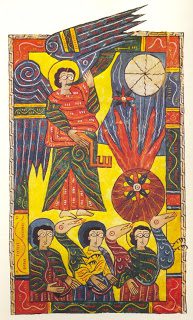
We do live in interesting times. With all that hangs in that phrase. Another word from the Western tradition which works for me thinking about this moment is Apocalypse. It certainly feels like some sort of apocalypse. Some sort of end time. Although this is a time with a conclusion that does not actually seem to have been written. But rather a time pregnant with possibility. And a time where who we are, who we are willing to be, and what we are willing to do, all coalesce into what will happen.
And. Apocalypse doesn’t actually mean the end of it all. At least not in its original meaning. Rather apocalypse means “to reveal.” I am quite taken with that small, shall we say, revelation. Here at this time, this most interesting of times, we definitely are seeing things revealed. And we also seem to be at some time when old worlds are dying, and from those ashes new worlds are birthing.
In our Buddhist stories, our mythic telling of the way things are, everything dies, everything passes away. Great cycles of birth and maturity and dying. Even the dharma. The end part of that cycle which is this era, is called mofa in Chinese and mappo in Japanese. In East Asian Buddhism various periods have been considered the dawning of the mappo era. In popular Japanese Buddhism through a calculation of when they thought Gautama Siddhartha lived, and giving each of the three eras, the beginning, the middle, and that end a thousand years each, set the year 1052 as the dawn of mappo.
What followed into these end times were the births of Nichiren, Shinran, and Dogen. And with them several revolutions. Each bringing their own approach to the apocalypse. Each responding to being in a corrupt era. A time more about dying than living. A time so benighted many feel it is impossible to find enlightenment.
Now, our great Zen ancestor Dogen flatly rejected the idea of mappo, of end times. He wrote (in my paraphrase of Shohaku Okumura’s translation) “We all have the possibility to penetrate to the heart of the Dharma. Do not think you’re an unfit vessel. We have minds and bodies; we lack for nothing.”
We are in an end time. While I only take it as an interesting coincidence, we are rapidly running up to the end of the mappo era in popular Japanese Buddhism. That thousand-year run concludes in 2052. Just around the corner. This is, of course, the end that Dogen didn’t really believe in.
And, we have minds and bodies. Genuinely, we lack for nothing.
So, what might all this mean for us, you and me, right now? People gathered together for Zen practice, and perhaps in this confused moment hoping for a word of encouragement?
I do have one. I think we on the Zen way can offer something of help, not only for ourselves, but possibly to help to midwife a new beginning within society.
As I understand it, Zen is all about awakening. But just what is awakening?
In Zen we most often use the words kensho or satori. The Zen priest scholar Victor Sogen Hori explains the word kensho “consists of two characters: ken, which means “see” or “seeing”, and sho, which means “nature”, “character”, “quality.” To “see one’s nature” is the usual translation…” Satori, which derives from the Japanese verb satoru, is for all practical purposes a synonym for kensho, although some suggest kensho be used for the initial insight, and satori for the deeper matured place. However, it seems Hakuin used the terms interchangeably, and as I said, for all practical purposes in contemporary Western Zen use, synonyms for the experience of awakening.
These days I’ve taken an interest in that other great East Asian school of Buddhism, the Pure Land. It’s all about mappo, about corrupt times, and what do we do when we are caught in the box of circumstances and there is no way to get out, at least not through our own efforts? Those of us who are even slightly familiar with Shin, the Japanese version of the Pure Land school, know it embodies a practice called nembutsu, which can be described as a mantra calling upon Amida Buddha, whose vow is to carry all who ask to the Pure Land. There are two understandings of the Pure Land, one as a place, the other as a realization.
The Zen master Hashimoto Eko said, “sit down and become Buddha.” I find that a koan, a direct pointing and an invitation. And it reminds me of the Pure Land, where Buddha and Pure Land are at one angle something very much outside ourselves, and at another, well, just this. This place. These minds and bodies that Dogen points to. Minds that can see and hands that can do. This mind, this body, these hands.
Awakening in the Shin tradition is called shinjin. It is commonly translated as faith. But that doesn’t seem to quite touch the matter. People sometimes describe it as “true entrusting.” I’ve heard Mark Unno the scholar and Shin priest refer to shinjin as the “moment of realizing true compassion.”
Awakening. Seeing. And true compassion.
I’m increasingly finding that awakening is as much about our hearts as our minds. And compassion seems to be what leaps out of our authentic experience of the Buddha dharma in this moment, at the end of an era, maybe at the end of time.
Mark points out how the founder of the major Pure Land school in Japan Shinran Shonin always finessed the two things, another place and this place, when he spoke of shinjin. In one of his papers Mark writes,
“To say merely that one attains birth or awakening in the present life implies that one can become free of blind passions, something that Shinran found he could not do.” Sound familiar? Do you know anyone who has been certified as having experienced kensho, Zen’s awakening, who seems untouched by passions, blind or otherwise? I’ve walked the Zen way for more than fifty years, I’ve known many masters, I’m counted as one by some standards. None. None are untouched by passions.
I would add, nor should it be otherwise. I’ll return to this.
But now returning to Mark, “In any case, what would it mean to the farmers and fishermen of thirteenth-century Japan, struggling from day to day, to say that everyone is already awakened?” Or, I wonder, how about us, ordinary people in the doings of our lives, I have friends who work with their hands, others who practice law or medicine, others, well, everything that occupies us in our culture to make a living. People with more obligations than you can shake a fistful of sticks at. What is already awakened to the fireman facing raging flames or the man who dies because he’s black?
Mark invites us. “Nevertheless, the reality of birth and awakening does become fully, suddenly present through the working of the nembutsu and shinjin.” And I can attest people do awaken through the power of just sitting or engaging Mu. Something bursts forth. Something unfolds.
The engaging is the waking. And our waking is no place other than this body, this mind, as it is. Pains and aches, passions and longings. Living among other people struggling to get by and struggling to live better lives. All part of the sacred way.
Mark, the Shin priest and scholar unpacks that “engaging is waking,” “In fact, it is precisely because one is burdened by blind passion that the boundless compassion of Amida and the Pure Land take on their significance.” I might say that my own shortcomings, a list too long to enumerate here, me, the person of this body and this history, me, just because I am me that the way throws itself open and I find how to live into time. Actually, I find how to live into this particular time. You may recall, the one in the midst of apocalypse.
I suggest this is true for you, as well. This is the invitation from our ancestors and their guidance in how to meet this moment of such pain and such possibility.
Mark explains some of this when he says, “The unfolding of… Amida’s (I might say the infinite, the universe, this mysterious world’s, maybe you’d say God’s) compassion embraces and dissolves the distinction between samsara and the Pure Land, yet in the world of linguistic understanding it is precisely because the two levels of reality are in dynamic tension with one another that each carries the significance that it does. Without one the other has no reality; the unqualified assertion that one actually attains awakening in this life negates the reality of both.”
We exist within this moment. And we exist beyond the bounds of our lives. There is awakening. Some say it’s not what you think. Actually, that’s not precisely right. Awakening is what you think when you’re not trapped in the thought. Awakening is realizing our minds and bodies, our hands, are exactly this and at the same time from just a slightly different angle a jewel within the great net, reflecting the entire universe.
And that every action is part of that, good or ill, blessing or curse, is dealt out to family.
And, so. Here we are. You. Me. A revolution. An apocalypse.
To summarize:
This is how I understand it. The world and everything in it is in motion. You and I and everyone else. And the bugs and the birds. The coronavirus and, well, I assume you get it. We are tangled together. And somehow, we’re actually more than tangled together.
Our saving from the great hurt, the anxiety and distress of life and death is found as we discover who we truly are, wildly, recklessly, intimate. Intimate. The truth of our existence is discovering we have minds and bodies, and these are not only sufficient, they are it. It openning beyond time and space. The big “it” of mystic dreams.
Our awakening is found as we find our efforts and another’s are not two. And with that grace we discover a world, not where we each walk alone, but where we each walk with the other as family.
And of course, of course, our attention is drawn to all those who suffer. The poor, the wounded, the oppressed.
Here the world itself calls to us. It’s quiet joys. It’s simmering hurt. Everyone is our child. Everyone is our mother.
Awakening. Kensho. Satori. Shinjin. Minds. Bodies. Hands.
Here our passions, whatever their grubby roots, held lightly, held in knowing that larger place of cycles and rhymes, become the passions of our family. And compassion and care and attention, these very minds put to work, these very bodies put to ease, these very hands, these very hands become the hands of compassion, of care, of love.
This is Zen at the end of the world.
Previous Post

June 13, 2020
Zen & Solving the Climate Crisis?
Next Post
June 15, 2020 Zen’s Precepts in Five Minutes
Browse Our Archives
Select a Category A Christmas Carol Abolitionist African-American Ahmadiyya Alan Watts Aldous Huxley Allen Ginsberg Amedkar Jayanti American politics American Zen Anaheim Zen Sangha Anglican Annie Besant April Fool Armageddon Art and Religion artificial intellegence Atheist Awakening B R Ambedkar Barlaam & Josaphat Beatnik Between Bhagavad Gita Bible biography birthday bodhisattva Bodhisattva Precepts Book burning Book of Common Prayer Book of Mormon Brahmo Samaj Buddha Buddhism Buddhist Buddhist Lord's Prayer Butterflies Calendars cartoons cat ChatGPT Chicken Tortilla Soup choices Christian atheism Christian mysticism Christian origins Christian Science Christian Zen Christianity Christianity and Buddhism christmas Christmas Truce Christopher Isherwood Church of Later Day Saints Cinco de Mayo circus covenant critical thinking culture D. T. Suzuki Dalit Buddhism Daniel Defoe Desert Fathers and Mothers dharma talk Dogen Donald Trump Dongshan's Five Ranks Dorothy Day dream Duty Easter ecology Edwin Arnold emptiness Empty Moon Zen Network Episcopal Church Eternal Now Ethics evolution existentialism Faith fantasy Fathers Day film film review fire Five Ranks Folk music food Form and emptiness Four Seals Francis of Assisi Francis Xavier Free thinker friendship George MacDonald Gerald Heard Glenn Taylor Webb God Good Friday Gospel of Gospel of Mark Gospel of Thomas grace Graduate Theological Unioin Graduate Theological Union Guanyin H R Blyth Hakuin Ekaku Hanamatsuri Hanukkah Harada Yasutani Zen Heart Sutra Henry David Thoreau Hermann Hesse Hinduism History and Religion history of religion Holy Spirit home Hospitality Icon Ides of March Isaac Newton Islam Islamic mysticism Jack Kerouac James Luther Adams Jiddu Krishnamurti Joan of Arc Johannes Gutenberg John Donne joke Judaism justice karma kensho King James Bible koan Koun Yamada Kyoto School Lewis Carrol Liberal Christianity Liberal Religion Life Plan Community Liminal literature Literature and Religion Liturgy Lord's Prayer Love Mahatma Gandhi Mahayana Martin Luther King Jr Mary Baker Eddy Mary Magdelene Mary Oliver Mayflower Compact Meditation memories memory metaphor money money and religioin Mormons Mother's Day movie review mysticism mythic Neighborhood Unitarian Universalist Church New Thought Nichiren Buddhism Nonduality not knowing Omar Khayyam Pacific School of Religion pagan Palm Sunday Passover peace Pentecost perennialism Phantastes Philip Kapleau philosophy Pilgrimage poetry Poetry and Religion politics Prayer Precepts Printing Press prophecy prophetic spirituality psychology Pure Land Queer religion queering religion Quietism Ram Mohan Roy rebirth recipe Relationships and religion religion religion and history Religious syncretism Resistance Retirement Retreat review Rissho Kosei Kai Ritual Robert Aitken Roshi Robert Ingersoll Rohatsu Romani religion Rosie the Riveter saints samadhi SanboZen Sangha Satyagraha science science and reigion science and religion science fiction seminary sermon Sesshin Sex and Religion Shinran Sikh Sikh tradition silence Social Justice Socially Engaged Buddhism Society and religion Soto Zen soul spiritual community spiritual practice Spirituality Sufism Suicide superstition Taoism Television Teresa of Avila Thanksgiving theological schools Theosophy Thomas Merton Time Transcendentalism Transcendentalist Trinitarian Trinity Uncategorized unitarian Unitarian Christianity Unitarian Universalist Universalism Vajrayana Vedanta Walking war Willa Cather William Ellery Channing wisdom women and religion women in religion World Teacher Writing zazen Zen Zen Center Zen inspired retriement zen meditation Zen Precepts Zen women
Select a Month September 2026 August 2026 July 2026 June 2026 May 2026 April 2026 March 2026 February 2026 January 2026 December 2025 November 2025 October 2025 September 2025 August 2025 July 2025 June 2025 May 2025 April 2025 March 2025 February 2025 January 2025 December 2024 November 2024 October 2024 September 2024 August 2024 July 2024 June 2024 May 2024 April 2024 March 2024 February 2024 January 2024 December 2023 November 2023 October 2023 September 2023 August 2023 July 2023 June 2023 May 2023 April 2023 March 2023 February 2023 January 2023 December 2022 November 2022 October 2022 September 2022 August 2022 July 2022 June 2022 May 2022 April 2022 March 2022 February 2022 January 2022 December 2021 November 2021 October 2021 September 2021 August 2021 July 2021 June 2021 May 2021 April 2021 March 2021 February 2021 January 2021 December 2020 November 2020 October 2020 September 2020 August 2020 July 2020 June 2020 May 2020 April 2020 March 2020 February 2020 January 2020 December 2019 November 2019 October 2019 September 2019 August 2019 July 2019 June 2019 May 2019 April 2019 March 2019 February 2019 January 2019 December 2018 November 2018 October 2018 September 2018 August 2018 July 2018 June 2018 May 2018 April 2018 March 2018 February 2018 January 2018 December 2017 November 2017 October 2017 September 2017 August 2017 July 2017 June 2017 May 2017 April 2017 March 2017 February 2017 January 2017 December 2016 November 2016 October 2016 September 2016 August 2016 July 2016 June 2016 May 2016 April 2016 March 2016 February 2016 January 2016 December 2015 November 2015 October 2015 September 2015 August 2015 July 2015 June 2015 May 2015 April 2015 March 2015 February 2015 January 2015 December 2014 November 2014 October 2014 September 2014 August 2014 July 2014 June 2014 May 2014 April 2014 March 2014 February 2014 January 2014 December 2013 November 2013 October 2013 September 2013 August 2013 July 2013 June 2013 May 2013 April 2013 March 2013 February 2013 January 2013 December 2012 November 2012 October 2012 September 2012 August 2012 July 2012 June 2012 May 2012 April 2012 March 2012 February 2012 January 2012 December 2011 November 2011 October 2011 September 2011 August 2011 July 2011 June 2011 May 2011 April 2011 March 2011 February 2011 January 2011 December 2010 November 2010 October 2010 September 2010 August 2010 July 2010 June 2010 May 2010 April 2010 March 2010 February 2010 January 2010 December 2009 November 2009 October 2009 September 2009 August 2009 July 2009 June 2009 May 2009 April 2009 March 2009 February 2009 January 2009 December 2008 November 2008 October 2008 September 2008 August 2008 July 2008 June 2008 May 2008 April 2008 March 2008 February 2008 January 2008 December 2007 November 2007 October 2007 September 2007 August 2007 July 2007 June 2007 May 2007 April 2007 March 2007 February 2007 January 2007 December 2006 November 2006 October 2006 September 2006
Follow Us!
TAKE THE
Religious Wisdom Quiz
Who betrayed Jesus for 30 pieces of silver?
Select your answer to see how you score.
Barabbas Peter James Judas Iscariot
Related posts from Monkey Mind


Which Is the True Qian? A Koan About...


TRENDING AT PATHEOS Buddhist

'Super Scam Me' Exposes AI Jon Bon Jovi...
Leslie Pickett believed she was in a relationship with Jon Bon Jovi....

The Brazilian Remake of Kendricks' 'Flywheel' Opens in...
“Flywheel,” the story that launched the Kendrick Brothers’ filmmaking career is getting...

The Dangers of Gradual Accommodation (Winking at Sin)
Recently, the “law of gradualness” resurfaced during the opening of a weeklong,...

The Iron Gates and the Lion of the...
Yesterday, I didn't finish my report about, well, yesterday. So I'll...

The Image: On the Horror of Capitalism and...
The Image Then went the Pharisees, and took counsel how they might...

We are approaching the date of our new American national holiday: October...
view all Buddhist blogs
Ad-Free & Subscriber Log-In Subscription Support
- About Us
- 2026 Calendar
- Videos
- Podcasts
- Library of World Religions
- Faith In Media Tracker
- Advertise With Us
- Write for Us
- Privacy Policy
- Terms of Service
- Do Not Sell My Data
- Contact Us
- Radiant Digital
- Manage Newsletter Subscriptions
- Unsubscribe From Notifications
- Sitemap
Copyright 2008-2026, Patheos. All rights reserved.
Subscription Support Ad-Free & Subscriber Log-In
Follow Patheos