
BuddhistCatholicContemplativeEvangelicalGeneral ChristianHinduJewishLatter-day SaintMuslimNew VisionsProgressive Christian
Beliefs
- Buddhist
- Catholic
- Contemplative
- Evangelical
- General Christian
- Hindu
- Jewish
- Latter-day Saint
- More Voices
- Muslim
- New Visions
- Pagan
- Progressive Christian
Topics
- Religion News
- Food and Religion
- Sports and Religion
- Religious Art
- Religious Music and Entertainment
- Religious Events
- History and Religion
- Style and Religion
- Politics and Religion
- Women in Religion
- Recreation Outdoors and Religion
- Business Finance and Religion
- Careers Workplace and Religion
- Education and Religion
- Family Parenting and Religion
- Health Fitness and Religion
- Home and Religion
- Relationships and Religion
- Technology and Religion
- Travel and Religion
Columnists
- Buddhist Columnists
- Business Finance and Religion Columnists
- Careers Workplace and Religion Columnists
- Catholic Columnists
- Contemplative Columnists
- Education and Religion Columnists
- Evangelists Columnists
- Family Parenting and Religion Columnists
- General Christian Columnists
- Health Fitness and Religion Columnists
- Hindu Columnists
- History and Religion Columnists
- Home and Religion Columnists
- Jewish Columnists
- More Voices Columnists
- Latter Day Columnists
- Muslim Columnists
- New Visions Columnists
- Nonreligious Columnists
- Pagan Columnists
- Politics and Religion Columnists
- Progressive Columnists
- Recreation Outdoors and Religion Columnists
- Relationships and Religion Columnists
- Religion News Columnists
- Religious Art Columnists
- Religious Events Columnists
- Religious Music and Entertainment Columnists
- Sports and Religion Columnists
- Style and Religion Columnists
- Technology and Religion Columnists
- Travel and Religion Columnists
- Women in Religion Columnists
Resource Library
- 2026 Calendar
- Library of World Religions
- The 100 Most Holy Places on Earth
- Patheos Answers
- Podcasts
- Videos
- Faith Leaders Database
- Anglican Episcopalian
- Bahai
- Baptist
- Buddhism
- Christianity
- Confucianism
- Eastern Orthodoxy
- Hinduism
- Holiness and Pentecostal
- ISKCON
- Islam
- Judaism
- Lutheran
- Methodist
- The Church of Jesus Christ of Latter-day Saints
- New Age
- Paganism
- Presbytarian and Reformed
- Protestantism
- Religion Behind the Scenes
- Roman Catholic
- Scientology
- Shia Islam
- Sikhism
- Sufism
- Sunni Islam
- Taoism
- Zen
- See all religions
Research Tools
 Ad-Free & Subscriber Log-In Subscription Support
Ad-Free & Subscriber Log-In Subscription Support
Follow Patheos 

- Trending:
- Forgiveness
- |
- Marriage
- |
- Consciousness
- |
- Death Penalty
- |
- Election
- |
- Halloween

- Home
- Buddhist
- EVERY DAY IS GOOD FRIDAY A Zen Meditation on a Christian Holy Day
EVERY DAY IS GOOD FRIDAY A Zen Meditation on a Christian Holy Day
Last updated on: April 10, 2020 at 2:37 pm by James Ford
EVERY DAY IS GOOD FRIDAY A Zen Meditation on a Christian Holy Day 2020-04-10T14:37:24-07:00 James Ford
Patheos Explore the world's faith through different perspectives on religion and spirituality! Patheos has the views of the prevalent religions and spiritualities of the world.
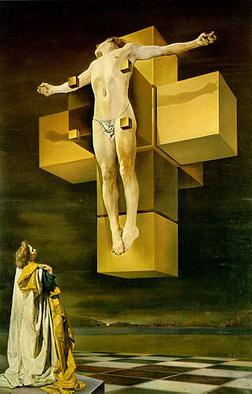
EVERY DAY IS GOOD FRIDAY
A Zen Meditation on a Christian Holy Day
James Ishmael Ford
I am a child of the West. I learned to read from an outsized King James Bible resting on my grandmother’s lap. I am fond of saying how to this day Jesus and the Mary’s all crowd up together in my dreams. It’s true.
Unlike many of my friends I’ve never been angry at the church, either the institutions or its messages. I simply found I could not believe the religion I was taught.
Specifically, I could not believe in a god that was painfully, obviously a larger human stuck up into the skies. People would say look at the astonishing beauty of the world, and then ask how I could not see a designer? I certainly saw the astonishing beauty. And I also saw the numberless horrors. And facing into it all, both the good and the ill, I felt some power. Enormous, unspeakable power. But, to then suggest some bigger and better and even more mysterious human as that power, just seemed something extra.
And I am ever wary of extras. Occam’s famous razor is not always right. But generally, usually, the simpler explanation is going to be the likely one. And, I saw no explanation for the rising of the worlds that needed a human-like consciousness directing it.
So, in my late adolescence I left the Christian churches.
And I began a journey, my journey. Along the way two things captured me and held my attention for the larger part of my life.
The first was Zen Buddhism. Its profound teachings which are summarized in the Heart Sutra, that “form is emptiness and emptiness is form,” became a pointer for me. Through a combination of a spiritual discipline rooted in silence and presence and the relentless pointers of Zen’s koan tradition, anecdotes that invited my heart and my mind; I learned what those words “form” and “emptiness” meant in the sense of someone drinking water and knowing for themselves whether it was cool or warm.
Today I am a Zen priest and a teacher of the Zen way.
But there has always been that other thing. After a few years in a Zen monastery, where I learned both the rudiments of the discipline, and the limitations of human beings whether they had insight or not, I began a second, broader quest.
I was working in a bookstore in San Diego when I stumbled across a Nineteenth century pamphlet titled “On Unitarian Christianity.” It was by a New England divine, William Ellery Channing. And it opened doors for me. With a few false starts I ended up following what would be the primary course of my life. I worked as a Unitarian Universalist parish minister while for many years also continuing my Zen practice particularly focused on koan introspection guided by a lay Zen master.
I wrote a sort of memoir, “If You’re Lucky, Your Heart Will Break,” in which I recount that dual path, my personal way “between.” It’s still in print, if you want to check it out. Essentially, I find that the deeper currents of the real can never be captured by any human enterprise. Not religion. Not science. But those things, and literature, and art, and psychology, all touch aspects of it. We are all of us like those blind men touching Buddha’s famous elephant, stroking a flank, embracing the trunk, tugging on the tail. But, as Paul sings to us, it is “through a glass darkly.” The difference is that Paul thinks there is a later time when it will be clear.
The reality is that it is always obscure. And astonish bright obscurity. Life changing. The truth is that our insights are almost always seen from the corner of the eye. As Emily Dickenson of blessed memory tells us
Tell all the truth but tell it slant —
Success in Circuit lies
Too bright for our infirm Delight
The Truth’s superb surprise
As Lightning to the Children eased
With explanation kind
The Truth must dazzle gradually
Or every man be blind —
It’s more like a dream. It is more like a cloud. What is lovely, I’ve learned, is that this cloud of unknowing is okay. There is something wonderful in that not knowing. Not knowing completely. As Master Dizang sings into the great heart when he
“…asked the visiting Buddhist philosopher Fayan, “Where are you going now?
Fayan answered, “I am resuming my pilgrimage.
Dizang asked, “Why do you go on pilgrimage?”
Fayan said, “I don’t know.”
Dizang said, “Not knowing is most intimate.”
Those words and that not knowing was Fayan’s awakening.
And, here, today, we’re in the middle of what the Christian churches call Holy Week. And specifically, we’re at Good Friday. And, I find myself reflecting on what it can mean? And for me what can it mean to people of whatever faith, or none, what might we find? Within the spirit of a profound unknowing what might we all be pointed toward?
My reclamation of the Christian part of my life, and a part, my life being some mysterious magpie’s nest, was that religion of Jesus rather than the religion about him. I am a fan of Thomas Jefferson’s New Testament, and his taking his scissors and removing anything repugnant to reason left him with a collection of sayings.
There are reasons some people see a Zen master in Jesus. They find it as they focus on his words. If you take the canonical sayings, especially from the Synoptics, and, okay, maybe throw in the teachings from the Gospel of Thomas, there are many invitations. A good word, indeed.
But, then, there’s the mythic Jesus, that religion about him. Increasingly I am interested in that story. There are bits and pieces of history attached to it. But I find the importance of it elsewhere. The truth of this part of Jesus’ story is revealed in the dream times. It is not unlike the story of Amida, Buddha of the Pure Lands. It tells of a time beyond joy, where suffering reigns, and liberation from our hurt is no longer possible through any effort we can accomplish.
But, like with Amida, from deep within the dream worlds, a door opens for us. A door that does not require our efforts. In fact, in a time where any attempt on our own is likely useless, where everything is too corrupt, too contaminated, were all our efforts fail. Still. Mysteriously. From a place on the other side of a dream, beyond a rainbow, if you will. In that place. A door is thrown wide open. Mary Oliver sings of that graceful moment when we notice
You do not have to be good.
You do not have to walk on your knees
For a hundred miles through the desert repenting.
You only have to let the soft animal of your body
Love what it loves.
That last part. Only be human. And let love win. All we need do is say yes.
But this is a terrible thing as well as a good one. The sufferings of Amida are in the distant past. But there were many. The sufferings of Jesus are brought into the moment itself.
Good Friday is a pivot point in that Jesus of the dream worlds. Worlds that touch this one enough so we can smell the heat and taste the dust of Jerusalem. There was before this a triumphant entry into the city, although marked with hints of something more complex, less triumph, and more a venture into the valley of the shadow.
He goes to the temple and drives out the money changers.
Then there’s a meal. And foot washing. Somehow that last part becomes background in the telling and retelling.
And then, today. Good Friday. He has been taken captive, betrayed by one of his own. Actually, abandoned by all but some women. Another part overlooked in the telling and retelling. And, I believe, important to recapture. Whatever. He is given a quick trial by the Roman authorities who don’t like messiness, especially in the provinces. And they don’t like itinerate preachers who may or may not be calling for a revolution. And, with the full-on support of the religious authorities, he is tortured, made to drag a cross out of town, unceremoniously nailed to it, and hung up to die.
In the Christian story, in the Christian calendar, that’s this moment. Today. It will be followed by an emptiness, the despair of the worlds. And, that will be followed by some magic thing. Every element of every Spring story ever told.
But today it is the cross.
What about this day?
One of the greatest koans is that presented by the master Yunmen
“I do not ask you about the fifteenth of month. Come. Tell me about after the fifteenth. He then gave his own response, “Every day is a good day.”
The fifteenth is the full moon, the set-up is not a question about approaching awakening, liberation, saving. It’s a question about the awakened heart. And. This story told in the midst of very, very hard times. And no one on the Zen way takes it as a nostrum.
The Zen teacher Susan Murphy, in her wonderful book Upside Down Zen writes of a friend who was dying of AIDS. He offered his comment on the koan
“’Every day is Good Friday.’” That’s it. From a dying man’s mouth. Every day is Good Friday. Roshi Murphy tells us how “This is a powerful and illuminating turning phrase. The mystery and the passion of Good Friday – and the astonishing fact that such a day is called ‘Good’ – is enacted every day in every life upon the Earth, in some measure. This is where we live.”
She reminds us, “Yunmen was offering no blandishments at all, but the hardest of all possible challenges.” Slyly she adds,We notice, with gratitude, that he didn’t say ‘Every day is a nice day.’”
Every day is a nice day is a lie. Every day is a good day is the truth. As is every day is Good Friday.
Jesus’s last words as he hung dying on that cross, as captured by the gospel writers are each a bit different. Luke says he said “Father, forgive them, for they know not what they do,” then “Truly, I say to you, today you will be with me in paradise” said to a thief, and for which there’s a lovely midrash where a Japanese Zen priest was told by an Orthodox Christian priest that this line should read “Today you are with me in paradise,” and probably finally, “Father, into your hands I commend my spirit.”
John, whose composition is at least three generations after the events and so the farthest out of any of the canonical gospels has Jesus say “Woman, behold your son. Son, behold your mother,” then “I thirst,” and finally “It is finished.”
The words I find most compelling, haunting, of them all is reported by both Matthew and Mark, generally believed to be the closest texts to the actual event, where Jesus says “My God, my God. Why have you forsaken me?”
The sermon-like last words, I take with a grain. Despair last words, those I get. When the great Zen master Yantou was old, his monastery was sacked by bandits. One of them stabbed him. It is said his dying scream could be heard ten miles away.
That this renowned master could scream at his death so haunted a later young monk, Hakuin, that he would despair of even finding awakening, doubting that it could even be true.
Hakuin would eventually see through to the heart of the matter. And it could be found in that scream. And, our own saving can be found in those last words, My God, my God. Why have you forsaken me?”
Now Christian thinkers have had a terrible time trying to put this story, all of it from the entry into Jerusalem to this horrific death, and then to a story of resurrection, into some clear explanation. In fact, there are to this day contending explanations, what they call “doctrines of atonement.” Few of them square.
That’s because as powerful and important as reason and putting it all together is, I do love Occam and his terrible razor to this day, when we come to this story, in fact, to the whole of it, we are fully into the dream world of our human heart’s longing. The heart’s reasons are of a completely different physics.
Here we are invited into the Mandala of Holy Week, where the human journey is revealed.
And here’s where it points.
In the midst of our suffering we are liberated. All the parts of our lives are it. There is no moment to be despised.
The entry into Jerusalem and those palm fronds. They are it. Turning over the tables of the money changers. That’s it. Sitting together with his friends. That’s it. He particularly points to that “it” of it, when he calls their attention to what the bread and the wine really are. Just bread. Just wine. And, him. Both. And. Later, the empty tomb. That’s it. And, later the dream conversations. They are it, each of them.
And. And, right here, today, as the day turns to night, and thirst and blood and pain, and dying are the matter at hand.
That’s it.
Every day is Good Friday.
For those have ears to hear, this is good news.
Every day is the good day.
Thank you.
Previous Post

April 9, 2020
That is Enough: The Zen Priest's Small Poem for Maundy Thursday
Browse Our Archives
Select a Category A Christmas Carol Abolitionist African-American Ahmadiyya Alan Watts Aldous Huxley Allen Ginsberg Amedkar Jayanti American politics American Zen Anaheim Zen Sangha Anglican Annie Besant April Fool Armageddon Art and Religion artificial intellegence Atheist Awakening B R Ambedkar Barlaam & Josaphat Beatnik Between Bhagavad Gita Bible biography birthday bodhisattva Bodhisattva Precepts Book burning Book of Common Prayer Book of Mormon Brahmo Samaj Buddha Buddhism Buddhist Buddhist Lord's Prayer Butterflies Calendars cartoons cat ChatGPT Chicken Tortilla Soup choices Christian atheism Christian mysticism Christian origins Christian Science Christian Zen Christianity Christianity and Buddhism christmas Christmas Truce Christopher Isherwood Church of Later Day Saints Cinco de Mayo circus covenant critical thinking culture D. T. Suzuki Dalit Buddhism Daniel Defoe Desert Fathers and Mothers dharma talk Dogen Donald Trump Dongshan's Five Ranks Dorothy Day dream Duty Easter ecology Edwin Arnold emptiness Empty Moon Zen Network Episcopal Church Eternal Now Ethics evolution existentialism Faith fantasy Fathers Day film film review fire Five Ranks Folk music food Form and emptiness Four Seals Francis of Assisi Francis Xavier Free thinker friendship George MacDonald Gerald Heard Glenn Taylor Webb God Good Friday Gospel of Gospel of Mark Gospel of Thomas grace Graduate Theological Unioin Graduate Theological Union Guanyin H R Blyth Hakuin Ekaku Hanamatsuri Hanukkah Harada Yasutani Zen Heart Sutra Henry David Thoreau Hermann Hesse Hinduism History and Religion history of religion Holy Spirit home Hospitality Icon Ides of March Isaac Newton Islam Islamic mysticism Jack Kerouac James Luther Adams Jiddu Krishnamurti Joan of Arc Johannes Gutenberg John Donne joke Judaism justice karma kensho King James Bible koan Koun Yamada Kyoto School Lewis Carrol Liberal Christianity Liberal Religion Life Plan Community Liminal literature Literature and Religion Liturgy Lord's Prayer Love Mahatma Gandhi Mahayana Martin Luther King Jr Mary Baker Eddy Mary Magdelene Mary Oliver Mayflower Compact Meditation memories memory metaphor money money and religioin Mormons Mother's Day movie review mysticism mythic Neighborhood Unitarian Universalist Church New Thought Nichiren Buddhism Nonduality not knowing Omar Khayyam Pacific School of Religion pagan Palm Sunday Passover peace Pentecost perennialism Phantastes Philip Kapleau philosophy Pilgrimage poetry Poetry and Religion politics Prayer Precepts Printing Press prophecy prophetic spirituality psychology Pure Land Queer religion queering religion Quietism Ram Mohan Roy rebirth recipe Relationships and religion religion religion and history Religious syncretism Resistance Retirement Retreat review Rissho Kosei Kai Ritual Robert Aitken Roshi Robert Ingersoll Rohatsu Romani religion Rosie the Riveter saints samadhi SanboZen Sangha Satyagraha science science and reigion science and religion science fiction seminary sermon Sesshin Sex and Religion Shinran Sikh Sikh tradition silence Social Justice Socially Engaged Buddhism Society and religion Soto Zen soul spiritual community spiritual practice Spirituality Sufism Suicide superstition Taoism Television Teresa of Avila Thanksgiving theological schools Theosophy Thomas Merton Time Transcendentalism Transcendentalist Trinitarian Trinity Uncategorized unitarian Unitarian Christianity Unitarian Universalist Universalism Vajrayana Vedanta Walking war Willa Cather William Ellery Channing wisdom women and religion women in religion World Teacher Writing zazen Zen Zen Center Zen inspired retriement zen meditation Zen Precepts Zen women
Select a Month September 2026 August 2026 July 2026 June 2026 May 2026 April 2026 March 2026 February 2026 January 2026 December 2025 November 2025 October 2025 September 2025 August 2025 July 2025 June 2025 May 2025 April 2025 March 2025 February 2025 January 2025 December 2024 November 2024 October 2024 September 2024 August 2024 July 2024 June 2024 May 2024 April 2024 March 2024 February 2024 January 2024 December 2023 November 2023 October 2023 September 2023 August 2023 July 2023 June 2023 May 2023 April 2023 March 2023 February 2023 January 2023 December 2022 November 2022 October 2022 September 2022 August 2022 July 2022 June 2022 May 2022 April 2022 March 2022 February 2022 January 2022 December 2021 November 2021 October 2021 September 2021 August 2021 July 2021 June 2021 May 2021 April 2021 March 2021 February 2021 January 2021 December 2020 November 2020 October 2020 September 2020 August 2020 July 2020 June 2020 May 2020 April 2020 March 2020 February 2020 January 2020 December 2019 November 2019 October 2019 September 2019 August 2019 July 2019 June 2019 May 2019 April 2019 March 2019 February 2019 January 2019 December 2018 November 2018 October 2018 September 2018 August 2018 July 2018 June 2018 May 2018 April 2018 March 2018 February 2018 January 2018 December 2017 November 2017 October 2017 September 2017 August 2017 July 2017 June 2017 May 2017 April 2017 March 2017 February 2017 January 2017 December 2016 November 2016 October 2016 September 2016 August 2016 July 2016 June 2016 May 2016 April 2016 March 2016 February 2016 January 2016 December 2015 November 2015 October 2015 September 2015 August 2015 July 2015 June 2015 May 2015 April 2015 March 2015 February 2015 January 2015 December 2014 November 2014 October 2014 September 2014 August 2014 July 2014 June 2014 May 2014 April 2014 March 2014 February 2014 January 2014 December 2013 November 2013 October 2013 September 2013 August 2013 July 2013 June 2013 May 2013 April 2013 March 2013 February 2013 January 2013 December 2012 November 2012 October 2012 September 2012 August 2012 July 2012 June 2012 May 2012 April 2012 March 2012 February 2012 January 2012 December 2011 November 2011 October 2011 September 2011 August 2011 July 2011 June 2011 May 2011 April 2011 March 2011 February 2011 January 2011 December 2010 November 2010 October 2010 September 2010 August 2010 July 2010 June 2010 May 2010 April 2010 March 2010 February 2010 January 2010 December 2009 November 2009 October 2009 September 2009 August 2009 July 2009 June 2009 May 2009 April 2009 March 2009 February 2009 January 2009 December 2008 November 2008 October 2008 September 2008 August 2008 July 2008 June 2008 May 2008 April 2008 March 2008 February 2008 January 2008 December 2007 November 2007 October 2007 September 2007 August 2007 July 2007 June 2007 May 2007 April 2007 March 2007 February 2007 January 2007 December 2006 November 2006 October 2006 September 2006
Follow Us!
TAKE THE
Religious Wisdom Quiz
How many chapters are in the book of Luke?
Select your answer to see how you score.
28 20 22 24
Related posts from Monkey Mind

Keizan Jokin: The Zen Master Ancestor You Don't...

What Zen Practice Actually Does With Anger

Nanquan Cuts the Cat: A Jesuit commentary on...

On Taking Refuge in the Dharma
TRENDING AT PATHEOS Buddhist

Pope Leo Celebrates Mass for Nurses & Docs...
I don't have any idea how he did it, but Pope Leo...

The Sermon on the Mount, Part I: Matthew...
The Sermon on the Mount, Part I (Matthew 4:12-5:12) St. Matthew moves...

What's up from Crossway: Reviewing some of their latest A few weeks...

Janie Learns the Way of the Cross: A...
Teaching children about Jesus' Passion can be challenging. Many parents and educators...

Looking For Good Catholic Writing - October 2026
He alone extends the heavens, and he walks upon the waves of...

In "Irreplaceable," our book on vocation and technology, Trevor Sutton and I...
view all Buddhist blogs
Ad-Free & Subscriber Log-In Subscription Support
- About Us
- 2026 Calendar
- Videos
- Podcasts
- Library of World Religions
- Faith In Media Tracker
- Advertise With Us
- Write for Us
- Privacy Policy
- Terms of Service
- Do Not Sell My Data
- Contact Us
- Radiant Digital
- Manage Newsletter Subscriptions
- Unsubscribe From Notifications
- Sitemap
Copyright 2008-2026, Patheos. All rights reserved.
Subscription Support Ad-Free & Subscriber Log-In
Follow Patheos