
BuddhistCatholicContemplativeEvangelicalGeneral ChristianHinduJewishLatter-day SaintMuslimNew VisionsProgressive Christian
Beliefs
- Buddhist
- Catholic
- Contemplative
- Evangelical
- General Christian
- Hindu
- Jewish
- Latter-day Saint
- More Voices
- Muslim
- New Visions
- Pagan
- Progressive Christian
Topics
- Religion News
- Food and Religion
- Sports and Religion
- Religious Art
- Religious Music and Entertainment
- Religious Events
- History and Religion
- Style and Religion
- Politics and Religion
- Women in Religion
- Recreation Outdoors and Religion
- Business Finance and Religion
- Careers Workplace and Religion
- Education and Religion
- Family Parenting and Religion
- Health Fitness and Religion
- Home and Religion
- Relationships and Religion
- Technology and Religion
- Travel and Religion
Columnists
- Buddhist Columnists
- Business Finance and Religion Columnists
- Careers Workplace and Religion Columnists
- Catholic Columnists
- Contemplative Columnists
- Education and Religion Columnists
- Evangelists Columnists
- Family Parenting and Religion Columnists
- General Christian Columnists
- Health Fitness and Religion Columnists
- Hindu Columnists
- History and Religion Columnists
- Home and Religion Columnists
- Jewish Columnists
- More Voices Columnists
- Latter Day Columnists
- Muslim Columnists
- New Visions Columnists
- Nonreligious Columnists
- Pagan Columnists
- Politics and Religion Columnists
- Progressive Columnists
- Recreation Outdoors and Religion Columnists
- Relationships and Religion Columnists
- Religion News Columnists
- Religious Art Columnists
- Religious Events Columnists
- Religious Music and Entertainment Columnists
- Sports and Religion Columnists
- Style and Religion Columnists
- Technology and Religion Columnists
- Travel and Religion Columnists
- Women in Religion Columnists
Resource Library
- 2026 Calendar
- Library of World Religions
- The 100 Most Holy Places on Earth
- Patheos Answers
- Podcasts
- Videos
- Faith Leaders Database
- Anglican Episcopalian
- Bahai
- Baptist
- Buddhism
- Christianity
- Confucianism
- Eastern Orthodoxy
- Hinduism
- Holiness and Pentecostal
- ISKCON
- Islam
- Judaism
- Lutheran
- Methodist
- The Church of Jesus Christ of Latter-day Saints
- New Age
- Paganism
- Presbytarian and Reformed
- Protestantism
- Religion Behind the Scenes
- Roman Catholic
- Scientology
- Shia Islam
- Sikhism
- Sufism
- Sunni Islam
- Taoism
- Zen
- See all religions
Research Tools
 Ad-Free & Subscriber Log-In Subscription Support
Ad-Free & Subscriber Log-In Subscription Support
Follow Patheos 

- Trending:
- Forgiveness
- |
- Marriage
- |
- Consciousness
- |
- Death Penalty
- |
- Election
- |
- Halloween

- Home
- Buddhist
- ANTICIPATING PASSOVER Four Steps to Freedom
ANTICIPATING PASSOVER Four Steps to Freedom
Last updated on: April 5, 2020 at 12:03 pm by James Ford
ANTICIPATING PASSOVER Four Steps to Freedom 2020-04-05T12:03:13-07:00 James Ford
Patheos Explore the world's faith through different perspectives on religion and spirituality! Patheos has the views of the prevalent religions and spiritualities of the world.
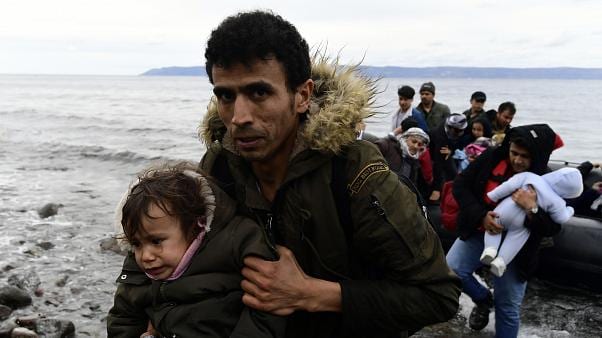
ANTICIPATING PASSOVER
Four Steps to Freedom
James Ishmael Ford
In the Christian calendar today is Palm Sunday. It inaugurates what is called Holy Week, which will retell the story of Jesus going into Jerusalem, celebrate a Passover meal with his friends, be arrested, tried, tortured, and crucified. Then, next Sunday, in the great myth of the Christian story, he will rise from the dead.
It is a powerful story, with many nuances and invitations for anyone wishing to dig deep into the contours of our human hearts. It is an ancient story with roots that go back to the dreams of our most distant ancestors. So even people who do not take it as literal, but who are willing to find the echoes of their, our own lives within that story, can find ample reason to experience the rhythms which will be unfolding.
But I find myself thinking more about another holy day which will start its own rhythmic celebrations in the middle of this year’s Holy Week. This year Passover celebrations begin on Wednesday. And, me, I find myself anticipating Passover.
It is that holy season which has captured my heart this year. And I find myself wondering what it might mean for us, all of us, whether Jewish or Christian or, well, I believe actually it has something to say to all of us. On the one hand it is a pivot point for Holy Week. Jesus, after all, goes with his friends into Jerusalem to celebrate Passover and famously joins those friends for a sacred meal. It is the Passover feast.
Perhaps you’re not familiar with it. So, to start let me tell you a story.
Once upon a time well before anyone had heard the phrase “social distancing,” following services at the First Unitarian Universalist Congregation of a small college town, the parents were in the front and the kids in the back seats of their pale green Prius. All, need I add, appropriately belted. The family was on its way to see relatives in the Big City for dinner.
Once they were well on their way, Sally turned and asked their eldest what she learned in Religious Education that day? Jessica replied, “We learned about Passover. It was amazing. Moses was this big guy, played football in college. Well, he tackled the Pharaoh and knocked him down. While the Pharaoh was getting up, Moses quickly gathered the Israelites together and they all ran toward the river. As soon as they got there Moses had his Corps of Engineers throw up a pontoon bridge. Then when they got across and while the Egyptians were on the bridge, Moses called in air support and they blew the whole thing up.”
There was a bit of silence in the car as they continued on their way. Finally, Sally asked in a hoarse whisper, “That’s what your Sunday school teachers taught?”
“Not really,” replied the girl. “But if I told you the story the way they did, you’d never believe it.”
I understand that. Perhaps the story doesn’t quite hang together for you as history, either. And, you know, it doesn’t really work for those who professionally study ancient Near Eastern religions, either. At least not among those with no dog in the hunt. Now this is not likely to be news to you. The mainstream of the scholarly community is confident that there was in fact no Egyptian captivity, no Moses, no forty years wandering, and no military assault on the shores of the Dead Sea. It was all made up.
A rather more likely story, one consistent with what we know of the historical record and archeology is this. There were among other peoples living in a place called Canaan, basically that area we now call Israel and Palestine, a rag tag band of refugees from various conflicts and abuses. Over time they cobbled together a community up in the hill country. If you use the term loosely, eventually they became a small kingdom. It wasn’t a lot different than any of the others in that area. They had their own god, and their spiritual leaders said it was the best god. But most of them were careful not to annoy the other gods of the area, and tokens of those deities were on almost every home altar.
The kingdom had its ups and downs. At some point it divided into two. The Northern kingdom was swept away in one of the numerous invasions that swirled around the area. But the southern kingdom continued. Until, that is, the Babylonian armies marched through in the year 605 before our common era.
As often happened in those days, the conquerors took the cream of the local crop, the artisans, the poets, the intellectuals, and carried them captive to Babylon. Normally this would be the end of the story. Up until this time conquered peoples would gradually be assimilated, and except for a style of pottery or a story or two most all memory of that conquered people would slip away and be no more than another echo among the many stories that we humans tell about ourselves.
This time something different happened. It was there, in the Babylonian captivity that these exiles began to weave together the stories we now know as the Exodus. They took fragments of this and that, added in allusions to their own situation and, well, we know what they came up with. In that story they reimagined a dreamscape of amazing power. Perhaps most important was how their idea of who and what their god was shifted. This deity was no longer the best god, it was the only God. And, while it was the God of all peoples, it had a particular special relationship with these exiles stranded by the waters of Babylon.
And, all of it came together in the story of another captivity, in mystical Egypt. It told of a prophet rising from among the people who spoke directly with the true God. And, it told how with his leadership he led them out of captivity and to freedom.
Truth be told, I love the Exodus story even more for it not being so much a history lesson as an articulation of the aspiration, the dream of a crushed and dominated people seeking an identity. And then in that creating out of their own human imaginations and hearts something quite wonderful. This dream nation, this dream of healing and home is something I can identify with.
As in fact have many, so many over the years. It has sustained slaves in many cultures. It has sustained the oppressed everywhere. It has been the dream of broken hearts for two and a half millennia and continues to be so.
And today, in this hard, hard time, a time getting harder yet. In this time before we can hope for a break, perhaps this story has some wisdom for us. I feel it. I believe it. And, so, let me explain how I find it might be helpful.
Solace in hard times is a major project of religion, of spirituality. We ask about meaning and direction. We wonder about what is holy and how to make lives worth living in these hard times. And, here’s a small secret. It’s always hard times. Yes, we are facing a unique period of suffering. And according to those who understand the currents of Covid-19, it’s going to get worse before it’s over. And, of course, there are many other oppressions going on at the same time, both within our hearts and impacting many bodies. We are all of us in captivity.
Of one sort or another, all of us are captive and dreaming off freedom. We are, in addition, most all of us, also Pharaoh. I’ll say that, but I’ll save that investigation for another day.
Here’s the important story, the critical one. This is the part that resonates across cultures and time. We are called from Egypt. Which in Hebrew is Mitzrayim, the narrow or constricted place. We are called to freedom, to the great boundless. And not in some fabled past. But here and today. Cut to the chase, and Passover is about the spiritual quest. Yours. Mine. Ours.
It has a social component, a call to justice for peoples. And that is informed by a shifting of human hearts. Today I want to reflect on the intimate part. It can inform how we act in this world in ways we may not immediately notice. But which are critical.
I was raised Baptist. So, the celebration of Passover, the Seder feast was introduced to me as an adult. As a stranger in a strange land, I was gifted with outsider eyes. And with them being able to see some aspects of that celebration which might be useful to all of us, whether we’re Jewish or not. It really is in fact a universal story.
And as something universal, it is intriguing to notice how the Seder ritual at the heart of the Passover observance as we encounter it today appears to be modeled on the ancient Greek Symposium. The Symposium is a structured conversation. Sometimes it can be little more than a drinking party. But at its best, and usually it is, it is an opportunity for a deep conversation about things that matter most. Think of Plato’s dialogue of the same name.
And that structure is very important. Within this framed conversation, the Seder celebration of Passover, there are four steps. By following these steps, we are invited into our own investigation of bondage and freedom. So, in our limited time here, let’s take just a brief glance at how they arise and how we might take that walk ourselves.
First, there’s a dedication. This is where we set our intention. It occurs when we notice what’s going on. How we have been in bondage? To what specifically? Well, each of us follows our own path. Alcohol? Sex? Work? An all-consuming view of the world that with any distance at all, doesn’t in fact seem to be true? What has enthralled us and kept us from whole lives? Our intention is to move beyond our narrowness, our obsessions, our addictions, what I think of as our ego-driven desire-oriented lives. And toward holiness, toward the whole, toward expansion and generosity, curiosity, and engagement.
The second thing in the Seder is a ritual washing. Here our intention is given its first concrete expression. We wash, we clean up, we tidy up the messes we’ve made out of that sense of narrowness, of separation, of constriction. It’s easy to see how this should be so. When you want to cook, the first thing to do is to clean up. In AA, one of our more interesting contemporary spiritual communities, one of the first steps is to atone for the wrong’s one has committed.
Third, we take nourishment, but of the humblest sort. Just something to drink, some vegetables and a little quick bread. Here our profoundest needs are represented in hunger. We all must eat. And we should never forget our bodies, ourselves, our relationships with others. In this Passover ritual the satisfaction of our heart’s longing is found easily, and in the simplest thing, within hunger and nourishment.
Fourth, and last, is a breaking with the things that bind us. Often, maybe of course, this is the hardest thing to accept when we embark on a spiritual journey. We tend to want it easy. We tend not to want to hurt. And breaking is hard. In the Seder ritual this breaking is of the matzoth, the bread. In reality, however, it’s about our own breaking. It’s the need for us to surrender being right or, for some of us, of being wrong. We need to not believe everything we think. Maybe we shouldn’t believe anything we think. We need to open ourselves to curiosity, to engagement, to not turning away. We need to let go. We need to allow the world in all its terribly glory to present and then to do what it must with us.
Within this last part there is the sharing of stories. I really believe we are the symbol-bearing animal. Our minds, our worlds, our hopes all are woven out of stories. There are many good and true stories. That of Jesus, that of the Buddha, to name just two. And here we have the story of Exodus, a truest of true stories. Here we’re given the big picture, the long view, the wide perspective of genuine wisdom.
At Passover, out of this telling of stories, come the questions. In the Seder all our questions are reduced to four. If you’re interested and don’t know what the specific questions are, I suggest later you google “four” “questions” and “Seder.” You’ll learn some interesting things. But broadly the questions mark out the Passover event.
And it turns out they’re less questions than a single woven together statement within its four parts. Our lives are a rush to get away from something and toward something. Slavery of any sort is as bitter as bitter can be. But we’re moving from that bitter to the sweet. And thanks to our taking this journey, this sacred journey, today, today we can live in freedom.
Wherever we are, whatever our condition, we can find freedom.
People have been telling this story for generations piled upon generations. And there’s another wrinkle that happens because of that. I have a number of friends who observe the Seder every year. Part of what happens when this celebration is observed year after year, because of a death in the family, who plays what parts change. And with that some have to move into places within that celebration that they thought were reserved for their elders. But they have now become the elders. This stepping up and taking our place in our time, as it has been for the many generations, is something daunting, and powerful.
With that, for us, today, here, a simple message: We are all of us caught up, bound by things, circumstances, often of our own creation. But we don’t have to continue that way. If we notice, we can set a goal of moving away from those constrictions of our lives. And then, we can do it. Taking a chance, breaking old patterns, living into new lives.
And there’s something of a cycle here. There are always aspects of our lives that bind us, and so we get to do it again. Not exactly a circle. More, a spiral.
And so each time our place is a little different.
Each time we can be a little closer to that dream Jerusalem of which those ancient exiles found their hearts calling.
To that gate through which we can walk. To paradise.
Next year. Maybe.
And this year. Absolutely.
With each breath.
Hope arises.
If, that is, we open our hearts, and are ready to step forward.
The Passover mystery.
Amen.
Previous Post

April 4, 2020
A CRICKET, SINGING Zen Commentary on Gateless Gate, Case 10
Next Post
April 9, 2020 That is Enough: The Zen Priest's Small Poem for Maundy Thursday
Browse Our Archives
Select a Category A Christmas Carol Abolitionist African-American Ahmadiyya Alan Watts Aldous Huxley Allen Ginsberg Amedkar Jayanti American politics American Zen Anaheim Zen Sangha Anglican Annie Besant April Fool Armageddon Art and Religion artificial intellegence Atheist Awakening B R Ambedkar Barlaam & Josaphat Beatnik Between Bhagavad Gita Bible biography birthday bodhisattva Bodhisattva Precepts Book burning Book of Common Prayer Book of Mormon Brahmo Samaj Buddha Buddhism Buddhist Buddhist Lord's Prayer Butterflies Calendars cartoons cat ChatGPT Chicken Tortilla Soup choices Christian atheism Christian mysticism Christian origins Christian Science Christian Zen Christianity Christianity and Buddhism christmas Christmas Truce Christopher Isherwood Church of Later Day Saints Cinco de Mayo circus covenant critical thinking culture D. T. Suzuki Dalit Buddhism Daniel Defoe Desert Fathers and Mothers dharma talk Dogen Donald Trump Dongshan's Five Ranks Dorothy Day dream Duty Easter ecology Edwin Arnold emptiness Empty Moon Zen Network Episcopal Church Eternal Now Ethics evolution existentialism Faith fantasy Fathers Day film film review fire Five Ranks Folk music food Form and emptiness Four Seals Francis of Assisi Francis Xavier Free thinker friendship George MacDonald Gerald Heard Glenn Taylor Webb God Good Friday Gospel of Gospel of Mark Gospel of Thomas grace Graduate Theological Unioin Graduate Theological Union Guanyin H R Blyth Hakuin Ekaku Hanamatsuri Hanukkah Harada Yasutani Zen Heart Sutra Henry David Thoreau Hermann Hesse Hinduism History and Religion history of religion Holy Spirit home Hospitality Icon Ides of March Isaac Newton Islam Islamic mysticism Jack Kerouac James Luther Adams Jiddu Krishnamurti Joan of Arc Johannes Gutenberg John Donne joke Judaism justice karma kensho King James Bible koan Koun Yamada Kyoto School Lewis Carrol Liberal Christianity Liberal Religion Life Plan Community Liminal literature Literature and Religion Liturgy Lord's Prayer Love Mahatma Gandhi Mahayana Martin Luther King Jr Mary Baker Eddy Mary Magdelene Mary Oliver Mayflower Compact Meditation memories memory metaphor money money and religioin Mormons Mother's Day movie review mysticism mythic Neighborhood Unitarian Universalist Church New Thought Nichiren Buddhism Nonduality not knowing Omar Khayyam Pacific School of Religion pagan Palm Sunday Passover peace Pentecost perennialism Phantastes Philip Kapleau philosophy Pilgrimage poetry Poetry and Religion politics Prayer Precepts Printing Press prophecy prophetic spirituality psychology Pure Land Queer religion queering religion Quietism Ram Mohan Roy rebirth recipe Relationships and religion religion religion and history Religious syncretism Resistance Retirement Retreat review Rissho Kosei Kai Ritual Robert Aitken Roshi Robert Ingersoll Rohatsu Romani religion Rosie the Riveter saints samadhi SanboZen Sangha Satyagraha science science and reigion science and religion science fiction seminary sermon Sesshin Sex and Religion Shinran Sikh Sikh tradition silence Social Justice Socially Engaged Buddhism Society and religion Soto Zen soul spiritual community spiritual practice Spirituality Sufism Suicide superstition Taoism Television Teresa of Avila Thanksgiving theological schools Theosophy Thomas Merton Time Transcendentalism Transcendentalist Trinitarian Trinity Uncategorized unitarian Unitarian Christianity Unitarian Universalist Universalism Vajrayana Vedanta Walking war Willa Cather William Ellery Channing wisdom women and religion women in religion World Teacher Writing zazen Zen Zen Center Zen inspired retriement zen meditation Zen Precepts Zen women
Select a Month September 2026 August 2026 July 2026 June 2026 May 2026 April 2026 March 2026 February 2026 January 2026 December 2025 November 2025 October 2025 September 2025 August 2025 July 2025 June 2025 May 2025 April 2025 March 2025 February 2025 January 2025 December 2024 November 2024 October 2024 September 2024 August 2024 July 2024 June 2024 May 2024 April 2024 March 2024 February 2024 January 2024 December 2023 November 2023 October 2023 September 2023 August 2023 July 2023 June 2023 May 2023 April 2023 March 2023 February 2023 January 2023 December 2022 November 2022 October 2022 September 2022 August 2022 July 2022 June 2022 May 2022 April 2022 March 2022 February 2022 January 2022 December 2021 November 2021 October 2021 September 2021 August 2021 July 2021 June 2021 May 2021 April 2021 March 2021 February 2021 January 2021 December 2020 November 2020 October 2020 September 2020 August 2020 July 2020 June 2020 May 2020 April 2020 March 2020 February 2020 January 2020 December 2019 November 2019 October 2019 September 2019 August 2019 July 2019 June 2019 May 2019 April 2019 March 2019 February 2019 January 2019 December 2018 November 2018 October 2018 September 2018 August 2018 July 2018 June 2018 May 2018 April 2018 March 2018 February 2018 January 2018 December 2017 November 2017 October 2017 September 2017 August 2017 July 2017 June 2017 May 2017 April 2017 March 2017 February 2017 January 2017 December 2016 November 2016 October 2016 September 2016 August 2016 July 2016 June 2016 May 2016 April 2016 March 2016 February 2016 January 2016 December 2015 November 2015 October 2015 September 2015 August 2015 July 2015 June 2015 May 2015 April 2015 March 2015 February 2015 January 2015 December 2014 November 2014 October 2014 September 2014 August 2014 July 2014 June 2014 May 2014 April 2014 March 2014 February 2014 January 2014 December 2013 November 2013 October 2013 September 2013 August 2013 July 2013 June 2013 May 2013 April 2013 March 2013 February 2013 January 2013 December 2012 November 2012 October 2012 September 2012 August 2012 July 2012 June 2012 May 2012 April 2012 March 2012 February 2012 January 2012 December 2011 November 2011 October 2011 September 2011 August 2011 July 2011 June 2011 May 2011 April 2011 March 2011 February 2011 January 2011 December 2010 November 2010 October 2010 September 2010 August 2010 July 2010 June 2010 May 2010 April 2010 March 2010 February 2010 January 2010 December 2009 November 2009 October 2009 September 2009 August 2009 July 2009 June 2009 May 2009 April 2009 March 2009 February 2009 January 2009 December 2008 November 2008 October 2008 September 2008 August 2008 July 2008 June 2008 May 2008 April 2008 March 2008 February 2008 January 2008 December 2007 November 2007 October 2007 September 2007 August 2007 July 2007 June 2007 May 2007 April 2007 March 2007 February 2007 January 2007 December 2006 November 2006 October 2006 September 2006
Follow Us!
TAKE THE
Religious Wisdom Quiz
True or False: Paul taught the Galatians that circumcision is necessary for salvation.
Select your answer to see how you score.
TRUE FALSE
Related posts from Monkey Mind
What About When You Run Out Of Sermons...

A Faithful Skeptic: Margaret Fuller's Transcendentalist "Credo"
Dreaming God, Dreaming Trinities
TRENDING AT PATHEOS Buddhist

The Iron Gates and the Lion of the...
Yesterday, I didn't finish my report about, well, yesterday. So I'll...

Dolly Parton’s Last Song Wins Dove Award with...
Bluegrass band The Grascals, speaking on the red carpet at the 57th...

The Image: On the Horror of Capitalism and...
The Image Then went the Pharisees, and took counsel how they might...

We are approaching the date of our new American national holiday: October...

Letters on Living the Faith by C.S. Lewis
Most of us met C.S. Lewis as a public intellectual. Mere Christianity....

When Halloween Unmasks Married Hearts
Written by Dr. David K. Ewen from Eternal Truth Bible College Behind...
view all Buddhist blogs
Ad-Free & Subscriber Log-In Subscription Support
- About Us
- 2026 Calendar
- Videos
- Podcasts
- Library of World Religions
- Faith In Media Tracker
- Advertise With Us
- Write for Us
- Privacy Policy
- Terms of Service
- Do Not Sell My Data
- Contact Us
- Radiant Digital
- Manage Newsletter Subscriptions
- Unsubscribe From Notifications
- Sitemap
Copyright 2008-2026, Patheos. All rights reserved.
Subscription Support Ad-Free & Subscriber Log-In
Follow Patheos