
BuddhistCatholicContemplativeEvangelicalGeneral ChristianHinduJewishLatter-day SaintMuslimNew VisionsProgressive Christian
Beliefs
- Buddhist
- Catholic
- Contemplative
- Evangelical
- General Christian
- Hindu
- Jewish
- Latter-day Saint
- More Voices
- Muslim
- New Visions
- Pagan
- Progressive Christian
Topics
- Religion News
- Food and Religion
- Sports and Religion
- Religious Art
- Religious Music and Entertainment
- Religious Events
- History and Religion
- Style and Religion
- Politics and Religion
- Women in Religion
- Recreation Outdoors and Religion
- Business Finance and Religion
- Careers Workplace and Religion
- Education and Religion
- Family Parenting and Religion
- Health Fitness and Religion
- Home and Religion
- Relationships and Religion
- Technology and Religion
- Travel and Religion
Columnists
- Buddhist Columnists
- Business Finance and Religion Columnists
- Careers Workplace and Religion Columnists
- Catholic Columnists
- Contemplative Columnists
- Education and Religion Columnists
- Evangelists Columnists
- Family Parenting and Religion Columnists
- General Christian Columnists
- Health Fitness and Religion Columnists
- Hindu Columnists
- History and Religion Columnists
- Home and Religion Columnists
- Jewish Columnists
- More Voices Columnists
- Latter Day Columnists
- Muslim Columnists
- New Visions Columnists
- Nonreligious Columnists
- Pagan Columnists
- Politics and Religion Columnists
- Progressive Columnists
- Recreation Outdoors and Religion Columnists
- Relationships and Religion Columnists
- Religion News Columnists
- Religious Art Columnists
- Religious Events Columnists
- Religious Music and Entertainment Columnists
- Sports and Religion Columnists
- Style and Religion Columnists
- Technology and Religion Columnists
- Travel and Religion Columnists
- Women in Religion Columnists
Resource Library
- 2026 Calendar
- Library of World Religions
- The 100 Most Holy Places on Earth
- Patheos Answers
- Podcasts
- Videos
- Faith Leaders Database
- Anglican Episcopalian
- Bahai
- Baptist
- Buddhism
- Christianity
- Confucianism
- Eastern Orthodoxy
- Hinduism
- Holiness and Pentecostal
- ISKCON
- Islam
- Judaism
- Lutheran
- Methodist
- The Church of Jesus Christ of Latter-day Saints
- New Age
- Paganism
- Presbytarian and Reformed
- Protestantism
- Religion Behind the Scenes
- Roman Catholic
- Scientology
- Shia Islam
- Sikhism
- Sufism
- Sunni Islam
- Taoism
- Zen
- See all religions
Research Tools
 Ad-Free & Subscriber Log-In Subscription Support
Ad-Free & Subscriber Log-In Subscription Support
Follow Patheos 

- Trending:
- Forgiveness
- |
- Marriage
- |
- Consciousness
- |
- Death Penalty
- |
- Election
- |
- Halloween

- Home
- Buddhist
- CHANGE & NOT KNOWING: Darwin, Huxley, & the Shape of Naturalistic Religion
CHANGE & NOT KNOWING: Darwin, Huxley, & the Shape of Naturalistic Religion
Last updated on: February 3, 2020 at 6:54 am by James Ford
CHANGE & NOT KNOWING: Darwin, Huxley, & the Shape of Naturalistic Religion 2020-02-03T06:54:31-08:00 James Ford
Patheos Explore the world's faith through different perspectives on religion and spirituality! Patheos has the views of the prevalent religions and spiritualities of the world.
CHANGE & NOT KNOWING
Darwin, Huxley, & the Shape of Naturalistic Religion
James Ishmael Ford
My “six-year old just got out of bed to tell me that here apple cores turn into soil & she can plant seeds in that soil to grow into apples. ‘Mommy, it’s a circle. You have to write that on the internet. What if they don’t know!’” Lynna Odel, found on the Internet
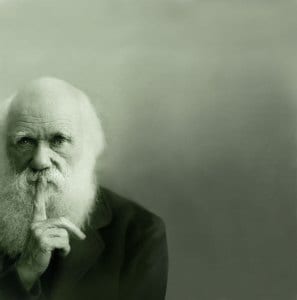
As I’m sure most here know, the 12th of February is Charles Darwin’s birthday. His two hundred and eleventh, this particular time around.
I believe this event has been noted here most every year for quite a few years. Gary has graced us with several reflections on Mr. Darwin and the doors he opened for us. The truth be told there are any number of ways we could reflect on that old worthy and his earth shaking as well as from one direction or another endlessly controversial articulation of his theory of evolution.
It’s something which on the face of it explains a whole lot about who we are. But in ways that can be enormously unsettling. His theory also opened a number truly ugly possible interpretations. So-called “social Darwinism” is one such blight on our human hearts, and human lives when applied. Something important to explore. Especially how it was based in a misunderstanding of what Darwin taught and that term he picked up from Thomas Mathus, “survival of the fittest.” We could profitably spend our time unpacking that term.
But today, here, I find the social and spiritual context in which he engaged his work is also worthy. I love the fact he was raised within the warm embrace of English Unitarianism. Unraveling this thread can be very helpful for us. I really believe.
Today, for me, and thinking about us here, I want to focus on the rise of naturalistic religion within our Western cultures. “Naturalist religion” is a term of art for spiritualities that do not appeal to supernatural explanation of things. Rather they seek meaning and purpose simplhy within the natural world.
And naturalistic religion is one of the most important facets of our received liberal spiritual tradition. Sometimes in UU congregations we can be unclear that we actually stand in a stream of thought and action. But in fact we are the product of much labor and suffering and reflection. And we’ve come up with a way of engaging life that, I think is astonishing.
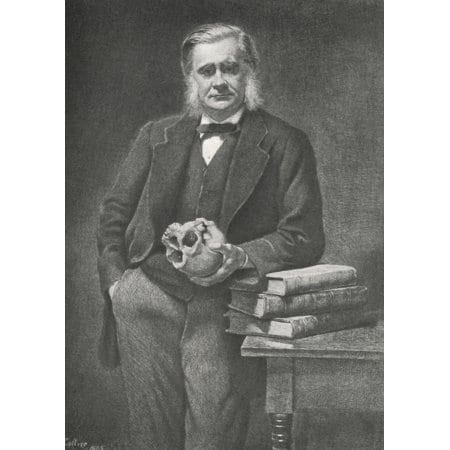
I don’t actually think we all are terribly familiar with naturalistic religion, and what it might mean. So, I am going to hold up two aspects of naturalistic religion, one that can be derived from Charles Darwin’s observations, and another advocated by his principal defender in the day, Thomas Huxley. I think this can give us a very good picture of this near unique aspect of the living currents that inform our Unitarian Universalism.
Of course, we offer a number of good things. Unfortunately, one of those can obscure these gifts from our tradition. Recently when skimming through Facebook I saw a posting from someone who had seen a t-shirt that proclaimed: “Unitarian Universalism: My Bedrock Belief is that Your Opinion is as Good as Mine.” This is a witty version of the assertion that one may believe anything one wants and be a UU.
There is a certain truth to this. There is no test one must pass to join us, beyond some general sense of good will and willingness to put up with each other. And actually, we’re not the only people to have such a liberality of heart. I recall someone opining how an advantage of being an Anglican was that they could attend services for their whole lives without it impinging upon either their politics or their religion. Not meant entirely kindly, but it speaks to that openness of heart which marks liberal religions. As well as, perhaps, some of our shadows.
A fierce protection of individual freedom within our tradition is a particular hall mark of our way. In our Universalist heritage, which was fonder of creedal-like statements than our Unitarian forebearers, whenever a statement of faith was published, it always, always included what they called a “freedom clause.” That is no one would be removed for not toeing the theological line. There were occasional exceptions, but on balance the Universalists held to this fundamental sense of freedom of conscience. Our Unitarian forebearers went a step farther and resisted any creed, of any sort. Creeds would be any formal assertion of what one must believe to belong. That’s the “free” in the UU principal that calls us to a free and responsible search for truth and meaning.
Of course, there’s also the “responsible.” One aspect of responsible is noticing those paths that have been taken before and assessing whether they might be of assistance in those things that matter most in our lives today. Both our Universalist and our Unitarian traditions offer profound gifts to us as we make our free and responsible way.
Which sets up a critical point. For me religion has two major aspects to it. One is about cultural preservation; frankly, often no more than crowd control. It is the conservative and conserving aspect of one’s particular culture, often for good, frequently not so much, all of it given sanctity by whatever religious establishment has ascendancy. Obviously, that’s Christianity in most of the West. And, frankly, one reason we’re popular with those who do not or simply cannot color inside the lines of more traditional spiritual communities. But this is important as well. Wherever there is a dominant religion, it is hand in glove about preservation of the status quo.
But there’s that other function, and it is also found in all the religions. It is the quest for deepest meaning. It is our seeking perspective on life and death. It is about that quest for healing the hurt and longing that sits close to all human hearts. Today the principal religions are so often publicly so much about protecting aspects of culture that to most reasonable human beings are at best outdated, if not from the beginning pernicious. And they’re so loud about it that it’s hard to remember this other thing. This most important thing. Life giving spiritual quest.
I have an interest in noticing the crowd control part. To understand gives one perspective and opens ways of dealing with things. But I am passionately engaged in the paths of faith and meaning. And, we within the Unitarian Universalist movement have some genuine guidance for wounded hearts. Our own paths of faith and meaning.
What obscures that fact for us, often, is not because it gets lost in the din of telling people they are not good enough or pure enough one way or another. We can miss the guidance of our tradition because of the emphasis on how no one must believe what our tradition has actually figured out about life and suffering and love. Small irony. Well, maybe not that small.
There is, nonetheless, something on offer. Several things, actually. Possibly the more important, certainly for me, are the cluster of insights and pointers to be found within our Universalist heritage. Talked a little about that a couple of weeks ago. But, today, so close, as we are to Charles Darwin’s birthday, I want to hold up the strategies inherent within what we can call the Unitarian aspect of our tradition. As I noted earlier Darwin was profoundly informed by the English Unitarianism of his day. And, parts of what he figured out would touch that tradition and become a living part of what it is we offer here.
While the word “unitarian” has to do with the singularity of God, that has never been a major issue within our English-speaking Unitarianism. Rather, what has captured our hearts within this historical thread of liberal religion, is seeing the power of our minds. Over the years we’ve meant different things by that word mind. In fact, today, I find many UUs mean something similar to the Buddhist sense of mind as consciousness rather than the narrower sense of rationality.
But, also rationality, reason, the astonish human capacity to notice, reflect, and predict is very much a part of it. And, it is where what has come to be called Unitarianism has its origins. Noticing the power of observation, analysis, and, from that, prediction.
Amazing stuff that. And, so, it shouldn’t be surprising that one religion or another wouldn’t see it as something holy. In fact, during the European Enlightenment several did. The Deist religion that arose briefly within those powerful and dangerous times in the French Revolution is an example of one that burned bright, and like a fire of paper, extinguished itself leaving only a smudge on the historical record. More substantial approaches to reason in religion in England began to inform both the Established and the non-conforming traditions. Earliest Unitarians turned that faculty on the Bible, with sometimes devasting effect, and in other ways opening itt in new and unexpected ways. Good stuff. More than good stuff.
By the Nineteenth century it birthed the Unitarian movement in both the British Isles and on the North American continent. I don’t want to spend over long on the history of this. But, as I said, first was that rational analysis of the Bible. The second wave was an embrace of the intuitive parts of our human minds, Transcendentalism. They are deeply connected. And there would become a pendulum within the Unitarian movement, where the excesses of rational thought would swing to an embrace of intuitive thought, which would in time itself overreach, and there would be another reaction, this time swinging back to a more full embrace of facts on the ground and reflection from there. And so on. Swinging from one to the other.
But, there’s a sweet spot in all this. And, that returns us to the two great gifts of those early Evolutionary theorists, who articulated the critical elements of making sense out of this world in what for us would become a spiritual way. It is the place where the impulses of scientific inquiry become part of that quest for meaning and purpose.
And, we can see it first in good old Charles Darwin. I so love that he was raised within the Unitarian community. Although as a footnote to that footnote when it was obvious he wasn’t really interested in medicine, his father had the pragmatic sense to purchase at auction for his son, something you could do in that time and place, a tenured job as an Anglican priest. Something young Charles did not pursue. Fortunately for all of us. And, instead he found his passion in the observation of nature.
Along the way he, and others, principally Alfred Russel Wallace, realized much of what marked life, maybe everything, could be explained totally naturalistically by something he called “natural selection.” The gist is, while genetics had not yet been figured out, he observed that those a tiny bit better adapted to life in any given place, had a slightly better chance of having offspring. Those adaptive traits would continue in their offspring. And with that – evolution by natural selection. It isn’t survival of the fittest, it is survival of the most adaptive.
With that I’m not really interested in the controversies that followed and follow. Rather it is the most basic and fundamental of his observations that matter for me. And, I suggest, can matter for us as people on spiritual pilgrimages. Darwin noticed that there is a fundamental truth to things. They change. All things are mutable. Nothing escapes the flow of change.
Darwin stands within a moment in time, where in the West we were invited to notice nothing is forever. Everything is in flux. And, a lot of people listened. Of course, people have known this for a longtime and it is found in some other religions. It is axiomatic to Buddhism, for instance. But, for people of a spiritual bent in the West, this was an astonishing gift. It points to something critical to understand if we really want to understand the world, and within this world, us.
It tells us something about ourselves and the world, that if ignored, pretty much guarantees anything that follows will be wrong. Everything changes. So. Or one example. There is a Buddhist maxim, “the true self is no self.” Our selves, we, you, me, these selves exist, but only contextually. And there are enormous consequences With this understanding, within our naturalistic UU spiritualities if we want to find something true, we need to include that everything, person and thought. is fragile, temporary, true in a moment, but may not be so in another. As for us. We’re real. Real as a heart attack. But, as passing as morning dew. It’s all dynamic. We’re dynamic. Wild. We’re wild. And open. We, you and me, we’re open as the sky.
And that invites us to the other critical gift to us as spiritual seekers, and, hopefully, finders, we following a liberal religious tradition. Thomas Huxley. Huxley was a close associate of Charles Darwin. Darwin was an introvert and not given to debate. In fact, he hesitated even to publish the findings of his research knowing it would spark a fire storm. Huxley had no problem entering the fray. For his efforts eventually he earned the nickname “Darwin’s Bulldog.”
He was brilliant and part of a brilliant family. His grandfather Erasmus was a noted freethinker, his descendants included Aldous Huxley. But for today the most important thing to me about Huxley was a term he coined. He belonged to a small philosophical discussion group. And he quickly noticed everyone else had a term that summarized their philosophical or spiritual position. Christians, rationalists, advocates of various kinds of philosophy. He decided in his own words that he wanted a “tail like all the other foxes.” And so, he coined a term to describe himself, his tail. He called it “agnostic.” “A” as in not. And “gnostic” as in knowing. So, not knowing.
Today when one says they’re agnostic they usually mean they don’t know whether there’s a God or not. And, it usually implies they don’t really care, either. This wasn’t Huxley’s agnosticism. Actually, whether God exists was not a primary concern for him, although he saw no reason to postulate a deity. Huxley’s real challenge, and one that for most of us cut much closer to the bone, was that he challenged how we see ourselves. He was adamant that human beings did not exist outside the flow of events and their intimate interrelatedness.
Expanding on Darwin Huxley wrote, “In the whole universe there is nothing permanent, no eternal substance either of mind or of matter.” He felt any idea of an abiding self, an eternal individual “personality is a metaphysical fancy; and in very truth not only we, but all things in the worlds without end of the cosmic phantasmagoria, are such stuff as dreams are made of.”
Change. All things dancing together. In motion. And. And, critically, not knowing. Two great things. The first noticing that the world is in play. And that nothing is solid or forever. Digging in a bit we discover that within this great flux everything is connected. We can see patterns. We can find paths to walk. And of these many paths, the wisest appears to be humbly witnessing what is.
The poet and lay Zen teacher Joan Hirschfield famously observed: Zen pretty much comes down to three things: Everything changes; everything is connected; pay attention.” I think we can drop the word “Zen” here and, I suggest the great observations and the way through can be summarized as It, this, all of it pretty much comes down to three things for us human beings: Everything changes; everything is connected; pay attention.
The Wisdoms of the East and the Wisdoms of the West. The great Unitarian insight.
No one here needs to believe these observations to belong. But, like a small treasure chest kept in a closet, it waits. Those among us seeking a path, well, we offer one. All you have to do is go to the closet, take out that chest, and open it.
There you will find the secret teaching of the Unitarian stream of our Unitarian Universalism.
Everything changes; everything is connected; pay attention.
Amen.
Previous Post

February 1, 2020
Wishing all a Blessed Imbolc & a Lovely Feast for the Lady Brigid
Next Post
February 9, 2020 Zen & the Art of Foolishness
Browse Our Archives
Select a Category A Christmas Carol Abolitionist African-American Ahmadiyya Alan Watts Aldous Huxley Allen Ginsberg Amedkar Jayanti American politics American Zen Anaheim Zen Sangha Anglican Annie Besant April Fool Armageddon Art and Religion artificial intellegence Atheist Awakening B R Ambedkar Barlaam & Josaphat Beatnik Between Bhagavad Gita Bible biography birthday bodhisattva Bodhisattva Precepts Book burning Book of Common Prayer Book of Mormon Brahmo Samaj Buddha Buddhism Buddhist Buddhist Lord's Prayer Butterflies Calendars cartoons cat ChatGPT Chicken Tortilla Soup choices Christian atheism Christian mysticism Christian origins Christian Science Christian Zen Christianity Christianity and Buddhism christmas Christmas Truce Christopher Isherwood Church of Later Day Saints Cinco de Mayo circus covenant critical thinking culture D. T. Suzuki Dalit Buddhism Daniel Defoe Desert Fathers and Mothers dharma talk Dogen Donald Trump Dongshan's Five Ranks Dorothy Day dream Duty Easter ecology Edwin Arnold emptiness Empty Moon Zen Network Episcopal Church Eternal Now Ethics evolution existentialism Faith fantasy Fathers Day film film review fire Five Ranks Folk music food Form and emptiness Four Seals Francis of Assisi Francis Xavier Free thinker friendship George MacDonald Gerald Heard Glenn Taylor Webb God Good Friday Gospel of Gospel of Mark Gospel of Thomas grace Graduate Theological Unioin Graduate Theological Union Guanyin H R Blyth Hakuin Ekaku Hanamatsuri Hanukkah Harada Yasutani Zen Heart Sutra Henry David Thoreau Hermann Hesse Hinduism History and Religion history of religion Holy Spirit home Hospitality Icon Ides of March Isaac Newton Islam Islamic mysticism Jack Kerouac James Luther Adams Jiddu Krishnamurti Joan of Arc Johannes Gutenberg John Donne joke Judaism justice karma kensho King James Bible koan Koun Yamada Kyoto School Lewis Carrol Liberal Christianity Liberal Religion Life Plan Community Liminal literature Literature and Religion Liturgy Lord's Prayer Love Mahatma Gandhi Mahayana Martin Luther King Jr Mary Baker Eddy Mary Magdelene Mary Oliver Mayflower Compact Meditation memories memory metaphor money money and religioin Mormons Mother's Day movie review mysticism mythic Neighborhood Unitarian Universalist Church New Thought Nichiren Buddhism Nonduality not knowing Omar Khayyam Pacific School of Religion pagan Palm Sunday Passover peace Pentecost perennialism Phantastes Philip Kapleau philosophy Pilgrimage poetry Poetry and Religion politics Prayer Precepts Printing Press prophecy prophetic spirituality psychology Pure Land Queer religion queering religion Quietism Ram Mohan Roy rebirth recipe Relationships and religion religion religion and history Religious syncretism Resistance Retirement Retreat review Rissho Kosei Kai Ritual Robert Aitken Roshi Robert Ingersoll Rohatsu Romani religion Rosie the Riveter saints samadhi SanboZen Sangha Satyagraha science science and reigion science and religion science fiction seminary sermon Sesshin Sex and Religion Shinran Sikh Sikh tradition silence Social Justice Socially Engaged Buddhism Society and religion Soto Zen soul spiritual community spiritual practice Spirituality Sufism Suicide superstition Taoism Television Teresa of Avila Thanksgiving theological schools Theosophy Thomas Merton Time Transcendentalism Transcendentalist Trinitarian Trinity Uncategorized unitarian Unitarian Christianity Unitarian Universalist Universalism Vajrayana Vedanta Walking war Willa Cather William Ellery Channing wisdom women and religion women in religion World Teacher Writing zazen Zen Zen Center Zen inspired retriement zen meditation Zen Precepts Zen women
Select a Month September 2026 August 2026 July 2026 June 2026 May 2026 April 2026 March 2026 February 2026 January 2026 December 2025 November 2025 October 2025 September 2025 August 2025 July 2025 June 2025 May 2025 April 2025 March 2025 February 2025 January 2025 December 2024 November 2024 October 2024 September 2024 August 2024 July 2024 June 2024 May 2024 April 2024 March 2024 February 2024 January 2024 December 2023 November 2023 October 2023 September 2023 August 2023 July 2023 June 2023 May 2023 April 2023 March 2023 February 2023 January 2023 December 2022 November 2022 October 2022 September 2022 August 2022 July 2022 June 2022 May 2022 April 2022 March 2022 February 2022 January 2022 December 2021 November 2021 October 2021 September 2021 August 2021 July 2021 June 2021 May 2021 April 2021 March 2021 February 2021 January 2021 December 2020 November 2020 October 2020 September 2020 August 2020 July 2020 June 2020 May 2020 April 2020 March 2020 February 2020 January 2020 December 2019 November 2019 October 2019 September 2019 August 2019 July 2019 June 2019 May 2019 April 2019 March 2019 February 2019 January 2019 December 2018 November 2018 October 2018 September 2018 August 2018 July 2018 June 2018 May 2018 April 2018 March 2018 February 2018 January 2018 December 2017 November 2017 October 2017 September 2017 August 2017 July 2017 June 2017 May 2017 April 2017 March 2017 February 2017 January 2017 December 2016 November 2016 October 2016 September 2016 August 2016 July 2016 June 2016 May 2016 April 2016 March 2016 February 2016 January 2016 December 2015 November 2015 October 2015 September 2015 August 2015 July 2015 June 2015 May 2015 April 2015 March 2015 February 2015 January 2015 December 2014 November 2014 October 2014 September 2014 August 2014 July 2014 June 2014 May 2014 April 2014 March 2014 February 2014 January 2014 December 2013 November 2013 October 2013 September 2013 August 2013 July 2013 June 2013 May 2013 April 2013 March 2013 February 2013 January 2013 December 2012 November 2012 October 2012 September 2012 August 2012 July 2012 June 2012 May 2012 April 2012 March 2012 February 2012 January 2012 December 2011 November 2011 October 2011 September 2011 August 2011 July 2011 June 2011 May 2011 April 2011 March 2011 February 2011 January 2011 December 2010 November 2010 October 2010 September 2010 August 2010 July 2010 June 2010 May 2010 April 2010 March 2010 February 2010 January 2010 December 2009 November 2009 October 2009 September 2009 August 2009 July 2009 June 2009 May 2009 April 2009 March 2009 February 2009 January 2009 December 2008 November 2008 October 2008 September 2008 August 2008 July 2008 June 2008 May 2008 April 2008 March 2008 February 2008 January 2008 December 2007 November 2007 October 2007 September 2007 August 2007 July 2007 June 2007 May 2007 April 2007 March 2007 February 2007 January 2007 December 2006 November 2006 October 2006 September 2006
Follow Us!
TAKE THE
Religious Wisdom Quiz
The Lord is close to the brokenhearted and saves those who are crushed in ____.
Select your answer to see how you score.
Grief Pain Fear Spirit
Related posts from Monkey Mind
Zen, Unitarian Universalism, and a Writer's Life

The American Unitarian Association Marks Two Hundred Years

Evelyn Underhill's Practical Guide to Prayer
Recalling Thomas Starr King, the Apostle of Liberty
TRENDING AT PATHEOS Buddhist

The Pillar of the Boatmen: the Ancient Monument...
The Pillar of the Boatmen is a Romano-Gaulish sculpture that dates from...

In one sense walking into Westminster Abbey is like walking down the...

'Super Scam Me' Exposes AI Jon Bon Jovi...
Leslie Pickett believed she was in a relationship with Jon Bon Jovi....

The Brazilian Remake of Kendricks' 'Flywheel' Opens in...
“Flywheel,” the story that launched the Kendrick Brothers’ filmmaking career is getting...

The Dangers of Gradual Accommodation (Winking at Sin)
Recently, the “law of gradualness” resurfaced during the opening of a weeklong,...

The Iron Gates and the Lion of the...
Yesterday, I didn't finish my report about, well, yesterday. So I'll...
view all Buddhist blogs
Ad-Free & Subscriber Log-In Subscription Support
- About Us
- 2026 Calendar
- Videos
- Podcasts
- Library of World Religions
- Faith In Media Tracker
- Advertise With Us
- Write for Us
- Privacy Policy
- Terms of Service
- Do Not Sell My Data
- Contact Us
- Radiant Digital
- Manage Newsletter Subscriptions
- Unsubscribe From Notifications
- Sitemap
Copyright 2008-2026, Patheos. All rights reserved.
Subscription Support Ad-Free & Subscriber Log-In
Follow Patheos