
BuddhistCatholicContemplativeEvangelicalGeneral ChristianHinduJewishLatter-day SaintMuslimNew VisionsProgressive Christian
Beliefs
- Buddhist
- Catholic
- Contemplative
- Evangelical
- General Christian
- Hindu
- Jewish
- Latter-day Saint
- More Voices
- Muslim
- New Visions
- Pagan
- Progressive Christian
Topics
- Religion News
- Food and Religion
- Sports and Religion
- Religious Art
- Religious Music and Entertainment
- Religious Events
- History and Religion
- Style and Religion
- Politics and Religion
- Women in Religion
- Recreation Outdoors and Religion
- Business Finance and Religion
- Careers Workplace and Religion
- Education and Religion
- Family Parenting and Religion
- Health Fitness and Religion
- Home and Religion
- Relationships and Religion
- Technology and Religion
- Travel and Religion
Columnists
- Buddhist Columnists
- Business Finance and Religion Columnists
- Careers Workplace and Religion Columnists
- Catholic Columnists
- Contemplative Columnists
- Education and Religion Columnists
- Evangelists Columnists
- Family Parenting and Religion Columnists
- General Christian Columnists
- Health Fitness and Religion Columnists
- Hindu Columnists
- History and Religion Columnists
- Home and Religion Columnists
- Jewish Columnists
- More Voices Columnists
- Latter Day Columnists
- Muslim Columnists
- New Visions Columnists
- Nonreligious Columnists
- Pagan Columnists
- Politics and Religion Columnists
- Progressive Columnists
- Recreation Outdoors and Religion Columnists
- Relationships and Religion Columnists
- Religion News Columnists
- Religious Art Columnists
- Religious Events Columnists
- Religious Music and Entertainment Columnists
- Sports and Religion Columnists
- Style and Religion Columnists
- Technology and Religion Columnists
- Travel and Religion Columnists
- Women in Religion Columnists
Resource Library
- 2026 Calendar
- Library of World Religions
- The 100 Most Holy Places on Earth
- Patheos Answers
- Podcasts
- Videos
- Faith Leaders Database
- Anglican Episcopalian
- Bahai
- Baptist
- Buddhism
- Christianity
- Confucianism
- Eastern Orthodoxy
- Hinduism
- Holiness and Pentecostal
- ISKCON
- Islam
- Judaism
- Lutheran
- Methodist
- The Church of Jesus Christ of Latter-day Saints
- New Age
- Paganism
- Presbytarian and Reformed
- Protestantism
- Religion Behind the Scenes
- Roman Catholic
- Scientology
- Shia Islam
- Sikhism
- Sufism
- Sunni Islam
- Taoism
- Zen
- See all religions
Research Tools
 Ad-Free & Subscriber Log-In Subscription Support
Ad-Free & Subscriber Log-In Subscription Support
Follow Patheos 

- Trending:
- Forgiveness
- |
- Marriage
- |
- Consciousness
- |
- Death Penalty
- |
- Election
- |
- Halloween

- Home
- Buddhist
- THE MYSTERIES OF LOVE: The Three Eras of Universalism
THE MYSTERIES OF LOVE: The Three Eras of Universalism
Last updated on: January 27, 2020 at 12:50 pm by James Ford
THE MYSTERIES OF LOVE: The Three Eras of Universalism 2020-01-27T12:50:36-08:00 James Ford
Patheos Explore the world's faith through different perspectives on religion and spirituality! Patheos has the views of the prevalent religions and spiritualities of the world.
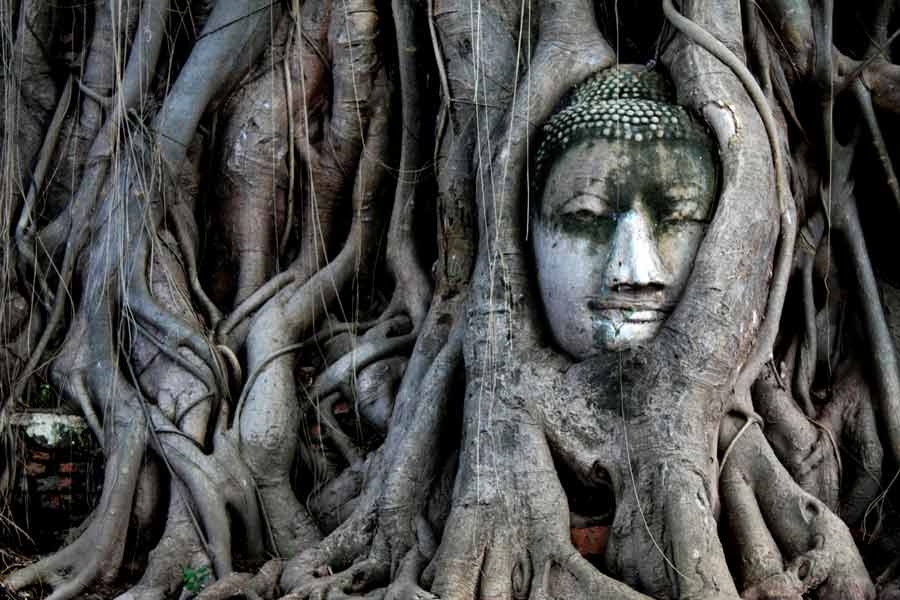
The Mysteries of Love
The Three Eras of Universalism
A version of this was first delivered at the Unitarian Universalist Church in Anaheim, California, on Sunday, the 19th of January, 2020. Revised and a little expanded it was delivered at the First Unitarian Church of Providence, Rhode Island, on the 26th of January. Then, with a few tweaks more it was delivered on the 27th of January, at the Fraters of the Wayside Inn, in Sudbury, Massachusetts,
James Ishmael Ford
“How we eat is connected to how we care for the planet
which is connected to how we use our resources
which is connected to how many people in the world go to bed hungry every night
which is connected to how food is distributed
which is connected to the massive inequalities in our world between those who have and those who don’t
which is connected to how our justice system treats people who use their power and position to make hundreds of millions of dollars while others struggle just to buy groceries
which is connected to how we treat those who don’t have what we have
which is connected to the sanctity and holiness and mystery of our human life and their human life and his little human life
which is why we hold up that baby’s hand and say to the parents, ‘it’s just so small.”
Rob Bell, “What We Talk about When We Talk about God
Not quite a decade ago a prominent Protestant minister caused quite the hubbub in Evangelical circles when he published a book titled “Love Wins.” He then spent a lot of time explaining precisely how he wasn’t actually a universalist. But, if you google him, Rob Bell is his name, you will see pretty much everyone else seems to think he’s one.
Around the same time a Charismatic minister, Bishop Carlton Pearson, after feeling a movement of the spirit, began to preach what he called the Gospel of Inclusion. Again, his colleagues looked at what he was saying, and as with Reverend Bell, they denounced him as a universalist.
The Reverend Mr Bell was pressured to leave his megachurch and began an independent ministry as a speaker and writer. While the bishop’s megachurch began to dwindle, until the remaining congregation, still a good five hundred people, ended up joining All Souls Unitarian Universalist church, in Tulsa.
Now, thanks largely to my participation with interfaith organizations I’ve come to know a number of Christian clergy. Episcopalians, Congregationalists, and Methodists, principally. Along with a sprinkling of others. And, of these, once we get past the “what church do you serve” and looking to find anyone we might know in common, a fair number of these ministers in one-on-one conversations, want to let me know, if quietly, that they, too, are universalists.
It is my sense that among the so-called main-line Episcopal and Protestant churches, some significant number of clergy and laity alike in fact believe in some form of ultimate reconciliation for everyone in this hurting world. While they may not use the word, it definitely is universalism. Their understanding might be more theologically informed as often is the case with clergy. It might be more visceral and specific, “of course Gandhi is in heaven,” as with many of the laity.
The fact is in many forms universalism runs a wondrous current through the churches. Sort of the secret teaching of the Christian heart.
Of course, we Unitarian Universalists are the inheritors of the denomination that originally owned the Universalist name. And, I’ve noticed something about this. Despite the chiding of clergy and the most institutionally committed among us, mainly we and those who know us usually call us by the first part of our rather cumbersome denominational name, Unitarians. But, I suggest, the theology, the spirituality that actually drives us is in fact Universalism.
Now the original sense of Universalist, the sense in which both Reverend Bell and Bishop Pearson are concerned, is that at some point, everyone, even the devil will (or with Mr Bell, can) be saved.
But, in fact, universalism has come to have additional meanings. Some enormously important. And, while not limited to our tiny denomination, this richer universalism can be encountered most clearly within the history of our Unitarian Universalist Association.
Today I hope you’ll indulge me as I try to capture what I’m calling the three eras of Universalism. Although era isn’t exactly right. Lots of overlapping. They’re sort of like Russian dolls. Each nestled within the other. Although that’s not quite it, either. They interpenetrate each other, and where one leaves off and another begins is rarely totally clear. Each aspect is valuable. But taken together in all their richness, they may well speak to a healing message for the world. I really believe they do.
The first era is that most basic intuition we encounter in the Christian story. How can a loving God at the very end of the day, not call all home? As Reverend Bell says, “love wins.” Or as it goes in our old Nineteenth century Universalist slogan, “Love over creed,” or maybe even best put by our contemporary UU theologian Thandeka, who declares, “love beyond belief.” Love is the name of the project.
But, then there’s a second era.
Some years ago, I had the privilege of preaching at the First Unitarian Church of Oakland. Among the mix of reasons that I was so pleased to be standing in their pulpit was how I felt a profound connection to the great Swami Vivekananda who had stood in that very same pulpit something more than a hundred years earlier.
Swami Vivekananda’s visits to America were watershed moments in interreligious encounter. In 1893 he captivated the World Parliament of Religions in Chicago. From that electrifying moment the swami drew large crowds wherever he spoke.
He introduced America to the fact, startling at the time, that a non-Christian and a non-European could be saintly, scholarly, and could advocate another religious perspective as compellingly as any Christian preacher. And for some hearing him, in fact with much more resonance than anything they’d heard before.
I believe it is important to notice his first official talk was actually at the Annisquam Universalist Church in Gloucester. During his two visits to America he visited Unitarian and Universalist congregations and spoke at them some twenty-seven times. Some of these were the largest and most prominent congregations of the two denominations that encompassed liberal religion at the very beginning of the twentieth century. He preached in Chicago and Detroit and Minneapolis, at a number of churches in New England, in Pasadena and in Oakland. Thousands heard him speak.
While both Unitarians and Universalists rejected the idea of hell as pernicious, the swami suggested an additional nuance to what universalism might actually be. He proclaimed that there is a universal current within religions, and that all faiths share in the spark of truth. Something like this can be found here and there before his tours. But, never quite as full throated. Never quite as grounded as an ancient spiritual teaching.
This would integrate as a current within these liberal traditions, even as they more focused on naturalism and rationalism.
We would see this sense resurge in 1988 when journalist Bill Moyers famously interviewed the comparative mythologist Joseph Campbell over seven episodes on PBS. Those episodes would be played in possibly every single UU church in the country.
The theme that ran through the episodes clearly captured this universalist sense of the sacred that had been articulated by Swami Vivekananda.
It also began a shift from what had become a primarily materialistic and analytical perspective, without denying any of that hard-earned intellectual freedom, toward a wildly open and heart-ful spirituality. It would mark the last decades of Unitarian Universalism in the Twentieth century.
This broadness of spirit is a calling to a universalism that is open to wisdom wherever it presents. Although it often presents most compellingly within poetry, myth, and the world’s religions.
And, there is the third era. I believe the most important point to the three faces, perhaps “faces” is the term I’m looking for, of our living Universalism. Those first two starting with the power of love in this world, but enriched by noticing that truth is multi-faceted, and has many different expressions found around the world in all cultures.
And then, there is that third thing. Era. Face. Aspect. Maybe even the deep root for all of these things…
I believe I first described the event that follows in 2013, at the installation sermon for the Reverend Christana Wille McKnight. At the time she was a community minister for the First Unitarian Church of Providence. And was now called as minister at the First Parish Church in Taunton, Massachusetts. The following year the anecdote was reprinted by the UU World. And, since then it has had a small life of its own. I hope you’ll forgive me quoting, well, me.
In 1961, when the American Unitarian Association and the Universalist Church of America consolidated, there was a statement of our principles. By the mid nineteen seventies it was pretty obvious it needed updating. Chief among those who took up the challenge were members of the Unitarian Universalist Women’s Federation. The process was hard. As they say, you don’t really want to visit the sausage factory. There were negotiations, there were fights, there were compromises.
Finally, on June 25th, 1984, Unitarian Universalists from across the United States and Canada gathered at the Ohio State University campus in Columbus, for the eleventh General Assembly of the Unitarian Universalist Association of Congregations. The great focus of this GA was a vote on a new statement of principles.
As perhaps is appropriate for such a momentous event, people aren’t actually clear on all the details. The official agenda set Thursday morning the 27th for the final debate and vote on the proposed document. However, some people say the vote took place that afternoon, while others say the debate continued on to the next day, the 28th, and it wasn’t until late that afternoon the last points of dispute were resolved, and the vote taken.
Whichever hour, when it looked pretty close to done, the document was, frankly, mostly “mom and apple pie.” Hardly a word anyone of most any spiritual tradition or of a broad humanistic bent, could argue with. What I would call the perfect product of a committee. The most distinctive feature was the first principle, a call to the “inherent worth and dignity of every person,” a libertarian focus on the individual that had marked out English speaking Unitarianism for its entire history.
Then the Reverend Paul L’Herrou made his way to the microphones. Everyone who describes the scene say he was lanky and bearded, and stood at the microphone with the ease of an experienced pulpit minister. He looked around, briefly stroked his beard and then addressed the proposed seventh principle, which was a call to “respect for the Earth and the interdependence of its living systems.” In my mind’s eye, as Paul stood there, the hall fell to a hushed silence. I think, I’m pretty sure the world outside grew quiet, as well. Perhaps one or two stars broke through the Ohio daylight, shooting beams in the general direction of Columbus. Out of that silence Paul pointed out how that wording fell far short of what it could be.
Paul proposed new wording for the seventh principal: a call to respect “the interdependent web of existence, of which we are all a part.” I’m pretty sure, although I have to admit there’s no hard record of it, that with those words the ceiling blew off the convention center and a host of angels, devas, and many other celestial beings from all the world’s religions, past, present and future, descended from the heavens, some playing instruments of astonishing beauty, while others sang a Gloria that reached out to the farthest corners of the universe. Even the stars danced in joy at the revelation of this great secret of the universe within a gathering of Unitarian Universalists in Columbus, Ohio, within the United States, nestled on the North American continent of a tiny planet circling a middling star at the edge of one of a hundred thousand million galaxies.
The call: to know that interdependent web of existence, of which we are all a part.
The proclamation of the third era of Universalism.
And then it was over. The ceiling resealed, the beings were gone, only a hint of their song remaining in the hearts of the assembled, who then voted. They accepted that proposed change, and with that our little band found itself marked with an astonishing charism, a particular channel of divine blessing aimed at healing this poor, broken world. I suggest in that hour our future was articulated with as much authority as if it were from the tongue of an ancient prophet.
And, what has happened since? Well, many have missed the importance of that moment. Others dismiss it as typical liberal hat tipping to the issues of the day, in this case our looming ecological catastrophe. But, actually, this is so vastly more important, so deep, and compelling, it needs the cloak of myth, the mystery of song to even partially convey its import. It is so powerful a message it is hard to look at it directly. I suspect we will spend lifetimes unpacking and expanding what this all means.
Universalism.
I find myself thinking of the Reverend Rob Bell and Bishop Carlton Pearson. And the other Christian clergy and laity who find it best to have a quiet Universalism. There is something both glorious and terribly sad that this good news must be kept quiet. Glorious in that it cannot be suppressed. Not really. As long as there are human hearts yearning for healing. Not as long as people seek a true north star for their lives and their deaths. And so sad because we need this good news. All of us.
Also, it seems that when suppressed the deeper nuances can be lost, while trying to keep alive a small flame: it is the whispering of the all-pervading truth of love. But with a little freedom we can also see how this truth can be found in other expressions around the world. It genuinely is our common inheritance.
And there is that last wonderful part that the story of the Seventh Principal speaks to. There was another Christian accused of Universalism in the early part of the Twentieth century. C. S. Lewis called us to the four loves as used by the ancient Greeks. Agape, divine love, eros, the loves of the body, philios, friendship, and storge, empathy or perhaps compassion.
If one understands we are all woven of the same cloth, that our lives, and our deaths, are bound up in what Dr Martin Luther King, Jr called a garment of destiny, then, in the exact moment when we open ourselves full to this truth, well then all four of those loves flow into and from us.
And the great way of healing for us all is revealed. A north star appears, and we know what to do.
We find ourselves as we really are. Precious, unique. And, in a contradiction only out of our sense of isolation, both passing as the morning dew, and eternal. Always alive within the mysteries of our interdependent, interpenetrating, all encompassing, love.
With this body knowing we can find the healing of our own divided hearts. And beyond that, we are given a moral compass that allows us to act in this world in ways that actually can help.
All of it.
It is the mystery and power of Universalism.
Our way.
Hope for this world.
Amen.

Browse Our Archives
Select a Category A Christmas Carol Abolitionist African-American Ahmadiyya Alan Watts Aldous Huxley Allen Ginsberg Amedkar Jayanti American politics American Zen Anaheim Zen Sangha Anglican Annie Besant April Fool Armageddon Art and Religion artificial intellegence Atheist Awakening B R Ambedkar Barlaam & Josaphat Beatnik Between Bhagavad Gita Bible biography birthday bodhisattva Bodhisattva Precepts Book burning Book of Common Prayer Book of Mormon Brahmo Samaj Buddha Buddhism Buddhist Buddhist Lord's Prayer Butterflies Calendars cartoons cat ChatGPT Chicken Tortilla Soup choices Christian atheism Christian mysticism Christian origins Christian Science Christian Zen Christianity Christianity and Buddhism christmas Christmas Truce Christopher Isherwood Church of Later Day Saints Cinco de Mayo circus covenant critical thinking culture D. T. Suzuki Dalit Buddhism Daniel Defoe Desert Fathers and Mothers dharma talk Dogen Donald Trump Dongshan's Five Ranks Dorothy Day dream Duty Easter ecology Edwin Arnold emptiness Empty Moon Zen Network Episcopal Church Eternal Now Ethics evolution existentialism Faith fantasy Fathers Day film film review fire Five Ranks Folk music food Form and emptiness Four Seals Francis of Assisi Francis Xavier Free thinker friendship George MacDonald Gerald Heard Glenn Taylor Webb God Good Friday Gospel of Gospel of Mark Gospel of Thomas grace Graduate Theological Unioin Graduate Theological Union Guanyin H R Blyth Hakuin Ekaku Hanamatsuri Hanukkah Harada Yasutani Zen Heart Sutra Henry David Thoreau Hermann Hesse Hinduism History and Religion history of religion Holy Spirit home Hospitality Icon Ides of March Isaac Newton Islam Islamic mysticism Jack Kerouac James Luther Adams Jiddu Krishnamurti Joan of Arc Johannes Gutenberg John Donne joke Judaism justice karma kensho King James Bible koan Koun Yamada Kyoto School Lewis Carrol Liberal Christianity Liberal Religion Life Plan Community Liminal literature Literature and Religion Liturgy Lord's Prayer Love Mahatma Gandhi Mahayana Martin Luther King Jr Mary Baker Eddy Mary Magdelene Mary Oliver Mayflower Compact Meditation memories memory metaphor money money and religioin Mormons Mother's Day movie review mysticism mythic Neighborhood Unitarian Universalist Church New Thought Nichiren Buddhism Nonduality not knowing Omar Khayyam Pacific School of Religion pagan Palm Sunday Passover peace Pentecost perennialism Phantastes Philip Kapleau philosophy Pilgrimage poetry Poetry and Religion politics Prayer Precepts Printing Press prophecy prophetic spirituality psychology Pure Land Queer religion queering religion Quietism Ram Mohan Roy rebirth recipe Relationships and religion religion religion and history Religious syncretism Resistance Retirement Retreat review Rissho Kosei Kai Ritual Robert Aitken Roshi Robert Ingersoll Rohatsu Romani religion Rosie the Riveter saints samadhi SanboZen Sangha Satyagraha science science and reigion science and religion science fiction seminary sermon Sesshin Sex and Religion Shinran Sikh Sikh tradition silence Social Justice Socially Engaged Buddhism Society and religion Soto Zen soul spiritual community spiritual practice Spirituality Sufism Suicide superstition Taoism Television Teresa of Avila Thanksgiving theological schools Theosophy Thomas Merton Time Transcendentalism Transcendentalist Trinitarian Trinity Uncategorized unitarian Unitarian Christianity Unitarian Universalist Universalism Vajrayana Vedanta Walking war Willa Cather William Ellery Channing wisdom women and religion women in religion World Teacher Writing zazen Zen Zen Center Zen inspired retriement zen meditation Zen Precepts Zen women
Select a Month September 2026 August 2026 July 2026 June 2026 May 2026 April 2026 March 2026 February 2026 January 2026 December 2025 November 2025 October 2025 September 2025 August 2025 July 2025 June 2025 May 2025 April 2025 March 2025 February 2025 January 2025 December 2024 November 2024 October 2024 September 2024 August 2024 July 2024 June 2024 May 2024 April 2024 March 2024 February 2024 January 2024 December 2023 November 2023 October 2023 September 2023 August 2023 July 2023 June 2023 May 2023 April 2023 March 2023 February 2023 January 2023 December 2022 November 2022 October 2022 September 2022 August 2022 July 2022 June 2022 May 2022 April 2022 March 2022 February 2022 January 2022 December 2021 November 2021 October 2021 September 2021 August 2021 July 2021 June 2021 May 2021 April 2021 March 2021 February 2021 January 2021 December 2020 November 2020 October 2020 September 2020 August 2020 July 2020 June 2020 May 2020 April 2020 March 2020 February 2020 January 2020 December 2019 November 2019 October 2019 September 2019 August 2019 July 2019 June 2019 May 2019 April 2019 March 2019 February 2019 January 2019 December 2018 November 2018 October 2018 September 2018 August 2018 July 2018 June 2018 May 2018 April 2018 March 2018 February 2018 January 2018 December 2017 November 2017 October 2017 September 2017 August 2017 July 2017 June 2017 May 2017 April 2017 March 2017 February 2017 January 2017 December 2016 November 2016 October 2016 September 2016 August 2016 July 2016 June 2016 May 2016 April 2016 March 2016 February 2016 January 2016 December 2015 November 2015 October 2015 September 2015 August 2015 July 2015 June 2015 May 2015 April 2015 March 2015 February 2015 January 2015 December 2014 November 2014 October 2014 September 2014 August 2014 July 2014 June 2014 May 2014 April 2014 March 2014 February 2014 January 2014 December 2013 November 2013 October 2013 September 2013 August 2013 July 2013 June 2013 May 2013 April 2013 March 2013 February 2013 January 2013 December 2012 November 2012 October 2012 September 2012 August 2012 July 2012 June 2012 May 2012 April 2012 March 2012 February 2012 January 2012 December 2011 November 2011 October 2011 September 2011 August 2011 July 2011 June 2011 May 2011 April 2011 March 2011 February 2011 January 2011 December 2010 November 2010 October 2010 September 2010 August 2010 July 2010 June 2010 May 2010 April 2010 March 2010 February 2010 January 2010 December 2009 November 2009 October 2009 September 2009 August 2009 July 2009 June 2009 May 2009 April 2009 March 2009 February 2009 January 2009 December 2008 November 2008 October 2008 September 2008 August 2008 July 2008 June 2008 May 2008 April 2008 March 2008 February 2008 January 2008 December 2007 November 2007 October 2007 September 2007 August 2007 July 2007 June 2007 May 2007 April 2007 March 2007 February 2007 January 2007 December 2006 November 2006 October 2006 September 2006
Follow Us!
TAKE THE
Religious Wisdom Quiz
Who was the last king of Israel before the Assyrian conquest?
Select your answer to see how you score.
Hoshea Shallum Amon Jehoahaz
Related posts from Monkey Mind
A Feast for Origen & Universalism
George MacDonald & the World of Wonder: A...

HELL IN THE CHRISTIAN TRADITION : Some Notes...
Zen, a New Universalism, and Politics
TRENDING AT PATHEOS Buddhist

Emotion in Early Christianity by Andrew Crislip
Andrew Crislip’s Emotion in Early Christianity examines an often overlooked dimension of...

16 Spiritual Touchstones for a More Grounded Life
After decades of spiritual study, here are 16 principles I try...

Catholic Evangelization: Sharing Your Faith Every Day
Welcome back to the Graceful Awakening mini-series called, “From Faith to Mission.” ...

The Pillar of the Boatmen: the Ancient Monument...
The Pillar of the Boatmen is a Romano-Gaulish sculpture that dates from...

In one sense walking into Westminster Abbey is like walking down the...

'Super Scam Me' Exposes AI Jon Bon Jovi...
Leslie Pickett believed she was in a relationship with Jon Bon Jovi....
view all Buddhist blogs
Ad-Free & Subscriber Log-In Subscription Support
- About Us
- 2026 Calendar
- Videos
- Podcasts
- Library of World Religions
- Faith In Media Tracker
- Advertise With Us
- Write for Us
- Privacy Policy
- Terms of Service
- Do Not Sell My Data
- Contact Us
- Radiant Digital
- Manage Newsletter Subscriptions
- Unsubscribe From Notifications
- Sitemap
Copyright 2008-2026, Patheos. All rights reserved.
Subscription Support Ad-Free & Subscriber Log-In
Follow Patheos