
BuddhistCatholicContemplativeEvangelicalGeneral ChristianHinduJewishLatter-day SaintMuslimNew VisionsProgressive Christian
Beliefs
- Buddhist
- Catholic
- Contemplative
- Evangelical
- General Christian
- Hindu
- Jewish
- Latter-day Saint
- More Voices
- Muslim
- New Visions
- Pagan
- Progressive Christian
Topics
- Religion News
- Food and Religion
- Sports and Religion
- Religious Art
- Religious Music and Entertainment
- Religious Events
- History and Religion
- Style and Religion
- Politics and Religion
- Women in Religion
- Recreation Outdoors and Religion
- Business Finance and Religion
- Careers Workplace and Religion
- Education and Religion
- Family Parenting and Religion
- Health Fitness and Religion
- Home and Religion
- Relationships and Religion
- Technology and Religion
- Travel and Religion
Columnists
- Buddhist Columnists
- Business Finance and Religion Columnists
- Careers Workplace and Religion Columnists
- Catholic Columnists
- Contemplative Columnists
- Education and Religion Columnists
- Evangelists Columnists
- Family Parenting and Religion Columnists
- General Christian Columnists
- Health Fitness and Religion Columnists
- Hindu Columnists
- History and Religion Columnists
- Home and Religion Columnists
- Jewish Columnists
- More Voices Columnists
- Latter Day Columnists
- Muslim Columnists
- New Visions Columnists
- Nonreligious Columnists
- Pagan Columnists
- Politics and Religion Columnists
- Progressive Columnists
- Recreation Outdoors and Religion Columnists
- Relationships and Religion Columnists
- Religion News Columnists
- Religious Art Columnists
- Religious Events Columnists
- Religious Music and Entertainment Columnists
- Sports and Religion Columnists
- Style and Religion Columnists
- Technology and Religion Columnists
- Travel and Religion Columnists
- Women in Religion Columnists
Resource Library
- 2026 Calendar
- Library of World Religions
- The 100 Most Holy Places on Earth
- Patheos Answers
- Podcasts
- Videos
- Faith Leaders Database
- Anglican Episcopalian
- Bahai
- Baptist
- Buddhism
- Christianity
- Confucianism
- Eastern Orthodoxy
- Hinduism
- Holiness and Pentecostal
- ISKCON
- Islam
- Judaism
- Lutheran
- Methodist
- The Church of Jesus Christ of Latter-day Saints
- New Age
- Paganism
- Presbytarian and Reformed
- Protestantism
- Religion Behind the Scenes
- Roman Catholic
- Scientology
- Shia Islam
- Sikhism
- Sufism
- Sunni Islam
- Taoism
- Zen
- See all religions
Research Tools
 Ad-Free & Subscriber Log-In Subscription Support
Ad-Free & Subscriber Log-In Subscription Support
Follow Patheos 

- Trending:
- Forgiveness
- |
- Marriage
- |
- Consciousness
- |
- Death Penalty
- |
- Election
- |
- Halloween

- Home
- Buddhist
- Enter the Swami: A Taste of Vivekananda’s Teachings
Enter the Swami: A Taste of Vivekananda’s Teachings
Last updated on: January 12, 2020 at 7:19 am by James Ford
Enter the Swami: A Taste of Vivekananda’s Teachings 2020-01-12T07:19:49-08:00 James Ford
Patheos Explore the world's faith through different perspectives on religion and spirituality! Patheos has the views of the prevalent religions and spiritualities of the world.
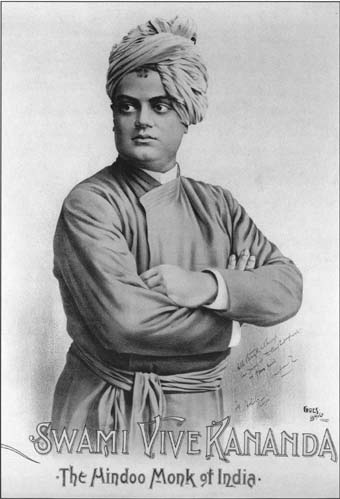
I consider Swami Vivkeananda one of those signal figures in the dawning of our modern era of world religious encounter.
This was true for me personally, where an exploration of Vedanta, Sri Ramaakrishna, and his great disciple Swami Vivekananda were my first tentative exploration beyond Christianity…
The Swami was born in Calcutta on this day, the 12th of January, in 1863, as Narendranath Datta. His was a professional family, his father an attorney.
From childhood religion was Narrendranath’s great obsession. As an undergraduate he studied religion and philosophy, both Eastern and Western. He then became interested in the Hindu reform movement the Brahmo Samaj, joining a breakaway branch, the Sadharan Brahmo Samaj.
He also met Sri Ramakrishna. For a time Narendranath remained more interested in the Western (and Unitarian and Transcendentalist) influenced Braho Samaj, but followng his father’s death, he gradually gravitated to Ramakrishna and his ecstatic spirituality.
His Wikipedia article tells us “Although he did not initially accept Ramakrishna as his teacher and rebelled against his ideas, he was attracted by his personality and began to frequently visit him at Dakshineswar.” Narendranath “initially saw Ramakrishna’s ecstasies and visions as ‘mere figments of imagination’ and ‘hallucinations.’ As a member of Brahmo Samaj, he opposed idol worship, polytheism and Ramakrishna’s worship of Kali. He even rejected the Advaita Vedanta of ‘identity with the absolute’ as blasphemy and madness, and often ridiculed the idea.”
However, under Ramakrishna’s tutelage he gradually found his quest to know God overtaking everything else. Soon he found himself falling into ecstatic samadhi states. And then he had his great awakening. Named Vivekananda by his teacher he quickly became Ramakrishna’s leading disciple. When his teacher died, Swami Vivekananda became the head of what would become the Ramakrishna Math.
With his trip to speak at the 1893 World Parliament of Religions Swami Vivekananda would become one of the most important interpreters of Hinduism to the West as well as a leading spiritual figure in India itself. In the West the Vedanta Society, which represents the Ramakrishna Order, has become a significant spiritual force, influencing many people including Aldous Huxley and Christopher Isherwood.
The Wikipedia article summarizes how “Vivekananda propagated that the essence of Hinduism was best expressed in Adi Shankara’s Advaita Vedanta philosophy. Nevertheless, following Ramakrishna, and in contrast to Advaita Vedanta, Vivekananda believed that the Absolute is both immanent and transcendent. According to Anil Sooklal, Vivekananda’s neo-Advaita ‘reconciles Dvaita or dualism and Advaita or non-dualism.’ Vivekananda summarised the Vedanta as follows, giving it a modern and Universalistic interpretation:
Each soul is potentially divine. The goal is to manifest this Divinity within by controlling nature, external and internal. Do this either by work, or worship, or mental discipline, or philosophy—by one, or more, or all of these—and be free. This is the whole of religion. Doctrines, or dogmas, or rituals, or books, or temples, or forms, are but secondary details.”
His influence is near incalculable. Among other things I think he is critical in the shifting of Western Universalism from the belief that the dead are all reconciled to the divine to the belief that all religions contain the deepest truth.
Summarizing his influence, Wikipedia suggests, that Swami “Vivekananda was one of the main representatives of Neo-Vedanta, a modern interpretation of selected aspects of Hinduism in line with western esoteric traditions, especially Transcendentalism, New Thought and Theosophy. His reinterpretation was, and is, very successful, creating a new understanding and appreciation of Hinduism within and outside India, and was the principal reason for the enthusiastic reception of yoga, transcendental meditation and other forms of Indian spiritual self-improvement in the West.”
An amazing figure.
As an example what follows is based out of a talk he delivered on Sunday, February 25, 1900, at the First Unitarian Church of Oakland, in California. The following notes of this lecture are as reported in the Oakland Enquirer together with their editorial comments. Thanks to the Reverend Kathy Huff, one time Senior Minister of the First Unitarian Church of Oakland for this text.
***
The announcement that Swami Vivekananda, a distinguished savant of the East, would expound the philosophy of Vedanta in the Parliament of Religions at the Unitarian Church last evening, attracted an immense throng. The main auditorium and ante-rooms were packed, the annexed auditorium of Wendte Hall was thrown open, and this was also filled to overflowing, and it is estimated that fully 500 persons, who could not obtain seats or standing room where they could hear conveniently, were turned away.
The Swami created a marked impression. Frequently he received applause during the lecture, and upon concluding, held a levee of enthusiastic admirers. He said in part, under the subject of “The Claims of Vedanta on the Modern World”:
Vedanta demands the consideration of the modern world. The largest number of the human race is under its influence. Again and again, millions upon millions have swept down on its adherents in India, crushing them with their great force, and yet the religion lives. In all the nations of the world, can such a system be found? Others have risen to come under its shadow. Born like mushrooms, today they are alive and flourishing, and tomorrow they are gone. Is this not the survival of the fittest?
It is a system not yet complete. It has been growing for thousands of years and is still growing. So I can give you but an idea of all I would say in one brief hour.
First, to tell you of the history of the rise of Vedanta. When it arose, India had already perfected a religion. Its crystallisation had been going on many years. Already there were elaborate ceremonies; already there had been perfected a system of morals for the different stages of life. But there came a rebellion against the mummeries and mockeries that enter into many religions in time, and great men came forth to proclaim through the Vedas the true religion. Hindus received their religion from the revelation of these Vedas. They were told that the Vedas were without beginning and without end. It may sound ludicrous to this audience — how a book can be without beginning or end; but by the Vedas no books are meant. They mean the accumulated treasury of spiritual laws discovered by different persons in different times.
Before these men came, the popular ideas of a God ruling the universe, and that man was immortal, were in existence. But there they stopped. It was thought that nothing more could be known. Here came the daring of the expounders of Vedanta. They knew that religion meant for children is not good for thinking men; that there is something more to man and God.
The moral agnostic knows only the external dead nature. From that he would form the law of the universe. He might as well cut off my nose and claim to form an idea of my whole body, as argue thus. He must look within. The stars that sweep through the heavens, even the universe is but a drop in the bucket. Your agnostic sees not the greatest, and he is frightened at the universe.
The world of spirit is greater than all — the God of the universe who rules — our Father, our Mother. What is this heathen mummery we call the world? There is misery everywhere. The child is born with a cry upon its lips; it is its first utterance. This child becomes a man, and so well used to misery that the pang of the heart is hidden by a smile on the lips.
Where is the solution of this world? Those who look outside will never find it; they must turn their eyes inward and find truth. Religion lives inside.
One man preaches, if you chop your head off, you get salvation. But does he get any one to follow him? Your own Jesus says, “Give all to the poor and follow me.” How many of you have done this? You have not followed out this command, and yet Jesus was the great teacher of your religion. Every one of you is practical in his own life, and you find this would be impracticable.
But Vedanta offers you nothing that is impracticable. Every science must have its own matter to work upon. Everyone needs certain conditions and much of training and learning; but any Jack in the street can tell you all about religion. You may want to follow religion and follow an expert, but you may only care to converse with Jack, for he can talk it.
You must do with religion as with science, come in direct contact with facts, and on that foundation build a marvellous structure.
To have a true religion you must have instruments. Belief is not in question; of faith you can make nothing, for you can believe anything.
We know that in science as we increase the velocity, the mass decreases; and as we increase the mass, the velocity decreases. Thus we have matter and force. The matter, we do not know how, disappears into force, and force into matter. Therefore there is something which is neither force nor matter, as these two may not disappear into each other. This is what we call mind — the universal mind.
Your body and my body are separate, you say. I am but a little whirlpool in the universal ocean of mankind. A whirlpool, it is true, but a part of the great ocean.
You stand by moving water where every particle is changing, and yet you call it a stream. The water is changing, it is true, but the banks remain the same. The mind is not changing, but the body — how quick its growth! I was a baby, a boy, a man, and soon I will be an old man, stooped and aged. The body is changing, and you say, is the mind not changing also? When I was a child, I was thinking, I have become larger, because my mind is a sea of impressions.
There is behind nature a universal mind. The spirit is simply a unit and it is not matter. For man is a spirit. The question, “Where does the soul go after death?” should be answered like the boy when he asked, “Why does not the earth fall down?” The questions are alike, and their solutions alike; for where could the soul go to?
To you who talk of immortality I would ask when you go home to endeavour to imagine you are dead. Stand by and touch your dead body. You cannot, for you cannot get out of yourself. The question is not concerning immortality, but as to whether Jack will meet his Jenny after death.
The one great secret of religion is to know for yourself that you are a spirit. Do not cry out, “I am a worm, I am nobody!” As the poet says, “I am Existence, Knowledge, and Truth.” No man can do any good in the world by crying out, “I am one of its evils.” The more perfect, the less imperfections you see.
Previous Post

January 11, 2020
Recalling that Explorer of the Human HeartMind, William James
Next Post
January 14, 2020 A Feast for the Ass
Browse Our Archives
Select a Category A Christmas Carol Abolitionist African-American Ahmadiyya Alan Watts Aldous Huxley Allen Ginsberg Amedkar Jayanti American politics American Zen Anaheim Zen Sangha Anglican Annie Besant April Fool Armageddon Art and Religion artificial intellegence Atheist Awakening B R Ambedkar Barlaam & Josaphat Beatnik Between Bhagavad Gita Bible biography birthday bodhisattva Bodhisattva Precepts Book burning Book of Common Prayer Book of Mormon Brahmo Samaj Buddha Buddhism Buddhist Buddhist Lord's Prayer Butterflies Calendars cartoons cat ChatGPT Chicken Tortilla Soup choices Christian atheism Christian mysticism Christian origins Christian Science Christian Zen Christianity Christianity and Buddhism christmas Christmas Truce Christopher Isherwood Church of Later Day Saints Cinco de Mayo circus covenant critical thinking culture D. T. Suzuki Dalit Buddhism Daniel Defoe Desert Fathers and Mothers dharma talk Dogen Donald Trump Dongshan's Five Ranks Dorothy Day dream Duty Easter ecology Edwin Arnold emptiness Empty Moon Zen Network Episcopal Church Eternal Now Ethics evolution existentialism Faith fantasy Fathers Day film film review fire Five Ranks Folk music food Form and emptiness Four Seals Francis of Assisi Francis Xavier Free thinker friendship George MacDonald Gerald Heard Glenn Taylor Webb God Good Friday Gospel of Gospel of Mark Gospel of Thomas grace Graduate Theological Unioin Graduate Theological Union Guanyin H R Blyth Hakuin Ekaku Hanamatsuri Hanukkah Harada Yasutani Zen Heart Sutra Henry David Thoreau Hermann Hesse Hinduism History and Religion history of religion Holy Spirit home Hospitality Icon Ides of March Isaac Newton Islam Islamic mysticism Jack Kerouac James Luther Adams Jiddu Krishnamurti Joan of Arc Johannes Gutenberg John Donne joke Judaism justice karma kensho King James Bible koan Koun Yamada Kyoto School Lewis Carrol Liberal Christianity Liberal Religion Life Plan Community Liminal literature Literature and Religion Liturgy Lord's Prayer Love Mahatma Gandhi Mahayana Martin Luther King Jr Mary Baker Eddy Mary Magdelene Mary Oliver Mayflower Compact Meditation memories memory metaphor money money and religioin Mormons Mother's Day movie review mysticism mythic Neighborhood Unitarian Universalist Church New Thought Nichiren Buddhism Nonduality not knowing Omar Khayyam Pacific School of Religion pagan Palm Sunday Passover peace Pentecost perennialism Phantastes Philip Kapleau philosophy Pilgrimage poetry Poetry and Religion politics Prayer Precepts Printing Press prophecy prophetic spirituality psychology Pure Land Queer religion queering religion Quietism Ram Mohan Roy rebirth recipe Relationships and religion religion religion and history Religious syncretism Resistance Retirement Retreat review Rissho Kosei Kai Ritual Robert Aitken Roshi Robert Ingersoll Rohatsu Romani religion Rosie the Riveter saints samadhi SanboZen Sangha Satyagraha science science and reigion science and religion science fiction seminary sermon Sesshin Sex and Religion Shinran Sikh Sikh tradition silence Social Justice Socially Engaged Buddhism Society and religion Soto Zen soul spiritual community spiritual practice Spirituality Sufism Suicide superstition Taoism Television Teresa of Avila Thanksgiving theological schools Theosophy Thomas Merton Time Transcendentalism Transcendentalist Trinitarian Trinity Uncategorized unitarian Unitarian Christianity Unitarian Universalist Universalism Vajrayana Vedanta Walking war Willa Cather William Ellery Channing wisdom women and religion women in religion World Teacher Writing zazen Zen Zen Center Zen inspired retriement zen meditation Zen Precepts Zen women
Select a Month September 2026 August 2026 July 2026 June 2026 May 2026 April 2026 March 2026 February 2026 January 2026 December 2025 November 2025 October 2025 September 2025 August 2025 July 2025 June 2025 May 2025 April 2025 March 2025 February 2025 January 2025 December 2024 November 2024 October 2024 September 2024 August 2024 July 2024 June 2024 May 2024 April 2024 March 2024 February 2024 January 2024 December 2023 November 2023 October 2023 September 2023 August 2023 July 2023 June 2023 May 2023 April 2023 March 2023 February 2023 January 2023 December 2022 November 2022 October 2022 September 2022 August 2022 July 2022 June 2022 May 2022 April 2022 March 2022 February 2022 January 2022 December 2021 November 2021 October 2021 September 2021 August 2021 July 2021 June 2021 May 2021 April 2021 March 2021 February 2021 January 2021 December 2020 November 2020 October 2020 September 2020 August 2020 July 2020 June 2020 May 2020 April 2020 March 2020 February 2020 January 2020 December 2019 November 2019 October 2019 September 2019 August 2019 July 2019 June 2019 May 2019 April 2019 March 2019 February 2019 January 2019 December 2018 November 2018 October 2018 September 2018 August 2018 July 2018 June 2018 May 2018 April 2018 March 2018 February 2018 January 2018 December 2017 November 2017 October 2017 September 2017 August 2017 July 2017 June 2017 May 2017 April 2017 March 2017 February 2017 January 2017 December 2016 November 2016 October 2016 September 2016 August 2016 July 2016 June 2016 May 2016 April 2016 March 2016 February 2016 January 2016 December 2015 November 2015 October 2015 September 2015 August 2015 July 2015 June 2015 May 2015 April 2015 March 2015 February 2015 January 2015 December 2014 November 2014 October 2014 September 2014 August 2014 July 2014 June 2014 May 2014 April 2014 March 2014 February 2014 January 2014 December 2013 November 2013 October 2013 September 2013 August 2013 July 2013 June 2013 May 2013 April 2013 March 2013 February 2013 January 2013 December 2012 November 2012 October 2012 September 2012 August 2012 July 2012 June 2012 May 2012 April 2012 March 2012 February 2012 January 2012 December 2011 November 2011 October 2011 September 2011 August 2011 July 2011 June 2011 May 2011 April 2011 March 2011 February 2011 January 2011 December 2010 November 2010 October 2010 September 2010 August 2010 July 2010 June 2010 May 2010 April 2010 March 2010 February 2010 January 2010 December 2009 November 2009 October 2009 September 2009 August 2009 July 2009 June 2009 May 2009 April 2009 March 2009 February 2009 January 2009 December 2008 November 2008 October 2008 September 2008 August 2008 July 2008 June 2008 May 2008 April 2008 March 2008 February 2008 January 2008 December 2007 November 2007 October 2007 September 2007 August 2007 July 2007 June 2007 May 2007 April 2007 March 2007 February 2007 January 2007 December 2006 November 2006 October 2006 September 2006
Follow Us!
TAKE THE
Religious Wisdom Quiz
Which city was destroyed by fire and brimstone along with Gomorrah?
Select your answer to see how you score.
Babylon Nineveh Sodom Jericho
Related posts from Monkey Mind


Which Is the True Qian? A Koan About...


TRENDING AT PATHEOS Buddhist

Methodist Central Hall and Westminster Abbey
Situated on the same square is Methodist Central Hall and Westminster Abbey. ...

57th Dove Awards Honor Dolly Parton, Crown New...
On gospel music’s biggest night, the 57th annual GMA Dove Awards honored...

The First Eucharistic Controversy: Christ’s Real Presence
For Catholics, the Eucharist is the source and summit of the Christian...

What a Stop Sign Can Teach Us About...
How to Make a Decision When You Can't Hear God Main point:...

Archdiocese Hosts Military Marriage Retreat in Germany
RASTATT, Germany — The transient military lifestyle, with its frequent deployments and...

Nearly every morning, I make the drive to Detroit with my high-school-age...
view all Buddhist blogs
Ad-Free & Subscriber Log-In Subscription Support
- About Us
- 2026 Calendar
- Videos
- Podcasts
- Library of World Religions
- Faith In Media Tracker
- Advertise With Us
- Write for Us
- Privacy Policy
- Terms of Service
- Do Not Sell My Data
- Contact Us
- Radiant Digital
- Manage Newsletter Subscriptions
- Unsubscribe From Notifications
- Sitemap
Copyright 2008-2026, Patheos. All rights reserved.
Subscription Support Ad-Free & Subscriber Log-In
Follow Patheos