
BuddhistCatholicContemplativeEvangelicalGeneral ChristianHinduJewishLatter-day SaintMuslimNew VisionsProgressive Christian
Beliefs
- Buddhist
- Catholic
- Contemplative
- Evangelical
- General Christian
- Hindu
- Jewish
- Latter-day Saint
- More Voices
- Muslim
- New Visions
- Pagan
- Progressive Christian
Topics
- Religion News
- Food and Religion
- Sports and Religion
- Religious Art
- Religious Music and Entertainment
- Religious Events
- History and Religion
- Style and Religion
- Politics and Religion
- Women in Religion
- Recreation Outdoors and Religion
- Business Finance and Religion
- Careers Workplace and Religion
- Education and Religion
- Family Parenting and Religion
- Health Fitness and Religion
- Home and Religion
- Relationships and Religion
- Technology and Religion
- Travel and Religion
Columnists
- Buddhist Columnists
- Business Finance and Religion Columnists
- Careers Workplace and Religion Columnists
- Catholic Columnists
- Contemplative Columnists
- Education and Religion Columnists
- Evangelists Columnists
- Family Parenting and Religion Columnists
- General Christian Columnists
- Health Fitness and Religion Columnists
- Hindu Columnists
- History and Religion Columnists
- Home and Religion Columnists
- Jewish Columnists
- More Voices Columnists
- Latter Day Columnists
- Muslim Columnists
- New Visions Columnists
- Nonreligious Columnists
- Pagan Columnists
- Politics and Religion Columnists
- Progressive Columnists
- Recreation Outdoors and Religion Columnists
- Relationships and Religion Columnists
- Religion News Columnists
- Religious Art Columnists
- Religious Events Columnists
- Religious Music and Entertainment Columnists
- Sports and Religion Columnists
- Style and Religion Columnists
- Technology and Religion Columnists
- Travel and Religion Columnists
- Women in Religion Columnists
Resource Library
- 2026 Calendar
- Library of World Religions
- The 100 Most Holy Places on Earth
- Patheos Answers
- Podcasts
- Videos
- Faith Leaders Database
- Anglican Episcopalian
- Bahai
- Baptist
- Buddhism
- Christianity
- Confucianism
- Eastern Orthodoxy
- Hinduism
- Holiness and Pentecostal
- ISKCON
- Islam
- Judaism
- Lutheran
- Methodist
- The Church of Jesus Christ of Latter-day Saints
- New Age
- Paganism
- Presbytarian and Reformed
- Protestantism
- Religion Behind the Scenes
- Roman Catholic
- Scientology
- Shia Islam
- Sikhism
- Sufism
- Sunni Islam
- Taoism
- Zen
- See all religions
Research Tools
 Ad-Free & Subscriber Log-In Subscription Support
Ad-Free & Subscriber Log-In Subscription Support
Follow Patheos 

- Trending:
- Forgiveness
- |
- Marriage
- |
- Consciousness
- |
- Death Penalty
- |
- Election
- |
- Halloween

- Home
- Buddhist
- ON BECOMING SPIRITUAL ADULTS: A Hanukkah Meditation
ON BECOMING SPIRITUAL ADULTS: A Hanukkah Meditation
Last updated on: December 29, 2019 at 8:42 pm by James Ford
ON BECOMING SPIRITUAL ADULTS: A Hanukkah Meditation 2019-12-29T20:42:59-08:00 James Ford
Patheos Explore the world's faith through different perspectives on religion and spirituality! Patheos has the views of the prevalent religions and spiritualities of the world.
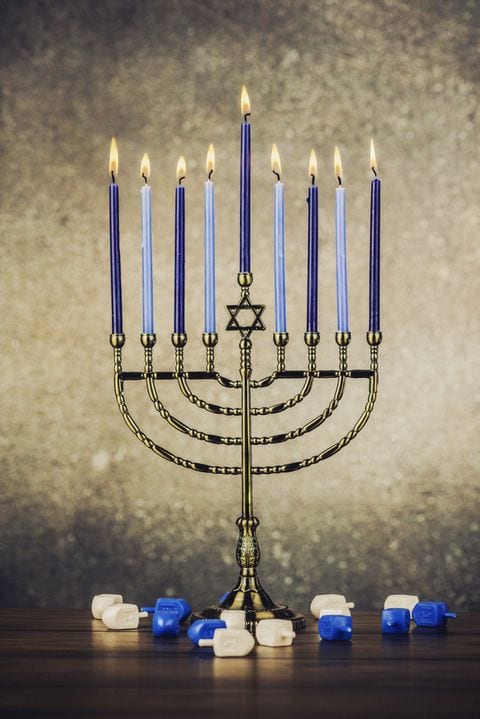
ON BECOMING SPIRITUAL ADULTS
A Hanukkah Meditation
James Ishmael Ford
29 December 2019
(A Sermon based Upon Several Earlier Efforts)
Emerson Unitarian Universalist Church
Canoga Park, California
Text
A candle is a small thing.
But one candle can light another.
And see how its own light increases,
as a candle gives its flame to the other.
You are such a light.
Moshe Davis & Victor Ratner
Once upon a time a friend who is psychic told me how I’d been a rabbi in a fairly recent past life. I liked that. A lot. Although the sad truth is, I’m goy to the bone. I still blush as I recall a school tour of a synagogue when I was nine or ten, when I asked the rabbi, as I didn’t see one anywhere else, if the arrangement of the ceiling lights was their cross?
This doesn’t mean Judaism wasn’t part of my forming consciousness. My maternal grandmother’s fundamentalist Christian theology, which meant our family’s theology included the belief that Jews are in fact God’s chosen people. This was an ideology that had two consequences for us.
The first was how important it was to convert the Jewish community. You know, get them back on the right side. Grandma was often in correspondence with various Messianic Jewish organizations, writing checks out of her very meager savings. And, second was how nice she thought it would be if we were somehow Jewish, ourselves.
Grandma put a lot of hope in her own maternal grandmother who had, she thought, a Jewish sounding name. Genetic testing that Jan and I gave each other a couple of years ago as Christmas gifts, suggests this hope is rather unlikely. Nonetheless, as I said, I liked it when my friend pronounced how I had once been a rabbi in some past life. Didn’t even matter that I don’t put much store in psychic pronouncements of any sort.
My spiritual pilgrimage began in my adolescence sparked by my serious doubts about the existence of the deity described in church, and a profound desire to know what was true. Over the years that have passed I’ve traveled a very long ways from fundamentalist Christianity and its concerns.
Still, as I’ve walked my way, and life’s journey twisted and turned and I ended up a Zen Buddhist as well as a Unitarian Universalist minister, I still found it a treat that in general it is our UU custom is to pay attention to some Jewish holidays. Honoring as we do this, our deep ancestral root. In fact, some have suggested if there are Jews for Jesus, Unitarian Universalist’s could be Christians for Moses. Well, but for the fact that these days only about twenty percent of UUs are particularly comfortable being identified as Christian.
However, nonetheless, there is that root. And there is little doubt whatever our current spiritual stance is broad. Perhaps even dangerously broad. Many, like with Gertrude Stein’s Oakland, find it hard to see the there there. Although this astonishing broadness is something in which I delight, and truthfully which allows someone like me a place in this community. Nonetheless Unitarian Universalism has several roots, including a taproot. And while I would argue the rich soil that nourishes our tradition is ancient paganism particularly as expressed in the Greek philosophical tradition, still, I have no doubt the larger part of that root is found within Judaism.
And so, I believe, it is more than helpful that we take time from time to time to look at the traditions of Judaism. Particularly the holidays. And to consider what they may say to us as contemporary religious liberals. It is a conversation with our ancestors. And you never know what can come out of such shamanic endeavors.
To be honest it can be dangerous for all who do such things. Digging into heart matters reveals much. It discovers, and then, opens doors. Doors that we are sometimes unprepared for. But with care and respect I believe there are lessons to be gleaned. And those lessons can be well worth the dangers.
Perhaps you’ve heard how someone goes to the rabbi and asks, “When is Hanukkah this year?” And she replies, “Just like every year, silly. It starts on 25h of Kislev.” For the rest of the goys out there, that’s a Jewish joke, friends. The Jewish calendar is a modified lunar calendar. If it weren’t modified, it’d be like the Muslim lunar calendar where there’s an annual drift of eleven or twelve days, and so major festivals gradually wind around the whole year.
In the Jewish calendar, there’s a bit of a float, but with little tweaks here and there which allows things to stay more or less in the same general seasonal area. And, of course, the dates are constant within that calendar. Hence, as much as I hate to explain a joke, that question, and the rabbi’s response. In our Gregorian calendar, of course, what some call the universal secular calendar, this year Hanukkah runs through the last days of December, from the 22nd to the 30th. So, this year Hanukkah ends at sundown, tomorrow.
And, with that, why Hanukkah? What’s the point to the eight days? As most of us know Hanukkah is an extremely minor holiday in the traditional Jewish calendar. It has certainly only grown here in North America because of its rough proximity to Christmas. It’s become a way for the Jewish community to celebrate the season dominated by our culture’s Christian hegemony.
Of course, that’s not the end of the matter. After that small irony of dealing with the season and its utility in standing out against Christmas, the ironies begin to pile upon each other. Especially for us, here. After all the story is, among other things, about a war between assimilationists and traditionalists. That is between religious liberals and conservatives. Actually it’s not putting too fine a point on this to say a war between liberals and fundamentalists.
Not what one would think of as a ready theme for Unitarian Universalists and our magpie religious tradition, assimilating many themes and traditions into our ever-evolving and dynamic faith. So, here’s the gateway into my point for today.
The ironies within this holiday are almost endless. For instance, many, most scholars suggest Hanukkah is in fact itself rooted in ancient pagan festivals celebrating light at the darkest time of the year. In that sense its roots are as pagan as are the roots of the Christmas holiday.
And then to compound the ironies its history of a fundamentalist victory over liberalism was first recorded by the Greek-speaking, think assimilationist, liberal Jewish community. And then preserved as part of their Holy Scripture by the early Christian community, think not their friends.
The early rabbis were wary of the Maccabees and their holiday for several reasons. But two principally. First the Maccabeean call to arms was a pyrrhic victory. Much ill would follow this revolt and its brief success. But also, the Maccabeean blending of priestly and kingly power during the brief Hasmonean dynasty whose founding is the celebration of Hanukkah, had more than a shade of resemblance to various Middle Eastern theocracies of recent history. Iran and Afghanistan come to mind. All of this should be deeply troubling if one thinks about it.
And the rabbis did think about it. And, it did trouble them. The rabbinic commentators choose to focus their attention, as limited as it actually was, remember “minor holiday.” The Reconstructionst rabbi Arthur Waskow observes, “To the rabbis, it was crucial both to call for courage and hope, and to do so in a sphere other than military resistance, which they… viewed (through the tragic lens of historic hindsight) as hopeless and dangerous and self-destructive.” A point, perhaps, for all of us to recall.
Waskow continues, “…(T)he story the rabbis told about the Light was the story of the rabbis themselves – absorbing that the Maccabees’ military victory had saved the nation, but that getting stuck there would be self-destructive. They needed to bring the Higher Consciousness of courage for Enlightenment into the people’s arsenal of spiritual ‘weaponry.’”
Higher consciousness. What should higher consciousness mean for us? Personally, I’m more inclined to the simpler word wisdom. And, I’m taken by that seeking of wisdom, which very much is in the story as the rabbis tell it. With that Hanukkah is all about our deeper calling. It becomes a calling toward our true freedom. It becomes a call into to a way of genuine wisdom. Reshaped in this way it is our heart story. It is about how we can find the light, how we can find our depth, our possibility. It opens the way of the wise heart.
And the wise heart must juggle contradictory information. Always.
The scholar and author Rachel Adelman cites columnist David Brooks’ December 10th, 2009 op-ed in the New York Times. Thee Brooks describes Hanukkah as “’the most adult of holidays. It commemorates an event in which the good guys did horrible things, the bad guys did good things and in which everybody is flummoxed by insoluble conflicts that remain with us today.’ For Brooks, the story of Hanukkah is a ‘self-congratulatory morality tale,’ commemorating a Civil War, a war in which he may have fought on the side of the Hellenizers.’”
And, there are deeper currents yet. Adelman then cites the great Jewish scholar Theodore Herzl Gaster, who “suggests that the Hanukkah story is essentially about the inalienable right to be different. The festival teaches the value of ‘the few against the many, of the weak against the strong, of passion against indifference, of the single unpopular voice against the thunder of public opinion. The struggle was not only against oppression from without but equally against corruption and complacency within. It was a struggle fought in the wilderness and in the hills; and its symbol is appropriately a small light kindled when the shadows fall.”
Both, and. If we want to be spiritual adults, if we want wisdom, we’re going to have to take our history and our myth all mixed up. Which is fine, as long as we’re respectful, careful, and engaging in all of it to a purpose.
The purpose for us is that we find the light, that one miraculous light that lasts well past any possible reasonable effort. It is the path of passion, and heart. And this is our task, as it has been the task of every soul over the many generations. To take what is given, to look deeply into the matter at hand, and to allow our very selves to be transformed. And in that transforming to become spiritual adults. To become people who can take on the work that needs to be done.
There is little doubt today that our liberal religious tradition is the minority position. We are the weak in this struggle for hearts and minds. Right now ours is the unpopular voice that is nearly lost in the thunder of public opinion. And the call for us is to a struggle. It is a struggle not only against every oppression from beyond those walls, but to fiercely resist corruption of this spirit, losing to our own complacency. That is the small light we are called to notice today, the light burning in our hearts, the light that shows the way.
I suggest this story and our working with it calls us, you and me, to resist the dying of the light. To shine forth beyond all reasonable expectations. To become, each and every one of us by our example, by our willingness to not turn away, by our challenging all authority, particularly that voice in the back of our heads that says turn away.
Each of us needs to be that small candle in the great wind. And in doing so become the miracle.
And how do we do this? Question authority, of course. Particularly our own. Looking deeply, not just to do something, but to find ourselves, and our place in the family of things. We do this and the flame we are will leap from our hearts to others.
And with that there becomes a chance for this poor, dying world.
The onetime Buddhist monk and spiritual writer Clark Strand shifts the image of that flame just a little bit, perhaps in a way that can help. He notices how we can also use as our image how the world itself is on fire, consumed in a conflagration of grasping and hatred and endless certainties. And to which we can bring a different flame, that spiritual possibility, that small light.
As Clark sings to us.
To this burning house
Of a world, I add one log
And a little light.
May this turning of the heart, of our becoming the flame of possibility become the Hanukkah flame. May it burn, and burn, transforming our own hearts, and showing this beautiful suffering world a way through.
That’s our challenge. That’s our possibility.
Previous Post

December 27, 2019
A Terrible Joy: A Reflection on Zen & Awakening in All Circumstances
Next Post
December 30, 2019 The Mad Monk Dies
Browse Our Archives
Select a Category A Christmas Carol Abolitionist African-American Ahmadiyya Alan Watts Aldous Huxley Allen Ginsberg Amedkar Jayanti American politics American Zen Anaheim Zen Sangha Anglican Annie Besant April Fool Armageddon Art and Religion artificial intellegence Atheist Awakening B R Ambedkar Barlaam & Josaphat Beatnik Between Bhagavad Gita Bible biography birthday bodhisattva Bodhisattva Precepts Book burning Book of Common Prayer Book of Mormon Brahmo Samaj Buddha Buddhism Buddhist Buddhist Lord's Prayer Butterflies Calendars cartoons cat ChatGPT Chicken Tortilla Soup choices Christian atheism Christian mysticism Christian origins Christian Science Christian Zen Christianity Christianity and Buddhism christmas Christmas Truce Christopher Isherwood Church of Later Day Saints Cinco de Mayo circus covenant critical thinking culture D. T. Suzuki Dalit Buddhism Daniel Defoe Desert Fathers and Mothers dharma talk Dogen Donald Trump Dongshan's Five Ranks Dorothy Day dream Duty Easter ecology Edwin Arnold emptiness Empty Moon Zen Network Episcopal Church Eternal Now Ethics evolution existentialism Faith fantasy Fathers Day film film review fire Five Ranks Folk music food Form and emptiness Four Seals Francis of Assisi Francis Xavier Free thinker friendship George MacDonald Gerald Heard Glenn Taylor Webb God Good Friday Gospel of Gospel of Mark Gospel of Thomas grace Graduate Theological Unioin Graduate Theological Union Guanyin H R Blyth Hakuin Ekaku Hanamatsuri Hanukkah Harada Yasutani Zen Heart Sutra Henry David Thoreau Hermann Hesse Hinduism History and Religion history of religion Holy Spirit home Hospitality Icon Ides of March Isaac Newton Islam Islamic mysticism Jack Kerouac James Luther Adams Jiddu Krishnamurti Joan of Arc Johannes Gutenberg John Donne joke Judaism justice karma kensho King James Bible koan Koun Yamada Kyoto School Lewis Carrol Liberal Christianity Liberal Religion Life Plan Community Liminal literature Literature and Religion Liturgy Lord's Prayer Love Mahatma Gandhi Mahayana Martin Luther King Jr Mary Baker Eddy Mary Magdelene Mary Oliver Mayflower Compact Meditation memories memory metaphor money money and religioin Mormons Mother's Day movie review mysticism mythic Neighborhood Unitarian Universalist Church New Thought Nichiren Buddhism Nonduality not knowing Omar Khayyam Pacific School of Religion pagan Palm Sunday Passover peace Pentecost perennialism Phantastes Philip Kapleau philosophy Pilgrimage poetry Poetry and Religion politics Prayer Precepts Printing Press prophecy prophetic spirituality psychology Pure Land Queer religion queering religion Quietism Ram Mohan Roy rebirth recipe Relationships and religion religion religion and history Religious syncretism Resistance Retirement Retreat review Rissho Kosei Kai Ritual Robert Aitken Roshi Robert Ingersoll Rohatsu Romani religion Rosie the Riveter saints samadhi SanboZen Sangha Satyagraha science science and reigion science and religion science fiction seminary sermon Sesshin Sex and Religion Shinran Sikh Sikh tradition silence Social Justice Socially Engaged Buddhism Society and religion Soto Zen soul spiritual community spiritual practice Spirituality Sufism Suicide superstition Taoism Television Teresa of Avila Thanksgiving theological schools Theosophy Thomas Merton Time Transcendentalism Transcendentalist Trinitarian Trinity Uncategorized unitarian Unitarian Christianity Unitarian Universalist Universalism Vajrayana Vedanta Walking war Willa Cather William Ellery Channing wisdom women and religion women in religion World Teacher Writing zazen Zen Zen Center Zen inspired retriement zen meditation Zen Precepts Zen women
Select a Month September 2026 August 2026 July 2026 June 2026 May 2026 April 2026 March 2026 February 2026 January 2026 December 2025 November 2025 October 2025 September 2025 August 2025 July 2025 June 2025 May 2025 April 2025 March 2025 February 2025 January 2025 December 2024 November 2024 October 2024 September 2024 August 2024 July 2024 June 2024 May 2024 April 2024 March 2024 February 2024 January 2024 December 2023 November 2023 October 2023 September 2023 August 2023 July 2023 June 2023 May 2023 April 2023 March 2023 February 2023 January 2023 December 2022 November 2022 October 2022 September 2022 August 2022 July 2022 June 2022 May 2022 April 2022 March 2022 February 2022 January 2022 December 2021 November 2021 October 2021 September 2021 August 2021 July 2021 June 2021 May 2021 April 2021 March 2021 February 2021 January 2021 December 2020 November 2020 October 2020 September 2020 August 2020 July 2020 June 2020 May 2020 April 2020 March 2020 February 2020 January 2020 December 2019 November 2019 October 2019 September 2019 August 2019 July 2019 June 2019 May 2019 April 2019 March 2019 February 2019 January 2019 December 2018 November 2018 October 2018 September 2018 August 2018 July 2018 June 2018 May 2018 April 2018 March 2018 February 2018 January 2018 December 2017 November 2017 October 2017 September 2017 August 2017 July 2017 June 2017 May 2017 April 2017 March 2017 February 2017 January 2017 December 2016 November 2016 October 2016 September 2016 August 2016 July 2016 June 2016 May 2016 April 2016 March 2016 February 2016 January 2016 December 2015 November 2015 October 2015 September 2015 August 2015 July 2015 June 2015 May 2015 April 2015 March 2015 February 2015 January 2015 December 2014 November 2014 October 2014 September 2014 August 2014 July 2014 June 2014 May 2014 April 2014 March 2014 February 2014 January 2014 December 2013 November 2013 October 2013 September 2013 August 2013 July 2013 June 2013 May 2013 April 2013 March 2013 February 2013 January 2013 December 2012 November 2012 October 2012 September 2012 August 2012 July 2012 June 2012 May 2012 April 2012 March 2012 February 2012 January 2012 December 2011 November 2011 October 2011 September 2011 August 2011 July 2011 June 2011 May 2011 April 2011 March 2011 February 2011 January 2011 December 2010 November 2010 October 2010 September 2010 August 2010 July 2010 June 2010 May 2010 April 2010 March 2010 February 2010 January 2010 December 2009 November 2009 October 2009 September 2009 August 2009 July 2009 June 2009 May 2009 April 2009 March 2009 February 2009 January 2009 December 2008 November 2008 October 2008 September 2008 August 2008 July 2008 June 2008 May 2008 April 2008 March 2008 February 2008 January 2008 December 2007 November 2007 October 2007 September 2007 August 2007 July 2007 June 2007 May 2007 April 2007 March 2007 February 2007 January 2007 December 2006 November 2006 October 2006 September 2006
Follow Us!
TAKE THE
Religious Wisdom Quiz
True or False: The parable of the Good Samaritan is found in all four Gospels.
Select your answer to see how you score.
TRUE FALSE
Related posts from Monkey Mind
A Zen meditation in the middle of Hanukkah
That holy spirit, always resting wherever it wishes
TRENDING AT PATHEOS Buddhist

'Super Scam Me' Exposes AI Jon Bon Jovi...
Leslie Pickett believed she was in a relationship with Jon Bon Jovi....

The Brazilian Remake of Kendricks' 'Flywheel' Opens in...
“Flywheel,” the story that launched the Kendrick Brothers’ filmmaking career is getting...

The Dangers of Gradual Accommodation (Winking at Sin)
Recently, the “law of gradualness” resurfaced during the opening of a weeklong,...

The Iron Gates and the Lion of the...
Yesterday, I didn't finish my report about, well, yesterday. So I'll...

The Image: On the Horror of Capitalism and...
The Image Then went the Pharisees, and took counsel how they might...

We are approaching the date of our new American national holiday: October...
view all Buddhist blogs
Ad-Free & Subscriber Log-In Subscription Support
- About Us
- 2026 Calendar
- Videos
- Podcasts
- Library of World Religions
- Faith In Media Tracker
- Advertise With Us
- Write for Us
- Privacy Policy
- Terms of Service
- Do Not Sell My Data
- Contact Us
- Radiant Digital
- Manage Newsletter Subscriptions
- Unsubscribe From Notifications
- Sitemap
Copyright 2008-2026, Patheos. All rights reserved.
Subscription Support Ad-Free & Subscriber Log-In
Follow Patheos