
BuddhistCatholicContemplativeEvangelicalGeneral ChristianHinduJewishLatter-day SaintMuslimNew VisionsProgressive Christian
Beliefs
- Buddhist
- Catholic
- Contemplative
- Evangelical
- General Christian
- Hindu
- Jewish
- Latter-day Saint
- More Voices
- Muslim
- New Visions
- Pagan
- Progressive Christian
Topics
- Religion News
- Food and Religion
- Sports and Religion
- Religious Art
- Religious Music and Entertainment
- Religious Events
- History and Religion
- Style and Religion
- Politics and Religion
- Women in Religion
- Recreation Outdoors and Religion
- Business Finance and Religion
- Careers Workplace and Religion
- Education and Religion
- Family Parenting and Religion
- Health Fitness and Religion
- Home and Religion
- Relationships and Religion
- Technology and Religion
- Travel and Religion
Columnists
- Buddhist Columnists
- Business Finance and Religion Columnists
- Careers Workplace and Religion Columnists
- Catholic Columnists
- Contemplative Columnists
- Education and Religion Columnists
- Evangelists Columnists
- Family Parenting and Religion Columnists
- General Christian Columnists
- Health Fitness and Religion Columnists
- Hindu Columnists
- History and Religion Columnists
- Home and Religion Columnists
- Jewish Columnists
- More Voices Columnists
- Latter Day Columnists
- Muslim Columnists
- New Visions Columnists
- Nonreligious Columnists
- Pagan Columnists
- Politics and Religion Columnists
- Progressive Columnists
- Recreation Outdoors and Religion Columnists
- Relationships and Religion Columnists
- Religion News Columnists
- Religious Art Columnists
- Religious Events Columnists
- Religious Music and Entertainment Columnists
- Sports and Religion Columnists
- Style and Religion Columnists
- Technology and Religion Columnists
- Travel and Religion Columnists
- Women in Religion Columnists
Resource Library
- 2026 Calendar
- Library of World Religions
- The 100 Most Holy Places on Earth
- Patheos Answers
- Podcasts
- Videos
- Faith Leaders Database
- Anglican Episcopalian
- Bahai
- Baptist
- Buddhism
- Christianity
- Confucianism
- Eastern Orthodoxy
- Hinduism
- Holiness and Pentecostal
- ISKCON
- Islam
- Judaism
- Lutheran
- Methodist
- The Church of Jesus Christ of Latter-day Saints
- New Age
- Paganism
- Presbytarian and Reformed
- Protestantism
- Religion Behind the Scenes
- Roman Catholic
- Scientology
- Shia Islam
- Sikhism
- Sufism
- Sunni Islam
- Taoism
- Zen
- See all religions
Research Tools
 Ad-Free & Subscriber Log-In Subscription Support
Ad-Free & Subscriber Log-In Subscription Support
Follow Patheos 

- Trending:
- Forgiveness
- |
- Marriage
- |
- Consciousness
- |
- Death Penalty
- |
- Election
- |
- Halloween

- Home
- Buddhist
- Six Markers of a Modernist Buddhism
Six Markers of a Modernist Buddhism
Last updated on: July 25, 2019 at 5:01 pm by James Ford
Six Markers of a Modernist Buddhism 2019-07-25T17:01:22-07:00 James Ford
Patheos Explore the world's faith through different perspectives on religion and spirituality! Patheos has the views of the prevalent religions and spiritualities of the world.
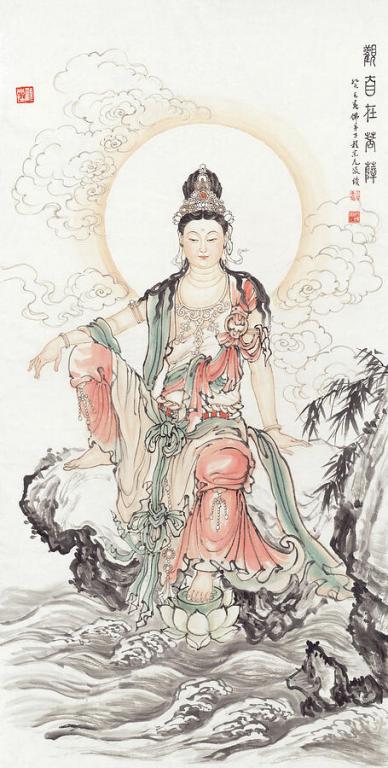
Six Markers of a Modernist Buddhism
James Myoun Ford
Buddhisms, Ancient & Modern
There I was, on Facebook, when I was pointed to an article that purported to compare “traditional” Buddhism with “secular” Buddhism. The author appeared to belong to a Traditionalist school of one sort or another, and, interestingly, to me, at least, is also a pretty far right person politically, identifying, it appears with the alt-right.
This generated several trains of thought for me. One has to do with Traditionalism and how it appears to be co-opted on occasion by rightists of various sorts. Some of them pretty reprehensible. Personally, I find this unsettling and challenging.
Particularly as I consider Perennialism, and in particular Traditionalism do have much to offer. But with a warning, perhaps, to take everything cautiously. And in matters like religion and spirituality to bring both our heart and our mind to the project. That later point, of course, is a hallmark of the modernist schools of Buddhism, which the author was criticizing under the thinnest of veneers of comparison.
At the same time the part I found most interesting was a list of differences between what the author thought of as the new-age sympathetic bleeding-heart liberal nonsense held by “secularists” and those positions held by real Buddhists. Here I thought the major problem with the putative comparison was its reductionism. It assumed one kind of modernist Buddhism and seemed to represent one kind of “traditional” Buddhism. It wasn’t clear to me which, although I suspected some form of Vajrayana.
The reality, however, is that there has never been a singular Buddhism. Rather there have always, even from before the sutras were written down, Buddhisms. Plural. Finally, the screed ended with a rather odd assertion that the real, I mean traditional Buddhists were interested in respect across the perspectives, while the unwashed were, well, not.
I found the essay wasn’t particularly useful. Although I was taken with the list of issues.These are areas worth looking at for anyone hoping to understand how a modernist Buddhism distinguishes itself from more traditional models. Hardly complete, but worthy.
The six markers of a modernist Buddhism. Karma and rebirth, understanding of the nature of the Buddha, psychology, approach to sacred texts, and the nature of and relationship with teachers. To which I will add a seventh, a critical omission in the original offering, the emphasis on lay or non-monastic practice.
Let’s take these one at a time.
Karma and rebirth
This is without a doubt the big issue. Everything else follows this shift in understanding. I recall all these years ago reading John Blofeld’s introduction to the Son monk Stephen Batchelor’s lovely book Alone With Others. In it Blofeld, a beloved figure in early convert Buddhism, writing how he was so impressed with the monk’s book.
However, he wished that Batchelor had addressed karma and rebirth, understanding that one cannot cover everything in a book, particularly one as focused as this was. And, well, then, some years later now former monk Stephen Batchelor offered his view of karma and rebirth in his book Buddhism Without Beliefs. It would become the first great intellectual volley of modernist Buddhisms, whether religious or secular.
Here we do indeed see the principal shift from the traditional Buddhisms, and that is a plural, and something new. It turns on the soteriological project, that is the doctrine of salvation. In the oldest strata of Buddhisms it seems pretty clear the concern was based in a belief that we are chained to a cycle of endless rebirths, the experience of which is endless personal suffering. To put it simply, although tottering toward simplistic, through finding right view we can be liberated from this cycle, breaking it all, and passing into nirvana. The process itself for most forms of Buddhism takes many life times, usually over vast amounts of time. While there are challenges to this within the emerging spiritualities of Chinese Buddhism and the schools that derive through China, it definitely is with modernity that a clearly asserted, or rather several clearly asserted variations are offered.
A marker of all modernist Buddhisms, I believe, whether they identify as secular or religious (and I fit into that later, “religious” category, thanks for asking), have to do with an assumption that the play of causality, while true, and tied in with the larger understanding of the “marks of existence” that everything is impermanent, and that nothing has an inherent substance, and that clinging to that which is passing is on the face of it hurtful; it all plays out in this one life. We are birthed out of the conditions of existence, live, and then as we die, it all falls apart. There is no extra or after for most modernist Buddhists.
So, that saving project for the modernist is about how we experience this one life. For one end of the modernist spectrum this is “psychological,” a way to endure the tension of existence. For the religious modernist, however, psychological doesn’t fully define the experience. And, here I find myself taking the most objection to what seems on the face of it a simplistic collapsing of the modernist project into a straw man version of some bare materialism.
Modernist or naturalistic Buddhisms are complex and approach the great matter in a number of ways. There is indeed a reductionist approach by some. But to say that approaching the matter naturalistically is merely reductionist is itself simplistic. And hardly universal.
Understanding of the Buddha
There have been a great variety of understandings of who and what the Buddha is over the many years of Buddhism’s existence. In its most “primitive” or maybe “original” use, the Buddha is a title for the human person Gautama Siddhartha. The word means awakened. And the Buddha is someone who has awakened to the fundamental insights described in the four noble truths, and who has won liberation from the cycle of rebirths. It would in the Mahayana come to be a title for a variety of teachers, mostly outside of history, who represent awakening in the past or future or in other realms. The word can also be used to mean the awakened state itself.
What the word Buddha means must be asked of advocates of every specific school. And the answer will not be the same.
I would say that for the range of modernist Buddhists the word is usually the title for the historic teacher, but often, particularly for the religious modernist, it also points to a state of consciousness, or even the sum total of reality which may be apprehended in some manner by human beings.
Psychology
As Buddhism has entered the world’s cultures it has always engaged in a dialogue, rich and mutually transformative with the indigenous religions it encounters. The most dramatic example would be when Indian Buddhism moved to China where it encountered a culture fully as old and as established as Indian, as well as spiritual traditions well developed and nuanced. For us in the West the meeting of Indian Buddhism and Chinese religion, particularly Daoism and to a lesser degree Confucianism birthed what we call Zen. Pretty important to me.
And there is no doubt there have been some rich conversations in modernity out of the meetings between Buddhism and Islam and Judaism, and most of all with Christianity. But, rather unexpectedly, considering the history of religious encounter, the most powerful, and potentially fruitful, and no doubt, dangerous dialogue has been with western psychology.
Of course, Buddhism has always been deeply interested in the mind. With the Abhidharma , an extremely early attempt to systematize the Buddha’s teachings, Buddhism ended up offering the world’s first attempt at a systematic psychology. And now in the contemporary West with its own sophisticated psychological models, something rich is going on. It is an encounter that includes both more traditional Buddhisms as well as the rich varieties that might best be categorized as modernist.
Approach to spiritual texts
There is a wild variety of approaches to the sutras, literally “sacred thread” that constitute the sacred texts of Buddhism. The Pali Nikaya texts attempt to present the actual teachings of the Buddha of history. How successfully, who knows? The texts themselves are written down hundreds of years, no less than two hundred, and possibly four hundred years after they were uttered and in a completely different language. Then there are the Mahayana texts in Sanskrit another cognate but not the ordinal language of the Buddha of history.
How to approach these voluminous libraries is a conundrum.
For Theravadans, the answer is to attend narrowly to those Nikaya texts that purport to be the teachings of the historic Buddha. For those in the various Mahayana schools the problem is how to order that astonishing array of texts. In China various attempts at ordering them have helped, and depending on one’s tastes, one or a small cluster of texts are given primacy.
For those within the modernist schools, well, it all depends. For some, particularly those who fit into the secular spectrum the oldest strata, the texts attributed to the Buddha of history are generally given primacy. For modernists of either Zen or Pure Land inclinations, there are other places to focus one’s attention. For me the koan anthologies, mostly those of the twelfth and thirteenth century as well as later compendiums like the eighteenth century collection Entangling Vines, are where I give most attention together with writers like Hakuin Ekaku and Eighei Dogen.
None of these texts, however, for me, other other modernists, I suspect, are above critical analysis. While a number of modernist Buddhists give the texts little attention, that’s true of Buddhists in general. Those who give their attention to the sacred writings are a smaller subset of those interested in the religion.
The modernist approach is heavily influenced by Christian textual analysis along with the important assumption that these documents are written by human beings and subject to errors. This academic approach is in fact not that much different for more traditionalist and modernist Buddhists of all schools, just as for mainstream Christians whether liberal or conservative. All assume the validity of textual analysis.
One an argue this reflects the general bias toward critical engagement that might be seen as the spirit of our age. Although it is at the same time very much a hall mark of all the modernist Buddhisms.
Teachers and the Problems of Authority
Buddhism presents with a pretty clear hierarchy. Monks are at the top. Then nuns. Then lay people. The lay teacher is a relatively rare figure in traditional Buddhisms. Within Theravadan Buddhism authority rests pretty much exclusively within the ordained sangha, and more specifically among the monks. One sees more emphasis on the possibility of lay teachers in the Mahayana particularly with the introduction of a popular sutra focused on the wisdom of a layman. For those within modernist schools, probably there are any number of possible authorities, ranging from academics to meditation masters to people who’ve walked the way for many years and with or without formal authorizations have come to be regarded as wise guides.
As a Zen person of modernist sensibilities, I know I want someone who teachers to a) have extensive training, and b) to have received some generally accepted authorizations within the tradition. Formal titles by themselves mean little. But people who’ve actually practiced for many years, and have received authorizations within those generally recognized traditions, me, I assume have something to offer. Unless, of course, something presents that leads me to think otherwise.
So, extending that out, I’d say for the modernist of whatever school authority is mostly earned. Designated authority should be noted. But, the proof of the pudding is in that actual encounter. Do they live up to the advertising? For me in general this approach is a good idea. As one politician once observed, trust, but verify.
The Modernist Emphasis on Lay Practice
In many ways this probably should precede the question of authority or teachers. Because the issue turns on who practices? In most forms of Buddhism over the many years practice, particularly the disciplines of meditation were nearly exclusively the project of the ordained community. In the West probably the first steps in the birthing of a distinctive modernist school was not the theological or spiritual challenge to karma and rebirth. But, rather the challenge came in who practiced.
A number of Westerners have ordained, particularly over the years in the Zen schools of Japan with its own aberrant ordination models. But few in the West have felt remaining a lay person meant one could not practice. And, with this, there was also an instant gender equality that does not exist in any traditional forms of Buddhism. Although like with several other forms of Buddhism mentioned here, it is nearly impossible to find some absolute point where there is a “traditional” Buddhism to compare and contrast with a “modernist” Buddhism. There are always Buddhisms, plural, and it appears always exceptions to anyone’s rules.
Clericalism and sexism runs rife through traditional Buddhism. Nuns are nominally more important than lay people. But barely. And in some parts of the Buddhist world even full traditional ordination is denied women. In modernist Buddhisms the “spirit of our age” has prevailed and I cannot at this writing think of a modernist version of Buddhism that does not assume the full equality of women. And with that the questions of the full acceptance of LGBTQ people rise. In traditional Buddhisms there is a general disease with any form of sexuality, although there have been various interesting accommodations over the years.
In modernist forms of Buddhism this is that most distinctive feature, the flattening of all hierarchies.
Previous Post

July 23, 2019
Zen: Revisiting an Early Book by Alan Watts
Next Post
July 28, 2019 I find myself thinking of Margot Adler
Browse Our Archives
Select a Category A Christmas Carol Abolitionist African-American Ahmadiyya Alan Watts Aldous Huxley Allen Ginsberg Amedkar Jayanti American politics American Zen Anaheim Zen Sangha Anglican Annie Besant April Fool Armageddon Art and Religion artificial intellegence Atheist Awakening B R Ambedkar Barlaam & Josaphat Beatnik Between Bhagavad Gita Bible biography birthday bodhisattva Bodhisattva Precepts Book burning Book of Common Prayer Book of Mormon Brahmo Samaj Buddha Buddhism Buddhist Buddhist Lord's Prayer Butterflies Calendars cartoons cat ChatGPT Chicken Tortilla Soup choices Christian atheism Christian mysticism Christian origins Christian Science Christian Zen Christianity Christianity and Buddhism christmas Christmas Truce Christopher Isherwood Church of Later Day Saints Cinco de Mayo circus covenant critical thinking culture D. T. Suzuki Dalit Buddhism Daniel Defoe Desert Fathers and Mothers dharma talk Dogen Donald Trump Dongshan's Five Ranks Dorothy Day dream Duty Easter ecology Edwin Arnold emptiness Empty Moon Zen Network Episcopal Church Eternal Now Ethics evolution existentialism Faith fantasy Fathers Day film film review fire Five Ranks Folk music food Form and emptiness Four Seals Francis of Assisi Francis Xavier Free thinker friendship George MacDonald Gerald Heard Glenn Taylor Webb God Good Friday Gospel of Gospel of Mark Gospel of Thomas grace Graduate Theological Unioin Graduate Theological Union Guanyin H R Blyth Hakuin Ekaku Hanamatsuri Hanukkah Harada Yasutani Zen Heart Sutra Henry David Thoreau Hermann Hesse Hinduism History and Religion history of religion Holy Spirit home Hospitality Icon Ides of March Isaac Newton Islam Islamic mysticism Jack Kerouac James Luther Adams Jiddu Krishnamurti Joan of Arc Johannes Gutenberg John Donne joke Judaism justice karma kensho King James Bible koan Koun Yamada Kyoto School Lewis Carrol Liberal Christianity Liberal Religion Life Plan Community Liminal literature Literature and Religion Liturgy Lord's Prayer Love Mahatma Gandhi Mahayana Martin Luther King Jr Mary Baker Eddy Mary Magdelene Mary Oliver Mayflower Compact Meditation memories memory metaphor money money and religioin Mormons Mother's Day movie review mysticism mythic Neighborhood Unitarian Universalist Church New Thought Nichiren Buddhism Nonduality not knowing Omar Khayyam Pacific School of Religion pagan Palm Sunday Passover peace Pentecost perennialism Phantastes Philip Kapleau philosophy Pilgrimage poetry Poetry and Religion politics Prayer Precepts Printing Press prophecy prophetic spirituality psychology Pure Land Queer religion queering religion Quietism Ram Mohan Roy rebirth recipe Relationships and religion religion religion and history Religious syncretism Resistance Retirement Retreat review Rissho Kosei Kai Ritual Robert Aitken Roshi Robert Ingersoll Rohatsu Romani religion Rosie the Riveter saints samadhi SanboZen Sangha Satyagraha science science and reigion science and religion science fiction seminary sermon Sesshin Sex and Religion Shinran Sikh Sikh tradition silence Social Justice Socially Engaged Buddhism Society and religion Soto Zen soul spiritual community spiritual practice Spirituality Sufism Suicide superstition Taoism Television Teresa of Avila Thanksgiving theological schools Theosophy Thomas Merton Time Transcendentalism Transcendentalist Trinitarian Trinity Uncategorized unitarian Unitarian Christianity Unitarian Universalist Universalism Vajrayana Vedanta Walking war Willa Cather William Ellery Channing wisdom women and religion women in religion World Teacher Writing zazen Zen Zen Center Zen inspired retriement zen meditation Zen Precepts Zen women
Select a Month September 2026 August 2026 July 2026 June 2026 May 2026 April 2026 March 2026 February 2026 January 2026 December 2025 November 2025 October 2025 September 2025 August 2025 July 2025 June 2025 May 2025 April 2025 March 2025 February 2025 January 2025 December 2024 November 2024 October 2024 September 2024 August 2024 July 2024 June 2024 May 2024 April 2024 March 2024 February 2024 January 2024 December 2023 November 2023 October 2023 September 2023 August 2023 July 2023 June 2023 May 2023 April 2023 March 2023 February 2023 January 2023 December 2022 November 2022 October 2022 September 2022 August 2022 July 2022 June 2022 May 2022 April 2022 March 2022 February 2022 January 2022 December 2021 November 2021 October 2021 September 2021 August 2021 July 2021 June 2021 May 2021 April 2021 March 2021 February 2021 January 2021 December 2020 November 2020 October 2020 September 2020 August 2020 July 2020 June 2020 May 2020 April 2020 March 2020 February 2020 January 2020 December 2019 November 2019 October 2019 September 2019 August 2019 July 2019 June 2019 May 2019 April 2019 March 2019 February 2019 January 2019 December 2018 November 2018 October 2018 September 2018 August 2018 July 2018 June 2018 May 2018 April 2018 March 2018 February 2018 January 2018 December 2017 November 2017 October 2017 September 2017 August 2017 July 2017 June 2017 May 2017 April 2017 March 2017 February 2017 January 2017 December 2016 November 2016 October 2016 September 2016 August 2016 July 2016 June 2016 May 2016 April 2016 March 2016 February 2016 January 2016 December 2015 November 2015 October 2015 September 2015 August 2015 July 2015 June 2015 May 2015 April 2015 March 2015 February 2015 January 2015 December 2014 November 2014 October 2014 September 2014 August 2014 July 2014 June 2014 May 2014 April 2014 March 2014 February 2014 January 2014 December 2013 November 2013 October 2013 September 2013 August 2013 July 2013 June 2013 May 2013 April 2013 March 2013 February 2013 January 2013 December 2012 November 2012 October 2012 September 2012 August 2012 July 2012 June 2012 May 2012 April 2012 March 2012 February 2012 January 2012 December 2011 November 2011 October 2011 September 2011 August 2011 July 2011 June 2011 May 2011 April 2011 March 2011 February 2011 January 2011 December 2010 November 2010 October 2010 September 2010 August 2010 July 2010 June 2010 May 2010 April 2010 March 2010 February 2010 January 2010 December 2009 November 2009 October 2009 September 2009 August 2009 July 2009 June 2009 May 2009 April 2009 March 2009 February 2009 January 2009 December 2008 November 2008 October 2008 September 2008 August 2008 July 2008 June 2008 May 2008 April 2008 March 2008 February 2008 January 2008 December 2007 November 2007 October 2007 September 2007 August 2007 July 2007 June 2007 May 2007 April 2007 March 2007 February 2007 January 2007 December 2006 November 2006 October 2006 September 2006
Follow Us!
TAKE THE
Religious Wisdom Quiz
Who was cast out with her son Ishmael?
Select your answer to see how you score.
Dinah Lot's wife Hagar Rebekah
Related posts from Monkey Mind
Recalling D. T. Suzuki & his Zen Buddhism
A Small Meditation on Buddhisms, Traditional and Modernist

Great Awakenings: A Small Zen Meditation on Hope...

My Uncertainty Principle: A Modernist, Or, Perhaps Its...
TRENDING AT PATHEOS Buddhist

Nearly every morning, I make the drive to Detroit with my high-school-age...

The Real AI Story Is Adoption Without Trust
Artificial intelligence has crossed a political threshold. It is no longer a...

A new article, written by Jeff Lindsay and Gale L. Pooley,...

Swimfan: Forgotten Aughts Pleasures
This is a recovery effort. In 2002, My Big Fat Greek Wedding...

Top Three Anti-Catholic Lies About Catholicism
This is my initial transcript for the video, "THE 3 WORST...

Pope Leo Celebrates Mass for Nurses & Docs...
I don't have any idea how he did it, but Pope Leo...
view all Buddhist blogs
Ad-Free & Subscriber Log-In Subscription Support
- About Us
- 2026 Calendar
- Videos
- Podcasts
- Library of World Religions
- Faith In Media Tracker
- Advertise With Us
- Write for Us
- Privacy Policy
- Terms of Service
- Do Not Sell My Data
- Contact Us
- Radiant Digital
- Manage Newsletter Subscriptions
- Unsubscribe From Notifications
- Sitemap
Copyright 2008-2026, Patheos. All rights reserved.
Subscription Support Ad-Free & Subscriber Log-In
Follow Patheos