
BuddhistCatholicContemplativeEvangelicalGeneral ChristianHinduJewishLatter-day SaintMuslimNew VisionsProgressive Christian
Beliefs
- Buddhist
- Catholic
- Contemplative
- Evangelical
- General Christian
- Hindu
- Jewish
- Latter-day Saint
- More Voices
- Muslim
- New Visions
- Pagan
- Progressive Christian
Topics
- Religion News
- Food and Religion
- Sports and Religion
- Religious Art
- Religious Music and Entertainment
- Religious Events
- History and Religion
- Style and Religion
- Politics and Religion
- Women in Religion
- Recreation Outdoors and Religion
- Business Finance and Religion
- Careers Workplace and Religion
- Education and Religion
- Family Parenting and Religion
- Health Fitness and Religion
- Home and Religion
- Relationships and Religion
- Technology and Religion
- Travel and Religion
Columnists
- Buddhist Columnists
- Business Finance and Religion Columnists
- Careers Workplace and Religion Columnists
- Catholic Columnists
- Contemplative Columnists
- Education and Religion Columnists
- Evangelists Columnists
- Family Parenting and Religion Columnists
- General Christian Columnists
- Health Fitness and Religion Columnists
- Hindu Columnists
- History and Religion Columnists
- Home and Religion Columnists
- Jewish Columnists
- More Voices Columnists
- Latter Day Columnists
- Muslim Columnists
- New Visions Columnists
- Nonreligious Columnists
- Pagan Columnists
- Politics and Religion Columnists
- Progressive Columnists
- Recreation Outdoors and Religion Columnists
- Relationships and Religion Columnists
- Religion News Columnists
- Religious Art Columnists
- Religious Events Columnists
- Religious Music and Entertainment Columnists
- Sports and Religion Columnists
- Style and Religion Columnists
- Technology and Religion Columnists
- Travel and Religion Columnists
- Women in Religion Columnists
Resource Library
- 2026 Calendar
- Library of World Religions
- The 100 Most Holy Places on Earth
- Patheos Answers
- Podcasts
- Videos
- Faith Leaders Database
- Anglican Episcopalian
- Bahai
- Baptist
- Buddhism
- Christianity
- Confucianism
- Eastern Orthodoxy
- Hinduism
- Holiness and Pentecostal
- ISKCON
- Islam
- Judaism
- Lutheran
- Methodist
- The Church of Jesus Christ of Latter-day Saints
- New Age
- Paganism
- Presbytarian and Reformed
- Protestantism
- Religion Behind the Scenes
- Roman Catholic
- Scientology
- Shia Islam
- Sikhism
- Sufism
- Sunni Islam
- Taoism
- Zen
- See all religions
Research Tools
 Ad-Free & Subscriber Log-In Subscription Support
Ad-Free & Subscriber Log-In Subscription Support
Follow Patheos 

- Trending:
- Forgiveness
- |
- Marriage
- |
- Consciousness
- |
- Death Penalty
- |
- Election
- |
- Halloween

- Home
- Buddhist
- Covenant As Unitarian Universalism’s Great Spiritual Discipline
Covenant As Unitarian Universalism’s Great Spiritual Discipline
Last updated on: May 19, 2019 at 12:00 pm by James Ford
Covenant As Unitarian Universalism’s Great Spiritual Discipline 2019-05-19T08:27:57-07:00 James Ford
Patheos Explore the world's faith through different perspectives on religion and spirituality! Patheos has the views of the prevalent religions and spiritualities of the world.
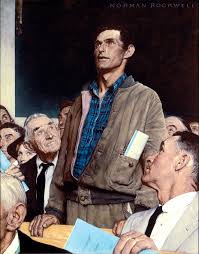
IN THE PRESENCE OF GOD, AND ONE OF ANOTHER
A Meditation on Covenant as Spiritual Practice Among Unitarian Universalist Congregations
James Ishmael Ford
Delivered at the
Unitarian Universalist Church in Anaheim
19 May 2019
Text
… In the name of God, Amen. We whose names are under-written, the loyal subjects of our dread sovereign Lord, King James, by the grace of God, of Great Britain, France, and Ireland King, Defender of the Faith, etc. Having undertaken, for the glory of God, and advancement of the Christian faith, and honor of our King and Country, a voyage to plant the first colony in the northern parts of Virginia, do by these presents solemnly and mutually, in the presence of God, and one of another, covenant and combine our selves together into a civil body politic, for our better ordering and preservation and furtherance of the ends aforesaid; and by virtue hereof to enact, constitute, and frame such just and equal laws, ordinances, acts, constitutions and offices, from time to time, as shall be thought most meet and convenient for the general good of the Colony, unto which we promise all due submission and obedience. In witness whereof we have hereunder subscribed our names at Cape Cod, the eleventh of November [New Style, November 21], in the year of the reign of our sovereign lord, King James, of England, France, and Ireland, the eighteenth, and of Scotland the fifty-fourth. Anno Dom. 1620.
Mayflower Compact as Recorded by William Bradford
Later today we will be gathering for our annual congregational meeting. Perhaps you hear that word “meeting’ and, like me, might feel slightly queasy. I’ve attended a lot of meetings in my time. And, well, often I would rather be almost anywhere else. They can and too often do run over long. They can be mind-numbing boring. Or, infuriating. Often some combination. They can swerve at a moment’s notice down some rabbit hole, and then turning on a dime, drop into another. And after all that work and effort, too often, well, there’s not a ton of result.
Yes, to all of that.
And, there is something more. Or, can be. Especially, I suggest for us as Unitarian Universalists, standing in that most amazing tradition called congregationalism. It’s the system of church governance that says you, the members of this church, you’re in charge. For good and for ill, you’re in charge. You own this building. You hire, and I don’t like emphasizing this, you fire your minister at your will. You’re responsible for raising the money for your upkeep. And you create your own budgets. No bishops. No elders from some other place telling you what you must do.
This is congregationalism. And, well, there’s a lot to it. Let me tell you a story.
On November 11th, 1620, after more than two months hard sailing, including one death and one birth, the Mayflower and its largely Pilgrim passengers touched land at Cape Cod. This was far afield from the mouth of the Hudson River where the settlers had a Royal patent or charter to establish their colony. They sailed just a little way up the coast and uninterested in continuing the journey any farther, decided to establish themselves at what we now call Plymouth, Massachusetts.
While their days were devoted to building houses, at night they returned to the safety of their ship continuing to live in the crowded, dark, and damp cargo hold that had been their home since the beginning of the trip. In that place they did something amazingly radical.
Their original patent that legal document for establishing a colony, had no legal force here, where they actually decided to settle. While they would request another charter, they were also aware of many potential difficulties. Their band was a mix as I mentioned mostly of Pilgrims who had separated from the Church of England, but also a solid minority of Puritans who had very similar views as the Pilgrims but who had not separated from the established church. Neither were particularly popular back home.
As they drew up their document they used as their model a church covenant, itself patterned on the ancient Jewish mythical covenant of Israel with God. Of the one hundred and two passengers, we believe forty-one of them, representing the large majority of the male passengers, including all save one of the freemen, three of the hired workers, and two of the nine servants, all signed the document. It was ten days after they had arrived, November 21st.
The document has come to be known as the Mayflower Compact. Its consequences have played out in many directions. Most see in the Compact one of the inspirations, and really, it’s hard to miss it as the principal source for our Declaration of Independence as well as our American Constitution.
While the course of European history had largely been based on the subjection of the weak by the powerful, this radical idea of social contract, the idea that people should gather together in some equal way was beginning to be whispered across the European continent. And now it had actually happened. With this simple act, a spark was definitely struck.
And yes, there are nuances to be recalled. Principal of which were two things. Women did not have a say. And, that their little colony already had people occupying the land. This needs to be noted. Also, implicit within that sense of taking land from people deemed inferior or unworthy was a slowly germinating seed of an evil that would allow slavery. That said, and then folded into the whole mix of who we are reveals something much more complex and, you know, more powerful than any narrative that excludes the wounds and hurts, and the contributions that continue to inform what is, shifting and changing, and lurching along creating an ever more perfect union.
Bottom line: there was a spark of some amazing fire struck in the hold of that small ship. Something that brought hope to many people over the many ages. And. And, what is most important for us here in this Unitarian Universalist congregation, today, is how that document, while very much the ancestor of our whole democratic way of life – it was also at its heart a spiritual document that would in good time lead to us. Talk about unintended consequences.
In the years that followed in New England the sometimes implicit, sometimes explicit Enlightenment principles of freedom and reason and tolerance would follow that idea of covenant like the bright day follows the dawn. Those old Calvinists could never have dreamed as they banded together in the dank, dark hold of that ship and created a covenant of mutuality that they would birth such a radical religious idea as would become us, Unitarian Universalists. But they did. And here we are, their most unlikely descendants.
Now it should be noted there are other unitarianisms around the globe that do not depend upon a congregational polity with mutuality as its guiding institutional principle, to uphold individual freedom – the Unitarians of Great Britain and Ireland both maintain presbyterian polities, rule by elders, and Hungarian speaking Unitarians maintain modified episcopal polities, with that monarchal like rule of bishops, modified, of course. Modified. And, this is important; all these unitarianisms have to one degree or another a sense of the preciousness of the individual as central to their spiritualities.
But this is how it happened here. And how this happened in America and how covenant became so central has had substantial consequences of emphasis and eventually come to be at the very heart of our unique spirituality. Today our liberal faith is the heir to a radical congregationalism, rooted vastly more in covenant than in creed, which is a statement of faith that one must subscribe to in order to belong.
From very near the beginning of our Unitarian Universalist tradition we rejected creedal assertions in defining ourselves. We have felt the spirit was free and so human beings should also be free. And rather than finding some formula of belief that people needed to adhere to in order to belong to one of our congregations, we instituted covenants.
For us a covenant was, as we can see in the Mayflower document, originally a three-way contract, inspired by the founding myth of Judaism as a covenant between God and with and among a people. For us the covenant became a contract made between people, between you and me, and, and this is important, before that larger out of which we take our being, within which we live, and to which we shall in time return.
Many, although by no means all of us prefer not to use that freighted word God to describe this larger of which we are part. But, truthfully all words, be it God, the cosmos, the world, Gaia, interdependent web; they all fall short of the reality of this intuition of our hearts. But however we name it, or resist naming it, we do acknowledge within our covenant that you and I are standing before, coming out of, standing within, again the language fails, but in this covenant we see ourselves as part of something larger, of our highest, or if you prefer, of our deepest aspirations.
You and I are precious and unique, and passing. And we belong to something larger, a wild and mysterious web of interdependence. And it is before, out of, and within this mystery we make our covenants.
Now these covenants are living documents. So, they do need revision from time to time. I also believe these documents are sufficiently important we should be hesitant before changing them. What’s important to note is that these covenants have worked. We have gathered together and stood together through rough times and good, and as a community over the long haul we have prospered. And as individuals we have been relentlessly given the opportunity to grow deep.
That’s what I want to point out in our remaining time today. Out of this spirituality of covenant a spiritual discipline has emerged.
First, let me unpack that phrase “spiritual discipline,” just a little. First, “spiritual.” For me the meaning of that word is found within its etymology. It comes from the Latin spiritus, meaning “breath.” Similar usages are found around the world. The Hebrew *ruach,*the Greek pneume, the Sanskrit prana, and the Chinese chiall derive from their language’s word for breath. And each stands for that deepest thing in human life, that which gives life, that which gives meaning. The spiritual enterprise is about life and meaning. Spirituality is the task that arises out of our, as the UU theologian Forrest Church said so many years ago, knowing we are alive and knowing we are going to die.
I suggest the spiritual life is all about this knowing we’re alive and that we’re going to die. And our spiritual quest is to find meaning and purpose within our precious life and our certain demise. It is our seeking to know with our full hearts that greater of which we intuit we are a part, and which we are called to find that is the substance of our faith tradition. We are called from the depths of our own being, from the mystery of our connection to each other and to the world, each of us, as individuals, to know these connections and to live our lives from that knowing.
We are being invited into a place where we move from an idea to an experience. The method is paying attention. The practice of covenant is a practice of paying attention. To ourselves. To each other. And to the world. In our willingness to just be present, things happen. Our hearts can be touched in ways we can’t even anticipate. And the wonder is, it comes to us, it comes to us however we name or do not name that mysterious unity. It comes because we are willing to be present to what is. That’s the ultimate convenant.
This encounter may happen in our little congregation, right here, among us in this service. It might come to us when we’re working at a food pantry or taking a sandwich down to a hungry person. It might come to us as we’re walking along the beach with a friend on a Spring day. It might come to us as we look at a blade of grass breaking through a crack in some concrete sidewalk.
Pure presence. Just this. Just this.
However it happens, when we find that moment we discover the boundaries between our individual lives and the life of the world begins to dissolve, if only a bit. Small insight. Great one. Usually we have many experiences over many years, smaller and larger insights, all coalescing over time into wisdom.
Wisdom. What we discover is some great dynamic, like electricity leaping between us as individuals and us as part of something larger. Or. We are each of us the vine, and we are each of us the branches thereof. Not an idea. An experience, a body knowing, something that grows more deeply over the years.
And, I suggest, finding this insight is worth a great deal. It brings a certain peace to us as individuals, knowing even as we are a part, we are also the whole, and this knowing or openness can inform how we encounter each other and the world. It is the source of our ethics, our intuition we need to work for each other, and for this planet.
It’s that important. So, rather than just knowing life teaches us, and wait, some of us take the bull by the horns, and add that second word, “discipline.” We take on the disciplines of spirituality such as found in our way of covenant, in our covenant of presence, to push the river just a little. Actually, some of us wade in the shallows, some of us swim out, some of us throw ourselves into the depths. Each moment a practice of presence.
Taking this on as your practice and how, wading, swimming, or diving is your choice. We have no compulsion on our way. Although, I need to point out the clock ticks. And this work is the great work of being human. Fortified by our potluck gathering before our meeting, we are invited into the mystery of convenant. So, boring, annoying, over long, or mercifully focused, whatever, our annual meeting is the place of our spiritual work.
And of course, there is no guarantee in this spiritual work. Those precious moments of insight, they come to us out of the blue, like an accident, sort of like crossing a street and being hit by a bus. But, and this is so wonderful, spiritual disciplines make us accident-prone. As such they’re worth a lot of effort. As we go forward, may we recall this.
Among the many spiritual disciplines of the many religions of the world, we have ours. We find it in being present to ourselves and to each other, open to discovery, open to possibility, open to mystery.
What is something wondrous is as we attend to this work, how it works.
So, my advice as we move forward into this day. Throw yourselves into the project of presence, into this great covenant we have among us, presence before the mysterious web of reality. Throw yourself into the depths. Pay attention. Notice. Open your heart to what is and what may be.
This is the substance of that covenant, of our covenant. To be present. And in the goodness of time, we will find, deeply, personally, viscerally the way is broad and generous, and its heart is ours.
Our way.
Amen. Shalom. Salaam. Namaste. Blessed be.
Previous Post

May 18, 2019
Enlightenment, Endarkenment, Zen
Next Post
May 21, 2019 St Helena: Recalling the Patron Saint of Spiritual Tourism
Browse Our Archives
Select a Category A Christmas Carol Abolitionist African-American Ahmadiyya Alan Watts Aldous Huxley Allen Ginsberg Amedkar Jayanti American politics American Zen Anaheim Zen Sangha Anglican Annie Besant April Fool Armageddon Art and Religion artificial intellegence Atheist Awakening B R Ambedkar Barlaam & Josaphat Beatnik Between Bhagavad Gita Bible biography birthday bodhisattva Bodhisattva Precepts Book burning Book of Common Prayer Book of Mormon Brahmo Samaj Buddha Buddhism Buddhist Buddhist Lord's Prayer Butterflies Calendars cartoons cat ChatGPT Chicken Tortilla Soup choices Christian atheism Christian mysticism Christian origins Christian Science Christian Zen Christianity Christianity and Buddhism christmas Christmas Truce Christopher Isherwood Church of Later Day Saints Cinco de Mayo circus covenant critical thinking culture D. T. Suzuki Dalit Buddhism Daniel Defoe Desert Fathers and Mothers dharma talk Dogen Donald Trump Dongshan's Five Ranks Dorothy Day dream Duty Easter ecology Edwin Arnold emptiness Empty Moon Zen Network Episcopal Church Eternal Now Ethics evolution existentialism Faith fantasy Fathers Day film film review fire Five Ranks Folk music food Form and emptiness Four Seals Francis of Assisi Francis Xavier Free thinker friendship George MacDonald Gerald Heard Glenn Taylor Webb God Good Friday Gospel of Gospel of Mark Gospel of Thomas grace Graduate Theological Unioin Graduate Theological Union Guanyin H R Blyth Hakuin Ekaku Hanamatsuri Hanukkah Harada Yasutani Zen Heart Sutra Henry David Thoreau Hermann Hesse Hinduism History and Religion history of religion Holy Spirit home Hospitality Icon Ides of March Isaac Newton Islam Islamic mysticism Jack Kerouac James Luther Adams Jiddu Krishnamurti Joan of Arc Johannes Gutenberg John Donne joke Judaism justice karma kensho King James Bible koan Koun Yamada Kyoto School Lewis Carrol Liberal Christianity Liberal Religion Life Plan Community Liminal literature Literature and Religion Liturgy Lord's Prayer Love Mahatma Gandhi Mahayana Martin Luther King Jr Mary Baker Eddy Mary Magdelene Mary Oliver Mayflower Compact Meditation memories memory metaphor money money and religioin Mormons Mother's Day movie review mysticism mythic Neighborhood Unitarian Universalist Church New Thought Nichiren Buddhism Nonduality not knowing Omar Khayyam Pacific School of Religion pagan Palm Sunday Passover peace Pentecost perennialism Phantastes Philip Kapleau philosophy Pilgrimage poetry Poetry and Religion politics Prayer Precepts Printing Press prophecy prophetic spirituality psychology Pure Land Queer religion queering religion Quietism Ram Mohan Roy rebirth recipe Relationships and religion religion religion and history Religious syncretism Resistance Retirement Retreat review Rissho Kosei Kai Ritual Robert Aitken Roshi Robert Ingersoll Rohatsu Romani religion Rosie the Riveter saints samadhi SanboZen Sangha Satyagraha science science and reigion science and religion science fiction seminary sermon Sesshin Sex and Religion Shinran Sikh Sikh tradition silence Social Justice Socially Engaged Buddhism Society and religion Soto Zen soul spiritual community spiritual practice Spirituality Sufism Suicide superstition Taoism Television Teresa of Avila Thanksgiving theological schools Theosophy Thomas Merton Time Transcendentalism Transcendentalist Trinitarian Trinity Uncategorized unitarian Unitarian Christianity Unitarian Universalist Universalism Vajrayana Vedanta Walking war Willa Cather William Ellery Channing wisdom women and religion women in religion World Teacher Writing zazen Zen Zen Center Zen inspired retriement zen meditation Zen Precepts Zen women
Select a Month September 2026 August 2026 July 2026 June 2026 May 2026 April 2026 March 2026 February 2026 January 2026 December 2025 November 2025 October 2025 September 2025 August 2025 July 2025 June 2025 May 2025 April 2025 March 2025 February 2025 January 2025 December 2024 November 2024 October 2024 September 2024 August 2024 July 2024 June 2024 May 2024 April 2024 March 2024 February 2024 January 2024 December 2023 November 2023 October 2023 September 2023 August 2023 July 2023 June 2023 May 2023 April 2023 March 2023 February 2023 January 2023 December 2022 November 2022 October 2022 September 2022 August 2022 July 2022 June 2022 May 2022 April 2022 March 2022 February 2022 January 2022 December 2021 November 2021 October 2021 September 2021 August 2021 July 2021 June 2021 May 2021 April 2021 March 2021 February 2021 January 2021 December 2020 November 2020 October 2020 September 2020 August 2020 July 2020 June 2020 May 2020 April 2020 March 2020 February 2020 January 2020 December 2019 November 2019 October 2019 September 2019 August 2019 July 2019 June 2019 May 2019 April 2019 March 2019 February 2019 January 2019 December 2018 November 2018 October 2018 September 2018 August 2018 July 2018 June 2018 May 2018 April 2018 March 2018 February 2018 January 2018 December 2017 November 2017 October 2017 September 2017 August 2017 July 2017 June 2017 May 2017 April 2017 March 2017 February 2017 January 2017 December 2016 November 2016 October 2016 September 2016 August 2016 July 2016 June 2016 May 2016 April 2016 March 2016 February 2016 January 2016 December 2015 November 2015 October 2015 September 2015 August 2015 July 2015 June 2015 May 2015 April 2015 March 2015 February 2015 January 2015 December 2014 November 2014 October 2014 September 2014 August 2014 July 2014 June 2014 May 2014 April 2014 March 2014 February 2014 January 2014 December 2013 November 2013 October 2013 September 2013 August 2013 July 2013 June 2013 May 2013 April 2013 March 2013 February 2013 January 2013 December 2012 November 2012 October 2012 September 2012 August 2012 July 2012 June 2012 May 2012 April 2012 March 2012 February 2012 January 2012 December 2011 November 2011 October 2011 September 2011 August 2011 July 2011 June 2011 May 2011 April 2011 March 2011 February 2011 January 2011 December 2010 November 2010 October 2010 September 2010 August 2010 July 2010 June 2010 May 2010 April 2010 March 2010 February 2010 January 2010 December 2009 November 2009 October 2009 September 2009 August 2009 July 2009 June 2009 May 2009 April 2009 March 2009 February 2009 January 2009 December 2008 November 2008 October 2008 September 2008 August 2008 July 2008 June 2008 May 2008 April 2008 March 2008 February 2008 January 2008 December 2007 November 2007 October 2007 September 2007 August 2007 July 2007 June 2007 May 2007 April 2007 March 2007 February 2007 January 2007 December 2006 November 2006 October 2006 September 2006
Follow Us!
TAKE THE
Religious Wisdom Quiz
What city was Paul heading to when he encountered Jesus?
Select your answer to see how you score.
Antioch Jerusalem Rome Damascus
Related posts from Monkey Mind
Zen, Unitarian Universalism, and a Writer's Life
Evelyn Underhill's Practical Guide to Prayer
Recalling Thomas Starr King, the Apostle of Liberty
Unitarian Universalism's Not Exactly Creeds
TRENDING AT PATHEOS Buddhist

The First Eucharistic Controversy: Christ’s Real Presence
For Catholics, the Eucharist is the source and summit of the Christian...

What a Stop Sign Can Teach Us About...
How to Make a Decision When You Can't Hear God Main point:...

Archdiocese Hosts Military Marriage Retreat in Germany
RASTATT, Germany — The transient military lifestyle, with its frequent deployments and...

Nearly every morning, I make the drive to Detroit with my high-school-age...

The Real AI Story Is Adoption Without Trust
Artificial intelligence has crossed a political threshold. It is no longer a...

A new article, written by Jeff Lindsay and Gale L. Pooley,...
view all Buddhist blogs
Ad-Free & Subscriber Log-In Subscription Support
- About Us
- 2026 Calendar
- Videos
- Podcasts
- Library of World Religions
- Faith In Media Tracker
- Advertise With Us
- Write for Us
- Privacy Policy
- Terms of Service
- Do Not Sell My Data
- Contact Us
- Radiant Digital
- Manage Newsletter Subscriptions
- Unsubscribe From Notifications
- Sitemap
Copyright 2008-2026, Patheos. All rights reserved.
Subscription Support Ad-Free & Subscriber Log-In
Follow Patheos