
BuddhistCatholicContemplativeEvangelicalGeneral ChristianHinduJewishLatter-day SaintMuslimNew VisionsProgressive Christian
Beliefs
- Buddhist
- Catholic
- Contemplative
- Evangelical
- General Christian
- Hindu
- Jewish
- Latter-day Saint
- More Voices
- Muslim
- New Visions
- Pagan
- Progressive Christian
Topics
- Religion News
- Food and Religion
- Sports and Religion
- Religious Art
- Religious Music and Entertainment
- Religious Events
- History and Religion
- Style and Religion
- Politics and Religion
- Women in Religion
- Recreation Outdoors and Religion
- Business Finance and Religion
- Careers Workplace and Religion
- Education and Religion
- Family Parenting and Religion
- Health Fitness and Religion
- Home and Religion
- Relationships and Religion
- Technology and Religion
- Travel and Religion
Columnists
- Buddhist Columnists
- Business Finance and Religion Columnists
- Careers Workplace and Religion Columnists
- Catholic Columnists
- Contemplative Columnists
- Education and Religion Columnists
- Evangelists Columnists
- Family Parenting and Religion Columnists
- General Christian Columnists
- Health Fitness and Religion Columnists
- Hindu Columnists
- History and Religion Columnists
- Home and Religion Columnists
- Jewish Columnists
- More Voices Columnists
- Latter Day Columnists
- Muslim Columnists
- New Visions Columnists
- Nonreligious Columnists
- Pagan Columnists
- Politics and Religion Columnists
- Progressive Columnists
- Recreation Outdoors and Religion Columnists
- Relationships and Religion Columnists
- Religion News Columnists
- Religious Art Columnists
- Religious Events Columnists
- Religious Music and Entertainment Columnists
- Sports and Religion Columnists
- Style and Religion Columnists
- Technology and Religion Columnists
- Travel and Religion Columnists
- Women in Religion Columnists
Resource Library
- 2026 Calendar
- Library of World Religions
- The 100 Most Holy Places on Earth
- Patheos Answers
- Podcasts
- Videos
- Faith Leaders Database
- Anglican Episcopalian
- Bahai
- Baptist
- Buddhism
- Christianity
- Confucianism
- Eastern Orthodoxy
- Hinduism
- Holiness and Pentecostal
- ISKCON
- Islam
- Judaism
- Lutheran
- Methodist
- The Church of Jesus Christ of Latter-day Saints
- New Age
- Paganism
- Presbytarian and Reformed
- Protestantism
- Religion Behind the Scenes
- Roman Catholic
- Scientology
- Shia Islam
- Sikhism
- Sufism
- Sunni Islam
- Taoism
- Zen
- See all religions
Research Tools
 Ad-Free & Subscriber Log-In Subscription Support
Ad-Free & Subscriber Log-In Subscription Support
Follow Patheos 

- Trending:
- Forgiveness
- |
- Marriage
- |
- Consciousness
- |
- Death Penalty
- |
- Election
- |
- Halloween

- Home
- Buddhist
- Universalism as Paradoxical Intervention: A Paper by the Reverend John Gibbons
Universalism as Paradoxical Intervention: A Paper by the Reverend John Gibbons
Last updated on: February 8, 2019 at 11:36 am by James Ford
Universalism as Paradoxical Intervention: A Paper by the Reverend John Gibbons 2019-02-08T11:36:33-08:00 James Ford
Patheos Explore the world's faith through different perspectives on religion and spirituality! Patheos has the views of the prevalent religions and spiritualities of the world.
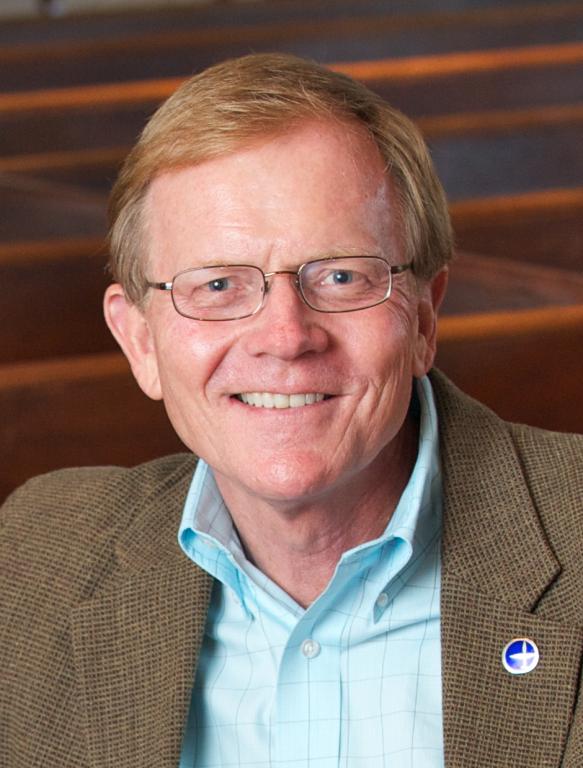
“Paradoxical Intervention, Reverend Billy, Sanctuary, Universalism, Etc.”
A Paper Delivered at the 117th Gathering of the Fraters of the Wayside Inn, Sudbury, MA, on 29 January 2019
Frater John Gibbons
(printed with permission of the author)
I begin by reminding you of what you already know: the Prior assigns the topics of the papers we present.
Which is a way of saying that this paper was not my idea; I’m not to blame. Prior Peirce assigned this paper to me. He said and I quote, “I would like you to write about Rev. Billy’s idea of sanctuary, and sharing sanctuary as a church then expanding it to the whole world al-la a Universal sanctuary.”
Now this makes pretty much no sense to me whatsoever.
Hank Peirce. (The prior’s personal email originally given by the speaker here is deleted by the editor).
I don’t want to talk much about Rev. Billy (What’s this with Rev. Billy? Rev. Hank? Should I be Rev. Johnny?) Just so you know, if you don’t already, Rev. Billy is a white-suited big-haired New York City preacherman who I have befriended and he’s come to Bedford three times now, most recently last spring on Earth Day, jumping up and down and shouting Earth-a-lujah, with his 35 member multi-racial multi-gender Stop Shopping gospel choir. Earth-a-lujah! Billy got his start invading Starbucks and beseeching customers to “Step back from that demonic register!” and generally making an anti-consumerist nuisance of himself until the cops got called.
A few years ago, a group of Bedford parishioners and me, accompanied by the New Yorker environmental writer Elizabeth Kolbert, joined with Billy and the choir, and we invaded a robotics lab at Harvard where, in preparation for the demise of the honeybee, they’re inventing a replacement robotic bee. Billy’s choir dressed as bees, following a most regal Queen Bee. Through a megaphone in the hallowed Harvard engineering halls, Billy preached about the coming apocalypse, and we sang, “Ro-bo bee you can’t pollinate me, you can’t fly from my hive, this bee is alive!” And for the baffled robotics engineers we left sacred offerings of fruits dependent on pollination.
Then we went to Kendall Square and invaded the headquarters of Monsanto where we denounced the neonicotinoid fertilizers that are causing hive collapse and killing the honeybees. And, yes, of course, we performed an exorcism.
The thing about Rev. Billy is that he does baffle people: you can’t quite tell if it’s all a spoof, or if it’s religion, or politics, or theatre…and that’s the point: he and the choir are all of those things. Billy and his choir are progressives – they weigh in on environmentalism (they joined us at the Boston fracked gas pipeline protests); they make a stinging critique of consumerism, the shopocalypse (check out his book, What Would Jesus Buy?), as well as the immorality of our immigration disaster.
I’ve brought copies for all of you of Billy’s most recent book, The Earth Wants You which, among other things, he describes our Harvard escapade…and I will gladly sign copies of the page on which he mentions me. It is, of course, all about me!
The genius of Rev. Billy is that he has realized that progressives are oh-so boring when we go around chanting “Hey Hey, Ho Ho (fill in the blank) has got to go!” That’s a yawner. Raised fists may have their place but touching hearts, firing our imaginations, and stirring in some ridiculousness…now for me that’s a potent recipe for social change.
Well, that’s a little bit about Rev. Billy. I should say that in Bedford he was not everyone’s cup of tea – though he only said the word “fuck” once in his sermon; but I’ll also say that of all the services she’s been part of in the last 13 months, Rev. Billy was our sanctuary guest Maria’s favorite preacher, by far. Change-a-lujah! She likes more life and volume and musicality in her preachers!
And now somehow I have to touch on the other things that Rev. Hank assigned: sanctuary and Universalism. I’ll tell you, with this odd assignment I feel like a circus juggler who does just fine with a few balls or pins or spinning plates or flaming torches, but then someone tosses up a kitten. Juggle that! And then someone tosses up a whizzing chainsaw. Juggle that!
Well, I’ll try. But here I’m going to take a turn and tell you about – and quote – one of the best sermons I’ve heard in a long time. It helps me juggle all this stuff. Last fall I was asked to visit a preaching class at Harvard and help critique the students. There were about a dozen students, UU, Buddhist, atheist, Christian, what have you. I listened to four sermons the day I visited and one of them was by a UU woman named Sophia Lyons. She was brilliant. She’s out of our Newburyport church and next year she will do her internship at the Universalist Unitarian Church in Haverhill. She has a background in theatre and performing arts and she’s married to a Blue Man (you know the Blue Man Group?).
Sophia’s sermon was about the transformative power of story and myth and archetype, and particularly the archetype of the trickster, the Fool, the Holy Fool. She quoted Joseph Campbell: “Myth helps you to put your mind in touch with this experience of being alive.” That is what we all want, right? To be put back in touch with the experience of being alive.
And so Sophia talked about a favorite memory she shares with her father. They watched Charlie Chaplin films together. They loved them and their favorite is called “The Circus.” It was made in 1928, and was written, directed, produced by and starred in by Charlie Chaplin, playing his favorite character, the Tramp.
After hearing Sophia’s sermon, I googled my way to a YouTube version of The Circus, and though it’s a silent film, in addition to everything else he did, Charlie Chaplin actually composed and sang the song that begins the film with the credits:
Swing little girl, swing high to the sky, And don’t ever look at the ground. If you’re searching for rainbows Look up to the sky—
You’ll never find rainbows If you’re looking down.
At some length now, I’m going to quote Sophia. This really doesn’t capture the brilliance of her sermon but she lays out the basic of the story in The Circus, a film she said she’s seen more than 200 times. I recommend you see it at least once. (It’s only a little more than an hour).
“The story is this,” Sophia says, “a circus is in town and the general culture of this traveling show is an oppressive one. The ringmaster is an angry, greedy bully of a man. He continuously beats his (own) daughter, who (high-swinging on the trapeze) stars in the show, and the workers, the other acts, even the clowns are a miserable, broken lot. The show itself, no surprise here, is also dying. Crowds are sparse and the few people that do show up seem to absorb the dismal, joylessness of this place, turning quickly into demanding, disgruntled hecklers.
…Really, the story is the story of the Tramp. He lives on the streets, he is homeless. He scrapes…for food, he sleeps where and when he can, he moves through city and country…looking for work, looking for companionship, looking for love. But he is path-less and un-rooted to society or any one person. In fact every story depicting the Tramp begins and ends with him alone. And, he is a Fool. He is our hero, but he is also our Fool.
…The Tramp, not unsurprisingly, finds himself enmeshed in this circus… Upon running away from the police, he stumbles into the middle of a live performance. Suddenly the audience comes to life watching this unexpected clown fumbling through the ring. The act ends in uproarious laughter and applause.
This is where the rest of the story unfolds: he is deceptively hired on by the ringmaster as a poorly paid prop handler who, every day, enters the ring to set up an act and every day inadvertently creates comic mayhem; selling out more and more seats. He is the star of the show and does not know it.
Despite being a victim in this exploitative system he stands separate from it; he is unchanged, un-fazed by it. You see, the Tramp, this Fool, always holds tight to Love, and no mortal can break this. You can probably guess that he becomes the great liberator of the girl, the ringmaster’s daughter. His very presence in this dark and dismal place brings light, joy and reconciliation to the oppressive ring.”
To which I say, “The Tramp is mightier than the Trump.”
Sophia says, “This is the possibility of the Fool archetype–offering a portal into the realms of childlike wonder and imagination. A key that unlocks our own creative spirit, our own resilience, our own child-like hope.
By the end of this story the Circus is leaving town and the Tramp stands beside the departing caravan. He sits down on an old barrel and stares at the ground, the indent of the circus ring surrounds him. His shoulders slump and we wonder, for the first time, if the circus has snuffed his light out. That maybe it ultimately broke him.
Suddenly, a large piece of paper gets kicked up in the wind and it blows into his lap. He opens it and discovers on it a picture of a star; a remnant of one of the acts from the circus. He crumples it up and looks into the distance. Then he stands up, pulls his shoulders back, playfully kicks the crumpled up paper star with one of his out-turned feet, turns his back to us and walks off into the distance; each step becoming more and more bounding and buoyant. Cane twirling.”
Sophia said she and her father always cried at the ending. And making her sermon all the more poignant that day I was at the preaching class, there was another student who had, we knew, recently experienced the death of a family member; and midway into Sophia’s sermon that student began to sob and she sobbed and she sobbed. Sophia continued and finished her sermon, and when she did we comforted the other student, but there was something in that story that, in Sophia’s words, “provided safe passage to what I now call the realm of the Spirit…. Because transcendence and soul rearrangement were available here.”
“It was literally born out of being able to identify with the Love, identify with the suffering, identify with the laughter, identify with the hopelessness. Identify with the oppressor, yes we have this in us too–someone who lives with unchecked pain and anger and aims it at their fellows, AND, identify with their transformation, their redemption, their humanity.“
Sophia concludes, “This is the potential of story, if we are up for taking a closer look. It can literally grip the potential inside all of us – you see we can access these archetypes within ourselves and our own stories as a way to heal ourselves. We heal ourselves when we know ourselves. And when we know ourselves we can know others.
This is where we start my friends. Our outer work, our outward facing, justice-centered work depends, depends, on this kind of inner healing. Depends on this kind of soul-searching and soul-rearrangement….And when we access this, live intensely into this, we begin to open to our fellows. Because we begin to see how alike we humans are. Hear that. We are more alike than we are different my beloveds. We share this thing called (life).”
Fraters, I want to suggest that what connects Rev. Billy, and sanctuary, and Universalism is that they are all a kind of paradoxical intervention, a small tincture of the unexpected that makes possible a rearrangement of the soul, a transformation of the whole. Rev. Billy shouts, “Change-a-lujah! Earth-a-lujah! And then he buzzes, “Robo-bee….!”
I was introduced to the term “paradoxical intervention” by the family systems therapist Ed Friedman. As an example, Friedman suggests a case where a spouse had been having an affair. Friedman encouraged the cheated-upon spouse to approach the cheater with travel brochures and helpfully suggest the cheater might want to go off on a nice romantic trip with the other person. Whaaa? When approached by someone who was suicidal, Friedman was even known to take out a prescription pad and calmly ask, “How much medication do you think you’ll need to do yourself in?” Almost like the archetype of the fool, a paradoxical intervention is a kind of preposterous and unexpected electro-convulsive therapy designed to shock and jolt a system into rediscovering its own resources of health and wholeness.
My contention in this paper is that Rev. Billy, sanctuary, and Universalism itself are all variations of paradoxical interventions that may jolt us into health and wholeness.
Sanctuary, for example, takes some old words off a page:
“For I was hungry and you gave me food, I was thirsty and you gave me drink, I was a stranger and you welcomed me.”
“You shall treat the stranger who sojourns with you as the native among you, and you shall love her as yourself, for you were strangers in the land of Egypt.”
Sanctuary breathes life into those old words, makes deeds out of creeds, and by the experience of offering sanctuary what we in Bedford have come to know is a living breathing woman who loves her family with a fierce love…and we have come to know comrades who defend others’ lives with our own.
Maria, our guest in sanctuary has now been at the Bedford church for 13 months. Maria’s husband was deported to Guatemala two years ago. Here eldest son was deported 8 months ago. She has three American born US citizen sons, two of them teenagers, fending for themselves in an apartment. Maria says, “It’s like the government is taking my family apart one by one.”
To protect Maria, there are at present more than 400 volunteers from 9 covenanted congregations, two of whom are present 24/7. These volunteers are from Lexington, Concord, Bedford, Winchester, Belmont, Watertown, Burlington. I tell people that the last time these towns made common cause against tyranny and empire was in 1775!
And, so too, Universalism proclaims the unlikely affirmation that all may be saved, saved from alienation and meaninglessness and boredom and that all souls – even ours – may grow into harmony with the divine.
Our rational side says, You gotta be kidding! And yet there is amazing grace! And, indeed, grace is the way I’m going to tie up this topic. Grace is what holds aloft the balls, the pins, the spinning plates, the fiery torches, the kitten and the whizzing chainsaw, not to mention Charlie Chaplin’s twirling cane:
Who woulda thunk?
The only commonality I can imagine, the only unifying thread that brings these disparate topics together is that each is unexpected, improbable, paradoxical, counter-intuitive.
The poet Anne Sexton once described her faith as “a great weight hung on a small wire;” and thus the theme I’m trying to distill is that sometimes a very nearly invisible homeopathic distillate and tincture of health and healing and wholeness can reverberate with a power and glory that far exceeds its perceived earthly value. “Thou canst not stir a flower, without troubling of a star,” said Francis Thompson.
So now where I’m going with this is where Hank (personal email provide here deleted by editor) asked me to go: “to expand this to the whole world al-la a Universal sanctuary.”
I believe that Unitarian Universalism can yet be a potent and even explosive distillation, tincture and titration of the unexpected, such that not only may we topple oppressive systems by the subversive interjection of the unexpected but that this faith may also revivify and breathe life into the dead bones that all too often are our own dead bones.
Universalists say, All may be saved; all may grow into harmony with the divine. We, my friends, preach an unexpected and improbable gospel! We live in a culture of “you get what you deserve,” “you reap what you sow.” Universalism says the blessings of life are boundless; grace abounds.
Somewhere I found an old 19th century evangelical Christian tract that denounces Universalism, “Reasons for Not Embracing the Doctrine of Universal Salvation.”
“The greater part of the community who are believers in divine revelation, and persons of industrious and virtuous habits, though not professedly pious, will reject the doctrine, and avoid the preaching that attempts to propagate it. But
If there are in the community any deists who have opposed Christianity until their opposition has become unpopular, these when the trumpet of Universalism is blown, will be among the first professed converts to the faith, that, being screened from odium by the name of Christian, they may still aim their poisoned shafts against the cause of evangelical truth.
The profane swearers in a town or city, together with those who are accustomed to neglect public worship, and violate the Sabbath by business or amusements, will become diligent in their attendance upon the worship which is conducted by preachers of universal salvation.
If there are any persons in the community who are unfaithful in the conjugal relation, and who are accustomed to drink “stolen waters” as sweeter than their own, these are usually much pleased to hear that there is no hell and that “adulterers” shall inherit the kingdom of God.”…
I have noticed also, that intemperate persons are generally very ready to attend when the doctrine of universal salvation is preached near them, and hear with much satisfaction that the path of the drunkard leads as directly to heaven as the path of the just.
Another portion of the audience of a Universalist preacher is commonly made up of young men and boys of loose habits. Those “whose feet,” according to the Bible, “go down to death, and whose steps take hold on hell,” delight to hear it proved that the Bible lies, and that “fornicators” shall “inherit the kingdom of God.”
Those persons who have been awakened to a sense of their guilt and danger, and have as often relapsed into a stupid or irreligious state, and who are always annoyed and irritated by the doctrines of grace, are much inclined to seek rest under the preaching of Universalists, and there get their consciences quieted by hearing that there is no day of judgment, and no punishment for the wicked.”
Well, all you deists, you bearers of unpopular opinions, you profane swearers, you who neglect public worship, you who are unfaithful, adulterous, intemperate, ye of loose habits and fornicators, you who sometimes live with a sense of guilt and danger and stupidity, the irreligious, annoyed and irritated – does that about cover all of you? – none of us, no one else, and no one anywhere is banished from grace and possibility.
Rev. Billy proclaims Earth-a-lujah! – Earth is our sacred sanctuary. Those who rise in defense of the scorned and undocumented, those who keep faith with the fallen – these are acts of mercy and grace.
Now it probably won’t surprise any of you to know that I tend not to rely on a lot of theological language. My religion is pretty darn this-worldly: what I know of revelation is revealed in the here-and-now and the ordinary. One need not seek the supernatural, for as George Orwell once said, “To see what is in front of our nose is a constant struggle.”
And so it may come to you as a surprise and, indeed, it comes to me as a surprise that the common thread, the thin wire, I am looking for that connects not only Rev. Billy and sanctuary and Charlie Chaplin, and Universalism is an old theological word; and that is the word, “grace.”
Forgive me, Fraters, many of you are much more fluent and conversant in the language of grace than I am. This paper is my first occasion to attempt to explicate grace. Better late than never.
Frederick Buechner once said, “Grace is something you can never get but can only be given. There’s no way to earn it or deserve it or bring it about any more than you can deserve the taste of raspberries and cream or earn good looks or bring about your own birth. A good sleep is grace and so are good dreams. Most tears are grace. The smell of rain is grace. Somebody loving you is grace. Loving somebody is grace. Have you ever tried to love somebody?”
The essence of grace is that it is unexpected and improbable. Grace seems to go against every human instinct. We are naturally drawn to cause-and-effect, to covenants, to karma, to reaping what we sow, to getting what we deserve, to earning what we
Grace is different. Grace is an unmerited favor, given alike to the deserving and the undeserving. Frater Gordon McKeeman, my mentor, was fond of quoting Kahlil Gibran, “You say, ‘I would give, but only to the deserving.’ The trees in your orchard say not so, nor the flocks in your pasture. They give that they may live…”
Grace is hard to understand because it’s not entirely rational. Bono says, “Grace defies reason and logic. Love interrupts, if you like, the consequences of your actions.” Grace is a kind of paradoxical intervention.
I love this image of “The Kind Confessor.” This etching is framed in my office. Ours is an abundant faith, not a stingy one. Grace and blessing and forgiveness are available to all of us, if we are willing to receive it. Saints and sinners. Yesterday Frater Peirce mentioned Nadia Bolz Weber who until recently served a great church in Colorado called the House for All Saints and Sinners (HFASS). It’s one grace-filled half-assed church, and I would wish that all our churches be similarly half-assed and infamous.
This is the radical equality at the heart of Universalism: none shall be cast into outer darkness.
A writer named Peter Wehner has said, “If you find yourself in the company of people whose hearts have been captured by grace, count yourself lucky. They love us despite our messy lives, stay connected to us through our struggles, always holding out the hope of redemption. When relationships are broken…it’s grace that causes people not to give up, to extend the invitation to reconnect, to work through misunderstandings with sensitivity and transparency.
You don’t sense hard edges, dogmatism or self-righteous judgment from gracious people. There’s a tenderness about them that opens doors that had previously been bolted shut. People who have been transformed by grace have a special place in their hearts for those living in the shadows of society. They’re easily moved by stories of suffering and step into the breach to heal. And grace properly understood always produces gratitude.”
Of course, the idea of grace can be misused by those who don’t want to be held accountable for their actions. Dietrich Bonhoeffer, of coursed, warned against “cheap grace.” And it is challenging to balance justice and grace, but the biggest problem we have today is not that there is too much grace but that grace is too often absent from our public and personal lives.
Grace is often said to be a gift of God, “God’s grace.” But I don’t think it matters much what you believe or disbelieve. Grace abides as “some combination of generosity and magnanimity, kindness and forgiveness, and empathy…all above the ordinary call of duty, and bestowed even (or especially?) when not particularly earned.”
Well, I’m pretty much done with this juggling act. That which unifies Rev. Billy, and sanctuary, and Charlie Chaplin, and Universalism, the kitten and the chainsaw, is that small unexpected and improbable, paradoxical, empire shattering, soul-rearranging tincture called grace.
My mentor, Frater McKeeman used to say two other things. Approvingly, quoting Emerson, he would appeal to his parishioners, saying “There are sermons foolishly spoken that may be wisely heard.” I too appeal to your wise hearing. (The prior’s personal email is once again listed but deleted by the editor).
And McKeeman further said words that we may imagine being spoken by The Kind Confessor:
We are beneficiaries of blessings! Manifold, diverse, and plentiful. Blessings! Manifold, diverse, and plentiful.
All together now: Blessings! Manifold, diverse, and plentiful.
Oh so plentiful. Amen.
Saints and sinners, here’s one final bonus lagniappe of a blessing:
**“**Who Said This?” – Mary Oliver
Something whispered something
that was not even a word.
It was more like a silence
that was understandable.
I was standing
at the edge of the pond.
Nothing living, what we call living,
was in sight.
And yet, the voice entered me,
my body-life,
with so much happiness.
And there was nothing there
but the water, the sky, the grass.
Previous Post

February 6, 2019
Letting Go: A Smallest Zen Reflection
Next Post
February 8, 2019 A Zen Priest's Five Pointers for Getting Over Yourself
Browse Our Archives
Select a Category A Christmas Carol Abolitionist African-American Ahmadiyya Alan Watts Aldous Huxley Allen Ginsberg Amedkar Jayanti American politics American Zen Anaheim Zen Sangha Anglican Annie Besant April Fool Armageddon Art and Religion artificial intellegence Atheist Awakening B R Ambedkar Barlaam & Josaphat Beatnik Between Bhagavad Gita Bible biography birthday bodhisattva Bodhisattva Precepts Book burning Book of Common Prayer Book of Mormon Brahmo Samaj Buddha Buddhism Buddhist Buddhist Lord's Prayer Butterflies Calendars cartoons cat ChatGPT Chicken Tortilla Soup choices Christian atheism Christian mysticism Christian origins Christian Science Christian Zen Christianity Christianity and Buddhism christmas Christmas Truce Christopher Isherwood Church of Later Day Saints Cinco de Mayo circus covenant critical thinking culture D. T. Suzuki Dalit Buddhism Daniel Defoe Desert Fathers and Mothers dharma talk Dogen Donald Trump Dongshan's Five Ranks Dorothy Day dream Duty Easter ecology Edwin Arnold emptiness Empty Moon Zen Network Episcopal Church Eternal Now Ethics evolution existentialism Faith fantasy Fathers Day film film review fire Five Ranks Folk music food Form and emptiness Four Seals Francis of Assisi Francis Xavier Free thinker friendship George MacDonald Gerald Heard Glenn Taylor Webb God Good Friday Gospel of Gospel of Mark Gospel of Thomas grace Graduate Theological Unioin Graduate Theological Union Guanyin H R Blyth Hakuin Ekaku Hanamatsuri Hanukkah Harada Yasutani Zen Heart Sutra Henry David Thoreau Hermann Hesse Hinduism History and Religion history of religion Holy Spirit home Hospitality Icon Ides of March Isaac Newton Islam Islamic mysticism Jack Kerouac James Luther Adams Jiddu Krishnamurti Joan of Arc Johannes Gutenberg John Donne joke Judaism justice karma kensho King James Bible koan Koun Yamada Kyoto School Lewis Carrol Liberal Christianity Liberal Religion Life Plan Community Liminal literature Literature and Religion Liturgy Lord's Prayer Love Mahatma Gandhi Mahayana Martin Luther King Jr Mary Baker Eddy Mary Magdelene Mary Oliver Mayflower Compact Meditation memories memory metaphor money money and religioin Mormons Mother's Day movie review mysticism mythic Neighborhood Unitarian Universalist Church New Thought Nichiren Buddhism Nonduality not knowing Omar Khayyam Pacific School of Religion pagan Palm Sunday Passover peace Pentecost perennialism Phantastes Philip Kapleau philosophy Pilgrimage poetry Poetry and Religion politics Prayer Precepts Printing Press prophecy prophetic spirituality psychology Pure Land Queer religion queering religion Quietism Ram Mohan Roy rebirth recipe Relationships and religion religion religion and history Religious syncretism Resistance Retirement Retreat review Rissho Kosei Kai Ritual Robert Aitken Roshi Robert Ingersoll Rohatsu Romani religion Rosie the Riveter saints samadhi SanboZen Sangha Satyagraha science science and reigion science and religion science fiction seminary sermon Sesshin Sex and Religion Shinran Sikh Sikh tradition silence Social Justice Socially Engaged Buddhism Society and religion Soto Zen soul spiritual community spiritual practice Spirituality Sufism Suicide superstition Taoism Television Teresa of Avila Thanksgiving theological schools Theosophy Thomas Merton Time Transcendentalism Transcendentalist Trinitarian Trinity Uncategorized unitarian Unitarian Christianity Unitarian Universalist Universalism Vajrayana Vedanta Walking war Willa Cather William Ellery Channing wisdom women and religion women in religion World Teacher Writing zazen Zen Zen Center Zen inspired retriement zen meditation Zen Precepts Zen women
Select a Month September 2026 August 2026 July 2026 June 2026 May 2026 April 2026 March 2026 February 2026 January 2026 December 2025 November 2025 October 2025 September 2025 August 2025 July 2025 June 2025 May 2025 April 2025 March 2025 February 2025 January 2025 December 2024 November 2024 October 2024 September 2024 August 2024 July 2024 June 2024 May 2024 April 2024 March 2024 February 2024 January 2024 December 2023 November 2023 October 2023 September 2023 August 2023 July 2023 June 2023 May 2023 April 2023 March 2023 February 2023 January 2023 December 2022 November 2022 October 2022 September 2022 August 2022 July 2022 June 2022 May 2022 April 2022 March 2022 February 2022 January 2022 December 2021 November 2021 October 2021 September 2021 August 2021 July 2021 June 2021 May 2021 April 2021 March 2021 February 2021 January 2021 December 2020 November 2020 October 2020 September 2020 August 2020 July 2020 June 2020 May 2020 April 2020 March 2020 February 2020 January 2020 December 2019 November 2019 October 2019 September 2019 August 2019 July 2019 June 2019 May 2019 April 2019 March 2019 February 2019 January 2019 December 2018 November 2018 October 2018 September 2018 August 2018 July 2018 June 2018 May 2018 April 2018 March 2018 February 2018 January 2018 December 2017 November 2017 October 2017 September 2017 August 2017 July 2017 June 2017 May 2017 April 2017 March 2017 February 2017 January 2017 December 2016 November 2016 October 2016 September 2016 August 2016 July 2016 June 2016 May 2016 April 2016 March 2016 February 2016 January 2016 December 2015 November 2015 October 2015 September 2015 August 2015 July 2015 June 2015 May 2015 April 2015 March 2015 February 2015 January 2015 December 2014 November 2014 October 2014 September 2014 August 2014 July 2014 June 2014 May 2014 April 2014 March 2014 February 2014 January 2014 December 2013 November 2013 October 2013 September 2013 August 2013 July 2013 June 2013 May 2013 April 2013 March 2013 February 2013 January 2013 December 2012 November 2012 October 2012 September 2012 August 2012 July 2012 June 2012 May 2012 April 2012 March 2012 February 2012 January 2012 December 2011 November 2011 October 2011 September 2011 August 2011 July 2011 June 2011 May 2011 April 2011 March 2011 February 2011 January 2011 December 2010 November 2010 October 2010 September 2010 August 2010 July 2010 June 2010 May 2010 April 2010 March 2010 February 2010 January 2010 December 2009 November 2009 October 2009 September 2009 August 2009 July 2009 June 2009 May 2009 April 2009 March 2009 February 2009 January 2009 December 2008 November 2008 October 2008 September 2008 August 2008 July 2008 June 2008 May 2008 April 2008 March 2008 February 2008 January 2008 December 2007 November 2007 October 2007 September 2007 August 2007 July 2007 June 2007 May 2007 April 2007 March 2007 February 2007 January 2007 December 2006 November 2006 October 2006 September 2006
Follow Us!
TAKE THE
Religious Wisdom Quiz
Who confronted David about his sin with Bathsheba?
Select your answer to see how you score.
Nathan Samuel Gad Joab
Related posts from Monkey Mind

A Feast for Origen & Universalism
George MacDonald & the World of Wonder: A...

What About When You Run Out Of Sermons...

A Faithful Skeptic: Margaret Fuller's Transcendentalist "Credo"
TRENDING AT PATHEOS Buddhist

The Iron Gates and the Lion of the...
Yesterday, I didn't finish my report about, well, yesterday. So I'll...

Dolly Parton’s Last Song Wins Dove Award with...
Bluegrass band The Grascals, speaking on the red carpet at the 57th...

The Image: On the Horror of Capitalism and...
The Image Then went the Pharisees, and took counsel how they might...

We are approaching the date of our new American national holiday: October...

Letters on Living the Faith by C.S. Lewis
Most of us met C.S. Lewis as a public intellectual. Mere Christianity....

When Halloween Unmasks Married Hearts
Written by Dr. David K. Ewen from Eternal Truth Bible College Behind...
view all Buddhist blogs
Ad-Free & Subscriber Log-In Subscription Support
- About Us
- 2026 Calendar
- Videos
- Podcasts
- Library of World Religions
- Faith In Media Tracker
- Advertise With Us
- Write for Us
- Privacy Policy
- Terms of Service
- Do Not Sell My Data
- Contact Us
- Radiant Digital
- Manage Newsletter Subscriptions
- Unsubscribe From Notifications
- Sitemap
Copyright 2008-2026, Patheos. All rights reserved.
Subscription Support Ad-Free & Subscriber Log-In
Follow Patheos