
BuddhistCatholicContemplativeEvangelicalGeneral ChristianHinduJewishLatter-day SaintMuslimNew VisionsProgressive Christian
Beliefs
- Buddhist
- Catholic
- Contemplative
- Evangelical
- General Christian
- Hindu
- Jewish
- Latter-day Saint
- More Voices
- Muslim
- New Visions
- Pagan
- Progressive Christian
Topics
- Religion News
- Food and Religion
- Sports and Religion
- Religious Art
- Religious Music and Entertainment
- Religious Events
- History and Religion
- Style and Religion
- Politics and Religion
- Women in Religion
- Recreation Outdoors and Religion
- Business Finance and Religion
- Careers Workplace and Religion
- Education and Religion
- Family Parenting and Religion
- Health Fitness and Religion
- Home and Religion
- Relationships and Religion
- Technology and Religion
- Travel and Religion
Columnists
- Buddhist Columnists
- Business Finance and Religion Columnists
- Careers Workplace and Religion Columnists
- Catholic Columnists
- Contemplative Columnists
- Education and Religion Columnists
- Evangelists Columnists
- Family Parenting and Religion Columnists
- General Christian Columnists
- Health Fitness and Religion Columnists
- Hindu Columnists
- History and Religion Columnists
- Home and Religion Columnists
- Jewish Columnists
- More Voices Columnists
- Latter Day Columnists
- Muslim Columnists
- New Visions Columnists
- Nonreligious Columnists
- Pagan Columnists
- Politics and Religion Columnists
- Progressive Columnists
- Recreation Outdoors and Religion Columnists
- Relationships and Religion Columnists
- Religion News Columnists
- Religious Art Columnists
- Religious Events Columnists
- Religious Music and Entertainment Columnists
- Sports and Religion Columnists
- Style and Religion Columnists
- Technology and Religion Columnists
- Travel and Religion Columnists
- Women in Religion Columnists
Resource Library
- 2026 Calendar
- Library of World Religions
- The 100 Most Holy Places on Earth
- Patheos Answers
- Podcasts
- Videos
- Faith Leaders Database
- Anglican Episcopalian
- Bahai
- Baptist
- Buddhism
- Christianity
- Confucianism
- Eastern Orthodoxy
- Hinduism
- Holiness and Pentecostal
- ISKCON
- Islam
- Judaism
- Lutheran
- Methodist
- The Church of Jesus Christ of Latter-day Saints
- New Age
- Paganism
- Presbytarian and Reformed
- Protestantism
- Religion Behind the Scenes
- Roman Catholic
- Scientology
- Shia Islam
- Sikhism
- Sufism
- Sunni Islam
- Taoism
- Zen
- See all religions
Research Tools
 Ad-Free & Subscriber Log-In Subscription Support
Ad-Free & Subscriber Log-In Subscription Support
Follow Patheos 

- Trending:
- Forgiveness
- |
- Marriage
- |
- Consciousness
- |
- Death Penalty
- |
- Election
- |
- Halloween

- Home
- Buddhist
- Maezumi Roshi on Zen’s Gassho & Bowing Practice
Maezumi Roshi on Zen’s Gassho & Bowing Practice
Last updated on: December 19, 2018 at 6:19 pm by James Ford
Maezumi Roshi on Zen’s Gassho & Bowing Practice 2018-12-19T18:19:19-08:00 James Ford
Patheos Explore the world's faith through different perspectives on religion and spirituality! Patheos has the views of the prevalent religions and spiritualities of the world.
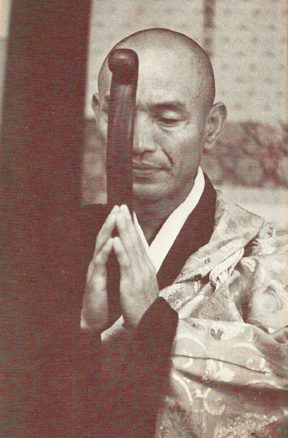
A NOTE ON GASSHO AND BOWING
Taizan Maezumi Roshi
with John Daishin Buksbazen
Visitors to the Zen Center often ask about the gassho and about bowing. What, they inquire, is the meaning of these gestures? Why are they done? And why is it necessary to do them so precisely and uniformly? These questions deserve careful consideration.
Although we are Zen Buddhists, it should be noted that the gassho and the bow are common to all sects of Buddhism, both Mahayana and Theravada. These two gestures date from the earliest days of Buddhism, or even earlier than that, and they have moved from India throughout the Orient, finally arriving recently in the Western world.
When Shakyamuni Buddha’s enlightenment occurred, he went to see five of his former comrades with whom he had practiced various austerities and spiritual disciplines prior to his enlightenment. These five men, who were very devout monks, felt that their companion had gone astray when he abandoned their customary practices. “Come,” they said to each other, “Let’s not pay any attention to poor Gautama, he no longer is one of us.” They were dismayed to find that he had seemingly stopped his spiritual practices, going so far as to even drink milk and take a bath (two forbidden acts according to their tradition). They could not understand why he seemed only to sit quietly, doing nothing of any value.
But when the Buddha approached them, it is reported that these five monks were so struck by the transformation of their former friend, by his serenity and the radiance of his personality, that they spontaneously placed their palms together and greeted him with deep bows. Perhaps it is a little misleading to say that they greeted him. More accurately, it should be said that they were bowing not to their old friend Gautama, but rather to the Buddha — the Enlightened One.
What the Buddha had experienced was the Supreme Great Enlightenment (in Sanskrit, anuttara samyak sambodhi): the direct and conscious realization of the oneness of the whole universe, and of his own unity with all things. This is what enlightenment means. This very realization is actually in itself the act of being the Buddha. And it was to this enlightened state that the five monks bowed.
When the Buddha was enlightened, the first thing he said was: “Wonder of wonders! All sentient beings have the same (enlightened) nature!” What this implies is that in bowing to the
Buddha, the monks were actually bowing to themselves, and to all beings. These monks were recognizing the great unity which their former companion had directly and profoundly experienced.
Let us examine the gassho and the bow more closely.
GASSHO:
The word gassho literally means “To place the two palms together”. Of all the mudras (symbolic hand-gestures or positions) we use, it is perhaps the most fundamental, for it arises directly from the depths of enlightenment. Its uses are many, but most commonly it is employed to express respect, to prevent scattering of the mind, to unify all polarities (such as left and right, passive and dominant, etc.) and to express the One Mind — the total unity of
Being.
Although there are many types of gassho, in the Soto sect we are primarily concerned with these four:
1. THE FIRM GASSHO.
The most formal of the gasshos, this is the one most commonly used in our daily practice. It is the gassho we use upon entering the zendo, and upon taking our seats. We also use it at least sixteen times in the course of a formal meal, and during all services. It is made by placing the hands together, palm to palm in front of the face. The fingers are placed together, and are straight rather than bent, while the palms are slightly pressed together so that they meet. The elbows are held somewhat out from the body, although the forearms are not quite parallel with the floor. There is about one fist’s distance between the tip of the nose and the hands. Fingertips are at about the same height from the floor as the top of the nose. This gassho has the effect of helping to establish an alert and reverential state of mind.
2. THE GASSHO OF NO-MIND.
This is the next most commonly used gassho. It is basically used in greeting one another or our teachers. In this position, the hands are held a little more loosely together, with a slight space between the palms, although the fingers still touch. The elevation of the elbows from the floor is not so great as in the Firm Gassho; forearms should be at approximately a 45-degree angle to the floor. This gassho has the effect of deepening one’s state of samadhi.
3. THE LOTUS GASSHO.
This gassho is used primarily by officiating priests on special ceremonial occasions. It is made
like the gassho of no-mind, except that the tips of the middle fingers are held one inch apart. Its name derives from the resemblance of this hand position to the shape of a just-opening lotus bud.
4. THE DIAMOND GASSHO.
This gassho is also known as the gassho of being one with life3. Like the lotus gassho, it is used by officiants in services. Although the hands and arms are in basically the same position as in the gassho of no mind, the diamond gassho is made with the fingers of each hand extended and interlocking, and with the right thumb on top of the left.
In each of these gasshos, we keep the eyes focused upon the tips of our middle fingers. But regardless of the style or variety of the gassho, and in whatever setting it is being used, the
fundamental point of the gassho is to be one with the Three Treasures: Buddha, Dharma, and Sangha.
Of course, we can look at the Three Treasures from many perspectives, and with varying degrees of depth and clarity. At perhaps the most superficial level, the Three Treasures are seen as external objects of supreme reverence for all Buddhists. Unfortunately, in this view, the Three Treasures tend to be perceived as something other than oneself. But as our vision opens
up, we experience that each of us is, in fact, the Buddha. We see clearly that everything we encounter in the world is none other than the Dharma — the functioning of underlying enlightenment.
And, realizing the oneness of all beings, we come to realize that the Sangha — the all-embracing brotherhood of practice — is simply all composite things, including each of us. Having this awareness we become — or rather, we are — one with the Three Treasures. So, joining our hands palm to palm, we simultaneously create and express the absolute, the oneness which goes beyond all dichotomies. It is from this perspective that we make the gassho, and that we bow.
It is no ordinary person who bows; it is the Three Treasures recognizing itself in all things. If anyone thinks of himself as “just ordinary”, he is, in effect, defaming the Three Treasures.
And as we place our palms together we unite wisdom and samadhi, knowledge and truth, enlightenment and delusion.
BOWING:
Dogen Zenji once said: “As long as there is true bowing, the Buddha Way will not deteriorate.” In bowing, we totally pay respect to the all-pervading virtue of wisdom, which is the Buddha.
In making the bow, we should move neither hastily nor sluggishly but simply maintain a reverent mind and humble attitude. When we bow too fast, the bow is then too casual a thing; perhaps we are even hurrying to get it over and done with. This is frequently the result of a lack of reverence. On the other hand, if our bow is too slow, then it becomes a rather pompous display; we may have gotten too attached to the feeling of bowing, or our own (real or imagined) gracefulness of movement. This is to have lost the humble attitude which a true
bow requires.
When we bow, it is always accompanied by gassho, although the gassho itself may not always be accompanied by bowing. As with the gassho, there are numerous varieties and styles of bowing, but here we will deal only with the two main kinds of bow which we use
in our daily practice.
1. THE STANDING BOW.
This bow is used upon entering the zendo, and in greeting one another and our teachers. The body is erect, with the weight distributed evenly and the feet parallel to each other. The appropriate gassho is made (see above). As the bow is made, he body bends at the waist, so that the torso forms an angle with the legs of approximately 45 degrees. The hands (in gassho) do not move relative to the face, but remain in position and move only with the whole body.
2. THE DEEP BOW (FULL PROSTRATION).
This bow is most often used at the beginning and end of services, and upon entering and
leaving dokusan. It is somewhat more formal than the standing bow, and requires a continuous concentration during its execution so that it is not sloppily done.
The bow itself begins in the same way as the standing bow, but once the body is bent slightly from the waist, the knees ben and one assumes a kneeling position. From the kneeling position, the movement of the torso continues, with the hands separating and moving, palms upward, into a position parallel with the forehead.
As the bowing movement progresses, the backs of the hands come to rest just above the floor and the forehead is lowered until it rests upon the floor between the hands. At this point, the body is touching the floor at knees, elbows, hands, and forehead. The hands are then slowly raised, palms upward, to a point just above the ears. Then the hands slowly return to the floor. This action is a symbolic placing of the Buddha’s feet above one’s head as an act of reverence and humility. There should be no sharp, abrupt movements of the hands or arms, no bending of the wrists or curling of the fingers when executing this gesture.
When the hands have been raised and lowered, the body then straightens as the person bowing gets to his feet once again and ends in gassho, just as he began. In kneeling, actually the knees do not touch the ground simultaneously, but in sequence; first, the right and then the left knee touches the ground. The same is true for the right and left hands and right and left elbows, in that sequence. In practice, however, the interval between right and left sides touching the ground may be so minute as to be unnoticeable. In bowing, movement should not be jerky or disjointed, but should flow smoothly and continuously without either disruption or
arrested motion.
Master Obaku, the teacher of Master Rinzai, was famous for his frequent admonition to his students. “Don’t expect anything from the Three Treasures.” Time after time he was heard to say this. One day, however, Master Obaku was observed in the act of bowing, and was challenged about his practice. “You always tell your students not to expect anything from the
Three Treasures,” said the questioner, “and yet you have been making deep bows.” In fact, he had been bowing so frequently and for so long that a large callus had formed on his forehead at the point where it touched the hard floor. When asked how he explained this, Master Obaku replied, “I don’t expect. I just bow.”
This is the state of being one with the Three Treasures. Let us just make gassho. Let us just bow.
***
From ON ZEN PRACTICE, Hakuyu Taizan Maezumi and Bernard Tetsugen Glassman, ed.
Previous Post

December 18, 2018
The Zen Koan of the Expectation of the Blessed Virgin Mary
Browse Our Archives
Select a Category A Christmas Carol Abolitionist African-American Ahmadiyya Alan Watts Aldous Huxley Allen Ginsberg Amedkar Jayanti American politics American Zen Anaheim Zen Sangha Anglican Annie Besant April Fool Armageddon Art and Religion artificial intellegence Atheist Awakening B R Ambedkar Barlaam & Josaphat Beatnik Between Bhagavad Gita Bible biography birthday bodhisattva Bodhisattva Precepts Book burning Book of Common Prayer Book of Mormon Brahmo Samaj Buddha Buddhism Buddhist Buddhist Lord's Prayer Butterflies Calendars cartoons cat ChatGPT Chicken Tortilla Soup choices Christian atheism Christian mysticism Christian origins Christian Science Christian Zen Christianity Christianity and Buddhism christmas Christmas Truce Christopher Isherwood Church of Later Day Saints Cinco de Mayo circus covenant critical thinking culture D. T. Suzuki Dalit Buddhism Daniel Defoe Desert Fathers and Mothers dharma talk Dogen Donald Trump Dongshan's Five Ranks Dorothy Day dream Duty Easter ecology Edwin Arnold emptiness Empty Moon Zen Network Episcopal Church Eternal Now Ethics evolution existentialism Faith fantasy Fathers Day film film review fire Five Ranks Folk music food Form and emptiness Four Seals Francis of Assisi Francis Xavier Free thinker friendship George MacDonald Gerald Heard Glenn Taylor Webb God Good Friday Gospel of Gospel of Mark Gospel of Thomas grace Graduate Theological Unioin Graduate Theological Union Guanyin H R Blyth Hakuin Ekaku Hanamatsuri Hanukkah Harada Yasutani Zen Heart Sutra Henry David Thoreau Hermann Hesse Hinduism History and Religion history of religion Holy Spirit home Hospitality Icon Ides of March Isaac Newton Islam Islamic mysticism Jack Kerouac James Luther Adams Jiddu Krishnamurti Joan of Arc Johannes Gutenberg John Donne joke Judaism justice karma kensho King James Bible koan Koun Yamada Kyoto School Lewis Carrol Liberal Christianity Liberal Religion Life Plan Community Liminal literature Literature and Religion Liturgy Lord's Prayer Love Mahatma Gandhi Mahayana Martin Luther King Jr Mary Baker Eddy Mary Magdelene Mary Oliver Mayflower Compact Meditation memories memory metaphor money money and religioin Mormons Mother's Day movie review mysticism mythic Neighborhood Unitarian Universalist Church New Thought Nichiren Buddhism Nonduality not knowing Omar Khayyam Pacific School of Religion pagan Palm Sunday Passover peace Pentecost perennialism Phantastes Philip Kapleau philosophy Pilgrimage poetry Poetry and Religion politics Prayer Precepts Printing Press prophecy prophetic spirituality psychology Pure Land Queer religion queering religion Quietism Ram Mohan Roy rebirth recipe Relationships and religion religion religion and history Religious syncretism Resistance Retirement Retreat review Rissho Kosei Kai Ritual Robert Aitken Roshi Robert Ingersoll Rohatsu Romani religion Rosie the Riveter saints samadhi SanboZen Sangha Satyagraha science science and reigion science and religion science fiction seminary sermon Sesshin Sex and Religion Shinran Sikh Sikh tradition silence Social Justice Socially Engaged Buddhism Society and religion Soto Zen soul spiritual community spiritual practice Spirituality Sufism Suicide superstition Taoism Television Teresa of Avila Thanksgiving theological schools Theosophy Thomas Merton Time Transcendentalism Transcendentalist Trinitarian Trinity Uncategorized unitarian Unitarian Christianity Unitarian Universalist Universalism Vajrayana Vedanta Walking war Willa Cather William Ellery Channing wisdom women and religion women in religion World Teacher Writing zazen Zen Zen Center Zen inspired retriement zen meditation Zen Precepts Zen women
Select a Month September 2026 August 2026 July 2026 June 2026 May 2026 April 2026 March 2026 February 2026 January 2026 December 2025 November 2025 October 2025 September 2025 August 2025 July 2025 June 2025 May 2025 April 2025 March 2025 February 2025 January 2025 December 2024 November 2024 October 2024 September 2024 August 2024 July 2024 June 2024 May 2024 April 2024 March 2024 February 2024 January 2024 December 2023 November 2023 October 2023 September 2023 August 2023 July 2023 June 2023 May 2023 April 2023 March 2023 February 2023 January 2023 December 2022 November 2022 October 2022 September 2022 August 2022 July 2022 June 2022 May 2022 April 2022 March 2022 February 2022 January 2022 December 2021 November 2021 October 2021 September 2021 August 2021 July 2021 June 2021 May 2021 April 2021 March 2021 February 2021 January 2021 December 2020 November 2020 October 2020 September 2020 August 2020 July 2020 June 2020 May 2020 April 2020 March 2020 February 2020 January 2020 December 2019 November 2019 October 2019 September 2019 August 2019 July 2019 June 2019 May 2019 April 2019 March 2019 February 2019 January 2019 December 2018 November 2018 October 2018 September 2018 August 2018 July 2018 June 2018 May 2018 April 2018 March 2018 February 2018 January 2018 December 2017 November 2017 October 2017 September 2017 August 2017 July 2017 June 2017 May 2017 April 2017 March 2017 February 2017 January 2017 December 2016 November 2016 October 2016 September 2016 August 2016 July 2016 June 2016 May 2016 April 2016 March 2016 February 2016 January 2016 December 2015 November 2015 October 2015 September 2015 August 2015 July 2015 June 2015 May 2015 April 2015 March 2015 February 2015 January 2015 December 2014 November 2014 October 2014 September 2014 August 2014 July 2014 June 2014 May 2014 April 2014 March 2014 February 2014 January 2014 December 2013 November 2013 October 2013 September 2013 August 2013 July 2013 June 2013 May 2013 April 2013 March 2013 February 2013 January 2013 December 2012 November 2012 October 2012 September 2012 August 2012 July 2012 June 2012 May 2012 April 2012 March 2012 February 2012 January 2012 December 2011 November 2011 October 2011 September 2011 August 2011 July 2011 June 2011 May 2011 April 2011 March 2011 February 2011 January 2011 December 2010 November 2010 October 2010 September 2010 August 2010 July 2010 June 2010 May 2010 April 2010 March 2010 February 2010 January 2010 December 2009 November 2009 October 2009 September 2009 August 2009 July 2009 June 2009 May 2009 April 2009 March 2009 February 2009 January 2009 December 2008 November 2008 October 2008 September 2008 August 2008 July 2008 June 2008 May 2008 April 2008 March 2008 February 2008 January 2008 December 2007 November 2007 October 2007 September 2007 August 2007 July 2007 June 2007 May 2007 April 2007 March 2007 February 2007 January 2007 December 2006 November 2006 October 2006 September 2006
Follow Us!
TAKE THE
Religious Wisdom Quiz
Who traveled with Paul and received letters to lead churches in Crete?
Select your answer to see how you score.
Barnabas Timothy Luke Titus
Related posts from Monkey Mind

Keizan Jokin: The Zen Master Ancestor You Don't...

What Zen Practice Actually Does With Anger

Nanquan Cuts the Cat: A Jesuit commentary on...

On Taking Refuge in the Dharma
TRENDING AT PATHEOS Buddhist

How to Make a Decision When You Can't...
Main point: It’s much more valuable to stay close to God so...

Archdiocese Hosts Military Marriage Retreat in Germany
RASTATT, Germany — The transient military lifestyle, with its frequent deployments and...

Nearly every morning, I make the drive to Detroit with my high-school-age...

The Real AI Story Is Adoption Without Trust
Artificial intelligence has crossed a political threshold. It is no longer a...

A new article, written by Jeff Lindsay and Gale L. Pooley,...

Swimfan: Forgotten Aughts Pleasures
This is a recovery effort. In 2002, My Big Fat Greek Wedding...
view all Buddhist blogs
Ad-Free & Subscriber Log-In Subscription Support
- About Us
- 2026 Calendar
- Videos
- Podcasts
- Library of World Religions
- Faith In Media Tracker
- Advertise With Us
- Write for Us
- Privacy Policy
- Terms of Service
- Do Not Sell My Data
- Contact Us
- Radiant Digital
- Manage Newsletter Subscriptions
- Unsubscribe From Notifications
- Sitemap
Copyright 2008-2026, Patheos. All rights reserved.
Subscription Support Ad-Free & Subscriber Log-In
Follow Patheos